Question Formation in Conditional Sentences

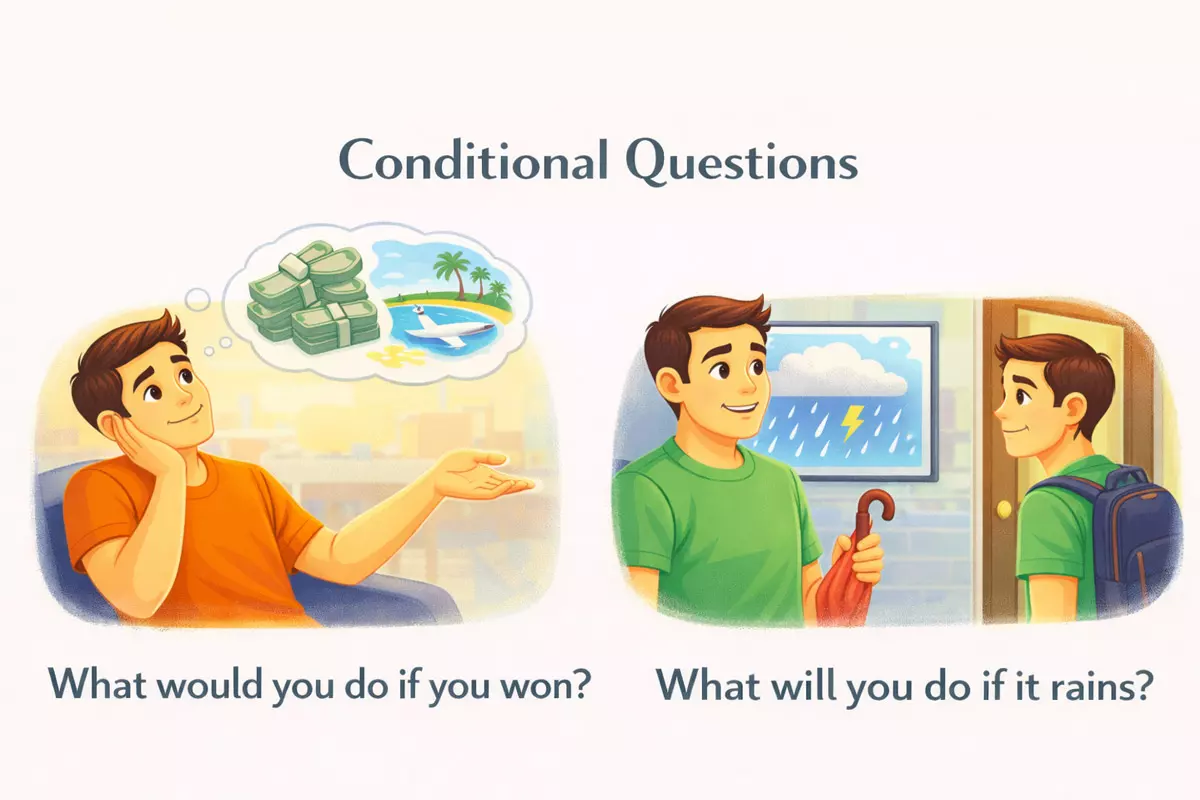 This article explains how to form conditional questions, covering zero, first, second, third, and mixed conditionals. It highlights common learner mistakes and provides practice exercises for self-assessment and improvement.
Turning "if" statements into questions involves rephrasing conditional sentences to seek information about possible outcomes or situations. For example, instead of stating, "If it rains, we will cancel the picnic," you could ask, "What will we do if it rains?" This approach allows you to inquire about hypothetical situations or uncertain events in a clear and natural way. Mastering this technique helps improve your ability to communicate possibilities and uncertainties effectively in English.
Overview of Conditionals in Questions
Conditional sentences often appear in interrogative forms when we want to ask about possibilities, hypothetical situations, or causes and effects. Understanding how to form questions with conditionals is essential for clear communication, especially when discussing scenarios that depend on certain conditions.
What Makes a Question Conditional?
A question becomes conditional when it includes an "if" clause or another marker of condition, such as "unless" or "provided that." These questions explore what might happen or be true if a particular situation occurs. The structure can involve real (likely) or unreal (unlikely or hypothetical) conditions, and the verb tense in each clause will shift accordingly.
Common Patterns for Conditional Questions
- What will you do if it rains? → I’ll stay inside and watch a movie.
- If she calls, will you answer? → Yes, I’ll answer.
- Would you go if you had more time? → Yes, I would.
- If they had known, would they have acted differently? → Yes, they would have.
- Should I bring an umbrella if it looks cloudy? → Yes, you should.
- If you were offered the job, would you take it? → Yes, I would.
- Will you help me if I ask? → Yes, I will.
- If the weather improves, can we go hiking? → Yes, we can.
- Do you think it will work if we try this method? → Yes, I think it will.
- If we leave now, will we get there on time? → Yes, we will.
- Would it matter if he didn’t come? → No, it wouldn’t.
- If you see her, can you give her this message? → Yes, I can.
- What happens if the power goes out? → The lights turn off.
- If nobody answers, should I call again? → Yes, call again in a few minutes.
- Could you help if I needed you? → Yes, I could.
- If you could travel anywhere, where would you go? → I’d go to Italy.
- Is it okay if I open the window? → Yes, that’s fine.
- If you don’t mind, can I borrow your notes? → Sure, you can borrow them.
- Would you mind if I joined you? → No, not at all.
- If you had listened, would things be different? → Yes, they would.
Types of Conditional Questions
Interrogative conditionals can be sorted by likelihood and time reference. The main types include:
- First conditional: Real possibility in the future (If it rains, will you stay inside?)
- Second conditional: Hypothetical or unlikely present/future (If you won the lottery, what would you do?)
- Third conditional: Unreal past situations (If you had known, would you have come?)
- Zero conditional: General truths (What happens if you mix red and blue?)
Word Order and Inversion
Most conditional questions follow the standard question word order: auxiliary verb + subject + main verb. However, in more formal or literary contexts, inversion may occur (e.g., "Were you to win, what would you do?"). This form is less common in everyday speech.
| Conditional Type | Example Question |
|---|---|
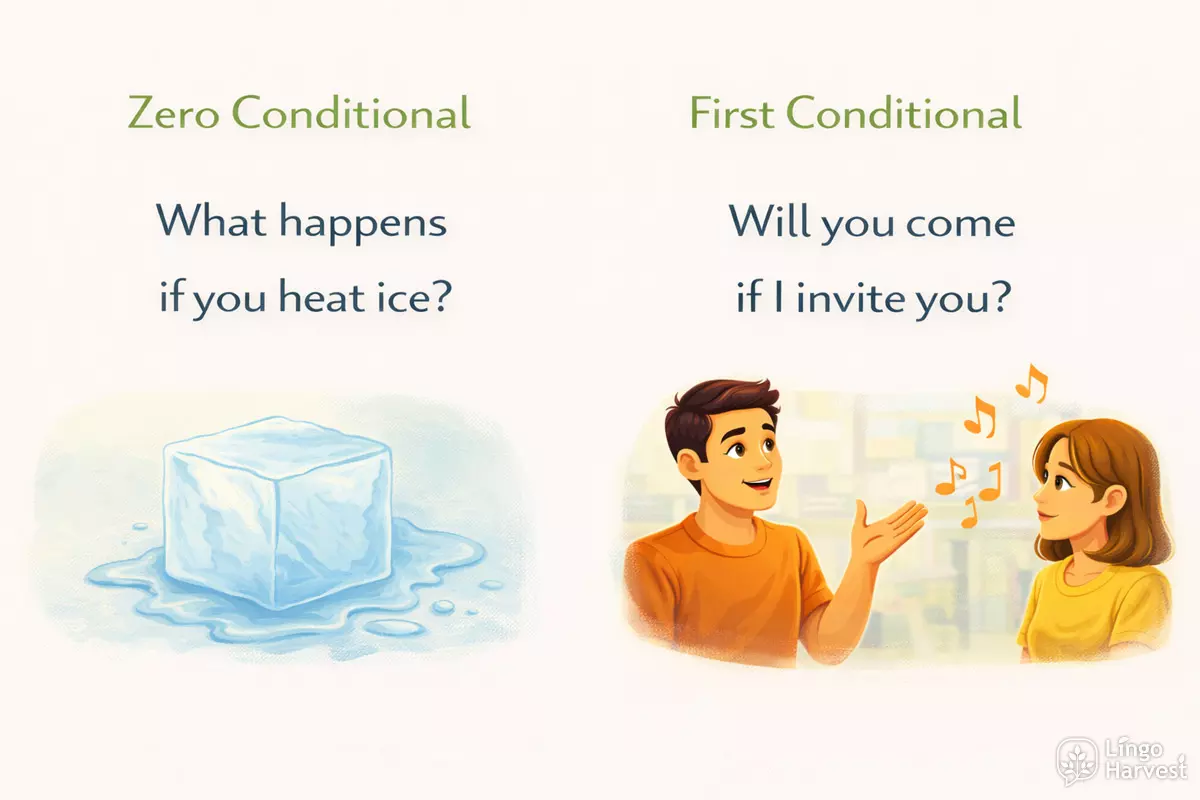
| Zero Conditional | What happens if you heat ice? |
| First Conditional | Will you come if I invite you? |
| Second Conditional | What would you do if you saw a bear? |
| Third Conditional | Would you have helped if I had asked? |
When forming questions with conditionals, pay attention to verb tense and auxiliary usage. The correct structure ensures clarity and helps listeners or readers understand the scenario being discussed.
Zero Conditional Questions
Understanding how to form questions with the zero conditional helps clarify cause-and-effect relationships that are always true. In English, these questions are used to ask about general truths, scientific facts, or habits. The zero conditional uses the present simple tense in both clauses, and this pattern continues when you turn a statement into a question.
How to Form Questions
To create a question, invert the subject and auxiliary verb (do/does) in the main clause. The structure is typically:
- If + present simple, do/does + subject + base verb...?
- Or: Do/Does + subject + base verb... if + present simple?
Both forms are correct, but the second is more common in everyday conversation.
Common Patterns and Examples
You’ll often use "do" or "does" at the start, depending on the subject. Here are some typical ways these questions appear:
- Do plants grow if they get enough sunlight? → Yes, they do.
- Does water boil if you heat it to 100°C? → Yes, it does.
- Do you get tired if you don’t sleep well? → Yes, you do.
- Does metal rust if it gets wet? → Yes, it does.
- Do dogs bark if they see a stranger? → Yes, they do.
- Does ice melt if you leave it out of the freezer? → Yes, it does.
- Do students learn faster if they practice daily? → Yes, they do.
- Does bread go stale if you leave it uncovered? → Yes, it does.
- Do people get sunburned if they stay in the sun too long? → Yes, they do.
- Does milk spoil if it isn’t refrigerated? → Yes, it does.
- Do alarms ring if there is a fire? → Yes, they do.
- Does your phone work if it isn’t charged? → No, it doesn’t.
- Do computers crash if you overload them? → Yes, they do.
- Does paper burn if you hold it near a flame? → Yes, it does.
- Do cats purr if they are happy? → Yes, they do.
- Does rain fall if clouds are heavy? → Yes, it does.
Comparison: Statement vs. Question Form
The following table shows how a zero conditional statement is converted into a question:
| Statement | Question |
|---|---|
| If you mix red and blue, you get purple. | Do you get purple if you mix red and blue? |
| If water reaches 0°C, it freezes. | Does water freeze if it reaches 0°C? |
| If students study, they remember more. | Do students remember more if they study? |
| If it rains, the grass gets wet. | Does the grass get wet if it rains? |
Short Answers
When you answer these questions, short responses are natural:
- ✅ Yes, it does. / No, it doesn’t.
- ✅ Yes, they do. / No, they don’t.
These confirm or deny the general truth being asked about.
Usage Notes
Questions in the zero conditional are best for checking facts, confirming routines, or exploring scientific principles. They do not refer to specific events, but to what always happens when certain conditions are met. This makes them useful in both academic and everyday contexts.
First Conditional Questions
Forming questions with the first conditional is a practical skill for discussing possible future situations and their outcomes. In English, this structure helps us ask about what might happen if a particular condition is met. Typically, these questions use "if" with the present simple tense in the condition, and "will" in the result clause.
Basic Structure
The most common way to construct such questions is to start with "What," "Where," "Who," "Why," or another question word, followed by "will," then the subject, and finally the base verb. The "if" clause (with present simple) usually comes after the main clause, though it can also appear at the beginning.
- What will you do if it rains tomorrow? → I’ll stay at home.
- Will she come if you invite her? → Yes, she will.
- Where will they stay if the hotel is full? → They’ll stay with friends.
- Will you help me if I ask? → Yes, I will.
- Who will look after the cat if we go on holiday? → Our neighbor will.
- What will happen if nobody calls? → We’ll cancel the plan.
- If you see John, will you give him this message? → Yes, I will.
- If the meeting finishes early, will you go home? → Yes, I will.
- Will it be a problem if I arrive late? → No, it won’t.
- If they don't answer, will you try again? → Yes, I’ll try again later.
- Why will you leave if the weather is bad? → Because it won’t be safe.
- Will you be upset if your team loses? → A little, yes.
Question Patterns
Learners often want to know how to vary the structure for different meanings. Sometimes, the "if" clause can come first to put emphasis on the condition. Other times, the result ("will" clause) leads.
| Pattern | Example |
|---|---|
| Result first, condition second | Will you come if it doesn't rain? |
| Condition first, result second | If it doesn't rain, will you come? |
| Wh-question, result first | What will you do if you miss the bus? |
| Yes/No question, result first | Will your friends join if they finish work early? |
Tips for Usage
- Use the present simple in the "if" clause, even when talking about the future.
- Only use "will" in the main clause, not after "if."
- For yes/no questions, begin with "Will" followed by the subject.
- For information questions, start with a question word ("What," "Who," "Where," etc.) before "will."
Mastering these question forms helps in making predictions, offers, and suggestions about future possibilities. Practicing a variety of patterns will help you communicate more flexibly in real-life situations.
Second Conditional Questions
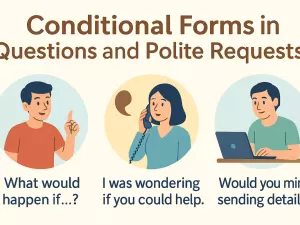
When asking about hypothetical or unlikely situations in the present or future, English speakers often use the second conditional structure. These questions help us imagine alternatives or possibilities that are not real right now. To form such questions, the typical pattern involves "would" plus the base form of the verb, usually with the subject and "would" inverted.
How to Form Second Conditional Questions
The question form usually starts with "Would" or sometimes "If," depending on the focus. For example, "Would you travel the world if you had unlimited money?" Here, "would" comes before the subject, followed by the base verb. When asking for more information, question words like "What," "Where," or "Who" can be added at the beginning.
- Would you change your job if you could? → Yes, I would.
- If you won the lottery, what would you buy first? → I’d buy a house.
- Where would you live if you could choose any country? → I’d live in Italy.
- Who would you invite to dinner if you could pick anyone? → I’d invite a close friend.
- Would your friends help you if you needed them? → Yes, they would.
- If you found a wallet, would you keep it? → No, I wouldn’t.
- Would you study another language if you had more time? → Yes, I would.
- If you met your favorite author, what would you ask? → I’d ask about their inspiration.
- Would your family move to another city if offered a good job? → Yes, they would.
- If you could change one thing about school, what would it be? → I’d reduce homework.
- What would you do if you lost your keys? → I’d call a locksmith.
- Would you try skydiving if you weren't afraid of heights? → Yes, I would.
- If you could meet any historical figure, who would it be? → I’d meet Albert Einstein.
- Would you eat insects if it was the only protein available? → Yes, I would.
- What would happen if nobody used cars for a year? → Cities would be much cleaner.
- If your pet could talk, what would it say? → It would ask for food.
- Would you move to Mars if it was possible? → No, I wouldn’t.
- If you saw a crime, would you report it? → Yes, I would.
Key Features of the Structure
The second conditional uses "if" + past simple for the condition, and "would" + base verb for the result. In questions, "would" comes before the subject, making it easy to recognize. The past simple in the "if" clause does not refer to real past time but signals unreality or imagination.
| Question Pattern | Example |
|---|---|
| Would + subject + base verb + if + subject + past simple? | Would you travel more if you had more money? |
| Question word + would + subject + base verb + if + subject + past simple? | What would you do if you lost your phone? |
| If + subject + past simple, would + subject + base verb? | If you won the lottery, would you quit your job? |
| Would + subject + base verb? | Would you accept a job abroad? |
Common Uses and Tips
These questions are useful for interviews, classroom discussions, or creative writing. They encourage thinking about alternatives and possibilities. Remember, contractions are not typically used at the start of questions ("Wouldn't you...?") unless expressing surprise or expecting agreement. For clarity and variety, try mixing direct and information questions as shown above.
Third Conditional Questions
When talking about unreal situations in the past, English uses the third conditional. Forming questions in this structure requires special attention to word order and auxiliary verbs. These questions focus on hypothetical scenarios that did not happen, and they are useful for discussing regrets, missed opportunities, or alternative outcomes.
How to Form Third Conditional Questions
To build a question in the third conditional, start with the auxiliary verb "would," "could," or "might," followed by the subject, then "have," and the past participle of the main verb. The if-clause (with "if" + past perfect) often comes after the main part, but it can also appear at the beginning for emphasis or style.
- Would you have helped if you had known? → Yes, I would have.
- Could she have passed the exam if she had studied harder? → Yes, she could have.
- Might they have arrived earlier if they had left home sooner? → Yes, they might have.
- Would your boss have been angry if you had missed the meeting? → Yes, he would have.
- Could we have avoided the problem if we had listened to advice? → Yes, we could have.
- Would he have traveled abroad if he had saved enough money? → Yes, he would have.
- Would the team have won if the star player had not been injured? → Yes, they would have.
- Could I have met you if I had come yesterday? → Yes, you could have.
- Would you have bought the car if it had been cheaper? → Yes, I would have.
- Could the cat have escaped if the door had been open? → Yes, it could have.
- Would this have happened if we had been more careful? → No, it wouldn’t have.
- Could she have solved the puzzle if she had tried another method? → Yes, she could have.
Common Patterns and Variations
Most third conditional questions use "would," but "could" and "might" are also possible, depending on the meaning. The if-clause always uses the past perfect (had + past participle). Note that contractions are less common in formal writing but often appear in speech.
| Question Form | Example |
|---|---|
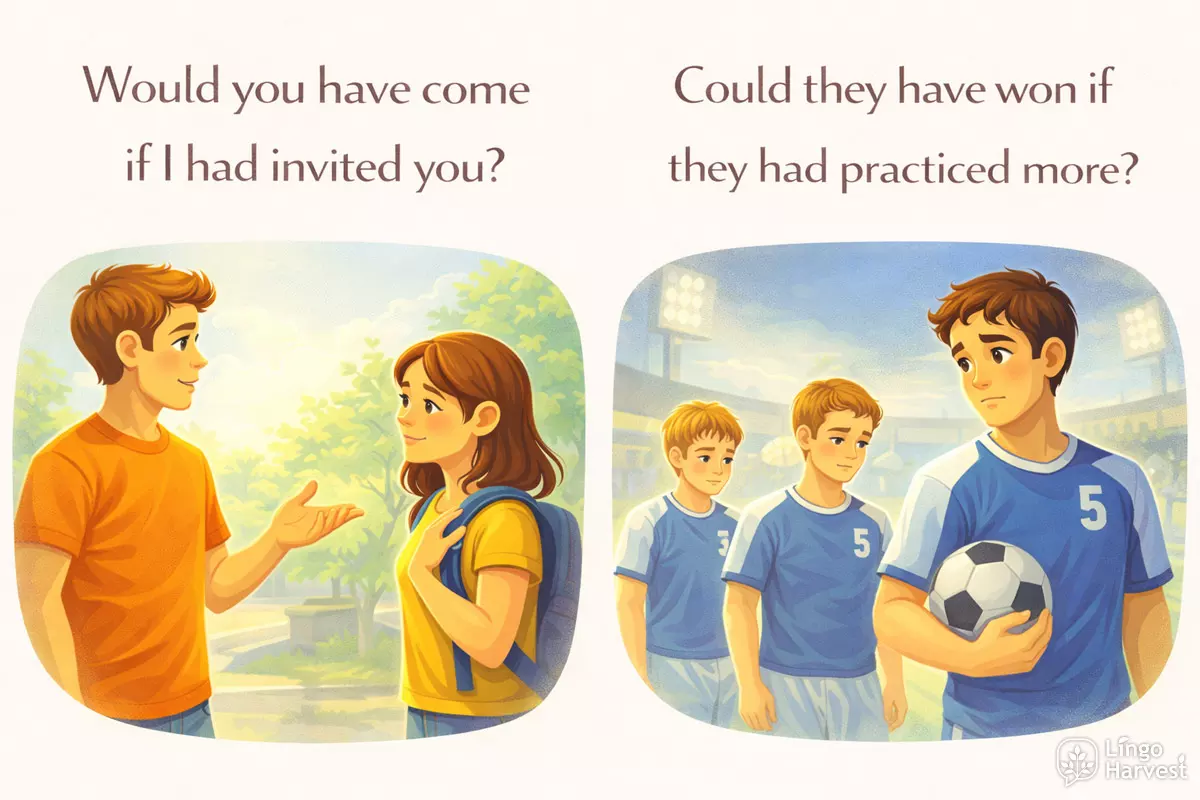
| Would + subject + have + past participle? | Would you have come if I had invited you? |
| Could + subject + have + past participle? | Could they have won if they had practiced more? |
| Might + subject + have + past participle? | Might she have called if she had seen your message? |
| Negative form (Wouldn't/Couldn't/Mightn't) | Wouldn't you have stayed if you had known? |
Typical Uses of Hypothetical Past Questions
These questions are common in discussions about past events that could have turned out differently. They help speakers explore alternative histories, assign responsibility, or express curiosity about what might have been.
- Exploring missed chances: "Would you have joined us if you had finished work earlier?"
- Expressing regret: "Could I have done more if I had known about the problem?"
- Analyzing outcomes: "Might the result have changed if we had tried a different approach?"
- Assigning responsibility: "Would the accident have happened if the driver had been careful?"
Remember, the third conditional is always about the past and situations that did not actually occur. Using this form accurately helps clarify your meaning and shows advanced English skills.
Mixed Conditionals in Questions
Questions using mixed conditionals can be challenging, as they combine elements from two different conditional types. These forms are often used to discuss imaginary situations in the past that affect the present, or hypothetical present situations that would have changed the past. Understanding how to form and use these structures in questions is key for fluency and nuance.
What Are Mixed Conditionals?
A mixed conditional sentence merges two different time frames: typically, the if-clause refers to one time (past or present), while the main clause refers to another. In questions, this can help you ask about unreal scenarios that cross time periods. For example, you might want to ask how a different past could impact the present, or how a current hypothetical situation could have changed the outcome in the past.
Common Patterns for Mixed Conditional Questions
There are two main types of mixed conditional questions:
- Past → Present: The if-clause is in the past perfect, and the main clause uses "would" + base verb for present results.
Example: If you had studied harder, would you have a better job now? - Present → Past: The if-clause uses simple past, while the main clause is in "would have" + past participle to show how a present state could have changed a past result.
Example: If you were more organized, would you have missed fewer deadlines last year?
Forming Mixed Conditional Questions
To turn mixed conditionals into questions, invert the subject and auxiliary verb in the main clause, or start with a question word. Consider the following patterns:
- Would you have done X if you had Y?
- If you were X, would you have done Y?
- What would you have changed if you had known?
- If you hadn't moved cities, would you be happier now?
Examples of Mixed Conditional Questions
- If you had taken the other job, would you be living abroad now?
- Would you have finished the project earlier if you were more experienced?
- If she had saved more money, would she feel less stressed today?
- Would you have met your best friend if you weren't so outgoing?
- If they had left earlier, would they be stuck in traffic now?
- Would you have chosen a different career if you knew what you know now?
- If he were taller, would he have played on the team last year?
- Would you be more confident now if you had practiced more as a child?
- If your parents had lived in the city, would you know more people here?
- Would you have succeeded if you were more determined?
- If they had studied harder, would they have better grades now?
- Would you have traveled more if you had more money?
Quick Comparison: Mixed vs. Standard Conditional Questions
| Conditional Type | Example Question |
|---|---|
| Second (Present Unreal) | If you won the lottery, what would you buy? |
| Third (Past Unreal) | If you had known, would you have come? |
| Mixed (Past → Present) | If you had listened, would you be in trouble now? |
| Mixed (Present → Past) | If you were taller, would you have joined the team last year? |
When forming questions with these structures, pay attention to verb tense consistency and be clear about which time frame you’re referring to. Practicing these patterns will help you ask nuanced and grammatically correct questions about hypothetical scenarios that span different periods of time.
Typical Learner Errors
When learners try to form questions within conditional sentences, a range of problems often arises. Many of these missteps stem from confusion about word order, auxiliary verbs, or the tense shifts required. Understanding where things tend to go wrong can help you recognize and correct these common issues more quickly.
Confusing Word Order in Questions
One frequent challenge is maintaining the correct word order. Learners sometimes forget to invert the subject and auxiliary verb in the question part, especially when the conditional clause comes first. This can lead to statements that sound unnatural or are difficult to understand.
- Incorrect: If she will come, you are happy?
- Correct: If she comes, are you happy?
- Incorrect: Will you buy it if it rains?
- Correct: Will you buy it if it rains? ✅ (Correct, but learners may misplace the auxiliary)
Mixing Up Tenses
Another stumbling block is the use of inappropriate tenses in either the if-clause or the main clause. Learners might use "will" in the if-clause, or forget to use the past simple for second conditionals.
- Incorrect: If you will see him, can you ask?
- Correct: If you see him, can you ask?
- Incorrect: Would she go if she will have time?
- Correct: Would she go if she had time?
Omitting or Misusing Auxiliaries
Auxiliaries are essential in English question formation, but they are easy to overlook. Sometimes, learners leave out "do/does/did" or use them incorrectly, especially with conditionals.
- Incorrect: If you like it, you buy it?
- Correct: If you like it, do you buy it?
- Incorrect: Did you call if he arrived?
- Correct: Did you call if he arrived? (Correct but rare; more natural: Did you call when he arrived?)
Confusing Direct and Indirect Questions
Students sometimes mix up direct question forms with indirect ones, especially when the question is embedded within the conditional sentence. This often results in misplaced question words or incorrect sentence structure.
- Incorrect: If she will come, tell me when does she arrive.
- Correct: If she comes, tell me when she arrives.
Incorrect Placement of Question Words
Another error involves placing question words (who, what, when, where, why, how) incorrectly, either at the start of the wrong clause or not at all.
- Incorrect: If will he come, when?
- Correct: When will he come, if at all?
- Incorrect: If you see him, you tell what?
- Correct: If you see him, what will you tell him?
Summary Table: Typical Errors vs. Correct Forms
| Mistaken Form | Correct Form |
|---|---|
| If you will see her, you ask her? | If you see her, will you ask her? |
| Would you help if you will have time? | Would you help if you had time? |
| If he comes, do you knows? | If he comes, do you know? |
| What you will do if it rains? | What will you do if it rains? |
| Will you come if will it snow? | Will you come if it snows? |
Other Pitfalls to Watch For
- Forgetting to use the base form of the verb after auxiliaries in questions.
- Mixing up first, second, and third conditional forms within one sentence.
- Overusing "will" in both clauses.
- Omitting "if" or using another conjunction incorrectly.
- Using statements instead of questions by mistake.
By being aware of these frequent slips and reviewing the correct structures, you can steadily improve your ability to form clear and accurate questions in conditional sentences.
Practice Exercises and Self-Check
Test your understanding of forming questions in conditional structures with these exercises. You’ll find sentence transformations, error identification, and creative question-writing tasks. Take your time to analyze each example, and check your responses using the answer sections provided below each activity.
1. Transform Statements into Conditional Questions
Rewrite each statement as a correctly formed question that uses a conditional structure.
- She will come to the party if you invite her.
- They would help us if they had more time.
- If it rains tomorrow, we will cancel the picnic.
- If you had studied harder, you would have passed the exam.
- You can borrow my book if you promise to return it.
- We would travel more if we had a bigger budget.
- If he calls tonight, I will tell him the news.
- If I were you, I would apologize immediately.
- If you had left earlier, you would not have missed the train.
- We will start the meeting if everyone is ready.
Show answers
- Will she come to the party if you invite her?
- Would they help us if they had more time?
- Will we cancel the picnic if it rains tomorrow?
- Would you have passed the exam if you had studied harder?
- Can you borrow my book if you promise to return it?
- Would we travel more if we had a bigger budget?
- Will you tell him the news if he calls tonight?
- Would you apologize immediately if you were me?
- Would you not have missed the train if you had left earlier?
- Will we start the meeting if everyone is ready?
2. Identify the Error
Each sentence below contains a mistake in conditional question formation. Find and correct the error.
- Would you go to the beach if is sunny tomorrow?
- If you will see her, can you give her this note?
- Do you come if I call you?
- If had you known, would you have acted differently?
- Will you help me if you would have time later?
- If he would study harder, would he pass the test?
- Would you have bought it if you know it was on sale?
- If she calls, would you answer the phone?
- Would you be upset if he didn’t apologized?
- If it will snow tonight, do we cancel the trip?
Show answers
- Would you go to the beach if it is sunny tomorrow? → if it is sunny tomorrow
- If you see her, can you give her this note? → if you see her
- Will you come if I call you? → Will you come if I call you? (or: Would you come if I called you?)
- If you had known, would you have acted differently? → If you had known
- Will you help me if you have time later? → if you have time later
- If he studied harder, would he pass the test? → If he studied harder
- Would you have bought it if you had known it was on sale? → if you had known
- If she calls, will you answer the phone? → Will you answer the phone if she calls? (or: Would you answer the phone if she called?)
- Would you be upset if he didn’t apologize? → if he didn’t apologize
- If it snows tonight, do we cancel the trip? → If it snows tonight (or: If it snows tonight, will we cancel the trip?)
3. Multiple Examples: Conditional Question Patterns
Here’s a quick reference for forming questions with different types of conditional sentences:
| Type | Example Question |
|---|---|
| Zero Conditional | What happens if you heat ice? |
| First Conditional | Will you call me if you arrive early? |
| Second Conditional | Would you travel more if you had more money? |
| Third Conditional | What would you have done if you had lost your passport? |
| Mixed Conditional | Would you be happier if you had chosen a different job? |
4. Create Your Own Conditional Questions
Write original questions using the following prompts, making sure to use conditional structures:
- A wish about a skill you don’t have
- A hypothetical situation about winning a prize
- An action you would have taken if you had known something earlier
- What someone might do if it snows tomorrow
- A general truth involving a scientific fact
- A decision you would make if you had more free time
- Something you would change if you could go back in time
- What you will do if you miss your bus or train
- Advice you would give if a friend felt nervous about an exam
- A likely result if people don’t recycle
Show answers
- If you could speak any language, which would you choose?
- If you won the lottery, what would you buy first?
- What would you have done if you had heard the news earlier?
- Will you build a snowman if it snows tomorrow?
- What happens if you mix vinegar and baking soda?
- What would you do if you had more free time?
- What would you change if you could go back in time?
- What will you do if you miss your bus or train?
- What would you tell a friend if they felt nervous about an exam?
- What happens if people don’t recycle?