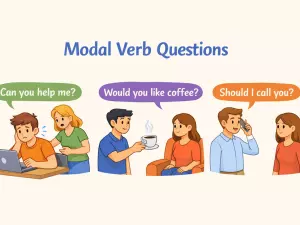
Can and Could: Ability, Permission, and Requests in English

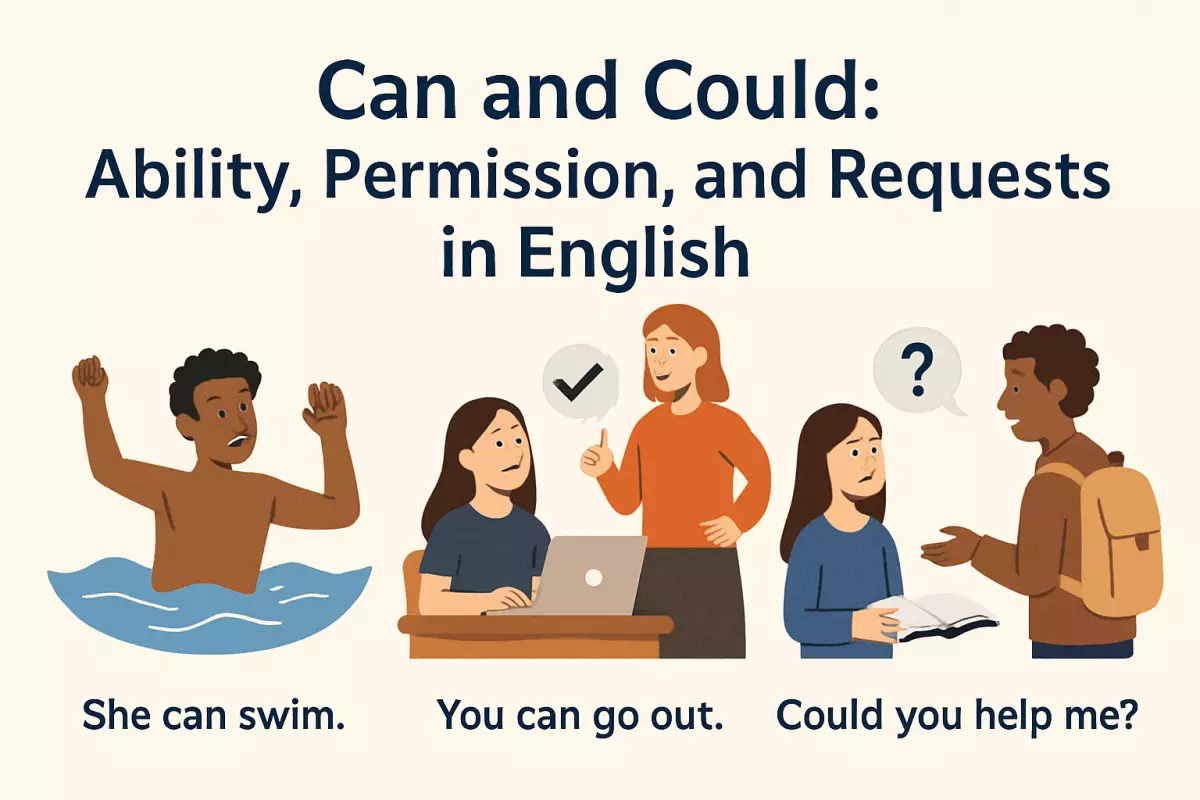 Covers the basic meanings of can and could, how they show present and past ability, polite permission, and everyday requests. It also explains could for indirect speech, negatives and questions, common mistakes, and homework practice tasks.
In everyday English, can and could help you talk about ability, permission, and polite requests. Use can for what you’re able to do now and for casual permission, like I can swim or Can I sit here. Use could for past ability and for softer, more respectful requests, like I could run fast as a kid or Could you help me for a moment. Knowing the difference makes your speech sound natural in both friendly and formal situations.
Basic meanings of can and could
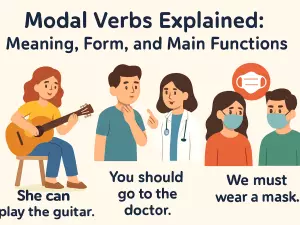
Can and could are modal verbs that add meaning to another verb (the main verb stays in the base form). They are used most often to talk about ability, permission, and requests, with differences in time, politeness, and certainty.
| Meaning | Common use | Can | Could | Example |
|---|---|---|---|---|
| Ability (general skill) | What someone is capable of | Present/general ability | Past general ability | I can swim. / When I was five, I could swim. |
| Ability (specific situation) | Success in one particular event | Often possible now | Often possible but less certain; for past success, use “was able to” | I can meet you today. / I could meet you tomorrow. / I was able to find your file. |
| Permission | Rules, authority, allowance | Direct, neutral | More polite or tentative | You can leave early. / Could I leave early today? |
| Requests | Asking someone to do something | Informal/straightforward | Politer/softer | Can you help me? / Could you help me, please? |
| Possibility | What may happen; what is possible | Realistic possibility in general | More uncertain or hypothetical | It can get cold here. / It could get cold later. |
| Suggestions | Offering an option | Practical option | Gentle suggestion | We can take the bus. / We could take the bus instead. |
Core form and word order
These modals do not change for person or number, and they are followed by the base verb (no to).
- Pattern: subject + can/could + base verb
- Questions: can/could + subject + base verb?
- Negatives: cannot/can’t, could not/couldn’t + base verb
Quick usage notes that prevent common mistakes
Use these points to choose the right form in everyday sentences.
- General past ability: “could” is natural for skills over time: “She could read at four.”
- One-time past success: prefer “was able to” (or “managed to”) rather than “could”: “I was able to fix it.”
- Politeness shift: “could” often sounds more respectful than “can” in requests: “Could you open the window?”
- Permission vs ability: “Can I…?” is common in conversation for permission, but context must make the meaning clear.
- Stronger refusal: “can’t” often sounds more definite than “couldn’t”: “I can’t come tonight.”
- Hypothetical tone: “could” is useful when you want to sound less certain or more flexible: “We could try again tomorrow.”
Talking about present and past ability
Use can to describe what someone is able to do now (general ability) or what is possible in the current situation. Use could mainly for ability in the past, especially as a general skill over a period of time. For a single successful action in the past, English often prefers was/were able to or managed to instead of could.
Core patterns for ability
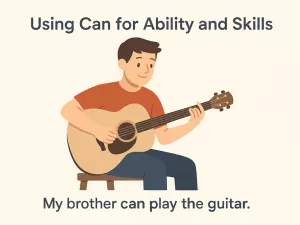
- Present general ability: can + base verb (I can swim. She can read fast.)
- Past general ability: could + base verb (When I was younger, I could run for miles.)
- Past single achievement: was/were able to or managed to (I was able to find my keys. We managed to catch the last train.)
- Negative ability: can’t / couldn’t (I can’t hear you. I couldn’t open the jar.)
- Questions: Can you…? / Could you…? (Can you lift this? Could you read at age four?)
General ability vs one-time success in the past
Could commonly describes a repeated or typical skill in earlier life, while one specific completed event usually takes was/were able to or managed to. This avoids ambiguity about whether the action actually happened.
- ✅ General past skill: I could speak a little Italian when I lived in Rome.
- ✅ General past condition: Before the injury, he could run 10 km easily.
- ✅ One-time success: I was able to get a same-day appointment yesterday.
- ✅ One-time success (effort implied): She managed to finish the report before midnight.
- ❌ Often avoided for a single success: I could get a same-day appointment yesterday. (sounds like “it was possible,” not clearly “it happened”)
- ✅ Negative is fine for a single event: I couldn’t get a same-day appointment yesterday. (clear failure)
Ability limited by the situation
Both modals can describe what is possible because of circumstances. In this use, could often suggests a less certain or more conditional possibility than can.
- With this password, you can access the files.
- If we leave now, we can catch the 6:10 train.
- With a little help, you could finish today. (conditional)
- We could meet earlier if your schedule changes. (depends on a condition)
Useful example set (present and past)
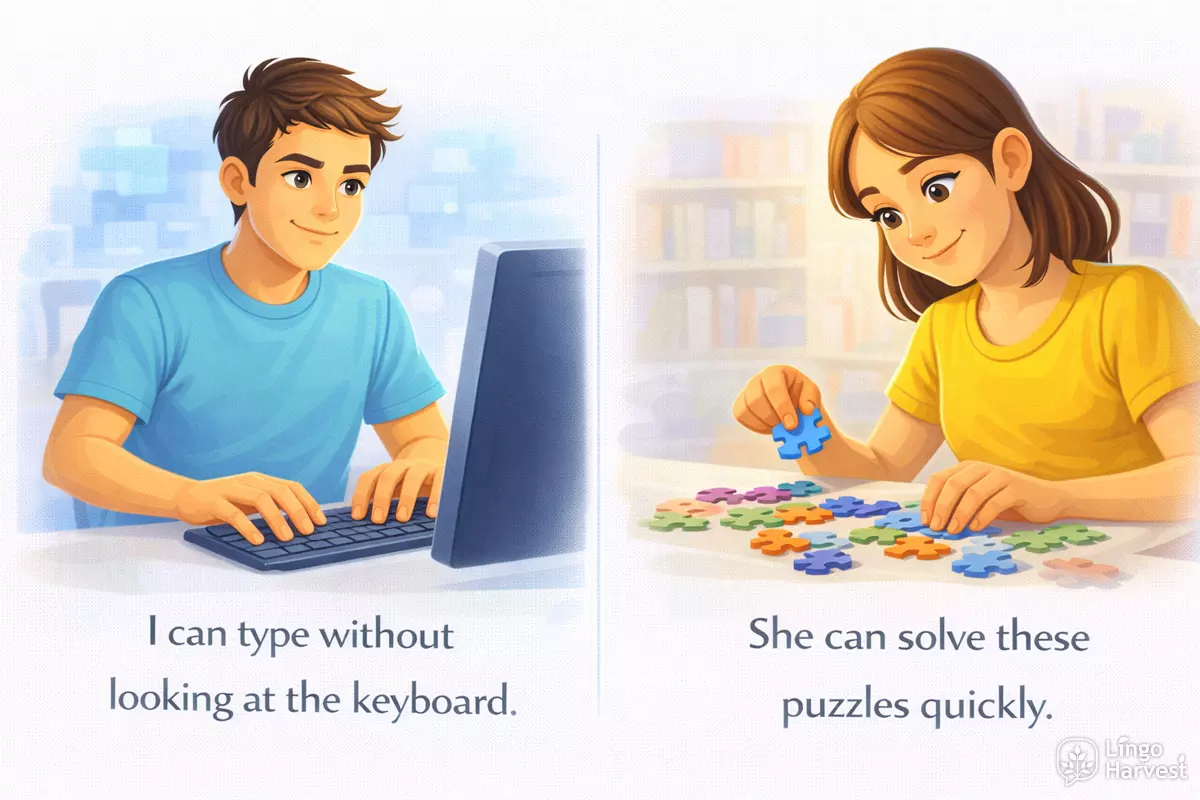
- I can type without looking at the keyboard.
- She can solve these puzzles quickly.
- They can’t park here after 6 p.m.
- Can you hear the announcement?
- When he was five, he could already read.
- We could see the mountains from our old house.
- I couldn’t understand the instructions at first.
- After a few tries, I was able to connect the printer.
- Despite the traffic, we managed to arrive on time.
- She wasn’t able to attend because of a fever.
- In the past, I could stay up all night; now I can’t.
- Could you swim before you learned proper technique?
- I can meet today, but I can’t tomorrow.
- At the time, we couldn’t afford a car.
- He was able to fix the leak with the right tools.
Asking and giving permission politely
In English, permission questions often use can, could, or may. The choice signals how formal or tentative you want to sound. In everyday situations, can is common; could is usually more polite and less direct; may is more formal and is often used in customer service, schools, and official contexts.
Common patterns for requesting permission
- Can I + base verb? (neutral, everyday) → Can I open the window?
- Could I + base verb? (more polite, more tentative) → Could I leave a little early today?
- May I + base verb? (formal) → May I speak to the manager?
- Can we + base verb? (group permission) → Can we take a short break?
- Could we + base verb? (polite group request) → Could we reschedule the meeting?
- Is it OK if I + present? (checks comfort/approval) → Is it OK if I sit here?
- Would it be OK if I + past? (more tentative; sounds careful) → Would it be OK if I used your phone?
- Do you mind if I + present? (common; expects “no” for yes) → Do you mind if I close the door?
- Do you mind my + -ing? (more formal) → Do you mind my taking notes?
- Would you mind if I + past? (very polite) → Would you mind if I joined you?
- Would you mind + -ing? (very polite) → Would you mind waiting a moment?
- Could I possibly + base verb? (extra polite; use sparingly) → Could I possibly ask a quick question?
- Can I just + base verb? (softens; can sound casual) → Can I just check one thing?
- Is it all right if we + present? (neutral) → Is it all right if we start now?
Choosing between can, could, and may
- Can: standard in conversation; direct but not rude in most settings. Can I borrow your pen?
- Could: adds distance and politeness; useful with strangers, at work, or when asking a favor. Could I use your restroom?
- May: formal or rule-based permission; also used by staff to sound professional. May I see your ID?
- Context matters: with close friends, can often sounds natural; in formal situations, could or may may fit better.
Giving permission and responding politely
- ✅ Yes, you can. (neutral) → Yes, you can use my charger.
- ✅ Sure. / Of course. (friendly) → Of course, go ahead.
- ✅ Yes, that’s fine. (common in workplaces) → Yes, that’s fine—thanks for asking.
- ✅ Yes, please do. (encouraging) → Yes, please do take a seat.
- ✅ Go ahead. (short, natural) → Go ahead and start without me.
- ❌ I’m afraid not. (polite refusal) → I’m afraid not; it’s against policy.
- ❌ I’d rather you didn’t. (soft “no”) → I’d rather you didn’t share that photo.
- ❌ Sorry, not this time. (friendly refusal) → Sorry, not this time—I need it today.
- ❌ Not right now. (temporary refusal) → Not right now; I’m on a call.
- Adding a reason often sounds more considerate: I’m afraid not, because we’re closing.
Politeness and grammar notes
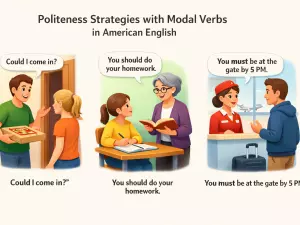
- Could does not always mean past time in permission questions; it often signals extra politeness: Could I ask something?
- With Would you mind…? and Do you mind…?, a “yes” answer can be confusing. Prefer clear responses like No, not at all (permission) or Sorry, I do (refusal).
- For rules and signs, English often uses can’t / mustn’t: You can’t park here. / You mustn’t smoke inside.
- When asking someone to allow an action, pair the request with a softener if needed: Could I just step out for a minute?
Requests with can and could
To ask someone to do something, English often uses can or could followed by a subject and a base verb. Both are common in everyday speech, but they differ in tone: can is usually more direct, while could is typically more polite and a little more tentative.
Core patterns
- Can + subject + base verb? → direct, friendly: Can you help me?
- Could + subject + base verb? → more polite/softer: Could you help me?
- Can/Could + subject + please + base verb? → adds politeness: Could you please repeat that?
- Can/Could + subject + base verb + (for me/us)? → makes the favor explicit: Can you check this for me?
- Can/Could + subject + base verb + (a bit/a little)? → softens the request: Could you speak a little more slowly?
Politeness and situation
- Use can with friends, classmates, coworkers you know well, or in quick practical situations: Can you open the window?
- Use could with customers, strangers, teachers, supervisors, or when you want to sound less demanding: Could you send that again, please?
- Could does not mean the action is in the past; it signals a more respectful tone in many contexts.
- In very formal settings, speakers may choose other forms (for example, Would you…?), but could is often polite enough for most situations.
Useful examples (common verbs and contexts)
- Can you give me a hand with this box?
- Could you hold the door for a moment?
- Can you tell me where the restroom is?
- Could you repeat the last part, please?
- Can you turn down the music a little?
- Could you turn up the brightness on this screen?
- Can you check my math quickly?
- Could you look over this email before I send it?
- Can you send me the file today?
- Could you forward that message to the team?
- Can you pick up some milk on the way home?
- Could you book a table for two?
- Can you explain this word in simpler terms?
- Could you speak a bit more slowly, please?
- Can you wait here for a minute?
- Could you let me know when you’re free?
Short answers and follow-up language
- Accepting: Sure. / Of course. / No problem. / Yes, I can.
- Refusing politely: Sorry, I can’t right now. / I’m afraid I can’t. / Could we do it later?
- Clarifying: Do you mean now or later? / Which one should I send?
Common learner points to avoid
- ❌ Can you to help me? → ✅ Can you help me? (use the base verb, no to)
- ❌ Could you helped me? → ✅ Could you help me? (keep the base form after the modal)
- Adding please usually sounds polite, but tone and context still matter; a calm, respectful phrasing often works better than extra words.
Could for polite and indirect speech
Could is a common choice when you want to sound less direct. It often makes a request, question, or suggestion feel softer and more considerate than can, especially with strangers, customers, teachers, or in workplace situations.
Core patterns
These structures are widely used for courteous requests and gentle questions. Intonation and context matter, but the grammar stays consistent.
- Could + subject + base verb: “Could you help me?”
- Could + subject + base verb + please: “Could you open the window, please?”
- Could I + base verb (asking to do something yourself): “Could I leave a bit early?”
- Could you possibly + base verb (extra soft): “Could you possibly send it today?”
- Could you + base verb + for me (emphasizes assistance): “Could you check this for me?”
- Could you tell me + wh- word… (polite information request): “Could you tell me where the station is?”
- Could you let me know + clause: “Could you let me know when you’re free?”
- Could you + base verb + if… (indirect question): “Could you check if the payment went through?”
Common uses in everyday and professional contexts
In many situations, could signals respect and reduces pressure. It is especially useful when the other person may need to make an effort, when you are interrupting, or when you are asking for a favor.
- “Could you speak a little more slowly?”
- “Could you repeat that, please?”
- “Could you hold the door?”
- “Could you email me the details?”
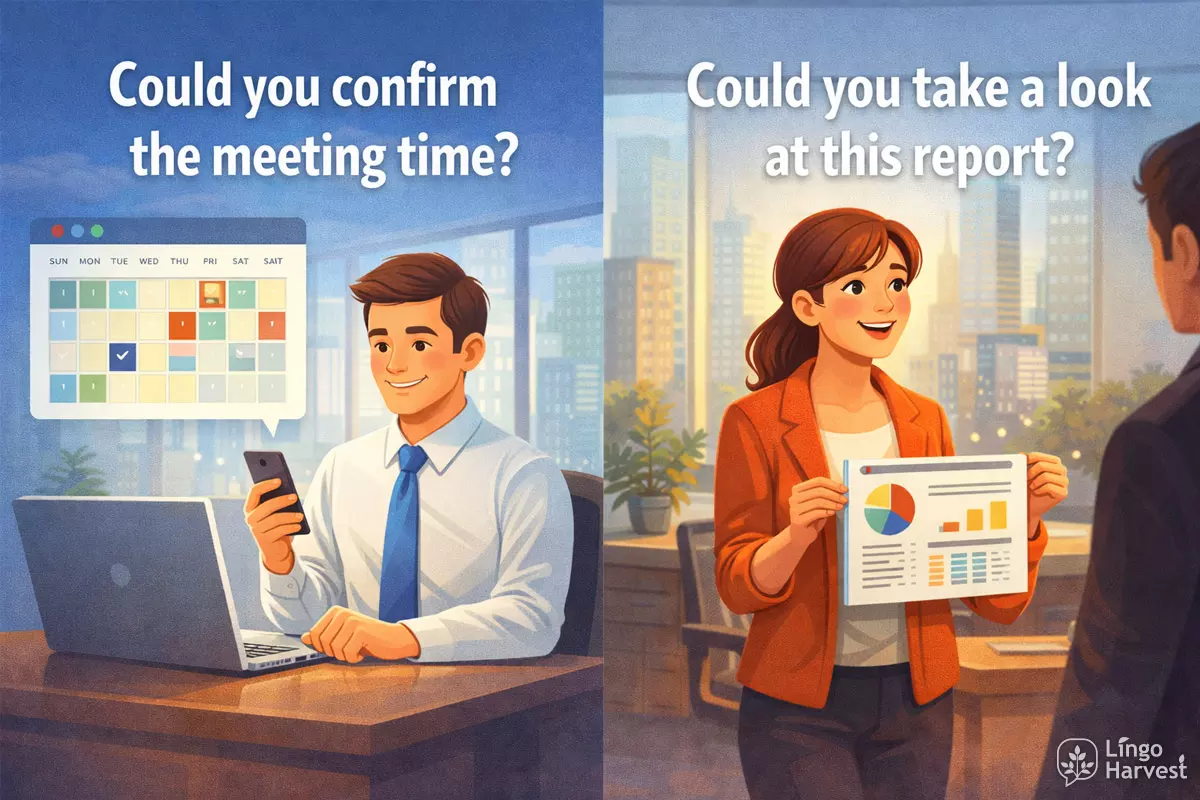
- “Could you confirm the meeting time?”
- “Could you take a look at this report?”
- “Could you give me a hand with these boxes?”
- “Could you keep an eye on my bag for a moment?”
- “Could I ask you a quick question?”
- “Could I use your phone for a minute?”
- “Could I get a receipt, please?”
- “Could we reschedule to Thursday?”
- “Could we talk after class?”
- “Could you point me in the right direction?”
- “Could you let me know your decision by Friday?”
Indirect questions: sounding less abrupt
To make questions more formal or tactful, use could with reporting verbs like tell, explain, or show. The word order stays like a statement (no inversion), which is a key feature of indirect speech.
- ✅ “Could you tell me where the meeting is?” (statement order)
- ❌ “Could you tell me where is the meeting?”
- ✅ “Could you explain how this works?”
- ✅ “Could you show me which button to press?”
- ✅ “Could you let me know what time you’ll arrive?”
How polite is “could” compared with “can”?
Both are correct for requests, but could generally sounds more tentative. Use it when you want to be careful, when you are asking someone you do not know well, or when the request may inconvenience them. Use can when the situation is casual, quick, or with people you know well.
Helpful add-ons for softer tone
Small words can make the request feel more considerate. These are optional, but common in natural speech.
- please: “Could you help me, please?”
- possibly: “Could you possibly send it again?”
- just (reduces the sense of demand): “Could you just sign here?”
- a moment / a second: “Could you wait a moment?”
- when you have a chance: “Could you reply when you have a chance?”
- if you don’t mind: “Could you close the door, if you don’t mind?”
Negative forms and questions
With can and could, negatives and questions follow clear auxiliary-verb patterns: the modal comes first, and the main verb stays in the base form (no to, no -s, no -ed). This makes word order predictable in statements, yes/no questions, and short answers.
How to form negatives
Use cannot (one word) or can’t for the negative of can. For could, use could not or couldn’t. After the negative modal, keep the verb in its base form.
- can + not + base verb → I cannot swim. / I can’t swim.
- could + not + base verb → She could not attend. / She couldn’t attend.
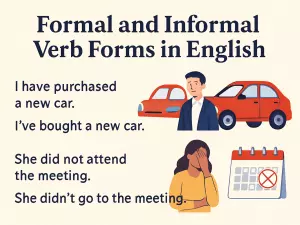
- cannot is standard in formal writing; can’t is common in speech and informal writing.
- ❌ Avoid can not as two words unless you mean “can choose not to” (contrast): I can not go if you prefer (meaning: it is possible for me to not go).
- Negatives often change the meaning of ability/permission: You can’t park here usually means “not allowed,” not “not able.”
How to form yes/no questions
For questions, place the modal before the subject. The main verb remains in the base form.
- Can + subject + base verb? → Can you hear me?
- Could + subject + base verb? → Could they arrive by six?
- Use could to sound more tentative or polite in requests: Could you open the window?
- Negative questions are common for checking expectations: Can’t you stay a bit longer? / Couldn’t he find it?
Short answers and common replies
Short answers repeat the modal and match the polarity (positive or negative). Avoid answering with only Yes or No in careful writing or formal speaking.
- Can you drive? → Yes, I can. / No, I can’t.
- Could she join us? → Yes, she could. / No, she couldn’t.
- Can I come in? → Yes, you can. / No, you can’t.
- Could we reschedule? → Yes, we could. / No, we couldn’t.
Wh- questions with can/could
In wh- questions, the wh- word comes first, then the modal, then the subject. This pattern is useful for asking about ability, permission, and options.
- What can I do?
- Where can we park?
- When can you call?
- How can I reset my password?
- Why can’t they attend?
- What could we try next?
- Where could I find a quieter seat?
- How could he know? (often expresses surprise)
Typical patterns to notice
- Base verb after the modal: can/could + go/see/help (not to go, not goes).
- Use can’t for strong impossibility or firm refusal: I can’t agree to that.
- Use couldn’t for past inability: We couldn’t find the address.
- Couldn’t can also show strong certainty (deduction): That couldn’t be true.
- In requests, Could you…? is usually softer than Can you…?, even though both are common.
Common mistakes and correct usage
Many errors with can and could come from mixing up time (present vs. past), meaning (ability vs. permission), and politeness (direct vs. softened requests). The patterns below show what native speakers usually choose in everyday English and what to avoid.
Ability: present, past, and “managed to”
- ❌ “Yesterday I can swim.” → ✅ “Yesterday I could swim.” (past general ability)
- ❌ “I could speak French now.” → ✅ “I can speak French now.” (present ability)
- ❌ “I could finish the report last night.” (often unclear) → ✅ “I was able to finish the report last night.” / “I managed to finish…” (a specific completed success)
- ✅ “When I was a child, I could run fast.” (general past ability)
- ✅ “I couldn’t open the window.” (either no ability or no success; context decides)
- ✅ “I couldn’t sleep last night.” (common for inability in a specific situation)
- ❌ “I can play piano when I was 10.” → ✅ “I could play piano when I was 10.”
- ✅ “I can’t hear you.” (present inability; very common)
Permission: choosing the right level of formality
- ❌ “Could I open the window? Yes, you could.” → ✅ “Yes, you can.” / “Sure.” (answer permission with can or a natural reply)
- ✅ “You can use my phone.” (giving permission now)
- ✅ “You could use my phone if yours dies.” (conditional/less direct; not immediate permission)
- ✅ “Can I leave early today?” (neutral)
- ✅ “Could I leave a bit early?” (more polite/softer)
- ❌ “In my school, we couldn’t wear jeans.” (may be misunderstood as “not able to”) → ✅ “We weren’t allowed to wear jeans.” (clear rule/prohibition)
- ✅ “You can’t park here.” (rule/prohibition; common on signs)
Requests: politeness and realistic expectations
- ✅ “Can you help me?” (direct, friendly)
- ✅ “Could you help me?” (polite; slightly more formal)
- ❌ “Could you pass the salt yesterday?” → ✅ “Could you pass the salt?” (requests usually refer to now, not a past time)
- ❌ “Could you to send it?” → ✅ “Could you send it?” (no to after could you)
- ❌ “Can you please…” in a complaint can sound sharp → ✅ “Could you…?” / “Would you mind…?” (softens tone)
- ✅ “Could you possibly email it today?” (extra softening with possibly)
- ✅ “Can you hear me?” (ability check; not a request for permission)
Form and pattern mistakes (grammar mechanics)
- ❌ “He cans swim.” → ✅ “He can swim.” (no -s on modal verbs)
- ❌ “She can to drive.” → ✅ “She can drive.” (modal + base verb)
- ❌ “Do you can…?” → ✅ “Can you…?” (question word order with modals)
- ❌ “I don’t can…” → ✅ “I can’t…” / “I cannot…” (use modal negative form)
- ❌ “I could to go.” → ✅ “I could go.”
- ✅ “I can help.” / “I could help.” (both correct; meaning changes)
Meaning confusion: suggestion vs. ability
- ✅ “You could try restarting your computer.” (suggestion, not past ability)
- ❌ “I’m sick. I could go to the doctor.” (may sound like a suggestion to yourself) → ✅ “I can go to the doctor.” (it’s possible/available) or “I should go…” (advice)
- ✅ “We can meet at 6.” (possible/available plan)
- ✅ “We could meet at 6.” (one option; less fixed)
Homework: can and could practice tasks
Use these activities to build accuracy with can and could for ability, permission, and polite requests. Focus on the pattern (subject + modal + base verb) and the meaning change between present ability, past ability, and softer/politer language.
Task 1: Choose can or could
Complete each sentence with can or could. Write only one word.
- I ______ swim, but only in a pool.
- When I was six, I ______ read simple books.
- ______ you help me carry this box, please?
- You ______ leave early today if you finish your work.
- My phone is dead. ______ I use your charger?
- In my last job, I ______ speak to clients in Spanish every day.
- It’s very noisy. I ______ hear you clearly.
- ______ you open the window? It’s hot in here.
- He’s only three, but he ______ count to twenty.
- We ______ meet tomorrow, but I’m not sure yet.
- As a teenager, she ______ run 10 km without stopping.
- Sorry, I ______ come to the meeting at 3 p.m. I have a class.
Show answers
- can
- could
- could
- can
- can
- could
- can’t
- could
- can
- could
- could
- can’t
Task 2: Rewrite to change the level of politeness
Rewrite each sentence using the word in brackets. Keep the meaning, and keep the rest of the sentence as similar as possible.
- Can you email me the file today? (could)
- Could I sit here? (can)
- Can we talk after class? (could)
- Could you not park here, please? (can)
- Can you speak more slowly? (could)
- Could I borrow your pen for a minute? (can)
- Can you tell me the time? (could)
- Could we start at 9 instead? (can)
Show answers
- Could you email me the file today?
- Can I sit here?
- Could we talk after class?
- Can you not park here, please?
- Could you speak more slowly?
- Can I borrow your pen for a minute?
- Could you tell me the time?
- Can we start at 9 instead?
Task 3: Fix the grammar (modal form)
Each sentence has one common mistake with modals. Correct it.
- She can to drive, but she doesn’t like highways.
- Could you to repeat that, please?
- I don’t can come tomorrow.
- He could plays the piano when he was a child.
- Can you opening the door?
- We could went earlier, but we waited for Tom.
- Could I to ask a question?
- They can’t to hear the announcement.
- Can you to help me with this form?
- When I was younger, I can run very fast.
Show answers
- She can drive, but she doesn’t like highways.
- Could you repeat that, please?
- I can’t come tomorrow.
- He could play the piano when he was a child.
- Can you open the door?
- We could go earlier, but we waited for Tom.
- Could I ask a question?
- They can’t hear the announcement.
- Can you help me with this form?
- When I was younger, I could run very fast.
Task 4: Match meaning to form (ability, permission, request, possibility)
Decide what each sentence expresses. Write one label: ability, permission, request, or possibility.
- Could you check these numbers again?
- I can’t lift this suitcase.
- Can I leave my bag here?
- We could take the train if the roads are bad.
- When he was younger, he could stay up late.
- Can you hear that buzzing sound?
- You can use my laptop for the presentation.
- Could I speak to Ms. Patel, please?
- It could rain later, so bring a jacket.
- She can solve these problems quickly.
- Could you turn the music down?
- Can we park here on Sundays?
Show answers
- request
- ability
- permission
- possibility
- ability
- ability
- permission
- permission
- possibility
- ability
- request
- permission
Task 5: Mini-dialogues (choose the best modal)
Complete each dialogue with can, could, can’t, or couldn’t.
- A: ______ you help me for a minute?
B: Sure. What do you need? - A: ______ I borrow your notes from yesterday?
B: Of course. - A: Why are you whispering?
B: Because I ______ hear the speaker well from here. - A: Did you understand the instructions?
B: No, I ______ follow them. They were too fast. - A: We’re late.
B: We ______ take a taxi, but it might be expensive. - A: ______ you use a calculator in this exam?
B: No, it’s not allowed. - A: ______ you swim when you were a child?
B: Yes, my dad taught me. - A: My internet is down.
B: You ______ use my hotspot if you want. - A: ______ you speak a bit louder, please?
B: Sorry, yes. - A: I tried to call you last night.
B: I ______ answer. My phone was off.
Show answers
- could
- can
- can’t
- couldn’t
- could
- can
- could
- can
- could
- couldn’t