Question Formation with Prepositions in English

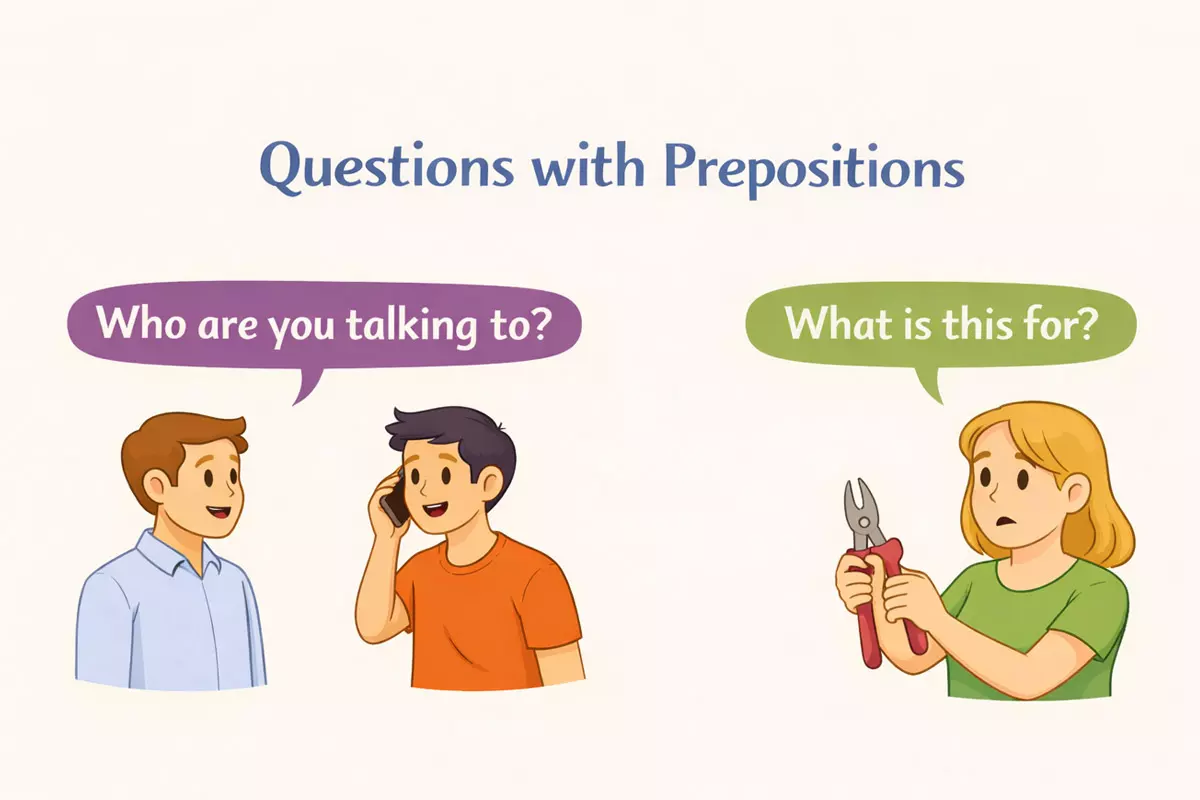 This article explains how prepositions work with question words in English. It covers prepositions before and after WH-words, formal and informal usage, common mistakes, natural spoken patterns, and includes practice exercises.
Forming questions in English can be especially challenging when prepositions are involved, as learners often feel uncertain about the correct word order and structure. Understanding how to place prepositions appropriately not only helps avoid confusion but also leads to more natural and effective communication. With practice and attention to common patterns, you can gain confidence in constructing questions that sound fluent and clear, making your conversations in English more successful and enjoyable.
Role of Prepositions in Questions
Prepositions play a crucial part in shaping the meaning and structure of English questions. They often indicate relationships such as time, place, direction, or manner, connecting the question word to the rest of the sentence. Their placement can affect both the formality and clarity of a question, especially in spoken and written English.
How Prepositions Affect Question Structure
When forming questions, the position of a preposition can change. In more formal written English, prepositions typically remain before the question word (preposition stranding is avoided), while in spoken or informal contexts, prepositions often appear at the end of the question.
- Formal: "To whom did you give the book?"
- Informal: "Who did you give the book to?"
This flexibility allows speakers to adjust tone and emphasis. However, some prepositions are rarely stranded, and certain question words naturally pair with specific prepositions.
Types of Prepositions Commonly Used in Questions
- at → What time does the meeting start at?
- for → What are you waiting for?
- with → Who are you going with?
- about → What are they talking about?
- to → Who did you speak to?
- on → What are you working on?
- by → Who was the book written by?
- from → Where are you coming from?
- over → What are they arguing over?
- under → What is this table standing under?
- after → Who are you looking after?
- before → What happened before the meeting?
- between → What is the difference between these two?
- among → Who is the most popular among them?
- during → What happened during the flight?
- through → What did you go through?
- against → What are they protesting against?
- without → What can you live without?
Examples of Questions with Prepositions
- What are you thinking about?
- Who are you going with?
- Which university did you graduate from?
- Who did you talk to?
- Where did you come from?
- Who are you waiting for?
- Which city do you live in?
- What is this made of?
- Who are you looking at?
- What are you interested in?
- Which team are you playing against?
- Who did you receive the message from?
- What are you laughing at?
- Who are you sitting next to?
- Which topic are you writing about?
- Who do you agree with?
- What are you worried about?
- Which house do you live in?
Comparing Preposition Placement in Questions
| Formal/Standard Placement | Informal/Stranded Placement |
|---|---|
| With whom are you traveling? | Who are you traveling with? |
| To whom should I speak? | Who should I speak to? |
| About what are you worried? | What are you worried about? |
| From where did you hear this? | Where did you hear this from? |
Understanding the placement and function of prepositions in interrogative sentences helps learners create natural, grammatically correct questions. It also aids in recognizing subtle differences in tone and formality, which can be essential in academic, professional, and everyday communication.
Prepositions Before Question Words
When forming questions in English, it’s important to know where to place prepositions such as "to," "with," "about," or "for" in relation to words like "who," "what," "which," and "where." This placement affects both the style and the tone of your questions, and sometimes the meaning. Generally, English allows two main patterns: placing the preposition at the end of the question or positioning it directly before the question word. While both structures are grammatically correct, the first is more common in everyday conversation, and the second is often seen in formal or written English.
Common Patterns
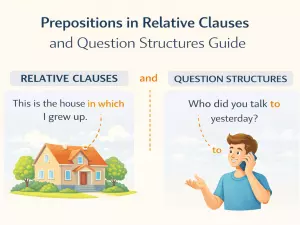
- End position (more informal): "Who are you talking to?"
- Front position (more formal): "To whom are you speaking?"
These options give speakers flexibility, but keep in mind the shift in tone. Using a preposition up front can sound very formal, while ending with a preposition feels natural and conversational.
Examples of Prepositions Used with Question Words

Here are some examples of how different prepositions combine with question words in English questions:
- Who are you going with?
- With whom will you travel?
- What are you looking for?
- For what are you searching?
- Which company does she work for?
- For which company does she work?
- Where did this idea come from?
- From where did this idea come?
- Who did you get this from?
- From whom did you get this?
- What are you interested in?
- In what are you interested?
- Who are you waiting for?
- For whom are you waiting?
- Which team are you playing against?
- Against which team are you playing?
Comparison of Structures
The following table shows the difference between placing the preposition at the end and placing it before the question word. Notice how the meaning stays the same, but the tone shifts.
| Informal / Spoken | Formal / Written |
|---|---|
| Who are you talking about? | About whom are you talking? |
| What are you laughing at? | At what are you laughing? |
| Who are you going with? | With whom are you going? |
| Which project are you interested in? | In which project are you interested? |
When to Use Each Form
- End position: Use this in everyday situations, especially in speech. It feels natural and is almost always preferred in casual conversation.
- Front position: Use this in formal writing, speeches, or when you want to sound especially polite or precise.
Choosing the right placement of prepositions in questions helps you control the formality and clarity of your English. Practice both styles to understand their effect and to be ready for different contexts.
Prepositions at the End of Questions
In everyday English, it’s common to place prepositions at the end of questions, especially in informal speech and writing. This pattern may seem unusual to learners, but it’s a natural construction for native speakers. Instead of keeping the preposition next to its object, English often separates them when forming questions, particularly with who, what, which, or where.
How It Works
When a prepositional phrase is involved, the preposition can move to the end of the question. This often happens when the question word refers to the object of the preposition. Compare:
- Formal: With whom did you speak?
- Natural: Who did you speak with?
The second version is much more common in spoken English. This pattern applies to many prepositions, such as to, about, for, from, at, and on.
Common Examples
- What are you looking for?
- Who did she go with?
- Which team are you cheering for?
- Where did you come from?
- Who are you talking about?
- What are you afraid of?
- Who did you send it to?
- What did you laugh at?
- Who are you waiting for?
- What are you interested in?
- Who do you live with?
- What did you write about?
- Who did you get that from?
- What are you working on?
- Who are you meeting with?
Formal vs. Informal Patterns
More formal English tends to keep the preposition before the question word, but this is rare in conversation. The table below shows how standard spoken English often differs from more formal or traditional forms:
| Informal Question | Formal Equivalent |
|---|---|
| Who are you talking to? | To whom are you talking? |
| What is she worried about? | About what is she worried? |
| Which class are you in? | In which class are you? |
| Who did you come with? | With whom did you come? |
| What are you thinking of? | Of what are you thinking? |
When Is This Structure Appropriate?
Ending questions with prepositions is natural in most everyday contexts—casual conversations, emails, and even many types of professional communication. However, in highly formal writing or in some academic settings, the more traditional structure may be preferred. Still, it’s important to recognize that the end-position pattern is not incorrect and is widely accepted in modern English.
Key Points to Remember
- Moving the preposition to the end makes questions sound more natural and less stiff.
- This structure is especially common after who, what, which, and where.
- Formal forms are rarely used in casual speech.
- Understanding this pattern helps you sound more fluent and confident in English.
WH-Questions with Prepositions
When forming questions in English that include prepositional phrases, it’s important to pay attention to the position of the preposition and the structure of the sentence. These types of questions are common in both spoken and written communication, especially when seeking specific information related to time, place, reason, people, or things.
Common Patterns and Rules
The placement of the preposition can differ depending on formality and style. In more formal English, the preposition typically comes before the question word (preposition fronting). In everyday conversation, however, it’s common to place the preposition at the end of the question (preposition stranding).
- Formal: To whom did you give the book?
- Informal: Who did you give the book to?
- What are you talking about?
- Which city are you traveling to?
- Who are you waiting for?
- Whom did you go with?
- Where are you from?
- Who did you hear that from?
- What are you looking for?
- Which team are you cheering for?
- What did you pay for?
- Who do you live with?
- Where did you get that from?
- Which friend did you talk to?
- What did you agree on?
- Whose advice did you act on?
- What did you succeed at?
- Who did you write that for?
Preposition Placement: Comparison
In some cases, both structures are correct but convey different levels of formality. Here’s a quick comparison:
| Preposition Fronted (Formal) | Preposition at End (Informal) |
|---|---|
| For whom is this present? | Who is this present for? |
| About what are you worried? | What are you worried about? |
| To which university did you apply? | Which university did you apply to? |
| With whom did you travel? | Who did you travel with? |
Tips for Natural Question Formation
- In casual speech, ending a question with a preposition is generally accepted and sounds more natural.
- In formal writing or interviews, placing the preposition before the WH-word can be appropriate.
- Some verbs always require certain prepositions (for example, “listen to”, “speak with”, “wait for”). Remember to keep these together in your question.
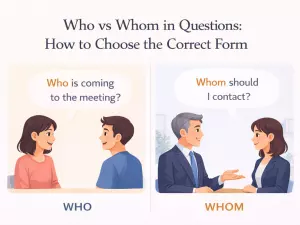
- When the object is a person, “who” or “whom” is used, but “whom” is mostly found in formal contexts.
Mastering these patterns helps you ask clear, natural questions in a variety of situations, whether you’re seeking details about people, places, reasons, or objects.
Formal vs Informal Placement
When forming questions with prepositions in English, the position of the preposition can shift depending on the level of formality. In more formal writing and speech, prepositions are usually placed before the question word or relative pronoun. In contrast, everyday conversations and informal contexts often see the preposition moved to the end of the question sentence. This difference not only affects the sentence structure but also the overall tone of the question.
Preposition Placement: Before or After?
In formal contexts, placing the preposition at the beginning of the question is considered grammatically correct and somewhat traditional. For instance, you might hear this style in academic writing, official correspondence, or formal interviews. Conversely, informal English tends to favor ending sentences with prepositions, which feels more natural to native speakers in day-to-day communication.
| Formality | Preposition Placement Example |
|---|---|
| Formal | To whom did you speak? |
| Informal | Who did you speak to? |
| Formal | About which topic are you writing? |
| Informal | What are you writing about? |
| Formal | With whom are you traveling? |
| Informal | Who are you traveling with? |
| Formal | For whom is this present? |
| Informal | Who is this present for? |
Common Patterns and Usage Tips
- Formal structures are preferred in writing, speeches, and professional settings.
- Informal placement is favored in spoken English and casual writing.
- When the question word is “who,” informal placement almost always sounds more natural in conversation.
- Some prepositions (such as “of,” “with,” and “for”) are more likely to be moved to the end in informal questions.
- In academic or legal documents, the preposition-before structure is often expected.
- Ending a sentence with a preposition is not considered incorrect in modern English, especially in informal or neutral contexts.
- Formal questions may sound stilted or overly rigid in casual conversation.
- Clarity and tone should guide your choice of placement.
- When in doubt, match the style to your audience and situation.
Understanding these differences helps you adjust your language for the right setting. Whether you’re preparing for a job interview, writing an essay, or just chatting with friends, knowing how to place prepositions in questions improves both clarity and appropriateness.
Common Learner Mistakes

Many English learners run into difficulties when forming questions that involve prepositions. This often happens because the rules differ from those in other languages, or because spoken and written English sometimes handle these structures differently. Understanding the most frequent pitfalls can help you avoid confusion and build more accurate questions.
Omitting the Preposition
One of the most widespread errors is dropping the preposition entirely from the question. In English, prepositions are often needed at the end or near the beginning of the question, depending on the formality and structure. For example:
- Incorrect: Who did you give the book?
- Correct: Who did you give the book to?
Incorrect Preposition Placement
Another frequent mistake is placing the preposition in an unnatural position, especially when translating directly from the learner’s native language. In English, especially in informal questions, the preposition usually comes at the end:
- Incorrect: To whom did you speak?
- Correct (informal): Who did you speak to?
- Correct (formal): To whom did you speak?
Mixing Direct and Indirect Question Order
Learners often confuse the word order for direct and indirect questions, especially with prepositions:
- Incorrect: Can you tell me where is she from?
- Correct: Can you tell me where she is from?
Confusing “Who” and “Whom”
Choosing between “who” and “whom” can be tricky, particularly when a preposition is involved. “Whom” is used after prepositions, but in everyday speech, “who” is often used instead:
- Formal: With whom did you travel?
- Informal: Who did you travel with?
Leaving Out the Subject
Sometimes, learners drop the subject or misplace it, especially when the sentence gets longer or more complex:
- Incorrect: To talked you?
- Correct: Who did you talk to?
Confusing Which Preposition to Use
Choosing the wrong preposition is a classic error. Different verbs and adjectives require specific prepositions, and this doesn’t always match your native language. Here are some commonly confused pairs:
| Verb/Adjective | Correct Preposition | Example Question |
|---|---|---|
| listen | to | What music do you listen to? |
| wait | for | Who are you waiting for? |
| depend | on | What does it depend on? |
| believe | in | What do you believe in? |
| talk | about | What are you talking about? |
| apologize | for | What are you apologizing for? |
| apply | for | Which job are you applying for? |
| look | at / for / after | What are you looking at? |
Overusing Formal Structures
Some learners use formal question forms in all situations, which can sound unnatural in everyday conversation. While “To whom did you speak?” is correct, most native speakers will say “Who did you speak to?” in informal contexts.
Summary of Frequent Pitfalls
- Forgetting to include the preposition when necessary
- Misplacing the preposition at the beginning in informal questions
- Directly translating from your own language’s structure
- Using the wrong preposition for specific verbs
- Confusing question word order in embedded questions
- Overusing formal patterns in casual speech
Paying attention to these patterns will help you form clearer, more natural questions involving prepositions in English.
Natural Usage in Spoken English
When people ask questions with prepositions in everyday conversation, they often use sentence patterns that sound casual and fluid rather than strictly following textbook rules. Native speakers tend to move prepositions to the end of the question, especially in informal situations. This is called "preposition stranding," and it’s much more common in speech than in formal writing.
Common Patterns in Conversation
Here are some typical ways questions with prepositions appear in real-life dialogue:
- Who are you talking to?
- What are you looking for?
- Which team do you play for?
- Who did you go with?
- What are you interested in?
- Who did you get it from?
- What are you thinking about?
- Who are you waiting for?
- Who do you live with?
- What are you afraid of?
- Which book are you talking about?
- Who are you laughing at?
- Who did you send it to?
- What did you spend your money on?
- Who are you working for?
- What did you agree on?
Preposition at the Beginning vs. End
Placing the preposition at the start of a question (preposition fronting) is more formal and less common in spoken English, often sounding unnatural in relaxed settings. Compare the following:
| Casual (Preposition at End) | Formal (Preposition at Start) |
|---|---|
| Who are you talking to? | To whom are you talking? |
| What are you interested in? | In what are you interested? |
| Who did you get it from? | From whom did you get it? |
| What are you waiting for? | For what are you waiting? |
Spoken Nuances and Tips
- Ending a question with a preposition is almost always acceptable in speech.
- Using "whom" plus a fronted preposition is rare and sounds very formal or old-fashioned.
- Some questions (like "Where are you from?") are fixed phrases and always end with the preposition.
- In very casual conversation, words may be dropped: "Who you talking to?"
- Listen for these patterns in movies, TV shows, and everyday chat to get a feel for what sounds natural.
Understanding these real-world patterns helps learners sound more fluent and blend in naturally when speaking English. The key is to notice how native speakers actually ask questions and to practice these structures until they feel comfortable.
Practice Exercises and Self-Check
Understanding how to create questions with prepositions is essential for clear and natural English communication. Use the following activities to apply your knowledge and check your understanding of common question forms.
1. Complete the Questions
Rewrite each statement as a question, making sure the preposition is placed correctly. Pay attention to whether the preposition should come at the end or before the question word.
- You are talking about the meeting. (What)
- She lives in London. (Where)
- This book belongs to Sarah. (Who)
- He is waiting for someone. (Who)
- They are interested in art. (What)
- We are working on a new project. (What)
- She is listening to music. (What)
- He was speaking with his manager. (Who)
- They arrived after the concert. (What)
- You borrowed money from someone. (Who)
Show answers
- What are you talking about?
- Where does she live?
- Who does this book belong to?
- Who is he waiting for?
- What are they interested in?
- What are you working on?
- What is she listening to?
- Who was he speaking with?
- What did they arrive after?
- Who did you borrow money from?
2. Identify the Correct Question Form
Choose the better question for each statement. Consider natural word order and preposition placement.
-
- To whom are you speaking?
- Who are you speaking to?
-
- What are you laughing at?
- At what are you laughing?
-
- Who is this present from?
- From whom is this present?
-
- Which team are you playing for?
- For which team are you playing?
-
- Who are you talking with?
- With whom are you talking?
-
- What are you looking at?
- At what are you looking?
-
- Who did you get the message from?
- From whom did you get the message?
-
- Which topic are they interested in?
- In which topic are they interested?
-
- Who are you waiting for?
- For whom are you waiting?
-
- What are we talking about?
- About what are we talking?
Show answers
- Who are you speaking to?
- What are you laughing at?
- Who is this present from?
- Which team are you playing for?
- Who are you talking with?
- What are you looking at?
- Who did you get the message from?
- Which topic are they interested in?
- Who are you waiting for?
- What are we talking about?
3. Common Preposition Question Patterns
Review these frequently used patterns for forming questions with prepositions. Notice the natural placement of prepositions in everyday English.
- Who are you talking to?
- What are you looking for?
- Where are you from?
- Who did you go with?
- What are you thinking about?
- Who is she waiting for?
- Which book are you interested in?
- Who are you sitting next to?
- What are you afraid of?
- Who did you get this from?
- What are you working on?
- Who did you send the email to?
- Which city do you live in?
- Who do you agree with?
- What are you responsible for?
4. Transforming Direct Questions
Change each direct question so that the preposition comes before the question word. This is more formal and less common, but sometimes used in writing or very formal speech.
- Who are you talking to?
- What are you interested in?
- Which team do you play for?
- Who did you go with?
- What are you looking at?
- Who did you get the email from?
- Which topic are they arguing about?
- Who are you waiting for?
- What are we working on?
- Who did she speak to?
Show answers
- To whom are you talking?
- In what are you interested?
- For which team do you play?
- With whom did you go?
- At what are you looking?
- From whom did you get the email?
- About which topic are they arguing?
- For whom are you waiting?
- On what are we working?
- To whom did she speak?
5. Common Errors: Spot the Mistake
Find and correct the errors in these questions:
- Who you are waiting for?
- With who did you speak?
- What did you do it for?
- To who does this belong?
- Who are you speaking?
- For who is this gift?
- What are you talking?
- From who did you hear this?
- Who did you buy it to?
- About what you are thinking?
Show answers
- Who are you waiting for?
- With whom did you speak?
- What did you do it for? (Correct as is; alternative: For what did you do it?)
- To whom does this belong?
- Who are you speaking to?
- For whom is this gift?
- What are you talking about?
- From whom did you hear this?
- Who did you buy it for?
- About what are you thinking?
6. Prepositions in Indirect Questions
Practice making indirect questions. Turn the direct questions below into indirect ones, keeping the preposition placement natural.
- Who are you talking to?
- What are you worried about?
- Which company do you work for?
- Who did you get the message from?
- What are you thinking about?
- Which team are you playing for?
- Who are you waiting for?
- What are you arguing about?
- Which school did you graduate from?
- Who are you going with?
Show answers
- Can you tell me who you are talking to?
- I’d like to know what you are worried about.
- Could you say which company you work for?
- Do you know who you got the message from?
- Can you tell me what you are thinking about?
- I’d like to know which team you are playing for.
- Could you tell me who you are waiting for?
- Can you tell me what you are arguing about?
- I’d like to know which school you graduated from.
- Could you say who you are going with?