Determiners in Legal and Policy Language: strict interpretation

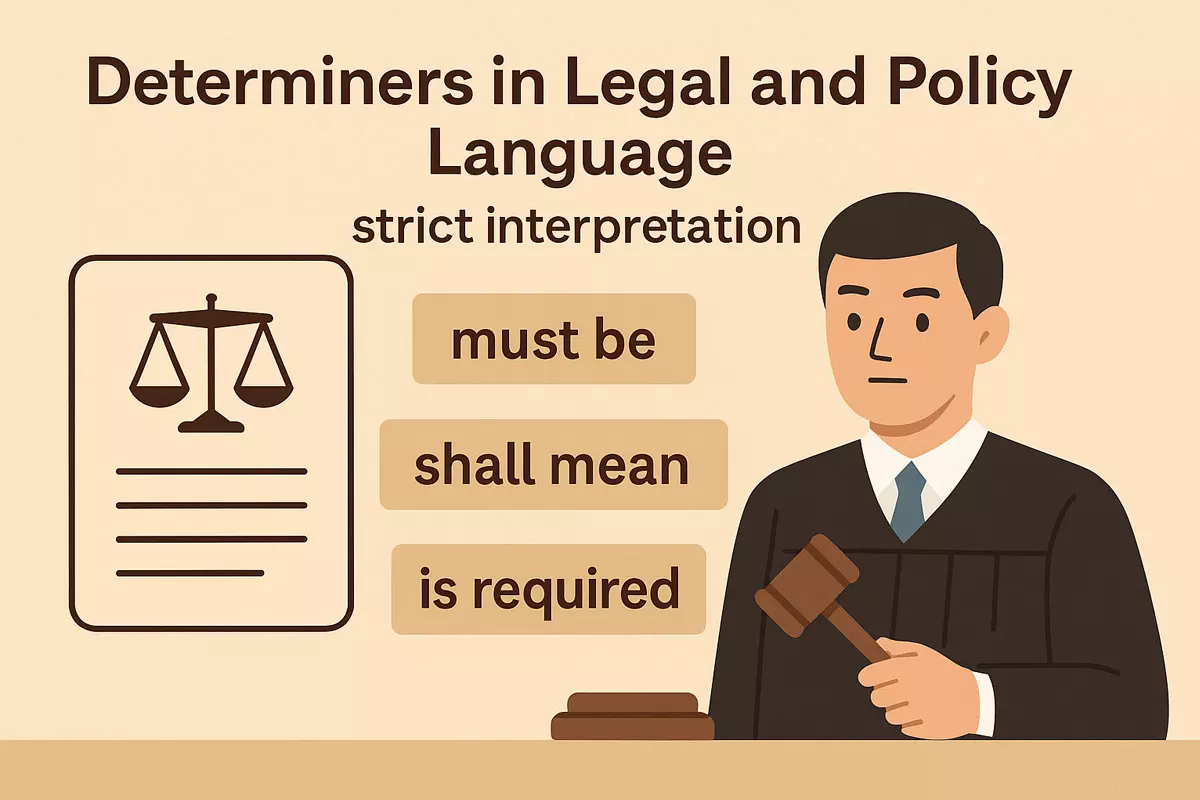 Here we why determiners are essential for legal precision, how 'the' and 'a' affect definitions and obligations, risks of ambiguity in policy language, and includes examples and practice identifying strict versus flexible determiner use.
- Why determiners matter for legal precision
- Using the for fixed definitions and obligations
- Interpreting a vs the in legal clauses
- Determinants that broaden or restrict interpretation
- Ambiguity risks in policy text
- Examples from contracts, policies, and regulations
- Practice: identify strict vs flexible determiner use
The choice of a single word in a law or regulation can significantly influence its interpretation and application, sometimes altering the outcome of legal cases or the way policies are enforced. Lawmakers must carefully select articles and qualifiers because even minor changes in wording can lead to broader or narrower readings of a statute. As a result, courts and policymakers often scrutinize legislative language to ensure that the intended meaning is preserved and that the law achieves its desired effect without unintended consequences.
Why determiners matter for legal precision
The choice of determiners—such as "a," "an," "the," "any," "every," and "some"—can fundamentally alter how a legal or policy statement is interpreted. Because these words indicate scope, specificity, and inclusion or exclusion, they serve as subtle yet powerful tools in drafting and interpreting statutes, contracts, and regulations. A single misplaced or ambiguous determiner may lead to disputes, loopholes, or unintended obligations.
Impact on Interpretation
Legal documents demand exactness. Determiners help clarify whether a rule applies to one instance, all possible instances, or a subset. For example, "the contractor" refers to a specific party, while "a contractor" could mean any qualifying entity. Courts often hinge their rulings on such distinctions, especially under strict interpretation principles.
Common Determiners and Their Legal Effects
- The: Specifies a particular entity or item, often narrowing the scope.
- A/An: Introduces generality or one among many possible instances.
- Any: Broadens the application to all qualifying cases.
- All: Encompasses every member of a defined group.
- Some: Indicates at least one, but not necessarily all.
- No: Excludes all from the group or category.
- Each: Applies individually to every member of a group.
- Every: Similar to "all," but with subtle distributive emphasis.
- This/That: Points to a specific item, document, or clause.
- Such: Refers back to a previously described type or category.
- Either: Indicates a choice between two possibilities.
- Neither: Excludes both options in a binary set.
- Another: Refers to an additional, distinct member of a group.
- Much/Many: Quantifies, often with context-dependent implications.
- Few/Several: Suggests a limited but plural number, often imprecise.
Illustrative Comparison: Determiner Choices in Legal Language
| Clause with Determiner | Interpretation |
|---|---|
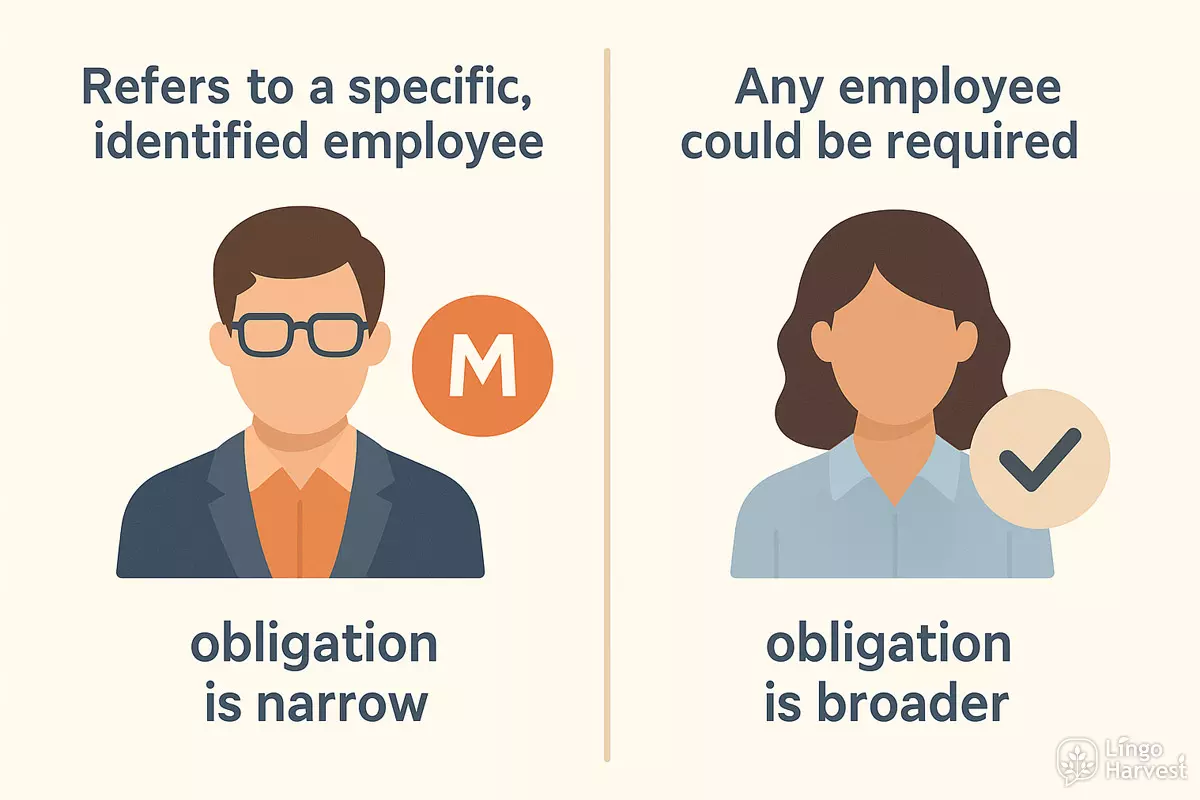
| "The employee must submit a report" | Refers to a specific, identified employee; obligation is narrow. |
| "An employee must submit a report" | Any employee could be required; obligation is broader. |
| "Every employee must submit a report" | All members of the employee group are obligated; no exceptions. |
| "Any employee must submit a report" | Potentially applies to one, several, or all, depending on further context; often broadest. |
| "No employee must submit a report" | Explicit exclusion; none are required. |
Consequences of Ambiguity
Ambiguous or inconsistent use of determiners can result in litigation or regulatory challenges. For example, a contract stating "the goods" may spark debate if the parties disagree about which goods are referenced. In statutory language, a shift from "a" to "the" has led to appellate review and even reversals of lower court decisions.
Best Practices for Legal Drafters
- Define key terms clearly when using determiners with potential for multiple interpretations.
- Maintain consistency throughout the document to avoid conflicting obligations.
- When in doubt, add clarifying language to specify scope (e.g., "any and all," "each of the following").
- Review precedent and case law for how similar phrases have been interpreted.
Precision in determiner use is not just a matter of grammar—it's essential for upholding clarity, fairness, and enforceability in legal and policy texts.
Using the for fixed definitions and obligations
In legal drafting and policy documents, the definite article "the" is not simply a grammatical nicety—it's a tool for precision. Writers employ it to anchor terms to specific definitions, ensuring that obligations, rights, and duties are clearly delineated. Whether referencing "the contract," "the party," or "the obligation," this usage signals that the term refers to a particular, previously defined entity or concept, rather than something general or ambiguous.
Definite reference and unambiguous meaning
When a legal document introduces a term—often in quotation marks or bold, such as “the Agreement”—it is subsequently used with "the" to indicate that every mention refers back to that exact definition. This approach reduces the risk of misinterpretation, which is especially critical when assigning obligations or rights.
- the Lessee – always refers to the specific party renting property, not just any lessee
- the Effective Date – points to the exact date when a contract becomes operative
- the Premises – means the property as described in the agreement, not any premises
- the Services – refers to the services detailed in the schedule, not services in general
- the Payment – designates the specific amount or method set out in the terms
- the Regulations – indicates a defined set of rules, rather than any regulations
- the Governing Law – means the jurisdiction chosen for the contract
- the Notice – a defined way or form of communication, not just any notice
- the Confidential Information – information specified in the contract, not all confidential info
- the Term – the duration as defined in the contract
- the Indemnity – the specific indemnity clause or obligation
- the Liabilities – those liabilities described or limited in the agreement
- the Authority – the named authority, agency, or regulator
- the Supplier – the party providing goods or services as defined
- the Client – the customer or recipient as specified in the document
- the Force Majeure Event – a defined set of circumstances excusing obligations
- the Schedule – an appendix or annex referred to in the main body
- the Assignment – a particular transfer of rights or duties
Contrast with indefinite and generic references
Using "the" stands in contrast to indefinite articles such as "a" or "an," which introduce concepts not yet specified. In legal language, this distinction is crucial for clarity. For example, "a party" could refer to any party, while "the party" ties directly to a named or defined entity. This practice helps avoid ambiguity and ensures that obligations fall on the correct parties.
Common patterns in obligations and rights
Legal provisions frequently state obligations using the definite article to anchor the responsibility. Some typical patterns include:
- "The Contractor shall deliver the Goods by the Delivery Date."
- "The Licensee must maintain the Equipment in good condition."
- "The Insurer is liable for the Losses described in the Policy."
- "The Borrower agrees to repay the Loan in accordance with the Schedule."
- "The Employee shall comply with the Code of Conduct."
- "The Guarantor undertakes to fulfill the Obligations in the event of default."
- "The Purchaser has the right to inspect the Property prior to completion."
- "The Landlord is responsible for the Maintenance of the Premises."
- "The Parties agree to resolve disputes through Arbitration."
- "The Company must notify the Regulator within seven days."
This methodical use of "the" throughout legal and policy documents provides a backbone for strict interpretation, ensuring that rights and obligations are fixed, recognizable, and enforceable.
Interpreting a vs the in legal clauses
Precision in legal and policy drafting often hinges on the selection between "a" and "the." These determiners—though simple in everyday English—carry significant weight in formal documents. "A" typically introduces an indefinite, non-specific item or party, while "the" signals something definite and previously identified. Courts and legal practitioners scrutinize these distinctions to resolve disputes about rights, obligations, or scope.
Why the Choice Matters
Using "a" can leave room for interpretation, sometimes intentionally, to allow flexibility or apply a rule to any qualifying subject. In contrast, "the" generally refers to a particular entity, document, or object, often identified earlier in the text. This distinction can determine whether a contract clause applies broadly or narrowly.
Common Patterns and Pitfalls
Wording can affect everything from eligibility to compliance requirements. Here are some frequent patterns and issues:
- "A party may terminate the agreement" → Any party has the right.
- "The party may terminate the agreement" → Only the identified party can act.
- "A license" → Any qualifying license.
- "The license" → The specific license previously mentioned.
- "A notice" vs. "the notice" → Refers to any notice versus a particular one.
- "A director" vs. "the director" → Any board member or a specific person.
- "A breach" vs. "the breach" → Any violation or the one at issue.
- "A condition precedent" vs. "the condition precedent" → Any required condition or one specifically defined.
- "A remedy" vs. "the remedy" → Any available solution or a designated one.
- "A time period" vs. "the time period" → Any period or a specific stated one.
- "A claim" vs. "the claim" → Any potential claim or a particular asserted claim.
- "A court" vs. "the court" → Any competent court or the one seized of the matter.
- "A provision" vs. "the provision" → Any clause or the one in question.
- "A copy" vs. "the copy" → Any reproduction or the referenced document.
- "A dispute" vs. "the dispute" → Any conflict or the specific one addressed.
Comparing the Effects of "A" and "The"
Context determines interpretation, but side-by-side comparison helps clarify the difference in scope and intent. The table below illustrates typical legal clause constructions:
| Example Using "A" | Example Using "The" |
|---|---|
| If a party breaches this Agreement, the other party may terminate. | If the party breaches this Agreement, the other party may terminate. |
| Upon receipt of a notice, the recipient must respond within 10 days. | Upon receipt of the notice, the recipient must respond within 10 days. |
| The Company may appoint a director at any time. | The Company may appoint the director at any time. |
| A license granted under this section is non-transferable. | The license granted under this section is non-transferable. |
| Any person holding a permit may enter the premises. | The person holding the permit may enter the premises. |
Guidance for Drafters
To avoid ambiguity, legal drafters should:
- Define key terms explicitly at first mention.
- Use "the" only when the reference is unique and previously identified.
- Choose "a" for general, non-specific applicability.
- Review every occurrence for unintended breadth or restriction.
- Consider context and cross-references in complex documents.
Understanding these subtle distinctions is essential for crafting enforceable, unambiguous legal texts. Small words can have a big impact on interpretation and outcome.
Determinants that broaden or restrict interpretation
Legal and policy documents often hinge on the precise use of determiners—words like "any," "all," "some," or "the." The choice of determiner can dramatically affect whether a rule is interpreted narrowly or expansively. This section explores how specific linguistic elements influence the scope of interpretation, shaping everything from statutory obligations to policy eligibility.
Wording that Widen Interpretation
Certain determiners are known for expanding the possible meanings or applications of legal language. These terms introduce flexibility, making it more likely that provisions will apply in a broader range of situations. Examples include:
- Any – often signals inclusion of all possible cases, unless context limits it
- All – indicates no exceptions unless explicitly stated
- Each – covers every individual item in a set
- Every – similar to "all," but can emphasize individual applicability within a group
- Including – suggests non-exhaustive lists
- Or – introduces alternatives, expanding the possibilities
- Otherwise – opens the door to additional, unlisted scenarios
- May – can imply discretion or optionality
- Such as – provides examples without limiting to those mentioned
- Whoever/Whichever – broadens the subject or object class
Terms that Limit or Narrow Meaning
On the other hand, some determiners restrict the scope of interpretation, signaling that only certain cases or entities are covered. These words are frequently used to promote certainty and prevent unintended applications.
- The – refers to a specific, previously identified item or group
- This/That – points to something definite and already known
- Only – strictly limits the application to what is stated
- Exclusive/Exclusively – leaves no room for expansion
- Must – expresses obligation, but only within the defined context
- None – excludes all items or cases
- Except – carves out exceptions to a rule
- Unless – creates a condition that limits when a rule applies
- Particular/Specific – confines the meaning to named items
- One – signals a singular, unique object or person
Comparing Broadening vs. Restrictive Determiners
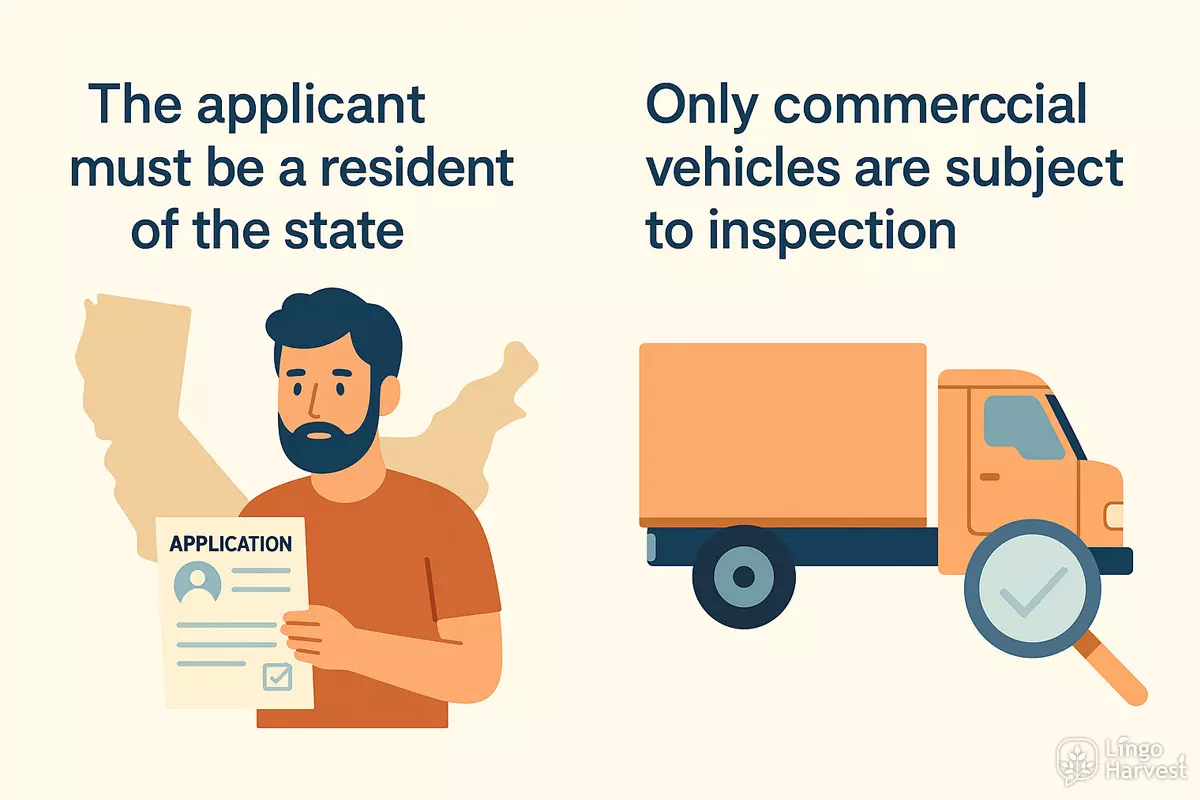
When analyzing legal or policy texts, it’s helpful to compare how different determiners influence interpretation. The table below illustrates examples of broadening and restricting terms in typical legal phrasing:
| Broadening Determiner | Restrictive Determiner |
|---|---|
| Any person may apply for a permit. | The applicant must be a resident of the state. |
| All vehicles must comply with emissions standards. | Only commercial vehicles are subject to inspection. |
| Such as bicycles, scooters, and skateboards are permitted. | Except motorcycles, no motorized vehicles are allowed. |
| Including late submissions will be considered. | None of the late submissions will be accepted. |
Context and Intent
While determiners play a critical role, their effect always depends on the broader context and legislative intent. Courts and policymakers may look beyond the literal word choice to determine whether a provision should be interpreted strictly or flexibly, often guided by precedent or policy objectives. The interplay between linguistic precision and interpretive philosophy is a hallmark of legal drafting and adjudication.
Ambiguity risks in policy text
Policies and legal texts often rely on determiners—words like "the," "a," "any," or "some"—to specify obligations, permissions, or prohibitions. However, these seemingly simple words can introduce significant uncertainty when their meaning is not strictly defined or consistently applied. For example, a single misplaced "any" may broaden a rule’s scope far beyond what was intended, while "the" might suggest a singular, specific entity when a broader or more general reference was meant.
Common sources of uncertainty with determiners
Vague or inconsistent use of determiners can lead to disputes over interpretation, implementation challenges, and even litigation. Key sources of confusion include:
- Use of "any" to imply either one or all instances
- Ambiguity between "a" (one of many) and "the" (a specific one)
- Lack of clear referent for "such," "these," or "those"
- Omission of determiners, making scope unclear
- Shifting determiner use within a single document
- Contradictory usages in related clauses
- Unclear plurality: "a person" vs. "persons"
- Unintentional exclusivity with "each" or "every"
- Ambiguous quantifiers: "some," "many," or "several"
- Confusion from indefinite vs. definite articles
- Use of "all" without specifying limits
- Context-dependent meanings that shift between sections
- Inadequate cross-referencing of defined terms
- Implicit assumptions about reader knowledge
- Overlapping categories caused by broad determiners
- Potential for misinterpretation in translation
- Overuse of "the aforementioned" or similar phrases
- Failure to update determiners after policy revisions
Consequences of unclear determiner use
When determiners are ambiguous, the intended legal effect may be undermined. This can result in:
- Disputes over eligibility or coverage
- Loopholes that allow for avoidance of obligations
- Unintended restrictions or expansions of policy scope
- Difficulty in enforcement and compliance checks
- Administrative burdens from clarification requests
Comparing determiner interpretations
Even a small change in wording can have a large impact. Consider the following illustrative contrasts:
| Determiner Used | Potential Policy Interpretation |
|---|---|
| Any employee | May refer to one, some, or all employees; can be interpreted broadly, risking over-inclusion. |
| The employee | Implies a specific, previously defined person; ambiguity if not clearly referenced. |
| Each employee | Requires that every individual is included; removes discretion but may be unnecessarily strict. |
| A(n) employee | Suggests any single instance, potentially omitting others unintentionally. |
Reducing interpretive risk
To minimize misinterpretation, policy drafters should:
- Define key terms at the outset
- Maintain consistency in determiner use
- Regularly review documents for potential ambiguities
- Consult with legal experts on language precision
- Test policy language through hypothetical scenarios
Careful attention to these details helps ensure that policies are both precise and enforceable, reducing the risk of confusion or dispute.
Examples from contracts, policies, and regulations
Legal and policy documents often hinge on the precise use of determiners—words like “the,” “any,” “all,” “each,” and “a”—to establish obligations, rights, and exceptions. Strict interpretation of these terms can significantly affect how a clause is applied or enforced.
How determiners shape obligations and permissions
The choice of determiner can narrow or broaden the scope of a provision. For instance:
- “The party” refers to a specific, previously identified party, limiting the scope to that entity only.
- “Any party” opens the clause to all parties that might fit the description, not just those already named.
- “Each party” imposes the same duty or right separately on every party involved.
- “A party” refers to one unstated or non-specific party, often the first party to act.
- “All parties” requires collective participation or consent.
- “No party” clearly prohibits action by any party.
- “Every contract” applies a rule to each contract individually, not just to contracts as a group.
- “Some contracts” introduces ambiguity, often requiring further definition elsewhere.
- “This agreement” restricts interpretation to the document at hand, not to agreements in general.
- “Such action” links back to a previously described action, clarifying which acts are covered or permitted.
- “Their obligations” assigns responsibilities to a group, but not necessarily to each individual member.
- “His or her duties” is more personal, targeting individuals rather than groups.
- “That regulation” singles out a specific regulation, as opposed to regulations in general.
- “Any person” is commonly used to extend a rule broadly—sometimes more widely than intended if not interpreted strictly.
- “Each employee” is stricter than “employees,” as it ensures the rule applies to all, not just the group collectively.
Comparing interpretations: Determiner impact in real clauses
A strict approach to interpretation often means reading determiners literally, without inferring broader or narrower meanings. Here’s a comparison of how various determiners can shift meaning in typical provisions:
| Sample Clause | Strict Interpretation Effect |
|---|---|
| “The employee shall submit a report.” | Obligation applies only to the specifically referenced employee, not to others. |
| “Any employee may request leave.” | Permits every employee, without exception, to make a request; cannot be limited unless specified elsewhere. |
| “Each director must sign the resolution.” | Every director is individually required to sign; missing one signature invalidates compliance. |
| “All members must approve the amendment.” | Unanimous approval is required; a single dissent means the amendment fails. |
| “A party may terminate this agreement.” | Termination can be initiated by any one party, not necessarily all parties. |
| “No person shall enter without authorization.” | Absolute prohibition; applies to every individual. |
Practical consequences of strict determiner interpretation
Courts and regulatory bodies often emphasize the literal wording in legal texts. For example, using “any” instead of “the” can open up eligibility or liability, while “each” ensures no one is excluded from obligation. Conversely, ambiguous determiners like “some” may lead to disputes over interpretation. In summary, the choice of determiners in legal and policy language is never accidental. Their strict interpretation can be the deciding factor in disputes, compliance checks, and enforcement actions. This makes careful drafting—and attentive reading—essential for both drafters and those interpreting these documents.
Practice: identify strict vs flexible determiner use
Understanding how determiners function in legal and policy contexts is essential for precise interpretation. Some determiners—such as "the," "all," or "no"—often signal strict boundaries, while others like "some," "any," or "a" may invite broader, more flexible readings. Below, you'll find exercises to help distinguish between these uses, as well as a structured comparison of typical determiner behavior in legal drafting.
Task: Classify the Determiner Usage
For each sentence, decide whether the determiner is likely to be interpreted strictly (with narrow, fixed boundaries) or flexibly (allowing for broader or contextual interpretation).
- All employees must submit the form by Friday.
- An individual may appeal the decision.
- No vehicles are permitted beyond this point.
- Any person found trespassing will be prosecuted.
- The contract shall terminate upon expiration of the term.
- Some exceptions may apply in certain cases.
- Each party is responsible for its own costs.
- A document must be provided as evidence.
- Every applicant is required to provide identification.
- Such measures are to be taken as necessary.
Show answers
- Strict
- Flexible
- Strict
- Flexible
- Strict
- Flexible
- Strict
- Flexible
- Strict
- Flexible
Common Determiners in Legal and Policy Language
Here is a comparison of determiners frequently found in legal documents, with notes on their typical interpretive boundaries:
| Determiner | Typical Interpretation |
|---|---|
| the | Usually strict; refers to a specific, previously identified entity. |
| a/an | Often flexible; may refer to any member of a category, unless context restricts it. |
| all | Strict; encompasses every member of the group with no exceptions. |
| any | Flexible; can mean one, some, or every, depending on context. |
| no | Strict; prohibits absolutely, allows no exceptions. |
| some | Flexible; indicates an unspecified quantity or subset. |
| each/every | Strict; applies individually to all members of a set. |
| such | Flexible; refers back to previously described or implied entities, often context-dependent. |
Quick Identification Practice
- The agreement (strict or flexible?)
- Any dispute (strict or flexible?)
- No liability (strict or flexible?)
- Some rights (strict or flexible?)
- All parties (strict or flexible?)
- A license (strict or flexible?)
- Such conditions (strict or flexible?)
- Every document (strict or flexible?)
Show answers
- Strict
- Flexible
- Strict
- Flexible
- Strict
- Flexible
- Flexible
- Strict
By practicing with real examples and reviewing these typical patterns, you can become more adept at recognizing when a determiner is likely to be interpreted strictly or with flexibility in legal and policy texts.