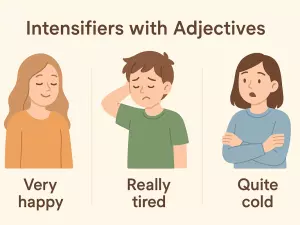
Avoiding Weak Adverbs in Writing (very, really - strong alternatives)

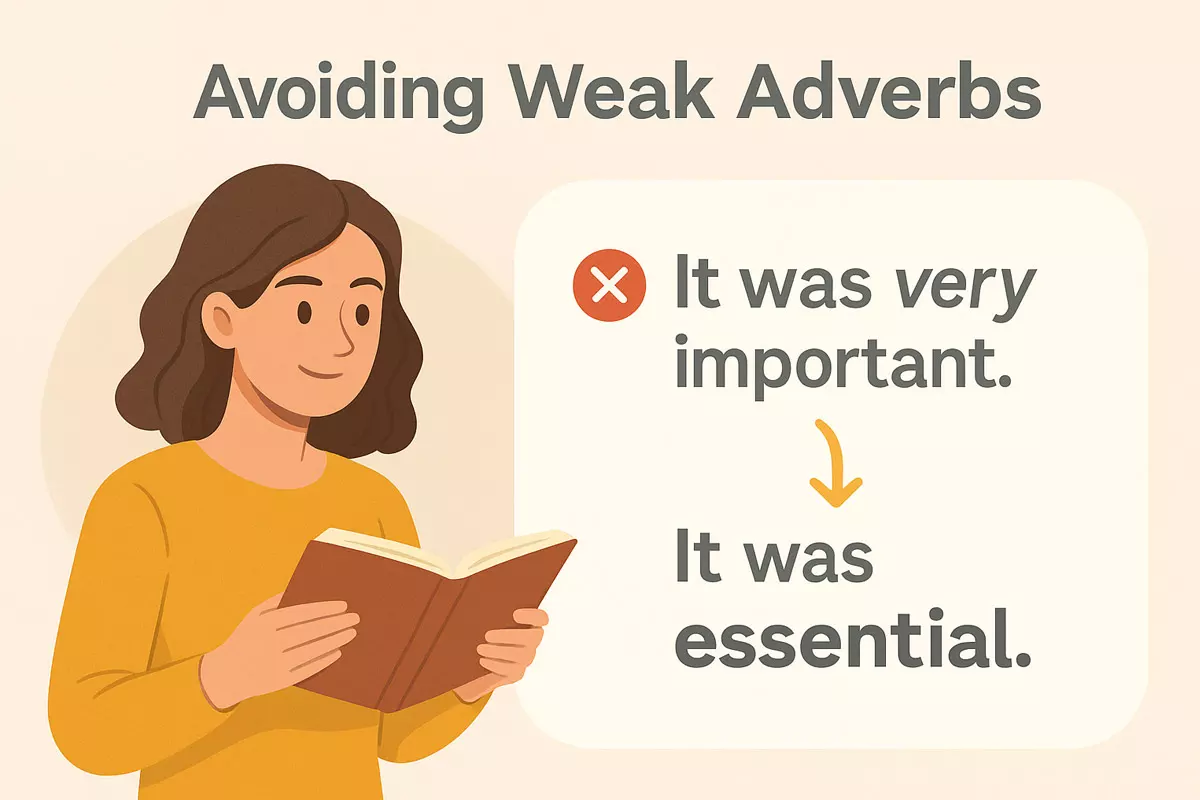 Weak adverbs like very and really weaken clarity in writing. This article explains their impact, suggests stronger adjective alternatives, shows improved sentence examples, discusses when intensifiers work, and offers practice replacing weak adverbs.
Writers often use intensifiers such as really or very to strengthen their meaning, but excessive reliance on these words can weaken writing and make it less engaging. Instead, selecting precise and vivid language helps convey ideas more powerfully and keeps readers interested. By opting for more descriptive words, writers can avoid blandness and ensure their message stands out. Thoughtful word choice not only enhances clarity but also adds energy and personality to any piece of writing.
Why weak adverbs reduce clarity
Using adverbs like "very" and "really" often makes sentences less direct and precise. These words add little actual information, and can create vague or diluted statements. Instead of sharpening your message, they tend to blur it, making your writing less impactful and harder for readers to interpret with confidence.
How weak adverbs undermine precision
Writers sometimes reach for intensifiers such as "extremely" or "quite" to strengthen adjectives or verbs. However, these modifiers rarely specify the degree or nature of the quality being described. For example, saying "very cold" doesn’t tell the reader how cold it is—whereas "freezing" immediately conveys a clear sense of temperature. Relying on these generic adverbs can leave your audience guessing, rather than informing them.
Common weak adverbs that cloud meaning
- very → The task was very difficult.
- really → She was really tired.
- quite → The results were quite surprising.
- fairly → The explanation was fairly clear.
- somewhat → The data was somewhat inconsistent.
- just → He just wanted to help.
- rather → The method was rather unusual.
- almost → The conclusion was almost correct.
- pretty → The process was pretty simple.
- slightly → The measurements were slightly off.
- barely → The results barely changed.
- simply → The solution is simply wrong.
- highly → The procedure is highly complex.
- totally → The system totally failed.
- absolutely → The idea is absolutely essential.
- completely → The hypothesis was completely disproven.
- especially → The findings were especially interesting.
- truly → The outcome was truly unexpected.
- literally → She literally ran out of time.
- seriously → The issue is seriously concerning.
Direct language vs. vague intensifiers
Replacing weak intensifiers with specific adjectives or verbs not only shortens your sentences but also boosts their effectiveness. Readers understand your intent faster when you choose a precise term over a generic modifier.
| Vague Phrase | Clearer Alternative |
|---|---|
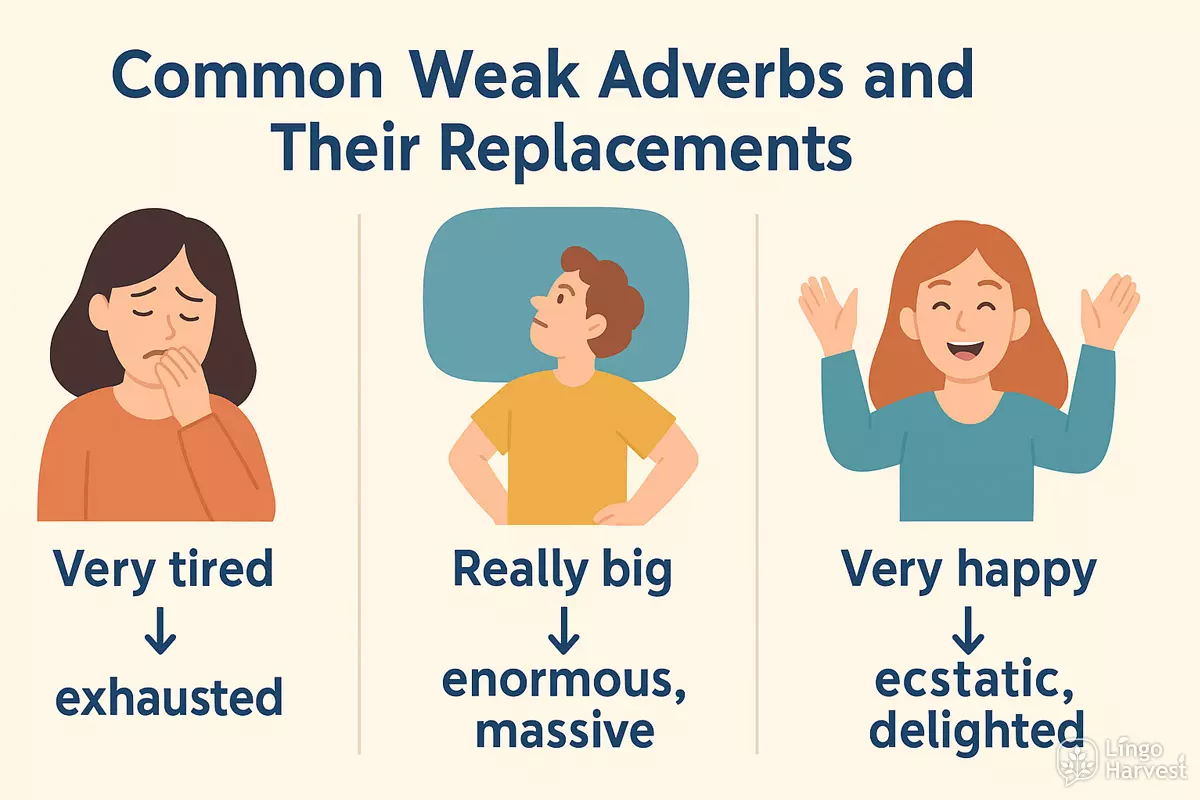
| very tired | exhausted |
| really big | enormous |
| very happy | ecstatic |
| really fast | swift |
| very cold | freezing |
| really smart | brilliant |
| very hungry | starving |
| really scared | terrified |
| very small | tiny |
| really angry | furious |
In summary, overusing weak adverbs can make your writing less effective by obscuring meaning and reducing energy. Opting for vivid, specific words helps your message stand out and ensures your ideas are communicated as clearly as possible.
Strong adjective alternatives
Choosing precise, vivid adjectives can instantly elevate your writing and reduce the need for weak adverbs like “very” or “really.” Instead of amplifying a basic adjective with an adverb, look for a single word that conveys the full intensity or nuance you want. This not only makes your sentences more concise but also paints a clearer picture for your reader.
Why replace adverb-adjective pairs?
Phrases like “very big” or “really happy” tend to sound flat and generic. Swapping these out for more descriptive adjectives—such as “enormous” or “ecstatic”—adds variety and impact. This approach also helps avoid repetition and keeps your language fresh.
Common substitutions for adverb-adjective combinations
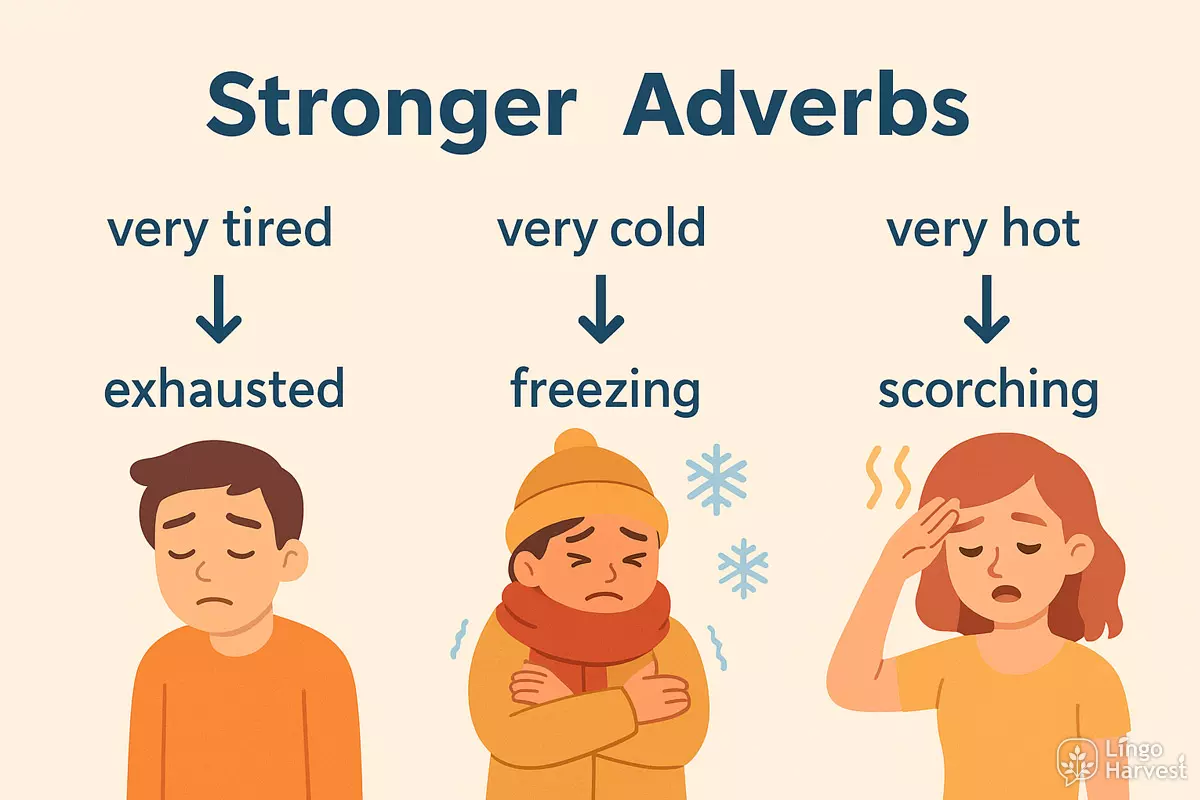
Here are some alternatives you can use to replace common “very/really + adjective” pairs. These words often capture the intended meaning more precisely:
- really bad → atrocious / terrible
- very beautiful → gorgeous
- very big → enormous / immense
- very clean → spotless
- very cold → freezing
- very dirty → filthy
- very easy → effortless
- very happy → ecstatic / elated
- really beautiful → stunning
- really dangerous → perilous
- very hot → scorching
- really hungry → starving
- very interesting → fascinating
- very old → ancient
- really old → ancient
- really good → excellent / superb
- very sad → heartbroken / devastated
- really scared → terrified
- very small → tiny / minuscule
- very smart → brilliant
- very tired → exhausted
- very young → juvenile / infantile
Comparison table: Weak vs. strong choices
| Adverb + Adjective | Stronger Alternative |
|---|---|
| very tired | exhausted |
| really cold | freezing |
| very angry | furious |
| very small | minuscule |
| really good | excellent |
| very sad | devastated |
| very clean | spotless |
| very funny | hilarious |
Using these alternatives, your writing becomes more specific and engaging. Next time you catch yourself about to write “very” or “really,” pause and see if there’s a single, sharper word that fits your meaning. Over time, this practice will help you develop a more dynamic and expressive style.
Impact on writing style
Choosing strong verbs and specific adjectives in place of weak adverbs like "very" or "really" leads to more precise and engaging language. Writers who avoid overusing these modifiers often create sentences that are both clearer and more memorable. Instead of padding sentences, they communicate with intention, making each word count.
Clarity and Precision
Relying on vague adverbs can make descriptions feel generic or diluted. When you swap them for vivid alternatives, your ideas become sharper. For example, "very tired" becomes "exhausted," instantly painting a more specific picture for the reader. This approach not only tightens prose but also reduces ambiguity.
Strengthening Tone and Voice
Consistently using strong vocabulary in place of weak adverbs helps develop a distinct authorial voice. It encourages variety in sentence structure and word choice, making your writing more dynamic and less repetitive. Readers are more likely to connect with text that feels deliberate and expressive.
Before-and-After Comparison
| With Weak Adverb | Stronger Alternative |
|---|---|
| She was very angry about the mistake. | She was furious about the mistake. |
| He ran really fast to catch the bus. | He sprinted to catch the bus. |
| The room was very cold. | The room was freezing. |
| They were really happy with the results. | They were thrilled with the results. |
| The explanation was very clear. | The explanation was crystal-clear. |
In summary, replacing weak adverbs with more descriptive words not only improves readability but also allows your unique style and intent to shine through. This habit leads to writing that is both concise and compelling, encouraging readers to stay engaged and attentive.
When intensifiers still work
Although strong writing often benefits from replacing bland adverbs, there are moments when words like very or really serve a useful purpose. In creative writing, dialogue, and even some forms of informal communication, intensifiers can express emotion, highlight contrast, or convey authenticity. The key is recognizing when these words add genuine emphasis instead of simply padding a sentence.
Where intensifiers make sense
- Dialogue: Characters may naturally use intensifiers to reflect real speech patterns or emotion (“I’m really sorry”).
- Emotional impact: Sometimes, a simple intensifier captures a feeling more directly than a more complex phrase (“It was very hard to say goodbye”).
- Stylistic effect: Writers may use these words to create rhythm, irony, or humor.
- Deliberate understatement or exaggeration: Intensifiers can help with sarcasm or hyperbole (“That’s really helpful,” when the opposite is meant).
- Colloquial tone: In informal writing, such as blogs or personal essays, these adverbs can keep the tone conversational.
- Contrast: Using an intensifier to draw a sharp line between two ideas (“Her first attempt was good; her second was really impressive”).
- Modifying adjectives that lack a strong synonym: Sometimes, “very” is the most efficient way to intensify a word (“very unique” is incorrect, but “very clear” is sometimes better than “crystal clear”).
- Children’s literature: Simple intensifiers are often more accessible for younger readers.
- Quoting others: Maintaining the original tone or intent of speech.
- Expressing surprise or urgency: “That’s really urgent!”
Comparing effect: intensifier vs. strong adjective
| With Intensifier | With Stronger Alternative |
|---|---|
| very tired | exhausted |
| really big | enormous |
| very scared | terrified |
| really happy | ecstatic |
| very important | crucial |
| really cold | freezing |
| very fast | rapid |
| really funny | hilarious |
| very old | ancient |
| really angry | furious |
Remember, the occasional use of intensifiers can sound natural or even necessary. The trick is to use them intentionally, not as a crutch. When you want to heighten emotion, mimic real speech, or keep a casual tone, sprinkling in these adverbs can work. Just be thoughtful and selective—most sentences are stronger without them.
Examples of improved sentences
Writers often rely on words like "very" or "really" to intensify meaning, but stronger verbs or more specific adjectives typically produce clearer, more engaging sentences. Below, you’ll find several sentences rewritten to replace weak adverbs with more vivid alternatives. These examples show how you can transform lackluster phrasing into writing that feels more direct and powerful.
Stronger Vocabulary Choices: Powerful Adjective Substitutions
- Very weak → feeble
- Really bright → radiant
- Very dirty → grimy, muddy
- Really boring → dull, tedious
- Very slow → sluggish
- Really tired (emotionally) → drained
- Very confused → bewildered
- Really unhappy → miserable
- Very noisy → clamorous
- Really hot (weather) → sweltering
- Very risky → hazardous
- Really surprising → astonishing
- Very rude → insolent
- Really tired of something → fed up
- Very serious → grave
- Really thin → slender
- Very messy → chaotic
- Really painful → excruciating
- Very calm → serene
- Really strange → bizarre
- Very eager → keen
- Really rare → scarce
- Very excited → thrilled
- Really angry (quiet type) → irate
- Very talkative → chatty, loquacious
- Really nervous → anxious
- Very polite → courteous
- Really warm (emotionally) → affectionate
- Very short → brief
- Really long → lengthy
- Very creative → inventive
- Really hard-working → diligent
- Very simple → basic
- Really valuable → priceless
- Very wild → untamed
- Really dangerous (extreme) → deadly
- Very smooth → silky
Before and after: sentence transformations
For a clearer comparison, here are several sentences using weak adverbs, followed by stronger revisions. Notice how the revised versions are more precise and impactful.
| Original Sentence | Revised Sentence |
|---|---|
| She was very tired after work. | She was exhausted after work. |
| The room was really clean. | The room was immaculate. |
| He ran very fast to catch the bus. | He sprinted to catch the bus. |
| They were really hungry after the hike. | They were famished after the hike. |
| The test was very hard. | The test was challenging. |
Choosing precise language not only strengthens your writing but also makes your message more memorable. Replacing vague intensifiers with specific words is a simple way to achieve greater clarity and style.
Practice: replace weak adverbs with stronger choices
Choosing vivid, precise adverbs and adjectives can help your writing stand out. Words like "very" and "really" often weaken your sentences. Instead, try replacing them with more specific language that conveys your meaning clearly and powerfully.
Exercise: Choose the stronger alternative
For each sentence below, select the bold phrase that could be improved, and write a stronger word or phrase to replace it.
- The movie was really good.
- She ran a very long distance.
- It was really cold outside.
- He is very smart for his age.
- The room was very clean.
- The task was really hard to complete.
- The city was very crowded during the festival.
- The child was really hungry after school.
- The explanation was very confusing.
- The view from the mountain was really beautiful.
Show answers
- excellent, superb
- marathon-like, exhausting
- freezing
- brilliant, gifted
- spotless, immaculate
- challenging, arduous
- packed, overcrowded
- starving, famished
- puzzling, unclear
- stunning, breathtaking
Before-and-after comparison
| Original (weak adverb) | Improved (stronger alternative) |
|---|---|
| He was very tired after work. | He was exhausted after work. |
| The test was really hard. | The test was challenging. |
| They live in a very small apartment. | They live in a tiny apartment. |
| She is really happy with her results. | She is ecstatic with her results. |
| It’s very important to listen. | It’s crucial to listen. |
Try reviewing your own writing to spot "very" or "really" and see if you can substitute a more precise or expressive word. Over time, these habits will help make your sentences more engaging and memorable.