How to Use Can in Everyday English Sentences

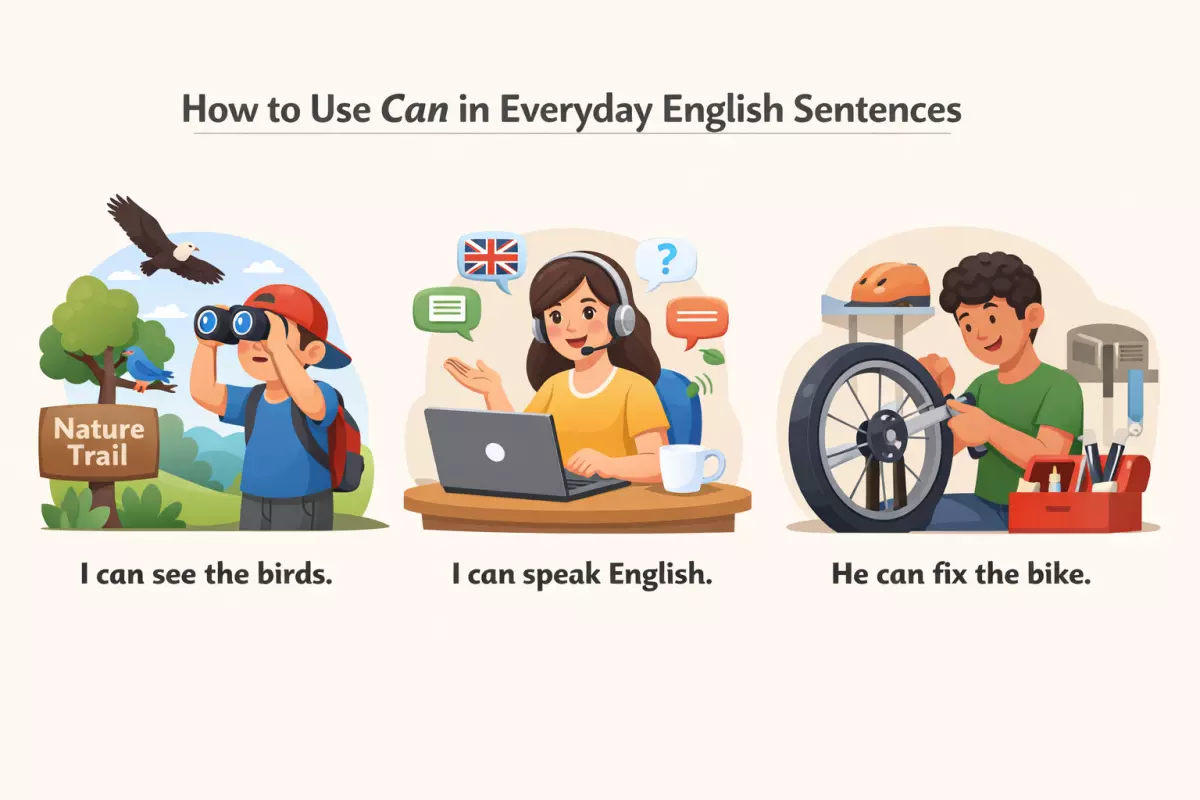 This article explains the core meanings of can: ability, permission, and possibility. It shows how to use it for skills, daily permission requests, and informal general possibility, plus question and negative forms, common phrases, typical learner mistakes, and practice tasks.
- The core meanings of 'can' such as ability, permission, and possibility
- How 'can' is used to talk about skills and learned abilities
- Using 'can' when asking for or giving permission in daily situations
- How 'can' expresses general possibility in informal English
- Question and negative forms built with 'can'
- Common everyday phrases and expressions that use 'can'
- Typical mistakes learners make when using 'can'
- Practice exercises and tasks focused on using 'can' correctly
Learning to use can naturally in everyday sentences is one of the quickest ways to sound more confident in English. You will hear it when people talk about ability, ask for help, give permission, or make polite requests at work, in shops, and with friends. Here we will practice the most common patterns and pick the right tone so your meaning stays clear, friendly, and appropriate in different situations.
The core meanings of 'can' such as ability, permission, and possibility
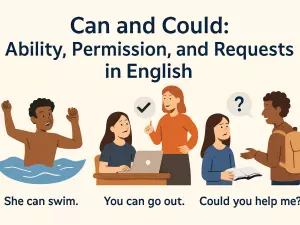
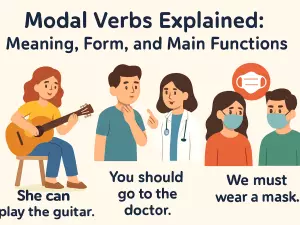
Can is a modal verb that most often expresses three practical ideas: what someone is able to do, what is allowed, and what is possible. It stays the same for all subjects (I/you/he/she/we/they can), and it is followed by the base form of the verb (can + verb).
1) Ability: skills and capacity
Use can to talk about what someone knows how to do or is capable of doing. For general ability, it often describes a stable skill; for situational ability, it can describe what is possible in the moment.
- Pattern: can + base verb → “She can swim.”
- Negative: can’t / cannot + base verb → “He can’t drive.”
- Question: Can + subject + base verb? → “Can you hear me?”
- With adverbs: can + adverb + base verb → “I can easily explain it.”
- With senses: can see / can hear / can smell → “I can’t see the sign.”
- Typical examples:
- I can type fast.
- She can speak three languages.
- They can lift the box together.
- He can’t remember your name.
- Can you open this jar?
- We can finish today if we start now.
2) Permission: what is allowed
Use can to ask for or give permission in everyday situations. In more formal contexts, “may” is sometimes used, but “can” is common in normal conversation.
- Asking: Can I + base verb? → “Can I leave early?”
- Giving: You can + base verb → “You can sit here.”
- Refusing: You can’t + base verb → “You can’t park there.”
- Common classroom/workplace uses:
- Can I ask a question?
- Can we use calculators?
- You can submit it tomorrow.
- You can’t bring food into the lab.
- Can she join the meeting?
- Politeness tip: “Can you…?” often functions as a request, not just permission: “Can you help me?”
3) Possibility: what could happen or be true
Use can to say that something is possible in general, or that a situation sometimes happens. This meaning often appears with words like “sometimes,” “often,” and “in this weather.”
- General possibility: “It can be expensive.” (Sometimes it is expensive.)
- Situational possibility: “We can meet after 6.” (It’s possible to meet then.)
- Negative possibility: can’t → “That can’t be true.” (It’s not possible.)
- Common examples:
- Traffic can get heavy on Fridays.
- It can be hard to find a taxi at night.
- This road can be dangerous in winter.
- Prices can change without notice.
- That can’t be the right address.
- Can it really be that late?
Quick form reminders (all three meanings)
- ✅ “She can play.” / ❌ “She can plays.” (After a modal, use the base verb.)
- ✅ “Do you think I can go?” / ❌ “Do you think I can to go?” (No “to” after can.)
- ✅ “I can’t come.” / ❌ “I don’t can come.” (Negatives use can’t/cannot, not do-support.)
How 'can' is used to talk about skills and learned abilities
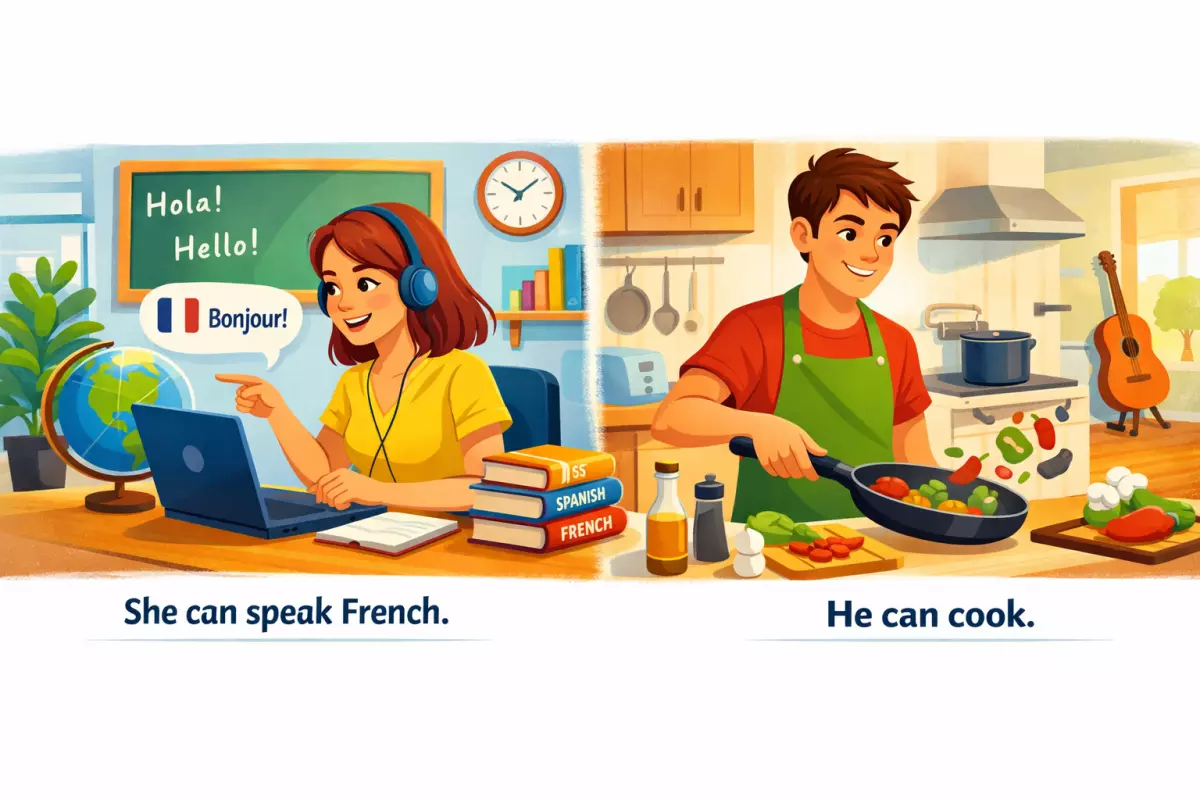
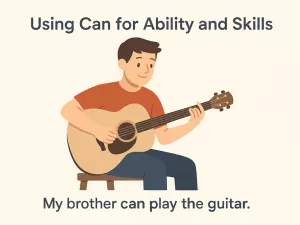
Use can to say that someone has the ability to do something because they know how, have practiced, or have learned it. This is common for languages, sports, school subjects, musical instruments, work tasks, and everyday practical skills.
Core pattern
- Subject + can + base verb: “She can swim.” / “I can drive.”
- Use the base verb (no to, no -ing): ✅ “He can cook.” ❌ “He can to cook.”
- For third-person singular, the form stays the same: “He can,” not “He cans.”
- Negative form: can’t / cannot + base verb: “I can’t play the guitar.”
- Question form: Can + subject + base verb? “Can you type fast?”
- Short answers: “Yes, I can.” / “No, I can’t.”
Common uses for learned skills
- Languages: “She can speak Korean.” / “They can read Spanish.”
- Sports and physical skills: “He can skate.” / “I can do a handstand.”
- Music and performance: “We can sing in harmony.” / “She can play the piano.”
- School and academic abilities: “He can solve equations.” / “I can write a clear summary.”
- Work and technical tasks: “She can use Excel.” / “They can code in Python.”
- Everyday practical skills: “I can change a tire.” / “He can bake bread.”
Adding detail: level, speed, and range
To make the ability more specific, add an adverb, a phrase about level, or a time expression.
- Adverbs: “She can type quickly.” / “He can explain it clearly.”
- Degree phrases: “I can swim a little.” / “She can speak French fluently.”
- Range: “He can play several instruments.” / “They can cook many Italian dishes.”
- Time expressions: “I can run 5K now.” / “She can drive at night.”
Typical contrasts and corrections
- Ability vs. experience: “I can drive” (I know how) vs. “I’ve driven before” (I have experience).
- Ability vs. permission: “Can I use your phone?” often means permission; “I can use this software” usually means ability.
- Ability in the past: use could for general past ability (“When I was younger, I could run fast.”). For a single successful event, many speakers prefer “was able to” (“I was able to fix it yesterday.”).
- Ability with conditions: “I can help if I finish early.” / “She can join if she gets time off.”
More example sentences (skills-focused)
- “I can juggle three balls.”
- “She can edit videos on her laptop.”
- “He can read music, but he can’t sight-read well.”
- “We can set up the projector in five minutes.”
- “Can you knit?”
- “They can design a simple logo.”
- “I can follow the recipe, but I can’t decorate cakes.”
- “She can translate emails for the team.”
- “Can he do basic first aid?”
- “I can remember faces, but I can’t remember names.”
- “He can repair bikes.”
- “She can take professional-looking photos.”
Using 'can' when asking for or giving permission in daily situations
Use can to ask if something is allowed and to say that something is allowed. It’s common in everyday speech with friends, family, classmates, and coworkers. In more formal settings, may is sometimes preferred, but can is widely accepted in modern English.
Core patterns
- Asking: Can + subject + base verb + …? (Can I leave early?)
- Giving permission: Yes, you can + base verb. / You can + base verb. (You can use my phone.)
- Refusing permission: No, you can’t + base verb. / You can’t + base verb. (You can’t park here.)
- Asking about rules: Can we + base verb + …? (Can we bring food inside?)
- Asking for permission for someone else: Can my friend + base verb + …? (Can my friend join us?)
Everyday questions you can copy
- Can I sit here?
- Can I open the window?
- Can I borrow your pen for a minute?
- Can I use your charger?
- Can I take a quick break?
- Can I leave a little early today?
- Can I turn the volume down?
- Can I bring a guest?
- Can I pay by card?
- Can we start now?
- Can we reschedule the meeting?
- Can we take photos in here?
- Can my child come with me?
- Can he join the call?
- Can she submit it tomorrow?
Common answers (yes, no, and “maybe”)
- Yes: Yes, you can. / Sure, you can. / Of course you can.
- Yes, with a condition: You can, but be careful. / You can if you put it back when you’re done.
- No (direct): No, you can’t. / Sorry, you can’t.
- No (softer): I’m afraid you can’t. / Not right now.
- Uncertain: I’m not sure. / You can, as long as it’s okay with the manager.
Politeness tips with “can”
- Add please to sound more polite: “Can I use this, please?”
- Use a friendly opener for sensitive requests: “Excuse me, can I ask a quick question?”
- For extra softness, use could: “Could I leave a bit early?” (more tentative than “Can I…?”)
- When refusing, give a brief reason if helpful: “Sorry, you can’t bring food in here—company policy.”
Accuracy notes (form and meaning)
- Use the base verb after can: ✅ “Can I go?” ❌ “Can I to go?”
- Negatives use can’t (or “cannot” in writing): “You can’t enter without a badge.”
- Questions invert word order: ✅ “Can I…?” ❌ “I can…?” (not a normal permission question)
- Can can mean ability or permission; context clarifies: “Can I use your laptop?” (permission) vs. “Can you swim?” (ability).
How 'can' expresses general possibility in informal English
In everyday conversation, can often talks about what is possible in general, not what is happening right now. This use is common when you mean “sometimes,” “it’s possible for this to happen,” or “this is a typical result in certain conditions.” It’s less formal than using words like may or phrases like “it is possible that.”
Core meaning and where it fits
Use can for general possibility when you’re describing a real-world situation that is possible under normal circumstances. It works well for:
- Things that happen sometimes: “It can get noisy here.”
- Typical results: “Too much screen time can cause headaches.”
- General truths with exceptions: “Traffic can be bad on Fridays.”
- Situations that depend on conditions: “If you leave early, you can avoid the rush.”
Common patterns
These structures are frequent in informal English and are easy to reuse:
- Subject + can + base verb: “Kids can be brutally honest.”
- It can + base verb: “It can take a while to get used to.”
- Can + be + adjective: “This app can be confusing at first.”
- Can + happen: “Mistakes can happen.”
- Can + cause/lead to/result in: “Skipping meals can lead to low energy.”
- Can + make + object + adjective: “That kind of comment can make people uncomfortable.”
- Can + vary/depend: “Prices can vary a lot.” / “It can depend on the season.”
- Can + take + time/money/effort: “Moving can take more time than you expect.”
Example sentences you can copy
- It can get pretty cold at night, even in spring.
- That road can be dangerous when it rains.
- Online reviews can be helpful, but they’re not always accurate.
- Small changes can make a big difference.
- Spicy food can upset your stomach.
- People can misunderstand texts without tone of voice.
- This kind of work can be stressful during busy weeks.
- Plans can change at the last minute.
- It can feel awkward the first time you try it.
- Group chats can get overwhelming.
- Public transport can be unreliable in bad weather.
- New shoes can take a few days to break in.
- That update can slow down older phones.
- Too much coffee can make you jittery.
- One missed detail can cause problems later.
- Some passwords can be easy to guess.
Negatives and questions for general possibility
To say something is generally not possible, use can’t. To ask about general possibility, use Can…? These forms often sound casual and direct.
- ✅ “It can’t be easy to manage all that.” (general difficulty)
- ✅ “You can’t always trust first impressions.” (general limitation)
- ✅ “Can it get busy around lunchtime?” (asking about typical possibility)
- ✅ “Can this kind of issue happen again?” (asking about recurrence)
Useful notes to avoid confusion
- Can for general possibility is different from can for ability. Compare: “She can swim” (ability) vs. “It can be hard to swim here” (possible situation).
- For a specific situation right now, speakers often choose other wording: “It might be noisy today” rather than “It can be noisy today.”
- In informal English, can is common for neutral statements; may can sound more formal or careful.
Question and negative forms built with 'can'
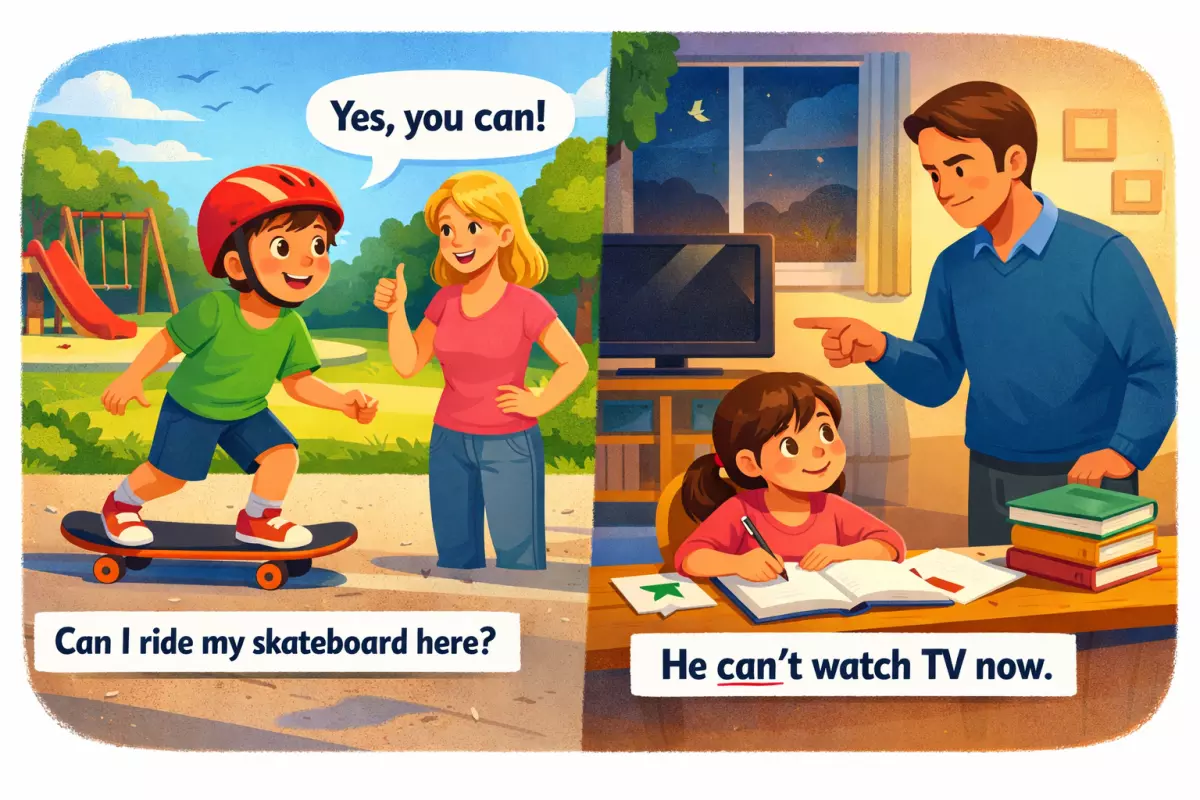
To ask about ability, permission, or possibility, English typically places can before the subject. To make a negative, add not (often contracted to can’t). These patterns stay the same with all subjects (I/you/he/we/they), which makes them easy to reuse in everyday sentences.
Core word order patterns
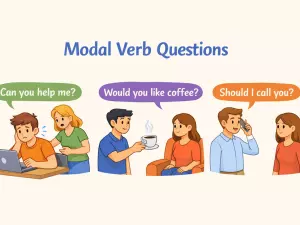
- Yes/No question: Can + subject + base verb + … ?
- Negative statement: Subject + can + not + base verb + … .
- Negative contraction: Subject + can’t + base verb + … .
- Short answers: Yes, subject can. / No, subject can’t.
- Wh-question: Wh-word + can + subject + base verb + … ? (e.g., What can you do?)
Common question forms (with examples)
- Can you help me for a minute?
- Can I sit here?
- Can we pay by card?
- Can she drive at night?
- Can they come tomorrow?
- What can I do to fix this?
- Where can we park?
- When can you call me back?
- Who can answer this question?
- How can I get to the station?
- Which bus can we take?
- Why can’t you join us today?
Negative forms and typical uses
- Ability: I can’t swim very well.
- Permission: You can’t park here.
- Possibility: It can’t be true. (speaker believes it’s impossible)
- Rules/instructions: You can’t bring food into the lab.
- Temporary limitation: She can’t talk right now.
- Polite refusal (softened): Sorry, I can’t make it tonight.
Short answers and follow-up questions
- Can you meet at 3? — Yes, I can. / No, I can’t.
- Can he use your phone? — Yes, he can. / No, he can’t.
- Can they finish today? — Yes, they can. / No, they can’t.
- Can I open the window? — Yes, you can. / No, you can’t.
- Follow-up for details: Can you do it now, or later?
Frequent mistakes to avoid
- ❌ Can you to help me? → ✅ Can you help me?
- ❌ Do you can drive? → ✅ Can you drive?
- ❌ I don’t can come. → ✅ I can’t come.
- ❌ Can she helps? → ✅ Can she help?
- ❌ He can to swim. → ✅ He can swim.
Common everyday phrases and expressions that use 'can'
Many fixed expressions with can show ability, possibility, permission, requests, or offers. These phrases are common in spoken English and short messages, and they often follow predictable patterns like can + subject + base verb (questions) or subject + can + base verb (statements).
Requests and asking for help
- Can you help me? (general request)
- Can you give me a hand? (informal help)
- Can you do me a favor? (asking for a favor)
- Can you hold on a second? (phone/in-person: wait briefly)
- Can you speak up? (talk louder)
- Can you slow down? (talk/drive/work more slowly)
- Can you repeat that? (say it again)
- Can you show me how? (asking for instructions)
- Can you check this for me? (review/verify)
Permission and rules
- Can I use your phone? (asking permission; informal)
- Can I sit here? (permission)
- You can’t park here. (rule/prohibition)
- You can go in now. (permission granted)
- Can we bring food? (asking what’s allowed)
Offers and suggestions
- Can I help you? (offer of help)
- Can I get you something to drink? (offer)
- We can meet later. (suggesting a plan)
- You can try restarting it. (suggestion/advice)
- Can we talk for a minute? (suggesting a short conversation)
Possibility, uncertainty, and limitations
- It can get pretty busy. (general possibility)
- That can happen. (acknowledging a possible result)
- It can wait. (not urgent)
- I can’t make it. (can’t attend/participate)
- I can’t complain. (things are okay; common small talk)
- I can’t believe it. (surprise)
- I can’t tell. (uncertain; can’t judge/see)
Ability and capability (everyday statements)
- I can’t hear you. (ability affected right now)
- I can see it now. (ability becomes possible)
- She can drive. (skill/ability)
- Can you swim? (asking about ability)
- I can manage. (I can handle it)
Common patterns to notice
- Question form: Can + subject + base verb → “Can you send it today?”
- Negative form: can’t / cannot + base verb → “I can’t come tonight.”
- Short answers: “Yes, I can.” / “No, I can’t.” (common in quick conversations)
- Politeness tip: “Can you…?” is normal and friendly; in more formal situations, “Could you…?” often sounds softer.
Typical mistakes learners make when using 'can'
Errors with this modal verb usually come from mixing it with other verb patterns, applying “normal” tense rules, or choosing it when a different modal fits better. The points below focus on the most common form and meaning problems, with quick fixes and examples.
Form and grammar problems
- Adding “to” after it: ❌ I can to swim. → ✅ I can swim.
- Using the -s form in the third person: ❌ She cans drive. → ✅ She can drive.
- Adding -ing after it: ❌ He can driving. → ✅ He can drive.
- Using “do/does” to make negatives: ❌ I don’t can come. → ✅ I can’t come.
- Using “do/does” to make questions: ❌ Do you can help me? → ✅ Can you help me?
- Double modals (common in some dialects, but not standard): ❌ I can will do it. → ✅ I will do it / I can do it.
- Forgetting inversion in questions: ❌ You can help me? → ✅ Can you help me? (In speech, the first can sound like a question, but it is less clear.)
- Wrong short answers: ❌ Yes, I can do. → ✅ Yes, I can. / No, I can’t.
- Using a full verb after “can’t” instead of the base form: ❌ She can’t understands. → ✅ She can’t understand.
- Misplacing “not”: ❌ I not can go. → ✅ I can’t go. / I cannot go.
Tense and time reference mix-ups
- Trying to use it as a normal past tense: ❌ Yesterday I can go. → ✅ Yesterday I could go. (ability/opportunity in the past)
- Using “could” when you mean a real past achievement: ❌ I could fix it (meaning: I fixed it). → ✅ I was able to fix it / I managed to fix it. (for a specific success)
- Using it for future plans instead of ability/permission: ❌ Tomorrow I can meet you at 3 (meaning: scheduled plan). → ✅ I can meet you at 3 (if it means “I’m available”) or I’ll meet you at 3 (if it’s a plan/decision).
- Confusing “can” with “be able to” in more complex tenses: ❌ I have can finish. → ✅ I have been able to finish.
Meaning and choice of modal
- Using it for requests that need extra politeness: “Can you…?” is common, but in formal situations many learners overuse it. Consider: ✅ Could you…? / Would you mind…?
- Using it for permission in very formal contexts: ✅ Can I leave early? (common) but ✅ May I leave early? can sound more formal.
- Using it for obligation: ❌ You can wear a helmet (meaning: required). → ✅ You must wear a helmet / You have to wear a helmet.
- Using it for strong prohibition when the meaning is “not allowed”: ✅ You can’t park here can mean inability or prohibition; if clarity matters, use ✅ You’re not allowed to park here.
- Confusing ability with possibility: ✅ I can be late usually means “it’s possible for me to be late,” not “I have the skill to be late.” For pure possibility, learners often prefer ✅ I might be late.
- Overusing it to express certainty: ❌ He can be at home now (meaning: definitely). → ✅ He must be at home now (strong logical conclusion) / He might be at home (uncertain).
Spoken and written form issues
- Spelling “can not” in normal negatives: In standard writing, ✅ cannot is typical; ✅ can’t is common in informal writing. “Can not” is usually used for emphasis or contrast (e.g., “You can go, but you can not stay”).
- Pronunciation affecting meaning: In fast speech, “can” is often reduced (sounds like /kən/), while “can’t” is stressed. Learners sometimes pronounce both the same, which can confuse listeners.
Practice exercises and tasks focused on using 'can' correctly
Use these activities to build accuracy with meaning (ability, permission, possibility) and form (negative, questions, short answers). Focus on the pattern can + base verb and avoid adding to or verb endings after can.
1) Choose the best meaning (ability / permission / possibility)
- “I can swim 2 kilometers.” (ability / permission / possibility)
- “Can I open the window?” (ability / permission / possibility)
- “It can get very cold here in January.” (ability / permission / possibility)
- “You can use my phone.” (ability / permission / possibility)
- “This road can be dangerous at night.” (ability / permission / possibility)
- “She can speak three languages.” (ability / permission / possibility)
- “Can we leave early today?” (ability / permission / possibility)
- “Mistakes can happen.” (ability / permission / possibility)
Show answers
- ability
- permission
- possibility
- permission
- possibility
- ability
- permission
- possibility
2) Fix the form (common errors)
Rewrite each sentence correctly. Keep the meaning the same.
- ❌ I can to drive. → (correct it)
- ❌ She cans help you. → (correct it)
- ❌ Do you can come tomorrow? → (correct it)
- ❌ He can cooks well. → (correct it)
- ❌ Can you to repeat that? → (correct it)
- ❌ I don’t can hear you. → (correct it)
- ❌ We can’t to park here. → (correct it)
- ❌ Can she speaks English? → (correct it)
- ❌ I can playing chess. → (correct it)
- ❌ He can’t goes tonight. → (correct it)
Show answers
- I can drive.
- She can help you.
- Can you come tomorrow?
- He can cook well.
- Can you repeat that?
- I can’t hear you.
- We can’t park here.
- Can she speak English?
- I can play chess.
- He can’t go tonight.
3) Make questions and short answers
Write the question, then give a short answer (Yes, … / No, …). Use the prompts.
- (you / swim?) + short answer: No
- (she / join us?) + short answer: Yes
- (I / sit here?) + short answer: Yes
- (they / hear the announcement?) + short answer: No
- (we / pay by card?) + short answer: Yes
- (he / finish today?) + short answer: No
- (your friend / drive?) + short answer: Yes
- (it / be fixed today?) + short answer: No
Show answers
- Can you swim? No, I can’t.
- Can she join us? Yes, she can.
- Can I sit here? Yes, you can.
- Can they hear the announcement? No, they can’t.
- Can we pay by card? Yes, we can.
- Can he finish today? No, he can’t.
- Can your friend drive? Yes, they can.
- Can it be fixed today? No, it can’t.
4) Complete the sentences with can / can’t
Choose can or can’t based on the context.
- I’m sorry, I ______ talk right now. I’m in a meeting.
- You ______ bring water into the lab. It’s not allowed.
- With this app, you ______ translate signs instantly.
- It’s too dark; I ______ see the number on the door.
- We ______ meet at 6, or we ______ meet at 7—either is fine.
- He hurt his ankle, so he ______ run today.
- From here, you ______ see the whole city.
- “______ you help me with this box?” “Sure.”
- She’s only five, but she ______ read simple books.
- If you save the file, you ______ reopen it later.
Show answers
- can’t
- can’t
- can
- can’t
- can, can
- can’t
- can
- Can
- can
- can
5) Production tasks (use the patterns in your own sentences)
- Write 3 sentences about skills you have (ability): “I can …”
- Write 3 polite requests (permission): “Can I …?” / “Can we …?”
- Write 3 sentences about general truths or situations (possibility): “It can …” / “Things can …”
- Write 4 negatives about limits or rules: “I can’t …” / “You can’t …”
- Write a mini-dialogue (4 lines) using a question with can and a short answer.
- Check each sentence: after can, use the base verb (go, do, see), not “to + verb” and not “-s/-ing.”