Parallel Structure with Coordinators: Grammar Essentials

 This article explains what parallel structure is, why it improves clarity, and how to use coordinators like and, or, and but. It covers common patterns, frequent errors, and offers practice in rewriting sentences for better parallelism.
Crafting sentences that flow smoothly relies on effectively balancing words and phrases, particularly when connecting ideas with conjunctions. Developing this skill not only improves the clarity of your writing but also helps ensure that your message is engaging and easy to follow. By paying attention to how sentences are structured and how ideas are linked, writers can create more cohesive and compelling content that resonates with readers and communicates information more effectively.
What Parallel Structure Is
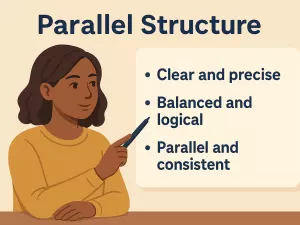
Parallel structure, often called parallelism, is a grammatical principle that ensures elements of a sentence that are joined by coordinators (such as "and," "or," and "but") have the same grammatical form. This means that items in a series or a list, paired elements, or phrases linked by coordinating conjunctions should match in structure. Maintaining consistency in form makes writing clearer, more rhythmic, and easier to follow. When constructing sentences, parallelism typically involves aligning nouns with nouns, verbs with verbs, phrases with phrases, or clauses with clauses. This approach avoids awkwardness and ambiguity, making sentences more effective and polished.
Why Use Parallel Construction?
Using coordinated elements that follow the same pattern helps readers process information smoothly. It also prevents confusion and highlights the relationships between ideas. Lack of parallelism can make sentences feel jarring or unbalanced, which can distract from your message.
Common Contexts for Parallelism
Writers most often use parallel structure in:
- Lists or series: "She likes hiking, swimming, and biking."
- Paired ideas: "You can pay now or pay later."
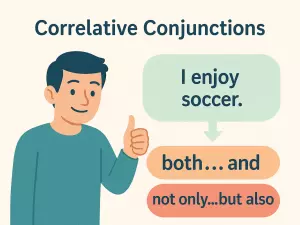
- Correlative conjunctions: "Not only did he sing, but he also danced."
- Comparisons: "Reading is more enjoyable than watching television."
- Bullet points and outlines
- Instructions or directions
- Job descriptions and résumés
- Formal speeches and presentations
- Academic writing
- Advertising slogans
- Legal and technical writing
- Creative writing for stylistic effect
Recognizing Parallel and Non-Parallel Structures
Parallel structure is all about balance and repetition of grammatical forms. Here are a few quick examples:
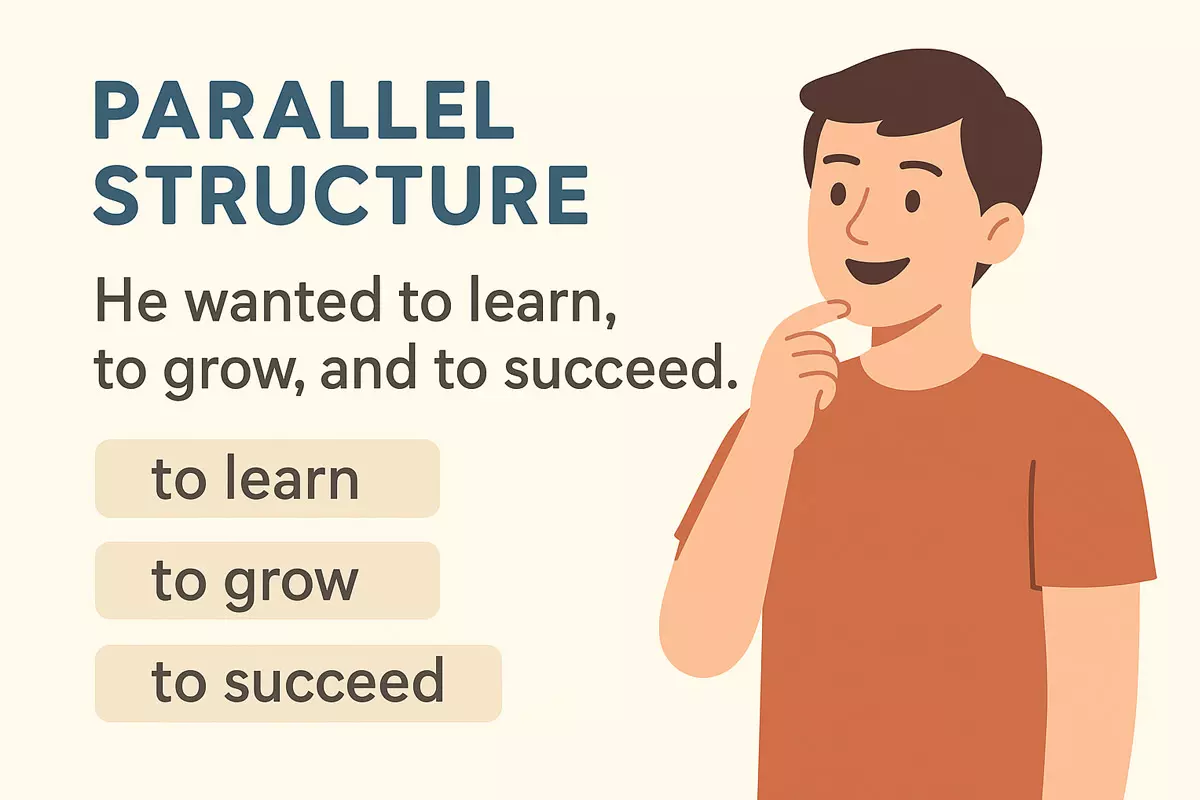
- ✅ Correct: "He wanted to learn, to grow, and to succeed."
- ❌ Incorrect: "He wanted to learn, growing, and to succeed."
- ✅ Correct: "The manager was strict but fair."
- ❌ Incorrect: "The manager was strict but fairness."
Typical Patterns in Parallel Construction
Writers can achieve parallelism in several ways, depending on the sentence structure. Notice how the following elements are aligned:
| Structure Type | Example |
|---|---|
| Nouns | We bought bread, cheese, and fruit. |
| Verbs | She writes, edits, and publishes her stories. |
| Infinitives | To run, to jump, and to swim are his favorite activities. |
| Clauses | He said that he would call, that he would visit, and that he would help. |
| Adjectives | The task was simple, clear, and quick. |
Parallel structure is not just about grammatical correctness—it’s also about style and clarity. Practicing parallelism refines your writing and ensures your ideas are presented in a logical, compelling way.
Why Parallelism Improves Clarity
Consistent grammatical patterns make sentences easier to read and understand. When writers use parallel structure, readers can quickly follow relationships between ideas because each part of the sentence matches the others in form. This predictability helps the brain process information efficiently, reducing confusion and misinterpretation.
How Parallel Structure Guides the Reader
When similar ideas are presented in a matching format, the logical connections become much clearer. For example, using the same verb tense or noun form for each item in a list helps readers immediately recognize that the items are related. This is especially important when using coordinators like "and," "but," or "or." Without parallelism, sentences may sound awkward or even misleading.
- She likes reading, writing, and drawing. ✅
- She likes to read, writing, and draw. ❌
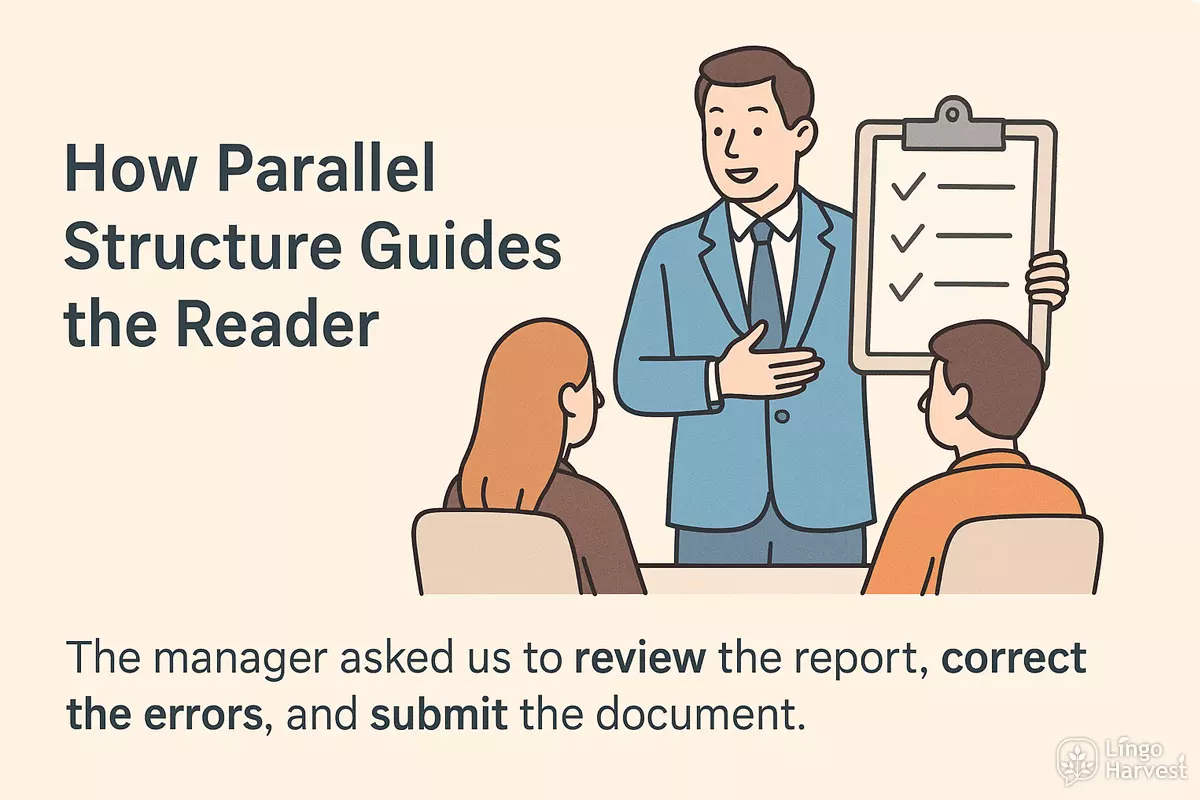
- The manager asked us to review the report, correct the errors, and submit the document. ✅
- The manager asked us reviewing the report, to correct errors, and submitting the document. ❌
Clarity in Lists and Comparisons
Parallelism is especially helpful in lists, instructions, or when comparing options. Mismatched structures can distract or even mislead your audience. Maintaining a parallel pattern not only improves style but also ensures your message is interpreted as intended.
| Non-Parallel | Parallel |
|---|---|
| He wanted to win, earning respect, and to inspire others. | He wanted to win, to earn respect, and to inspire others. |
| The plan requires attention, patience, and being creative. | The plan requires attention, patience, and creativity. |
| We must either change the schedule or the location needs to be changed. | We must either change the schedule or change the location. |
| She is talented, hardworking, and knows how to motivate. | She is talented, hardworking, and motivating. |
Benefits Beyond Grammar
Good parallel structure not only enhances readability but also gives your writing a professional and polished tone. It shows attention to detail and respect for your audience’s time. Sentences constructed with parallel elements are more memorable, persuasive, and impactful.
- Improved flow and rhythm
- Reduced ambiguity
- Stronger emphasis on key points
- Greater reader engagement
- Easier editing and revision
Ultimately, consistent patterns make communication smoother and more effective, allowing your ideas to stand out without distraction.
Using Coordinators: And, Or, But
Coordinators like and, or, and but are essential for connecting ideas in a sentence. To ensure clarity and balance, it’s important to use parallel structure when joining words, phrases, or clauses with these conjunctions. This means each element should share the same grammatical form.
Coordinating Single Words
When joining individual words, keep the same part of speech for each item. This not only makes your writing smoother but also avoids confusion for the reader.
- ✅ She likes reading and writing. (both gerunds)
- ❌ She likes to read and writing. (mixed forms)
- ✅ The meal was hot but delicious. (both adjectives)
Coordinating Phrases
Parallelism is equally important when combining phrases. Matched structure helps the sentence flow and communicates your meaning more effectively.
- ✅ He enjoys playing chess and watching movies.
- ❌ He enjoys playing chess and to watch movies.
- ✅ You can choose to stay home or to go out.
Coordinating Clauses
Full clauses connected by these conjunctions should be structured similarly. This often means using the same tense or sentence pattern in each clause.
- ✅ She finished her homework, and she went to bed.
- ✅ You can come with us, or you can meet us there.
- ✅ He wanted to go for a walk, but it started to rain.
Common Patterns with Coordinators
Writers often encounter certain recurring patterns where parallel structure is crucial. The examples below highlight typical uses and non-parallel errors:
- buying groceries and cooking dinner
- to learn quickly or to forget easily
- smart but inexperienced
- either by email or by phone
- running, jumping, and swimming
- not only friendly but also helpful
- to sing and to dance
- in the morning or in the evening
- She cooks and he cleans
- He likes to travel and to explore
- working hard but earning little
- either accepting the offer or rejecting it
- to read, to write, and to draw
- by train, by bus, or by car
- She smiled and waved
- not only tired but also hungry
- to laugh or to cry
- think fast but act carefully
- in spring and in summer
Quick Comparison: Correct vs. Incorrect Parallelism
| Parallel Example | Non-Parallel Example |
|---|---|
| He likes to swim and to run. | He likes swimming and to run. |
| They wanted to eat or to rest. | They wanted to eat or resting. |
| She is smart but shy. | She is smart but has shyness. |
| We can meet at the cafe or at the park. | We can meet at the cafe or park. |
Summary
Parallel structure with coordinating conjunctions increases sentence clarity, readability, and stylistic polish. Always align grammatical forms when linking words, phrases, or clauses with and, or, or but for effective communication.
Common Parallelism Patterns
Parallel structure often appears in sentences that use coordinating conjunctions such as and, but, or, nor, and yet. These patterns help ensure clarity and rhythm by matching grammatical forms. Writers frequently use parallelism when listing actions, connecting adjectives, or joining phrases and clauses.
Typical Uses of Coordinators in Parallel Construction
Writers rely on several tried-and-true configurations when linking elements with coordinators. Here are some frequent formats:
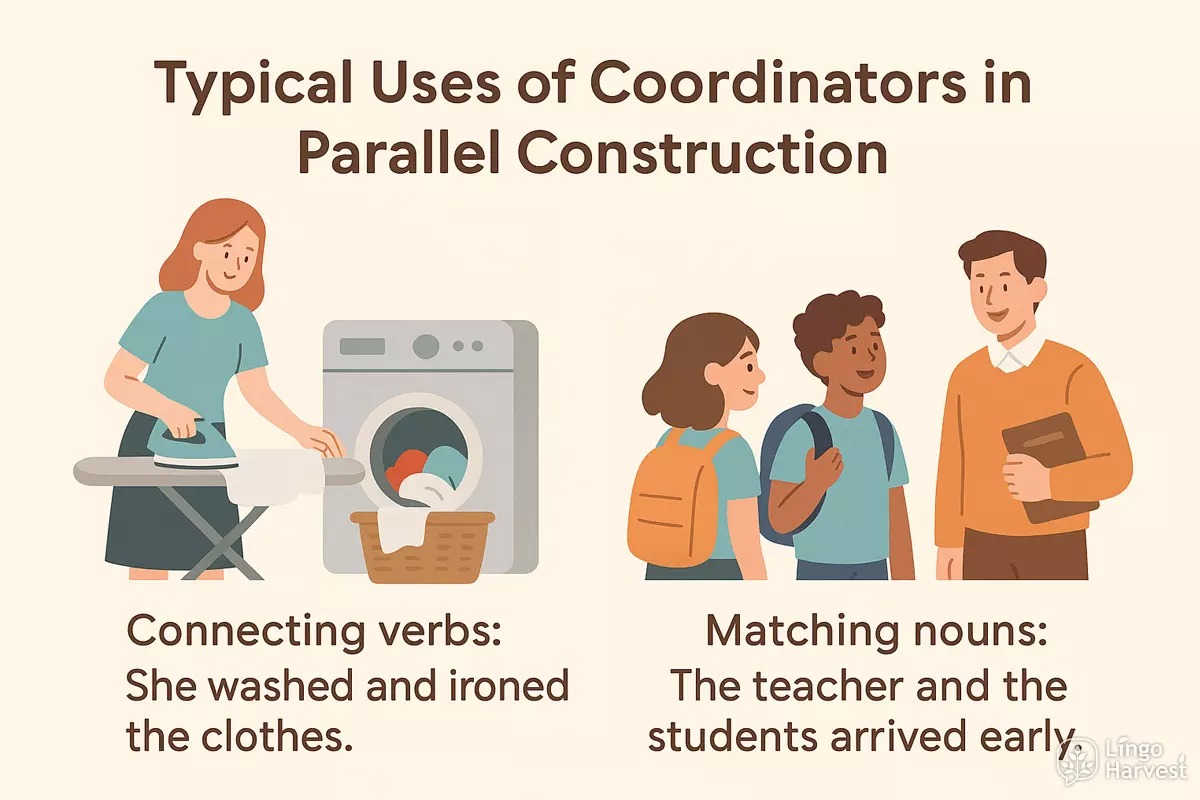
- Connecting verbs: She washed and ironed the clothes.
- Matching nouns: The teacher and the students arrived early.
- Pairing adjectives: The room was bright but cold.
- Balancing prepositional phrases: He ran into the store and up the stairs.
- Coordinating infinitive phrases: They plan to study and to travel this summer.
- Using gerunds: Reading, writing, and drawing are her hobbies.
- Joining clauses: He finished his meal, and she cleared the table.
- Contrasting elements: She likes to hike, but he prefers to relax.
- Listing adverbs: She worked quickly and efficiently.
- Negative constructions: Neither the manager nor the assistant was available.
- Comparisons: He is as smart as he is kind.
- Alternative choices: You can call or email me.
- Coordinating compound structures: She not only completed the project but also presented the findings.
- Balancing questions: Did you study or guess the answers?
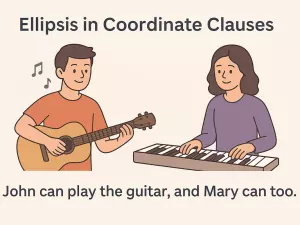
- Short elliptical constructions: He likes tea, and she coffee.
- Correlative conjunctions: Both the plan and the execution were flawless.
- Paired modifiers: The solution was simple yet effective.
- Longer compound predicates: They visited museums and explored the city.
Comparing Parallel and Non-Parallel Forms
The effectiveness of parallel structure becomes clear when you compare sentences that follow the pattern with those that do not. The following table highlights these differences, showing how coordinated elements align for clarity.
| Parallel Example | Non-Parallel Example |
|---|---|
| She enjoys reading, writing, and drawing. | She enjoys reading, to write, and drawing. |
| He wanted to win and to celebrate. | He wanted to win and celebration. |
| The manager was polite but firm. | The manager was polite but acted firmly. |
| You can call or email me. | You can call or sending an email to me. |
Tips for Maintaining Balanced Structure
To keep your writing smooth and understandable, match grammatical forms after coordinators. When in doubt, check that each element shares the same part of speech and structure. This attention to detail prevents confusion and keeps sentences flowing naturally.
Typical Errors and How to Fix Them
When using coordinators like "and," "but," or "or," writers sometimes mix up grammatical forms within a sentence. This disrupts the flow and clarity, making sentences awkward or confusing. Recognizing frequent mistakes can help you spot and correct them quickly.
Common Issues with Parallel Coordination
- Combining different grammatical forms (verbs with nouns, infinitives with gerunds)
- Switching tenses or voices unexpectedly in a coordinated list
- Mismatching sentence elements (phrases with clauses, adjectives with adverbs)
- Using inconsistent structure after correlative conjunctions (either...or, neither...nor)
- Forgetting to repeat necessary words or prepositions in each part
- Overusing or underusing coordinators, leading to run-on or choppy sentences
- Adding unnecessary detail to only one part of a coordinated structure
- Mixing singular and plural forms inconsistently
- Including negative and positive forms incorrectly within the same coordination
- Using complex or unclear wording that hides parallel errors
Quick Fixes and Strategies
To resolve these issues, always check that each part of your sentence after a coordinator matches in form, tense, and structure. Read your sentence aloud; awkwardness often signals a parallelism problem. If you’re unsure, break down each coordinated element and compare them side by side.
| Incorrect Example | Corrected Version |
|---|---|
| She likes reading, to swim, and bikes. | She likes reading, swimming, and biking. |
| He wanted to win and proving his worth. | He wanted to win and to prove his worth. |
| We will either go to the park or staying home. | We will either go to the park or stay home. |
| The project is challenging but rewards. | The project is challenging but rewarding. |
| She is talented and has creativity. | She is talented and creative. |
| He likes to run and biking. | He likes running and biking. |
| They are smart, diligent, and work hard. | They are smart, diligent, and hardworking. |
| I enjoy hiking, cooking, and to read. | I enjoy hiking, cooking, and reading. |
| She wants either to travel or staying home. | She wants either to travel or to stay home. |
| He is not only a teacher but also writes books. | He is not only a teacher but also a writer. |
Summary Tips
- Keep the grammatical structure consistent after each coordinator.
- When using correlative conjunctions, match the structure on both sides.
- Double-check lists for uniformity in tense, form, and voice.
- Read sentences aloud to catch awkwardness or imbalance.
Mastering parallelism with coordinators not only improves clarity but also gives your writing a polished, professional sound. With practice, these corrections will become second nature.
Parallel Structure in Lists and Clauses
When constructing sentences that include a list or use coordinating conjunctions like and, or, or but, it’s important to maintain a consistent grammatical pattern. This consistency makes writing clearer and easier to follow. Parallelism is especially vital when items are grouped together in a series or when clauses are joined, as it helps readers process information efficiently.
Why Consistency Matters
Parallelism ensures that each part of a list or paired clause matches in form. Without it, writing can become confusing or awkward. For example, mismatched verb forms or sentence structures can distract the reader and obscure meaning.
- Correct: She likes reading, writing, and jogging.
- Incorrect: She likes reading, to write, and jogging.
- Correct: We will either win the game or lose with dignity.
- Incorrect: We will either win the game or be losing with dignity.
Common Patterns that Require Parallelism
Writers often use coordinators to connect items or clauses. The forms that need to match include:
- Nouns: “The meeting included managers, assistants, and interns.”
- Infinitives: “He promised to cook, to clean, and to organize.”
- Gerunds: “Her hobbies are swimming, dancing, and painting.”
- Adjectives: “The room was quiet, bright, and spacious.”
- Clauses: “She said that she would call and that she would visit.”
- Prepositional phrases: “You can choose between in the morning, at noon, or in the evening.”
- Past participles: “The poem was written, revised, and published.”
- Adverbs: “He spoke clearly, confidently, and politely.”
- Questions: “Do you know where he is going and what he is doing?”
- Comparative forms: “This task is more challenging and more rewarding.”
- Negative forms: “She neither smiled nor laughed.”
- Direct objects: “He bought a pen, a notebook, and a bag.”
- Verb phrases: “We can stay at home or go out for dinner.”
- Subordinate clauses: “I will call you if I arrive early and if I find my phone.”
Spotting and Revising Faulty Parallelism
A common error is mixing different grammatical forms. To fix this, identify the pattern and adjust items to match. Consider these examples:
| ❌ Not Parallel | ✅ Parallel |
|---|---|
| She likes to swim, jogging, and biking. | She likes swimming, jogging, and biking. |
| The coach told the players they should get a lot of sleep, not eat too much, and to do some warm-up exercises. | The coach told the players to get a lot of sleep, not to eat too much, and to do some warm-up exercises. |
| My goals are to finish my degree, finding a job, and travel the world. | My goals are to finish my degree, to find a job, and to travel the world. |
| He wanted a promotion, a raise, and to receive recognition. | He wanted a promotion, a raise, and recognition. |
Quick Tips for Achieving Parallelism
- Identify the grammatical pattern used in the first item.
- Apply the same pattern to all following items or clauses.
- Check lists after coordinators for consistency.
- Read sentences aloud to spot awkward breaks or mismatches.
Effective parallel structure is a core skill for clear, polished writing. By paying attention to matching forms in lists and coordinated clauses, you can make your sentences more readable and professional.
Practice: Rewrite Sentences for Better Parallelism
Strengthening your understanding of parallel structure often comes down to hands-on editing. In this exercise, you'll identify sentences that lack parallelism and practice rewriting them for clarity and balance. Coordinators like “and,” “but,” and “or” often join elements that should mirror each other in form.
Identify and Revise Non-Parallel Sentences
Below are several sentences that do not follow parallel structure. Review each one and rewrite it so that the elements joined by coordinators are grammatically consistent.
- She likes reading, to jog, and going on hikes.
- The manager asked us to file the report quickly and with accuracy.
- He promised to call me, that he would send an email, and meeting in person.
- The project requires attention to detail, precision, and working hard.
- We want not only to learn new skills but also making friends.
- The proposal was clear, concise, and it was persuasive.
- My hobbies include painting, to write stories, and playing chess.
- You can choose to stay here, go to the park, or visiting your friend.
- The teacher said we should review the notes, complete the worksheet, and practicing vocabulary.
- He is talented, hardworking, and he has creativity.
Show answers
- She likes reading, jogging, and going on hikes.
- The manager asked us to file the report quickly and accurately.
- He promised to call me, send an email, and meet in person.
- The project requires attention to detail, precision, and hard work.
- We want not only to learn new skills but also to make friends.
- The proposal was clear, concise, and persuasive.
- My hobbies include painting, writing stories, and playing chess.
- You can choose to stay here, go to the park, or visit your friend.
- The teacher said we should review the notes, complete the worksheet, and practice vocabulary.
- He is talented, hardworking, and creative.
Common Patterns for Parallel Structure with Coordinators
When improving sentences, keep these parallel forms in mind:
- Infinitive phrases: to run, to read, to dance
- Gerund phrases: running, reading, dancing
- Noun phrases: high energy, strong focus, clear goals
- Adjective lists: quick, efficient, accurate
- Clauses: that she studies, that she practices, that she improves
- Short verb forms: runs, jumps, laughs
- Prepositional phrases: in the morning, at night, after lunch
- Questions: where she went, why he left, how they arrived
- Past participles: finished, forgotten, lost
- Comparative structures: faster than, more interesting than, less costly than
- Adverbs: quickly, carefully, quietly
- Negative forms: not eating, not sleeping, not working
- Direct objects: books, games, puzzles
- Subject complements: a teacher, a leader, a friend
- Verb + object: read books, write essays, solve problems
- Paired conjunctions: either/or, neither/nor, both/and
- Parallel questions: who will help, what will change, when will it start
- Lists of modifiers: slowly and steadily, calmly and quietly, clearly and logically
Quick Self-Check: Parallel vs. Non-Parallel
Read each pair and decide which sentence uses parallel structure.
-
- A. She likes to swim, biking, and to hike.
- B. She likes swimming, biking, and hiking.
-
- A. The job requires patience, organization, and working hard.
- B. The job requires patience, organization, and hard work.
-
- A. He wants to travel, to learn languages, and meeting new people.
- B. He wants to travel, learn languages, and meet new people.
-
- A. The report was detailed, thorough, and persuasive.
- B. The report was detailed, thorough, and it persuaded.
Show answers
- B. She likes swimming, biking, and hiking.
- B. The job requires patience, organization, and hard work.
- B. He wants to travel, learn languages, and meet new people.
- A. The report was detailed, thorough, and persuasive.