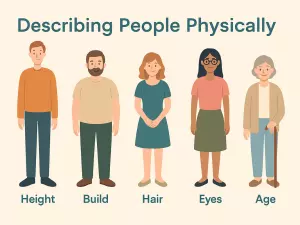
Describing Physical Appearance: Full Vocabulary Set

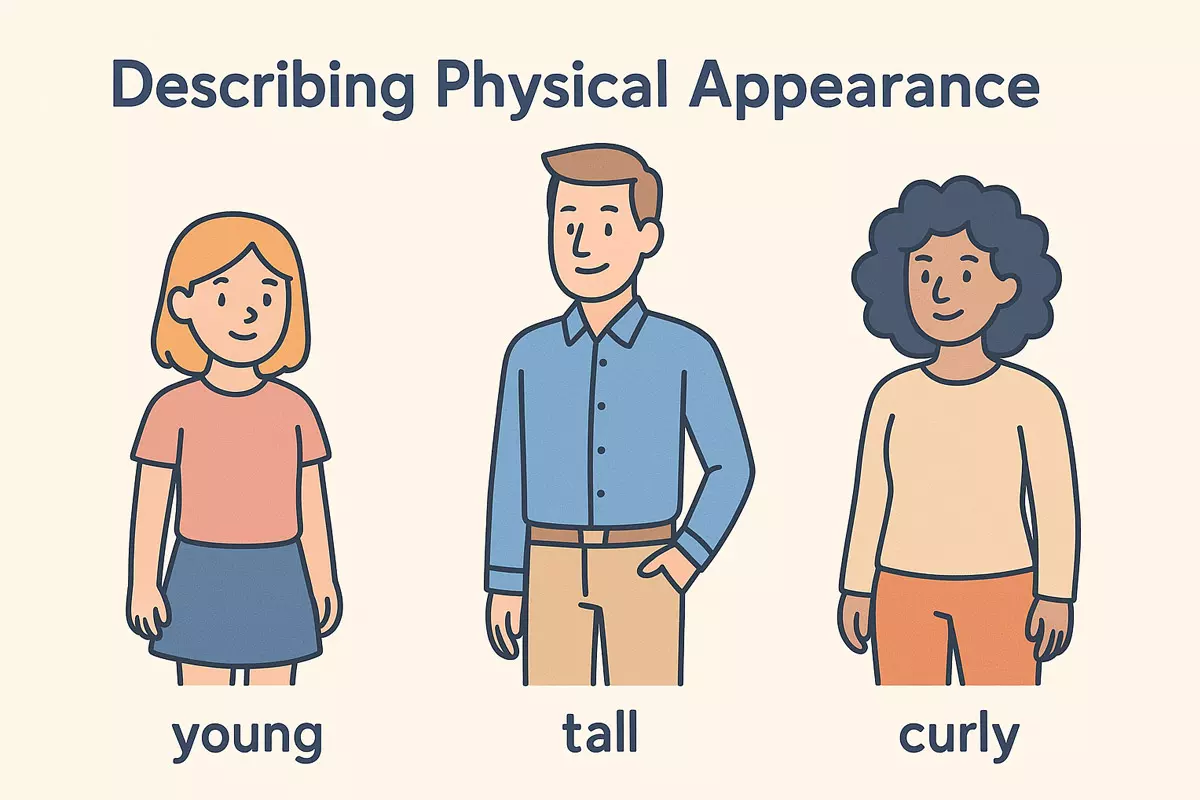 Here we adjectives for describing height, build, hair, eyes, age, and general appearance. It explains polite versus impolite descriptions, provides model sentences, and includes practice with describing pictures using appearance adjectives.
Describing someone's appearance accurately can sometimes be challenging, but expanding your vocabulary helps make your descriptions more vivid and precise. With the right words, you can convey not just basic features like hair or eye color, but also subtle details such as posture, expressions, or the way someone carries themselves. This skill is valuable whether you're writing a story, engaging in conversation, or simply trying to remember someone you've met. By choosing specific and varied language, your descriptions will become more engaging and memorable.
Adjectives for height and build
When talking about someone's physical form, it's useful to know a range of descriptive words for stature and body shape. These terms help paint a clearer picture, whether you're describing a character in a story or talking about real people. Knowing various adjectives lets you be more precise and expressive in your descriptions.
Describing Height
People's vertical measurements are often summarized with a handful of common adjectives. Here are some of the most widely used words for height:
- Tall – significantly above average in height
- Short – below average in stature
- Average height – neither tall nor short; typical or medium
- Petite – small and delicately built, usually referring to women
- Stocky – short and broad or sturdily built
- Stunted – unusually short, often due to growth issues
- Medium-height – in the middle range
- Lofty – very tall (often poetic or literary)
- Compact – small but solidly built
Words for Body Build
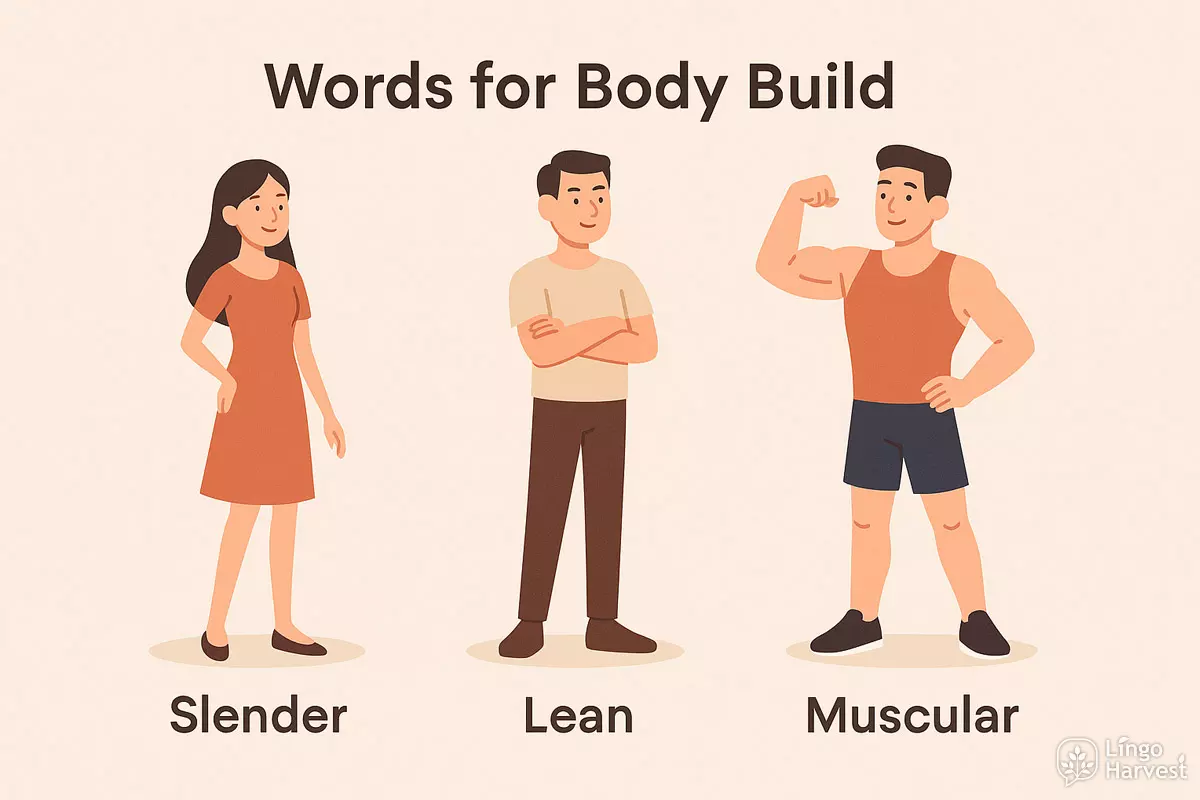
Describing someone's physique involves more than just height. Here are adjectives for body structure and overall build:
- Slender – thin in an attractive or graceful way
- Lean – slim, with little extra body fat
- Muscular – well-developed muscles, strong-looking
- Stocky – broad and sturdy
- Plump – slightly overweight, but often with a soft or rounded appearance
- Chubby – noticeably round or soft, especially in children
- Skinny – very thin, sometimes unhealthily so
- Hefty – large and heavy
- Burly – big and strong, with a solid frame
- Lanky – tall and thin, often with long limbs
- Petite – small and dainty (mainly for women)
- Robust – strong and healthy-looking
- Husky – large and strong, often used for men or boys
- Curvy – having an attractively rounded shape (usually for women)
Height and Build: Common Combinations
Some adjectives are often paired together for more nuanced descriptions. Here are a few examples:
| Height | Build |
|---|---|
| Tall | lanky, slim, muscular |
| Short | stocky, plump, petite |
| Average height | lean, robust, chubby |
| Very tall | burly, skinny, well-built |
| Compact | solid, husky, sturdy |
Choosing the right words to describe physical features lets your writing or conversation become more vivid and accurate. Mix and match these adjectives to suit the person or character you have in mind, and remember that tone and context can affect how these words are received.
Adjectives for hair and eyes
When describing someone's physical features, people often pay special attention to their hair and eye characteristics. These details help create a vivid mental image and are essential in both everyday conversation and more formal writing. Let's explore the vocabulary used for these two aspects, focusing on variety and precision.
Describing Hair
Hair can be characterized by its color, texture, length, and style. Here are some common adjectives and phrases to capture these qualities:
- Colors: blonde, brunette, black, red, auburn, chestnut, grey, silver
- Textures: straight, wavy, curly, frizzy, silky, coarse, smooth
- Length: short, shoulder-length, long, cropped, medium-length
- Styles: layered, spiky, braided, ponytailed, buzzed, messy, tied back
- Thickness: thick, thin, fine, voluminous
- Other: receding, bald, tousled, glossy, unkempt
For example, you might say, "She has long, curly auburn hair," or "His hair is short and spiky."
Describing Eyes
Eyes are often described by their color, shape, and expression. A rich selection of adjectives can help convey subtle differences:
- Colors: blue, green, brown, hazel, grey, amber, black
- Shapes: almond-shaped, round, narrow, wide-set, deep-set, hooded
- Size: large, small, bright, piercing
- Other qualities: sparkling, dull, expressive, twinkling, sleepy, alert, kind, sharp, intense, dreamy
A sentence might read, "He has piercing blue eyes," or "Her eyes are large and almond-shaped."
Common Combinations
Certain adjectives naturally pair together when describing appearance. The table below shows sample combinations for hair and eye descriptions commonly used in English:
| Hair Description | Eye Description |
|---|---|
| Short, straight, blonde | Bright blue, round |
| Long, wavy, dark brown | Hazel, almond-shaped |
| Curly, red, shoulder-length | Green, expressive |
| Bald or closely cropped | Piercing grey, deep-set |
| Frizzy, black, messy | Dark brown, sleepy |
By mixing and matching these adjectives, you can create detailed and accurate descriptions for any character or person, whether in writing or conversation.
Describing age and general look
When talking about someone's appearance, it's common to mention their age group and the overall impression they give. These details help create a mental image and are often the first things people notice. To describe this effectively, you'll want to use vocabulary that covers both specific ages and more general looks.
Age-related vocabulary
English offers a range of terms for different age stages, from infants to the elderly. You can be precise or keep it vague, depending on the context. Here are some useful words and expressions:
- Infant → a very young baby
- Toddler → a child learning to walk (1–3 years old)
- Child / Kid → young person (up to about 12)
- Teenager / Adolescent → person aged 13–19
- Young adult → early twenties
- In their mid-twenties / thirties, etc.
- Middle-aged → around 40–60 years old
- Senior / Elderly → older adults (65+)
- In their early/late fifties
- He looks about forty / She seems to be in her teens
General look: impressions and adjectives
Describing the general impression someone makes goes beyond age. It includes adjectives and phrases that capture their vibe, style, or energy. Here are common ways to talk about someone's overall look:
- Attractive → She is very attractive and has a bright smile.
- Plain-looking → He is plain-looking, but very friendly.
- Elegant → She looked elegant in her evening dress.
- Stylish / Trendy → He always wears stylish clothes that follow the latest trends.
- Casual → Her casual outfit was perfect for the weekend.
- Neat / Well-groomed → He always appears neat and well-groomed at work.
- Scruffy / Untidy → He looked scruffy after a long day of travel.
- Youthful → Her youthful appearance makes her look much younger.
- Mature → He has a calm, mature look that others admire.
- Charming → His charming personality made everyone like him immediately.
- Distinguished → The professor had a distinguished look with his grey hair and glasses.
- Average-looking → She is average-looking but very confident.
- Radiant → She looked radiant on her wedding day.
- Fit / Athletic → He’s very athletic and spends hours at the gym.
- Slender / Slim → She has a slender figure and moves gracefully.
- Stocky → He is stocky and strong, with broad shoulders.
- Petite → She is petite but very energetic.
- Imposing → His imposing height made him stand out in the crowd.
- Graceful → She dances in a graceful and effortless way.
Combining age and general appearance
Often, describing someone involves blending age-related terms with general appearance adjectives. For example: "a cheerful middle-aged woman" or "a stylish young man." This combination paints a fuller picture and adds nuance to your description.
Polite vs impolite descriptions
When discussing how people look, language choice matters a lot. Some words and phrases are considerate and respectful, while others can sound rude or even offensive. Understanding which expressions are appropriate in different contexts helps you communicate thoughtfully and avoid misunderstandings.
Why word choice makes a difference
Describing someone's appearance is often sensitive. Using tactful vocabulary shows respect for others’ feelings and helps build positive interactions. On the other hand, blunt or negative terms can easily cause embarrassment or offense, even if not intended.
Comparing considerate and inconsiderate expressions
Below is a side-by-side comparison of commonly used terms. The left column offers tactful or neutral options, while the right shows words that may be perceived as impolite or harsh. When in doubt, choose more neutral or positive language, especially in formal or unfamiliar settings.
| Polite / Neutral | Impolite / Blunt |
|---|---|
| He is a bit overweight | He is fat |
| She is petite | She is tiny |
| He is mature-looking | He looks old |
| She has a round face | She has a chubby face |
| He is bald | He has no hair |
| She is plus-sized | She is heavy |
| He is tall | He is lanky |
| She is well-built | She is stocky |
| He is slim | He is skinny |
| She has fair skin | She is pale |
| He has a prominent nose | He has a big nose |
| She has expressive eyes | She has bulging eyes |
| He is youthful | He is childish |
| She is attractive | She is hot |
| He has a full figure | He is chunky |
| She is elegantly dressed | She is flashy |
| He has distinguished features | He has weird features |
| She is radiant | She is gaudy |
| He is clean-shaven | He has no beard |
| She is curvy | She is plump |
Tips for describing people respectfully
- Focus on positive or neutral aspects.
- When unsure, choose broader or less specific vocabulary.
- Consider your relationship with the person—what’s fine among friends may not suit formal settings.
- Avoid making appearance the central topic unless it’s necessary.
- Remember that tone and context matter as much as the words themselves.
Choosing words thoughtfully is a sign of cultural awareness and emotional intelligence. Whether you’re describing a friend, a colleague, or someone you’ve just met, using sensitive language helps maintain respect and understanding.
Model sentences for describing people
When you want to talk about how someone looks, it helps to have ready-made phrases. These sample sentences can help you describe a person's height, build, hair, facial features, and general appearance in a clear and natural way. Try mixing and matching these patterns to create more detailed descriptions.
Describing height and build
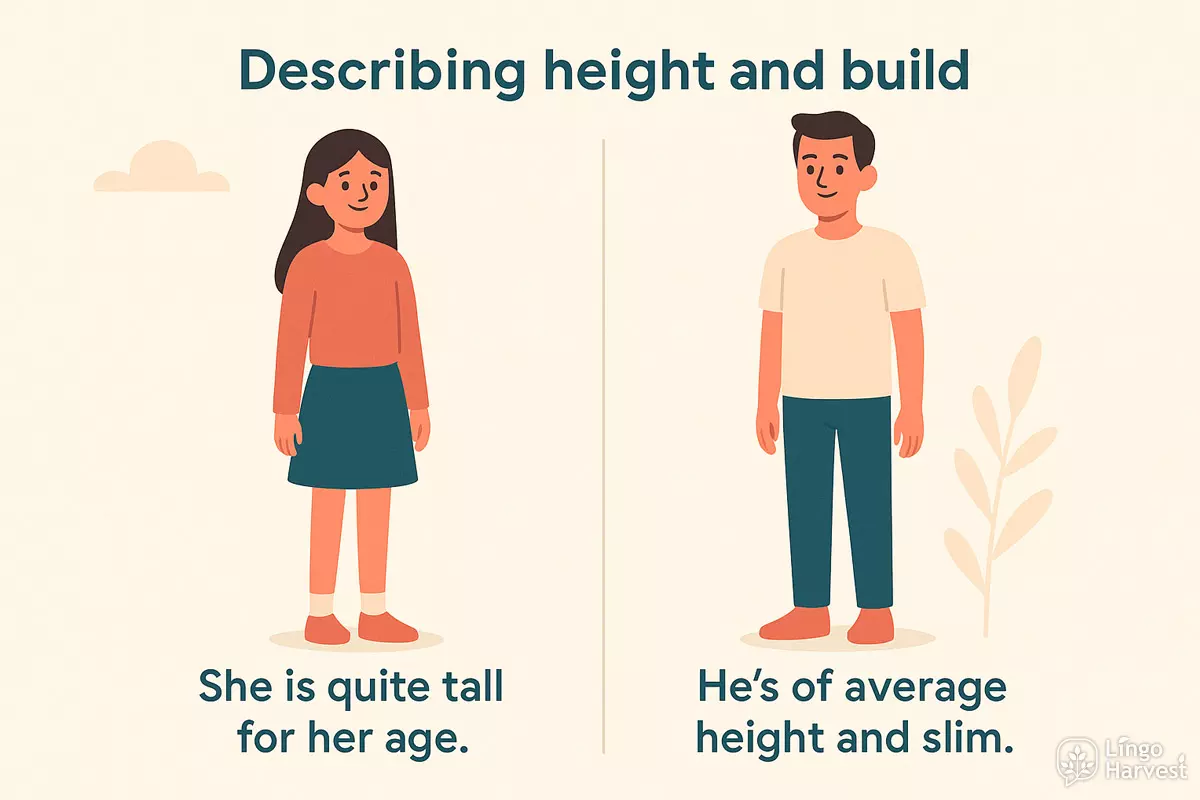
- She is quite tall for her age.
- He’s of average height and slim.
- They are short and stocky.
- He has a muscular build.
- She is petite and delicate-looking.
- He is very tall and broad-shouldered.
- She is medium height with a slender figure.
- He’s short but very athletic.
- She has a curvy build.
- He is lean and toned.
- She’s tall and graceful in her movements.
- He has a solid, sturdy build.
Talking about hair
- He has short, dark hair.
- She wears her hair long and wavy.
- He is bald with a neatly trimmed beard.
- Her hair is shoulder-length and straight.
- He has curly blond hair.
- She has thick, black hair tied in a ponytail.
- He has messy, medium-length hair.
- She has light brown hair with soft curls.
- His hair is thinning on top.
- She has a short, stylish bob haircut.
- He has red hair and a matching beard.
- Her hair is dyed bright blonde.
Facial features and skin tone
- She has bright blue eyes and a friendly smile.
- He has a strong jawline and high cheekbones.
- Her complexion is fair with freckles.
- He has a tanned skin tone and bushy eyebrows.
- She has dimples when she smiles.
- He has dark brown eyes and a sharp nose.
- She has full lips and long eyelashes.
- He has a round face and smooth skin.
- She has olive-toned skin and expressive eyebrows.
- He has a beard that gives him a rugged look.
- She has a soft complexion with rosy cheeks.
- He has pale skin and light freckles.
General appearance
- He looks very athletic.
- She always appears well-groomed and stylish.
- He has a casual, relaxed look.
- She looks younger than her age.
- He gives off a friendly and approachable vibe.
- She looks elegant and confident.
- He often appears tired but kind.
- She always looks professional and neat.
- He has a trendy, modern appearance.
- She looks cheerful and lively every day.
- He has a very polished, clean look.
- She looks calm, gentle, and welcoming.
| Pattern | Example Sentence |
|---|---|
| [Subject] has [adjective] [feature] | She has sparkling green eyes. |
| [Subject] is [adjective] | He is tall. |
| [Subject] looks [adjective] | They look cheerful. |
| [Subject] wears [description] | She wears glasses. |
| [Subject] has [hair type/length/color] | He has short brown hair. |
Using these templates and examples, you can confidently describe people in detail, whether you’re writing or speaking. Adjust the vocabulary to match the person you’re talking about and the context of your conversation.
Practice: describe pictures using appearance adjectives
Looking at images is a practical way to build your vocabulary for talking about how someone looks. Below, you'll find exercises and tips to help you use descriptive adjectives accurately and naturally. These activities will guide you through observing, analyzing, and describing different features, from hair and eye color to height and build.
Step-by-step: How to describe a person in a picture
- Observe the image carefully. Focus on the face, body, and clothing.
- Identify key features. Note hair color, style, length, eye color, skin tone, height, build, age, and distinguishing marks (like freckles or glasses).
- Choose precise adjectives. Use a variety of words to give a vivid description.
- Form sentences or phrases. Combine adjectives in natural ways, e.g., “She has long, curly brown hair.”
Useful appearance adjectives and phrases
- tall, short, medium-height
- slim, overweight, athletic, stocky
- young, middle-aged, elderly
- blond-haired, brunette, red-haired, bald
- straight hair, wavy hair, curly hair
- blue eyes, brown eyes, green eyes, hazel eyes
- fair-skinned, dark-skinned, tanned
- bearded, clean-shaven, mustache
- wearing glasses, has freckles, has dimples
- neatly dressed, casually dressed, well-groomed
Practice: Describe these pictures (imaginary examples)
- A young woman with shoulder-length, straight black hair and glasses. She is slim and wearing a red sweater.
- An elderly man, bald with a white beard, wearing a suit and tie. He has a friendly smile and blue eyes.
- A teenage boy with curly blond hair, green eyes, and freckles. He is tall and athletic.
- A middle-aged woman, tanned skin, wavy brown hair, wearing a dress and carrying a handbag.
Try to write a sentence or two for each imaginary photo using the adjectives above. Think about varying your word choice and sentence structure.
Comparison: Describing people with different adjectives
| Person | Sample Description |
|---|---|
| Anna | She is petite with long, wavy brown hair and hazel eyes. She usually wears casual clothes. |
| David | He is tall and well-built, with short, straight blond hair and a clean-shaven face. |
| Maria | Maria is middle-aged, has olive skin, curly black hair, and always wears elegant dresses. |
| Tom | He is quite short, stocky, with a shaved head and thick black beard. He wears glasses. |
Notice how each description combines several adjectives and details for a fuller picture.
Quick Quiz: Choose the best adjective
- Mark is very tall and has a muscular build. He is ________.
- Sara has light skin and red hair. She is __________ and __________.
- Paul’s hair is neither straight nor curly, but somewhere in between. It is __________.
- Linda is not fat, not thin, just regular. She is __________.
- Tom has very little hair left on his head. He is __________.
- Emily has big brown eyes and long eyelashes. She is __________.
- Jake is short and strong with a wide frame. He is __________.
- Olivia has smooth, dark skin. She is __________.
- David’s face is covered with light freckles. He is __________.
- Sophia has long blond hair and looks younger than her age. She is __________ and __________.
Show answers
- athletic
- fair-skinned, red-haired
- wavy
- medium-built / average-built
- bald
- wide-eyed / doe-eyed
- stocky
- dark-skinned
- freckled
- blonde-haired, youthful-looking
Practicing these patterns will help you describe people more confidently and precisely in conversation and writing.