Adjectives for Places: crowded, peaceful, modern

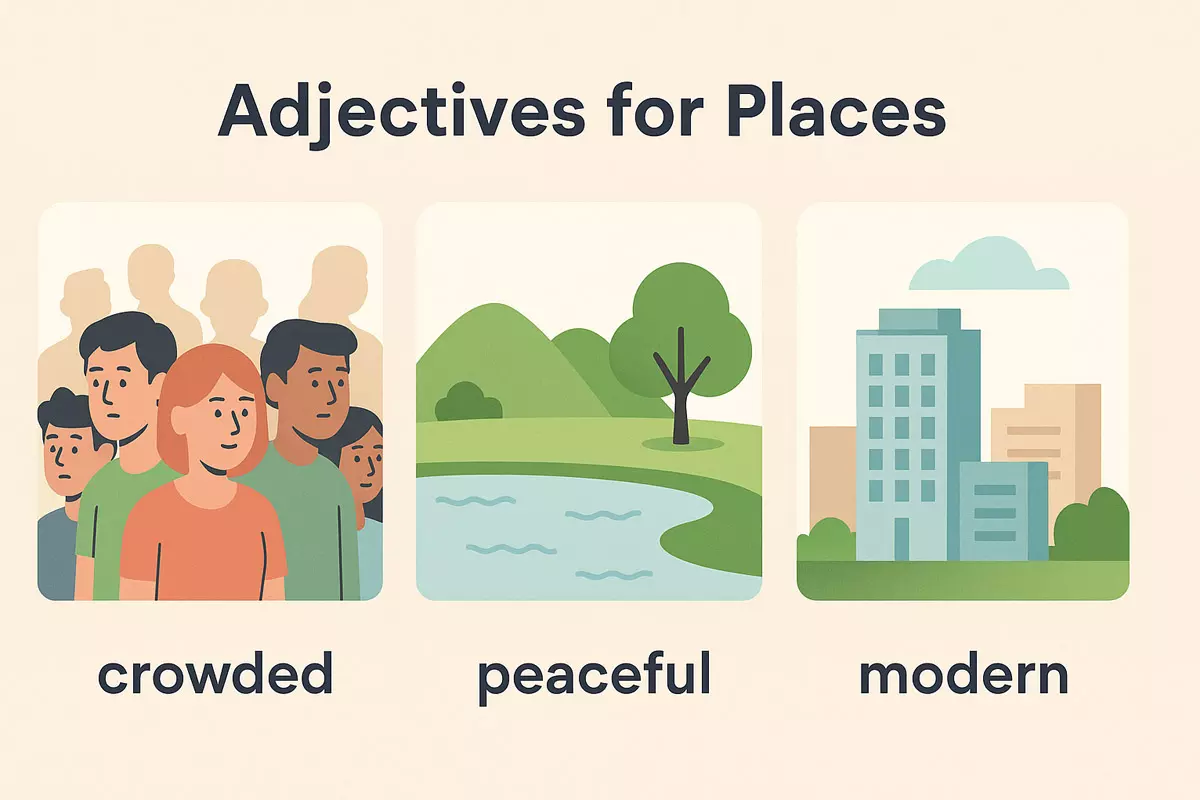 Here we how to use adjectives to describe cities, towns, rooms, houses, and buildings. It explains positive and negative descriptions, using intensifiers like very and really, and offers practice choosing the right adjectives.
Each place possesses a distinct atmosphere, from lively and energetic to peaceful and reflective, or even marked by modern and creative touches. Selecting precise and vivid language allows you to convey the true character of a setting, enabling others to imagine and connect with it more deeply. By thoughtfully choosing your words, you can effectively share your personal experience of a location and help others appreciate what makes it special and memorable.
Adjectives for cities and towns
Describing urban areas involves a range of adjectives that capture atmosphere, infrastructure, and the overall feeling of a place. When talking about cities or towns, people often highlight features such as their size, character, and pace of life. Choosing the right descriptive words can help communicate what makes each location unique, whether it's bustling with activity or known for its tranquility.
Common descriptive adjectives
Some adjectives frequently used to talk about urban environments include:
- crowded → The city center is always crowded at rush hour.
- modern → It’s a modern city with lots of glass buildings.
- historic → The historic old town is full of ancient churches.
- lively → The streets are lively at night with music and cafes.
- cosmopolitan → It’s a cosmopolitan city with people from many countries.
- peaceful → The village is small and peaceful.
- picturesque → The town is picturesque, with colorful houses by the river.
- noisy → The main road is very noisy during the day.
- sprawling → The city is sprawling and stretches for miles.
- compact → The city center is compact and easy to walk around.
- vibrant → It’s a vibrant neighborhood with street art and markets.
- industrial → The area is very industrial, with factories and warehouses.
- ancient → The city is famous for its ancient ruins.
- sleepy → It’s a sleepy town where not much happens.
- charming → The village square is charming in the evening light.
- touristy → The old port is beautiful but very touristy in summer.
- run-down → Some parts of the city look run-down and neglected.
- up-and-coming → This district is up-and-coming, with new cafes and galleries.
- bustling → The market is always bustling with people and noise.
- quaint → We stayed in a quaint little village in the mountains.
These words can describe anything from the city’s architecture and atmosphere to its population density or level of development. For example, a "modern" city might have tall glass buildings and efficient public transport, while a "quaint" town could be known for its old-fashioned charm and slower pace.
Comparing different urban atmospheres
The feel of a place can change dramatically depending on which aspects you focus on. For instance, some urban centers are known for being "crowded" and "noisy," while others are "peaceful" and "relaxed." Here’s a closer look at how some of these adjectives contrast:
| Adjective | Typical context |
|---|---|
| crowded | Lots of people, busy streets, little personal space |
| peaceful | Quiet neighborhoods, little traffic, calm environment |
| modern | New buildings, advanced technology, updated infrastructure |
| historic | Old architecture, cultural landmarks, sense of tradition |
| lively | Active nightlife, social events, energetic vibe |
| sleepy | Low activity, few people around, quiet atmosphere |
Choosing between these words depends on what you want to emphasize about a particular location. For example, describing a place as "vibrant" suggests a positive, energetic feeling, while calling it "run-down" points to neglect or decline.
Tips for using place adjectives
Think about the aspect you want to highlight: atmosphere, size, age, or activity level. Mixing these adjectives can create a more nuanced picture. For instance, a town could be both "quaint" and "bustling" if it’s small but full of visitors. When you describe a city or town, consider what sets it apart. Is it known for its modern skyline, or for its peaceful parks? The right adjective can help your listener or reader imagine the place more vividly.
Describing rooms, houses, and buildings
When talking about different types of interiors and structures, the right adjectives can help paint a clear picture. Words like crowded, peaceful, and modern are just a few options for expressing the mood, style, or atmosphere of a space. These descriptive terms allow you to be more specific about what a place feels or looks like, which is helpful both in conversation and writing.
Common adjectives for interiors and architecture
- Spacious → The living room feels spacious with high ceilings.
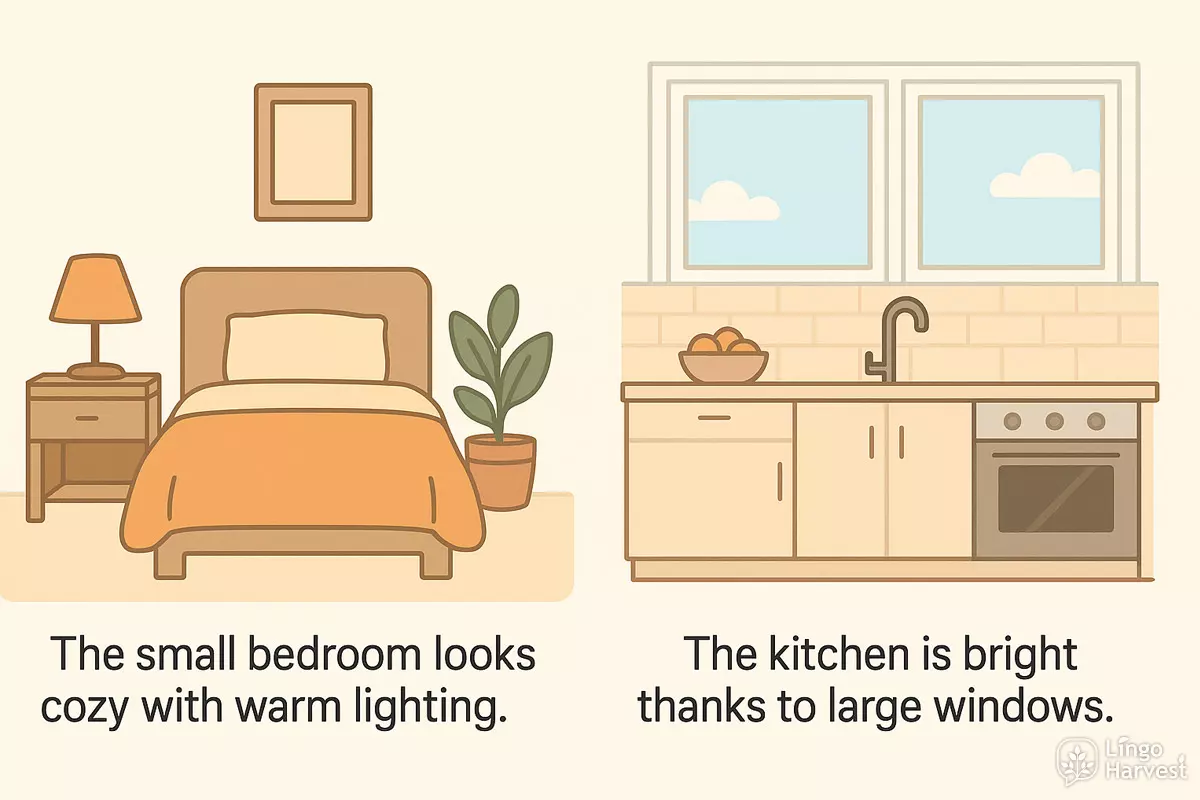
- Cozy → The small bedroom looks cozy with warm lighting.
- Bright → The kitchen is bright thanks to large windows.
- Dark → The hallway is dark without natural light.
- Airy → The loft feels airy because of the open layout.
- Cluttered → The office looks cluttered with too many items.
- Elegant → The dining room appears elegant with marble floors.
- Simple → The interior is simple but very comfortable.
- Rustic → The cottage has a rustic wooden design.
- Luxurious → The bathroom feels luxurious with gold accents.
- Noisy → The apartment is noisy due to street traffic.
- Quiet → The bedroom is quiet and peaceful.
- Historic → The building has a historic charm.
- Traditional → The house features traditional wooden furniture.
- Minimalist → The studio is decorated in a minimalist style.
- Charming → The entryway looks charming with plants and lights.
- Old-fashioned → The hotel lobby looks old-fashioned with dated decor.
- Functional → The kitchen is small but very functional.
- Run-down → The staircase looks run-down and needs repair.
- Welcoming → The living area feels welcoming with soft sofas and warm colors.
Choosing the right adjective
Selecting suitable words depends on what aspect you want to highlight. For example, modern suggests up-to-date design or technology, while peaceful focuses on the atmosphere. Crowded describes a lack of space or too many people or objects in the area.
Adjectives and their typical use
| Adjective | Example of Use |
|---|---|
| Modern | The apartment has a modern kitchen with new appliances. |
| Crowded | The small living room felt crowded during the party. |
| Peaceful | Her bedroom is peaceful, perfect for relaxing or reading. |
| Cozy | We spent the evening in a cozy cabin by the lake. |
| Spacious | The office is spacious, with plenty of room to move around. |
| Run-down | The old building looked run-down and needed repairs. |
| Luxurious | The hotel suite was luxurious, with elegant furniture. |
| Minimalist | His room is minimalist, containing only essential items. |
Using such descriptive vocabulary can help you communicate more clearly about any space, whether you are describing your own home, reviewing a hotel, or talking about a famous landmark. Consider what qualities matter most—comfort, style, atmosphere—and choose words that best express those details.
Positive vs negative descriptions of places
When talking about locations, choosing the right adjectives shapes how listeners or readers picture the environment. Terms like "peaceful" and "modern" usually evoke pleasant feelings, while words such as "crowded" can suggest discomfort or stress. The meaning we convey depends greatly on whether we use positive or negative language.
How adjectives influence our perception
Describing a place as "peaceful" or "modern" highlights comfort, calm, or innovation. These descriptions often make a place sound attractive or desirable. On the other hand, words like "crowded" or "noisy" can highlight drawbacks and discourage interest. The same location can be described in many ways depending on the speaker’s perspective and intention.
Common positive and negative adjectives for places
- Peaceful ✅ → The village is peaceful and quiet.
- Modern ✅ → The city center is full of modern buildings.
- Spacious ✅ → The park feels spacious and open.
- Charming ✅ → The old town is charming and beautiful.
- Inviting ✅ → The café looks warm and inviting.
- Crowded ❌ → The streets are crowded during rush hour.
- Noisy ❌ → The apartment is noisy at night.
- Polluted ❌ → The river is too polluted to swim in.
- Dull ❌ → The town felt dull with nothing to do.
- Run-down ❌ → The neighborhood looks run-down and neglected.
- Bustling (±) → The bustling market is exciting but very loud.
- Historic (±) → The historic district is beautiful but often crowded.
- Remote (±) → The cabin is remote, which is peaceful but inconvenient.
- Lively ✅ → The streets are lively with music and people.
- Isolated ❌ → The village is isolated and hard to reach.
Comparing impressions with different adjectives
The adjective you select can completely change the image of a place. For example, describing a city as "modern and vibrant" suggests energy and opportunity, while calling it "crowded and noisy" focuses on drawbacks. Here are some more examples of how the choice of word changes the impression:
- Peaceful park vs crowded park
- Modern apartment vs cramped apartment
- Inviting café vs noisy café
- Charming village vs dull village
Choosing adjectives carefully helps us express our true feelings and intentions about a place. Whether you want to recommend, warn, or simply describe, the right word makes a difference.
Using very and really with place adjectives
When you want to make descriptions of locations stronger, you can add words like very and really before adjectives. These words help express your feelings more clearly, whether you are talking about a city, a park, or a neighborhood. For example, if a place is not just modern but stands out for its style and technology, you might say it is really modern or very modern. The same applies when talking about how crowded or peaceful a place feels.
Which intensifier to use?
Both very and really are used to add emphasis, but they can sound a little different in conversation. Very is more neutral and common in written English, while really often sounds a bit more casual and is used a lot in conversation. You can use either one with adjectives for places like crowded, peaceful, and modern.
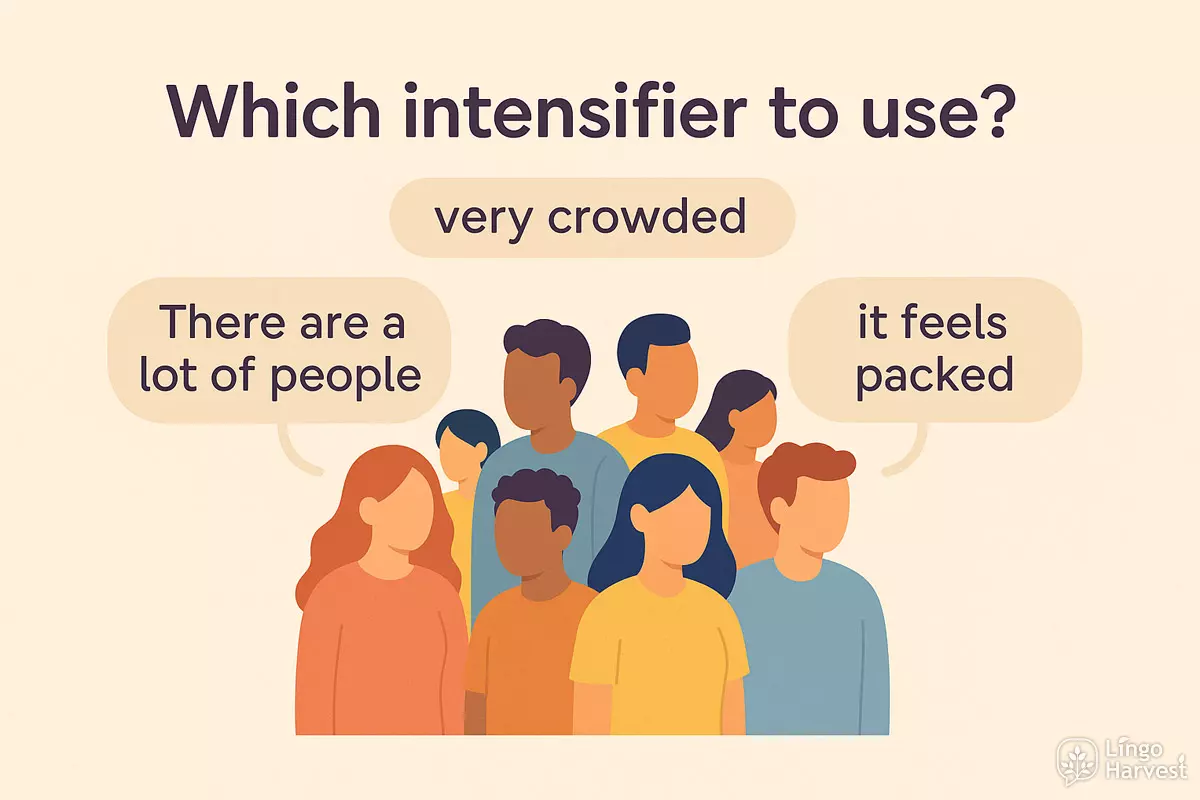
- very crowded: There are a lot of people; it feels packed.
- really crowded: It’s busy, maybe even more than you expected.
- very peaceful: It’s extremely quiet and calm.
- really peaceful: The calmness is noticeable and relaxing.
- very modern: The place looks advanced, with new buildings or technology.
- really modern: The modern style is impressive or surprising.
- very busy: Lots of activity going on.
- really quiet: Almost no noise at all.
- very old-fashioned: Not modern; maybe traditional or historic.
- really lively: Full of energy and people.
- very clean: No dirt or mess anywhere.
- really safe: Feels secure and protected.
- very noisy: Lots of loud sounds.
- really beautiful: The appearance stands out and is impressive.
- very spacious: There’s a lot of room to move around.
- really expensive: Costs much more than expected.
- very exciting: The atmosphere is full of energy and interest.
- really historic: The place has a lot of history or old buildings.
Examples in context
Here are some sample sentences showing how you might use these intensifiers with place adjectives:
- That café is very crowded on weekends.
- The library felt really peaceful in the morning.
- My friend lives in a very modern apartment building.
- The park is really quiet after sunset.
- The city center is very lively during festivals.
- The old town looks really charming at night.
- The streets become very noisy during rush hour.
- The museum is really spacious inside.
- The area is very polluted after the factory opened.
- The village feels really isolated in winter.
- The market is very bustling early in the morning.
- The neighborhood looks really run-down these days.
Remember, both words help you give more detail and emotion when describing locations, so you can choose whichever fits your tone and message best.
Short models for describing your city or room
When talking about where you live or your personal space, adjectives like "crowded," "peaceful," or "modern" help others imagine the atmosphere. Using simple sentence models makes it easy to share your impressions or describe a place clearly.
Example sentence patterns
- My city is crowded and full of life.
- The park near my house is very peaceful.
- I live in a modern apartment with large windows.
- This area is always busy in the evenings.
- Our classroom feels spacious and bright.
- The old town is historic but sometimes noisy.
- My room is cozy and quiet.
- The city center looks very modern now.
- My neighborhood is safe and friendly.
- This street is often crowded with tourists.
- The countryside around my town is peaceful and green.
- My office is modern but sometimes crowded.
- Our living room is always warm and inviting.
- The local café is quiet in the mornings.
- The school building is modern and well-equipped.
- The square becomes crowded during festivals.
Comparing different places using adjectives
| Place | How to describe it |
|---|---|
| City center | It's usually crowded and modern, with tall buildings. |
| My room | My room feels peaceful and cozy, perfect for relaxing. |
| Old town | The old town is historic and sometimes crowded with visitors. |
| Park | The park is peaceful, green, and a nice escape from the noise. |
Tips for using adjectives effectively
- Choose words that match the real mood or look of the place.
- Combine different adjectives for a richer picture (e.g., "modern and peaceful").
- Use simple sentence structures for clarity, especially when speaking or writing at a basic level.
- Think about time of day or season—some places change from peaceful to crowded.
By mixing these descriptive words and sentence models, you can give a clear idea of any location, from your own room to the busiest part of your city.
Practice: choose adjectives to describe different places
Exploring different environments often requires the right descriptive words. Selecting suitable adjectives helps to paint a clear picture of a location’s atmosphere, style, or feeling. Think about how you would describe a busy city street, a quiet park, or a sleek new building. The right adjective can make your description more vivid and precise.
Match the place with the best adjective
Read each description and select the adjective that fits best: crowded, peaceful, or modern.
- A small village with lots of green spaces, birds singing, and few people around.
- A shopping mall with many people, loud noises, and long lines at every store.
- An office building with glass walls, new technology, and minimalist design.
- A cozy café with warm lighting, soft music, and comfortable seating.
- A run-down neighborhood with broken sidewalks, old buildings, and peeling paint.
- A lively street full of music, restaurants, and people walking everywhere.
- A remote cabin far from the city, surrounded by forests and mountains.
- A luxurious hotel with marble floors, elegant décor, and friendly service.
- A polluted industrial area with smoke, dust, and unpleasant smells.
- A charming old town with narrow streets, flower balconies, and historic houses.
Show answers
- Peaceful
- Crowded
- Modern
- Cozy
- Run-down
- Lively
- Remote
- Luxurious
- Polluted
- Charming
Expand your vocabulary: more adjectives for places
Here are more words to describe locations. Consider which ones could be used for cities, parks, buildings, or other places:
- Spacious
- Cozy
- Lively
- Historic
- Remote
- Charming
- Picturesque
- Noisy
- Industrial
- Traditional
- Serene
- Bustling
- Urban
- Rural
- Ancient
- Touristy
- Rustic
- Luxurious
Choose the best adjective for each place
For each place below, pick the most appropriate word from the list above.
- A mountain cabin far from any town
- A city center full of shops and restaurants
- An old temple with beautiful architecture
- A small café with comfortable chairs and warm lighting
- A quiet village with narrow streets and flowered balconies
- A noisy market with street vendors shouting and crowds everywhere
- A luxurious hotel decorated with marble, gold accents, and soft music
- A polluted industrial zone with smoke, dust, and old factories
- A spacious park with open lawns, tall trees, and lots of sunlight
- A modern office building made of glass and steel
Show answers
- Remote / Rustic
- Bustling / Urban / Lively
- Ancient / Historic
- Cozy / Charming
- Charming / Peaceful
- Noisy / Crowded
- Luxurious / Elegant
- Polluted / Run-down
- Spacious / Airy
- Modern / Sleek
Quick quiz: positive or negative?
Decide if each adjective usually gives a positive, negative, or neutral impression:
- Picturesque
- Noisy
- Luxurious
- Industrial
Show answers
- Positive
- Negative
- Positive
- Neutral / Sometimes negative
Try using these adjectives in your own sentences to describe places you know well. This will help you become more comfortable and precise in your descriptions.