When English Speakers Use the Passive Voice

 This article explains why passive voice is used in real English, especially when the action matters most or the doer is unknown, obvious, or unimportant. It also covers formal tone, common uses, when passive sounds heavy, and how to choose naturally.
- Passive voice in real English
- When the action or result matters more
- Unknown, obvious, or unimportant doers
- Formal, objective, and polite tone
- Passive voice in news, rules, and instructions
- Casual passive and get-passive
- When passive voice sounds heavy or unnatural
- How to choose active or passive voice
- Common passive voice mistakes
- Homework: passive voice use
- FAQ: using passive voice naturally
Passive voice is not only a grammar form from textbooks. It is a normal part of real English. Native speakers use it when they want to focus on what happened, what changed, what was affected, or what result is important. Sometimes the person who did the action is unknown. Sometimes the person is obvious. Sometimes mentioning the person would simply distract from the message.
Compare these two sentences:
- Active: Someone changed the schedule.
- Passive: The schedule was changed.
The active sentence makes us think about the unknown person. The passive sentence makes us think about the schedule. In real communication, that difference matters. Passive voice helps speakers move attention away from the doer and toward the action, result, rule, problem, or affected person.
This article explains when passive voice sounds natural, when it sounds too heavy, and how to choose between active and passive voice in real English. You will see examples from everyday conversation, news reports, formal writing, rules, customer service, and instructions.
Passive voice in real English
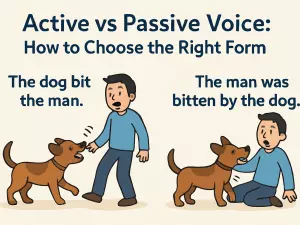
Many learners first meet passive voice as a transformation exercise: change “The chef cooked the meal” into “The meal was cooked by the chef.” That exercise is useful, but it does not fully explain why English speakers choose passive voice in real life.
The real reason is usually focus. Active voice often answers the question Who did it? Passive voice often answers the question What happened?
| Question in the speaker’s mind | More natural voice | Example | Why it works |
|---|---|---|---|
| Who did the action? | Active | Anna solved the problem. | Anna is the important information. |
| What happened? | Passive | The problem was solved. | The result is the important information. |
| What changed? | Passive | The meeting was moved to Friday. | The new situation matters more than who changed it. |
| Who is responsible? | Active | The supplier missed the deadline. | The doer should be named clearly. |
In other words, passive voice is not automatically better or worse than active voice. It simply does a different job. If you want a detailed comparison of this choice, the guide to active and passive voice explains how focus and meaning change when the sentence structure changes.
Teacher note: passive voice is a focus tool
When students ask whether passive voice is “good” or “bad,” I usually tell them to change the question. Ask this instead: What should the reader notice first? If the answer is the person doing the action, active voice is probably better. If the answer is the result, object, rule, or affected person, passive voice may be more natural.
Look at these pairs:
- Active: The airline cancelled our flight.
Passive: Our flight was cancelled. - Active: The teacher changed the deadline.
Passive: The deadline was changed. - Active: Someone broke the lock.
Passive: The lock was broken.
All six sentences are grammatically correct. The best choice depends on what the speaker wants to emphasize.
When the action or result matters more

One of the most common reasons to use passive voice is that the action, result, or affected thing is more important than the person who did it. This happens in everyday speech, work updates, travel problems, school notices, repair situations, and customer service messages.
Imagine you are waiting for an important package. You receive a message:
- Natural: Your order has been shipped.
- Less natural in this context: Our warehouse team has shipped your order.
The company could mention the warehouse team, but you probably do not care who shipped the order. You care that the order is on its way. Passive voice puts the useful information first.
Here are more examples where the result matters more than the doer:
- The report was finished before lunch.
- The road was closed after the accident.
- The room was cleaned before the guests arrived.
- The deadline has been extended until Monday.
- The password was changed for security reasons.
| Situation | Active version | Passive version | Better focus |
|---|---|---|---|
| Work update | Maria sent the report. | The report was sent. | Use passive if the report is the topic. |
| Travel problem | The airline delayed the flight. | The flight was delayed. | Use passive if the passenger cares about the flight status. |
| School notice | The teacher changed the test date. | The test date was changed. | Use passive if the date matters more than the teacher. |
| Home problem | Someone scratched the door. | The door was scratched. | Use passive if the damage matters more than the unknown person. |
This is also why passive voice helps with paragraph flow. If a paragraph is already about the report, it is natural to continue with “The report was sent yesterday” instead of suddenly switching focus to “Maria sent the report yesterday.”
Unknown, obvious, or unimportant doers
Passive voice is very common when the doer is unknown, obvious, general, or not worth mentioning. This is not laziness. It is efficient communication.
1. The doer is unknown
If you do not know who did the action, passive voice is often the most natural choice.
- My wallet was stolen on the train.
- The window was broken during the night.
- My account was hacked last week.
- The car was scratched in the parking lot.
In these sentences, adding “by someone” would be unnecessary:
- ❌ “My wallet was stolen by someone.”
- ✅ “My wallet was stolen.”
2. The doer is obvious
Sometimes everyone already understands who did the action.
- The suspect was arrested last night.
- The patient was examined immediately.
- The students were given their exam papers.
- The guests were served quickly.
In many contexts, “by the police,” “by the doctor,” “by the teacher,” or “by the waiter” is obvious. You can add it if it matters, but often it does not.
3. The doer is unimportant
Sometimes the person who did the action is technically known, but not important for the message.
- The forms were emailed yesterday.
- The office was cleaned after the meeting.
- The tickets were printed automatically.
- The old chairs were removed from the room.
If the message is about status, progress, or result, passive voice often sounds natural.
4. The doer is deliberately omitted
Passive voice can also hide or soften responsibility.
- A mistake was made.
- The wrong address was entered.
- The file was deleted by accident.
- The instructions were not followed.
This can be useful when you want to sound polite or neutral. But it can also sound evasive if responsibility should be clear. Compare:
- Direct: We made a mistake.
- Less direct: A mistake was made.
The second sentence may sound more diplomatic, but it also avoids naming who is responsible. Native speakers often notice that difference.
Formal, objective, and polite tone
Passive voice often sounds more formal and objective because it creates distance between the writer and the action. This is useful in academic writing, business communication, reports, rules, and official notices.
Compare these examples:
- Personal: We tested the samples in the lab.
- More objective: The samples were tested in the lab.
- Direct: You must submit the form by Friday.
- More formal: The form must be submitted by Friday.
- Personal: We reviewed your application.
- More official: Your application has been reviewed.
Formal English often uses passive voice when the process or rule matters more than the person performing it. For example:
- All applications will be reviewed within five business days.
- Payment must be received before shipment.
- The samples were stored at room temperature.
- The issue has been addressed.
- Visitors are required to sign in at reception.
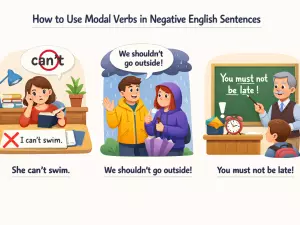
In this kind of writing, passive voice helps the sentence sound general, official, and procedure-focused. This connects closely with passive modal verbs, because forms like must be submitted, should be checked, and may be changed are very common in rules and instructions.
Passive voice for politeness
Passive voice can also make a message sound less personal. This is especially useful in customer service and workplace communication.
| Too direct | More neutral passive | Effect |
|---|---|---|
| You entered the wrong code. | The wrong code was entered. | Less blame-focused |
| You did not attach the file. | The file was not attached. | More professional |
| You missed the deadline. | The deadline was missed. | Softer, but less direct |
| You forgot to sign the form. | The form was not signed. | Focuses on the missing action |
However, be careful. If the situation requires honesty and clear responsibility, active voice is better. “We made a mistake” often sounds more trustworthy than “A mistake was made.”
Passive voice in news, rules, and instructions

Some types of English use passive voice more often than casual conversation. News reports, official rules, public notices, manuals, lab reports, and process descriptions often focus on events and procedures rather than individual people.
Passive voice in news reports
News often begins with the event itself:
- Three people were injured in the accident.
- A new law was introduced yesterday.
- The building was damaged by heavy rain.
- The suspect was arrested early this morning.
This style is natural because the event is the main information. Later, the report may switch to active voice when the actor becomes important:
- Passive first: The building was damaged during the storm.
- Active later: Officials said strong winds broke several windows.
Passive voice in rules and signs
Rules often use passive voice because they apply to everyone. The sentence does not need to name the person enforcing the rule.
- Food and drink are not allowed.
- ID must be shown at the entrance.
- Mobile phones must be switched off.
- Bags may be checked by security staff.
- Visitors are requested to sign in.
This kind of passive voice sounds official and impersonal on purpose. It makes the rule feel general, not like one person’s personal command.
Passive voice in instructions and procedures
In technical writing, passive voice can focus attention on the process:
- The solution is heated for ten minutes.
- The mixture is stirred until smooth.
- The data are recorded in a table.
- The samples are placed in separate containers.
But in direct spoken instructions, active voice is often more natural:
- Technical style: The solution is heated for ten minutes.
- Direct instruction: Heat the solution for ten minutes.
So the context matters. A lab report may use passive voice. A teacher standing beside a student will often use an imperative.
Casual passive and get-passive
Passive voice is not only formal. In everyday conversation, English speakers often use passive forms naturally, especially when talking about experiences, accidents, delays, invitations, problems, and changes.
- I was invited to the party.
- We were told to wait outside.
- My phone was stolen.
- The flight was delayed again.
- He was promoted last month.
In casual English, speakers also use get + past participle. This is called the get-passive. It often sounds more conversational and sometimes emphasizes that something happened suddenly, unexpectedly, accidentally, or personally.
- I got invited to the party.
- We got stuck in traffic.
- My phone got stolen.
- He got promoted last month.
- They got caught in the rain.
The get-passive is common in speech, but it is usually less formal than the standard be-passive. You can learn more about this pattern in the guide to get passive and informal passive forms.
| Standard passive | Get-passive | Tone difference |
|---|---|---|
| My bag was stolen. | My bag got stolen. | Get-passive sounds more conversational. |
| We were delayed at the airport. | We got delayed at the airport. | Get-passive sounds like a personal experience. |
| He was promoted. | He got promoted. | Both are natural; get-passive is less formal. |
| The window was broken. | The window got broken. | Get-passive may suggest an accident. |
Use the standard passive in formal writing. Use get-passive carefully in conversation, storytelling, informal emails, and natural speech.
When passive voice sounds heavy or unnatural
Passive voice is useful, but overusing it makes English sound dull, vague, or overly formal. A sentence can be grammatically correct and still sound unnatural.
Look at this example:
- Heavy: A decision was made by the team to restart the project.
- Better: The team decided to restart the project.
The passive version is not wrong, but it is longer and weaker. The active version is clearer because the doer is important and easy to name.
Here are more examples:
- Heavy: The party was enjoyed by everyone.
Natural: Everyone enjoyed the party. - Heavy: English is spoken by me every day.
Natural: I speak English every day. - Heavy: A suggestion was made by Anna.
Natural: Anna made a suggestion. - Heavy: The final answer was given by the student.
Natural: The student gave the final answer.
Passive voice often sounds unnatural when:
- the doer is important and should be named directly;
- the sentence becomes longer for no reason;
- the passive form sounds like a translation;
- several passive sentences appear in a row;
- the writer uses passive voice only to sound more advanced.
Teacher note: do not make passive voice your default style
A good passive sentence has a reason to be passive. It helps focus the sentence, soften the tone, sound more formal, or describe a process. If it does not do any of those things, active voice is usually better.
Compare this paragraph:
Too passive: The meeting was attended by several managers. A proposal was presented. A decision was made. The next steps were discussed.
Better: Several managers attended the meeting. Anna presented a proposal, and the team decided on the next steps.
The second version is clearer because it names the people and actions that matter.
How to choose active or passive voice
The best choice depends on focus, context, and tone. Do not ask, “Which voice is more correct?” Ask, “Which voice helps this sentence do its job?”
| If you want to emphasize... | Choose | Example | Why |
|---|---|---|---|
| The person doing the action | Active | The designer created the logo. | The designer is important. |
| The result or affected thing | Passive | The logo was created last week. | The logo is the topic. |
| Clear responsibility | Active | The supplier missed the deadline. | The doer should be named. |
| A formal rule | Passive | The form must be submitted by Friday. | The rule sounds general and official. |
| A tactful correction | Passive | The wrong file was uploaded. | The focus moves away from blame. |
Useful questions before choosing passive voice
- Who or what is the sentence really about?
- Does the reader need to know who did the action?
- Would active voice make responsibility clearer?
- Would passive voice make the sentence more polite or formal?
- Am I hiding the doer for a good reason?
- Does the passive sentence sound natural when I read it aloud?
Strong writing often uses both voices. A report may use passive voice to present results, then active voice to explain who acted. A customer service message may use passive voice to soften a problem, then active voice to explain the next step.
- Passive result: Your payment has been received.
- Active next step: We will send your confirmation email shortly.
That combination sounds natural because each sentence uses the voice that fits its purpose.
Common passive voice mistakes
Learners often know the basic passive formula, but they still make mistakes with tense, participles, by-phrases, adverbs, and verbs that cannot become passive. Here are the most common problems.
1. Forgetting the verb be
Passive voice needs a form of be. The past participle cannot usually stand alone.
- ❌ “The window broken yesterday.” → ✅ “The window was broken yesterday.”
- ❌ “The documents signed this morning.” → ✅ “The documents were signed this morning.”
- ❌ “The room cleaned before the guests arrived.” → ✅ “The room was cleaned before the guests arrived.”
2. Using the wrong past participle
Passive voice uses the past participle, not the base form of the verb.
- ❌ “The email was send this morning.” → ✅ “The email was sent this morning.”
- ❌ “The report was write by the assistant.” → ✅ “The report was written by the assistant.”
- ❌ “The money was stole from the office.” → ✅ “The money was stolen from the office.”
For tense forms such as is sent, was sent, has been sent, and will be sent, see the full guide to passive voice verb forms.
3. Using passive voice with verbs that do not take objects
Some verbs do not normally become passive because they do not take a direct object.
- ❌ “The accident was happened yesterday.” → ✅ “The accident happened yesterday.”
- ❌ “The airport was arrived at by the tourists.” → ✅ “The tourists arrived at the airport.”
- ❌ “The bed was slept by the child.” → ✅ “The child slept in the bed.”
4. Adding unnecessary by-phrases
Do not add by automatically. Use a by-phrase only when the doer matters.
- Weak: “The floor was cleaned by the cleaner.”
Better: “The floor was cleaned.” - Weak: “The email was sent by someone from the office.”
Better: “The email was sent from the office.” - Weak: “English is spoken by people in many countries.”
Better: “English is spoken in many countries.”
5. Confusing by and with
Use by for the doer. Use with for a tool or instrument. This is a common issue with prepositions in passive voice.
- ✅ “The letter was written by Emma.” Emma did the action.
- ✅ “The letter was written with a fountain pen.” The pen was the tool.
- ❌ “The letter was written by a fountain pen.”
6. Placing adverbs awkwardly
Adverbs often go between the auxiliary and the past participle, or at the end of the sentence. This is why adverb placement in passive voice deserves special attention.
- ✅ “The contract was carefully reviewed.”
- ✅ “The contract was reviewed carefully.”
- ❌ “The contract carefully was reviewed.”
- ✅ “The issue has been fully explained.”
- ✅ “The issue has been explained fully.”
- ❌ “The issue has fully been explained.” This may sound awkward in many contexts.
Homework: passive voice use
1. Choose Active or Passive Voice
Choose the more natural sentence for each situation.
- You want to emphasize that Anna solved the problem.
- You do not know who stole your phone.
- You are writing a formal sign about food in a museum.
- You are telling a story where the chef is the main person.
- You are writing a lab report about heating a liquid.
- You are complaining because the hotel lost your reservation.
- You want to avoid blaming the customer directly for entering the wrong code.
- You are reporting that the deadline changed, but the person who changed it is not important.
- You want to praise your colleague for fixing a software issue.
- You are writing a public statement and want to avoid naming the person responsible for an error.
Show answers
- Active: Anna solved the problem.
- Passive: My phone was stolen.
- Passive: Food is not allowed in the museum.
- Active: The chef prepared every dish by hand.
- Passive: The liquid was heated for five minutes.
- Active: The hotel lost my reservation.
- Passive: The wrong code was entered.
- Passive: The deadline was changed.
- Active: Anna fixed the software issue.
- Passive: An error was made.
2. Rewrite the Sentences Naturally
Rewrite each sentence using active or passive voice so it sounds more natural.
- The party was enjoyed by everyone.
- Someone scratched my car last night.
- The report was finished by our team before noon.
- You entered the wrong password.
- The samples were tested in a controlled environment.
- The mistake was noticed by Sarah.
- People speak English in many countries.
- The form must be submitted before Friday.
- The meeting was attended by five managers.
- The flight was delayed by the airline.
Show answers
- Everyone enjoyed the party.
- My car was scratched last night.
- Our team finished the report before noon. / The report was finished before noon.
- The wrong password was entered. / You entered the wrong password.
- Correct. This passive sentence is natural in a formal report.
- Sarah noticed the mistake.
- English is spoken in many countries.
- Correct. This passive modal form is natural in rules.
- Five managers attended the meeting.
- The flight was delayed. / The airline delayed the flight.
3. Spot the Passive Voice Mistake
Some of the following sentences contain passive voice mistakes. Find and correct them.
- The window was broken yesterday.
- The accident was happened near the station.
- The documents signed this morning.
- The email was sent by the assistant.
- The letter was written by a blue pen.
- The rooms are cleaned every day.
- The package will delivered tomorrow.
- The contract was carefully reviewed.
- The report was write by an expert.
- My bike got stolen last night.
Show answers
- Correct.
- The accident happened near the station.
- The documents were signed this morning.
- Correct.
- The letter was written with a blue pen.
- Correct.
- The package will be delivered tomorrow.
- Correct.
- The report was written by an expert.
- Correct in informal English.
FAQ: using passive voice naturally
1. Is passive voice common in everyday English?
Yes. Passive voice is common in everyday sentences such as “My phone was stolen,” “The meeting was moved,” “I was told to wait,” and “The flight was delayed.” It is not only formal grammar.
2. When should I use passive voice?
Use passive voice when the result, affected thing, rule, process, or situation matters more than the person who did the action. It is also useful when the doer is unknown, obvious, unimportant, or deliberately omitted.
3. Is passive voice bad writing?
No. Passive voice is not bad by itself. It becomes weak only when it is unnecessary, vague, or overused. Good writers use passive voice for focus, tone, politeness, and structure.
4. Why does passive voice sound more formal?
Passive voice often removes the person from the sentence and focuses on the action or result. That makes the sentence sound more objective, procedural, or official: “The application has been reviewed” sounds more formal than “We reviewed your application.”
5. Do I always need a by-phrase in passive voice?
No. Use a by-phrase only when the doer is important. “My wallet was stolen” is natural without “by someone.” But “The novel was written by George Orwell” needs the by-phrase because the author matters.
6. What is the difference between was done and got done?
Was done is the standard passive form and works in most styles. Got done is more informal and common in conversation: “My phone got stolen,” “We got delayed,” “He got promoted.”
7. Why do companies and politicians use passive voice so much?
Passive voice can make responsibility less direct. “A mistake was made” avoids saying who made the mistake. Sometimes this is polite or diplomatic, but sometimes it sounds evasive.
8. How can I check whether passive voice sounds natural?
Read the sentence aloud and ask two questions: Does the sentence have a real reason to be passive? Is the passive version clearer, more polite, or more natural than the active version? If not, active voice is probably better.