Adjectives for Describing Clothing and Style

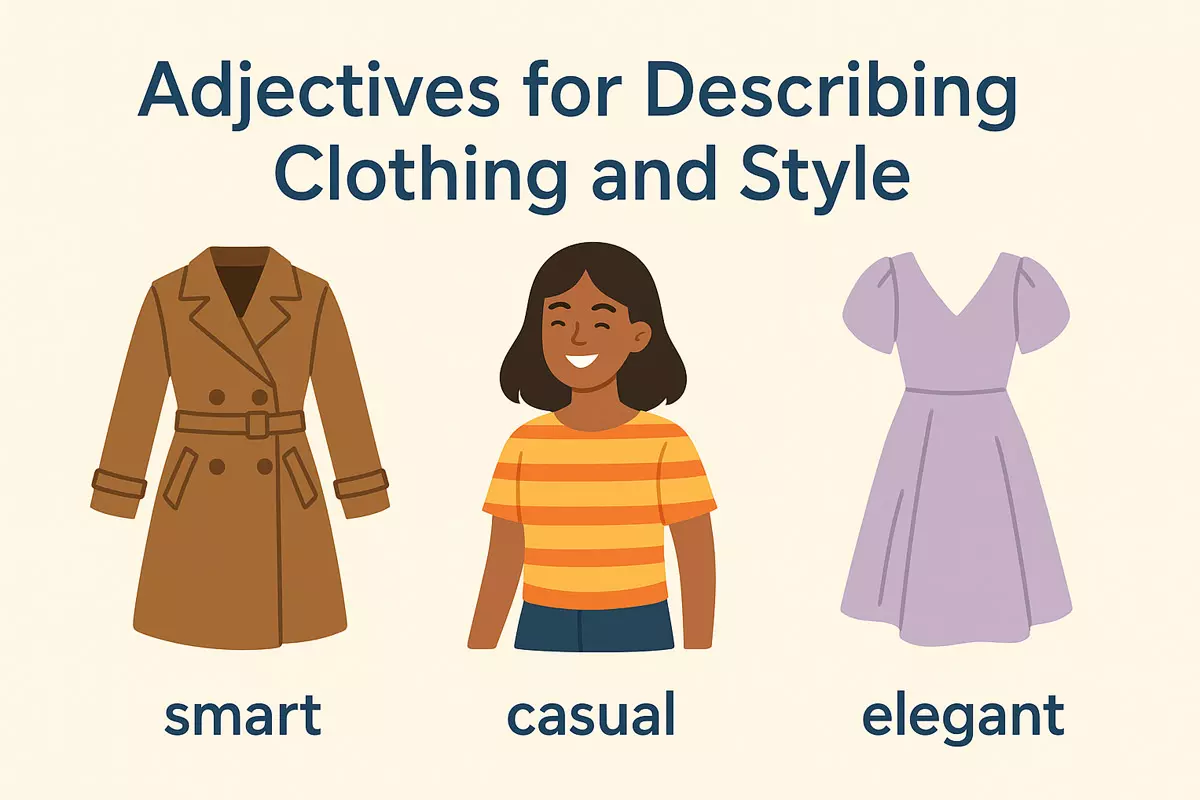 Here we basic clothing adjectives like long, short, tight, and loose, style terms such as casual, smart, and formal, how to talk about colors and patterns, and polite ways to describe outfits, with practice using simple sentences.
Selecting the appropriate words to discuss clothing can enhance conversations and express individuality. When talking with friends or writing about fashion, being able to describe outfits and personal style makes the topic more engaging and vivid. It allows you to capture the essence of different looks, highlight trends, and share your own preferences with clarity. Developing a varied vocabulary for fashion not only adds interest to your discussions but also helps you connect with others who share your enthusiasm for style.
Basic clothing adjectives: long, short, tight, loose
When describing clothes, a handful of simple adjectives often come up in everyday conversation. Words like “long,” “short,” “tight,” and “loose” help us quickly communicate the fit and overall appearance of what someone is wearing. These terms are especially useful when shopping, giving style advice, or talking about personal preferences in fashion.
Understanding the basics
Using these core descriptors can make it easier to specify what you mean. For instance, “long” and “short” typically refer to the length of garments, such as sleeves, pants, skirts, or dresses. “Tight” and “loose,” on the other hand, indicate how closely an item fits to the body. These adjectives are not just limited to one type of clothing—they work for everything from jeans to T-shirts and even accessories like gloves or socks.
Common ways to use these adjectives
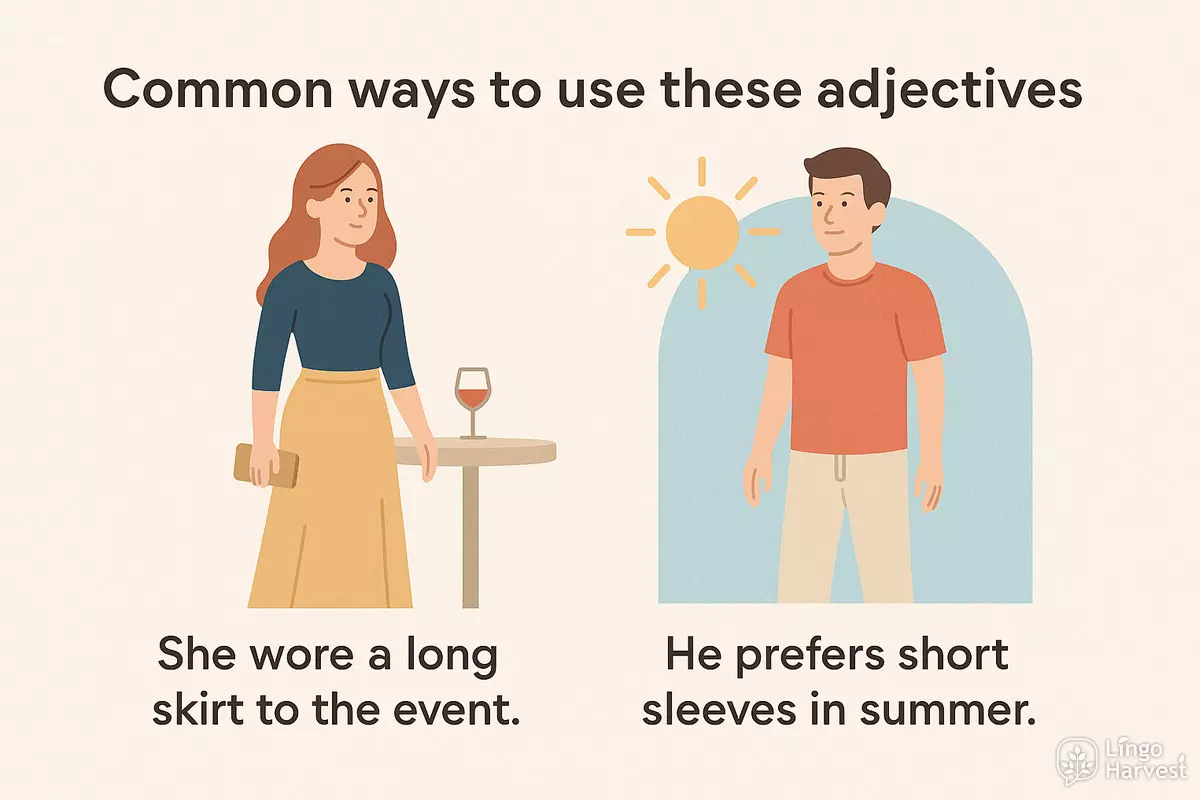
Here are some examples of how these basic words might appear in sentences:
- She wore a long skirt to the event.
- He prefers short sleeves in summer.
- Those jeans look a bit tight on you.
- I like my sweaters loose and comfortable.
More descriptive options
Beyond the four basics, English offers many related adjectives to give your descriptions extra precision or flair. Consider these alternatives and extensions:
- baggy → She wore baggy jeans that looked very comfortable.
- fitted → He chose a fitted shirt that showed his physique.
- oversized → She styled an oversized sweater with leggings.
- cropped → She put on a cropped jacket for the evening.
- mini → She wore a mini skirt to the party.
- maxi → A flowing maxi dress is perfect for summer.
- snug → The sweater felt snug around the shoulders.
- flowy → She loves wearing flowy dresses on vacation.
- skinny → He prefers skinny jeans with boots.
- loose-fitting → Loose-fitting trousers are very trendy now.
- ankle-length → She bought ankle-length pants for work.
- knee-high → She wore knee-high boots with her coat.
- above-the-knee → The above-the-knee dress looked stylish.
- bodycon → She chose a bodycon dress for the evening event.
- relaxed → He wore a relaxed fit T-shirt for comfort.
- high-waisted → High-waisted jeans are flattering on most body types.
- low-rise → Low-rise pants are coming back into fashion.
- tapered → He prefers tapered trousers for a modern look.
- wide-leg → Wide-leg pants create a dramatic silhouette.
- structured → The structured blazer gave her a polished look.
- stretchy → These stretchy leggings are great for the gym.
- ribbed → She wore a ribbed top with a denim skirt.
- pleated → A pleated skirt adds movement to the outfit.
Quick comparison: fit and length
To help clarify these terms, here’s how they line up when talking about fit and length:
| Adjective | What it describes |
|---|---|
| Long | Garments that extend further (e.g., long pants, long sleeves) |
| Short | Items with less length (shorts, short skirts, short-sleeved shirts) |
| Tight | Clothes that fit closely to the body (tight jeans, tight dress) |
| Loose | Items with extra space, not form-fitting (loose T-shirt, loose trousers) |
These basic adjectives make it easy to give clear, practical information about clothing style and fit. Whether you’re giving feedback, asking for a size, or choosing outfits, having these words at your fingertips is always helpful.
Adjectives for style: casual, smart, formal
When talking about how people dress, English speakers use a range of descriptive words to capture the overall vibe or impression given by clothing. These words help to communicate whether an outfit feels laid-back, polished, or ready for a special occasion. Understanding these adjectives makes it easier to describe both your own look and what you notice in others.
Casual style adjectives
Casual clothing is all about comfort and ease. Outfits in this category are suitable for relaxed settings like weekends, home life, or informal gatherings. Here are some useful adjectives to describe this type of look:
Adjectives for casual, relaxed style
- Relaxed → She wore a relaxed outfit for the weekend trip.
- Laid-back → His laid-back style matches his personality.
- Comfy → She chose a comfy sweater for the cold morning.
- Sporty → He prefers a sporty look when running errands.
- Everyday → This is her everyday outfit for school.
- Simple → He likes simple clothing with no prints.
- Loose-fitting → She bought loose-fitting pants for comfort.
- Slouchy → She styled a slouchy cardigan over a T-shirt.
- Effortless → Her effortless style looks natural and chic.
- Down-to-earth → His down-to-earth clothing feels authentic.
- Chill → She wore a chill outfit to hang out with friends.
- Informal → It was an informal gathering, so casual clothes were fine.
- Cozy → She stayed warm in a cozy oversized hoodie.
- Everyday-friendly → This everyday-friendly outfit works for any casual plan.
- Minimal → He prefers a minimal wardrobe with neutral tones.
Adjectives for smart, polished looks
- Neat → She arrived looking neat and put-together.
- Sharp → His sharp outfit impressed everyone at the meeting.
- Polished → Her polished appearance made her stand out.
- Refined → He has a refined style with tailored pieces.
- Presentable → She dressed presentably for the interview.
- Tailored → He wore a tailored blazer for a perfect fit.
- Chic → Her chic outfit looked modern and stylish.
- Sleek → A sleek black dress made the look elegant.
- Crisp → He wore a crisp white shirt to the office.
- Classy → She chose a classy outfit for the dinner party.
- Businesslike → His businesslike look was appropriate for the event.
- Professional → A professional outfit is required at her workplace.
- Well-groomed → He came looking well-groomed and confident.
- Structured → A structured blazer gives a strong silhouette.
- Elegant-casual → Her elegant-casual style works for semi-formal events.
Adjectives for formal attire
- Elegant → She looked elegant in her evening gown.
- Sophisticated → His sophisticated suit drew attention.
- Glamorous → The actress arrived in a glamorous dress.
- Opulent → The opulent outfit sparkled under the lights.
- Dressy → She wore a dressy ensemble for the special event.
- Stately → His stately attire fit the ceremonial occasion.
- Luxurious → The luxurious fabric felt smooth and rich.
- Immaculate → His immaculate suit showed no wrinkles.
- Graceful → She walked in a graceful, flowing gown.
- Traditional → He wore traditional attire for the ceremony.
- Classic → A classic black tuxedo never goes out of style.
- Resplendent → She looked resplendent in her sparkling dress.
- Formal → He wore formal attire for the award ceremony.
- Regal → Her regal dress made her look majestic.
- Majestic → The majestic outfit matched the grand event.
| Style Category | Example Adjectives |
|---|---|
| Casual | Relaxed, comfy, informal, slouchy, everyday |
| Smart | Neat, polished, tailored, chic, professional |
| Formal | Elegant, glamorous, stately, opulent, classic |
Using the right adjective helps others instantly picture the level of formality and the impression an outfit creates. Whether you’re describing your own wardrobe or analyzing fashion choices, a strong vocabulary for style makes your descriptions much more vivid and precise.
Talking about colors and patterns
Describing what someone is wearing often involves mentioning both the color and the pattern of their clothes. These details help to create a vivid picture and can also reflect personality or mood. Knowing a range of adjectives for color and pattern makes your descriptions more precise and interesting.
Adjectives for Colors
When talking about the shade or hue of clothing, you can use both basic and more specific terms. Here are some useful adjectives for colors:
Adjectives for Color Tones
- Vibrant → She loves wearing vibrant colors in summer.
- Muted → He prefers muted tones for work outfits.
- Pastel → She chose a pastel pink dress for the party.
- Neon → Neon yellow shoes made the outfit stand out.
- Earthy → He likes earthy shades like olive and brown.
- Deep → She wore a deep red coat.
- Pale → The pale blue scarf looked elegant.
- Bold → He chose a bold orange jacket.
- Dark → Dark colors usually look more formal.
- Bright → She picked a bright purple sweater.
- Rich → The dress came in a rich emerald green.
- Soft → Soft beige tones are easy to style.
- Warm → She looks great in warm colors like mustard.
- Cool → Cool tones like navy and grey suit him well.
- Monochrome → She wore a monochrome black outfit.
- Neutral → Neutral shades are perfect for layering.
- Saturated → He prefers saturated tones for streetwear.
- Faded → She loves that vintage faded denim look.
These adjectives can be combined with color names: “deep green,” “pale blue,” “bright red,” etc.
Common Patterns in Clothing
- Striped → He wore a striped shirt to the office.
- Checked → She bought a checked blazer for fall.
- Plaid → Plaid skirts are popular in winter fashion.
- Polka-dotted → She wore a polka-dotted summer dress.
- Floral → Floral patterns are perfect for spring outfits.
- Geometric → He likes geometric prints for a modern look.
- Animal print → She styled a bold animal print jacket.
- Camouflage → Camouflage pants are trendy in streetwear.
- Houndstooth → The houndstooth coat looked very chic.
- Paisley → He wore a paisley-patterned scarf.
- Solid → A solid black T-shirt works with anything.
- Abstract → Abstract prints give a creative vibe.
- Chevron → She chose a chevron-patterned sweater.
- Argyle → Argyle socks are classic and timeless.
- Speckled → He bought a speckled knit sweater.
- Embroidered → The embroidered blouse looked handcrafted.
- Graphic print → She loves T-shirts with graphic prints.
- Marbled → The marbled pattern added a soft texture effect.
Combining Color and Pattern
When describing what someone is wearing, it's common to combine both aspects: "She wore a pastel pink, floral dress," or "He chose a bold, striped shirt." These combinations help create a detailed mental image and can also convey the style or formality of the clothing.
| Color Adjective | Pattern Adjective/Noun | Example Phrase |
|---|---|---|
| Muted | Checked | Muted checked blazer |
| Bright | Polka-dotted | Bright polka-dotted skirt |
| Earthy | Plaid | Earthy plaid shirt |
| Pastel | Floral | Pastel floral blouse |
| Neutral | Solid | Neutral solid trousers |
Tips for Using Color and Pattern Adjectives
- Start with the color, then mention the pattern: "dark striped pants."
- For more precision, add a color adjective: "soft blue polka-dotted scarf."
- Use adjectives that match the mood or occasion: "vibrant geometric dress" for something lively, "muted houndstooth coat" for something subtle.
By expanding your vocabulary for both color and pattern, you can describe clothing and style choices more vividly and accurately.
Describing what someone is wearing
Talking about a person’s outfit involves more than simply naming clothing items. To give a vivid impression, it helps to use a variety of adjectives that convey color, fit, style, texture, and overall look. This not only paints a clearer picture but also adds interest to your description.
Useful adjectives for clothing and style
When you want to comment on someone’s attire, consider adjectives that describe:
- Color: navy, pastel, bright, muted, vibrant, neutral
- Fit: loose, baggy, fitted, tight, oversized, tailored, snug
- Style: casual, formal, sporty, vintage, trendy, classic, bohemian
- Material/Texture: silky, woolen, denim, leather, cotton, sheer, knitted, velvet
- Condition: new, worn, spotless, faded, creased, pristine
- Pattern: striped, checked, polka-dot, floral, plain, graphic
- Length: short, long, knee-length, cropped, floor-length
- Accessories: accessorized, layered, minimal, statement
- Overall impression: elegant, bold, understated, flashy, relaxed, sophisticated
Sample phrases and sentence patterns
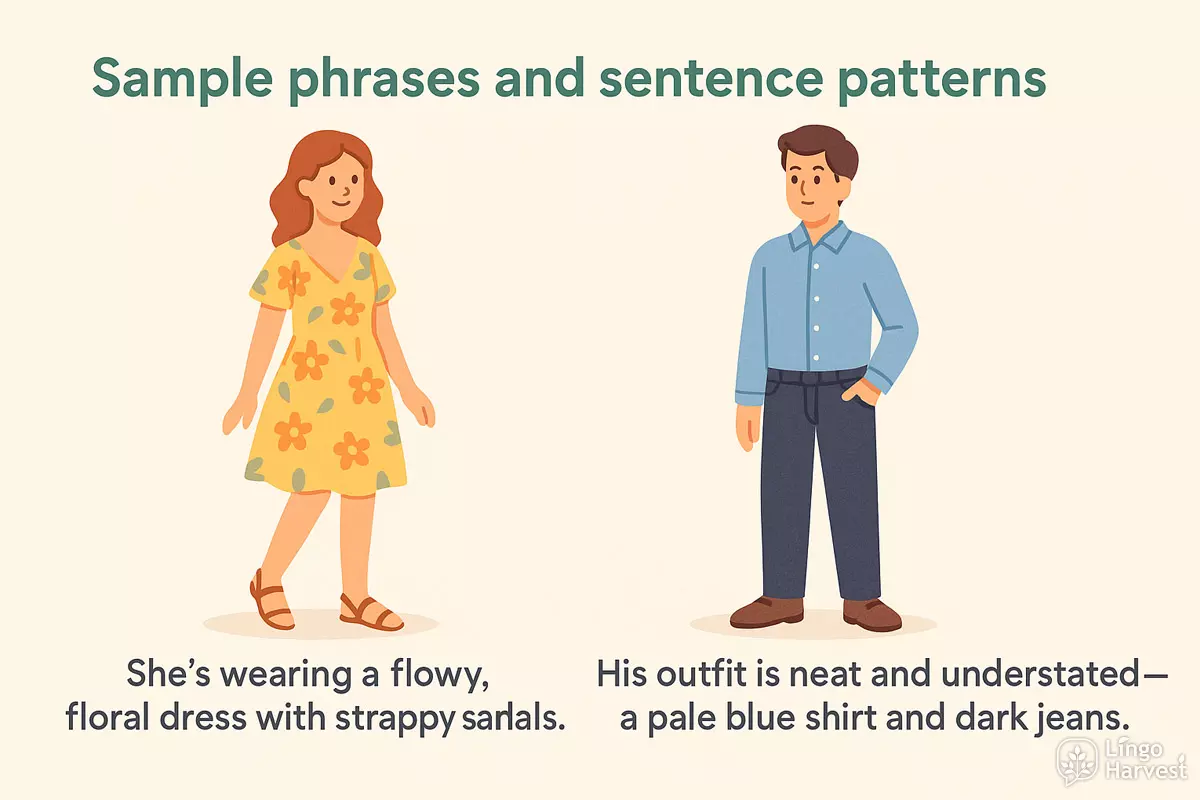
To describe a person’s look smoothly, you can use these patterns:
- She’s wearing a flowy, floral dress with strappy sandals.
- His outfit is neat and understated—a pale blue shirt and dark jeans.
- They have on a trendy oversized sweater and ripped jeans.
- He looks smart in a tailored suit and polished shoes.
- She’s dressed in casual, sporty clothes with bright sneakers.
- Their style is vintage, featuring a checked blazer and corduroy trousers.
Adjective comparison for clothing descriptions
Sometimes, choosing between similar adjectives can help you be more precise. Here’s a quick comparison:
| Adjective | Best Used For |
|---|---|
| Fitted | Clothes that closely follow the shape of the body, like tailored shirts or dresses |
| Loose | Relaxed, comfortable clothing such as baggy sweaters or wide-leg pants |
| Formal | Attire for professional or special occasions, like suits or evening gowns |
| Casual | Everyday wear, such as jeans, t-shirts, or sneakers |
| Trendy | Clothing that reflects the latest fashions or popular styles |
| Classic | Timeless pieces that never go out of style, like a little black dress or white button-down |
| Elegant | Stylish and graceful outfits, often with refined details |
| Bold | Outfits that stand out due to color, pattern, or unique design |
By mixing and matching these adjectives and patterns, you can express a wide range of clothing styles and personal flair. Whether you’re giving a compliment, describing a character in writing, or simply chatting about fashion, this vocabulary makes your descriptions more engaging and precise.
Polite ways to talk about other people’s clothes
When mentioning what someone else is wearing, it’s important to choose words that show respect and consideration. Instead of making blunt or overly personal comments, you can use positive, tactful language that focuses on style, color, or suitability. This approach helps to avoid misunderstandings and keeps conversations friendly.
Useful phrases and adjectives for compliments
- You look great in that [color/style]!
- That outfit really suits you.
- I love how you’ve put those pieces together.
- The color is very flattering on you.
- That’s a very elegant choice.
- Your style is always so unique.
- Where did you find such a lovely jacket?
- You have a great sense of fashion.
- That’s a classic look.
- The pattern is really eye-catching.
- You pull off that style so well.
- That dress/shirt is so chic!
- I like how comfortable that looks.
- Your outfit is so well-coordinated.
- Those shoes are a perfect match.
- That’s a bold choice—it works!
- You always look so put-together.
- That accessory really completes your look.
Tips for staying tactful
Focus on the clothing or the overall impression rather than the person’s body. Avoid making comparisons, and steer clear of negative or ambiguous adjectives. If you’re unsure whether a comment will be received well, it’s usually best to highlight something neutral, like color or how the clothing fits the occasion.
Polite vs. less considerate adjectives
| Considerate Adjectives | Adjectives to Avoid |
|---|---|
| stylish | weird |
| elegant | loud |
| classic | old-fashioned (in a negative way) |
| colorful | garish |
| trendy | outdated |
| unique | strange |
| well-fitted | tight/loose (unless positive context) |
| coordinated | clashing |
Choosing your words thoughtfully can make conversations about clothing and style more pleasant and supportive. When in doubt, focus on what you genuinely appreciate about the person’s outfit or how it suits the occasion.
Practice: describe outfits in simple sentences
Describing what someone is wearing is a practical way to use adjectives for clothing and style. Simple sentences help you focus on key vocabulary and structure. Below, you’ll find examples, practice tasks, and tips for building clear descriptions using a variety of adjectives.
Example Outfit Descriptions
- She is wearing a long, blue dress.
- He has on a white, cotton shirt and black jeans.
- The boy wears a striped T-shirt and denim shorts.
- Her jacket is bright red and very stylish.
- They are dressed in casual, comfortable clothes.
- My friend’s sweater is soft and oversized.
- He chose elegant, leather shoes for the event.
- She likes her old, faded jeans.
- The woman’s outfit is colorful and trendy.
- He is wearing a simple, gray hoodie and dark pants.
- Her skirt is floral and knee-length.
- He has a smart, tailored suit.
- She wears a light, summer scarf around her neck.
- The girl’s blouse is loose and comfortable.
- He prefers classic, plain T-shirts.
Practice: Describe These Outfits
- A man at a business meeting, wearing a suit, white shirt, and tie.
- A woman at the beach, dressed in a sundress and sandals.
- A teenager at a concert, in a graphic T-shirt, ripped jeans, and sneakers.
- A child on a rainy day, wearing a yellow raincoat and boots.
- An office worker on casual Friday, wearing jeans and a shirt.
- A woman at a wedding, in a long dress and high heels.
- A man at the gym, wearing sports clothes and trainers.
- A person in winter, dressed in a warm coat, hat, and scarf.
- A student at school, wearing a uniform.
- A chef at work, in a white jacket and apron.
Show answers
- He is wearing a dark suit, a white shirt, and a striped tie.
- She is dressed in a colorful sundress and flat sandals.
- He has on a black graphic T-shirt, ripped blue jeans, and white sneakers.
- The child is wearing a bright yellow raincoat and rubber boots.
- He is wearing blue jeans and a checked shirt for casual Friday.
- She is dressed in a long pastel dress and high heels.
- He is wearing a sleeveless sports T-shirt, shorts, and running shoes.
- She is wearing a thick winter coat, a wool hat, and a long scarf.
- The student is wearing a school blazer, a white shirt, and dark trousers.
- The chef is dressed in a white jacket, black trousers, and an apron.
Useful Adjectives for Clothing
Here is a list of adjectives commonly used to describe clothing and style. Mix and match these to make your own sentences:
- casual
- formal
- elegant
- trendy
- colorful
- plain
- striped
- checked
- floral
- faded
- oversized
- tight
- loose
- comfortable
- stylish
- classic
- leather
- cotton
- denim
- knee-length
Pattern for Describing Outfits
Follow this basic sentence structure for clear descriptions:
- Subject + be (is/are) + wearing + adjective(s) + clothing item(s).
- Example: "She is wearing a long, green skirt and a white blouse."
Challenge: Write Your Own Sentences
Write three sentences describing what you or someone you know is wearing today. Try to use at least two adjectives in each sentence.
Show answers
- I am wearing a soft, gray sweater and blue jeans.
- My sister has on a bright, patterned dress and black boots.
- My friend is dressed in a comfortable, loose T-shirt and denim shorts.