250+ Everyday Nouns You'll Use from Day One

 Here we 250+ essential nouns used in daily communication. It explores categories such as family members, places you visit, objects at home, items related to school and work, food and drinks, transportation, nature, weather, and basic feelings.
Embarking on a new language journey can be daunting, but focusing on the basics is essential. Begin by familiarizing yourself with common nouns that are frequently encountered in daily life. This foundational knowledge will help you navigate everyday situations more comfortably and with greater confidence. As you gradually build your vocabulary, you'll find it easier to communicate and understand the language in various contexts. Remember, patience and consistent practice are crucial as you progress, allowing you to unlock new opportunities and experiences through your language skills.
If you want to check how varied the nouns and other words in your own writing are, try our simple vocabulary variety tool . It shows how many different words you use compared with repeated ones.
What Are Everyday Nouns?
Everyday nouns are common words we use frequently in our daily conversations. They refer to objects, people, places, and concepts that are a regular part of our lives. These words are fundamental to building sentences and expressing ideas clearly and effectively.
Categories of Everyday Nouns
Everyday nouns can be grouped into several categories that reflect their usage in daily life. Understanding these categories can help you recognize and use these words more fluently.
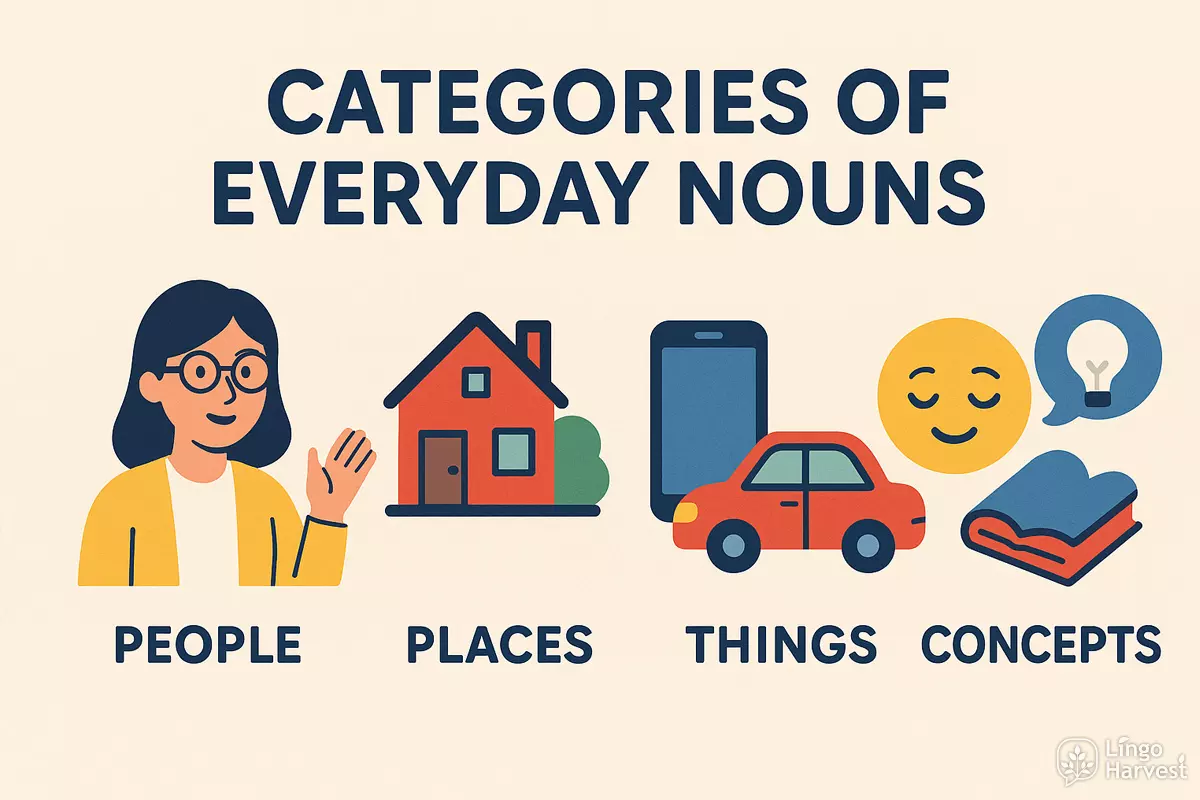
- People: Words like "teacher," "friend," and "doctor" refer to individuals we interact with regularly.
- Places: Terms such as "school," "home," and "park" are locations we frequently visit.
- Things: Objects like "phone," "car," and "book" are items we commonly use or encounter.
- Concepts: Words such as "happiness," "time," and "idea" represent abstract notions that are part of everyday discussions.
The Importance of Everyday Nouns
Mastering everyday nouns is crucial for effective communication. These words form the backbone of our language and help us convey our thoughts and experiences. By familiarizing yourself with these common terms, you can enhance your vocabulary and improve your ability to express yourself.
| Category | Examples |
|---|---|
| People | Mother, Boss, Neighbor |
| Places | Office, Restaurant, Library |
| Things | Computer, Bicycle, Television |
| Concepts | Freedom, Knowledge, Love |
Incorporating everyday nouns into your vocabulary is a stepping stone to mastering any language. As you become more comfortable with these terms, you'll find it easier to engage in conversations and understand the world around you. These nouns are the building blocks of communication, making them essential for anyone looking to improve their language skills.
People You See Daily
In our everyday lives, we encounter a variety of individuals who play different roles. From the moment you step out of your house, familiar faces such as neighbors, colleagues, and friends become part of your routine. These interactions shape our daily experiences and are integral to our social landscape.
Neighbors
Neighbors are often the first people you see when you leave your home. Whether it's a quick wave or a brief chat, these interactions can create a sense of community and belonging. Neighbors can also be a source of support, from lending a helping hand to looking out for each other's safety.
Colleagues
At your workplace, colleagues are the people you engage with regularly. Collaborating with them on projects or sharing a lunch break helps build professional relationships. These interactions can enhance teamwork and contribute to a positive work environment.
Friends
Friends are the people you choose to spend your free time with. They offer companionship and support, whether you're planning a weekend outing or simply catching up over coffee. The bonds you form with friends are often based on shared interests and experiences.
Service Workers
Every day, service workers such as cashiers, baristas, and bus drivers make your daily tasks smoother. A friendly smile or a simple thank you can go a long way in acknowledging their efforts. These brief encounters remind us of the importance of kindness and appreciation in our daily interactions.
- Neighbors: Provide a sense of community and support.
- Colleagues: Enhance teamwork and professional relationships.
- Friends: Offer companionship and shared experiences.
- Service Workers: Facilitate daily tasks and deserve appreciation.
Recognizing the roles these individuals play in our lives can enrich our social interactions and foster a sense of connection in our everyday routines.
Family Members
Understanding the vocabulary for relatives is essential when learning a new language. These words help you talk about your loved ones and describe your family tree. Knowing how to refer to various kinfolk can make conversations more personal and meaningful.
Immediate Family
- Mother → My mother works as a teacher at a local school.
- Father → My father usually cooks dinner on weekends.
- Sister → My sister is studying biology at university.
- Brother → My brother plays football every Saturday.
Extended Family
- Grandmother → My grandmother tells us stories from her childhood.
- Grandfather → My grandfather goes for a walk every morning.
- Aunt → My aunt lives in another country but visits us every summer.
- Uncle → My uncle plays the guitar in a band.
- Cousin → My cousin and I grew up in the same neighbourhood.
Each term for relatives carries cultural significance and varies across languages, reflecting different familial structures and traditions. Whether you're discussing your nuclear family or your extended clan, having the right words at your disposal is key to effective communication.
Family Dynamics
In many cultures, the concept of family extends beyond just blood relations. Terms like "in-laws" and "stepfamily" are also crucial for describing these relationships. Understanding these terms helps in navigating social interactions and deepening cultural insight.
Common Places Around You
As you navigate through daily life, you'll encounter a variety of locations that are integral to your routine. These places form the backdrop of your everyday experiences and are often the settings for essential tasks and activities. Knowing the names of these locations can enhance your communication and understanding of your surroundings.
Neighborhood Essentials
Within your local area, several spots are likely to be part of your regular visits. The grocery store is where you stock up on food and household items. The post office is essential for sending and receiving mail. For those who drive, the gas station is a frequent stop to refuel vehicles.
Community Services
Beyond shopping and errands, other places play a crucial role in community life. The library is a hub for learning and exploration, offering access to books and resources. Schools, often the center of education, are where children and adults alike engage in learning. Additionally, the hospital provides critical healthcare services, ensuring the well-being of the community.
Leisure and Recreation
- Park: A green space for walking, relaxing, and outdoor activities.
- Cinema: A place for watching movies on a large screen.
- Gym: A place to exercise and stay healthy.
- Restaurant: A place to enjoy meals outside your home.
- Café: A small place to drink coffee, tea, or have light snacks.
- Library: A quiet place to read, study, and borrow books.
- Playground: An outdoor area with swings and slides for children to play.
- Museum: A place to learn about art, history, or science through exhibits.
- Swimming Pool: A place to swim, relax, or practice water sports.
- Beach: A sandy area next to the ocean or lake for sunbathing and swimming.
- Shopping Mall: A large indoor space with many stores, restaurants, and entertainment areas.
- Theater: A place to watch live performances such as plays or musicals.
These locations, among others, are integral parts of your daily life. Familiarizing yourself with these terms can greatly improve your ability to navigate and interact within your community.
Objects at Home
Our living spaces are filled with numerous items that we interact with daily. These household items not only serve functional purposes but also contribute to the comfort and aesthetics of our homes. To get familiar with these everyday objects, let's explore some of the most common ones found in various rooms.

Kitchen Essentials
- Refrigerator: An appliance used to keep food and drinks cool and fresh.
- Stove: A cooking device that provides heat through gas or electricity.
- Microwave: A quick way to heat or cook food using microwave radiation.
- Dishwasher: A machine for cleaning dishes automatically.
- Blender: A kitchen tool used to mix, puree, or emulsify food and drinks.
- Oven: A heated compartment used for baking or roasting food.
- Toaster: A small appliance for browning bread slices.
- Cutting Board: A flat surface used for chopping ingredients safely.
- Knife Set: A group of kitchen knives used for slicing, chopping, and cutting.
- Frying Pan: A shallow pan used for frying and sautéing foods.
- Pot: A deep cooking vessel used to boil or simmer food and liquids.
- Kettle: A container used to heat or boil water.
- Measuring Cups: Tools used to measure exact amounts of ingredients.
- Spatula: A flat utensil for flipping or spreading food.
- Colander: A bowl with holes used for draining liquids from foods.
Living Room Basics
- Sofa: A comfortable seating option for multiple people.
- Coffee Table: A low table placed in front of seating.
- Television: An electronic device used for entertainment.
- Bookshelf: Furniture for storing books or display items.
- Armchair: A comfortable chair with armrests.
- Carpet: A large rug that covers part of the floor.
- Lamp: A light source used to brighten the room.
- Remote Control: A handheld device used to operate the TV or electronics.
- Decorative Pillow: A soft cushion used to decorate and add comfort.
- Side Table: A small table beside the sofa or chair.
- Wall Clock: A clock hung on the wall to tell time.
- Picture Frame: A frame used to hold photos or art.
Bedroom Necessities
- Bed: A piece of furniture for sleeping or resting.
- Wardrobe: A tall cupboard for storing clothes.
- Nightstand: A small table beside the bed.
- Dresser: A piece of furniture with drawers for clothes.
- Pillow: A soft cushion used to rest your head while sleeping.
- Blanket: A warm cover used while sleeping or resting.
- Mattress: The soft, padded surface you sleep on.
- Alarm Clock: A device used to wake someone at a set time.
- Closet: A built-in storage space for clothing and shoes.
- Mirror: A reflective surface used for grooming.
- Lamp: A light placed next to the bed for reading.
- Bed Sheet: A cover placed over a mattress for comfort and hygiene.
Bathroom Items
- Shower: A place to wash with running water.
- Toilet: A fixture for human waste disposal.
- Sink: A basin for washing hands and face.
- Towel Rack: A bar for hanging towels.
- Mirror: A reflective surface for daily grooming.
- Shampoo: A liquid cleanser for hair.
- Soap: A product used for cleaning the skin.
- Toothbrush: A small brush for cleaning teeth.
- Toothpaste: A gel or paste used with a toothbrush.
- Bath Mat: A soft mat placed on the floor to prevent slipping.
- Laundry Basket: A container for collecting dirty clothes.
- Trash Bin: A small container for bathroom waste.
School and Work Items
Navigating daily routines often involves a variety of tools and objects, especially in educational and professional settings. Whether you're a student or a working professional, certain items are indispensable for productivity and organization.
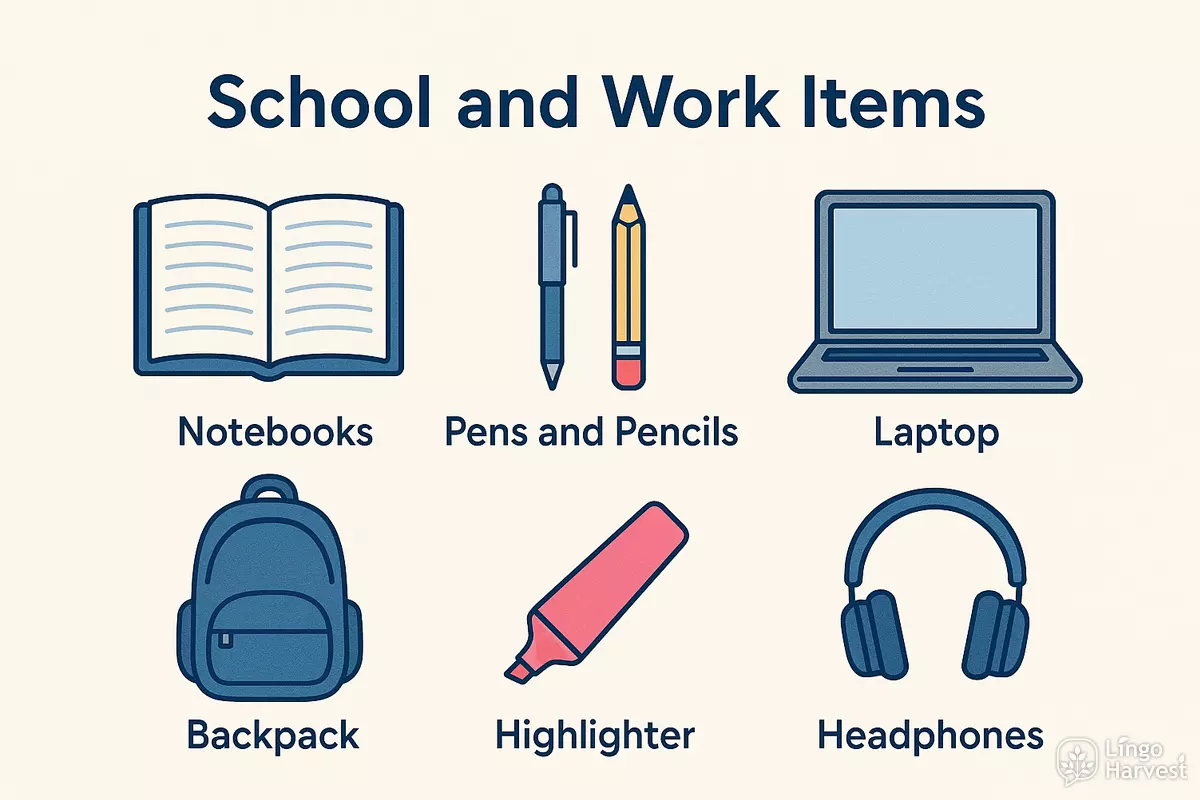
Essential Supplies for Learning and Working
To stay prepared and efficient, it's important to have dependable tools for studying, writing, and completing tasks. Here are common items used in everyday school and work life:
- Notebooks: Perfect for taking notes during classes, meetings, or brainstorming sessions.
- Pens and Pencils: Essential for writing, sketching, highlighting, and editing ideas.
- Laptops: A key device for research, typing documents, presentations, and online learning.
- Backpacks: Convenient for carrying books, devices, and personal essentials safely.
- Highlighters: Used to mark key points in texts or notes for easier review.
- Erasers: Helpful for correcting mistakes made while writing in pencil.
- Rulers: Useful for measuring, drawing lines, and working on math assignments.
- Chargers: Needed to keep laptops, tablets, and phones powered throughout the day.
- Headphones: Handy for online classes, focused work, or listening to study materials.
- Whiteboard Markers: Used for visual explanation during lessons, tutoring, or group work.
Organizational Tools
Good organization helps save time and reduces stress. The right tools can make tasks easier to plan, manage, and remember.
- Planners: Ideal for scheduling daily activities, homework, deadlines, and goals.
- Folders and Binders: Useful for storing notes, worksheets, and important documents neatly.
- Sticky Notes: Great for reminders, quick ideas, or marking important pages.
- Desk Organizer: Keeps pens, paperclips, notebooks, and gadgets in one place.
- Calendar: Helps track appointments, events, and study/work schedules visually.
- Bullet Journal: A customizable system for planning, note-taking, and habit tracking.
- Label Maker: Used to label folders, storage boxes, school supplies, and shelves.
- File Box: Keeps large collections of papers organized and easy to retrieve.
- Storage Drawer: Helps manage small supplies like sticky notes, pens, cords, and clips.
Table of Common Digital and Physical Items
| Item Type | Examples |
|---|---|
| Digital | Laptop, Tablet, Smartphone |
| Physical | Notebook, Pen, Backpack |
| Organizational | Planner, Binder, Sticky Notes |
| Accessories | Headphones, Mouse, USB Drive |
In both academic and professional environments, having the right items at your disposal can make a significant difference in managing tasks effectively. By ensuring you have these essential tools, you can enhance your productivity and maintain a well-organized workflow.
Food and Drinks
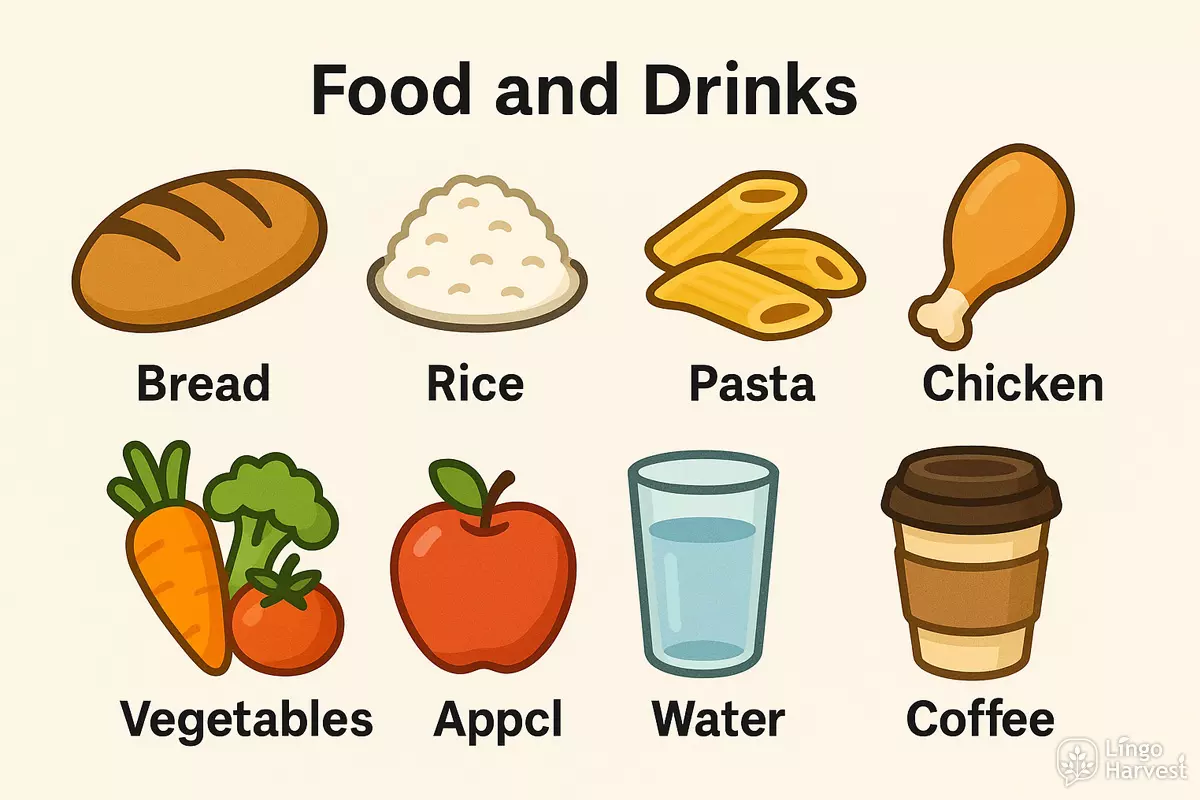
When learning a new language, words related to meals and beverages are essential. These terms are used daily, whether you're ordering at a restaurant or shopping for groceries. Knowing these basics can help you navigate various situations, from dining out to cooking at home.
Common Food Items
- Bread → I usually eat bread with butter for breakfast.
- Rice → We had rice and vegetables for dinner last night.
- Pasta → My favourite dish is pasta with tomato sauce.
- Chicken → She cooked chicken with herbs and garlic.
- Vegetables → It is healthy to eat fresh vegetables every day.
- Fruits → He likes to snack on fruits instead of sweets.
- Eggs → They made scrambled eggs for the whole family.
- Cheese → I added some cheese on top of the salad.
- Yogurt → She has yogurt with honey and nuts in the morning.
- Beef → We ordered grilled beef at the restaurant.
- Fish → Eating fish twice a week is good for your heart.
- Tofu → Tofu is a popular protein for many vegetarians.
- Beans → Beans are a cheap and nutritious source of protein.
- Potatoes → He roasted potatoes with olive oil and salt.
- Tomatoes → Fresh tomatoes make the salad taste better.
- Onions → She fried onions before adding the meat.
- Bananas → Bananas are a quick and easy snack.
- Apples → I like to cut apples into slices and share them.
Popular Beverages
- Water → It is important to drink enough water every day.
- Coffee → I drink a cup of coffee every morning.
- Tea → She prefers green tea in the afternoon.
- Juice → The children shared a glass of orange juice.
- Soda → He ordered a soda with his burger.
- Milk → She drinks a glass of milk before bed.
- Hot Chocolate → We had hot chocolate on a cold winter evening.
- Lemonade → They sold lemonade at the school fair.
- Iced Tea → I like to drink iced tea in the summer.
- Milkshake → We bought a chocolate milkshake after the movie.
- Sparkling Water → She ordered sparkling water instead of soda.
- Smoothie → He made a smoothie with bananas and strawberries.
- Herbal Tea → Herbal tea helps her relax at night.
- Energy Drink → He drank an energy drink before his workout.
- Coconut Water → Coconut water is refreshing on a hot day.
- Sports Drink → After running, they had a sports drink to rehydrate.
- Latte → She ordered a vanilla latte at the café.
- Espresso → He prefers a strong espresso after lunch.
Useful Phrases for Ordering
When you find yourself at a café or restaurant, knowing how to order appropriately can make your experience smoother. Here are some handy phrases:
- "Can I have...?"
- "I would like..."
- "What do you recommend?"
- "Could I see the menu, please?"
- "I'll have the special."
- "Do you have any vegetarian options?"
- "Can I get this without sugar/salt?"
- "Could you make it spicy/mild?"
- "What comes with this dish?"
- "Can I have it to go, please?"
- "Could we have the bill/check, please?"
- "Can I pay by card/cash?"
- "Could you split the bill?"
- "Is service included?"
- "Do you have any daily specials?"
Basic Food Vocabulary
Understanding the following categories can enhance your grocery shopping experience. Here’s a quick guide:
| Category | Examples |
|---|---|
| Fruits | Apples, Bananas, Oranges |
| Vegetables | Carrots, Broccoli, Spinach |
| Proteins | Chicken, Beef, Tofu |
| Dairy | Milk, Cheese, Yogurt |
Transportation and Travel Words
When you embark on a journey, whether it's a daily commute or an international adventure, knowing the right terms can make your trip smoother. Understanding common words related to vehicles and travel can help you navigate new environments and communicate effectively.
Common Modes of Transport
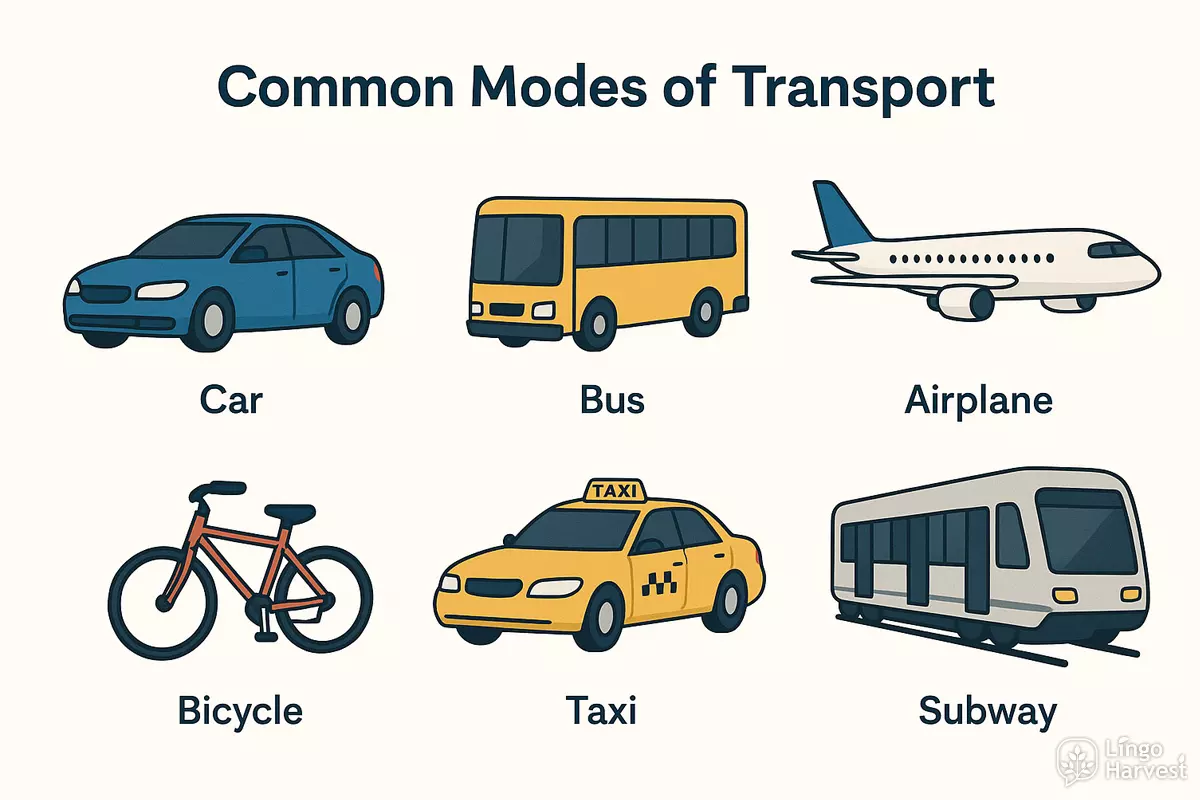
Familiarizing yourself with different types of transportation is essential. Here’s a list of some of the most frequently used terms:
- Car → We drove to the city by car because it was faster.
- Bus → She takes the bus to school every morning.
- Train → The train to London leaves at 9 a.m.
- Airplane → We flew to Spain by airplane for our holiday.
- Bicycle → He rides his bicycle to work when the weather is good.
- Taxi → We took a taxi from the airport to the hotel.
- Subway → Many people use the subway to avoid traffic.
Travel Essentials
In addition to modes of transport, there are several items and concepts that are indispensable for travelers. Recognizing these can enhance your travel experience:
- Passport → You must show your passport at the airport check-in desk.
- Ticket → I bought my ticket online a week before the trip.
- Luggage → Their luggage was too heavy, so they had to pay extra.
- Map → We used a city map to find the museum.
- Itinerary → Our itinerary includes three cities in five days.
- Boarding Pass → Please keep your boarding pass with you at all times.
- Reservation → They made a reservation at a hotel near the station.
Useful Phrases for Travelers
Effective communication is key when you're on the move. Here are some phrases that can assist you in various scenarios:
| English Phrase | Usage |
|---|---|
| Where is the nearest bus stop? | Finding public transport |
| How much is the fare? | Inquiring about transportation costs |
| Please take me to the airport. | Giving directions to a taxi driver |
| What time does the train depart? | Checking schedules |
By incorporating these terms and phrases into your vocabulary, you'll find that moving around, whether locally or abroad, becomes significantly more manageable. Knowing the right words not only aids in understanding but also enriches your travel experience by making interactions more meaningful.
Nature and Weather
Understanding the world around us often begins with the basics, and the environment is a great starting point. From the moment you step outside, you're surrounded by a variety of natural elements and weather conditions that are essential to your daily experiences. Let's explore some common terms that will help you describe and understand these aspects of life.
Common Natural Elements
When talking about the natural world, there are certain elements you will frequently encounter. These are some of the key terms that will help you navigate conversations about your surroundings:
- Tree: A large plant with a trunk and branches, often found in forests and parks.
- River: A natural stream of water flowing towards a sea, lake, or another river.
- Mountain: A large landform that rises prominently above its surroundings, typically having a peak.
- Ocean: A vast body of saltwater that covers much of the Earth's surface.
Weather Conditions
Weather is a crucial part of daily life, influencing everything from what you wear to your travel plans. Here are some fundamental terms to describe the weather:
- Sunny: When the sun is shining brightly and there are few to no clouds.
- Rainy: Characterized by the presence of rain, often resulting in wet conditions.
- Windy: When there is a significant amount of wind, which can affect outdoor activities.
- Snowy: When snow is falling, covering the ground in a white layer.
Weather Patterns
Weather patterns can vary greatly depending on your location and the time of year. Understanding these terms can help you predict and prepare for different conditions:
| Weather Pattern | Description |
|---|---|
| Thunderstorm | A storm with thunder and lightning, often accompanied by heavy rain. |
| Hurricane | A large, powerful storm system characterized by strong winds and heavy rain. |
| Drought | A prolonged period of abnormally low rainfall, leading to water shortages. |
| Blizzard | A severe snowstorm with high winds and low visibility. |
By familiarizing yourself with these terms, you'll be better equipped to engage in conversations about the natural environment and weather, enhancing your understanding of the world around you.
Feelings and Basic Ideas
Understanding and expressing emotions is essential in everyday communication. Whether you're learning a new language or enhancing your vocabulary, the ability to convey feelings and fundamental concepts can significantly improve your interactions. Here, we explore some common nouns related to emotions and basic ideas that you'll likely use frequently.
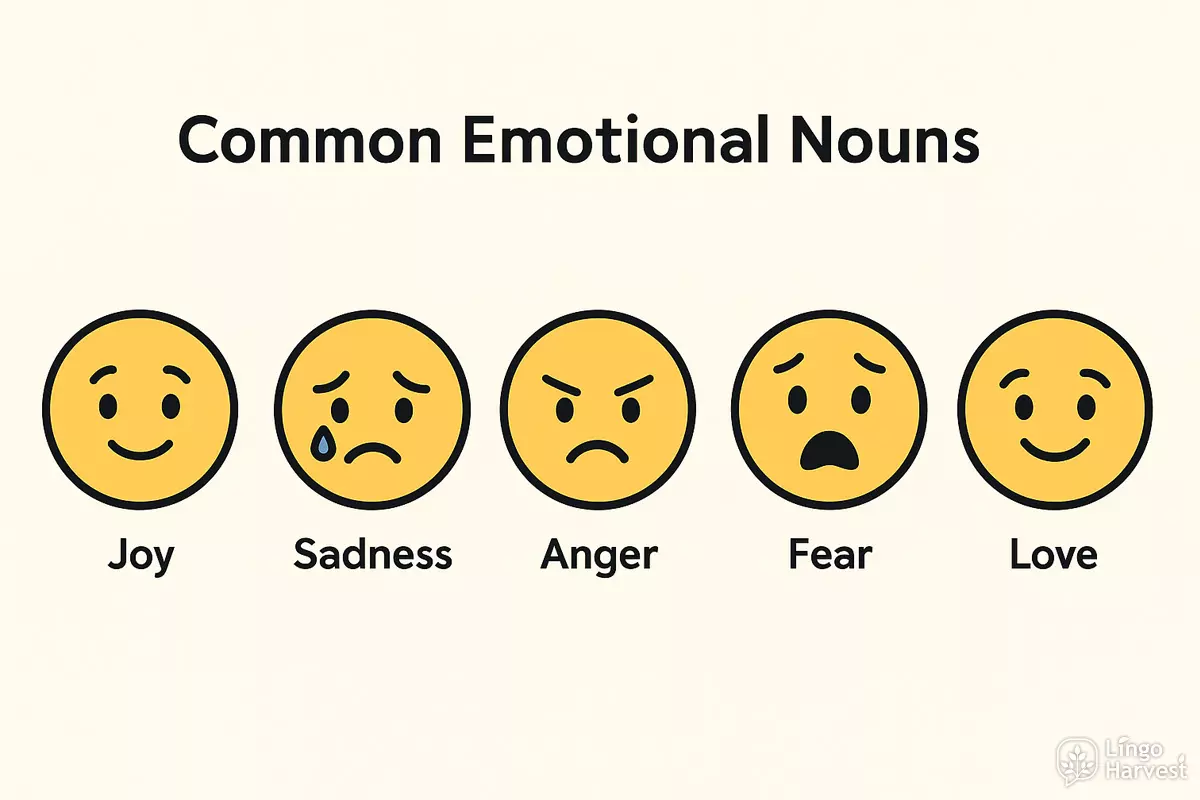
Common Emotional Nouns
Emotions are a universal aspect of human experience, and having the vocabulary to express them is crucial. Here are some nouns that describe feelings you might encounter daily:
- Joy: A feeling of great pleasure and happiness.
- Sadness: The condition or quality of being sad.
- Anger: A strong feeling of annoyance, displeasure, or hostility.
- Fear: An unpleasant emotion caused by the threat of danger, pain, or harm.
- Love: An intense feeling of deep affection.
Basic Conceptual Nouns
In addition to emotions, certain fundamental ideas are part of everyday conversations. These concepts help us describe situations, actions, and relationships:
- Time: The indefinite continued progress of existence and events.
- Space: The physical universe beyond the earth's atmosphere; also, the extent of an area.
- Knowledge: Facts, information, and skills acquired through experience or education.
- Freedom: The power or right to act, speak, or think as one wants.
- Responsibility: The state or fact of having a duty to deal with something or of having control over someone.
Structured Comparison of Emotional and Conceptual Nouns
To better understand the nuances between emotional and conceptual nouns, consider the following structured comparison:
| Emotional Noun | Conceptual Noun |
|---|---|
| Joy | Time |
| Sadness | Space |
| Anger | Knowledge |
| Fear | Freedom |
| Love | Responsibility |
By familiarizing yourself with these terms, you can express a wide range of emotions and ideas effectively, enriching your daily interactions and understanding.
Mini Practice + Quick Quiz
Enhance your understanding of common nouns with this quick practice session. These exercises will help you reinforce what you've learned and test your knowledge of everyday vocabulary.
Identify the Noun
Read each sentence and identify the noun.
- The cat sat on the mat.
- She loves her new book.
- The sun is shining brightly.
- He drank a glass of water.
- The teacher explained the lesson.
- My phone is on the table.
- The child is playing in the garden.
- We visited a large museum.
- The coffee smells wonderful.
- Her friend lives in another city.
Show answers
- cat
- book
- sun
- water
- teacher
- phone
- child
- museum
- coffee
- friend
Fill in the Blanks
Use the nouns from the list to complete the sentences: dog, car, tree, pizza, doctor, house, ocean, flower.
- The ________ barked loudly at the stranger.
- We drove the ________ to the beach.
- A tall ________ stood beside the river.
- We ordered a large ________ for dinner.
- The ________ helped him feel better.
- They built a beautiful ________ near the lake.
- The children played near the ________.
- She picked a yellow ________ from the garden.
Show answers
- dog
- car
- tree
- pizza
- doctor
- house
- ocean
- flower
Common vs. Proper Nouns
Classify each noun as common or proper. Don’t look at the answers until you try!
- London
- apple
- Amazon
- river
- Maria
- teacher
- Mount Everest
- city
- Coca-Cola
- museum
Show answers
- London → Proper
- apple → Common
- Amazon → Proper
- river → Common
- Maria → Proper
- teacher → Common
- Mount Everest → Proper
- city → Common
- Coca-Cola → Proper
- museum → Common
Rewrite with Proper Nouns
Replace the common noun in each sentence with a specific proper noun. Capitalize correctly. (Answers may vary.)
- We visited a city last summer.
- My teacher gave us a quiz.
- They had dinner at a new restaurant.
- She bought a new phone yesterday.
- The movie won several awards.
- We walked along the river.
- He studies at a famous university.
- Her favorite brand released a laptop.
- The park was crowded on Sunday.
- Our team won the match.
Show sample answers
- We visited Paris last summer.
- My teacher, Ms. Johnson, gave us a quiz.
- They had dinner at Olive Garden.
- She bought a new iPhone yesterday.
- The movie Avatar won several awards.
- We walked along the Thames.
- He studies at Harvard University.
- Her favorite brand, Dell, released a laptop.
- Central Park was crowded on Sunday.
- Our team, the Lakers, won the match.