Stop Saying 'Very': 20 Simple Adjectives That Sound Better

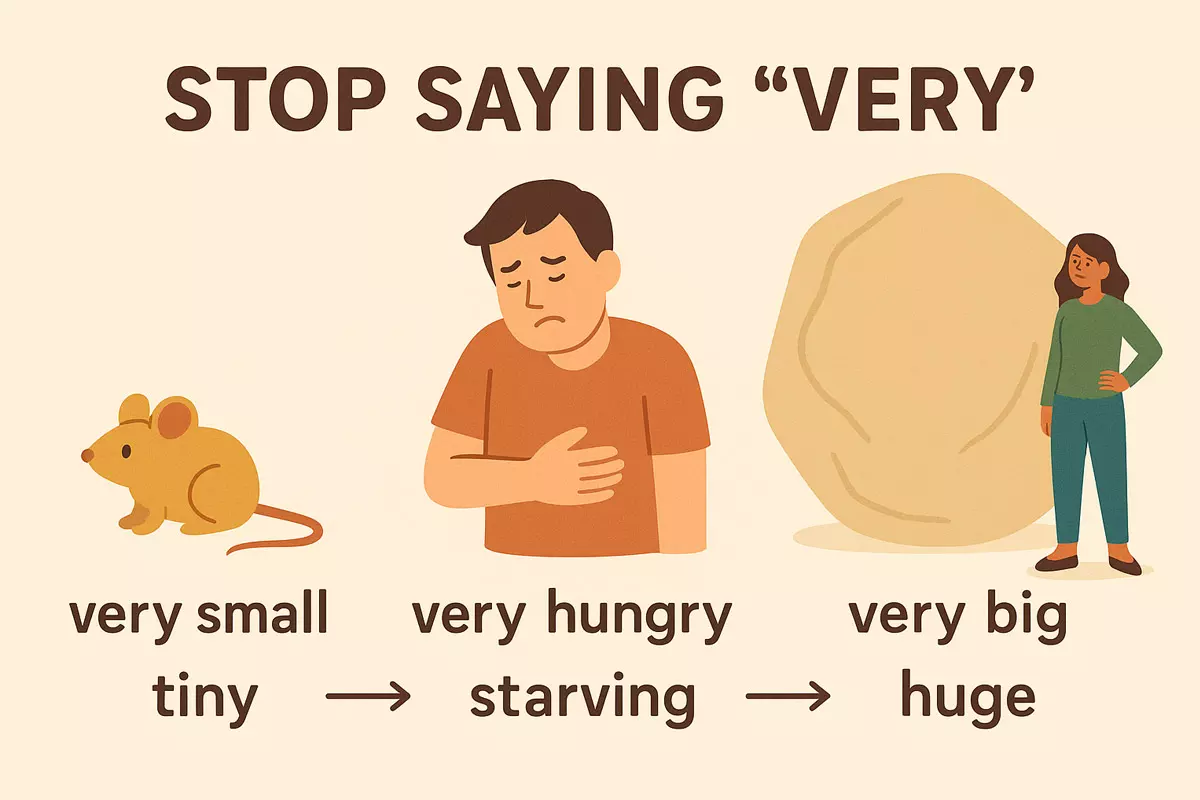 Here we why very can weaken your writing, offers stronger alternatives like tiny and starving, explains when to upgrade or keep very, reviews common collocations, and gives practice replacing very plus an adjective with a better word.
If you’re tired of relying on the same old intensifiers to boost your descriptions, consider exploring a variety of expressive words that can instantly elevate your writing. By replacing overused modifiers with more precise and vivid language, you give your sentences greater impact and clarity. Experimenting with fresh adjectives and adverbs not only makes your writing more engaging but also helps you communicate your ideas more effectively. Taking the time to choose the right words can transform bland descriptions into memorable, compelling prose, making your work stand out.
Why Very Can Be Weak
Relying on the word “very” often makes writing less vivid and precise. Instead of enhancing meaning, it can dilute the impact of the adjective it modifies. When readers see “very,” they may sense vagueness or a lack of confidence in the description. Choosing a single, strong adjective usually creates a clearer and more memorable image.
How “Very” Weakens Descriptions
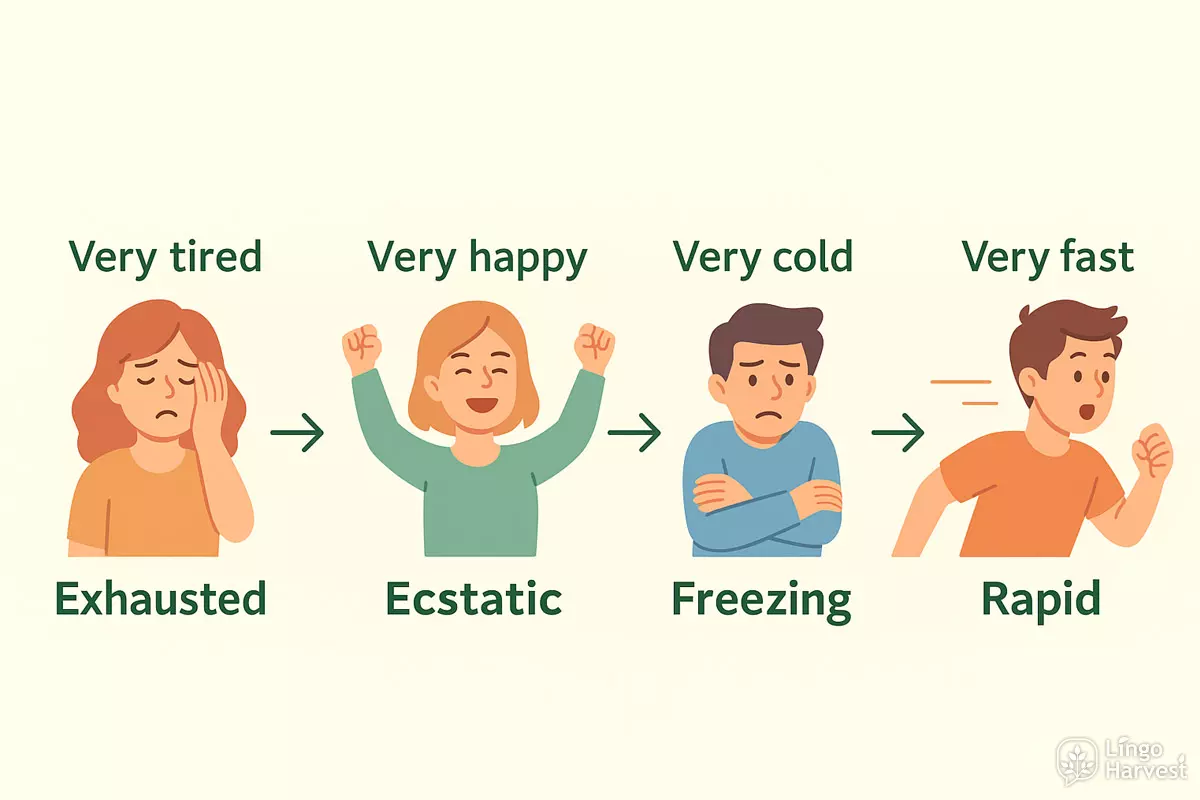
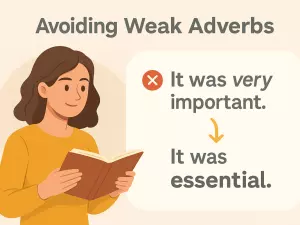
“Very” is tempting because it feels like an easy way to intensify a word. However, it rarely adds anything concrete. For example, “very big” is less specific than “enormous.” The result is often a phrase that feels generic or uninspired. Swapping “very” plus an adjective for a more precise word can sharpen your writing and make each sentence stand out.
- “Very tired” → Exhausted
- “Very happy” → Ecstatic
- “Very cold” → Freezing
- “Very fast” → Rapid
- “Very old” → Ancient
- “Very small” → Tiny
- “Very angry” → Furious
- “Very clean” → Spotless
- “Very hot” → Scorching
- “Very smart” → Brilliant
- “Very noisy” → Deafening
- “Very beautiful” → Gorgeous
- “Very boring” → Dull
- “Very bright” → Luminous
- “Very funny” → Hilarious
- “Very hungry” → Starving
- “Very bad” → Awful
- “Very easy” → Effortless
- “Very weak” → Frail
- “Very good” → Excellent
Why Stronger Adjectives Matter
Specific adjectives not only sound more interesting, but they also communicate exactly what you mean. Readers can visualize “colossal” more easily than “very big.” This precision helps your writing feel more confident and engaging. By reaching for a richer vocabulary instead of defaulting to “very,” you’ll naturally develop a more distinctive voice.
Stronger Simple Alternatives (tiny, huge, starving)
Choosing a more vivid, specific adjective can make your writing punchier and easier to understand. Instead of pairing "very" with a plain word (like "very small"), consider a single, stronger term that conveys the idea directly. Words such as "tiny," "huge," and "starving" instantly paint a clearer picture and cut out unnecessary filler.
Why Swap “Very + Adjective” for a Single Word?
It’s more concise and helps your reader grasp your meaning at a glance. For example, "very tired" feels weaker than "exhausted." This swap also boosts clarity and shows a stronger command of vocabulary.
Common Upgrades to Try
Here are some everyday alternatives that replace "very" plus an adjective with a more powerful single word:
- very small → tiny
- very big → huge
- very hungry → starving
- very tired → exhausted
- very cold → freezing
- very hot → scorching
- very clean → spotless
- very dirty → filthy
- very angry → furious
- very happy → ecstatic
- very scared → terrified
- very old → ancient
- very fast → rapid
- very slow → sluggish
- very smart → brilliant
- very sad → despondent
- very weak → frail
- very strong → robust
Quick Comparison Table
Many of these alternatives not only sound better—they also help you avoid wordiness. Here’s a side-by-side look at some common swaps:
| “Very” Phrase | Stronger Alternative |
|---|---|
| very small | tiny |
| very big | huge |
| very hungry | starving |
| very tired | exhausted |
| very clean | spotless |
| very angry | furious |
| very happy | ecstatic |
| very cold | freezing |
When to Use These Alternatives
Aim for these sharper adjectives whenever you want to avoid bland or repetitive language. They work especially well in narratives, descriptions, and even in everyday conversation. If you’re unsure, try swapping out "very" plus a basic word with one from the list above—your sentences will instantly feel more lively and precise.
When to Upgrade vs Keep Very
Deciding whether to swap out "very" for a stronger adjective or to leave it in place depends on context, tone, and clarity. While swapping "very" for a more precise word often improves writing, there are moments when keeping it is the better choice.
When a Stronger Word Improves Clarity
If your writing feels bland or repetitive, replacing "very" plus an adjective with one vivid word can make your message clearer and more engaging. For example, "very tired" becomes "exhausted," and "very happy" becomes "elated." This upgrade eliminates wordiness and sharpens your point.
Situations Where "Very" Works Fine
- Casual conversation or dialogue: People naturally use "very" when they speak.
- When the emphasis matters more than precision: "Very" can sound more personal or relatable, especially in informal writing.
- If no single-word alternative fits: Some combinations, like "very old-fashioned," don’t always have a perfect substitute.
- For rhythmic or stylistic reasons: Occasionally, keeping "very" helps with the flow or tone of a sentence.
Stronger Alternatives to "Very + Adjective"
Below are examples of how replacing "very" plus a common adjective with a more specific word can elevate your writing:
- very angry → furious
- very big → enormous
- very small → tiny
- very cold → freezing
- very hot → scorching
- very smart → brilliant
- very bad → terrible
- very good → excellent
- very hungry → starving
- very clean → spotless
- very dirty → filthy
- very fast → rapid
- very slow → sluggish
- very quiet → silent
- very loud → deafening
- very pretty → gorgeous
- very ugly → hideous
- very old → ancient
- very young → youthful
- very sure → certain
Quick Reference: Upgrade or Keep?
| Keep "Very" | Upgrade to Stronger Word |
|---|---|
| Dialogue in fiction or casual speech | Formal writing, essays, or business emails |
| No precise single-word alternative available | When a vivid word clarifies meaning |
| When you want to sound conversational or relatable | To avoid repetition or wordiness |
| For emphasis in personal stories | To create a stronger impression |
Ultimately, upgrading "very" isn’t a hard rule—it’s about choosing the right word for your purpose. Consider your audience, the effect you want, and whether a stronger adjective could say it better.
Tone: Polite, Neutral, Excited
Choosing the right words can make your language sound both engaging and clear. Swapping out “very” for more precise adjectives not only sharpens your writing but also helps you express enthusiasm, neutrality, or politeness depending on your intent. By selecting alternatives, you avoid repetition and make your speech or writing more vibrant and effective.
Why Replace “Very” in Adjectives?
Using “very” repeatedly can make communication feel bland or lazy. More specific adjectives communicate your message with greater clarity and style. Whether you want to be courteous, maintain a neutral stance, or convey excitement, the right word makes all the difference.
Examples of Simple, Stronger Adjectives
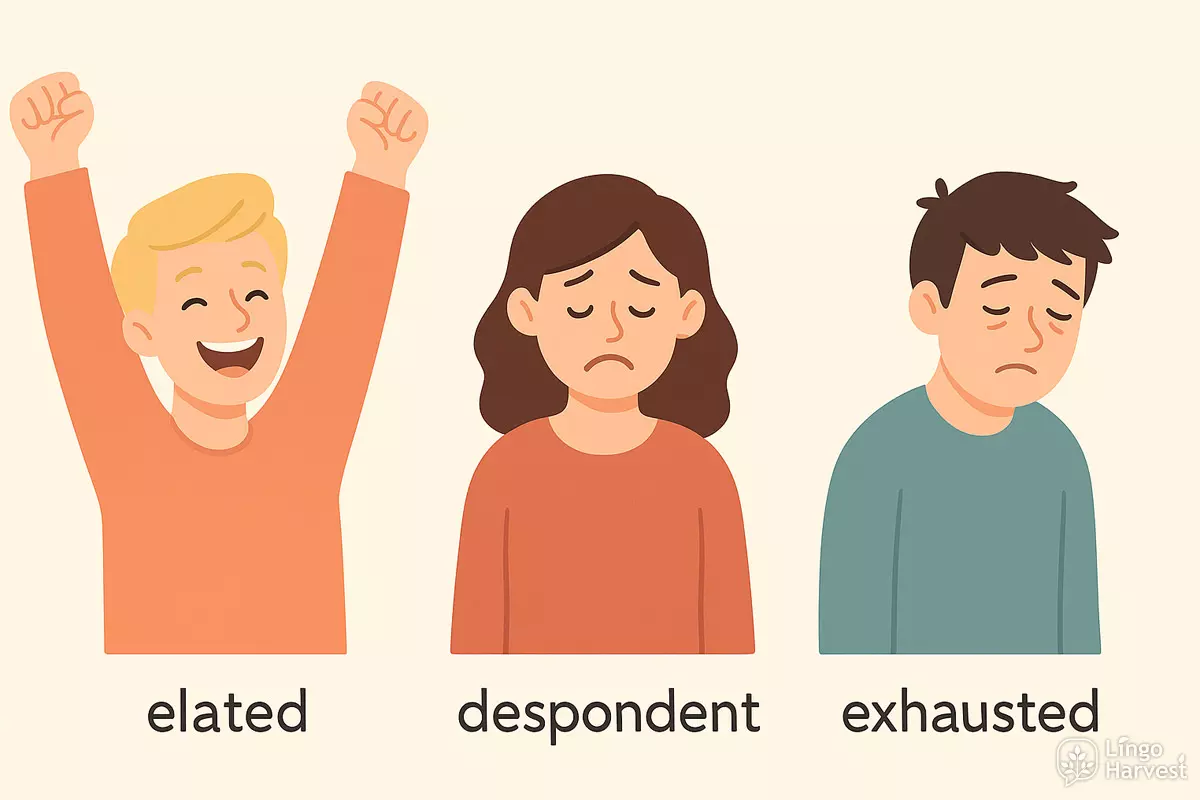
Here are some alternatives to common “very + adjective” combinations. Each option offers a more vivid or precise meaning:
- very happy → elated
- very sad → despondent
- very tired → exhausted
- very big → enormous
- very small → minuscule
- very beautiful → gorgeous
- very smart → brilliant
- very angry → furious
- very cold → freezing
- very hot → scorching
- very clean → spotless
- very dirty → filthy
- very fast → rapid
- very slow → sluggish
- very good → excellent
- very bad → atrocious
- very loud → deafening
- very quiet → hushed
- very old → ancient
- very new → brand-new
How Tone Changes with Word Choice
Selecting a more precise adjective can subtly shift the mood of your message. For example, “ecstatic” feels more excited than “very happy,” while “spotless” sounds slightly more formal and polite than “very clean.”
Quick Reference Table: “Very + Adjective” Alternatives
| Common Phrase | Stronger Adjective |
|---|---|
| very hungry | starving |
| very scared | terrified |
| very easy | effortless |
| very hard | arduous |
| very bright | dazzling |
| very cheap | inexpensive |
| very expensive | exorbitant |
| very thick | dense |
| very thin | slender |
| very funny | hilarious |
Using these alternatives lets you adapt your tone for different situations—whether you want to sound enthusiastic, neutral, or simply courteous. The right adjective can transform your message, making it more engaging for any audience.
Common Collocations (freezing cold → freezing)
When you want to sound more natural and concise, replacing intensifiers like "very" with stronger adjectives or established word combinations is a smart move. English speakers often use certain adjective-noun pairs so frequently that they become set expressions, or "collocations." Swapping out "very cold" for "freezing" is just one example—there are many more that can make your language sound fluent and expressive.
Why Use Stronger Adjectives?
Upgrading from phrases like "very tired" to "exhausted," or "very small" to "tiny," not only shortens your sentences but also adds emphasis without extra words. This approach helps avoid repetition and makes your speech or writing more vivid.
Popular Collocation Examples
Here are some common pairs where you can drop "very" and use a single, more precise word:
- very cold → freezing
- very hot → scorching
- very tired → exhausted
- very hungry → starving
- very angry → furious
- very big → enormous
- very small → tiny
- very happy → ecstatic
- very sad → miserable
- very scared → terrified
- very beautiful → gorgeous
- very clean → spotless
- very dirty → filthy
- very good → excellent
- very bad → awful
- very old → ancient
- very clever → brilliant
- very funny → hilarious
- very loud → deafening
- very quiet → silent
What Makes These Collocations Sound Better?
Using a single, vivid adjective instead of a "very + adjective" phrase makes your English more idiomatic. Native speakers naturally gravitate towards these combinations, so adopting them can help you sound more fluent and confident.
Quick Reference Table: Upgrading "Very" Phrases
| With "Very" | Stronger Adjective |
|---|---|
| very cold | freezing |
| very tired | exhausted |
| very hungry | starving |
| very big | enormous |
| very small | tiny |
| very happy | ecstatic |
| very angry | furious |
| very clean | spotless |
| very dirty | filthy |
| very old | ancient |
Learning and using these collocations will help you avoid overusing "very" and boost your English style. Try swapping out just a few in your next conversation or piece of writing to notice the difference.
Practice: Replace Very + Adjective
Understanding how to swap "very" plus an adjective for a single, stronger word helps your English sound more natural and expressive. Let's look at common examples and practice making these changes in context.
Common Substitutions
Instead of saying "very" with a basic adjective, try these alternatives for more impact:
- very angry → furious
- very tired → exhausted
- very big → enormous
- very small → tiny
- very happy → ecstatic
- very sad → miserable
- very old → ancient
- very clean → spotless
- very dirty → filthy
- very hungry → starving
- very bad → awful
- very good → excellent
- very cold → freezing
- very hot → scorching
- very scared → terrified
- very pretty → gorgeous
- very smart → brilliant
- very weak → frail
- very loud → deafening
- very quiet → silent
Practice: Transform the Sentences
Rewrite each sentence below using a single, more precise adjective instead of "very" + adjective.
- The soup is very hot.
- She felt very tired after the run.
- That exam was very easy.
- He gave me a very big gift.
- It was a very cold night.
Show answers
- The soup is scorching.
- She felt exhausted after the run.
- That exam was effortless.
- He gave me an enormous gift.
- It was a freezing night.
Quick Reference Table
| Very + Adjective | Single Strong Adjective |
|---|---|
| very angry | furious |
| very clean | spotless |
| very hungry | starving |
| very pretty | gorgeous |
| very loud | deafening |
| very cold | freezing |
| very smart | brilliant |
| very old | ancient |
By practicing these substitutions, you’ll build a richer vocabulary and sound more fluent. Try using these alternatives in your daily conversations or writing to make your language more vivid and precise.