Advanced Cleft Sentences: More Ways to Emphasize Key Information

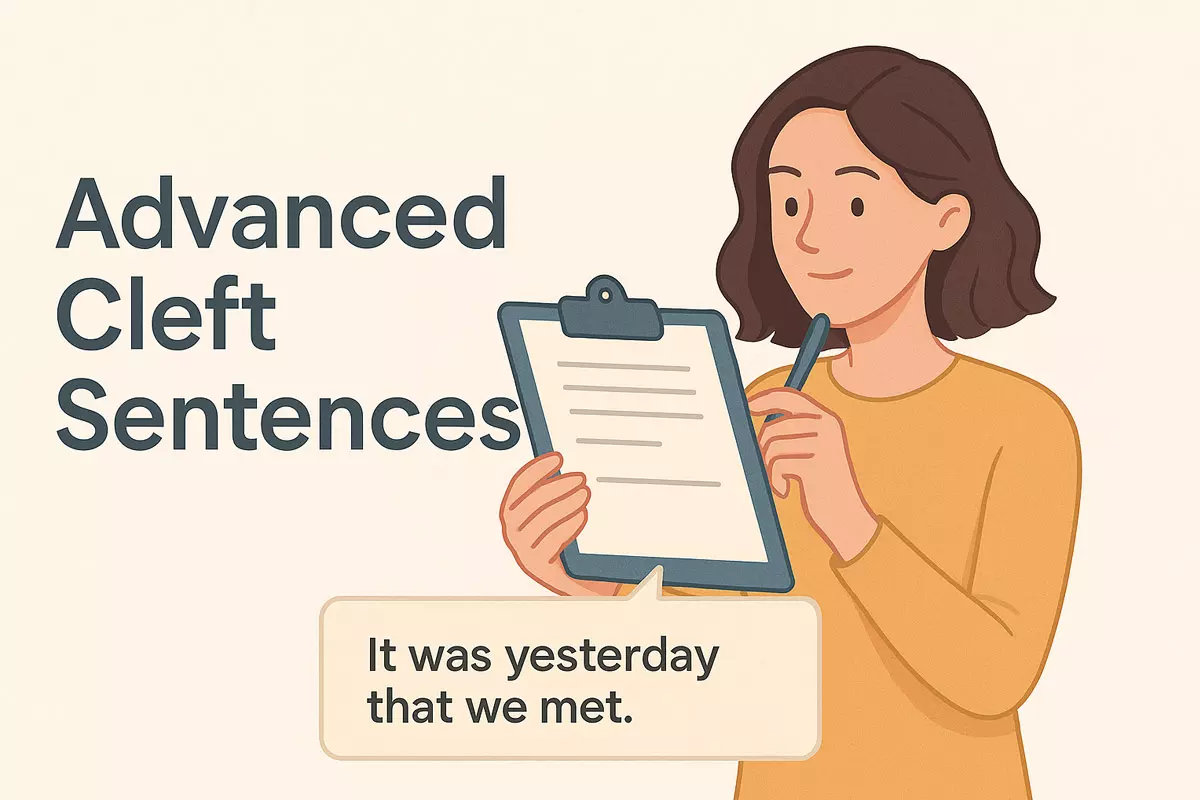 The article reviews basic it-cleft patterns, explores different cleft sentence types, and shows how to use clefts to emphasize time, place, and reason. It also covers contrast, correction, register concerns, and offers practice converting sentences.
To effectively emphasize the most important points in your writing, it is essential to master sophisticated sentence structures and use nuanced techniques to draw attention to key details. By carefully crafting your sentences and thoughtfully arranging information, you can ensure your message stands out and resonates with your audience. Employing varied sentence lengths, strategic word placement, and deliberate emphasis not only clarifies your main ideas but also keeps readers engaged and focused on what matters most.
Review of basic it-cleft pattern
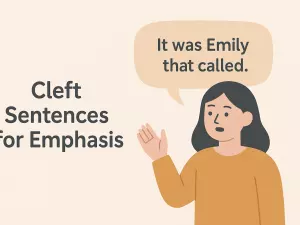
Understanding the typical structure used to highlight specific information in English sentences is essential before exploring more advanced forms. The "it-cleft" construction places focus on a particular element by dividing the sentence into two parts. This approach is especially useful for clarifying or emphasizing who did what, when, where, or why.
Structure and Function
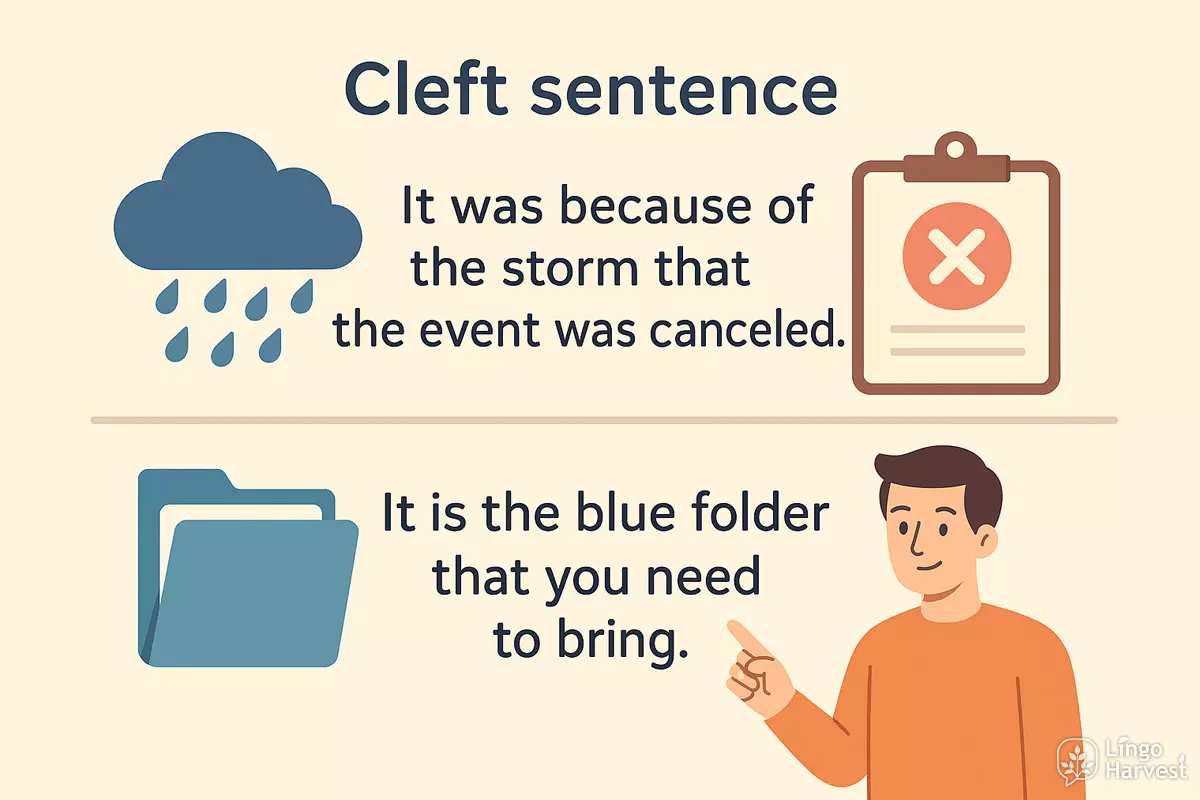
The standard pattern follows this formula: It + be + emphasized element + clause. The "be" verb adjusts for tense and agreement, while the emphasized element is what the speaker wants to highlight. The remaining clause (the "cleft clause") provides the background or context.
- It was John who fixed the computer.
- It is at midnight that the train departs.
- It was because of the storm that the event was canceled.
- It is the blue folder that you need to bring.
- It was last week when she moved out.
- It is in the kitchen where you'll find the keys.
- It was a mistake that caused the delay.
- It is only on Sundays that the market opens early.
- It was Anna who called you yesterday.
- It is with great pleasure that we announce the results.
- It was during the meeting that the decision was made.
- It is honesty that matters most.
- It was in Paris where we first met.
- It is my brother who will help you.
- It was the noise that woke me up.
- It is on Friday that the deadline falls.
- It was after dinner when they arrived.
- It is because of you that I succeeded.
Comparison with Regular Sentences
To see how this pattern shifts focus, compare typical statements with their it-cleft versions. This transformation often makes the highlighted information more prominent.
| Standard Sentence | It-Cleft Version |
|---|---|
| John fixed the computer. | It was John who fixed the computer. |
| The train departs at midnight. | It is at midnight that the train departs. |
| The event was canceled because of the storm. | It was because of the storm that the event was canceled. |
| You need to bring the blue folder. | It is the blue folder that you need to bring. |
Key Points to Remember
- The "it" in these sentences is a dummy subject; it does not refer to anything specific.
- Only one element is typically emphasized per sentence for clarity.
- Any part of the original sentence (subject, object, adverbial, reason) can be highlighted.
- Verb tense in the "be" form matches the time reference of the action.
- It-clefts are common in both spoken and written English for contrast or clarification.
Practice: Identify the Emphasized Element
For each sentence below, identify which part is being highlighted by the it-cleft construction.
- It was Sarah who organized the event.
- It is in the garden that the party will take place.
- It was after midnight when he arrived home.
- It is because of the new policy that changes were made.
- It was John who discovered the mistake.
- It is during the summer that tourism increases the most.
- It was on this very day that everything changed.
- It is for this reason that the meeting was postponed.
- It was their teamwork that led to success.
- It is in this chapter that the main argument appears.
Show answers
- Sarah (person)
- In the garden (location)
- After midnight (time)
- Because of the new policy (reason)
- John (person)
- During the summer (time)
- On this very day (time)
- For this reason (reason)
- Their teamwork (focus / cause)
- In this chapter (location)
Exploring different cleft sentence types
Understanding the range of cleft constructions can help you highlight specific elements in a sentence for greater clarity or emphasis. While "it-clefts" are the most familiar, advanced users of English often employ a variety of structures to manipulate focus and nuance.
Core cleft sentence forms
Several main types stand out, each with its own function and stylistic effect:
- It-cleft: Shifts focus to a particular phrase (e.g., It was Lucy who solved the puzzle.).
- Wh-cleft (pseudo-cleft): Emphasizes information after a relative clause (e.g., What I need is a break.).
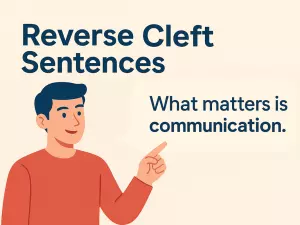
- Reverse wh-cleft: Presents the emphasized information first (e.g., A long conversation is what we had.).
- All-cleft: Highlights the totality or exclusivity of something (e.g., All he did was complain.).
- Inferential cleft: Draws a conclusion or inference (e.g., What this suggests is that we need a new strategy.).
- There-cleft: Uses "there" as a dummy subject for emphasis (e.g., There’s one thing I can’t stand—lateness.).
- Adverbial cleft: Brings an adverbial phrase to the front (e.g., Where I want to go is Italy.).
- Prepositional cleft: Focuses on prepositional phrases (e.g., What she’s interested in is art history.).
- Reason cleft: Highlights the reason behind something (e.g., The reason I left is that I was tired.).
- When-cleft: Emphasizes a time frame (e.g., When I realized the truth was yesterday.).
- How-cleft: Focuses on manner (e.g., How he won was by practicing daily.).
Comparing cleft sentence types
To better illustrate the differences, here’s a comparison showing how the same idea can be expressed using several advanced cleft structures.
| Cleft Type | Example |
|---|---|
| It-cleft | It was yesterday that I met her. |
| Wh-cleft (pseudo-cleft) | What I did was meet her yesterday. |
| Reverse wh-cleft | Yesterday was when I met her. |
| Prepositional cleft | What I was excited about was meeting her yesterday. |
| All-cleft | All I did was meet her yesterday. |
| Reason cleft | The reason I met her was because of the meeting yesterday. |
When to use advanced clefts
Choose a cleft structure based on the information you wish to spotlight. For instance, use a "wh-cleft" to foreground actions or objects, or an "it-cleft" to stress timing or agents. Mixing these forms in writing helps avoid monotony and delivers nuanced emphasis tailored to your communicative goal.
Emphasizing time, place, and reason
When you want to draw attention to when, where, or why something happened, advanced cleft constructions offer flexible ways to highlight this information. Instead of simply stating facts, these structures allow speakers and writers to foreground specific details, making statements clearer and more impactful.
Highlighting time with clefts
To bring focus to the time of an event, “It was… that…” and “What… was…” patterns are often used. This is especially helpful in narratives or explanations where the timing is crucial. For example:
- It was yesterday that I received the news.
- What happened at noon was completely unexpected.
- It was in 2015 that she moved abroad.
Placing emphasis on location
To foreground the place, similar patterns are adapted:
- It was at the old library that we met for the first time.
- What surprised me most was in that tiny café.
- It was on the rooftop that the concert took place.
Expressing reasons with cleft sentences
When the cause or motivation is most important, “The reason (why)… was…” or “It was because…” structures come into play. These constructions clarify and stress the underlying reason:
- The reason I left early was that I felt unwell.
- It was because the roads were icy that the event was canceled.
- The reason they succeeded was their teamwork.
Comparing patterns for emphasis
| Pattern | Example |
|---|---|
| It was [time] that… | It was last night that the decision was made. |
| It was [place] where… | It was in Paris where they first met. |
| The reason (why)… was… | The reason why I called was to apologize. |
| What [clause] was… | What surprised everyone was the sudden announcement. |
| It was because… that… | It was because the weather changed that we postponed the trip. |
Tips for using advanced clefts
- Use these patterns to clarify the most critical element in your message.
- Vary your sentence structure to maintain reader or listener interest.
- Avoid overusing clefts, as too many can make text feel unnatural.
- Reserve emphasis for information that truly benefits from being highlighted.
By thoughtfully choosing which part of a sentence to emphasize—whether it's the moment, the location, or the reason—your communication becomes more precise and engaging. Advanced clefts make this process both flexible and effective.
Using clefts for contrast and correction
When speakers want to highlight differences or fix misunderstandings in conversation, cleft sentences become a powerful tool. By reordering information and focusing on a specific element, clefts help make contrasts stand out or correct previous statements. This section explores how clefts serve these functions in nuanced communication.
Emphasizing Contrasts
Cleft structures are especially effective when you wish to compare two or more options, clarify what is not the case, or redirect attention. They allow you to put the spotlight on what truly matters in a sentence, making the distinction between alternatives clear.
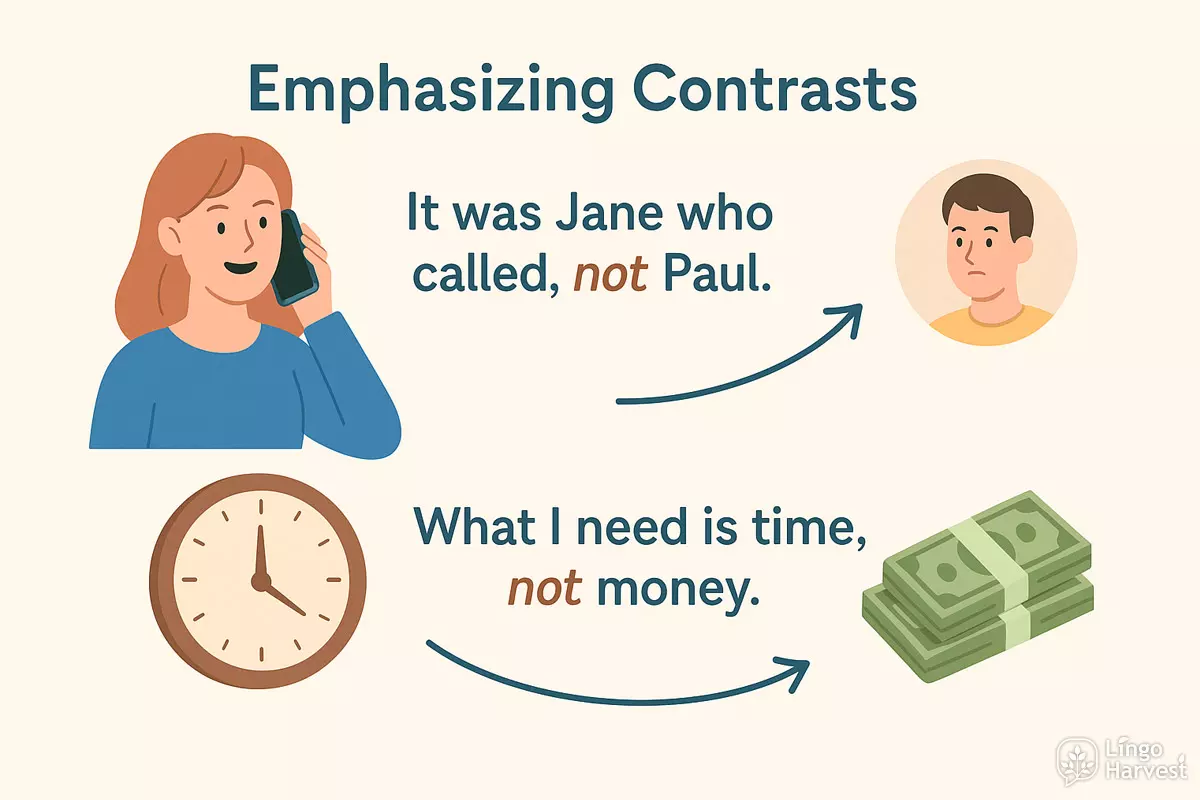
- It was Jane who called, not Paul. → Clarifies the caller.
- What I need is time, not money. → Contrasts two needs.
- It isn’t the price that bothers me, it’s the quality. → Shifts the focus of concern.
- It was yesterday that the package arrived, not today. → Emphasizes the correct time.
- What he forgot was the keys, not the tickets. → Specifies the forgotten item.
- It’s not that I don’t like pizza; it’s just that I prefer pasta. → Nuances a preference.
- The person who solved the problem was Maria, not John. → Distinguishes achievements.
- What we discussed was the schedule, not the budget. → Points out the actual topic.
- It was in Paris that I met her, not in Rome. → Differentiates locations.
- What matters is honesty, not perfection. → Highlights core values.
Correcting Misunderstandings
Beyond contrast, cleft sentences are ideal for setting the record straight. If a previous statement was inaccurate or someone has misunderstood, clefts let you gently but firmly provide the correct information.
- It was my brother who broke the vase, not me.
- What you heard was an accident, not a deliberate act.
- It isn’t on Friday that the meeting takes place; it’s on Thursday.
- What surprised me was her reaction, not the news itself.
- It’s not in the morning that trains are crowded; it’s in the evening.
Common Patterns for Contrast and Correction
Several cleft sentence patterns appear frequently when making distinctions or addressing errors. Here are some structures to look out for:
- It is/was X who/that…
- What X did was…
- What matters is…
- It’s not X that…; it’s Y.
- The thing that… is…
Comparing Standard and Cleft Forms
For a clearer sense of how clefts sharpen contrast or correction, compare standard sentences with their clefted versions:
| Standard Sentence | Cleft Sentence for Emphasis |
|---|---|
| I met her in Paris. | It was in Paris that I met her. |
| Paul called you, not Jane. | It was Paul who called you, not Jane. |
| The package arrived yesterday. | It was yesterday that the package arrived. |
| He forgot the keys. | What he forgot was the keys. |
| The meeting is on Thursday. | It isn’t on Friday that the meeting takes place; it’s on Thursday. |
Summary
Cleft sentences are not just stylistic flourishes—they clarify, correct, and highlight vital distinctions in communication. Mastering their use allows you to manage nuance, avoid ambiguity, and ensure your intended message is unmistakable.
Register and overuse warnings
When using advanced cleft constructions, it’s important to consider the level of formality and the context. While these structures can add emphasis or clarify complex information, they may sound unnatural or overly dramatic if used too often, especially in informal conversation or straightforward writing. In some registers, such as casual speech, simpler sentences are often more effective and authentic.
Appropriate contexts for advanced clefts
Advanced cleft sentences work best in specific scenarios:
- Academic writing, to highlight new findings or contrast ideas
- Formal speeches, where emphasis is needed for persuasion
- Literary analysis, to draw attention to specific elements
- Journalism, especially in opinion pieces or in-depth reporting
- Storytelling, to foreground key events or details
- Business presentations, for stressing crucial data or outcomes
- Debate and argumentation, to clarify points or rebuttals
- Instructional materials, to simplify complex procedures
- Advertising, for dramatic effect (used sparingly)
- Legal writing, where precision and focus are essential
Potential pitfalls of overusing clefts
Relying too heavily on cleft structures can make your writing or speech feel stilted or convoluted. Native speakers may perceive excessive emphasis as unnatural or even confusing. Overuse can also obscure your main message, making it harder for your audience to follow your point.
Register comparison: clefts in different styles
| Register | Advanced cleft use | Better alternative | Notes |
|---|---|---|---|
| Formal academic | “What this study demonstrates is that…” | “This study demonstrates that…” | Use clefts to highlight findings, but not in every sentence. |
| Everyday conversation | “What I want to tell you is that I’m leaving.” | “I’m leaving.” | Simpler forms sound more natural in casual speech. |
| Journalistic feature | “It was last summer that the change began.” | “The change began last summer.” | Clefts can add narrative flair, but avoid overuse. |
| Business email | “What we need to focus on is client satisfaction.” | “We need to focus on client satisfaction.” | Reserve clefts for emphasis; clarity should come first. |
Tips to avoid overusing emphatic structures
- Alternate with other ways of adding emphasis (word order, intonation, bolding).
- Read your draft aloud to check for natural flow.
- Limit cleft sentences to moments where emphasis is truly necessary.
- Ask for feedback from native speakers or experienced writers.
- Edit for simplicity—sometimes a direct statement is more powerful.
Remember, advanced clefts are a valuable tool, but moderation and awareness of context will help you maintain clarity and authenticity in your communication.
Practice: convert neutral sentences into clefts
Transforming ordinary statements into cleft structures is an essential skill for highlighting specific information in English. This exercise helps you recognize neutral statements and rephrase them to draw attention to important elements, whether you want to emphasize the subject, object, or another part of the sentence.
Task: Rewriting Neutral Sentences
Below you'll find several plain sentences. For each one, rewrite it using an appropriate cleft construction (it-cleft, wh-cleft, or all-cleft) to make the focus more explicit. Consider what part of the sentence you want to highlight.
- Maria baked the cake yesterday.
- John called the manager about the issue.
- The storm delayed our flight.
- She won the award for her research.
- We met in Paris last summer.
- My brother fixed the car.
- The children broke the window.
- They chose Sarah for the project.
- He forgot his passport at home.
- The concert started at eight o’clock.
Show answers
- It was Maria who baked the cake yesterday. / What Maria did was bake the cake yesterday.
- It was John who called the manager about the issue. / What John did was call the manager about the issue.
- It was the storm that delayed our flight. / What delayed our flight was the storm.
- It was she who won the award for her research. / What she did was win the award for her research.
- It was last summer that we met in Paris. / Where we met last summer was Paris.
- It was my brother who fixed the car. / Who fixed the car was my brother.
- It was the children who broke the window. / Who broke the window were the children.
- It was Sarah that they chose for the project. / Who they chose for the project was Sarah.
- It was his passport that he forgot at home. / What he forgot at home was his passport.
- It was at eight o’clock that the concert started. / When the concert started was at eight o’clock.
Common Patterns for Cleft Sentences
- It-cleft: It was/were + emphasized element + who/that + rest of sentence.
Example: It was Maria who baked the cake yesterday. - Wh-cleft (pseudo-cleft): What + clause + is/was + emphasized element.
Example: What Maria did was bake the cake yesterday. - All-cleft: All + clause + is/was + emphasized element.
Example: All Maria did was bake the cake yesterday.
Comparison: Neutral vs. Cleft Forms
| Neutral Form | Cleft Sentence Example |
|---|---|
| Maria baked the cake yesterday. | It was Maria who baked the cake yesterday. |
| The storm delayed our flight. | What delayed our flight was the storm. |
| They chose Sarah for the project. | It was Sarah that they chose for the project. |
| The concert started at eight o’clock. | It was at eight o’clock that the concert started. |
| He forgot his passport at home. | What he forgot at home was his passport. |
Notice how each cleft construction places focus on a different element, depending on what you want to emphasize. Experiment with different types to become comfortable with the range of possibilities.