Inversion After “So”, “Such”, and “Only”: Formal Emphasis Techniques

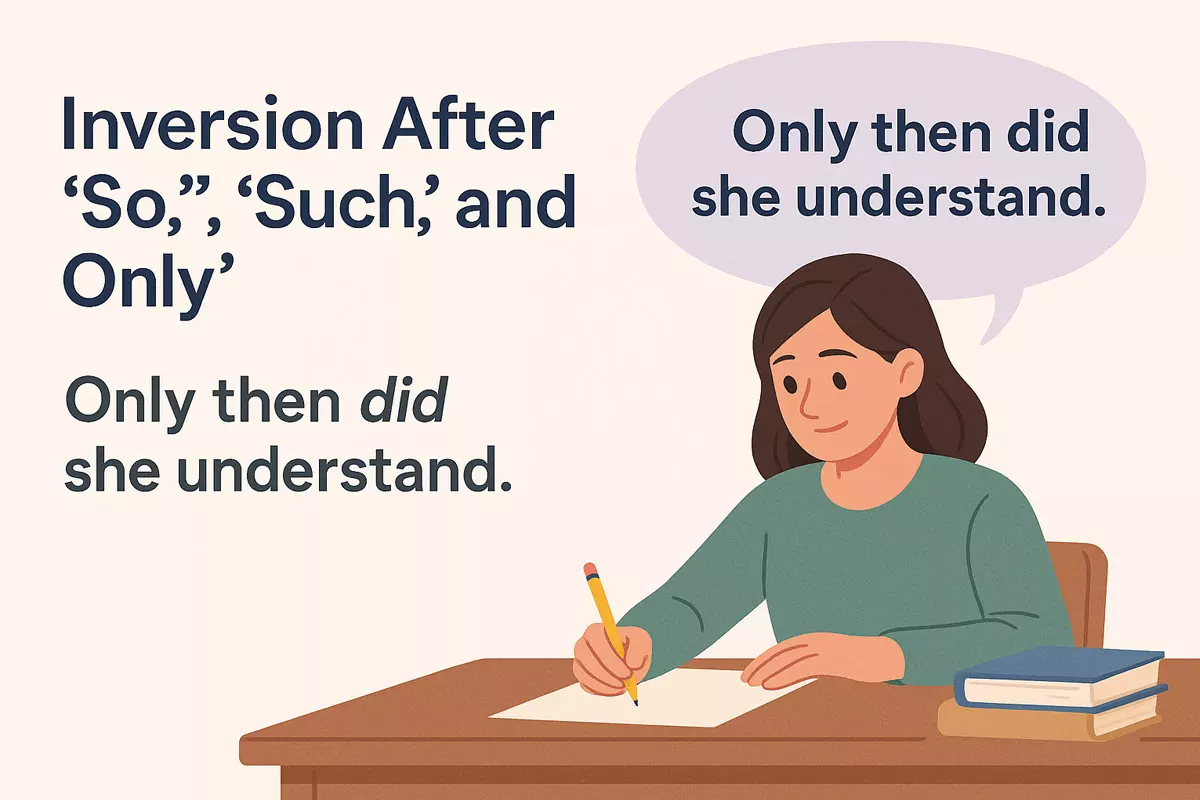 This article reviews inversion in English, showing how it works with so, such, only, and rare adverbs. It explains when inversion is natural or formal, highlights common mistakes, and provides practice rewriting sentences.
Mastering formal English involves learning how to rearrange sentences for emphasis, particularly after words such as so, such, or only. Using these special structures can make your writing more sophisticated and impactful by allowing you to highlight important information or create a specific tone. This article examines how these techniques work, providing clear examples and guidance to help you use them effectively in your own academic or professional writing.
Review of inversion as a structure
Understanding inversion in English involves looking at how word order changes, often for emphasis or stylistic effect. Instead of the standard Subject-Verb-Object (SVO) structure, inversion places the auxiliary or modal verb before the subject, especially after certain introductory phrases or adverbs. This construction is particularly frequent after expressions like "so," "such," and "only," which are discussed in detail elsewhere in this article.
In formal and literary English, inversion is used to highlight information or create a dramatic tone. Mastering these patterns is essential for advanced writing and speaking, especially in exams or academic contexts.
Basic patterns of inversion
- So + adjective/adverb + auxiliary + subject + main verb
Example: So quickly did she run that nobody could catch her. - Such + be + subject + that...
Example: Such was his excitement that he couldn't sleep. - Only + time/condition + auxiliary + subject + verb
Example: Only after the meeting did he realize the mistake. - Negative adverbials + auxiliary + subject + verb
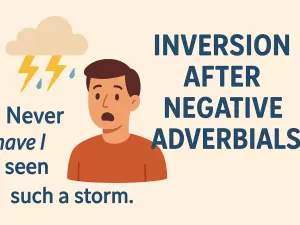
Example: Never have I seen such chaos. - Rarely/seldom/hardly + auxiliary + subject + verb
Example: Rarely does she arrive late. - No sooner + auxiliary + subject + verb + than...
Example: No sooner had he left than it started to rain. - Not only + auxiliary + subject + verb, but also...
Example: Not only did she win, but she also broke the record. - Little + auxiliary + subject + verb
Example: Little did they know about the surprise. - Under no circumstances + auxiliary + subject + verb
Example: Under no circumstances should you open the door. - Nowhere + auxiliary + subject + verb
Example: Nowhere have I found better coffee. - On no account + auxiliary + subject + verb
Example: On no account must this be repeated. - At no time + auxiliary + subject + verb
Example: At no time was the truth revealed. - In no way + auxiliary + subject + verb
Example: In no way can this be justified.
Common triggers for inversion
Inversion is most often triggered by:
- Adverbs of frequency or degree (never, rarely, seldom, so, such)
- Negative expressions (not only, under no circumstances, at no time)
- Conditional clauses without "if" (Had I known, Should you need help...)
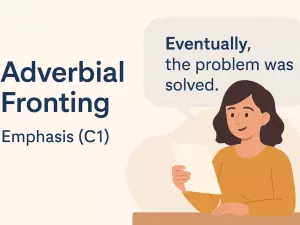
- Adverbial phrases for emphasis (Only after, Nowhere, Little...)
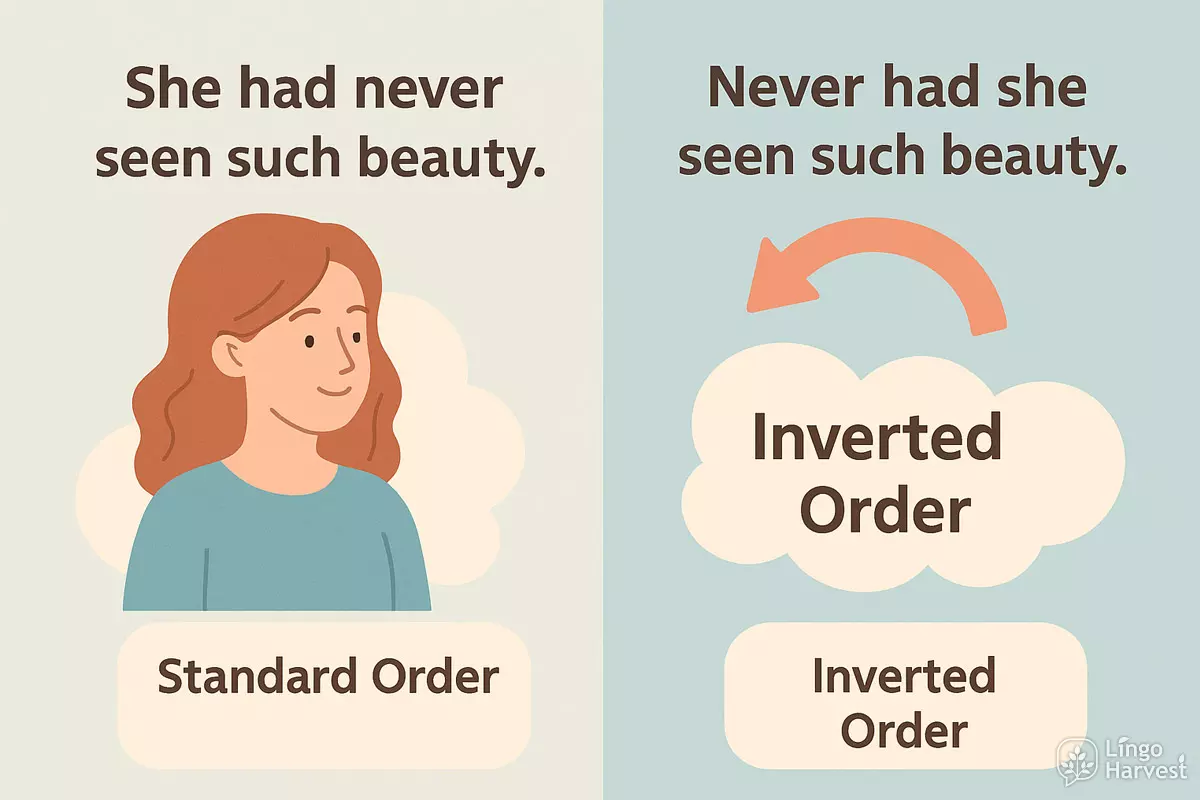
Comparison: Standard and Inverted Word Order
| Standard Order | Inverted Order |
|---|---|
| She had never seen such beauty. | Never had she seen such beauty. |
| He realized the mistake only after the meeting. | Only after the meeting did he realize the mistake. |
| The truth was revealed at no time. | At no time was the truth revealed. |
| They can justify this in no way. | In no way can they justify this. |
Practice: Identify the correct inversion
- ______ had I finished my work when the phone rang.
- Only then ______ he understand the problem.
- ______ does she complain about the food.
- At no time ______ he admit his guilt.
- Hardly ever ______ they make such mistakes.
- Under no circumstances ______ you enter the lab without permission.
- Seldom ______ we see results this clear.
- Not until later ______ they realize the error.
- Little ______ they know about the consequences.
- Rarely ______ the team face such challenges.
Show answers
- No sooner
- did
- Rarely
- did
- do
- must
- do
- did
- did
- does
By recognizing these patterns and triggers, you can use inversion to add variety, emphasis, and sophistication to your language. Practice forming both standard and inverted sentences to internalize these structures.
Patterns with so and such in front position
When “so” or “such” appears at the start of a sentence to add emphasis, English often uses inversion—meaning the verb comes before the subject. This structure is quite formal and usually found in written English, speeches, or dramatic storytelling. The aim is to highlight the extent or degree of something, making it stand out to the reader or listener.
Inversion with “So”
“So” is typically followed by an adjective or adverb, and then the auxiliary verb comes before the subject. This pattern is used to stress the intensity of a quality or action.
- So beautiful was the sunset that everyone stopped to watch.
- So quickly did she finish the work that her boss was amazed.
- So loudly did he shout that people heard him across the street.
- So rarely does this bird visit that it is considered a special event.
- So deeply was he affected by the news that he couldn’t speak.
- So well did she play that the audience gave her a standing ovation.
- So late did they arrive that the doors were already closed.
- So little did he understand that he could not answer any questions.
- So often does it rain here that people always carry umbrellas.
- So intent was he on his work that he forgot to eat.
Inversion with “Such”
“Such” is used before a noun phrase, often with an adjective, and is followed by an inverted verb phrase. This emphasizes the remarkable nature or extent of something.
- Such was the force of the explosion that windows shattered for miles.
- Such is her talent that she won the competition easily.
- Such were his fears that he refused to leave the house.
- Such was the confusion that nobody knew what to do.
- Such is the popularity of the show that tickets sell out in minutes.
- Such was the weather that the event was canceled.
- Such is the demand for the product that it is always out of stock.
- Such were the difficulties they faced that many gave up.
- Such was his anger that he slammed the door behind him.
- Such is life in the city—fast-paced and unpredictable.
Comparison of Form: “So” vs. “Such” Inversion
| “So” Pattern | “Such” Pattern |
|---|---|
| So + adjective/adverb + auxiliary + subject + main verb | Such + (adjective) + noun + auxiliary + subject + main verb |
| So strong was the wind that the trees fell. | Such was the wind that the trees fell. |
| So quickly did she leave that no one noticed. | Such was her haste that no one noticed. |
| So rarely does this happen that it’s newsworthy. | Such is the rarity of this event that it’s newsworthy. |
Usage Notes
These inversion structures sound formal and are not common in everyday conversation. They are more likely to be found in literature, speeches, or formal writing, where the writer or speaker wants to draw special attention to the degree of something. Remember, standard word order (subject + verb) is used in neutral or informal contexts. By mastering these patterns, you can add variety and emphasis to your English, especially when you want to sound particularly expressive or dramatic.
Inversion after only, rarely, hardly and similar adverbs
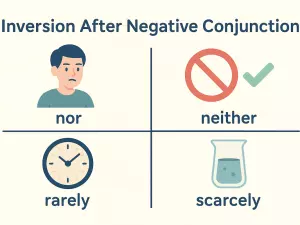
English sometimes places the verb before the subject – a structure called inversion – to add emphasis or formality, especially after certain negative or restrictive adverbs. Adverbs such as only, rarely, hardly, seldom, never, scarcely, and little often trigger this pattern, particularly when they appear at the beginning of a sentence or clause. This technique is common in written or formal speech, helping highlight a unique or surprising situation.
How inversion works with negative or restrictive adverbs
When one of these adverbs starts a sentence, the auxiliary verb comes before the subject. This is similar to question word order but is used for statements. The effect is to stress the limited or exceptional nature of the situation described.
- Only after the meeting did I understand the problem.
- Rarely have we seen such dedication.
- Hardly had she finished her speech when the applause began.
- Seldom do people admit their mistakes.
- Never have I felt so welcome.
- Scarcely had we sat down when the phone rang.
- Little did they know about the surprise.
- Only by working hard can you achieve this.
- Not until you apologize will I forgive you.
- No sooner had the sun risen than they began their journey.
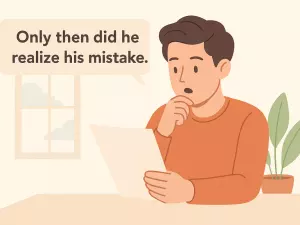
- Only then did he realize his mistake.
- Only when she left did I notice her absence.
- Not only does he speak French, but he also writes poetry.
Common triggers for inversion
These adverbs and phrases often lead to this formal word order:
- Only after / only when / only by / only then
- Rarely / seldom / never
- Hardly / scarcely / no sooner
- Little
- Not until / not only
Structure and patterns
The pattern generally follows: Adverb/phrase + auxiliary/modal + subject + main verb. Note that if there is no auxiliary in the affirmative, do/does/did is used for inversion.
| Trigger Adverb/Phrase | Inverted Example |
|---|---|
| Only after | Only after the exam did he relax. |
| Rarely | Rarely have I seen such skill. |
| Hardly | Hardly had they arrived when it started raining. |
| Never | Never have we experienced this before. |
| Not only | Not only does she sing, but she also dances. |
| No sooner | No sooner had I finished than he called. |
| Scarcely | Scarcely had we met when she left. |
| Little | Little did they suspect the truth. |
Notes on usage
This type of inversion is mainly used in formal writing, literature, or speeches. In everyday conversation, standard subject-verb order is more common. However, mastering this structure can add variety and emphasis to your English, especially for written arguments or storytelling.
Register: when inversion sounds natural and formal
Understanding when to use inversion after words like “so,” “such,” and “only” depends on the tone, context, and the level of formality you want to achieve. Inversion, especially after these words, is generally found in more formal or literary English, rather than in casual conversation. For many speakers, using these structures can make your statements sound more polished, dramatic, or emphatic.
Contexts Where Inversion Feels Appropriate
Inversion is most natural in the following situations:
- Formal writing: academic essays, speeches, or official reports
- Literary styles: novels, poetry, or storytelling
- Public speaking: to add emphasis or rhetorical flair
- Exams and advanced English tests: where advanced grammar is expected
In everyday conversation, these patterns can sound overly stiff or unnatural. Native speakers often avoid them outside of formal settings.
How Inversion Changes the Register
Using inversion after “so,” “such,” or “only” elevates your language. For example, compare:
- Normal: She was so tired that she fell asleep instantly.
- Inverted (formal): So tired was she that she fell asleep instantly.
The second version feels more dramatic and suitable for formal contexts.
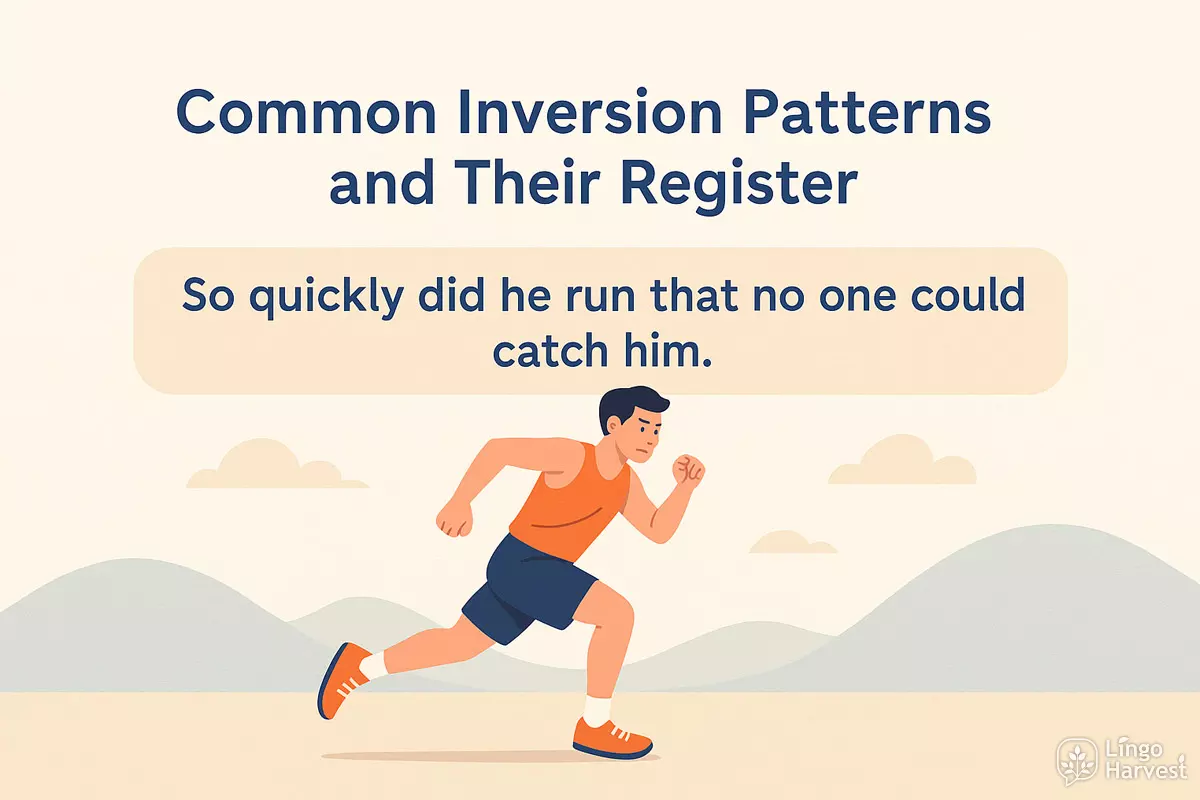
Common Inversion Patterns and Their Register
| Pattern | Formality & Usage |
|---|---|
| So + adjective/adverb + auxiliary + subject + main verb | Formal, emphatic; rarely used in speech So quickly did he run that no one could catch him. |
| Such + (a/an) + adjective + noun + auxiliary + subject + main verb | Very formal, literary or rhetorical Such was her talent that she won every competition. |
| Only + adverbial + auxiliary + subject + main verb | Formal, often in written English or speeches Only after the meeting did we realize the problem. |
| Normal word order (no inversion) | Neutral, natural in everyday conversation She was so tired that she fell asleep instantly. |
When Inversion Sounds Unnatural
Overusing inversion, or using it in casual chats, can make your English sound forced or old-fashioned. For example:
- ❌ So late was I that I missed the bus. (Unnatural for casual talk)
- ✅ I was so late that I missed the bus. (Natural and conversational)
Reserve these structures for contexts where they will be appreciated: written assignments, speeches, or when you want to add a dramatic or formal touch.
Quick Reference: When to Use Inversion for Emphasis
- To impress in formal writing or presentations
- To add emphasis or drama in storytelling
- To demonstrate advanced grammar on exams
- To avoid in everyday, informal speech and writing
Choosing the right register is about matching your language to your audience and purpose. Inversion after “so,” “such,” and “only” is a tool for formal and expressive communication, not for daily small talk.
Mistakes with word order and auxiliaries
Errors often occur when learners try to use formal inversion after words like “so,” “such,” and “only.” These mistakes usually involve putting auxiliary verbs in the wrong place or forgetting them altogether. Understanding how these structures work can help you avoid common pitfalls and write more polished, formal sentences.
Typical Problems with Structure
Inversion after “so,” “such,” and “only” follows specific patterns. Mixing up the subject, verb, or auxiliary can make sentences sound awkward or incorrect. For example, people sometimes forget to invert the subject and auxiliary, or they use the wrong auxiliary for the verb tense.
- Omitting the auxiliary: So beautiful was the scenery that we stayed longer. (Correct) vs. So beautiful the scenery that we stayed longer. (Incorrect)
- Incorrect order: Only then did he understand. (Correct) vs. Only then he did understand. (Incorrect)
- Wrong tense or auxiliary: Only after the meeting had ended did she speak. (Correct) vs. Only after the meeting ended did she speak. (Incorrect for past perfect)
Common Inversion Mistakes
Learners often make similar mistakes when using inversion for emphasis. Here are some frequent errors and how to fix them:
| Common mistake | Incorrect form ❌ | Correct form ✅ |
|---|---|---|
| Missing do/does/did in inversion | Only then he understood. | Only then did he understand. |
| Subject before auxiliary | So quickly she ran did. | So quickly did she run. |
| Wrong order with such + noun | Such the noise was that… | Such was the noise that… |
| No inversion after only if/when/after | Only if you ask he will help. | Only if you ask will he help. |
| Wrong auxiliary with continuous/perfect | Only then had she been working. | Only then was she working. |
| Unnecessary inversion with so | So I was happy. | I was so happy. |
| Wrong agreement in inversion | Only after sunset do comes the bats. | Only after sunset do the bats come. |
| Inversion without a trigger in statements | Did she leave early. (as a statement) | She left early. / Did she leave early? (question) |
| Omitting that in result clauses | So tired was he he fell asleep. | So tired was he that he fell asleep. |
| Inversion used with positive triggers | Often have I seen this problem. | Often I have seen this problem. |
At-a-glance: Correct vs. Incorrect Patterns
| Incorrect ❌ | Correct ✅ |
|---|---|
| Only then he understood. | Only then did he understand. |
| So quickly she ran did. | So quickly did she run. |
| Such the noise was that we left. | Such was the noise that we left. |
| Only if you ask he will help. | Only if you ask will he help. |
| So I was happy. | I was so happy. |
| Only after sunset do comes the bats. | Only after sunset do the bats come. |
Paying attention to auxiliary placement and word order is crucial for accurate formal emphasis. Reviewing these patterns—and practicing with common triggers—can help you avoid common errors and master inversion for more sophisticated English writing.
Practice: rewrite neutral sentences using inversion
Transforming plain statements using inversion is a great way to add formality or emphasis, especially after words like “so,” “such,” and “only.” This exercise section helps you practice turning everyday sentences into more sophisticated forms by applying these structures.
Instructions
Below you’ll find a series of neutral sentences. Your task is to rewrite each one using the appropriate inversion technique. Focus on the patterns introduced by “so,” “such,” and “only,” and remember to adjust word order and auxiliary verbs as needed.
Sentences to Transform
- The weather was so cold that nobody wanted to go outside.
- She had such a busy schedule that she barely had time to eat.
- He realized the truth only after he spoke to her.
- They arrived so late that the doors were already closed.
- Only when I finished the book did I understand the ending.
- It was such an impressive performance that the audience cheered for minutes.
- He solved the puzzle so quickly that everyone was surprised.
- Only after the meeting did we learn the real reason for the delay.
- The mountain was so high that we could see clouds below us.
- She made such a delicious cake that it disappeared in minutes.
- Only by practicing every day can you master the piano.
- So excited was he that he forgot to lock the door.
- Such was the noise outside that I couldn’t concentrate.
- Only by working together will we finish this project on time.
- The painting was so beautiful that everyone stopped to admire it.
Patterns to Remember
- So + adjective + auxiliary + subject + main verb
Example: So tired was she that she fell asleep instantly. - Such + be + subject + that-clause
Example: Such was his anger that he refused to speak. - Only + time/condition + auxiliary + subject + main verb
Example: Only after the rain stopped did we leave the house.
Show answers
- So cold was the weather that nobody wanted to go outside.
- Such was her busy schedule that she barely had time to eat.
- Only after he spoke to her did he realize the truth.
- So late did they arrive that the doors were already closed.
- Only when I finished the book did I understand the ending.
- Such was the performance that the audience cheered for minutes.
- So quickly did he solve the puzzle that everyone was surprised.
- Only after the meeting did we learn the real reason for the delay.
- So high was the mountain that we could see clouds below us.
- So delicious was the cake that it disappeared in minutes.
- Only by practicing every day can you master the piano.
- So excited was he that he forgot to lock the door.
- Such was the noise outside that I couldn’t concentrate.
- Only by working together will we finish this project on time.
- So beautiful was the painting that everyone stopped to admire it.