Correlative Conjunctions: both…and, not only…but also

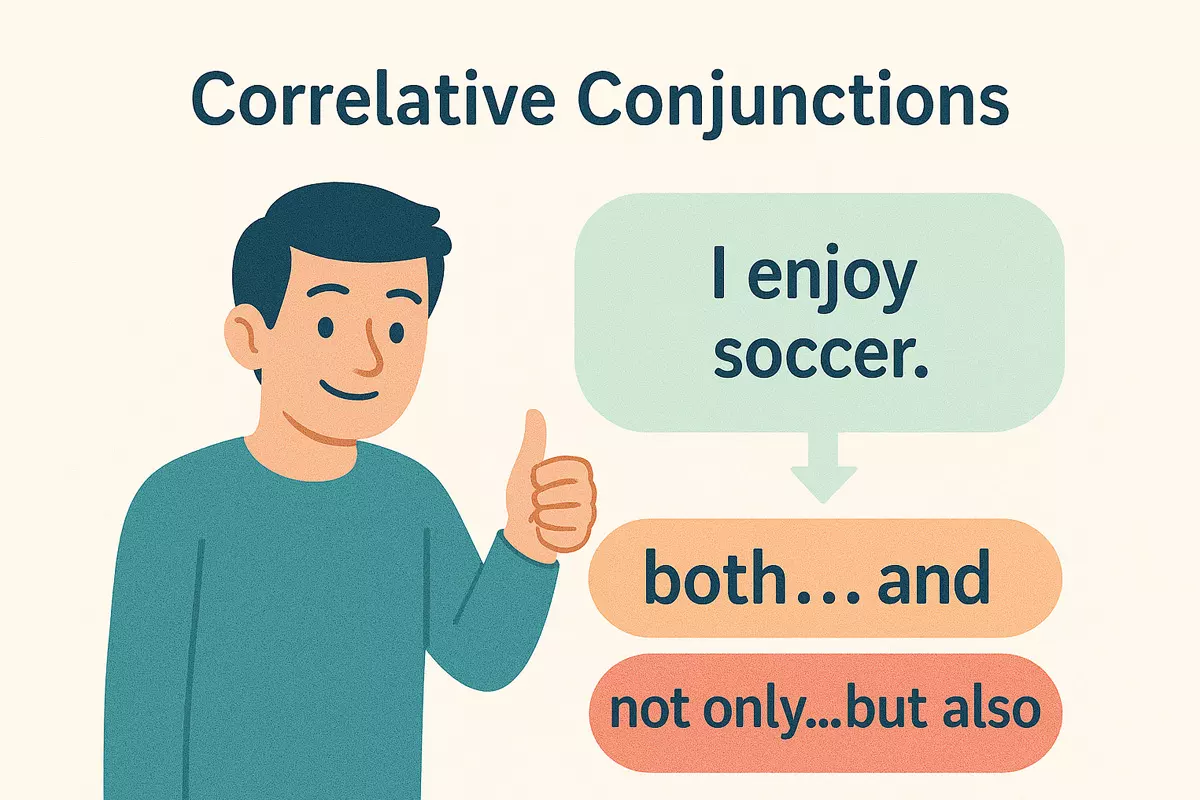 This article defines correlative conjunctions, explains how they work in pairs, covers structures and examples with both…and, either…or, neither…nor, and not only…but also, highlights parallel structure rules, common errors, and offers practice…
- Definition of correlative conjunctions and how they work in pairs
- Structure and examples with both…and
- Structure and examples with either…or and neither…nor
- Using not only…but also for emphasis and balance
- Rules for parallel structure after correlative pairs
- Common mistakes when the second part is missing or unbalanced
- Practice: complete and correct sentences using correlative conjunctions
Mastering paired connectors in English, such as both…and, either…or, and not only…but also, can significantly enhance your writing and speech by linking ideas smoothly and making your communication more coherent and effective. Understanding how these pairs function allows you to present information in a balanced way, emphasize contrasts, or show similarities between concepts. Using paired connectors appropriately helps your audience follow your thoughts more easily and adds variety to your language, making your messages more compelling and professional.
Definition of correlative conjunctions and how they work in pairs
Correlative conjunctions are special pairs of words that connect elements within a sentence, showing a clear relationship between them. Unlike single conjunctions such as "and" or "but," these work in tandem—each half of the pair appears before the words or phrases being linked, ensuring balance and emphasis. This structure helps to clarify meaning and create rhythm in both writing and speech.
How correlative conjunctions function
The main feature of these conjunctions is that they always come in matched pairs. Each part introduces a related idea, item, or clause, and together they highlight the connection between the two. If one part is used, the other must follow in the correct place to maintain grammatical accuracy and stylistic clarity.
- Both…and: Used to join two positive ideas or items. Example: Both the manager and the assistant attended the meeting.
- Not only…but also: Adds emphasis by showing that two qualities or facts are true, often surprising. Example: She is not only talented but also hardworking.
- Either…or: Presents two possible options. Example: You can either call me or send an email.
- Neither…nor: Connects two negative alternatives. Example: Neither the blue shirt nor the red one fits me.
- Whether…or: Shows alternatives or choices, often in indirect questions. Example: I don’t know whether he will come or stay home.
- As…as: Used to compare similarities in degree or quality. Example: She is as smart as her brother.
- Just as…so: Draws a parallel between two actions or qualities. Example: Just as the sun rises, so does hope each day.
- Such…that: Indicates cause and effect. Example: He spoke with such passion that everyone listened.
- No sooner…than: Emphasizes that one event happened immediately after another. Example: No sooner had I sat down than the phone rang.
- Rather…than: Expresses preference. Example: I’d rather walk than drive.
Pairing and placement rules
The correct use of correlative conjunctions depends on symmetry. Each half of the pair should introduce similar grammatical elements. For example, if one side introduces a noun, the other should as well. This parallel structure makes sentences clearer and more elegant.

| Pair | Example Sentence |
|---|---|
| both…and | Both the teacher and the students enjoyed the activity. |
| not only…but also | Not only did she win the race, but she also broke the record. |
| either…or | You can either stay here or join us at the park. |
| neither…nor | Neither the rain nor the wind stopped the parade. |
| whether…or | He will help whether you ask or not. |
| as…as | The soup is as hot as it looks. |
| just as…so | Just as we plan our day, so should we plan our week. |
| such…that | The movie was such a hit that it sold out in an hour. |
Correlative conjunctions are essential for expressing complex relationships, contrasts, and comparisons. Mastering their use makes your writing more precise and engaging, ensuring that ideas are linked in a clear and balanced manner.
Structure and examples with both…and
The correlative pair both…and is used to link two elements in a sentence, emphasizing that each one is true or applies. This construction connects either two nouns, two adjectives, two verbs, or even longer phrases, but the key is parallel structure—what comes after "both" and "and" should be grammatically similar.
Basic structure
- Both + element 1 + and + element 2
- Elements should belong to the same part of speech (e.g., two nouns, two verbs, two adjectives).
- In formal writing, place "both" before the first item and "and" before the second.
Common patterns
- Nouns: She invited both friends and colleagues.
- Adjectives: The movie was both funny and touching.
- Verbs: He both studied and worked during the summer.
- Prepositional phrases: The cat sleeps both on the bed and under the table.
Expanded examples
- Both the manager and the assistant attended the meeting.
- The solution is both simple and effective.
- He can both cook and paint well.
- Both my brother and I love hiking.
- They visited both London and Paris last year.
- The presentation was both informative and engaging.
- She speaks both Spanish and French fluently.
- We need both time and patience for this project.
- Both reading and writing are essential skills.
- The package includes both breakfast and lunch.
- He is both talented and hardworking.
- Both the laptop and the phone need charging.
- She wants to both travel and study abroad.
- We saw both mountains and rivers on our trip.
- Both his ideas and his attitude were impressive.
Points to remember
- Use parallel structure for clarity and style.
- Don't use "both" with more than two items—it's limited to pairs.
- When used with verbs, "both" usually comes before the verbs for emphasis: "He both plays and teaches piano."
- For negative statements, avoid "both...and"—use "neither...nor" instead.
Structure and examples with either…or and neither…nor
Both either…or and neither…nor are correlative conjunctions that help connect two alternatives or choices in a sentence. Either…or is used when you want to present two positive or possible options, while neither…nor connects two negative options, meaning that none of the given alternatives apply.
Basic structure
The pattern for both is straightforward:
- Either + option 1 + or + option 2
- Neither + option 1 + nor + option 2
The verb agrees with the subject closest to it. For example: Either my brother or my friends are coming.
Examples in sentences
Here are some practical sentences to illustrate how these pairs work:
- Either you finish your homework, or you can’t go out tonight.
- We can either watch a movie or play board games.
- She will either call you later or send an email.
- Either the manager or the assistant will help you.
- Neither the red shirt nor the blue jeans fit me.
- He speaks neither French nor German.
- Neither the teacher nor the students understood the instructions.
- The weather is neither hot nor cold today.
- She wants neither coffee nor tea this morning.
- Neither my phone nor my computer is working.
- Either you apologize or you leave.
- We have neither time nor money for that trip.
- Either the train or the bus arrives first.
- Neither Sam nor Alex attended the meeting.
- He is either at home or at work right now.
- Neither rain nor snow will stop the event.
Quick comparison
| Form | Usage |
|---|---|
| Either…or | Expresses a choice between two possibilities (positive or neutral). |
| Neither…nor | Denies both options; neither one nor the other is true or chosen. |
Tips for using these conjunctions
- Keep the grammatical structure parallel after each part (noun with noun, verb with verb).
- If the subjects are singular, use a singular verb; if the closest subject is plural, use a plural verb.
- Use either…or for offering alternatives; neither…nor for denying both options.
Using these structures accurately will help your sentences sound more fluent and clear.
Using not only…but also for emphasis and balance
The correlative pair not only…but also is a flexible tool for adding emphasis and creating a sense of balance in sentences. It highlights two related points, giving equal importance to both. The structure draws attention to surprising or impressive details, making writing more engaging and dynamic.
How the structure works
When you use not only and but also, you’re linking two ideas, actions, or qualities that are both noteworthy. This combination can amplify the impact of your message by stressing that more than one significant thing is true. It’s especially useful for showing that something exceeds expectations or involves multiple remarkable aspects.
Common patterns and placement
- Not only + verb/phrase, but also + verb/phrase: She not only sings, but also composes music.
- Not only + adjective, but also + adjective: The solution is not only practical but also elegant.
- Not only + noun, but also + noun: This course covers not only grammar but also vocabulary.
- Not only + clause, but also + clause: Not only did he finish the project, but he also presented it flawlessly.
Emphasis through inversion
To add even more emphasis, you can place not only at the beginning of a sentence. In this case, use inversion (swap the subject and auxiliary verb) in the first part:
- Not only did the team win, but they also broke a record.
- Not only has she traveled to Japan, but she has also lived there.
Examples of emphasis and balance
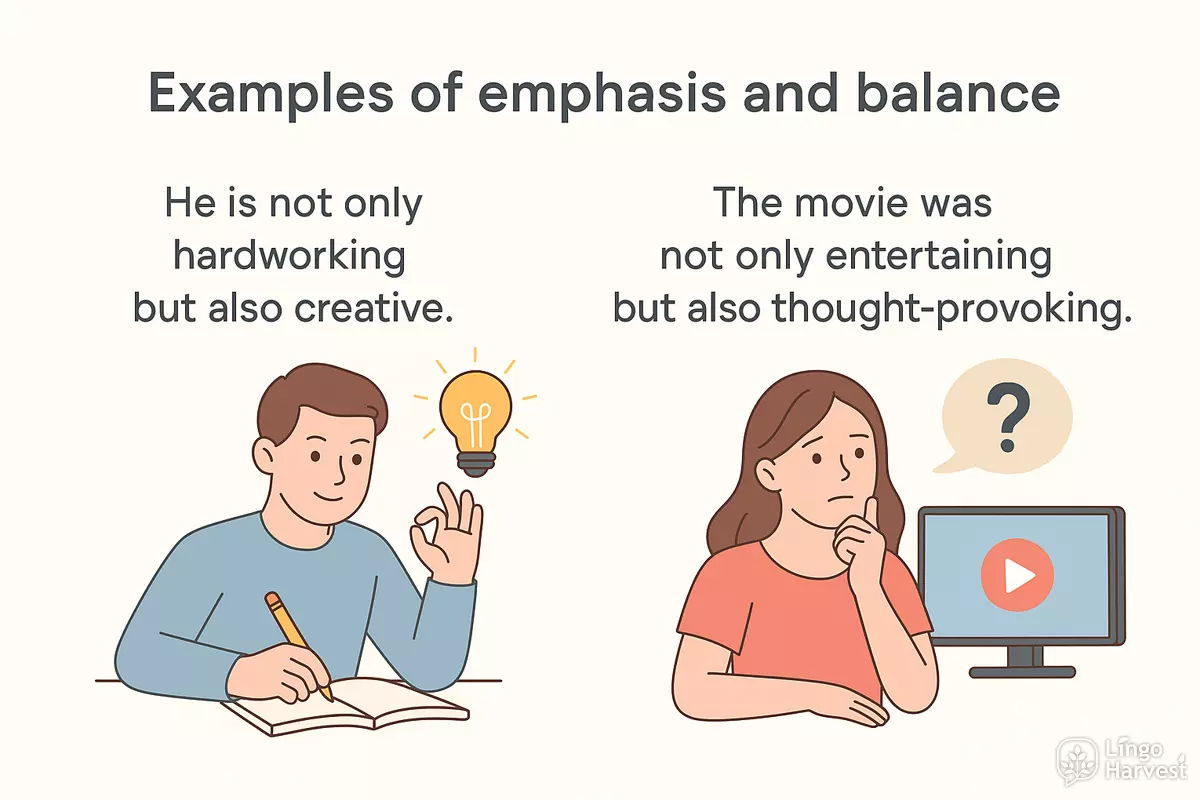
- He is not only hardworking but also creative.
- The movie was not only entertaining but also thought-provoking.
- Not only did they miss the bus, but they also forgot their tickets.
- This recipe is not only easy but also healthy.
- She speaks not only English but also Spanish and French.
- The new policy benefits not only students but also teachers.
- Not only was the weather perfect, but the scenery was stunning too.
- He is not only a talented musician but also a dedicated teacher.
- Not only is the museum free, but it’s also open late on Fridays.
- The event was not only well-organized but also highly attended.
- They not only completed the assignment but also submitted it early.
- Not only do I enjoy swimming, but I also love hiking.
- She’s not only my colleague but also my friend.
- Not only did we see dolphins, but we also spotted whales.
- The book is not only informative but also entertaining.
- He not only passed the test but also scored the highest marks.
- The product is not only affordable but also reliable.
- Not only was the food delicious, but the service was excellent.
- She not only organized the event but also managed the publicity.
- Not only can you call, but you can also text customer service.
Tips for clarity and parallelism
- Keep the grammatical structure after not only and but also parallel (matching parts of speech).
- Avoid mixing different forms, such as pairing a verb with a noun.
- Use this correlative pair to highlight two equally important ideas, not to list unrelated ones.
Using not only…but also thoughtfully can add rhythm and emphasis to your writing, making your points stand out and ensuring your sentences feel balanced and impactful.
Rules for parallel structure after correlative pairs
When using correlative conjunctions like both…and or not only…but also, it’s important that the grammatical forms following each part match. This means that whatever comes after the first conjunction should be the same type of word or phrase as what comes after the second. Keeping this balance makes your sentences clear and easy to read.
What does parallel structure mean?
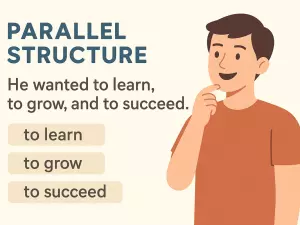
Parallel structure refers to using the same pattern of words to show that two or more ideas have the same level of importance. With correlative pairs, this typically involves matching nouns with nouns, verbs with verbs, adjectives with adjectives, and so on.
Common patterns after correlative pairs
Here are some patterns where maintaining parallelism is crucial:
- Noun + noun: He likes both apples and oranges.
- Verb + verb: She not only reads but also writes poetry.
- Adjective + adjective: The movie was both exciting and inspiring.
- Prepositional phrase + prepositional phrase: The meeting is not only in the morning but also after lunch.
- Infinitive + infinitive: He wants both to travel and to study abroad.
- Gerund + gerund: Both running and swimming improve fitness.
- Clause + clause: Not only did she win the race but also she broke the record.
- Adverb + adverb: He spoke both clearly and confidently.
- Pronoun + pronoun: Both she and he agreed.
- Number + number: The project requires not only ten engineers but also five designers.
Common mistakes to avoid
Mismatched structure after correlative conjunctions can make your writing awkward or unclear. For example:
- ❌ She likes both to swim and jogging. (Incorrect: mixing infinitive and gerund)
- ✅ She likes both swimming and jogging. (Correct: both gerunds)
Examples: Parallel and Non-Parallel Forms
| Parallel Example | Non-Parallel Example |
|---|---|
| He not only plays the piano but also composes music. | He not only plays the piano but also music composition. |
| They both enjoy hiking and love camping. | They both enjoy hiking and camping. |
| She is not only smart but also creative. | She is not only smart but also creativity. |
| The company will either increase salaries or reduce hours. | The company will either increase salaries or hours reduction. |
Quick tips for maintaining balance
- Identify the word or phrase type after each conjunction part.
- Check that both parts use the same grammatical form.
- Read your sentence aloud—imbalanced structure often sounds “off.”
- If you use a verb after the first conjunction, use a verb after the second.
- Parallelism helps your meaning stay clear and your style smooth.
Correct parallel structure is a simple way to make your sentences more professional and easier to understand, especially when using paired conjunctions.
Common mistakes when the second part is missing or unbalanced
When using correlative conjunctions like both…and or not only…but also, one of the most frequent problems is forgetting to include the second element, or making the two parts grammatically mismatched. This can confuse readers or listeners, and sometimes even change the intended meaning.
Omitting the second element
Leaving out the second part of a correlative pair results in incomplete sentences. For example:
- Incorrect: She is not only talented.
- Correct: She is not only talented but also hardworking.
Without the second element, the sentence feels unfinished and can make the writing sound abrupt.
Unbalanced grammatical structures
Another common pitfall is pairing words or phrases that don’t match grammatically. For clarity and style, the elements joined by correlatives should be parallel. Mismatched forms can make sentences awkward or confusing.
| Unbalanced Example | Improved (Parallel Structure) |
|---|---|
| She both likes reading and to swim. | She both likes reading and likes swimming. |
| He not only studied hard but also his friends helped him. | He not only studied hard but also asked his friends for help. |
| They not only visited Paris but also Rome. | They visited not only Paris but also Rome. |
| Both the manager and worked late. | Both the manager and the assistant worked late. |
Examples of typical errors
Writers and speakers often make these mistakes:
- Using only one part of the pair: Both the teacher is strict.
- Mismatching word types: Not only smart but also with kindness.
- Forgetting the second conjunction: She not only sings, she dances.
- Mixing singular and plural: Both my brother and my friends is here.
- Unbalanced clause length: Not only did he call, but also sent an email and a message.
- Leaving out the verb: Both chocolate and vanilla my favorites.
- Switching tenses: He both plays football and enjoyed basketball.
- Incorrect order: But also she not only sings.
- Repeating the conjunction: Both and she and her sister came.
- Inconsistent prepositions: They traveled not only to Spain but also France.
- Using correlative pairs with more than two elements: Both Jack, Jill, and Sam went.
- Placing the conjunctions too far apart: Not only did she, after a long day, but also managed to finish her work.
- Omitting necessary punctuation in complex sentences.
How to avoid these issues
To write clearly with correlative conjunctions, always:
- Check that both parts are present.
- Ensure grammatical balance (same structure on both sides).
- Keep the paired elements close together in the sentence.
- Read your sentence aloud to catch awkward or incomplete phrasing.
Careful attention to these patterns will help you use both…and and not only…but also correctly and confidently.
Practice: complete and correct sentences using correlative conjunctions
Understanding how to use pairs like both…and and not only…but also is essential for constructing clear, natural sentences. Below you’ll find targeted exercises and examples to help you master these conjunctions.
Fill in the blanks with the correct correlative conjunctions
Choose the appropriate pair (either both…and or not only…but also) to complete each sentence:
- __________ Sarah __________ James attended the meeting yesterday.
- The solution is __________ simple __________ effective.
- He is __________ smart __________ hardworking; that’s why he succeeded.
- This restaurant serves __________ Italian __________ French cuisine.
- She is __________ a talented musician __________ a skilled painter.
- They sell __________ books __________ stationery in this shop.
- He is __________ interested in science __________ passionate about art.
- The movie was __________ exciting __________ well-acted.
- You can contact us __________ by email __________ by phone.
- The city is famous __________ for its architecture __________ for its food.
Show answers
- Both Sarah and James attended the meeting yesterday.
- The solution is not only simple but also effective.
- He is both smart and hardworking; that’s why he succeeded.
- This restaurant serves both Italian and French cuisine.
- She is not only a talented musician but also a skilled painter.
- They sell both books and stationery in this shop.
- He is not only interested in science but also passionate about art.
- The movie was both exciting and well-acted.
- You can contact us either by email or by phone.
- The city is famous both for its architecture and for its food.
Identify and correct mistakes
Read each sentence and decide if the use of correlative conjunctions is correct. If not, rewrite the sentence correctly.
- Both the manager and also the assistant signed the contract.
- Not only he forgot his keys but also his wallet.
- Both Emily and Mark enjoy hiking.
- Not only the weather was cold but also windy.
- Either you can stay here or leave early.
- Both she likes dancing and singing.
- Not only he finished the report but he also presented it.
- Neither the teacher nor the students knew the answer.
- Either John or also Mike will drive us home.
- Not only the movie was long but also boring.
Show answers
- Incorrect. Correct: Both the manager and the assistant signed the contract.
- Incorrect. Correct: Not only did he forget his keys but also his wallet.
- Correct.
- Incorrect. Correct: Not only was the weather cold but also windy.
- Incorrect. Correct: Either you can stay here or you can leave early.
- Incorrect. Correct: She likes both dancing and singing.
- Incorrect. Correct: Not only did he finish the report but he also presented it.
- Correct.
- Incorrect. Correct: Either John or Mike will drive us home.
- Incorrect. Correct: Not only was the movie long but also boring.
Examples of correlative conjunctions in sentences
Here are varied examples showing both both…and and not only…but also in context:
- Both the movie and the book were amazing.
- Not only did she bake a cake but also decorated it beautifully.
- Both his parents and his siblings attended the graduation.
- The new policy is both fair and necessary.
- Not only was the task difficult but also time-consuming.
- Both cats and dogs need regular exercise.
- Not only does he speak Spanish but also French and German.
- Both the students and the teachers supported the initiative.
- Not only is this method faster but also more accurate.
- Both the design and the functionality impressed the judges.
- Not only did the team win the match but also broke a record.
- Both reading and writing are important skills.
- Not only is she intelligent but also very creative.
Quick reference: Correlative conjunction patterns
Notice how the structure works in different contexts:
| Pattern | Example |
|---|---|
| Both + noun + and + noun | Both Anna and Tom are coming. |
| Not only + adjective + but also + adjective | Not only tired but also hungry. |
| Both + verb + and + verb | She both studies and works. |
| Not only + clause + but also + clause | Not only did he call, but he also visited. |
| Both + object + and + object | I invited both Lisa and her brother. |
With practice, using correlative conjunctions will become second nature, improving both your writing and speaking fluency.