Multi-Clause Sentence Architecture: Handling Long Academic Sentences

 Here we planning complex sentences with several clauses, balancing coordination and subordination, and managing various clause types. It also addresses avoiding run-ons and fragments, revising long sentences, and practicing sentence redesign.
Mastering the structure of lengthy, intricate sentences is essential for clear academic writing, even though it can seem daunting at first. Learning how to organize multiple clauses not only enhances the clarity of your arguments but also allows for more nuanced and impactful expression. By breaking down complex ideas into well-structured sentences, writers can communicate their thoughts more effectively and engage their readers with greater precision. Developing this skill is key to successful scholarly communication.
Planning complex sentences with several clauses
To construct intricate academic sentences, it’s essential to map out the relationships between your ideas before writing. This process involves identifying your main point, supporting arguments, and any necessary qualifications or contrasts. By outlining these elements, you can determine the logical order and hierarchy of clauses, ensuring the sentence remains clear and coherent even as its length increases.
Steps for Structuring Multi-Clause Sentences
- Identify the central claim or thesis of your sentence.
- List supporting evidence or examples that need to be included.
- Decide which details are essential and which can be subordinated.
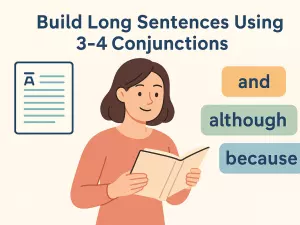
- Choose appropriate conjunctions (such as although, because, while, since).
- Establish the logical flow: cause-effect, contrast, addition, or condition.
- Draft the sentence skeleton, placing the main clause in a prominent position.
- Integrate subordinate and relative clauses as needed for clarity and emphasis.
- Revise for conciseness and readability, checking for potential ambiguity.
Common Clause Types and Their Functions
Understanding the function of each clause type helps you combine them effectively:
- Main (independent) clause: Expresses the core idea.
- Subordinate (dependent) clause: Adds detail or context, often introduced by conjunctions.
- Relative clause: Provides additional information about a noun, usually starting with who, which, or that.
- Conditional clause: States a precondition, typically starting with if or unless.
- Concessive clause: Expresses contrast, commonly introduced by although or even though.
Useful Connectors for Academic Complexity
Academic writing often relies on a variety of connectors to signal relationships between clauses. Here are some valuable options:
- because
- although
- since
- whereas
- while
- if
- unless
- however
- despite
- in order that
- even though
- provided that
- so that
- when
- after
- before
- as long as
- nonetheless
Sample Multi-Clause Sentence Patterns
Writers can combine clauses in many configurations, but clarity should always guide structure. Consider these patterns:
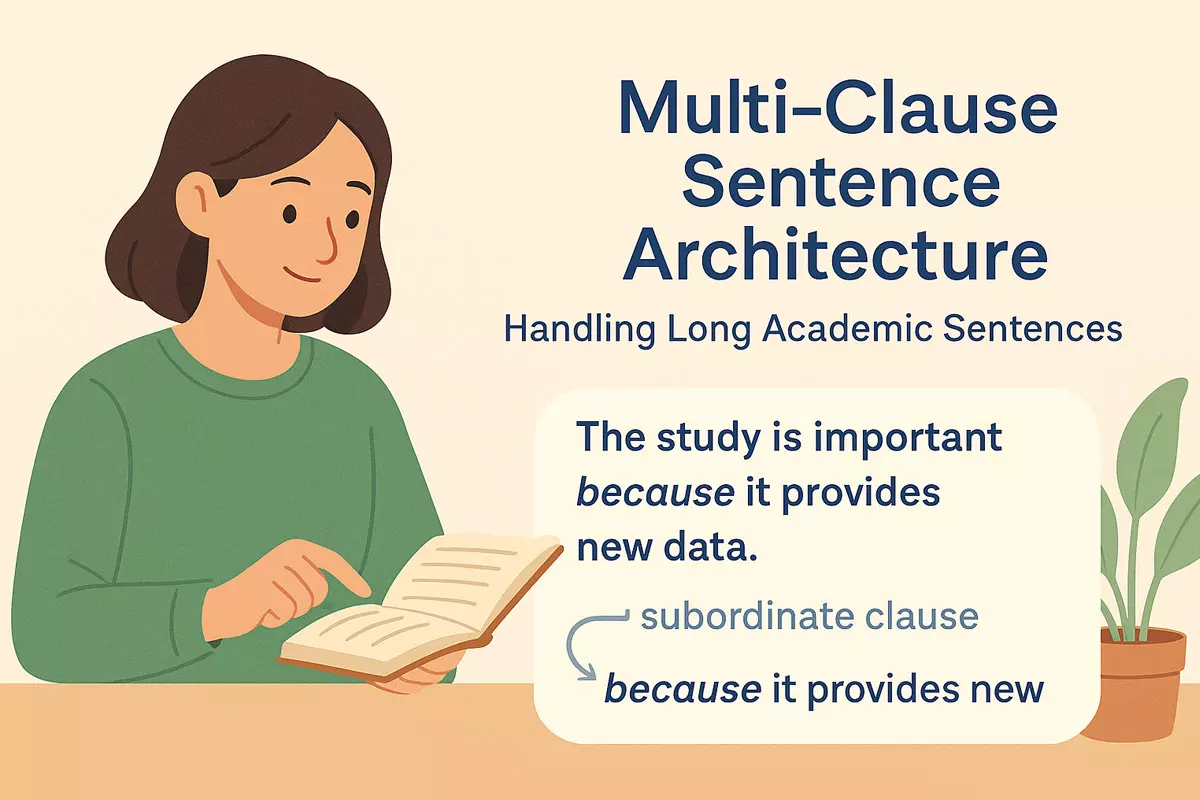
- Main clause + because + subordinate clause
- Although + subordinate clause, main clause
- Main clause, which + relative clause, + additional main clause
- If + conditional clause, main clause + result clause
- Main clause + while + contrasting clause
Balancing Complexity and Readability
While complex sentences can convey nuanced arguments, excessive length or nested clauses may confuse readers. Aim for logical progression, and consider breaking up unwieldy sentences. Use punctuation, such as commas and semicolons, to guide interpretation and prevent ambiguity. Ultimately, the goal is to express sophisticated ideas without sacrificing clarity.
Balancing coordination and subordination
Long academic sentences often require a careful mix of connectors to ensure clarity. While coordination links clauses with equal weight—using conjunctions such as and, but, or or—subordination introduces dependent clauses, providing additional information without overloading the main idea. Effective sentence architecture is about choosing when to present ideas side-by-side and when to subordinate details, background, or evidence, so that the main argument remains clear to the reader.
When to Coordinate and When to Subordinate
Writers need to decide whether ideas should stand as equals or if one should be backgrounded. Coordination works best for related points of similar importance, while subordination is preferable for conditions, reasons, or explanations that support a central claim. Excessive coordination can make sentences feel cluttered, while too much subordination may bury the main point.
- Coordination: Joining two findings of equal value
- Subordination: Adding a qualifying phrase to clarify a context
- Use although or because to show cause or contrast
- Choose while for simultaneous actions or ideas
- Insert since for reasoning or time relationships
- Apply if for conditions
- Reserve however or therefore for linking independent clauses with clear logic
- Balance sentence length by limiting the number of coordinated clauses
- Avoid stringing too many subordinate clauses together, which can confuse readers
- Emphasize the main idea by placing it in the independent clause
- Use punctuation (commas, semicolons) to clarify relationships
- Re-read for clarity: does the reader know what is primary and what is supplementary?
Common Patterns in Academic Sentences
Writers often alternate between the two strategies for better flow and readability. Here are some common patterns and their typical uses:
| Pattern | Typical Use |
|---|---|
| Independent clause + , + coordinating conjunction + independent clause | To present two related ideas of equal importance (e.g., “The study was rigorous, and the results were conclusive.”) |
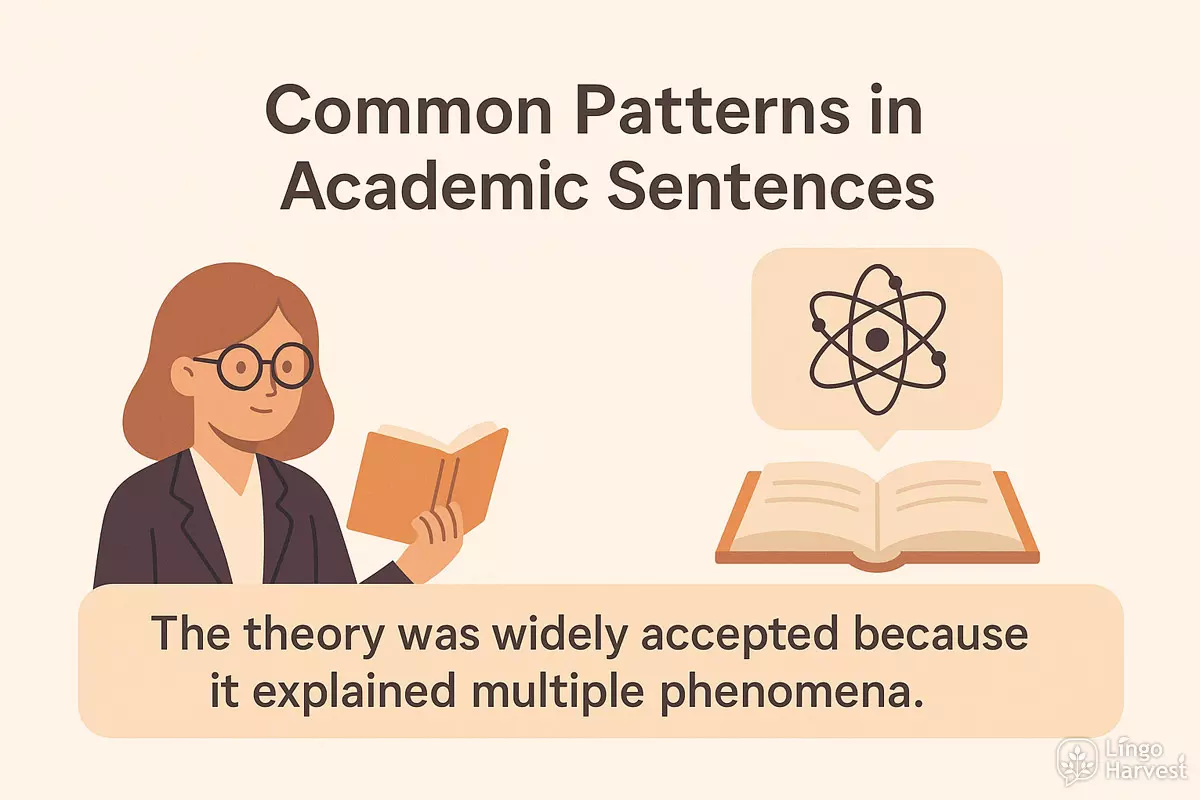
| Independent clause + subordinate conjunction + dependent clause | To provide reasoning, contrast, or conditions (e.g., “The theory was widely accepted because it explained multiple phenomena.”) |
| Complex sentences with embedded relative clauses | To add detail or restrict meaning without losing focus (e.g., “The participants, who were all graduate students, completed the survey.”) |
| Fronted subordinate clause + , + main clause | To foreground context or contrast (e.g., “Although the sample size was small, the findings were significant.”) |
Mastering these techniques helps academic writers maintain logical flow and prevent reader fatigue. By thoughtfully arranging clauses, writers guide their audience through complex arguments without sacrificing readability or precision.
Managing relative, conditional, and complement clauses
Long academic sentences often derive their complexity from the integration of relative, conditional, and complement clauses. Each type adds nuance, detail, or logical structure, but also increases the cognitive load for readers. Understanding how each clause functions within a sentence is essential for constructing clear, readable academic prose.
Relative Clauses: Adding Detail and Precision
Relative clauses typically provide extra information about a noun, allowing writers to specify or elaborate without starting a new sentence. These clauses often begin with words like who, which, that, or whose. For academic writing, embedding relative clauses can condense information, but overuse or improper placement may obscure the main point.
- The researchers who conducted the experiment discovered a new variable.
- The dataset, which was collected over five years, proved invaluable.
- Students whose essays were selected received feedback.
Conditional Clauses: Expressing Hypotheticals and Logic
Conditional clauses introduce circumstances or requirements, often using if, unless, provided that, or in case. These structures are key in academic arguments, especially when discussing hypotheses or theoretical implications. Proper management of conditionals clarifies cause-and-effect relationships.
- If the hypothesis holds, the results will support the model.
- Unless otherwise stated, all measurements are in SI units.
- Provided that the sample size is adequate, conclusions may be generalized.
Complement Clauses: Completing Thoughts and Reporting
Complement clauses frequently follow verbs such as believe, suggest, find, or report. They allow writers to embed statements, questions, or indirect speech within a sentence. In academic contexts, this is crucial for reporting findings or referencing other work.
- The study suggests that increased exposure improves retention.
- Researchers found that the effect was significant.
- It is assumed that participants understood the instructions.
Comparison of Clause Types in Academic Sentences
| Clause Type | Function | Typical Markers/Examples |
|---|---|---|
| Relative | Adds descriptive detail to nouns | who, which, that, whose e.g., "data that were collected" |
| Conditional | Expresses conditions or hypotheses | if, unless, provided that e.g., "if results are consistent" |
| Complement | Completes/reporting statements | that, whether, if e.g., "found that rates increased" |
Tips for Effective Clause Integration
- Limit the number of embedded clauses in a single sentence to maintain clarity.
- Use punctuation (commas, dashes) to separate non-essential information.
- Vary clause types to avoid repetitive sentence structures.
- Revise sentences with multiple clauses for logical flow and readability.
- Read sentences aloud to check for excessive complexity.
- Consider splitting very long sentences if the meaning becomes unclear.
- Ensure that each clause relates directly to the sentence’s main idea.
Strategic use of these clause types helps academic writers create nuanced, information-rich sentences without sacrificing reader comprehension.
Avoiding run-on sentences and fragmentation
Clarity in academic writing depends on structuring sentences that are neither overloaded nor incomplete. Long, multi-clause statements are common in scholarly texts, but managing their complexity is essential to prevent confusion. Two frequent pitfalls are the run-on sentence, where independent clauses are improperly joined, and fragmentation, where sentences lack necessary components to form a complete thought.
Recognizing and Preventing Run-On Sentences
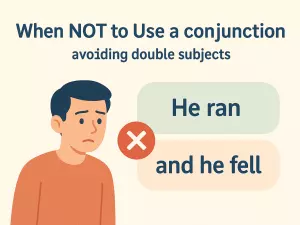
Run-on sentences occur when two or more independent clauses are joined without appropriate punctuation or conjunctions. This can overwhelm the reader and obscure your argument. Here are practical strategies to avoid this issue:
- Use coordinating conjunctions (for, and, nor, but, or, yet, so) to link clauses correctly.
- Separate independent clauses with a period or semicolon when appropriate.
- Employ transitional phrases (however, therefore, consequently) with proper punctuation.
- Break overly long sentences into two or more shorter ones if clarity suffers.
- Check for subjects and verbs in each clause to ensure completeness.
Avoiding Sentence Fragments
Fragments arise when a group of words is punctuated as a sentence but lacks a main clause. Academic readers expect complete ideas, so fragments can undermine the authority of your writing. To steer clear of this error:
- Ensure every sentence contains at least one independent clause (subject + verb).
- Watch out for dependent clauses left on their own (e.g., "Although the results were significant.").
- Attach introductory or conditional phrases to main clauses.
- Review sentences beginning with "which," "because," "when," or "while"—they often signal incomplete thoughts.
- Use sentence diagramming or outlining for especially complex ideas.
Common Error Patterns and How to Revise Them
Writers often encounter specific error patterns when constructing lengthy academic sentences. The following list provides examples of these patterns and suggested revisions:
- Comma splice: "The study was extensive, it covered multiple years." → "The study was extensive, and it covered multiple years."
- Fused sentence: "Participants responded quickly the data was recorded immediately." → "Participants responded quickly, and the data was recorded immediately."
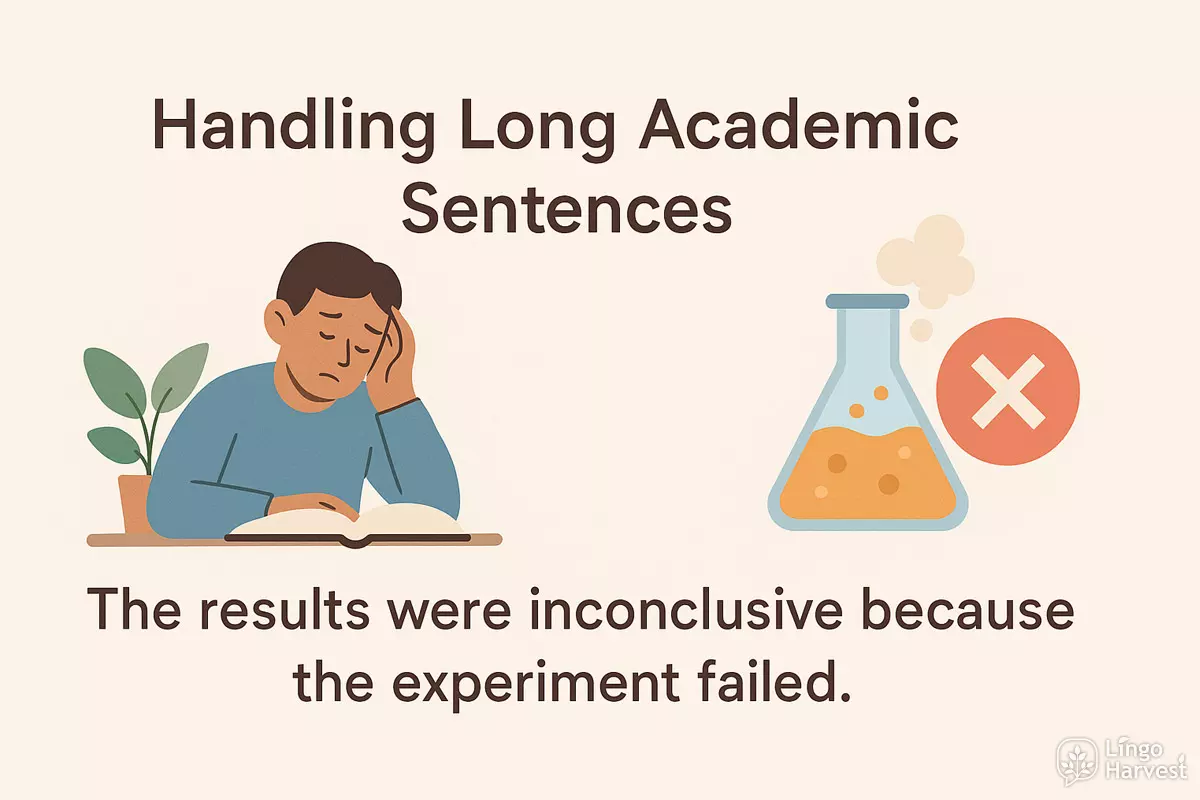
- Fragment: "Because the experiment failed." → "The results were inconclusive because the experiment failed."
- Fragment: "While analyzing the results." → "While analyzing the results, the researchers noted an anomaly."
- Overloaded sentence: "The survey included ten questions, the participants were given five minutes, the answers were recorded electronically, the results were analyzed by two researchers." → Break into two or more sentences for clarity.
- Missing subject: "Completed the experiment in record time." → "The team completed the experiment in record time."
- Improper conjunction: "The hypothesis was supported but the sample was small, so the results are inconclusive." → "The hypothesis was supported, but the sample was small; therefore, the results are inconclusive."
- Dependent clause fragment: "Although the sample size was limited." → "Although the sample size was limited, the findings were significant."
- Series of fragments: "Because of the rain. Which lasted all day. The fieldwork was postponed." → "Because of the rain, which lasted all day, the fieldwork was postponed."
- Unclear pronoun reference: "This was important." → Clarify what "this" refers to within the sentence.
When to Split or Combine Clauses
Effective academic prose often requires balancing sentence length and complexity. Consider these guidelines:
- Split sentences if the main idea is buried or if multiple ideas compete for attention.
- Combine clauses when ideas are closely related and brevity supports flow.
- Use subordination for supporting details; keep the main clause prominent.
- Read sentences aloud to test natural breaks and ensure readability.
By attending to these aspects of sentence construction, writers can maintain clarity and coherence, even in the context of long, information-rich academic sentences.
Strategies for revising overly long sentences
Overly complex sentences can obscure meaning and increase cognitive load for readers, especially in academic writing. Breaking down these sentences into clearer, more digestible components improves both readability and comprehension. Here are practical approaches for refining lengthy academic constructions.
Break into Shorter Sentences
Long stretches of text often benefit from division. If a sentence contains multiple ideas, consider separating them into two or more sentences. This not only clarifies each point but also helps maintain reader engagement.
Identify and Remove Redundancies
Academic prose tends to accumulate unnecessary qualifiers or repeated concepts. Review each sentence for words or phrases that add little new information. Eliminating these can streamline your writing without sacrificing nuance.
Use Coordinating and Subordinating Conjunctions Thoughtfully
While conjunctions like "and," "but," or "because" can join clauses, overusing them leads to unwieldy constructions. Instead, choose the most logical connector, and avoid stringing together too many clauses.
Leverage Punctuation for Clarity
Colons, semicolons, and em dashes help clarify relationships between clauses. However, use them sparingly. Over-punctuating can make sentences feel fragmented or confusing.
Replace Embedded Clauses with Simpler Structures
When sentences contain multiple embedded clauses, consider rephrasing. For example, transform relative clauses into standalone sentences or use noun phrases in place of lengthy explanations.
Prune Excessive Modifiers
Adjectives and adverbs can enrich meaning, but piling on modifiers often results in dense, hard-to-follow text. Retain only those that are essential for precision.
Prioritize Active Voice
Passive constructions tend to be longer and less direct. Where possible, recast sentences in the active voice to create more concise and engaging prose.
Example Transformations
Below is a comparison of common revision strategies applied to academic sentences.
| Original Sentence | Revised Version |
|---|---|
| The committee, which was formed last year and includes experts from various fields, has been working tirelessly to develop guidelines that will address the challenges faced by the organization. | The committee was formed last year and includes experts from various fields. The group has worked tirelessly to develop guidelines addressing the organization’s challenges. |
| Because the results were inconclusive and the testing procedure was lengthy, the researchers decided to repeat the experiment, which delayed the publication of their findings. | The results were inconclusive, and the testing procedure was lengthy. As a result, the researchers repeated the experiment, delaying publication of their findings. |
| It is important to note that while the methodology used in this study is widely accepted, it does have certain limitations, which should be considered when interpreting the results. | Although the methodology in this study is widely accepted, it has limitations. Readers should consider these when interpreting the results. |
| Despite the numerous advantages that the new system offers, including increased efficiency and reduced costs, several departments have expressed concerns about its implementation. | The new system offers increased efficiency and reduced costs. However, several departments have concerns about its implementation. |
Checklist for Revising Lengthy Constructions
- Split sentences containing more than two independent clauses
- Replace vague or filler phrases with precise terms
- Check for repeated ideas or information
- Use bullet points or numbered lists for complex enumerations
- Rephrase long introductory clauses as separate statements
- Summarize background details in fewer words
- Limit the use of parenthetical information
- Read sentences aloud to check flow and clarity
- Ask a peer to review for comprehensibility
- Revise iteratively, focusing on one issue at a time
Combining these methods creates more accessible and effective academic writing, ensuring that complex ideas remain clear without unnecessary convolution.
Practice: map and redesign multi-clause sentences
Understanding how to analyze and restructure complex sentences is essential for improving clarity and readability in academic writing. This section offers practical exercises to help you break down lengthy, multi-clause constructions and reconstruct them for greater impact. Mapping the relationships between clauses allows you to see which ideas should be prioritized, split, or joined for better flow.
Step 1: Identify and Map Clausal Relationships
Start by locating the core clauses and their connectors (such as "although," "because," "which," or "while"). Visualizing these links clarifies which parts carry the main message and which serve as background or detail.
- Find the main clause (central idea).
- List all subordinate or relative clauses.
- Note connectors and their function (contrast, cause, addition, condition).
- Sketch a simple tree or outline to show clause hierarchy.
Step 2: Practice – Break Down and Rebuild
Here are several complex sentences. For each, try to:
- Underline or highlight the main clause.
- List each dependent or embedded clause separately.
- Redesign the sentence for clarity, using shorter sentences or clearer connectors.
Examples for analysis:
- The experiment, which was conducted last year and included over 300 participants, revealed that although initial results were promising, several methodological issues remained unresolved.
- While the theory has gained significant attention in recent decades, its practical application remains limited, partly because relevant data are scarce and the methodology is still evolving.
- Because the committee did not reach a consensus, the proposal, which had already been revised multiple times, was postponed until further notice.
Show answers
- 1. Main clause: "The experiment revealed that several methodological issues remained unresolved."
Subordinate: "which was conducted last year and included over 300 participants" (modifies "experiment"); "although initial results were promising" (concessive clause).
Redesigned: "The experiment was conducted last year and included over 300 participants. Although the initial results were promising, several methodological issues remained unresolved." - 2. Main clause: "Its practical application remains limited."
Subordinate: "While the theory has gained significant attention in recent decades" (contrast); "partly because relevant data are scarce and the methodology is still evolving" (reason).
Redesigned: "The theory has gained significant attention in recent decades. However, its practical application remains limited, partly due to scarce data and evolving methodology." - 3. Main clause: "The proposal was postponed until further notice."
Subordinate: "Because the committee did not reach a consensus" (reason); "which had already been revised multiple times" (modifies "proposal").
Redesigned: "Because the committee did not reach a consensus, the proposal—already revised multiple times—was postponed until further notice."
Common Connectors in Multi-Clause Sentences
Knowing the most frequent linking words and their functions can help in both analysis and redesign. Here is an illustrative list:
- although / though / even though
- because / since / as
- while / whereas
- which / who / that (relative clauses)
- if / unless
- when / after / before / until
- so that / in order to
- despite / in spite of
- however / nevertheless / nonetheless
- therefore / thus / consequently
- provided that / given that
- in addition / furthermore
- such as / for example
- whereas
- since
- once
- unless
- because of
- as a result
Table: Original vs. Redesigned Sentences
Below is a structured comparison of sample sentences before and after reworking for clarity and conciseness.
| Original Sentence | Redesigned Version |
|---|---|
| Given that the survey, which was distributed to all faculty members, produced inconsistent responses and that follow-up interviews revealed additional ambiguities, the research team decided to revise their methodology before proceeding. | The survey was distributed to all faculty members but produced inconsistent responses. Follow-up interviews revealed further ambiguities. As a result, the research team decided to revise their methodology before proceeding. |
| Although the new policy was implemented last semester and was intended to streamline administrative processes, staff reported increased workloads, which suggests that further adjustments are necessary. | The new policy was implemented last semester to streamline administrative processes. However, staff reported increased workloads. This suggests that further adjustments are necessary. |
| When the data were analyzed, which included several outliers, the results, although generally consistent with previous findings, indicated a need for additional research to clarify unexpected trends. | The data analysis included several outliers. While the results were generally consistent with previous findings, they indicated a need for additional research to clarify unexpected trends. |
| Because the equipment malfunctioned during the experiment and the backup system was unavailable, the team was unable to collect sufficient data, which delayed publication of their findings. | The equipment malfunctioned during the experiment and the backup system was unavailable. As a result, the team could not collect sufficient data, delaying publication of their findings. |
Tips for Effective Redesign
- Prioritize the main message: place it at the beginning or in a standalone sentence.
- Split overloaded sentences: use two or more sentences when logical divisions exist.
- Replace vague connectors with precise ones.
- Limit the number of embedded clauses per sentence.
- Use punctuation (such as em dashes or parentheses) to clarify relationships if splitting is not possible.
- Check for parallel structure when listing multiple clauses or actions.