Articles with Names of Institutions: the university vs university

 Here we how using or omitting articles with institution nouns like school, university, hospital, and church changes meaning. It gives real examples, explains the patterns, and offers practice choosing the correct usage in dialogues.
Understanding how to use definite and indefinite articles with academic institution names can be surprisingly tricky, yet mastering this subtle distinction is essential for sounding natural and accurate in English. Generally, we omit "the" before most university or college names, such as Harvard University or Oxford University, but we use "the" with names that include words like "university" when they are part of a longer descriptive phrase, such as the University of Cambridge. Being attentive to these usage patterns helps ensure clear and polished communication.
Institution nouns as concepts vs specific places
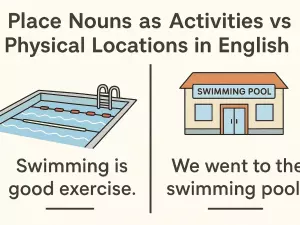
Whether you use an article with words like "university," "school," or "prison" depends on whether you mean the institution in an abstract, functional sense, or you're talking about the physical building or a specific location. Understanding this difference is key to choosing the correct form in English.
Institution as a concept (no article)

When discussing an institution in its general, functional role, articles are usually omitted. This is common when referring to the activity or function associated with the institution, rather than a particular place. For example:
- She goes to university in London. (She is a student, not just visiting the building.)
- He’s in hospital recovering from surgery. (He is receiving medical treatment.)
- The children are at school during the day. (They are students, not just physically present in the building.)
- He was sent to prison for five years. (He is serving a sentence.)
- My brother is in college in the US. (He is enrolled as a student.)
- She’s at church every Sunday. (She is there for worship.)
- They joined army after graduation. (They became members of the military.)
- He’s at sea for work. (He is working as a sailor.)
- I go to bed at midnight. (Referring to the activity of sleeping.)
- The doctor is in theatre. (Performing surgery, not watching a play.)
Institution as a specific place (article needed)
When referring to the actual building, location, or a particular institution, an article—often "the"—is required. This signals you are talking about a specific place, not the general concept or activity.
- I visited the university last week. (A particular campus or building.)
- She’s painting the hospital. (The physical building.)
- Parents waited outside the school. (The specific building.)
- He works at the prison as a guard. (A specific facility.)
- We toured the college during the open day. (A particular institution.)
- The wedding was held in the church on Main Street. (A particular church.)
- The soldiers returned to the army base. (A specific base.)
- They docked at the sea port. (A particular port.)
- She bought a new mattress for the bed. (A specific physical bed.)
- We met in the theatre downtown. (A particular building.)
Summary: Concept vs. Place
To clarify the contrast, here’s a quick reference showing how article use changes meaning:
| Without Article (Concept/Function) | With Article (Specific Place) |
|---|---|
| be in hospital (as a patient) | be in the hospital (in the building, any reason) |
| go to school (as a student) | go to the school (visit the building) |
| be at university (as a student) | be at the university (at the campus) |
| be in prison (as a prisoner) | be in the prison (inside the facility) |
| in church (for worship) | in the church (the building) |
In summary, using or omitting articles with institution nouns signals whether you’re speaking about a role, activity, or membership, versus a particular building or place. Pay attention to context for natural, accurate English.
Patterns with school, university, hospital, church
When talking about institutions like "school," "university," "hospital," or "church," the use of articles in English often depends on whether we refer to the general function of the institution or to a specific building or entity. This distinction can sometimes be confusing for learners, so it's useful to look at typical usage patterns.
General Meaning vs. Specific Place
When someone is involved with the primary purpose of the institution, articles are often omitted:
- She goes to school every day. (as a student)
- He’s in hospital after the accident. (as a patient, UK usage)
- They met at church on Sunday. (for worship)
- She is at university in Oxford. (as a student)
If the reference is to the building itself, or a specific institution, an article is usually required:
- The school was renovated last year. (the building)
- We visited a hospital during our trip. (a particular hospital)
- The church on Main Street is old. (a specific church)
- I work at the university. (specific workplace)
Common Patterns and Usage
Here are some typical patterns you might encounter:
- at school / at the school
- in hospital (UK) / in the hospital (US or for building)
- at church / at the church
- at university / at the university
- go to school / go to the school
- leave hospital / leave the hospital
- after church / after the church service
- study at university / visit the university
- return from hospital / return from the hospital
- work at school / work at the school
- sing in church / sing in the church choir
- graduate from university / attend the university
- be sent to hospital / be sent to the hospital
- get married in church / get married in the church
Comparison of Article Usage
The table below summarizes how articles change the meaning with these institutions:
| Without Article (General Function) |
With Article (Specific Place/Building) |
|---|---|
| She is in hospital. (as a patient) |
She is in the hospital. (in the building, not necessarily as a patient) |
| He goes to school. (as a pupil) |
He goes to the school. (to the building, for a reason other than study) |
| They’re at church. (for worship) |
They’re at the church. (at a specific church building) |
| She’s at university. (as a student) |
She’s at the university. (at a particular university location) |
Key Takeaways
- Omitting the article usually refers to the primary role or function (studying, being treated, worshipping).
- Using "the" or "a" points to a particular building, event, or institution.
- US English prefers "in the hospital" even for patients, while UK English uses "in hospital."
- Context is crucial: consider whether you mean the activity/purpose or the physical location.
Understanding these distinctions helps avoid common mistakes and makes your English sound more natural.
When zero article means the activity or role
In English, omitting the article before institutional names like school, university, or prison often signals a focus on the typical activity or function associated with that place. This use is common when describing someone's participation or involvement rather than referencing the physical building or a specific institution. The choice between using no article, the, or a/an can subtly alter the meaning.
Typical cases of zero article with institutions
- He is in hospital (receiving medical care, not just visiting the building).
- She goes to university (as a student, not just visiting the campus).
- Children must attend school (participating in education, not simply entering the building).
- He was sent to prison (as a punishment, not just visiting).
- They are at work (doing their job, rather than at their workplace for another reason).
- She is in class (participating in a lesson).
- He went to church (for worship, not just to see the building).
- They are at sea (working as sailors or traveling by ship).
- She is in court (involved in legal proceedings, not just visiting the premises).
- He is at college (studying, not just on campus).
- She is in town (present in the town, not referencing a specific town).
- He went to bed (for sleep, not just physically moving to the bed).
- She is in training (participating in a training program).
- He is in jail (serving a sentence).
- They are in session (actively meeting or working, as in parliament).
Comparing zero article and definite article usage
The meaning changes when you add the. Using the typically refers to a specific building or institution, not the activity within it.
| Zero Article (Activity/Role) | With "the" (Specific Place) |
|---|---|
| She is at university (studying) | She is at the university (on campus, not necessarily studying) |
| He is in hospital (as a patient) | He is in the hospital (in the building, maybe visiting) |
| They go to church (for worship) | They go to the church (to visit the building) |
| She is at school (as a student or teacher) | She is at the school (at the building, for any reason) |
Practice: Choose the correct form
- He is in ___ (hospital / the hospital) after his surgery.
- Are you going to ___ (university / the university) next year?
- She visited ___ (prison / the prison) to see her brother.
- My son is at ___ (school / the school) now.
- He is at ___ (work / the work) at the moment.
- She went to ___ (church / the church) to pray.
- We arrived at ___ (airport / the airport) two hours early.
- They met at ___ (college / the college) ten years ago.
- I have an appointment at ___ (hospital / the hospital) tomorrow.
- She’s studying in ___ (college / the college) this semester.
Show answers
- hospital (purpose: receiving treatment)
- university (purpose: studying)
- the prison (visiting a specific prison)
- school (purpose: studying)
- work (purpose/location of employment)
- church (purpose: praying)
- the airport (a specific airport)
- college (purpose: studying)
- the hospital (specific location for an appointment)
- the college (a specific institution, not general study context)
When the signals a physical building or specific one
In English, the article “the” is often used before the name of an institution to highlight its physical location or a particular, concrete building. This usage is distinct from talking about the institution as an abstract entity or community. For example, saying “I left my jacket at the university” refers to the campus or the buildings themselves, not the concept or organization.
Physical vs. Abstract Reference

If your meaning is about a specific site or structure, “the” makes it clear you mean the premises. In contrast, omitting “the” typically refers to the institution in a general or more abstract sense, such as enrollment or membership.
- I’ll meet you outside the university. (A specific campus or buildings)
- She works at the hospital. (The actual hospital building)
- He is in the school now. (Inside the school building)
- They visited the museum yesterday. (A particular location)
- We had a tour of the institute. (A defined, physical place)
- Classes are held at the college. (Specific site)
- There was a fire in the library. (The actual library building)
- I left my laptop in the university. (A precise place)
- The protest happened outside the embassy. (Referring to a building/site)
- He is being treated in the clinic. (A concrete location)
- The party is at the academy. (A specific building)
- She’s cleaning the laboratory. (A real, physical lab)
- They are repairing the observatory. (A particular facility)
- The meeting is in the auditorium. (The actual room/building)
- The exhibition is at the gallery. (A definite place)
Contrast with Abstract or General Use
When discussing an institution as an idea, or referring to its role rather than its site, “the” is usually omitted. For example, “She goes to university” or “He is in hospital” in British English, mean being part of those systems, not being inside a building.
Understanding this distinction helps clarify intent and avoids confusion, especially in contexts where both meanings are possible.
Subtle shifts in meaning in real examples
When choosing whether to use "the" before institution names like "university," context can subtly alter the intended message. Sometimes, the inclusion or omission of the article signals whether you mean a specific institution, a general concept, or the category as a whole. Let's look at how these small differences play out in natural sentences.
When "the" changes the focus
Often, "the" is used to point to a particular institution, while its absence can make the reference broader or more abstract. See how this works in real-world sentences:
- She was accepted to the university she had dreamed of since childhood. → Refers to a specific, known university.
- He hopes to go to university next year. → Refers to university in general, not a particular one.
- Research at the university has led to new discoveries. → Implies a particular, previously mentioned university.
- Going to university often means moving out for the first time. → General experience, not a specific place.
- She works at the hospital downtown. → A specific hospital.
- He works in hospital administration. → The field or sector, not a particular place.
- He studied at the London School of Economics. → Proper name with article as part of its title.
- I visited Oxford University last summer. → No "the" because it’s a full proper name.
- Classes at the university start in September. → A particular university, contextually known.
- She wants to pursue university studies abroad. → Refers to the idea of higher education in general.
- They met at the museum during an exhibition. → Specific place, known to both speakers.
- He plans to work in museum curation. → Field or profession, not a particular building.
- She was invited to give a lecture at the university. → Likely a specific, previously identified university.
- Many students attend university after high school. → Refers to the general practice or system.
Comparing structures: definite vs. zero article
To clarify these nuances, here’s a structured overview of how meaning shifts depending on article use:
| With "the" | Without "the" |
|---|---|
| He is studying at the university in his city. (A particular institution, likely known to both speaker and listener.) |
He is studying at university. (Any university, or the concept of higher education in general.) |
| She has an appointment at the hospital. (A specific hospital.) |
She works in hospital administration. (The field, not a specific hospital.) |
| We had dinner at the club. (A specific club, known to the group.) |
He joined club activities. (Any club, or the concept of club activities.) |
| Lectures at the university are mandatory. (Specific institution.) |
Attending university can be life-changing. (The general experience.) |
Key takeaways
Choosing whether or not to use "the" with names of institutions often depends on whether you mean a specific place or the idea as a whole. In conversation and writing, this choice can subtly shift how your message is understood, so paying attention to context is vital.
Practice: choose the correct pattern in short dialogues
Understanding when to use "the" before names of institutions can be tricky. Below you'll find practical exercises featuring short dialogues. For each, decide whether "the" is needed or not. These examples reflect real-life scenarios where learners often hesitate. Read the dialogues, then select the correct article usage.
Choose the correct option
For each dialogue, pick the best form: with or without "the".
- A: Where do you study?
B: I study at ___ University of Oxford. - A: Have you ever visited ___ British Museum?
B: Yes, I loved it! - A: She works at ___ hospital near my house.
B: Is it ___ St Thomas' Hospital? - A: Is your brother still at ___ school?
B: No, he graduated last year. - A: I'm applying to ___ Yale University.
B: That's impressive! - A: My cousin teaches at ___ university in Manchester.
B: Which one? - A: Did you see the exhibition at ___ National Gallery?
B: Not yet, but I plan to go. - A: He was admitted to ___ prison for theft.
B: That's unfortunate. - A: Are you going to ___ church this Sunday?
B: Yes, with my family. - A: She is studying law at ___ Cambridge.
B: That's a top university.
Show answers
- the University of Oxford
- the British Museum
- the hospital / St Thomas' Hospital
- at school
- Yale University
- a university in Manchester
- the National Gallery
- prison
- church
- Cambridge
Quick reference: Common patterns with institutions
- No article: when using the institution for its primary purpose (e.g., "at university," "in hospital," "at school").
- With "the": when referring to a specific institution or its building as a landmark (e.g., "the University of Oxford," "the hospital on Main Street").
- Names with "of": usually require "the" (e.g., "the University of California").
- Names without "of": often do not take "the" (e.g., "Harvard University," "Oxford University").
- Church, prison, school, hospital: No article when talking about purpose; use "the" when specifying a particular one.