Oxford Comma Explained: Do You Need It or Not?

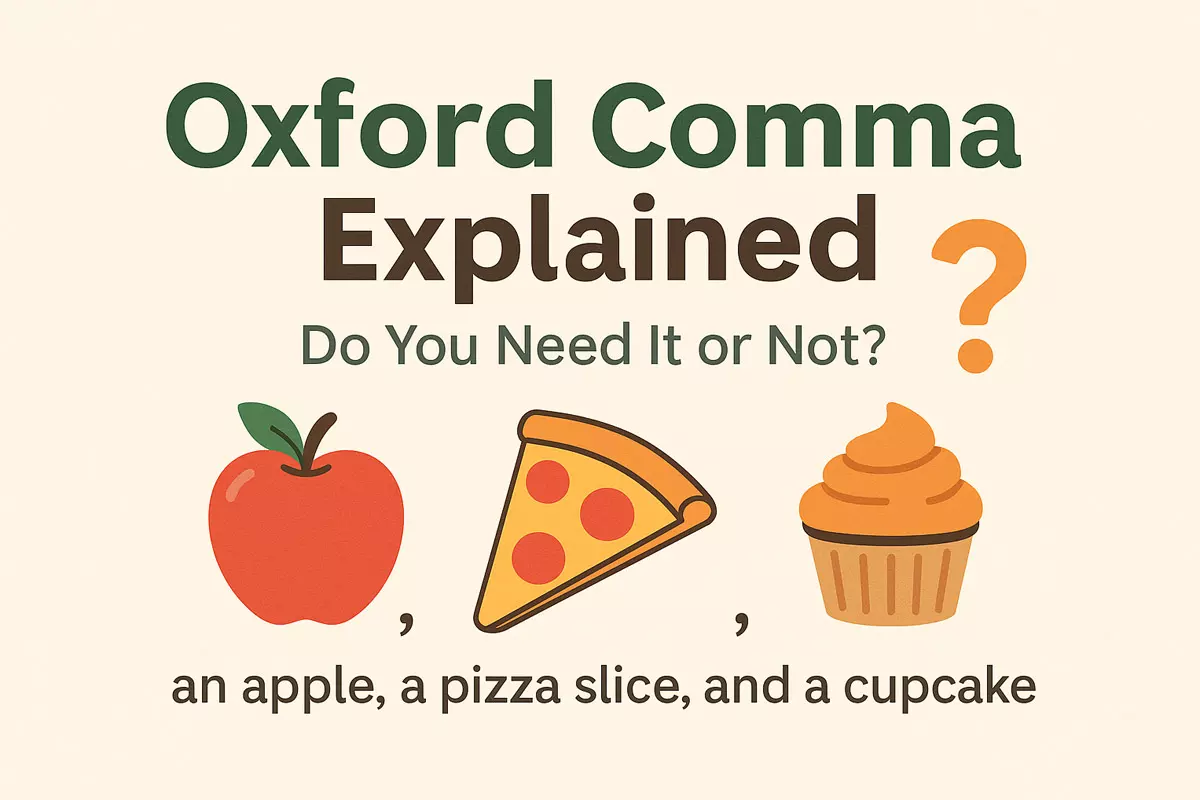 The article defines the Oxford comma, gives examples of its importance, and explains when it should be used for clarity. It also compares British and American usage, covers legal and academic contexts, and includes practice on adding or removing it.
The use of the serial, or Oxford, comma—the extra comma before the last item in a list—has sparked ongoing debate among writers and editors. Supporters argue that it can prevent ambiguity and ensure clarity, especially in complex lists, while opponents see it as unnecessary in most cases. The decision to use the serial comma often comes down to style guides or personal preference, but understanding its potential to clarify or confuse is important. Ultimately, writers should consider their audience and the context to determine whether including the serial comma enhances their writing.
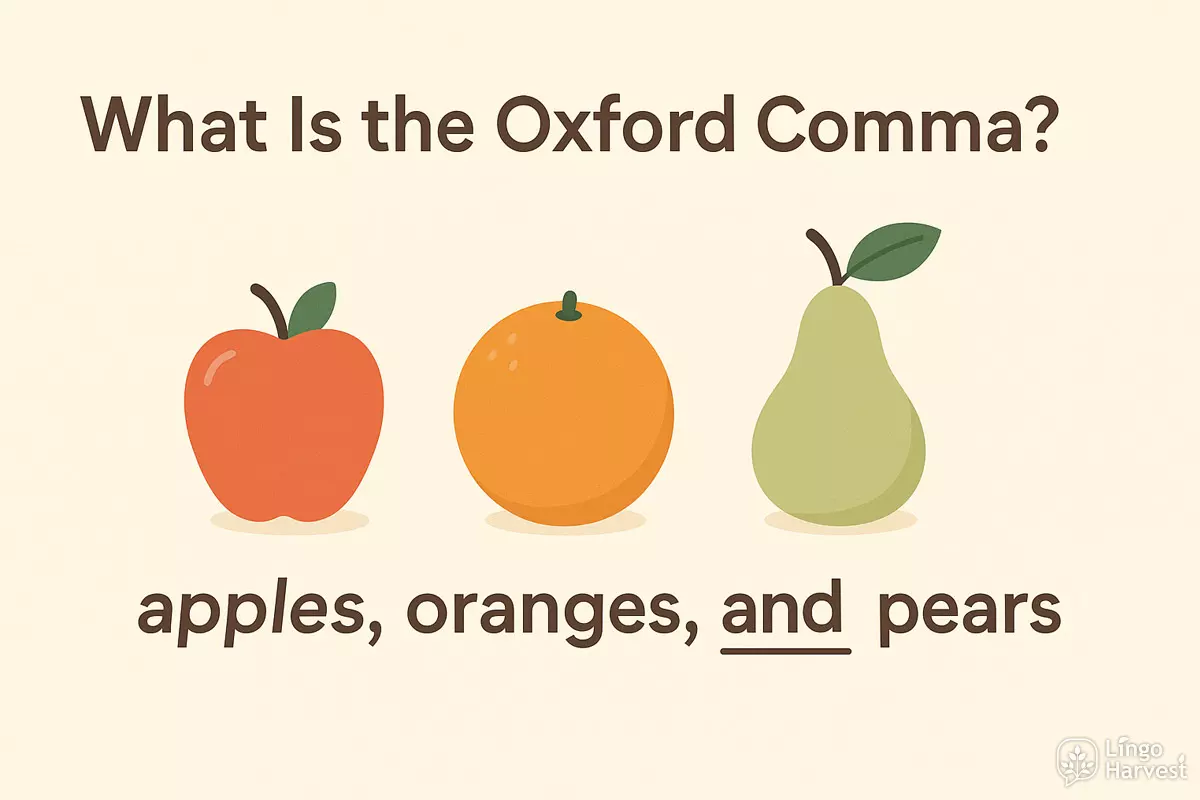
What Is the Oxford Comma?
The Oxford comma, also known as the serial comma, is an optional comma placed immediately before the conjunction—usually “and” or “or”—in a list of three or more items. Its main function is to clarify the separation between list elements, especially when items themselves contain “and” or “or.”
For example, consider the sentence: “I love my parents, Lady Gaga, and Humpty Dumpty.” Here, the comma after “Lady Gaga” is the Oxford comma. Without it—“I love my parents, Lady Gaga and Humpty Dumpty”—the meaning can become ambiguous, suggesting Lady Gaga and Humpty Dumpty are the speaker’s parents.
Where the Serial Comma Comes Into Play
Most style guides in American English, such as The Chicago Manual of Style, recommend its use to avoid confusion. However, some publications, like the Associated Press (AP) style, typically omit it unless needed for clarity. British English usage varies, with fewer institutions mandating the comma.
Common Scenarios
Writers often encounter the serial comma in lists, especially when:
- Each item in a list is a single word or simple phrase
- List items are lengthy or already include conjunctions
- Ambiguity could arise without it
Examples of Use and Omission
Below are typical instances showing its presence or absence:
- With: "We bought apples, oranges, and bananas." ✅
- Without: "We bought apples, oranges and bananas." (acceptable, but may be less clear)
- With complex items: "The meeting included John, a lawyer, and an architect." (clarifies that three people attended)
- Omitted: "The meeting included John, a lawyer and an architect." (could imply John is both a lawyer and an architect)
Quick Reference: Serial Comma in Action
| Sentence | With/Without Oxford Comma |
|---|---|
| She admires her parents, Oprah, and Elon Musk. | With (clarifies three entities) |
| She admires her parents, Oprah and Elon Musk. | Without (could mean her parents are Oprah and Elon Musk) |
| We invited the strippers, JFK, and Stalin. | With (avoids confusion) |
| We invited the strippers, JFK and Stalin. | Without (potentially ambiguous) |
In summary, the serial comma serves as a tool for disambiguation, especially in complex lists or formal writing. Whether you choose to use it may depend on the style guide you follow or your preference for clarity in written communication.
Examples That Show Its Importance
Understanding how a serial comma (sometimes called the Oxford comma) can change the meaning of a sentence is best achieved through real-life illustrations. The following cases demonstrate how punctuation can clarify or obscure your intended message.
How the Serial Comma Prevents Ambiguity
- Without: "I love my parents, Lady Gaga and Humpty Dumpty."
With: "I love my parents, Lady Gaga, and Humpty Dumpty."
First version suggests your parents are Lady Gaga and Humpty Dumpty; the second makes it clear they are three separate entities. - Without: "We invited the strippers, JFK and Stalin."
With: "We invited the strippers, JFK, and Stalin."
Leaving out the extra comma implies JFK and Stalin are the strippers! - Without: "He left the house to his sons, Tom and Jerry."
With: "He left the house to his sons, Tom, and Jerry."
The first could suggest his sons are Tom and Jerry; the second clearly lists three beneficiaries. - Without: "For breakfast, I had orange juice, toast and eggs."
With: "For breakfast, I had orange juice, toast, and eggs."
Here, the extra comma avoids any confusion but is less critical; still, it creates uniformity.
Side-by-Side Comparison
| No Oxford Comma | With Oxford Comma |
|---|---|
| We dedicate this book to our parents, Ayn Rand and God. | We dedicate this book to our parents, Ayn Rand, and God. |
| My favorite sandwiches are ham, peanut butter and jelly. | My favorite sandwiches are ham, peanut butter, and jelly. |
| She thanked her friends, the president and the vice president. | She thanked her friends, the president, and the vice president. |
| I spoke to my brothers, Tom and Jerry. | I spoke to my brothers, Tom, and Jerry. |
Everyday Writing Scenarios
- Legal contracts often require the Oxford comma to avoid disputes.
- Academic writing favors consistency, so the extra comma is standard in many style guides.
- Lists in emails or instructions are less likely to confuse readers when the extra comma is used.
- Journalistic style sometimes omits it for brevity, but this can lead to misreadings.
As shown above, using the serial comma can prevent misinterpretation, especially in complex lists or formal writing. Its absence can sometimes cause real confusion—something easily avoided with a tiny mark.
When to Use It for Clarity
The Oxford comma is especially useful in situations where a list could be misread without it. Its main job is to prevent confusion, ensuring that each item in a series stands out clearly. While not every sentence strictly requires this comma, including it can make your writing more precise and easier to understand—especially when list items themselves contain "and" or "or," or when the grouping of items could be ambiguous.
Common Scenarios Where the Oxford Comma Prevents Ambiguity
- Lists where the last two items could be mistakenly grouped as one
- Sentences with complex or compound items in a series
- Formal documents where clarity is essential
- Academic writing or publications with strict style guides
- Legal writing to avoid misinterpretation
- Long lists where the absence of a comma could cause readers to pause or reread
- Technical manuals or instructions with multi-part steps
- Creative writing for stylistic consistency
- Business communication that requires precision
- Lists including names, titles, or items that might otherwise be confusing
- Writing for international audiences who might interpret punctuation differently
- Textbooks and educational materials
- When mixing short and long items in a series
- Any context where the meaning could shift without the comma
Examples: With and Without the Oxford Comma
Compare how meaning changes depending on whether the serial comma is used:
| Without Oxford Comma | With Oxford Comma |
|---|---|
| We invited the strippers, JFK and Stalin. | We invited the strippers, JFK, and Stalin. |
| I love my parents, Lady Gaga and Humpty Dumpty. | I love my parents, Lady Gaga, and Humpty Dumpty. |
| For breakfast, I had orange juice, toast and eggs. | For breakfast, I had orange juice, toast, and eggs. |
| She took a photograph of her parents, the president and the vice president. | She took a photograph of her parents, the president, and the vice president. |
| This book is dedicated to my roommates, Ayn Rand and God. | This book is dedicated to my roommates, Ayn Rand, and God. |
Quick Tips for Deciding
- Read the sentence aloud—if you pause before the last item, a comma might help.
- Check if the last two items could be read as a single group.
- When in doubt, especially for formal or public writing, err on the side of clarity.
Ultimately, using the Oxford comma is about making your meaning as clear as possible. In cases where omitting it could lead to confusion or a humorous misreading, it's wise to include it. Consistency across your writing also helps readers know what to expect, reducing the chance of misunderstandings.
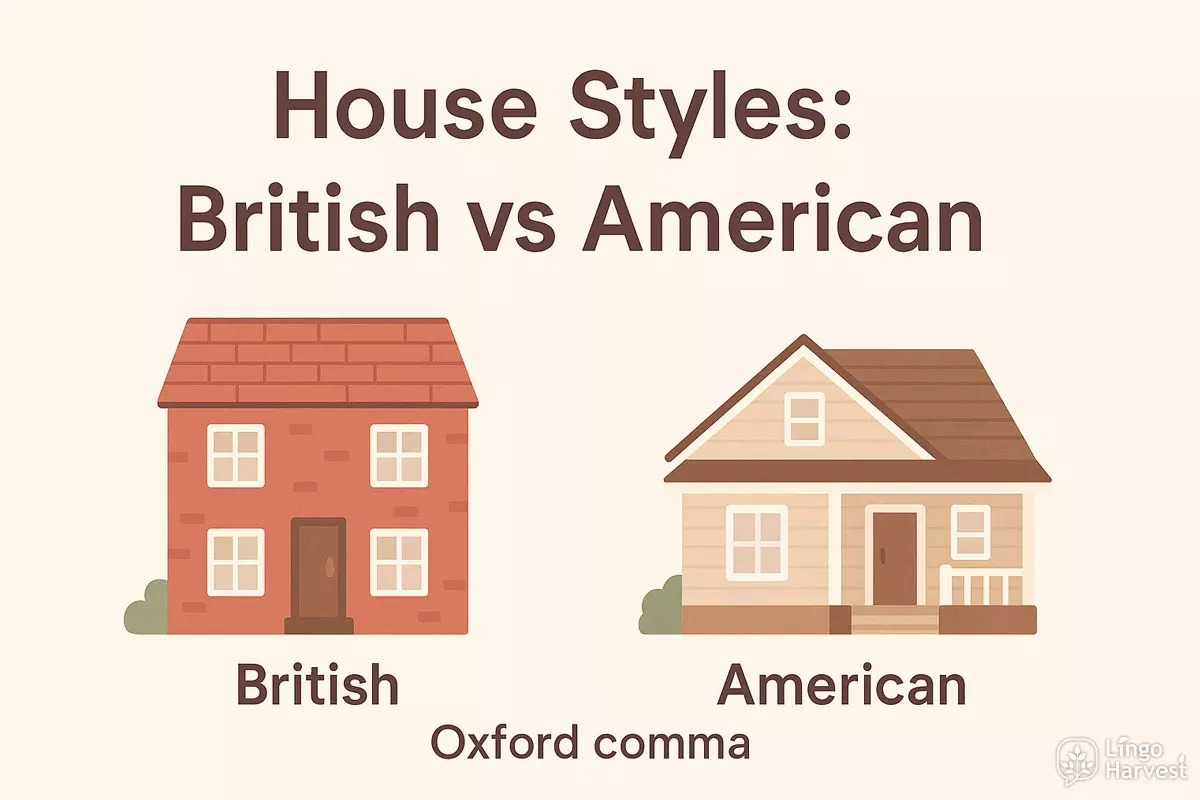
House Styles: British vs American
When it comes to the Oxford comma, editorial traditions differ considerably across the Atlantic. British and American publishers often have clear but contrasting guidelines on whether to use this punctuation mark, and these choices shape the style of academic, journalistic, and literary writing.
British Editorial Preferences
In the UK, most newspapers, magazines, and publishing houses avoid the Oxford comma, except where its absence could cause ambiguity. British English generally favors a minimalist approach to punctuation in lists. However, Oxford University Press and some academic publishers are exceptions, consistently using the serial comma for clarity.
- Standard newspapers: usually omit the serial comma
- Academic texts: may use it for clarity
- Legal documents: sometimes include it to avoid misinterpretation
- Fiction and non-fiction: varies by publisher’s style guide
American Editorial Practices
In contrast, American style guides like The Chicago Manual of Style and the MLA Handbook almost always recommend the Oxford comma in lists of three or more items. This approach is considered best for consistency and clarity, especially in formal writing and publishing.
- Major newspapers: often include the serial comma
- Academic writing: Oxford comma is standard
- Corporate and technical writing: usually required
- Popular magazines: vary, but many use it by default
Key Differences at a Glance
| Aspect | British Style | American Style |
|---|---|---|
| General Rule | Usually omit the Oxford comma | Usually include the Oxford comma |
| Academic Publications | Use varies; some prefer it for clarity | Strongly recommended |
| Newspapers | Rarely use | Frequently used |
| Ambiguity Handling | Insert comma only if needed for clarity | Comma used consistently, regardless of ambiguity |
| Examples | "apples, oranges and bananas" | "apples, oranges, and bananas" |
Summary of Usage
Writers and editors should always check the relevant style guide before deciding whether to use the Oxford comma. If your audience is international, it’s wise to clarify expectations. In sum, British and American conventions reflect broader differences in approach to clarity and tradition, so understanding these distinctions can help you communicate more effectively in both contexts.
Legal and Academic Contexts
How a serial comma is used—or omitted—can have significant consequences in both legal documents and scholarly writing. In contracts, laws, and academic papers, clarity and precision are crucial. The use (or lack) of the Oxford comma can change the meaning of a sentence, sometimes leading to confusion or even legal disputes.
Legal Implications
In legal writing, ambiguity is a serious issue. Consider a contract listing obligations: if items are separated without a final comma, it might be unclear whether the last two items are linked or separate. Courts have seen cases hinge on this very detail. For instance, a famous lawsuit in the U.S. involved overtime pay and the absence of a serial comma, costing a company millions. Lawyers often recommend using the Oxford comma to eliminate any doubt.
- Helps prevent misinterpretation of lists
- Can affect the outcome of legal cases
- Recommended by many legal style guides
- Some jurisdictions have explicit rules about comma usage
Academic Standards
In academic writing, style guides play a big role in determining whether the Oxford comma is expected. While some guides insist on its use for consistency and clarity, others consider it optional or even discourage it. The following table summarizes how major academic and legal style guides approach this punctuation mark:
| Style Guide | Oxford Comma Policy |
|---|---|
| APA (American Psychological Association) | Required in all lists |
| Chicago Manual of Style | Strongly recommended |
| Associated Press (AP) | Generally omitted, except for clarity |
| Oxford University Press | Mandatory |
| Legal Style Manuals (varies) | Often preferred for precision |
Typical Examples from Legal and Academic Texts
- “The tenant shall not keep dogs, cats, and birds.” (Each animal is a separate category.)
- “The study included participants from France, Italy, and Spain.” (Three countries, no ambiguity.)
- “The company is liable for injuries, damages, and losses.” (No overlap between last two items.)
- “Students may choose from history, literature and philosophy, and science.” (Grouping clarified.)
- “This policy affects teachers, administrators, and students.”
- “The contract covers equipment, software, and support.”
- “Research focused on cognition, language, and memory.”
- “The committee reviewed proposals, amendments, and reports.”
- “Duties include planning, organizing, and supervising.”
- “The law applies to individuals, corporations, and partnerships.”
- “The study examined syntax, semantics, and pragmatics.”
- “Awards will be given for innovation, leadership, and service.”
- “The report analyzed trends in health, education, and employment.”
In summary, whether you’re drafting a contract or submitting a thesis, it’s wise to consult the relevant style guide and consider the potential for ambiguity. The serial comma often offers an extra layer of clarity that can be invaluable in both legal and scholarly environments.
When You Can Skip It
There are plenty of situations where leaving out the final comma in a list is perfectly fine. In fact, many publications and style guides, especially journalistic ones, actually prefer sentences without that extra punctuation mark. The choice often comes down to context and the conventions you’re expected to follow.
Guidelines for Omitting the Final Comma
- Following Associated Press (AP) style, which rarely uses the last comma in a series
- Writing for newspapers, magazines, or online news platforms that specify no serial comma
- Composing informal emails, texts, or social posts where clarity isn’t affected
- Short, simple lists where misreading is unlikely (e.g., “milk, bread and eggs”)
- When a company or organization’s in-house style guide says to omit it
- If the sentence is already clear without it and there’s no risk of confusion
- In creative writing where the author prefers a streamlined look
- When using British English, which traditionally skips the extra comma
- In technical documentation that follows a specific no-serial-comma standard
- When the series consists of only two items, so the issue doesn’t arise
- If you’re copying a list format from a source that doesn’t use it for consistency
- In dialogue or quoted speech where the speaker’s style is more relaxed
- For headlines or titles where brevity and space are at a premium
- When the items in your list are short and no ambiguity exists
- If your audience expects or is accustomed to lists without the extra comma
Potential Downsides to Skipping It
While leaving out the comma is often acceptable, be mindful of sentences where omitting it could cause confusion or a humorous misunderstanding. If there’s any doubt, consider whether the sentence will still be clear to all readers.
Summary Table: Typical Scenarios
| Publication/Context | Serial Comma Policy |
|---|---|
| AP Style (news writing) | Generally omitted |
| Casual emails, texts | Optional, often skipped |
| British English writing | Usually left out |
| Company style guides (varies) | Follow specified rule |
| Technical documentation (some fields) | May omit unless clarity needed |
Ultimately, whether or not you use that extra comma depends on your audience, the style you’re following, and the potential for ambiguity. If you’re writing for a publication, always check their preferences. For everything else, clarity and consistency are your best guides.
Practice: Add or Remove the Oxford Comma
Mastering when to insert or omit the serial comma—often called the Oxford comma—can help clarify your writing. Below, you'll find a series of practical exercises and examples to reinforce your understanding of this punctuation mark. Review each sentence and decide if the additional comma after the penultimate item is needed for clarity or style, or if it can be left out.
Exercise: Decide Where the Serial Comma Belongs
- I packed sandwiches, juice and fruit.
- She thanked her parents, Oprah Winfrey and God.
- The committee includes Tim, Sarah, and Alex.
- We visited Paris, Rome and Madrid.
- My favorite colors are red, yellow and blue.
- For breakfast, he had eggs, toast, and orange juice.
- The options are swimming, hiking and biking.
- I love my sisters, Beyoncé and Lady Gaga.
- He brought pencils, paper and erasers.
- They bought apples, bananas, and pears.
Show answers
- 1. Both versions are acceptable; no ambiguity.
- 2. Needs Oxford comma for clarity: "...her parents, Oprah Winfrey, and God."
- 3. Oxford comma used; both styles are fine here.
- 4. Both versions acceptable; no confusion.
- 5. No ambiguity; comma is optional.
- 6. Oxford comma included; not required but preferred in some styles.
- 7. No confusion; comma is optional.
- 8. Needs Oxford comma for clarity: "...my sisters, Beyoncé, and Lady Gaga."
- 9. No ambiguity; comma is optional.
- 10. Oxford comma included; not strictly necessary but often used.
Comparison: With vs. Without the Serial Comma
| Without Oxford Comma | With Oxford Comma |
|---|---|
| I had eggs, toast and juice. | I had eggs, toast, and juice. |
| We invited the strippers, JFK and Stalin. | We invited the strippers, JFK, and Stalin. |
| She loves her parents, Lady Gaga and Madonna. | She loves her parents, Lady Gaga, and Madonna. |
| He bought apples, bananas and grapes. | He bought apples, bananas, and grapes. |
| Let’s eat grandma, and Grandpa. | Let’s eat, grandma, and Grandpa. |
Quick List: When to Prefer the Serial Comma
- To avoid ambiguity in a list
- When following style guides that require it (e.g., Oxford, Chicago)
- In academic and formal writing
- If your list items are complex or contain conjunctions
- When consistency is important in longer documents
- To improve readability in dense text
- When multiple adjectives or descriptors are present
- In legal, technical, or scientific documents
- If your audience expects it
- Whenever omitting it could lead to misreading
Practice makes perfect. Try rewriting your own lists both ways and observe how punctuation changes the meaning and flow of your sentences.