Joining Ideas: How to Make Longer Sentences with and/but/or

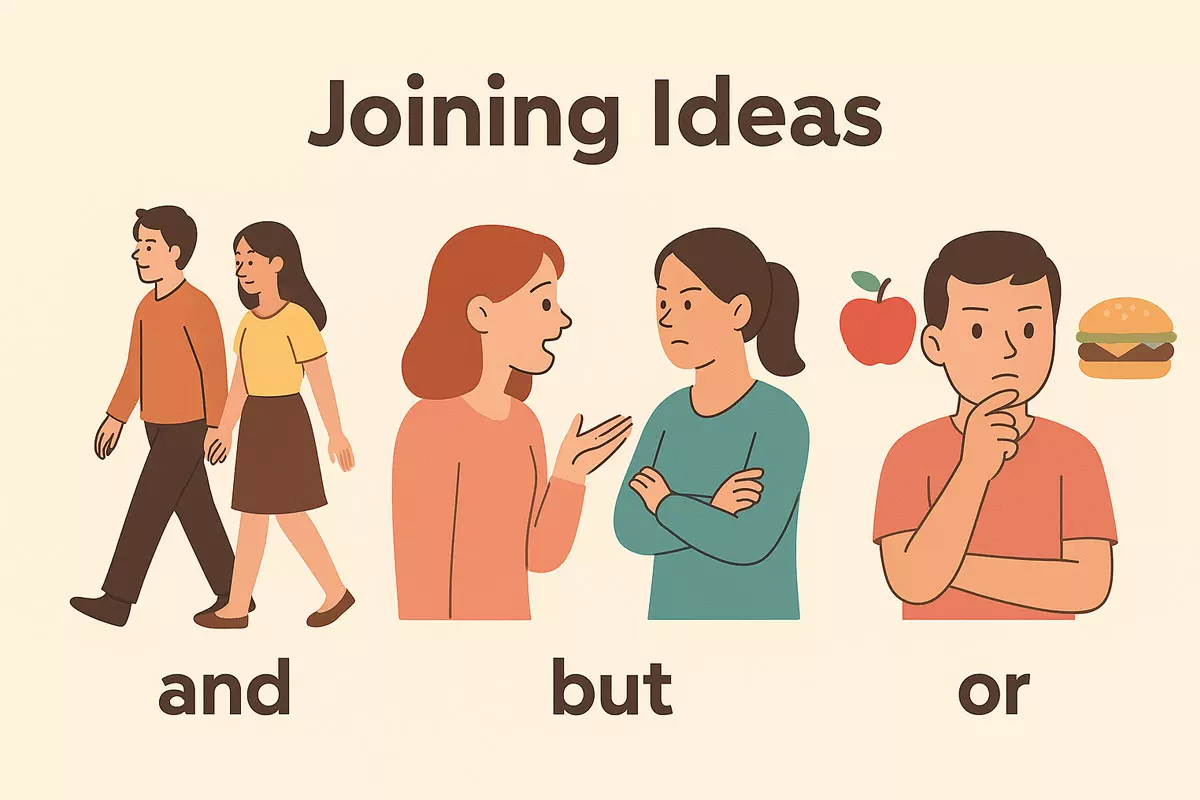 Here we why sentence length is important, how to coordinate or link ideas, and methods to avoid run-on sentences. It also explains punctuation basics, provides useful sentence frames, and includes practice in combining short sentences.
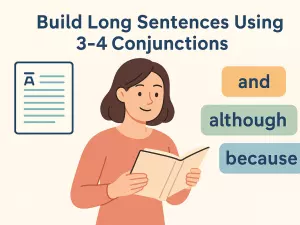
If you want to expand your writing beyond short, simple statements, try connecting your thoughts using words such as and, but, or. These connecting words, known as conjunctions, help you combine ideas within a sentence, making your writing more detailed and engaging. By linking related points, you create smoother transitions and a clearer flow, which can make your writing easier and more enjoyable to read. Practicing the use of conjunctions will help you develop more complex sentences and express your ideas more effectively.
Why Sentence Length Matters
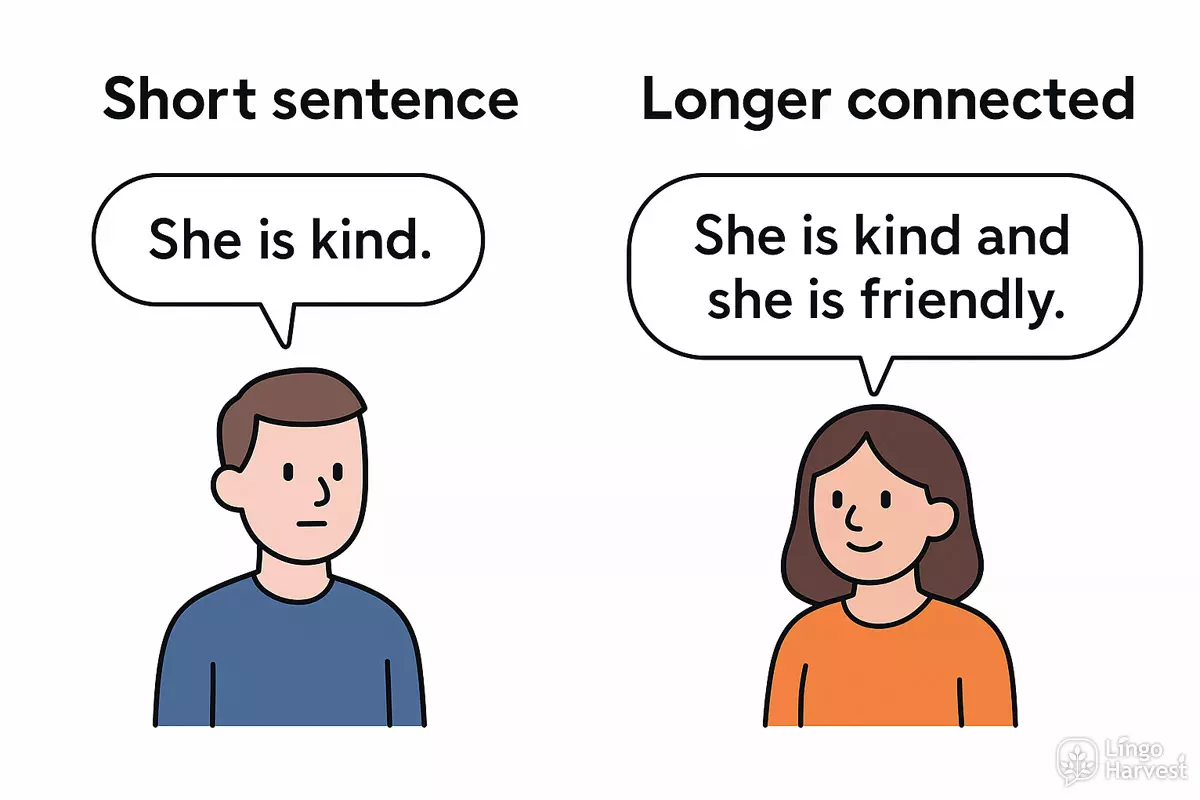
How long or short your sentences are can shape the way your writing feels and how easily readers understand your ideas. Short sentences are clear and direct, but connecting ideas with words like and, but, and or allows you to show relationships between thoughts. This helps your writing flow and makes your meaning more precise.
Clarity and Reader Engagement
Mixing sentence lengths keeps your writing interesting. If every sentence is short, your text may sound choppy. On the other hand, overly long sentences can be confusing. By joining ideas, you can strike a balance and hold your reader’s attention.
Expressing Complex Ideas
Longer sentences often let you explain cause and effect, contrast, or choices in a single line. This helps readers see how your ideas connect, instead of making them guess the links between separate statements.
- Connecting two related facts: It rained all night and the streets were wet in the morning.
- Showing contrast: She wanted to go out, but it was too cold.
- Offering alternatives: We can watch a movie or play a game.
- Adding details: He finished his homework and cleaned his room.
- Emphasizing consequences: You can stay here, but you must be quiet.
- Summing up: It was late and everyone was tired.
- Giving instructions: Read the instructions and follow them carefully.
- Explaining reasons: She left early because she had an appointment.
- Combining opinions: I like apples, but my sister prefers oranges.
- Presenting options: We could eat out or cook at home.
- Listing actions: He packed his bag and caught the bus.
- Stating conditions: You can join us, but you have to finish your work first.
- Describing sequences: She got up, brushed her teeth, and left for school.
- Clarifying choices: You can have tea or coffee.
- Expressing preferences: He likes reading, but not watching TV.
- Joining explanations: It was closed, so we went home.
- Adding examples: We saw lions and elephants at the zoo.
Common Pitfalls
While linking ideas is useful, making sentences too long or adding unrelated thoughts can make your writing unclear. It’s important to connect only ideas that belong together and to avoid run-on sentences.
| Short Sentence | Longer Sentence (with connector) |
|---|---|
| She was tired. She went to bed. | She was tired, so she went to bed. |
| I want pizza. I want pasta. | I want pizza or pasta. |
| He studied hard. He passed the test. | He studied hard and passed the test. |
| It is sunny. It is cold. | It is sunny but cold. |
Coordinating vs Linking Ideas
When building longer sentences, it's important to understand how we connect thoughts. Sometimes, we join ideas that are equal and could stand alone, while other times, we simply connect different pieces of information within a sentence. These approaches use different words and punctuation, and knowing which to use makes your writing clearer and more natural.
What Does It Mean to Coordinate?
Coordinating is about joining two or more independent clauses—complete sentences that can stand alone—using words like and, but, or or. These are called coordinating conjunctions. When you use them, both parts of the sentence hold equal weight. For example:
- She likes tea, and he prefers coffee.
- We can go now, or we can wait until later.
- It was raining, but we still went outside.
How Is Linking Different?
Linking ideas often means connecting phrases or words within a sentence, not full clauses. You might link nouns, adjectives, or verbs to avoid repetition and make your sentence flow smoothly. The same conjunctions (and, but, or) are used, but the grammar is different. For example:
- Apples and oranges are on the table.
- She is happy but tired.
- Do you want pizza or pasta?
Quick Comparison
| Coordinating (Joining Sentences) | Linking (Within a Sentence) |
|---|---|
| Two complete ideas It is cold, and it is windy. |
Connecting words/phrases Cold and windy weather |
| Comma usually needed before conjunction | No comma if only linking words/phrases |
| Each side could be a full sentence | Linked parts are not full sentences |
| Shows equal importance | Often just lists or combines similar items |
Common Coordinating Words
Here are some of the most frequent words used for joining ideas:
- and – adds information
- but – shows contrast
- or – offers a choice
- nor – negative alternative
- yet – contrast, similar to "but"
- so – shows result
- for – gives a reason
Understanding when to coordinate full sentences and when to simply link words or ideas within a sentence helps you write with greater precision and style. Try experimenting with different structures to see how they change the flow and meaning of your writing.
Avoiding Run-on Sentences
When combining ideas with words like "and," "but," or "or," it's easy to create sentences that are too long or confusing. A common mistake is joining two complete sentences with just a conjunction and no punctuation. This results in what’s called a run-on sentence. These sentences can make your writing hard to follow, so it’s important to know how to connect ideas correctly.
What Makes a Sentence a Run-on?
A run-on occurs when two independent clauses (complete thoughts) are joined without the right punctuation or connecting word. Simply adding "and," "but," or "or" is not enough if there is no comma or other punctuation to separate the clauses. For example:
- I finished my homework and I watched TV. ❌ (run-on)
- I finished my homework, and I watched TV. ✅ (correct)
Ways to Join Ideas Properly
To avoid this error, try these methods:
- Add a comma before "and," "but," or "or" when joining two independent clauses.
- Use a semicolon if you’re not using a conjunction.
- Break the sentence into two shorter sentences if it feels too long.
- Use subordinating conjunctions (like "because," "when") to make one idea dependent on the other.
Common Patterns to Watch For
Here are some patterns that often cause trouble:
- I like pizza I eat it every week. ❌
- I like pizza, I eat it every week. ❌
- I like pizza, and I eat it every week. ✅
- I like pizza; I eat it every week. ✅
- I like pizza because I eat it every week. ✅
Quick Guide: Correct Joining vs. Run-on
| Incorrect (Run-on) | Corrected Sentence |
|---|---|
| I was tired I went to bed. | I was tired, so I went to bed. |
| She likes tea he prefers coffee. | She likes tea, but he prefers coffee. |
| We can leave now or we can wait. | We can leave now, or we can wait. |
| You can call me I will help you. | You can call me, and I will help you. |
| It rained the picnic was canceled. | It rained, so the picnic was canceled. |
Tips for Clearer Sentences
- Read your sentence aloud—if you naturally pause, you may need punctuation.
- Check if both parts could stand alone; if yes, use a comma and conjunction.
- Don’t string together too many ideas with just "and" or "but." Break them up if necessary.
- Vary your sentence length to keep your writing interesting and easy to follow.
By carefully joining your ideas and watching for missing punctuation, you can write longer sentences that are clear and effective—without creating run-ons.
Punctuation Basics
Understanding how to connect ideas smoothly is essential for clear writing. When you use coordinating conjunctions like and, but, or or, punctuation plays a key role in showing the relationship between parts of your sentence. The right marks help your reader follow your meaning and avoid confusion.
Using Commas with Coordinating Conjunctions
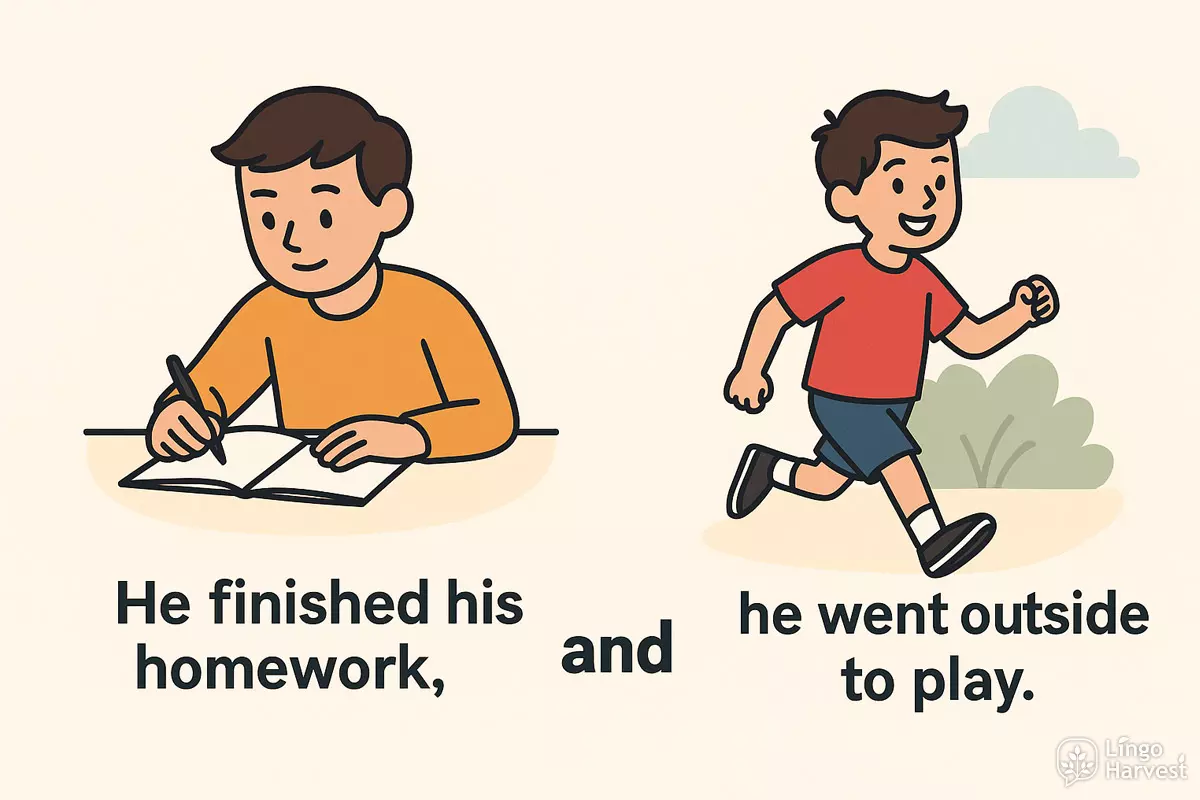
A common rule is to use a comma before and, but, or or when they connect two independent clauses (complete sentences). If you’re just joining two words or phrases, you usually don’t need a comma.
- He finished his homework, and he went outside to play. ✅
- She wanted pizza or pasta for dinner. ✅
- We can go to the park or stay home. ✅
- It was raining, but they went for a walk. ✅
- He studied hard and passed the test. ❌ (No comma needed; not two complete sentences)
Typical Mistakes to Avoid
Writers sometimes add unnecessary commas or forget them when needed. Here are some pitfalls:
- Missing comma: She likes to read but she doesn’t like to write. ❌ (Should be: She likes to read, but she doesn’t like to write.)
- Extra comma: He ran, and jumped over the fence. ❌ (Should be: He ran and jumped over the fence.)
Examples of Correct Punctuation
Here are more examples to illustrate correct use:
- I want to visit Paris, but flights are expensive.
- We could watch a movie or play a board game.
- Maria baked cookies and brought them to school.
- The team practiced every day, and they finally won the championship.
- Should we leave now or wait for the others?
- He tried to call her, but she didn’t answer.
- You can have tea or coffee with your breakfast.
- They packed sandwiches, and they brought extra water.
- She was tired but determined to finish.
- Will you take the bus or walk?
Quick Reference: When to Use a Comma
| Structure | Comma Needed? |
|---|---|
| Two complete sentences joined by and/but/or | ✅ Yes |
| Two verbs, nouns, or adjectives joined (not full sentences) | ❌ No |
| Items in a list (three or more) | ✅ Yes, between items |
| Short paired phrases (not independent clauses) | ❌ No |
Remember: using the right punctuation with coordinating conjunctions makes your writing clearer and easier to understand. Practice these patterns to join your ideas effectively.
Useful Sentence Frames
Combining ideas into longer statements helps you express thoughts more clearly. Here are practical ways to link two or more clauses using "and," "but," and "or." These patterns make your writing and speaking more fluent and connected.
Patterns for Linking Ideas
- I like X, and I also enjoy Y.
- She wanted to go, but she was too tired.
- We can eat now, or we can wait for everyone.
- He studied hard, and he passed the test.
- I tried to call you, but you didn’t answer.
- You can have tea, or you can have coffee.
- They went to the park, and they played soccer.
- I want to travel, but I don’t have enough money.
- It was raining, so we stayed inside.
- Would you like soup, or would you prefer salad?
- She sings well, and she dances beautifully.
- I love reading, but I don’t have much free time.
- We can start now, or we can wait until tomorrow.
- He is friendly, but sometimes he is shy.
- They ordered pizza, and they watched a movie.
Comparing Different Connectors
| Connector | Example Sentence |
|---|---|
| and | She finished her homework, and she went out to play. |
| but | He is smart, but he forgets things easily. |
| or | You can stay here, or you can come with us. |
| so | It was late, so they went home. |
Tips for Creating Your Own Sentences
Start with two simple ideas. Decide if you want to add, contrast, or offer a choice. Then, pick the right conjunction. For example, use "and" to add information, "but" to show contrast, and "or" to give options. Try mixing these patterns with your own words to practice making longer, more natural sentences. This approach will help you communicate your thoughts more clearly and logically.
Practice: Combine Short Sentences
Working with simple sentences is a great way to develop your ability to join ideas. By connecting two short statements, you can express more complex thoughts and make your writing smoother. Let's look at how you can use "and", "but", and "or" to link ideas.
How to Join Short Sentences
There are three common words to connect short sentences:
- and – adds similar or related information
- but – shows contrast or a difference
- or – gives a choice or alternative
When combining, remember to use a comma before "but" and "or" in most cases, especially in writing.
Try to Join These Sentences
Read each pair. Decide if you should use "and," "but," or "or" to join them. Write the new, longer sentence.
- It is raining. I forgot my umbrella.
- She likes apples. She likes oranges.
- We can eat now. We can wait for Tom.
- He studied hard. He did not pass the test.
- The bus was late. I arrived on time.
- You can have tea. You can have coffee.
- I want to go. I am too tired.
- They played soccer. They played basketball.
- He called me. I did not answer.
- The movie is long. The movie is interesting.
Show answers
- It is raining, but I forgot my umbrella.
- She likes apples and she likes oranges.
- We can eat now or we can wait for Tom.
- He studied hard, but he did not pass the test.
- The bus was late, but I arrived on time.
- You can have tea or you can have coffee.
- I want to go, but I am too tired.
- They played soccer and they played basketball.
- He called me, but I did not answer.
- The movie is long, but it is interesting.
Common Patterns for Joining Ideas
Here are some sentence structures you can use when linking two thoughts. Practice with your own examples.
- A and B (adds information): He likes dogs and he likes cats.
- A, but B (shows contrast): She is tired, but she will work.
- A or B (offers a choice): We can walk or we can take the bus.
- Not only A but also B: She speaks not only English but also French.
- Either A or B: You can have either soup or salad.
- Neither A nor B: He likes neither tea nor coffee.
- A as well as B: He visited Paris as well as Rome.
- A, and then B: He ate dinner, and then he went to bed.
- A, yet B: It was cold, yet we went swimming.
- A, so B: It was late, so I went home.
- A because B: I stayed inside because it was raining.
- A, or else B: Finish your homework, or else you can't play.
- A instead of B: She chose tea instead of coffee.
- A, nor B: I do not like apples, nor do I like oranges.
- A, for B: She was happy, for she passed the exam.
Quick Check: Which Word?
Choose the best connector ("and," "but," or "or") for each pair:
- The sun is shining. It is very cold.
- We can go to the park. We can stay home.
- She finished her work. She went home.
- I wanted to help. I was busy.
Show answers
- The sun is shining, but it is very cold.
- We can go to the park or we can stay home.
- She finished her work and she went home.
- I wanted to help, but I was busy.
Practice linking ideas like this to make your sentences richer and more connected. Try writing your own examples using these patterns.