Conjunctions of Proportion: the more…the more / the less…the less

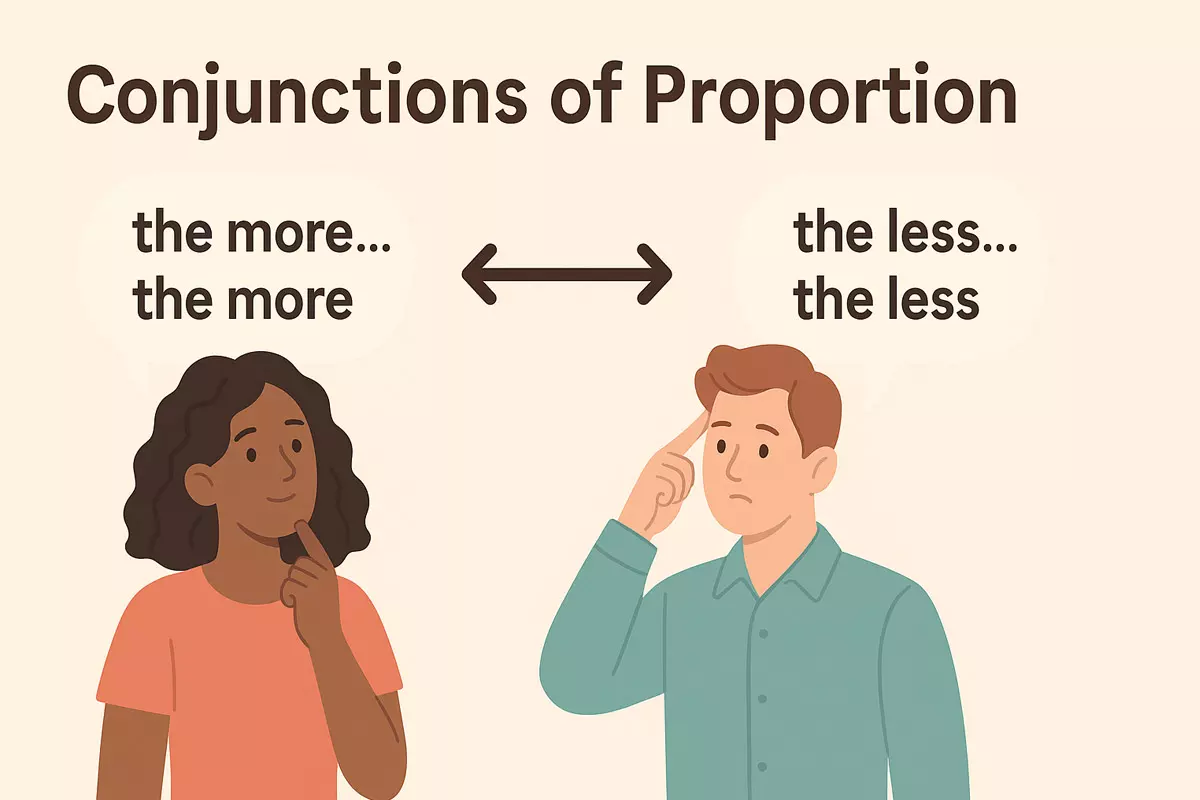 This article explains proportional relationships in English sentences, covers the structure of the more…the more and the less…the less, explores emphasis, common uses, typical errors, real examples, and offers sentence-building practice.
- Meaning of proportional relationships in sentences
- Structure of the more…the more and the less…the less
- How proportional clauses emphasize increasing or decreasing trends
- Common contexts: habits, results, comparisons, emphasis
- Typical errors with article use and word order
- Examples from conversation and academic analysis
- Practice: build proportional sentences from prompts
Have you ever noticed how certain expressions in English allow us to compare two things that change together? The language provides useful structures to show proportional relationships, making it easy to describe how one factor increases or decreases in response to changes in another. This is especially helpful when discussing trends, such as saying that as the temperature rises, people tend to drink more water, or as prices fall, demand often goes up. These comparisons help us communicate patterns and relationships clearly.
Meaning of proportional relationships in sentences
Proportional relationships in language show how two qualities or actions increase or decrease together. In English, we often use patterns like the more…the more or the less…the less to express this kind of connection. These constructions highlight how one situation or characteristic affects another in a parallel way, with changes in one part directly linked to changes in the other.
How proportional conjunctions work
When you use proportional conjunctions, you set up a direct link between two related elements. For example, saying "the more you practice, the better you become" establishes a cause-and-effect pattern: as the amount of practice increases, the level of skill also rises. These expressions are valuable for describing habits, outcomes, and trends in everyday conversation and writing.

- The more you read, the more you learn.
- The less you worry, the happier you feel.
- The more it rains, the muddier the roads get.
- The less sugar you eat, the healthier you are.
- The more she studies, the higher her grades.
- The less you sleep, the more tired you become.
- The more friends you make, the richer your social life.
- The less water you drink, the worse you feel.
- The more you save, the sooner you can travel.
- The less you exercise, the weaker you get.
- The more you help, the more you are appreciated.
- The less noise there is, the easier it is to concentrate.
Common patterns and variations
This structure is flexible and can be used with adjectives, adverbs, or even full clauses. Sometimes, both clauses use "more" or "less," while in other cases, a quality word (like "better" or "happier") appears in the second part. The relationship always shows that as one factor changes, the other shifts in the same direction (for "more…more") or in a correlated way (for "less…less").
| Pattern | Example Sentence |
|---|---|
| the more + noun/verb, the more + noun/verb | The more you study, the more you understand. |
| the less + noun/verb, the less + noun/verb | The less you spend, the less you worry about money. |
| the more + noun/verb, the + comparative adjective | The more you practice, the better you get. |
| the less + noun/verb, the + comparative adjective | The less you sleep, the worse you feel. |
This approach to linking ideas helps make your statements clearer and more persuasive. By understanding these proportional relationships, you can describe changes, trends, and consequences in a nuanced way.
Structure of the more…the more and the less…the less
Patterns like “the more…the more” and “the less…the less” are used to show proportional relationships between two actions or qualities. These constructions allow you to express how a change in one thing brings about a corresponding change in another. The basic formula is straightforward, but there are some variations to be aware of, especially regarding word order, subject choice, and verb tense.
Core Construction
The structure starts with “the more” or “the less” followed by an adjective, adverb, or noun phrase, then a clause. A second clause with the same pattern follows, indicating the result or parallel effect.
- The more you practice, the better you become.
- The less you worry, the happier you feel.
- The more effort you put in, the more you achieve.
- The less sugar you eat, the healthier you are.
Detailed Patterns
The phrases can be combined with different grammatical elements. Here are common variations:
- The more + adjective/adverb, the more + adjective/adverb
Example: The more quickly you reply, the sooner we finish. - The less + noun, the less + noun
Example: The less noise, the less distraction. - The more + subject + verb, the more + subject + verb
Example: The more you read, the more you know. - The less + subject + verb, the less + subject + verb
Example: The less you complain, the less you suffer. - With comparatives:
The more relaxed you are, the better you sleep. - With inversion (formal):
The more interesting the lecture, the more engaged the students. - With repetition of noun phrases:
The more books you have, the more shelves you need. - With actions:
The more you try, the more you learn. - With adjectives only:
The richer, the happier (implied subject). - With negative forms:
The less you try, the less you achieve.
Common Examples Compared
| Pattern | Example |
|---|---|
| The more + subject + verb, the more + subject + verb | The more you study, the more you remember. |
| The less + noun, the less + noun | The less clutter, the less stress. |
| The more + adjective, the more + adjective | The more patient, the more successful. |
| The less + subject + verb, the less + subject + verb | The less you rush, the less you forget. |
| The more + adverb, the more + adverb | The more often you call, the better you communicate. |
| The more + noun, the more + noun | The more friends you have, the more invitations you get. |
Tips for Usage
- Both clauses must start with “the more” or “the less”.
- Subjects can be implied for brevity (e.g., “The sooner, the better”).
- Use parallel structure in both parts.
- Verb tense can vary, but present simple is most common.
- These forms often express advice, cause and effect, or observations.
This proportional conjunction structure is common in both spoken and written English, especially when comparing habits, outcomes, or characteristics. It’s a concise way to connect two related changes in one sentence.
How proportional clauses emphasize increasing or decreasing trends
Proportional clauses, like "the more…the more" or "the less…the less," are especially useful for highlighting how one change directly affects another. These constructions allow speakers and writers to draw attention to patterns where an increase or decrease in one factor leads to a corresponding rise or fall in another. By pairing two comparative clauses with "the," we create a clear, direct link between cause and effect.
Spotlighting Parallel Changes
These structures are often chosen to make trends stand out. For instance, saying "The more you practice, the better you become" stresses that improvement is tied to effort. Such sentences are common when discussing habits, consequences, or relationships between variables.
- The more you listen, the more you understand.
- The less you worry, the happier you feel.
- The more people join, the better the event.
- The less sugar you eat, the healthier you are.
- The more we save, the sooner we can travel.
- The less you rush, the fewer mistakes you make.
- The more options you have, the harder it is to choose.
- The less sunlight plants get, the slower they grow.
- The more questions you ask, the clearer things become.
- The less noise, the easier it is to concentrate.
- The more you read, the broader your vocabulary.
- The less you sleep, the less energy you have.
- The more time you invest, the greater the reward.
- The less you spend, the more you save.
- The more crowded it gets, the less comfortable it feels.
- The less you move, the stiffer you become.
- The more feedback you receive, the faster you improve.
- The less water you drink, the thirstier you get.
Comparing Increasing and Decreasing Patterns
To clarify how these proportional constructions work, compare positive and negative trends side by side:
| Rising Trend | Falling Trend |
|---|---|
| The more you study, the higher your grades. | The less you study, the lower your grades. |
| The more exercise you do, the fitter you become. | The less exercise you do, the weaker you feel. |
| The more you participate, the more you learn. | The less you participate, the less you gain. |
| The more you communicate, the fewer misunderstandings occur. | The less you communicate, the more problems arise. |
Why Use These Structures?
Writers and speakers favor proportional clauses when they want to underscore a direct, ongoing relationship between two variables. These expressions are concise, memorable, and effective for persuading, warning, or simply describing how things change together. Whether increasing or decreasing, the parallel structure makes the trend unmistakable.
Common contexts: habits, results, comparisons, emphasis
Expressions like "the more…the more" and "the less…the less" often appear in English to show how two things change together. These constructions are flexible and can describe repeated actions, logical consequences, or highlight contrasts. Here’s how these proportional conjunctions fit into different types of sentences and situations.
Describing habits and repeated patterns
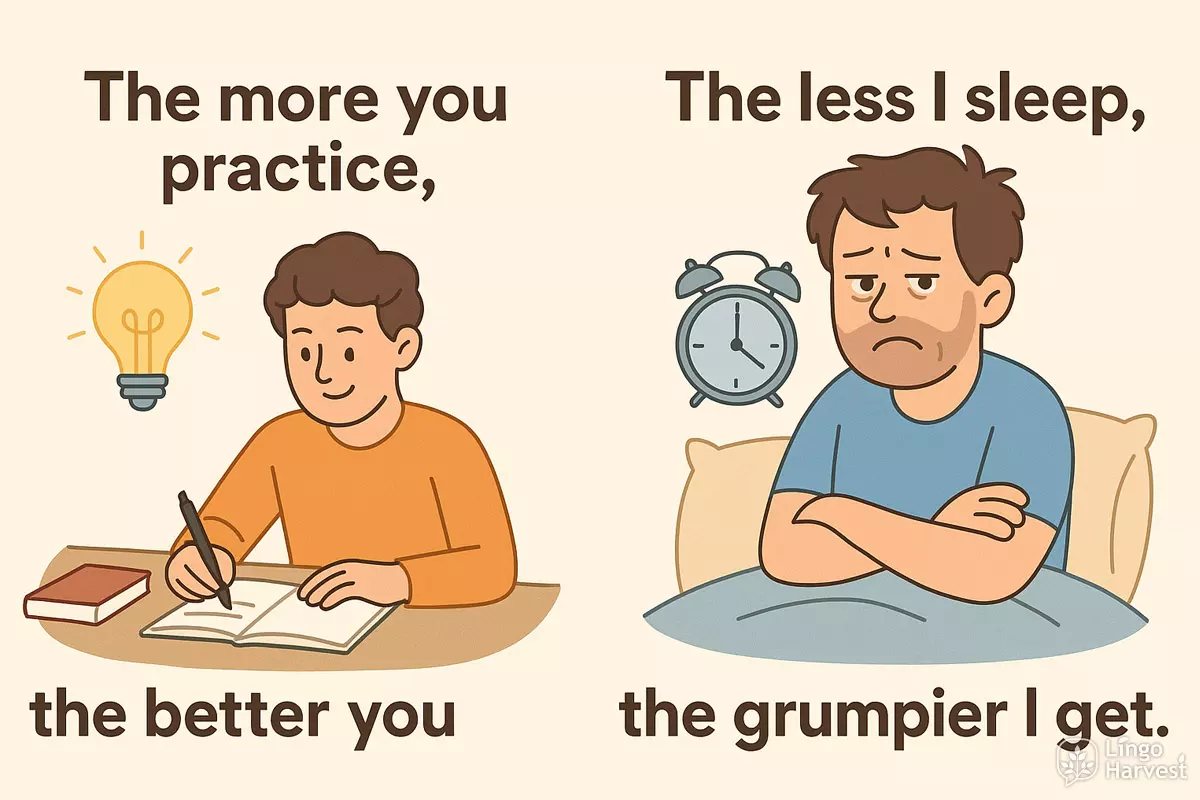
People frequently use these phrases to talk about things that happen regularly or as a habit. For example:
- The more you practice, the better you become.
- The less I sleep, the grumpier I get.
- The more often she visits, the happier her grandmother feels.
- The less you exercise, the harder it is to start again.
Stating results and consequences
These structures are handy for explaining cause and effect. They make it clear how one action or situation leads to another:
- The more you save, the more you’ll have for emergencies.
- The less sugar you eat, the healthier you’ll feel.
- The more it rains, the higher the river rises.
- The less effort he puts in, the worse his grades become.
Making comparisons and highlighting contrasts
When comparing two related trends, these phrases offer a concise way to express both positive and negative relationships. Here’s a structured overview with common sentence patterns:
| Pattern | Example |
|---|---|
| The more + subject + verb, the more + subject + verb | The more you read, the more you know. |
| The less + subject + verb, the less + subject + verb | The less you try, the less you achieve. |
| The more + adjective, the more + adjective | The more expensive, the more desirable it seems. |
| The less + noun, the less + noun | The less money, the less freedom. |
| The more…the less | The more you hurry, the less you remember. |
| The less…the more | The less you worry, the more you enjoy life. |
Emphasis and intensification
Writers and speakers also use these proportional structures to stress a point or underline a trend. They can add drama or draw attention to a particular relationship:
- The more you deny it, the more obvious it becomes.
- The less they talk, the more mysterious they seem.
- The more you look at it, the stranger it appears.
- The less you expect, the less disappointed you’ll be.
These forms are not only common in everyday conversation, but also in academic writing, advertising, and storytelling, making them a versatile tool for clear and impactful communication.
Typical errors with article use and word order
Learners often run into trouble with the structure of proportional conjunctions, especially when it comes to the placement of articles and the sequence of words. The format “the more…the more” or “the less…the less” can be confusing, particularly for those whose native languages construct comparisons differently.
Word order pitfalls
The most frequent issue is incorrect arrangement of the comparative phrase. In English, “the” is placed directly before the comparative adjective or adverb, and the rest of the clause follows. Some common mistakes include:
- Putting “the” before the subject instead of the comparative (e.g., ❌ The people the more work, the more tired they get.)
- Omitting “the” in one or both clauses (❌ More you practice, better you become.)
- Switching the order of clauses unnecessarily (❌ The harder you try, you succeed the more.)
- Using a regular word order instead of the special comparative construction (❌ You get more tired the more you work.)
Article use confusion
Another stumbling block is the use of “the” as a marker for the comparative phrase. Unlike its typical use as a definite article, here “the” signals a proportional relationship, not a specific noun. Typical missteps include:
- Adding an extra article to nouns unnecessarily (❌ The the more the people work, the the more they earn.)
- Leaving out “the” when it is required for the structure
- Using “a” or “an” instead of “the” (❌ A more you read, a smarter you get.)
Comparative phrase examples
Here are correct and incorrect patterns to watch for:
| Sentence | Correct? | Explanation |
|---|---|---|
| The more you practice, the better you become. | Yes | Correct parallel structure: "the more..., the better..." |
| The less you worry, the happier you feel. | Yes | Correct form: both clauses use “the + comparative”. |
| The more you practice, better you become. | No | The second clause must also include “the”: "the better you become". |
| More you practice, the better you become. | No | The first clause must begin with “the”: "the more you practice". |
| The more practice you do, you become the better. | No | Word order is incorrect; the comparative must follow “the”: "the better you become". |
| The less you the worry, the more happier you are. | No | Incorrect structure (“the worry”), and “more happier” is double comparative. |
| The harder you work, the faster you improve. | Yes | Both clauses correctly follow the comparative pattern. |
| The earlier you arrive, you get the better seat. | No | Second clause incorrect; should be "the better the seat you get" or similar structure. |
| The more you read, the more you learn. | Yes | Correct repetition of “the + comparative”. |
| The more you eat sweets, the unhealthy you become. | No | Second clause missing “the + comparative”: should be "the more unhealthy you become". |
Common mistakes and correct forms
To illustrate typical errors and their correct alternatives, see the examples below:
| ❌ Incorrect Form | ✅ Correct Form |
|---|---|
| The more the people work, more the money they get. | The more people work, the more money they get. |
| More you wait, the less you get. | The more you wait, the less you get. |
| The the less you try, the less you succeed. | The less you try, the less you succeed. |
| The more you the read, the more you the know. | The more you read, the more you know. |
Tips to avoid mistakes
- Always use “the” before each comparative adjective or adverb.
- Keep the structure parallel: “the more/less + subject + verb, the more/less + subject + verb.”
- Do not insert extra articles within the clause—“the” only introduces the comparative phrase.
- Read examples aloud to spot awkward or unnatural word order.
With practice and attention to these details, you can use proportional conjunctions accurately and naturally.
Examples from conversation and academic analysis
The structure the more…the more (or the less…the less) is common in both spoken English and academic writing to express proportional relationships. This pattern is used to highlight how one factor increases or decreases in direct relation to another. In everyday language, it often appears in advice, observations, and cause-and-effect statements. In academic contexts, it helps to clarify trends, correlations, and logical connections.
Practical usage in conversation
- The more you practice, the better you become at playing piano.
- The less you worry, the happier you feel.
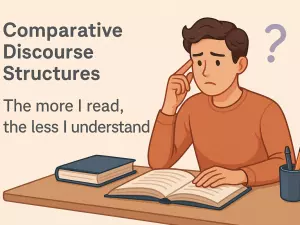
- The more I read, the less I understand this theory!
- The less you spend, the more you save.
- The more you explain, the more confused I get.
- The more people join, the less space we have.
- The less you sleep, the harder it is to concentrate.
- The more you travel, the broader your perspective becomes.
- The less time you have, the faster you work.
- The more you eat, the less hungry you are.
- The more you know, the more you realize you don’t know.
- The less you move, the stiffer you feel.
- The more you try, the closer you get to your goal.
- The less you talk, the more mysterious you seem.
Academic analysis and formal examples
In research papers and analytical writing, these proportional conjunctions help articulate statistical or logical relationships:
- The more data we collect, the more accurate our predictions become.
- The less exposure to sunlight, the lower the vitamin D levels in participants.
- The more variables introduced, the less reliable the outcome.
- The less frequent the intervention, the weaker the observed effect.
- The more participants were informed, the more likely they were to comply.
Comparing variations of the structure
| Pattern | Example |
|---|---|
| The more…the more | The more you invest, the more you earn. |
| The more…the less | The more you rush, the less you achieve. |
| The less…the more | The less you interrupt, the more people listen to you. |
| The less…the less | The less you participate, the less you learn. |
These proportional conjunctions allow speakers and writers to concisely express complex relationships between actions or phenomena. Whether in informal speech or scholarly texts, mastering these patterns improves both clarity and nuance.
Practice: build proportional sentences from prompts
Understanding proportional conjunctions like "the more…the more" or "the less…the less" is easier with hands-on work. Below, you'll find varied prompts and exercises designed to help you form sentences that express proportional relationships. These tasks will guide you in connecting ideas using the correct structure and vocabulary.
Sentence-building prompts
Transform the following prompts into full proportional sentences. Use "the more," "the less," or similar patterns as appropriate.
- Study / understand the topic
- Practice speaking / confidence grows
- Sleep / feel tired
- Eat vegetables / become healthy
- Ignore problems / worse they become
- Read books / expand your vocabulary
- Rush your work / mistakes you make
- Help others / receive help
- Wait / impatient become
- Save money / afford things you want
- Exercise / improve your mood
- Use your phone / distract yourself
- Work together / finish quickly
- Complain / enjoy the experience
- Listen carefully / understand instructions
- Try new things / learn
- Spend time outside / feel refreshed
- Delay starting / harder it gets
- Watch TV / less time for reading
- Travel / open-minded become
Prompt transformation exercise
Below are prompts with suggested beginnings. Complete the sentences using the correct proportional structure.
- The more you practice the piano, …
- The less you worry, …
- The more water you drink, …
- The less sugar you eat, …
- The more you read in English, …
- The more you sleep, …
- The more you study English, …
- The less time you spend on your phone, …
- The more you exercise, …
- The less money you spend, …
Show answers
- The more you practice the piano, the better you will play.
- The less you worry, the happier you feel.
- The more water you drink, the healthier you become.
- The less sugar you eat, the healthier your teeth will be.
- The more you read in English, the richer your vocabulary becomes.
- The more you sleep, the more energetic you feel.
- The more you study English, the more confident you become.
- The less time you spend on your phone, the more time you have for other activities.
- The more you exercise, the stronger you become.
- The less money you spend, the more you save.
Patterns and variations
Proportional statements can often be rephrased or expanded. Here are some common patterns:
- The more + subject + verb, the more/less + subject + verb.
- The less + subject + verb, the less/more + subject + verb.
- The more/less + noun + subject + verb, the more/less + noun + subject + verb.
Common errors to avoid
- Do not use a comma after the first "the more" clause unless the sentence is very long.
- Make sure both halves of the sentence are parallel in structure.
- Avoid mixing "the more" with "the less" in a way that confuses meaning.
Proportional sentence comparison table
| Prompt | Proportional Sentence |
|---|---|
| Study / remember | The more you study, the more you remember. |
| Sleep / feel alert | The more you sleep, the more alert you feel. |
| Rush / make mistakes | The more you rush, the more mistakes you make. |
| Ignore advice / regret | The less you listen to advice, the more you may regret it. |
| Eat junk food / feel energetic | The less junk food you eat, the more energetic you feel. |
Practicing with these prompts and patterns will help you master proportional conjunctions in everyday English.