Determiners in Contrast: this idea vs that idea

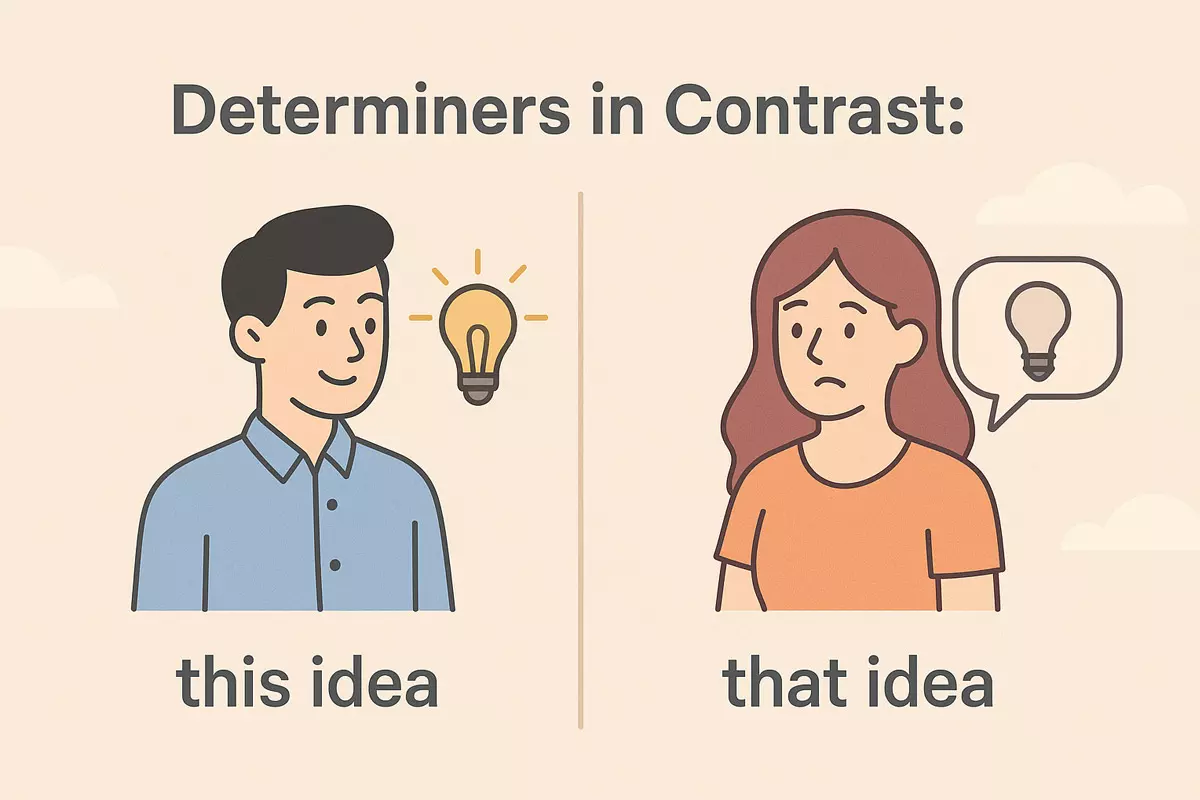 This article explains how determiners like this, that, these, and those highlight contrasts between options, groups, and arguments. It covers subtle attitude, common patterns, and offers practice rewriting sentences to emphasize differences.
- How determiners help contrast two or more options
- Using this vs that to show support or distance
- Using these vs those when comparing groups
- Contrast in arguments, reviews, and discussions
- Subtle attitude and evaluation expressed through determiners
- Common patterns: this problem, that solution, those people
- Practice: rewrite sentences to highlight contrast with determiners
Choosing between expressions like this concept and that notion may seem trivial at first, but the subtle distinction between these determiners can significantly influence meaning and emphasis in communication. The word this often suggests something immediate, relevant, or previously mentioned, while that can indicate distance, contrast, or something less directly connected. By carefully selecting between this and that, speakers and writers can guide their audience’s attention, clarify relationships among ideas, and create more precise or nuanced messages.
How determiners help contrast two or more options
Determiners such as "this" and "that" are essential tools for clarifying which idea, object, or person is being referred to, especially when comparing or contrasting multiple options. By specifying distance (both physical and metaphorical), they help listeners and readers distinguish between alternatives in conversation or writing. For example, "this idea" often signals something closer, more immediate, or currently under discussion, while "that idea" points to something more remote, previously mentioned, or less favored.
Making distinctions clear
When discussing multiple concepts, determiners serve to anchor each item in the listener’s mind. This anchoring is crucial for clear communication, preventing confusion when several possibilities are in play. Here are some typical ways determiners highlight differences:
- This book is interesting, but that book is challenging.
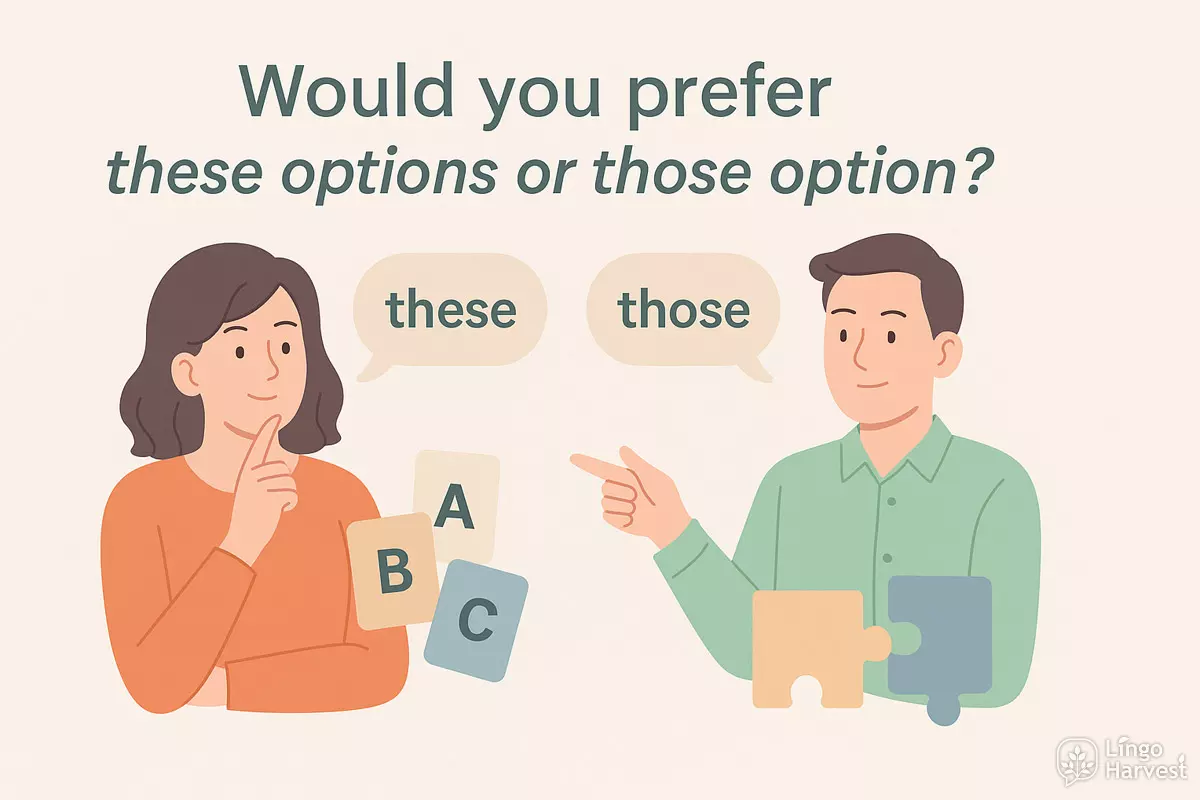
- Would you prefer these options or those options?
- This solution seems practical; that solution might be risky.
- I agree with this proposal, not that proposal.
- These shoes are comfortable, while those shoes are more stylish.
- Should we choose this route or that route?
- This argument makes sense, unlike that argument.
- These candidates seem qualified; those candidates lack experience.
- This idea excites me more than that idea.
- Do you want this seat or that seat?
- This version is updated; that version is outdated.
- These results are promising, but those results need review.
Comparison of demonstrative determiners
When contrasting two or more options, demonstrative determiners ("this," "that," "these," "those") are among the most commonly used. They help clarify which idea or object is intended, especially in discussions involving choice or evaluation.
| Determiner | Usage Example |
|---|---|
| This | This plan is feasible. (close in time/space/context) |
| That | That plan was rejected. (more distant or previously mentioned) |
| These | These recommendations are helpful. (plural, close) |
| Those | Those recommendations were outdated. (plural, distant) |
Beyond "this" and "that"
Other determiners like "each," "either," "neither," and "the other" also help in drawing distinctions:
- Each option has pros and cons.
- Either method could work.
- Neither proposal addresses the main issue.
- The other idea might be more effective.
In summary, determiners play a vital role in expressing contrast by pinpointing exactly which option is meant. They allow speakers and writers to guide attention, clarify preferences, and avoid ambiguity when multiple alternatives are in play.
Using this vs that to show support or distance
When speakers choose between “this idea” and “that idea,” they’re signaling how close or distant they feel from the concept—either emotionally, physically, or within the flow of conversation. The choice isn’t just about grammar; it subtly shapes how listeners perceive agreement, involvement, or detachment.
Proximity and Attitude in Conversation
Referring to “this idea” often shows alignment, interest, or endorsement. It can suggest the speaker finds the concept relevant or worth considering. In contrast, “that idea” can signal separation, disagreement, or a wish to keep the topic at arm’s length. These subtle cues help listeners interpret the speaker’s attitude.
- This idea seems practical. (Shows support)
- That idea doesn’t convince me. (Creates distance)
- Let’s focus on this solution for now. (Brings topic closer)
- That suggestion has some problems. (Pushes it away)
- We should try this approach first. (Endorses the approach)
- That proposal might not work here. (Distances from proposal)
- Consider this example—it’s important. (Highlights relevance)
- I’m not sure about that method. (Shows skepticism)
- This perspective is interesting. (Shows engagement)
- That argument feels outdated. (Expresses disapproval)
- Let’s keep this question in mind. (Brings attention closer)
- That idea is hard to accept. (Creates emotional distance)
Structured Comparison of “This” vs “That” in Support and Distance
| Form | Typical Speaker Attitude |
|---|---|
| This idea | Support, involvement, endorsement, present focus |
| That idea | Distance, doubt, disapproval, past/other focus |
| This approach | Interest, shared understanding, recommendation |
| That suggestion | Skepticism, separation, indirect rejection |
When to Use Each Form
Choose “this” when you want to include yourself in the discussion, highlight relevance, or show approval. Opt for “that” if you need to distance yourself from an idea, question its value, or refer to something less central to your point. These choices shape how your message is received, especially in debates, meetings, or persuasive writing. Understanding these nuances helps you communicate more clearly and interpret others’ intentions. Whether you’re supporting or distancing yourself from a concept, a simple determiner can make a significant difference in tone and clarity.
Using these vs those when comparing groups
When we talk about more than one item, the choice between "these" and "those" helps clarify which group is meant. "These" points to items close to the speaker, either physically or in terms of relevance, while "those" refers to groups that are farther away or less connected to the current focus. Understanding this distinction can make English communication clearer and more precise, especially when comparing sets of ideas, objects, or people.
How context determines the choice
Context is key. If you are holding a set of papers, you might say, "These documents need signatures." If referring to another stack across the room, you would say, "Those documents belong to accounting." The physical or metaphorical distance influences which word feels natural.
Examples of group comparison with these and those
- These students have submitted their homework; those students have not.
- These results are from last year, while those results show this year’s trends.
- These apples are fresh, but those apples look bruised.
- These ideas align with our goals; those ideas might need more work.
- These questions are easy; those questions require deeper thought.
- These shoes fit well, unlike those shoes over there.
- These proposals are promising, compared to those proposals.
- These memories make me smile, but those memories are bittersweet.
- These options are affordable; those options are more expensive.
- These colors match the theme, whereas those colors clash.
Summary table: choosing "these" or "those" for groups
| Usage Situation | Preferred Determiner |
|---|---|
| Items or people near the speaker (physically or in focus) | These |
| Items or people farther from the speaker (physically or conceptually) | Those |
| Comparing two groups, one more relevant or present | These (for the relevant/present group), Those (for the less relevant/absent group) |
| Items just mentioned versus items mentioned earlier | These (new/current), Those (prior/previously discussed) |
Contrast in arguments, reviews, and discussions
When people present opposing viewpoints, the choice between “this idea” and “that idea” becomes a subtle but powerful tool for structuring conversation. Using “this” typically signals closeness, relevance, or endorsement, while “that” can suggest distance, skepticism, or contrast. This distinction helps clarify which concept the speaker aligns with or challenges, especially in debates, book reviews, or critical essays.
How “this idea” and “that idea” function in discourse
- “This idea” often refers to a point just introduced or one the speaker is advocating.
- “That idea” usually points to an alternative, a previous argument, or a notion the speaker is questioning or rebutting.
- Speakers use these determiners to manage alignment and distance, subtly guiding the audience’s perception.
- Switching between “this” and “that” can signal agreement, disagreement, or a shift in focus.
Common scenarios where contrast is key
- Panel discussions, where participants refer to each other’s proposals (“This idea addresses the core issue, but that idea ignores the data”).
- Written reviews, distinguishing between the author’s thesis (“this idea is compelling”) and opposing arguments (“that idea falls short”).
- Academic debates, weighing evidence for one position against another using clear referential language.
Examples of contrast in context
- “This idea resonates with current research, while that idea lacks empirical support.”
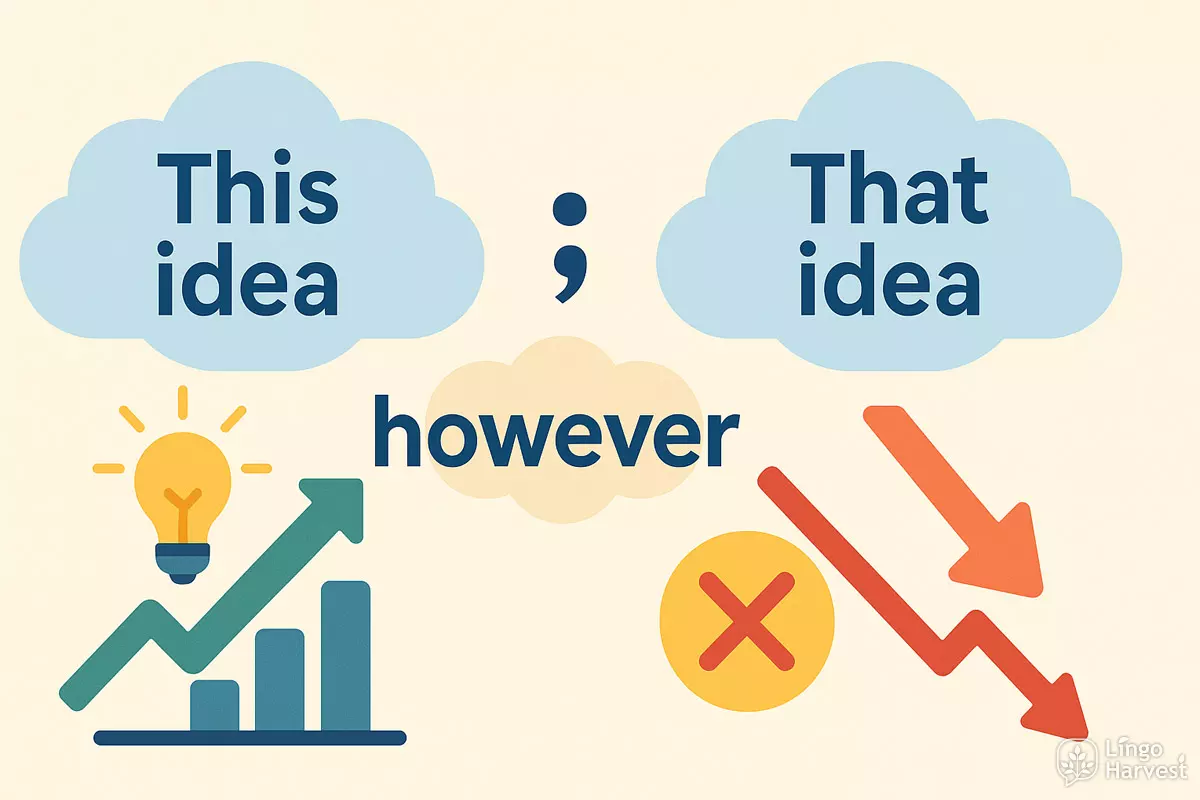
- “If we follow this idea, we might see progress; that idea, however, could lead to setbacks.”
- “This idea is practical. That idea is more theoretical.”
- “I support this idea for its clarity, but that idea seems ambiguous.”
- “This idea has widespread appeal; that idea is controversial.”
- “We should consider this idea for immediate action, leaving that idea for future debate.”
- “This idea aligns with our goals. That idea diverges from our strategy.”
- “This idea is innovative. That idea recycles old concepts.”
- “This idea solves the problem; that idea only describes it.”
- “This idea is well-supported. That idea is speculative.”
Quick reference: Functions of “this idea” vs “that idea”
| Usage | Typical Effect |
|---|---|
| “This idea” | Signals endorsement, proximity, or focus on the current topic ✅ |
| “That idea” | Indicates distance, opposition, or reference to a different/previous point ❌ |
| Switching between “this” and “that” | Highlights contrast, frames debate, clarifies alignment → |
| Consistent use of “this idea” | Reinforces advocacy for a single perspective |
| Alternating with “that idea” | Emphasizes opposing stances or critiques |
Ultimately, the deliberate selection of “this idea” or “that idea” in argumentative contexts not only aids clarity but also subtly influences how concepts are received and evaluated by an audience.
Subtle attitude and evaluation expressed through determiners
Choosing between determiners like "this" and "that" often reveals the speaker’s stance, level of involvement, or emotional distance. The choice isn’t just about physical or conceptual nearness—there’s often a shade of opinion, preference, or even skepticism signaled through these small words. For instance, when someone says "this idea," it can suggest alignment or approval, while "that idea" may introduce space, critique, or detachment.
How "this" and "that" color our reactions
"This" typically positions the referenced idea as closer—physically, mentally, or emotionally—to the speaker. It can signal endorsement, excitement, or a sense of belonging. In contrast, "that" may create distance, sometimes subtly expressing doubt, irony, or disagreement. Consider these uses:
- This idea really excites me. ✅ (involvement)
- That idea seems questionable. ❌ (skepticism)
- This suggestion could work for our team. (support)
- That proposal is difficult to accept. (distance)
- This solution fits our needs. (approval)
- That claim sounds exaggerated. (doubt)
- This approach aligns with our values. (identification)
- That argument misses the point. (critique)
- This question is worth exploring. (interest)
- That remark was unnecessary. (disapproval)
Attitudinal contrast in context
Speakers often rely on these determiners to nudge listeners toward a particular evaluation. For example, in meetings, someone might say, "Let’s focus on this idea," inviting group attention and positive regard. On the other hand, "I’m not sure about that idea," can introduce polite disagreement or skepticism, softening criticism while maintaining clarity.
Patterns of subtle evaluation
Notice that the use of "this" frequently accompanies positive or neutral assessments, while "that" can introduce negative, ironic, or distancing nuances. However, context and intonation matter; a sarcastic tone might flip the implied attitude entirely.
Summary of evaluative effects
The table below outlines how the choice between "this" and "that" can influence interpretation:
| Determiner | Typical Attitude/Effect |
|---|---|
| This | Closeness, approval, involvement, endorsement, curiosity |
| That | Distance, skepticism, critique, irony, reservation |
Ultimately, the subtlety of these choices allows speakers to express evaluation and emotional stance without overt statements, shaping how listeners perceive both ideas and intentions.
Common patterns: this problem, that solution, those people
Understanding how to use "this," "that," "these," and "those" with nouns helps clarify what we're referring to in English conversations. These words—called demonstratives—show whether something is near or far (in space, time, or even in thought), and whether it is singular or plural. Recognizing these patterns can make your speech and writing more precise and natural.
Typical Uses in Context
Demonstratives often anchor ideas or objects in a conversation. Notice how the choice between "this" and "that" can change the focus or emotional distance:
- This problem needs immediate attention. (near, urgent)
- That solution was suggested yesterday. (far, already discussed)
- These people are my colleagues. (near, present group)
- Those ideas sound outdated. (far, previously mentioned)
Expanded List of Common Demonstrative Patterns
- This question → This question needs a clear answer.
- That answer → That answer surprised everyone.
- These examples → These examples explain the rule well.
- Those results → Those results were published yesterday.
- This method → This method works better for beginners.
- That approach → That approach seems more practical.
- These reasons → These reasons justify our decision.
- Those possibilities → Those possibilities were carefully analyzed.
- This event → This event will be remembered for years.
- That incident → That incident caused a lot of discussion.
- These students → These students passed the exam with high scores.
- Those teachers → Those teachers inspired many generations.
- This moment → This moment feels very special.
- That day → That day changed everything for him.
- These facts → These facts cannot be ignored.
- Those opinions → Those opinions differ from mine.
- This book → This book helped me understand the topic.
- That film → That film was based on a true story.
- These comments → These comments were very helpful.
- Those suggestions → Those suggestions improved the final version.
Comparing Demonstrative Usage
Subtle distinctions arise depending on context. For example, "this problem" often refers to something you are currently dealing with or that feels immediate, while "that problem" typically points to something more distant in time or relevance.
| Demonstrative | Typical Context | Example |
|---|---|---|
| This | Singular, near in time/space or importance | This idea is interesting. |
| That | Singular, distant in time/space or less immediate | That idea was popular last year. |
| These | Plural, near or directly relevant | These suggestions are helpful. |
| Those | Plural, distant or previously mentioned | Those arguments no longer apply. |
Tips for Choosing the Right Demonstrative
- Use this/these for things that feel close—physically, emotionally, or in the conversation.
- Use that/those for things that are farther away, finished, or less relevant to the present moment.
- Pair demonstratives with clear nouns to avoid confusion, especially in formal writing.
- Remember, context matters: "this solution" can refer to something just introduced, while "that solution" might reference an earlier point or a different perspective.
Choosing the right demonstrative helps your listener or reader track what you mean, especially when discussing multiple ideas, problems, or people. Practice with real examples to build confidence and precision in your English communication.
Practice: rewrite sentences to highlight contrast with determiners
Understanding how to use determiners for contrast is an essential skill in English. Words such as "this," "that," "these," and "those" help us distinguish between ideas, objects, or opinions, emphasizing their differences. Practicing sentence rewrites with contrasting determiners sharpens your ability to make distinctions clear, both in writing and speaking.
Rewrite Each Sentence to Emphasize Contrast
Try changing the determiners in these sentences to highlight differences between two ideas or items. Sometimes, you may need to add a contrasting sentence for clarity.
- I don’t agree with the idea you mentioned.
- The problem is simple.
- Her suggestion seems helpful.
- My solution is better than yours.
- We should use the method from last week.
- Your plan is similar to mine.
- This information is outdated.
- That answer is incorrect.
- The results surprised everyone.
- His proposal addresses the main issue.
Show answers
- I don’t agree with that idea; I prefer this one.
- This problem is simple, but that one is complex.
- Her suggestion seems helpful, unlike his suggestion.
- This solution is better than that one.
- We should use this method, not that one from last week.
- Your plan is similar, but this one is different.
- This information is outdated; that information is current.
- That answer is incorrect, but this answer is correct.
- These results surprised everyone, while those did not.
- His proposal addresses the main issue; her proposal does not.
Common Contrasting Determiners
When you want to highlight differences, certain determiners and phrases are especially useful. Here are some examples:
- this idea / that idea
- these points / those points
- my opinion / your opinion
- our approach / their approach
- such a plan / another plan
- one method / the other method
- this solution / that solution
- these reasons / those reasons
- this answer / that answer
- these results / those results
- this side / that side
- this time / last time
- this year / previous year
- this version / that version
- my suggestion / your suggestion
- this statement / the other statement
- these findings / those findings
- this case / that case
- this group / that group
- this problem / that problem
Quick Contrast Practice
Choose the appropriate determiner to highlight contrast in each sentence.
- (This/That) report is accurate, but (this/that) one contains errors.
- (These/Those) students performed well; (these/those) struggled.
- I prefer (my/your) approach to (my/your) approach.
- (This/That) explanation is clear, unlike (this/that) explanation.
- (This/That) chair is broken, but (this/that) one is fine.
- (These/Those) shoes are too small; (these/those) fit perfectly.
- (My/Your) idea sounds better than (my/your) idea.
- (This/That) problem is easy, but (this/that) problem is difficult.
- (These/Those) answers are correct; (these/those) are wrong.
- (My/Your) notes are clearer than (my/your) notes.
Show answers
- This report is accurate, but that one contains errors.
- These students performed well; those struggled.
- I prefer my approach to your approach.
- This explanation is clear, unlike that explanation.
- This chair is broken, but that one is fine.
- These shoes are too small; those fit perfectly.
- My idea sounds better than your idea.
- This problem is easy, but that problem is difficult.
- These answers are correct; those are wrong.
- My notes are clearer than your notes.
By practicing these rewrites, you become more skilled at drawing attention to contrasts in your communication. Using the right determiner can make your meaning sharper and your arguments more persuasive.