Determiners in Conditional Clauses and Hypothetical Contexts

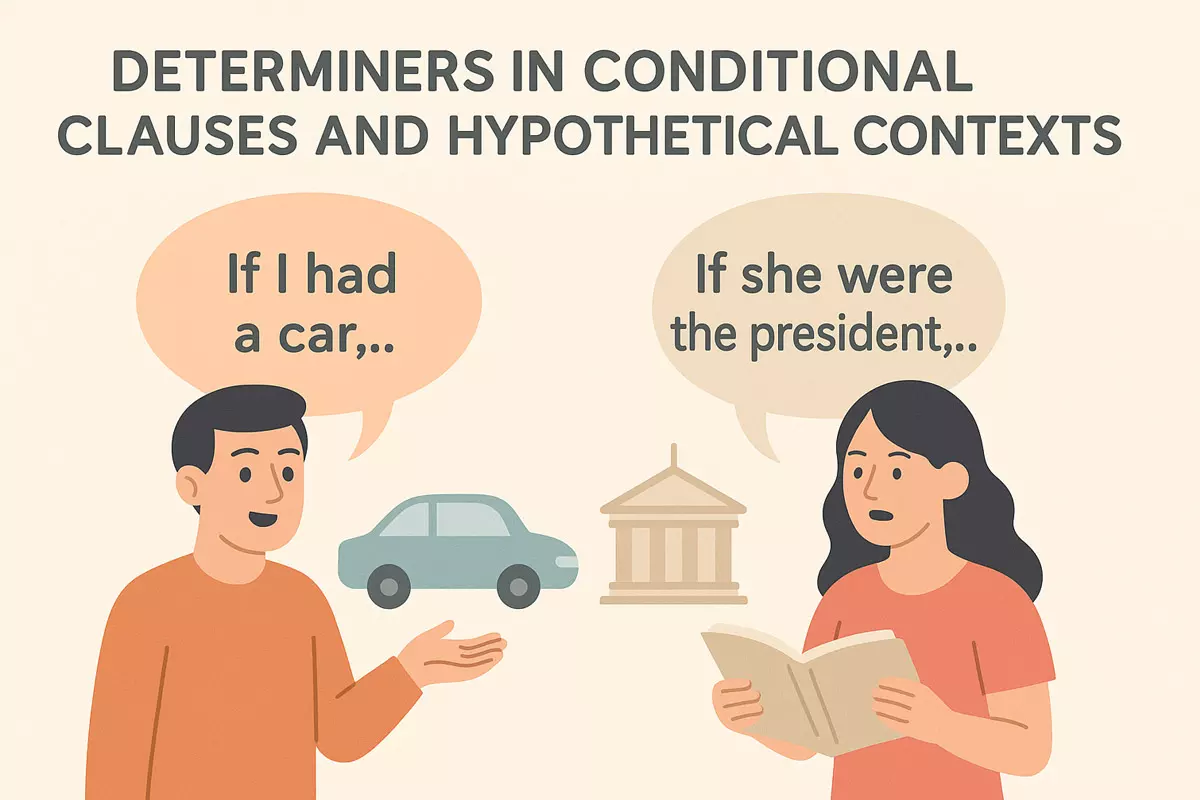 Here we how determiners such as a and the change meaning in conditional clauses, how to reference hypothetical scenarios, and how to use determiners to limit or expand conditions.
- How determiners shift meaning in conditional clauses
- Choosing a vs the in imagined situations
- Reference to hypothetical objects or scenarios
- Using determiners to limit or expand conditions
- Examples with if, unless, should, and inversion
- Common mistakes in unreal and mixed conditionals
- Practice: edit conditional sentences for correct reference
When exploring sentences that describe imagined scenarios or possible outcomes, the choice of small words indicating specificity or generality is surprisingly important. Articles and quantifiers within conditional statements can subtly change the meaning of what is being expressed, influencing how listeners interpret the degree of certainty or generalization. By paying attention to these language elements, we gain insight into how speakers convey nuance and manage uncertainty in their communication.
How determiners shift meaning in conditional clauses
When we use determiners like “any,” “some,” “every,” or “no” in if-clauses or hypothetical statements, the overall sense of the condition often changes. These small words set boundaries or open possibilities, signaling whether a statement is broad, limited, or even impossible. For example, compare “If you have any questions, ask me” with “If you have every question, ask me”—the first invites all questions, while the second sounds odd or even impossible.
Types of determiners in hypothetical contexts
Different determiners create different nuances in conditional sentences:
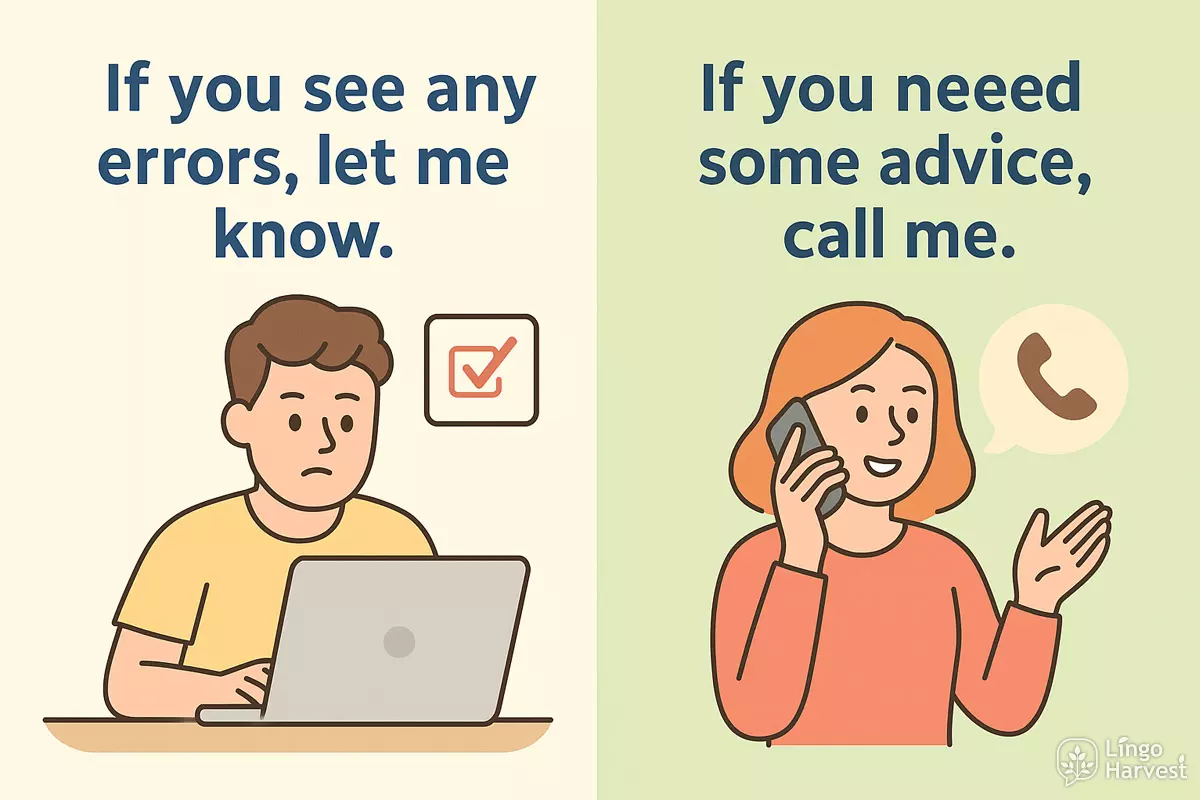
- Any: Suggests openness or possibility (“If you find any mistake, let me know”).
- Some: Implies expectation or a limited set (“If you need some help, call me”).
- No: Expresses a negative or impossibility (“If you have no time, we can reschedule”).
- Every: Indicates totality or an unlikely scenario (“If every student passes, we’ll celebrate”).
- Each: Focuses on individuals within a group (“If each member agrees, we’ll proceed”).
- All: Refers to the whole group (“If all lights are off, the building is closed”).
- Much/Many: Quantifies uncountable/countable nouns (“If much time is left, we’ll wait”).
- Few/Little: Suggests scarcity (“If few people attend, we’ll cancel”).
- Either/Neither: Gives options or excludes all (“If either option works, let me know”).
- Several: Refers to more than a few, but not all (“If several students volunteer, we’ll start”).
Subtle shifts in meaning
Changing just the determiner can flip the logic or mood of a conditional statement. For instance, “If you bring some friends, the party will be fun” hints at an expectation, while “If you bring any friends, the party will be fun” is more open-ended. Similarly, “If no one calls, we’ll leave early” sets a clear negative condition, and “If every guest arrives on time, dinner will start at eight” sets a strict, perhaps unlikely, requirement.
Comparing determiners in conditional clauses
| Determiner | Effect in If-Clause | Example |
|---|---|---|
| Any | Open to all possibilities | If you see any errors, let me know. |
| Some | Limited expectation | If you need some advice, call me. |
| No | Negative/none | If you have no money, I can help. |
| Every | All cases/totality | If every child finishes, we’ll leave. |
| All | Entire group | If all lights are out, check the fuse. |
| Few | Scarcity | If few people agree, we’ll postpone. |
| Each | Individual focus | If each participant signs, we’ll proceed. |
| Either | Choice between two | If either answer is correct, you pass. |
| Neither | Exclusion | If neither team wins, it's a draw. |
| Several | More than a few | If several guests arrive, we’ll start dinner. |
Summary
Choosing a different determiner in a conditional clause can drastically alter the meaning, scope, or tone of the statement. Subtle shifts in these words help convey expectation, possibility, or limitation, which is crucial for clear and precise communication in hypothetical or conditional contexts.
Choosing a vs the in imagined situations
When talking about conditional or hypothetical contexts, English speakers often need to decide between using "a" (or "an") and "the" before nouns. The difference depends on whether we're introducing something new to the conversation or referring to something already identified or specific, even in an imagined scenario.
Introducing New vs. Specific Imagined Elements
"A" is typically used when mentioning something for the first time in a hypothetical case, especially when it could be any example of that thing. "The" is used if the situation clearly defines or restricts which one is meant, even if it only exists in our imagination.
- If I had a car, I would drive to work. (any car, non-specific)
- If I had the car my friend owns, I would drive to the beach. (a specific, imagined car)
- Suppose you found a wallet on the street, what would you do? (any wallet)
- Suppose you found the wallet I lost, would you return it? (the specific lost wallet)
- If he were a doctor, he could help. (any doctor in general)
- If he were the doctor we met yesterday, he could help. (a specific, known doctor)
- If I won a prize, I'd travel. (any prize)
- If I won the prize they announced, I'd buy a house. (that particular prize)
- If you had a map, you could find the way. (any map will do)
- If you had the map we saw online, you could avoid traffic. (a particular map)
- If I saw a movie tonight, I'd relax. (any movie)
- If I saw the movie you recommended, I'd understand your reference. (that specific movie)
- If she bought a dress, she would wear it to the party. (any dress)
- If she bought the dress she saw yesterday, she'd be thrilled. (a specific dress)
- If we had a dog, we'd walk more. (any dog)
- If we had the dog from the shelter, we'd be happier. (a particular dog)
- Imagine you lived in a big city. (any big city)
- Imagine you lived in the big city where your friend moved. (that specific city)
Summary: How "a" and "the" Work in Hypotheticals
The article "a" signals openness or generality, while "the" points to something uniquely identified by context, even if it exists only in the scenario. This distinction helps clarify what is being imagined or supposed in conditional sentences.
| Formulation | Meaning in Hypothetical Context |
|---|---|
| If I had a key, I could open the door. | Any key, not specified; introduces a new, imagined item. |
| If I had the key, I could open the door. | A particular key, already identified by context or shared knowledge. |
| If she found a solution, she'd be happy. | Any possible solution, not specified which one. |
| If she found the solution, she'd be happy. | The specific solution everyone is seeking or knows about. |
Remember, the choice between indefinite and definite articles in imagined or conditional statements often comes down to whether the noun is generic or uniquely defined within the context. This subtlety can change the meaning of your sentence, even when discussing purely hypothetical situations.
Reference to hypothetical objects or scenarios
Conditional clauses and imagined contexts often require specific determiners to signal that the noun being mentioned is not real or definite, but rather possible, imagined, or non-existent. The choice of articles and determiners can subtly shift the meaning, indicating whether the speaker is thinking of a particular item, any possible item, or an entirely hypothetical entity.
Typical determiners in imagined conditions
In English, "a" or "an" is frequently used to refer to non-specific, hypothetical nouns, especially in if-clauses and wishes. For example, "If I had a car, I would drive to the beach." Here, "a car" means any car, not a specific one. Definite articles like "the" are less common unless referring back to a previously mentioned or uniquely identifiable object in the hypothetical scenario.
- If I found a wallet, I would return it.
- If you saw an owl, you might get excited.
- If she had the answer, she would tell us. (refers to one specific answer)
- If there were some cookies left, we could share them.
- Suppose you met someone famous.
- If I had any idea, I’d help.
- Imagine you lived in another country.
- If he owned no pets, his house would be quieter.
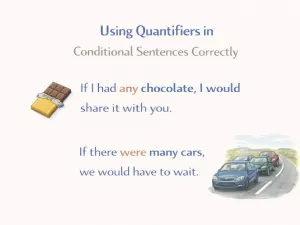
- If there were many options, which would you choose?
- If you needed this document, let me know. (less common; refers to a specific, imagined document)
- If they saw each other again, would they talk?
- Should you receive such a letter, contact us.
- If we had all the facts, we could decide.
- If you had the same problem, what would you do?
- If there were enough chairs, everyone could sit.
Comparing definite and indefinite determiners in hypothetical contexts
The distinction between definite and indefinite forms becomes especially important in imagined situations. Indefinite forms ("a," "an," "any," "some") keep the object general or unknown, while definite forms ("the," "this," "that," "those") imply specificity—even within a non-real scenario.
| Determiner | Example in Hypothetical Context |
|---|---|
| a / an | If I had a dog, I would go for walks. |
| the | If I had the key, I could open the door. (a specific key) |
| any | If you have any questions, ask me. |
| some | If there were some milk, we could make tea. |
| this | If you needed this information, you’d call me. (specific, imagined) |
Special notes on negative and universal determiners
Negative determiners like "no" and universal ones such as "all" or "every" can also frame hypothetical content. For example, "If there were no mistakes, the project would finish early," or "If every student passed, we would celebrate." These forms help to convey the scope or limitation of the imagined scenario. In summary, determiners in conditional and imagined contexts are essential for clarifying whether nouns are meant to be specific, general, possible, or impossible. The subtlety in their selection shapes the listener’s understanding of what is real, what is possible, and what remains purely theoretical.
Using determiners to limit or expand conditions
Determiners play a crucial role in shaping the scope and specificity of conditional sentences and hypothetical scenarios. By selecting particular determiners, speakers can restrict, broaden, or otherwise adjust the set of situations being described. This section explores how words like "any," "some," "every," "no," and others influence the meaning and reach of conditional clauses.
Restricting the Range of Conditions
Certain determiners help narrow down the possible cases under discussion. For example, using "this," "that," or "these" often singles out specific instances, while "no" or "none" can emphasize the absence of options or outcomes.
- If this solution works, we can proceed. (focuses on a single solution)
- If no one objects, we'll continue. (excludes all possibilities of objection)
- If neither option is available, we must reconsider. (limits to two specific choices)
- If that student finishes early, she may leave. (one individual)
Expanding Possibilities with Indefinite Determiners
Indefinite determiners such as "any," "some," or "every" open up the conditions to wider interpretation. They signal flexibility or inclusivity in hypothetical contexts.
- If any problems arise, call me. (applies to all potential problems)
- If some people disagree, we will discuss further. (not limited to specific individuals)
- If every child participates, the event will be a success. (all members of a group included)
- If either answer is correct, you get points. (broadens to two possibilities)
- If all resources are used, we must wait. (entire set considered)
Comparing Limiting vs. Expanding Determiners in Conditionals
The choice between restrictive and inclusive determiners dramatically affects interpretation. Consider the following patterns:
| Restrictive Determiner | Expanding Determiner |
|---|---|
| If this plan fails, we start over.❌ | If any plan fails, we start over.✅ |
| If no student attends, class is canceled.❌ | If every student attends, class is full.✅ |
| If that door is locked, use another.❌ | If all doors are locked, call security.✅ |
| If neither answer is correct, try again.❌ | If either answer is correct, award points.✅ |
Common Determiners in Conditional and Hypothetical Contexts
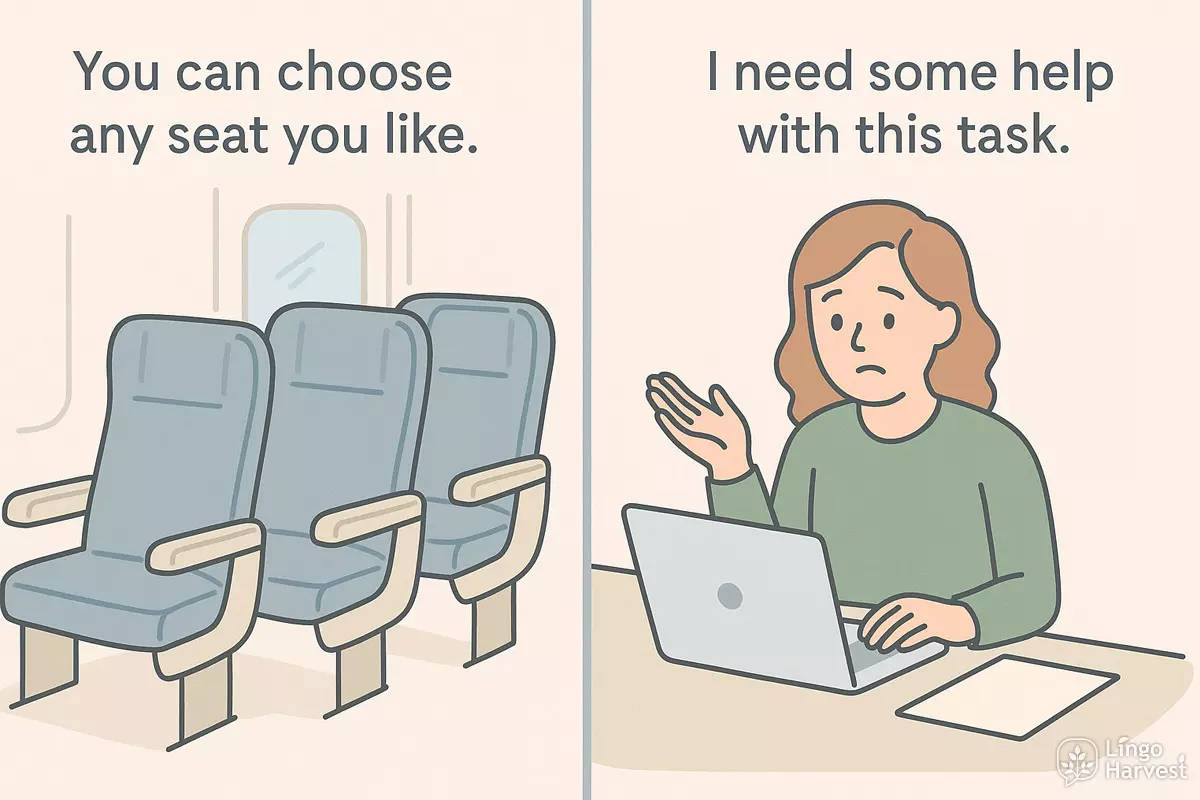
Below are determiners frequently found in "if" clauses and similar structures, each influencing scope in its own way:
- any → You can choose any seat you like.
- some → I need some help with this task.
- every → She checks her email every morning.
- all → All students must submit the form.
- no → There is no time left.
- none → None of the answers is correct.
- either → You can sit on either side of the table.
- neither → Neither option seems reasonable.
- this → This book is really interesting.
- that → That building is very old.
- these → These shoes are too small for me.
- those → Those mountains look amazing.
- each → Each student received a certificate.
- both → Both solutions work well.
- many → Many people attended the conference.
- few → Few workers stayed after the meeting.
- several → Several mistakes were found in the report.
- much → There isn’t much sugar left.
- little → He showed little interest in the project.
Choosing appropriate determiners is essential for clarifying what conditions are being considered. Whether you wish to limit or broaden the possible scenarios, the right word can make your meaning precise and your statements more effective.
Examples with if, unless, should, and inversion
Understanding how determiners interact with conditional constructions helps clarify meaning and nuance in hypothetical statements. Various structures—like those starting with "if," "unless," "should," and inversion—demonstrate how determiners affect the scope and specificity of these clauses.
Conditional Clauses with "If"
In "if" clauses, determiners specify which person, object, or situation is being discussed. Notice how articles and quantifiers change the meaning:
- If a student finishes early, he or she may leave.
- If the manager approves this, the project will proceed.
- If any problems arise, let me know.
- If some information is missing, the form will be rejected.
- If no answer is given, we will assume agreement.
Using "Unless" in Hypothetical Contexts
"Unless" introduces a negative condition. Determiners here can highlight exceptions or general rules:
- Unless every document is signed, the process cannot continue.
- Unless the weather changes, the event will go ahead.
- Unless a reason is provided, refunds are not possible.
- Unless all requirements are met, you cannot enroll.
Conditional Clauses with "Should"
"Should" can add formality or suggest possibility. Determiners still clarify the subject:
- Should any issues occur, contact support.
- Should the package arrive late, notify us immediately.
- Should an error be found, it must be reported.
- Should some questions remain, we will address them.
Inversion in Conditionals
Inversion structures (omitting "if") are common in formal or written English. Determiners maintain their specifying role:
| Standard Form | Inversion Form |
|---|---|
| If any problems arise, call us. | Should any problems arise, call us. |
| If the weather improve, we will go. | Should the weather improve, we will go. |
| If a mistake be discovered, report it. | Should a mistake be discovered, report it. |
| If no solution is found, we will try again. | Should no solution be found, we will try again. |
These examples illustrate how determiners such as "the," "a," "any," and "no" function within various conditional patterns, affecting the meaning and precision of hypothetical statements. Adjusting the determiner can make a condition more general, more specific, or more formal, depending on the context.
Common mistakes in unreal and mixed conditionals
Learners often find it tricky to choose the correct determiners and verb forms in unreal and mixed conditional sentences. These structures require careful attention to tense shifts, article use, and the distinction between real and hypothetical situations. Missteps can lead to confusion or ambiguity, especially in nuanced contexts.
Typical Errors with Determiners
Incorrect use of articles, quantifiers, or demonstratives frequently causes problems. In hypothetical clauses, determiners must fit the imagined scenario, not the real world. For example, saying "If I had a money, I would travel" is incorrect; "money" is uncountable, so "a" should be omitted.
- Using "a/an" with uncountable nouns (e.g., "If I had a information, I would help you")
- Omitting "the" when referring to a specific hypothetical object ("If you had solution, you would tell us" → should be "the solution")
- Confusing "some" and "any" in negative or conditional contexts ("If I had some friends here, I would be happier" vs. "If I had any friends here…")
- Choosing "this/that" vs. "these/those" incorrectly ("If I were in this shoes" → "these shoes")
- Misplacing determiners, especially with adjectives ("If I had advice good" instead of "good advice")
Tense and Structure Confusion
Switching between unreal and mixed conditionals often leads to mistakes. Learners might use the wrong verb tense in either the "if" or the result clause, or mix up time references.
| Incorrect Example | Corrected Version |
|---|---|
| If I would have known the answer, I would help you. | If I had known the answer, I would have helped you. |
| If she would be taller, she could reach the shelf. | If she were taller, she could reach the shelf. |
| If I knew the answer yesterday, I would tell you now. | If I had known the answer yesterday, I would tell you now. |
| If he would study, he would have passed. | If he had studied, he would have passed. |
Common Patterns to Watch For
The following mistakes are widespread among learners dealing with hypothetical or counterfactual clauses:
- Using "would" in the "if" clause ("If I would see him, I would say hello")
- Mixing present and past time frames incorrectly
- Forgetting to use the subjunctive ("If I was you" instead of "If I were you")
- Incorrect negative forms ("If I didn't knew" instead of "If I didn't know")
- Misusing determiners with plural vs. singular nouns ("If I had these chance")
- Incorrect placement of "any" and "some" ("If I had some any friends")
- Using "much" with countable nouns ("If I had much friends")
- Omitting articles with specific nouns ("If I had car, I would drive to work")
- Using definite articles for general ideas ("If I had the time" when talking about time in general)
- Confusing "each" and "every" ("If each child had a toy" vs. "If every child had a toy")
- Redundant determiners ("If I had a the answer")
Tips for Avoiding These Issues
Focus on matching the determiner to the noun’s countability and specificity. Double-check verb tenses for hypothetical versus real situations, and remember not to use "would" in the "if" clause. Reading authentic examples and practicing with feedback can help internalize correct patterns.
Practice: edit conditional sentences for correct reference
Understanding how determiners function in conditional structures is crucial for clarity and precision. Conditional clauses often require careful attention to pronouns, articles, and demonstratives to ensure the reference is clear and unambiguous. Below, you’ll find a variety of exercises to help you identify and correct issues with reference in hypothetical statements and conditionals.
Common Reference Issues in Conditional Clauses
Writers frequently encounter problems such as unclear pronoun references, missing articles, or inappropriate use of demonstratives in "if" or "unless" clauses. These can lead to confusion about what or whom the sentence refers to, especially in complex or hypothetical contexts.
- Unclear antecedents for "it" or "they"
- Omitted definite or indefinite articles where required
- Ambiguous use of "this," "that," "these," or "those"
- Misplaced determiners in the main or subordinate clause
Task: Edit for Correct Determiner Reference
Below are several sentences with reference errors related to determiners in conditional or hypothetical contexts. Revise each to clarify the reference and improve accuracy.
- If student submits assignment late, teacher may deduct points.
- If you see them at the event, please give message to them.
- If a person wants to join, they must fill out application.
- If these happens again, report it to supervisor.
- If one forgets password, they should reset it using link.
- If you buy car, make sure papers are complete.
- If someone knocks, do not open door unless you know who it is.
- If applicant is qualified, send offer letter to them.
- If this instructions are unclear, contact support team.
- If child finishes meal, give them dessert.
Show answers
- If a student submits an assignment late, the teacher may deduct points.
- If you see them at the event, please give the message to them.
- If a person wants to join, they must fill out an application.
- If this happens again, report it to the supervisor.
- If one forgets their password, they should reset it using the link.
- If you buy a car, make sure the papers are complete.
- If someone knocks, do not open the door unless you know who it is.
- If an applicant is qualified, send the offer letter to them.
- If these instructions are unclear, contact the support team.
- If a child finishes their meal, give them dessert.
Quick Reference: Determiners in Conditional Clauses
Below is a quick guide to common determiners and their preferred use in hypothetical or conditional contexts.
| Determiner | Typical Use in Conditionals |
|---|---|
| a/an | Introduce singular, non-specific nouns: "If a visitor arrives..." |
| the | Refer to specific or previously mentioned nouns: "If the report is finished..." |
| this/that/these/those | Emphasize particular items or clarify reference: "If these rules change..." |
| some/any | Refer to non-specific quantities: "If any errors occur..."; "If some people disagree..." |
| each/every | Used with singular countable nouns for generalization: "If every student passes..." |
| no | Negate existence: "If no solution is found..." |
Challenge: Identify the Reference Problem
For each sentence, identify the specific reference issue related to determiners.
- If person leaves bag unattended, security may confiscate it.
- If students complete assignment, they can leave early.
- If that instructions confuse you, ask for clarification.
- If report is missing, notify manager.
- If teacher arrives late, class will start later.
- If child needs help, tell parent immediately.
- If workers finish project early, they may leave.
- If document is incorrect, revise it.
- If those equipment breaks, report it.
- If customer requests refund, process it quickly.
Show answers
- Missing article → If a person leaves a bag unattended, security may confiscate it.
- Missing article → If students complete the assignment, they can leave early.
- Incorrect demonstrative → "that instructions" → those instructions
- Missing article → If the report is missing, notify the manager.
- Missing article → If the teacher arrives late, the class will start later.
- Missing article → If a child needs help, tell the parent immediately.
- Missing article → If the workers finish the project early, they may leave.
- Missing article → If the document is incorrect, revise it.
- Incorrect demonstrative → "those equipment" → that equipment
- Missing article → If a customer requests a refund, process it quickly.
Consistent use of determiners in conditional and hypothetical sentences ensures your meaning is clear and avoids ambiguity. Practice regularly to strengthen your editing skills in these contexts.