Using Determiners in Narrative and Rhetorical Framing

 Here we how determiners like this, that, a, and the affect point of view, guide reader attention, introduce characters or objects, and shape emotional distance in stories. It also provides literary examples and practical exercises for clarity.
- How determiners shape point of view in stories
- Using this, that, these, those to guide reader focus
- Introducing characters and objects with a/an and the
- Building emotional distance or closeness with determiners
- Shifts in reference across paragraphs in narratives
- Examples from literature and essays
- Practice: enhance narrative clarity using determiners
The art of storytelling and argumentation relies heavily on subtle language choices, particularly in how we specify or generalize details within a sentence. Selecting the right words, whether to narrow down a description or to broaden a statement, can significantly influence how readers interpret and connect with the message. These seemingly minor decisions in phrasing not only affect clarity and emphasis but also play a vital role in guiding a reader’s attention and emotional response, ultimately shaping their overall engagement with the text.
How determiners shape point of view in stories
The choice of determiners plays a subtle but powerful role in guiding the reader’s sense of perspective within a narrative. Determiners—words like “this,” “that,” “my,” “a,” and “the”—act as signals about whose viewpoint the story is filtered through, what is considered familiar or unfamiliar, and which elements are foregrounded. By carefully selecting determiners, writers can establish intimacy, distance, or even ambiguity between the narrator and the events described.
Establishing Narrative Distance and Intimacy
Writers often use possessive determiners (“my,” “our,” “their”) to draw readers closer to a character’s experiences, creating a sense of personal involvement. In contrast, indefinite articles (“a,” “an”) and demonstratives (“that,” “those”) can introduce distance or uncertainty, making scenes feel more observational or detached.
- My childhood home (personal, intimate)
- The city at night (shared, familiar)
- A stranger in the crowd (neutral, distant)
- That old feeling (removed, possibly judgmental)
- Some memories linger (vague, non-specific)
- Every morning, she waited (universal, habitual)
- Our secret meeting place (shared intimacy)
- This very moment (immediate, present)
- No answer came (absolute, exclusionary)
- Each step echoed (individual, sequential)
Controlling Reader Alignment
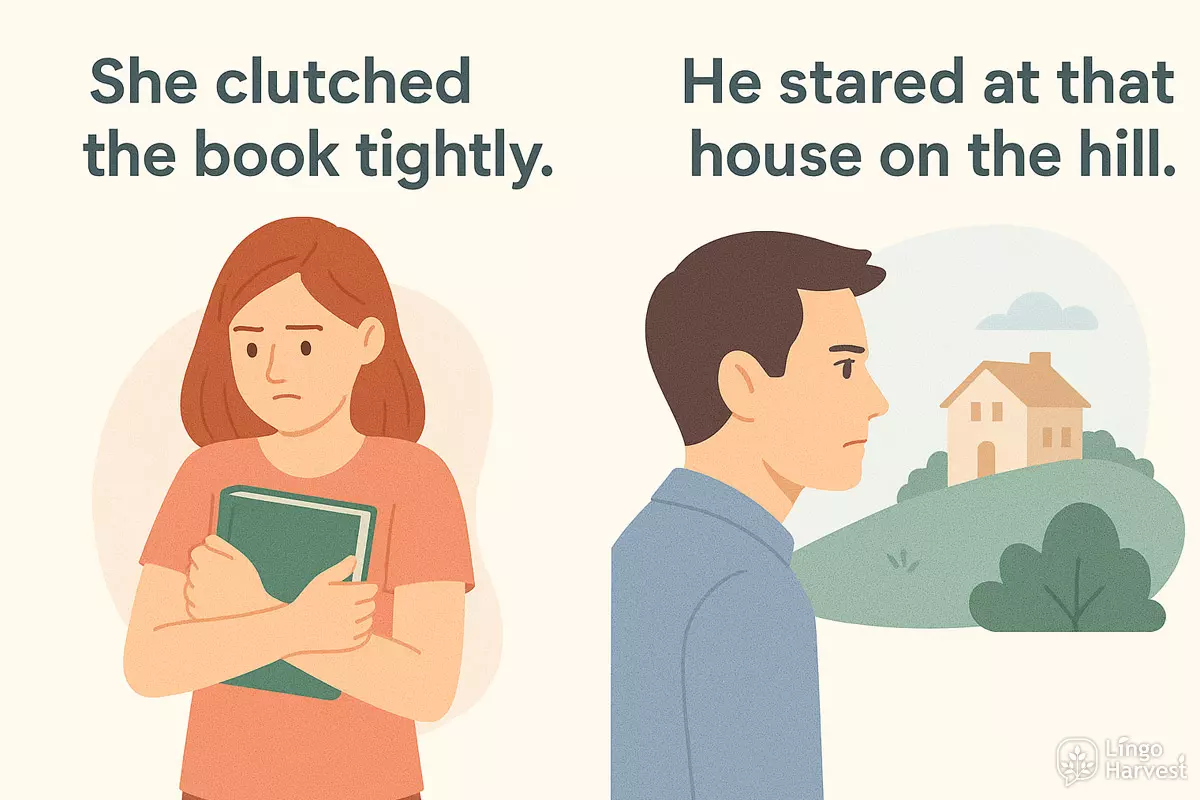
Determiners also influence how closely the reader aligns with a particular character or narrative voice. For example, using “her” versus “the” when referring to an object can subtly indicate whether the object is important to a character or simply part of the setting.
| Sentence | Effect on Point of View |
|---|---|
| She clutched her book tightly. | Signals ownership and emotional connection; aligns reader with the character’s perspective. |
| She clutched the book tightly. | The book is presented as an object; less emotional weight, more neutral or external viewpoint. |
| He stared at that house on the hill. | Suggests distance or possible judgment; may reflect the narrator’s attitude or unfamiliarity. |
| I remember this day vividly. | Brings immediacy and subjectivity; invites reader into the narrator’s direct experience. |
Implications for World-Building and Characterization
Subtle shifts in determiner usage can cue the reader to changes in narrative focus or character development. For instance, switching from “a” to “the” as a story unfolds can signal that something once unknown has become significant or familiar. Similarly, demonstratives like “these” or “those” can express a character’s attitude toward people or events, influencing how the audience perceives relationships and emotional stakes. In sum, determiners are more than grammatical tools—they are essential devices for narrative framing, shaping not only what is told, but how the reader experiences the unfolding story.
Using this, that, these, those to guide reader focus
Demonstrative determiners—this, that, these, and those—play a vital role in structuring narrative and rhetorical flow. By specifying proximity and number, these words help direct the reader’s attention, clarify references, and establish relationships between ideas or events in your text. Choosing the right demonstrative can signal whether something is near or distant, recent or remote, singular or plural, and even highlight shifts in perspective.
Clarifying Reference Points
Writers often use demonstratives to connect sentences, maintain coherence, and prevent ambiguity. For instance, consider how “this” points readers to a concept just introduced, while “that” may refer to something previously mentioned or less immediate. These subtle cues guide the audience through complex arguments or storylines, making the reading experience smoother and more engaging.
- This idea suggests a new approach. (Refers to the immediately preceding concept.)
- That solution, however, proved ineffective. (Points back to something discussed earlier.)
- These results are promising. (Highlights several recent findings.)
- Those mistakes should be avoided. (Emphasizes errors from a previous context.)
Building Rhetorical Emphasis
Strategic use of demonstratives can also strengthen argumentation and narrative emphasis. By deliberately shifting between “this” and “that,” writers may signal approval or distance, draw contrasts, or reinforce a progression of ideas. In persuasive writing, such choices subtly influence how readers interpret importance and relevance.
Common Patterns and Pitfalls
It’s easy to overuse or misuse these determiners, especially when multiple ideas are discussed. Ambiguous references can confuse readers. Always ensure the noun being referenced is clear, either by proximity or explicit mention.
| Demonstrative | Typical Use | Example in Context |
|---|---|---|
| This | Singular, near in time or space | This problem needs immediate attention. |
| That | Singular, distant or previously mentioned | That issue was resolved last week. |
| These | Plural, near in time or space | These options are available now. |
| Those | Plural, distant or earlier in text | Those concerns were addressed before. |
Expanded Examples of Effective Usage
- This chapter explores the main argument.
- That moment changed everything.
- These questions remain unanswered.
- Those traditions are centuries old.
- This evidence supports the claim.
- That perspective is controversial.
- These observations are crucial.
- Those days were challenging.
- This approach simplifies the process.
- That conclusion seems justified.
- These factors contribute to success.
- Those principles underlie the theory.
- This method yields better results.
- That example illustrates the point.
- These techniques are widely used.
- Those findings are outdated.
In summary, demonstratives help orient your audience, maintain clarity, and subtly manage focus. Careful selection and placement of these words enhance both the logic and the flow of your writing, making your narrative or argument more accessible and persuasive.
Introducing characters and objects with a/an and the
Writers often rely on articles like a, an, and the to guide the reader’s attention, especially when presenting new figures or items in a story. The choice of article can subtly signal whether something is being mentioned for the first time, or if it’s already known within the narrative’s context.
Using a and an for first mentions
When a character or object appears for the first time, indefinite articles (a or an) indicate that the reader is encountering something new or unspecified. This approach helps build curiosity and sets the stage for further development.
- A mysterious figure entered the room.
- She picked up an old book from the shelf.
- They saw a bird perched on the window.
- We spotted an unusual stone in the garden.
Switching to the for subsequent references
After the initial introduction, definite articles like the signal that the character or object is now familiar. This shift helps readers track subjects as the narrative unfolds.
- The figure glanced around, searching for something.
- She opened the book and began to read.
- The bird fluttered its wings.
- He examined the stone more closely.
Comparing article use in narrative context
Selecting between indefinite and definite articles shapes how readers perceive new and known elements in a story. The following table provides direct examples of how this transition works in practice:
| First Mention (Indefinite Article) | Subsequent Reference (Definite Article) |
|---|---|
| She found a key under the mat. | She used the key to open the door. |
| They saw a dog in the park. | The dog ran towards them. |
| He heard an alarm ringing outside. | The alarm kept ringing for minutes. |
| We noticed a strange shadow. | The shadow moved closer. |
| I bought a pen at the store. | The pen writes smoothly. |
Special cases and exceptions
While the general pattern is to use indefinite articles for first mentions and the definite article for known items, there are exceptions. For example, when referring to things that are unique or universally understood (like the sun or the president), or when the context makes something specific even on first mention. Awareness of these nuances helps strengthen narrative clarity.
Mastering the shift between a/an and the is essential for clear storytelling and effective rhetorical framing. Consistent article usage guides your reader, ensuring that new and familiar elements are always easy to follow.
Building emotional distance or closeness with determiners
How we choose determiners in storytelling or persuasive writing can subtly shift the reader’s sense of connection to people, objects, or events. For example, using “this” or “these” can invite readers closer to the subject, while “that” or “those” often creates a sense of detachment or separation. The difference might seem minor, but for narrative and rhetorical framing, these choices matter.
How determiners influence emotional proximity
Writers often select determiners to guide the reader’s stance. Consider how “my” or “our” paints a scene as personal, compared to the more distant “a” or “some.” The specificity or ambiguity of a determiner can also signal intimacy or objectivity. Here are some common patterns:
- this/these – draws attention, suggests immediacy or relevance
- that/those – indicates distance, past events, or emotional remove
- my/our – signals personal involvement or shared experience
- the – can either personalize (when context is shared) or generalize (when context is broad)
- a/an – introduces something new or unknown, often neutral or detached
- each/every – highlights individuals within a group, sometimes adding empathy or universality
- some – vague, can soften claims or introduce uncertainty
- any – open-ended, sometimes impersonal or hypothetical
- no/none – excludes, can create a sense of absence or exclusion
- his/her/their – denotes possession, can be distancing or familiar depending on context
- our – builds inclusivity and shared perspective
- such – can intensify or distance, depending on use
Comparison of determiner effects
The following table summarizes how various determiners can affect the tone of a narrative or argument, depending on the intended emotional proximity:
| Determiner | Emotional Effect |
|---|---|
| this | Creates intimacy and immediacy ✅ |
| that | Suggests distance or separation ❌ |
| my | Personalizes, signals ownership |
| a | Neutral or impersonal, introduces something new |
| our | Creates solidarity and shared experience |
| those | Distance from the subject, sometimes critical |
| some | Ambiguous, can soften or generalize |
| every | Universalizing, can evoke empathy |
| their | Third-person, can be neutral or distancing |
| no | Excludes, often signals absence or denial |
Practical tips for narrative and rhetorical framing
To create a specific emotional effect, consider matching your determiner choice to your narrative goal. If you want readers to feel involved, opt for immediate or inclusive forms like “our” or “this.” For a more detached tone, or when you want to encourage critical distance, “that,” “those,” or indefinite articles work well. Adjusting these words is a subtle but effective way to control the emotional temperature of your writing.
Shifts in reference across paragraphs in narratives
Writers often guide readers through stories by adjusting how people, places, or things are named and referred to as the narrative unfolds. These adjustments, or "referential shifts," help maintain clarity and keep readers oriented, especially when moving from one paragraph to another. Determiners—words like "the," "this," "that," "another," or "such"—play a crucial role in managing these transitions. They signal whether a noun is being introduced for the first time, revisited, or contrasted with something else, subtly shaping how readers interpret the story’s progression.
How reference changes between paragraphs
When a new paragraph begins, the writer might need to re-establish who or what is being discussed. This can mean switching from indefinite references ("a woman entered the room") to definite ones ("the woman sat down"), or using demonstratives ("this problem," "those children") to link back to previous information. Such shifts are not just stylistic—they’re essential for coherence.
- Introducing a new character with "a" or "an," then referring back with "the"
- Switching from a general category to a specific instance ("some books" → "these books")
- Using demonstratives for emphasis or contrast ("that idea," "this solution")
- Moving from singular to plural references as context broadens ("the boy" → "the boys")
- Restating information for clarity with "such a..." or "the aforementioned..."
- Employing possessives to clarify relationships ("her bag," "their home")
- Introducing contrast with "another," "the other"
- Summarizing with "the same," "the latter," "the former"
- Shifting focus with "each," "every," "any," or "no" as determiners
- Explicitly marking new topics: "a different approach," "a new character"
- Using quantifiers to shift scope: "many," "few," "all," "none"
- Highlighting uniqueness with "the only," "the first," "the last"
- Signaling a return to a previous referent: "that aforementioned event"
Common patterns in narrative reference
Choosing the right determiner depends on what the writer wants to highlight or recall. Some typical patterns include:
- First mention: indefinite article ("a dog barked")
- Subsequent mention: definite article ("the dog ran away")
- Contrast: "another option," "the other path"
- Summary: "these issues," "such problems"
- Reiteration: "the same question," "this very issue"
Reference shift and reader comprehension
Smooth transitions using determiners and other referencing devices help readers track characters and objects across paragraphs. When reference is unclear or shifts abruptly, readers may lose track of who is involved or what is being discussed. Effective use of determiners supports narrative flow and minimizes confusion.
| Referential Device | Function in Narrative Flow |
|---|---|
| Indefinite articles ("a," "an") | Introduce new entities or concepts |
| Definite article ("the") | Refer back to previously mentioned or known elements |
| Demonstratives ("this," "that," "these," "those") | Link to or distinguish specific items or ideas from earlier in the text |
| Quantifiers ("some," "many," "all") | Adjust scope or generality of reference |
| Possessives ("her," "their") | Clarify ownership or relationships between entities |
Staying aware of how references shift as the story develops can strengthen both narrative cohesion and reader engagement. The strategic use of determiners makes such transitions seamless, ensuring that readers always know who or what is in focus.
Examples from literature and essays
Writers often use determiners to subtly influence the reader's perception of characters, settings, or arguments. In classic novels, essays, and modern narratives, the choice between “the,” “a,” “this,” or “those” can frame a subject as familiar, unique, or ambiguous. This section draws on excerpts and paraphrased passages to illustrate how these small words shape tone, focus, and rhetoric.
The impact of determiners in famous passages

- “A tale of two cities” (Charles Dickens): The indefinite article “A” gives the title a sense of generality, suggesting the story could apply to many cities, not just specific ones.
- “The road not taken” (Robert Frost): Using “The” singles out a particular road, emphasizing its significance in the poem and the narrator’s life.
- Virginia Woolf’s essay writing: Often employs “this” or “that” for immediacy—e.g., “this moment” or “that room,” drawing readers into the present or pointing to specific memories.
- George Orwell in “Politics and the English Language”: Uses “such” and “these” to group and critique recurring language habits, making his arguments more pointed.
- “One ring to rule them all” (J.R.R. Tolkien): “One” singles out the ring as unique and central, framing the narrative around its singular power.
- “Some infinities are bigger than other infinities” (John Green): “Some” and “other” highlight contrast and introduce philosophical nuance.
- “That summer” (various memoirs): “That” creates nostalgia and specificity, as if recalling a shared, notable moment.
- “Every man for himself” (proverb): “Every” universalizes the statement, emphasizing individualism.
- “No country for old men” (Cormac McCarthy): “No” excludes a group, setting a stark thematic boundary.
- “Each of us is responsible” (essay rhetoric): “Each” individualizes responsibility, avoiding vagueness.
- “Their eyes were watching God” (Zora Neale Hurston): “Their” personalizes perspective, centering the narrative on a specific group’s experience.
- “Those who cannot remember the past are condemned to repeat it” (George Santayana): “Those” specifies a subset of people, not everyone.
- “My father’s house has many rooms” (biblical): “My” establishes a personal connection, “many” expands the scope.
- “This is the way the world ends” (T.S. Eliot): “This” signals immediacy, “the” singles out a particular end.
Comparing determiner choices in narrative context
| Phrase | Effect on Framing |
|---|---|
| “A stranger entered the room.” | Introduces an unknown character, creating suspense or ambiguity. |
| “The stranger entered the room.” | Refers to a previously mentioned or known figure, building continuity or expectation. |
| “One stranger entered the room.” | Emphasizes individuality; may suggest uniqueness or an exception. |
| “That stranger entered the room.” | Directs the reader’s attention to a specific person, often with emotional or narrative weight. |
| “Every stranger entered the room.” | Universalizes the action, possibly exaggerating or making a broader thematic point. |
In essays and fiction alike, determiners often serve as subtle tools to clarify, intensify, or generalize. Their careful use can shift the perspective, highlight contrasts, or establish intimacy between narrator and audience. Noticing these choices in published works helps readers and writers appreciate the nuanced role of grammar in shaping meaning.
Practice: enhance narrative clarity using determiners
Understanding how determiners function can significantly improve the flow and precision of your storytelling. Determiners such as "the," "a," "this," and "those" help readers track characters, objects, and ideas, making narratives easier to follow and more vivid.
Identifying and Using Determiners for Clarity
Writers often overlook the subtle impact of determiners. Without them, narratives can become confusing or ambiguous. Consider these two sentences:
- Dog chased cat.
- The dog chased the cat.
The addition of "the" instantly clarifies the sentence, specifying which dog and cat are being discussed.
Common Types of Determiners in Storytelling
Using a variety of determiners can add nuance and cohesion to your writing. Here are several types commonly used in narratives:
- Definite article: the
- Indefinite articles: a, an
- Demonstratives: this, that, these, those
- Possessives: my, your, his, her, its, our, their
- Quantifiers: some, any, many, few, several, all, each, every
- Numbers: one, two, three, etc.
- Interrogatives: which, what, whose
- Distributives: each, every, either, neither
- Partitives: some of, none of, all of
- Negative: no
Comparison of Determiner Usage in Narrative Contexts
When choosing which determiner to use, consider what you want to communicate: specificity, quantity, or ownership. The table below compares examples for clearer understanding.
| Determiner Type | Example in Narrative |
|---|---|
| Definite article | The lantern flickered in the storm. |
| Indefinite article | A stranger appeared at the gate. |
| Demonstrative | Those clouds looked ominous. |
| Possessive | Her footsteps echoed in the hallway. |
| Quantifier | Many villagers gathered in the square. |
| Number | Two birds perched on the windowsill. |
| Interrogative | Which path did he choose? |
| Distributive | Each candle flickered softly. |
| Partitive | Some of the guests left early. |
| Negative | No stars could be seen that night. |
Try It Yourself: Determiner Practice
Fill in each blank with an appropriate determiner to clarify the sentence:
- _____ old man waited by _____ bus stop.
- _____ of the apples were rotten.
- _____ suitcase is yours?
- _____ students passed the exam.
- _____ friend called me last night.
- _____ information you gave was very helpful.
- _____ books on the shelf belong to the library.
- _____ effort is needed to finish the project.
- _____ of these answers is correct.
- _____ people enjoy working under pressure.
Show answers
- The old man waited by the bus stop.
- Some of the apples were rotten.
- Which suitcase is yours?
- Many students passed the exam.
- A friend called me last night.
- The information you gave was very helpful.
- The books on the shelf belong to the library.
- An effort is needed to finish the project.
- One of these answers is correct.
- Few people enjoy working under pressure.
Tips for Enhancing Narrative Flow with Determiners
- Use definite articles for previously mentioned or known entities.
- Choose indefinite articles for new or unspecified items.
- Demonstratives can anchor the reader in time or space.
- Possessives clarify relationships and ownership.
- Quantifiers and numbers add detail and specificity.
Effective use of determiners can make your narratives clearer, more engaging, and easier to follow. Practice regularly to internalize these patterns and elevate your storytelling.