Advanced Review Test: Determiners in Complex Contexts

 Here we selecting articles in complex sentences, advanced quantifier use in real contexts, determiners in long noun chains and academic writing, resolving ambiguity, distinguishing similar forms, and practical application in professional writing.
- Mixed-difficulty tasks involving article choice
- Advanced quantifier selection in real contexts
- Determiners in long noun chains and academic phrasing
- Correcting ambiguity caused by determiners
- Distinguishing subtle differences between similar forms
- Practical applications in professional writing
- Practice: full test combining multiple determiner skills
Mastering the use of articles, quantifiers, and other specifying words can be challenging, particularly in complex sentences where subtle distinctions matter. This review aims to enhance your ability to select appropriate modifiers, providing strategies and examples to clarify their usage in various contexts. By understanding the rules and common pitfalls, you will become more confident in constructing precise and effective sentences, whether you are writing academically, professionally, or for everyday communication.
Mixed-difficulty tasks involving article choice
Exploring determiners in nuanced situations often requires careful attention to context and meaning. Articles—definite, indefinite, or zero—can change the sense of a sentence, especially in more complex structures or when abstract and concrete uses collide. This section presents a blend of tasks to challenge your understanding of article selection in such scenarios.
Identify the correct article
For each sentence, select the, a, or leave the space blank for zero article. Some contexts may allow more than one option; choose the most natural fit.
- ___ advice she offered was invaluable.
- He hopes to become ___ engineer after graduation.
- ___ information you provided is accurate.
- She doesn't usually drink ___ coffee in the evening.
- ___ patience is a virtue.
- We saw ___ unusual bird in the garden.
- ___ sun rises in the east.
- He gave me ___ useful tip before the exam.
- ___ water in this lake is crystal clear.
- ___ honesty is important in all relationships.
Show answers
- the
- an
- The
- — (zero article)
- — (zero article)
- an
- The
- a
- The
- — (zero article)
Contextual challenge: Complex noun phrases
Sometimes, article use becomes less obvious when dealing with longer noun phrases or abstract concepts. Consider the following examples and decide which article (if any) is needed.
- He was looking for ___ solution to the growing problem of pollution.
- ___ knowledge of ancient languages is rare these days.
- She became ___ leader her team needed.
- ___ beauty of the landscape took our breath away.
- They are searching for ___ evidence that supports the hypothesis.
Show answers
- a
- — (zero article)
- the
- The
- the
Article choice in idiomatic and fixed expressions
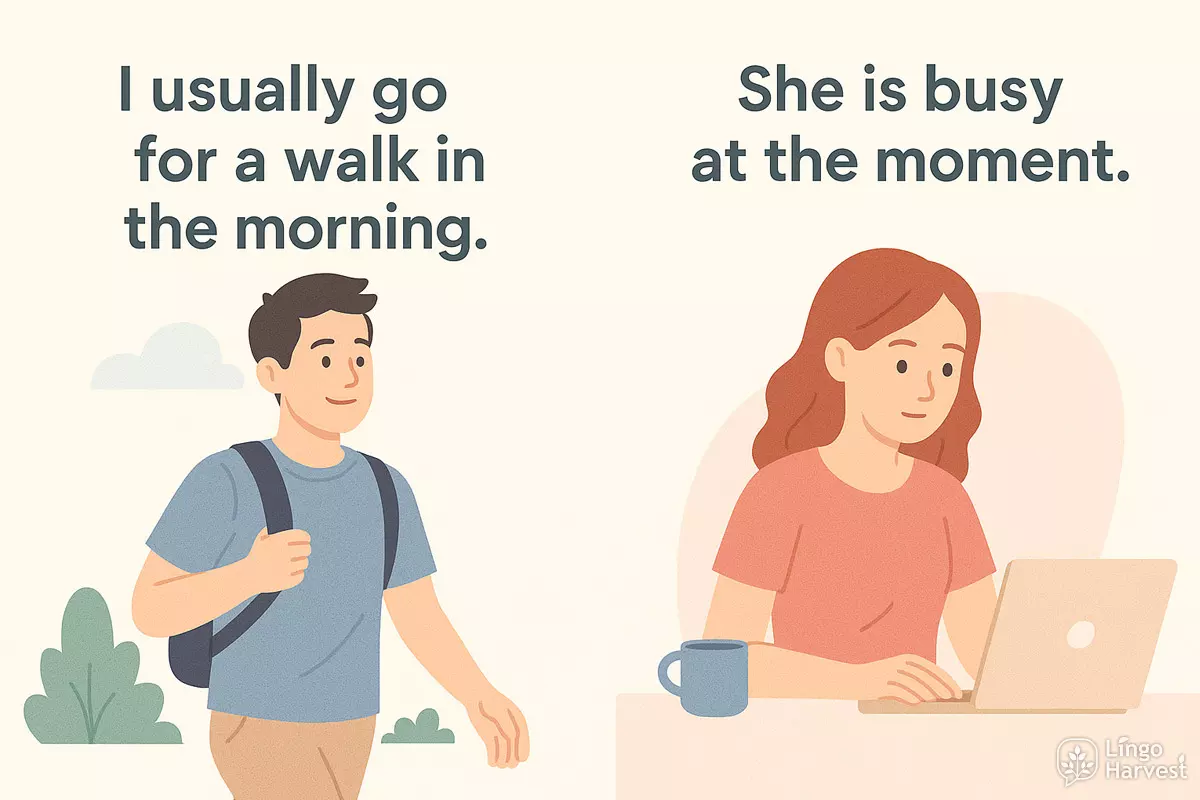
Certain expressions in English may seem to defy standard article rules. Here are some common phrases and their typical article usage:
- in the morning → I usually go for a walk in the morning.
- at the moment → She is busy at the moment.
- by car (zero article) → We traveled to the city by car.
- on the other hand → I like tea. On the other hand, I don’t drink coffee.
- in a hurry → He left the house in a hurry.
- make an effort → She made an effort to arrive on time.
- have lunch (zero article) → We usually have lunch at noon.
- go to the cinema → They go to the cinema every weekend.
- do the shopping → I need to do the shopping after work.
- take a seat → Please take a seat and wait here.
- play the piano → My sister plays the piano very well.
- catch the bus → I have to run to catch the bus.
- on holiday (zero article) → They are on holiday in Spain.
- have a cold → I can’t come today because I have a cold.
- in the long run → In the long run, this decision will help us.
- under pressure (zero article) → He works well under pressure.
- in the meantime → The report is ready. In the meantime, you can rest.
- as a rule → As a rule, I wake up early.
Comparison of article use: Abstract vs. specific
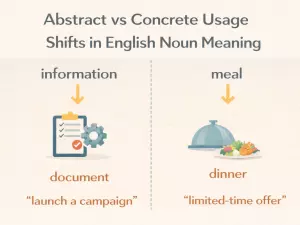
The distinction between abstract and specific meanings often determines whether an article is needed. Review the comparison below:
| Abstract/General | Specific/Concrete |
|---|---|
| Patience is important. | The patience you showed was impressive. |
| Music soothes the soul. | The music at the party was too loud. |
| Success requires effort. | The success of the project surprised everyone. |
| Coffee can keep you awake. | The coffee on the table is cold. |
| Information spreads quickly online. | The information in this report is confidential. |
Understanding when to use, omit, or select a particular article comes from exposure and practice with real-world contexts. Keep experimenting with sentences where article choice is not immediately obvious to refine your intuition.
Advanced quantifier selection in real contexts
Choosing the right quantifiers in nuanced situations requires awareness of both grammar and subtle meaning. Context—such as formality, specificity, and the noun type—often dictates which quantifier best fits. For example, "many" and "much" are both correct, but their use depends on whether the noun is countable or uncountable, and on the speaker’s intent.
Factors influencing quantifier choice
- Countability: Whether the noun takes a singular/plural or mass form.
- Formality: Some quantifiers, such as "a great deal of," sound more formal than "lots of."
- Emphasis: "A considerable number of" adds weight compared to "some."
- Contextual clarity: Avoiding ambiguity is crucial, especially in academic or technical writing.
- Negation: Negative contexts may require "few" or "little" instead of "some" or "any."
Common advanced quantifiers and their contexts
| Quantifier | Typical Context/Example |
|---|---|
| Numerous | Formal, positive: "Numerous studies confirm the results." |
| A handful of | Informal, small number: "Only a handful of people attended." |
| A great deal of | Formal, uncountable nouns: "A great deal of information was lost." |
| Scarcely any | Emphasizing rarity: "There was scarcely any food left." |
| Plenty of | Informal, abundance: "There are plenty of options available." |
| Scores of | Large, often approximate quantity: "Scores of complaints were received." |
| Each and every | Emphasis on inclusivity: "Each and every student must participate." |
| Not a single | Absolute negation: "Not a single error was found." |
| Any number of | Indefinite, often large: "Any number of factors could influence the outcome." |
| Vast majority/minority | Statistical or factual emphasis: "The vast majority agreed." |
| Much less | Contrastive, negative: "He can’t run a mile, much less a marathon." |
| All but | Near-totality except one/few: "All but one of the machines failed." |
Strategies for accurate quantifier use
- Identify if the noun is countable or uncountable before choosing a quantifier.
- Consider the tone—formal writing usually avoids colloquial quantifiers.
- In negative contexts, use "few," "little," or "hardly any" for precision.
- For emphasis, combine quantifiers ("almost every," "far too many").
- When in doubt, rephrase to avoid ambiguity or unintended emphasis.
Mastery of quantifier selection enhances both clarity and subtlety in complex sentences. Practicing with varied examples and analyzing native usage will help refine your understanding and improve your writing or speaking in advanced contexts.
Determiners in long noun chains and academic phrasing
When academic texts include lengthy noun chains, choosing and placing determiners becomes a subtle challenge. In formal writing, especially in research articles and technical papers, noun phrases often stack several nouns together, sometimes with adjectives and modifiers. The accurate use of determiners helps clarify which elements belong together and ensures the reader can parse the intended meaning.
Common patterns in extended noun phrases
Writers frequently encounter situations where multiple nouns compete for a determiner. Consider the difference between “the data analysis method” and “a data analysis method.” The first implies a specific, perhaps previously mentioned, method, while the second introduces one among many possibilities. In complex chains, the determiner typically attaches to the first noun, but context and meaning can shift depending on placement and omission.
- the government climate change policy
- a student feedback survey result
- this urban population growth trend
- each experimental control group outcome
- some recent social media usage data
- no significant gender wage gap evidence
- every language acquisition strategy report
- these teacher professional development programs
- an alternative energy investment forecast
- any available funding allocation option
- those historical climate anomaly records
- another cross-cultural communication study
Typical academic phrasing: Determiner placement
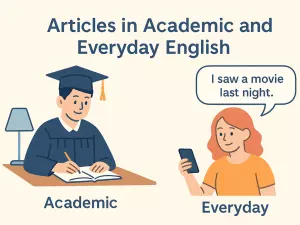
Academic English tends to avoid ambiguity by anchoring the determiner at the start of the noun chain. While spoken or informal English may drop articles or use them less precisely, published research requires consistency. The following table contrasts correct and problematic placements within complex noun clusters.
| Correct Usage | Problematic Usage |
|---|---|
| the university policy debate outcome | university the policy debate outcome |
| an economic growth forecast model | economic growth a forecast model |
| those teacher evaluation survey results | teacher those evaluation survey results |
| each peer review process step | peer each review process step |
Key points for clarity and precision
- Place the determiner before the entire noun chain, not in the middle.
- Use singular or plural forms as required by the head noun, not by modifiers.
- Be consistent with determiner choice throughout your academic work.
- Review long noun chains for ambiguity or misreading; rephrase if necessary.
- In highly technical writing, consider breaking up very long chains for readability.
Mastering the use of determiners within extended noun constructions is essential for clear, professional academic prose. Careful attention to placement and agreement helps ensure that complex information is delivered with maximum precision.
Correcting ambiguity caused by determiners
Ambiguous sentences often arise when determiners are used incorrectly or imprecisely, especially in complex contexts. The meaning of a phrase can shift dramatically depending on which determiner is chosen, or where it is placed. To clarify meaning, writers and speakers must pay close attention to both the type and position of these words.
Common Sources of Ambiguity
- Using "some" vs. "any" in negative or interrogative sentences
- Placing "all" or "each" before ambiguous nouns
- Mixing definite ("the") and indefinite ("a/an") articles in the same context
- Overusing quantifiers like "few", "many", or "several" without clear reference
- Omitting a determiner where one is required for clarity
- Using "every" with plural nouns incorrectly
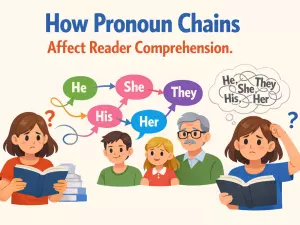
- Employing possessive determiners ("my", "their") with unclear antecedents
- Switching between "these/those" and "this/that" inconsistently
- Relying on "either" or "neither" without specifying the options
- Mistaking "much" vs. "many" in countable vs. uncountable contexts
- Using "another" or "other" in vague or overlapping situations
- Combining multiple determiners (e.g., "the my book")
Strategies for Disambiguation
To resolve potential confusion, consider these tactics:
- Restate the noun: Repeat or clarify the noun after the determiner to specify the reference.
- Choose more specific determiners: Opt for "each student" instead of "all students" if you mean individuals.
- Rephrase the sentence: Adjust the structure to remove uncertainty (e.g., "Some of the apples are rotten" vs. "Some apples are rotten").
- Use additional modifiers: Add adjectives or relative clauses to narrow the meaning ("the old book on the shelf").
- Check for agreement: Make sure determiners match the number and countability of nouns.
Illustrative Examples
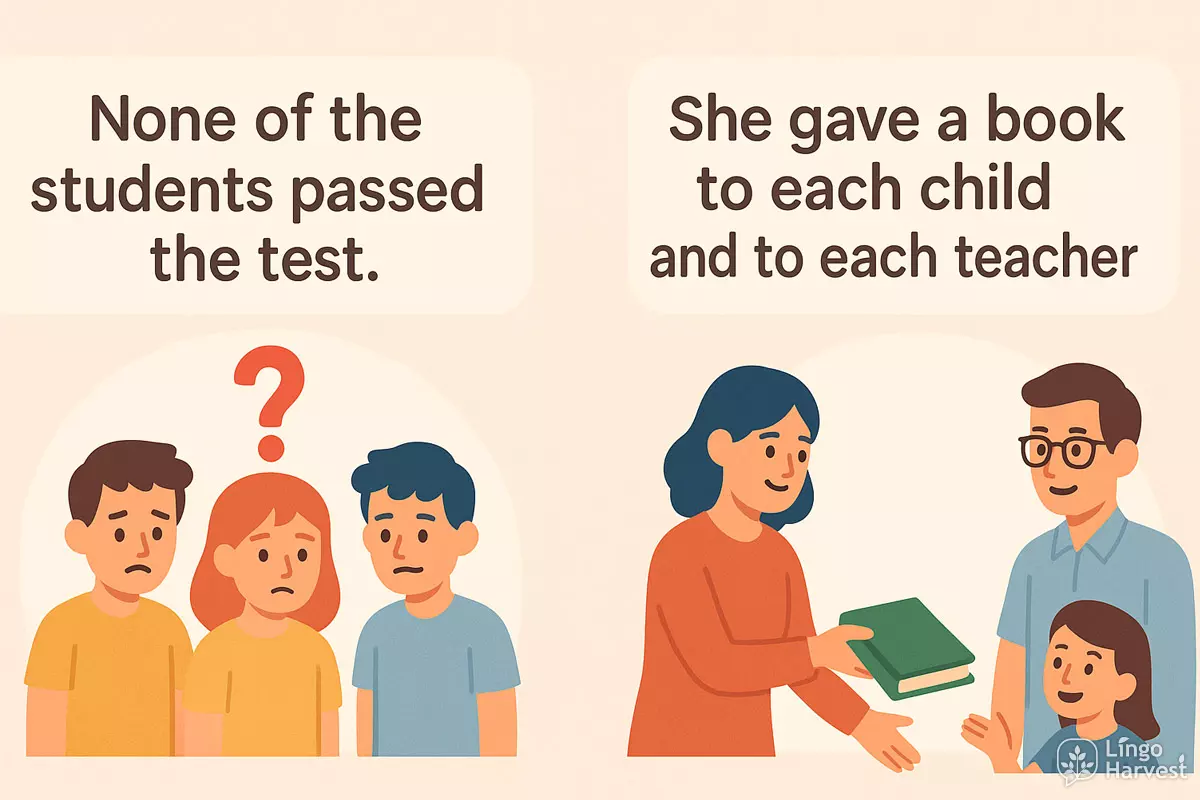
The table below demonstrates how subtle changes in determiners can cause or resolve ambiguity in complex sentences:
| Ambiguous Sentence | Clarified Version |
|---|---|
| All students didn't pass the test. | None of the students passed the test. ✅ Not all students passed the test. ❌ |
| She gave a book to each child and teacher. | She gave a book to each child and to each teacher. ✅ She gave a book to each child and teacher together. ❌ |
| He doesn't have any friends who live nearby. | No friends of his live nearby. ✅ He has friends, but none live nearby. ✅ |
| They want another car or house. | They want another car or another house. ✅ They want another car, or they want a house. ✅ |
Understanding how determiners interact with context is crucial for advanced mastery. By carefully reviewing their use and revising sentences for precision, ambiguity can be minimized or eliminated, resulting in clearer and more effective communication.
Distinguishing subtle differences between similar forms
Grasping the nuances between closely related determiners is an essential skill for advanced learners, especially when faced with layered or ambiguous sentences. Context, register, and even slight shifts in meaning often hinge on the specific determiner chosen. For example, "few" and "a few" may look similar, but their implications for quantity and tone differ significantly.
Commonly Confused Determiners
Many advanced English users encounter difficulty when distinguishing between determiners with overlapping meanings. Consider these pairs and groups, each with subtle distinctions:
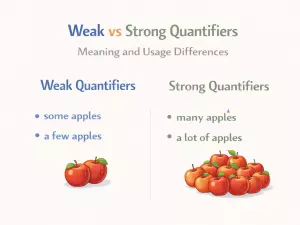
- Few vs a few (count nouns): "Few people attended" (almost none) vs "A few people attended" (some, but not many).
- Little vs a little (uncountable nouns): "Little time remains" (hardly any) vs "A little time remains" (some time is left).
- Each vs every: "Each student received a book" (focus on individuals) vs "Every student received a book" (focus on the group as a whole).
- Some vs any: "Some people know" (positive/affirmative) vs "Do you have any questions?" (used in questions/negatives).
- Much vs many: "Much information" (uncountable) vs "Many details" (countable).
- Another vs other vs the other: "Another chair" (an additional one), "other chairs" (different ones), "the other chair" (the remaining one).
- All vs whole: "All the cake" (entire quantity, possibly multiple cakes) vs "The whole cake" (one complete cake).
- Either vs neither: "You can take either road" (one or the other) vs "Neither road is open" (not one nor the other).
- Both vs each: "Both students passed" (together) vs "Each student passed" (individually).
- Somebody vs anybody: "Somebody called you" (unknown, but definite) vs "Did anybody call?" (open, not definite).
Table: Distinguishing Similar Determiners in Context
| Determiner | Typical Usage | Meaning/Implication |
|---|---|---|
| Few / A few | Few people understood. / A few people understood. | Few: almost none; A few: some, positive nuance |
| Little / A little | Little hope remains. / A little hope remains. | Little: almost none; A little: some, enough |
| Each / Every | Each child got a balloon. / Every child got a balloon. | Each: individual focus; Every: collective focus |
| All / Whole | All the group left. / The whole group left. | All: entirety, possibly several; Whole: single unit, undivided |
| Another / The other / Other | Another cookie; the other cookie; other cookies | Another: one more; The other: second of two; Other: remaining ones |
| Some / Any | Some advice is helpful. / Do you have any advice? | Some: affirmative, unspecified; Any: questions/negatives, open |
Tips for Advanced Distinction
Pay attention to the overall sentence meaning and the noun type (countable/uncountable). Context is often the deciding factor, especially in complex or formal writing. If in doubt, rephrase the sentence to check if the nuance changes. Exposure to authentic texts and focused practice will reinforce these distinctions over time.
Practical applications in professional writing
In advanced professional contexts, precise use of determiners can shape clarity, formality, and even persuasiveness. Whether drafting contracts, composing reports, or preparing academic manuscripts, understanding how determiners function in complex structures helps writers avoid ambiguity and maintain a polished tone.
Enhancing clarity and specificity
Writers often face situations where ambiguity in reference can lead to misunderstandings. Correct deployment of determiners such as "each," "every," "some," and "any" clarifies scope and intent. For instance, legal documents rely on "the" versus "a" to distinguish unique entities from general categories, while technical writing uses quantifiers to specify conditions or results.
- Each participant must sign the waiver. (Individual actions emphasized)
- Every report submitted will be reviewed. (Comprehensive inclusion)
- Some data were inconclusive. (Partial subset)
- Any errors found should be reported. (No restrictions)
- The committee approved the measure. (Specific group)
- A solution was proposed. (Non-specified option)
- Many studies support this finding. (Large, indefinite number)
- Few objections were raised. (Small quantity, negative emphasis)
- Several alternatives exist. (More than two, unspecified number)
- No further action is required. (Zero quantity, absolute)
- Little evidence supports the claim. (Small amount, uncountable)
- Much research remains. (Large amount, uncountable)
- All employees must comply. (Entire group, inclusive)
- Another example illustrates the point. (Additional, one more)
- Neither proposal was accepted. (Not one or the other)
Comparing determiner choices in formal contexts
Choosing the appropriate determiner is critical in business communication, academic writing, and official correspondence. Subtle differences can affect meaning and tone, especially in complex noun phrases or when referencing previously mentioned entities.
| Context | Determiner Choice & Effect |
|---|---|
| Contract language | The supplier shall deliver goods by June 1. Specifies a particular, previously identified supplier. |
| Academic writing | Any deviation from the protocol was recorded. All possible deviations included. |
| Business report | Several factors contributed to the outcome. Indicates more than two, but not all. |
| Policy memo | No exceptions will be granted. Absolute, without exception. |
Common pitfalls and solutions
Even experienced writers can misuse determiners in dense or technical documents. Overuse of "the" can imply unintended specificity; omitting "a" or "an" may render statements vague. Proofreading for determiner accuracy ensures that arguments remain logically sound and that meaning is not lost in translation.
- Check for repeated or missing determiners in long sentences.
- Ensure parallel structure when listing items with shared determiners.
- Match determiners to countable or uncountable nouns appropriately.
- Clarify whether reference is to a specific or general entity.
Mastery of determiners in nuanced contexts elevates professional writing, supporting both precision and readability across a range of fields.
Practice: full test combining multiple determiner skills
This section challenges your ability to select and use determiners in more demanding contexts. You'll encounter sentences that require a nuanced understanding of quantity, specificity, possessives, and complex noun phrases. Carefully read each prompt and decide which determiner or combination fits best. Some questions test subtle distinctions, such as the difference between "few" and "a few" or the use of "whose" in embedded clauses.
Comprehensive Determiner Quiz
-
Choose the correct determiner(s):
_____ information in this report is outdated, but _____ of it remains highly relevant. -
Fill in the blank:
_____ students who submitted their essays early received feedback before the deadline. -
Select the appropriate option:
There are _____ apples left in the basket; would you like _____? -
Correct the error in determiner usage:
She didn’t bring any umbrella, so she got wet in a rain. -
Choose the best phrase:
The author, _____ books have won several awards, will be speaking tonight. -
Insert the most suitable determiners:
I have read _____ of these articles, but not _____ of them. -
Pick the right determiner:
_____ advice you gave me was extremely helpful. -
Fill in the blank:
There isn’t _____ time left to finish the project, so let’s focus. -
Identify the correct phrase:
Is there _____ reason to doubt his explanation? -
Choose all correct determiners for the sentence:
_____ participants completed the survey, but only _____ provided detailed comments.
Common Determiner Confusions: Quick Reference
Some determiners are often confused, especially in advanced contexts. The table below summarizes key contrasts and examples.
| Determiner Pair | Example & Contrast |
|---|---|
| Few / A few | "Few people attended" (almost none) vs. "A few people attended" (some did) |
| Much / Many | "Much information" (uncountable) vs. "Many facts" (countable) |
| Each / Every | "Each student received a prize" (individual focus) vs. "Every student received a prize" (group focus) |
| Some / Any | "Do you have any questions?" (in questions/negatives) vs. "I have some questions." (affirmative) |
| Whose / Who's | "Whose book is this?" (possessive) vs. "Who's coming to dinner?" (who is) |
Useful Patterns: Complex Determiner Phrases
- All of the students
- None of my friends
- Each of those options
- Some of what you said
- Most of the time
- Several of these issues
- Much of the evidence
- Neither of them
- Whose responsibility is this?
- Every one of the answers
- Both of the reports
- Any of your suggestions
- Little of the water remained
- Which of the candidates?
- Another of her ideas
- Either approach is valid
Show answers
- Some information in this report is outdated, but much of it remains highly relevant.
- The students who submitted their essays early received feedback before the deadline.
- There are a few apples left in the basket; would you like some?
- Corrected: She didn’t bring an umbrella, so she got wet in the rain.
- The author, whose books have won several awards, will be speaking tonight.
- I have read some of these articles, but not all of them.
- The advice you gave me was extremely helpful.
- There isn’t much time left to finish the project, so let’s focus.
- Is there any reason to doubt his explanation?
- Many participants completed the survey, but only a few provided detailed comments.