Nouns as Sentence Subjects: Clear Form and Position Rules

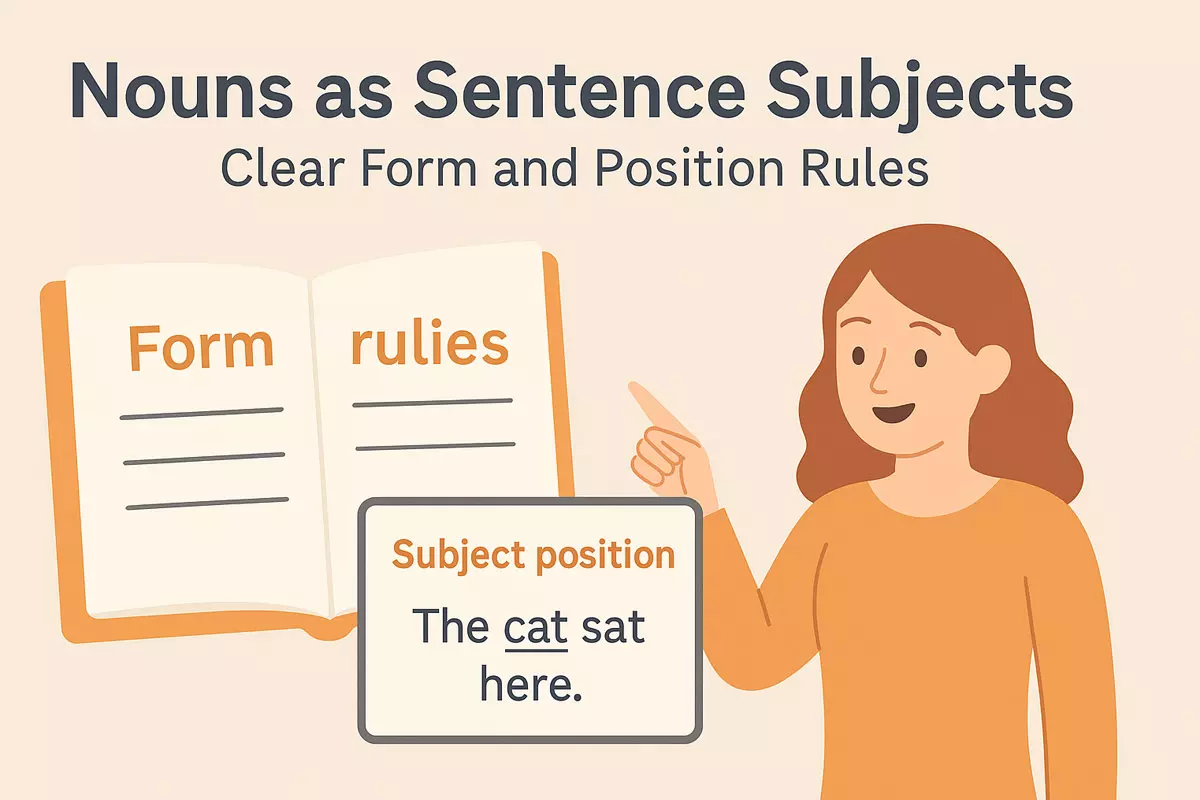 Here we what sentence subjects are in English, how nouns and pronouns act as subjects, typical word order, and the difference between simple and compound subjects. It also addresses common mistakes and provides practice for writing clear noun subjects.
- What a sentence subject is in English
- How nouns function as subjects in basic clauses
- Word order and position of noun subjects in English
- Simple vs compound noun subjects with examples
- Using pronouns vs full noun phrases as subjects
- Common mistakes with missing or unclear subjects
- Practice: rewrite sentences with clear noun subjects
Understanding how naming words function at the beginning of statements is essential for building clear and effective sentences. Grasping their typical placement and recognizing the forms they take allows you to construct writing that is both precise and engaging. When you identify and correctly use naming words, such as nouns and pronouns, you lay a strong foundation for your sentences. This awareness not only improves the clarity of your communication but also enhances the overall flow and impact of your writing, making your ideas easier for readers to follow and understand.
What a sentence subject is in English
In English grammar, the subject is the main actor in a sentence—the person, thing, or idea that performs the action or is described. It usually answers the question “who?” or “what?” before the verb. Recognizing the subject is essential for building clear and correct sentences.
The subject is almost always a noun, noun phrase, or pronoun. Its position is typically at the beginning of the sentence, directly before the verb in standard statements. However, certain sentence types, like questions or imperatives, may move or omit it.
Key Functions of the Subject
- Performs the verb’s action: Sarah runs every morning.
- Receives description or identification: That building is historic.
- Indicates who/what the sentence is аbout: The weather changed suddenly.
Common Forms Subjects Take
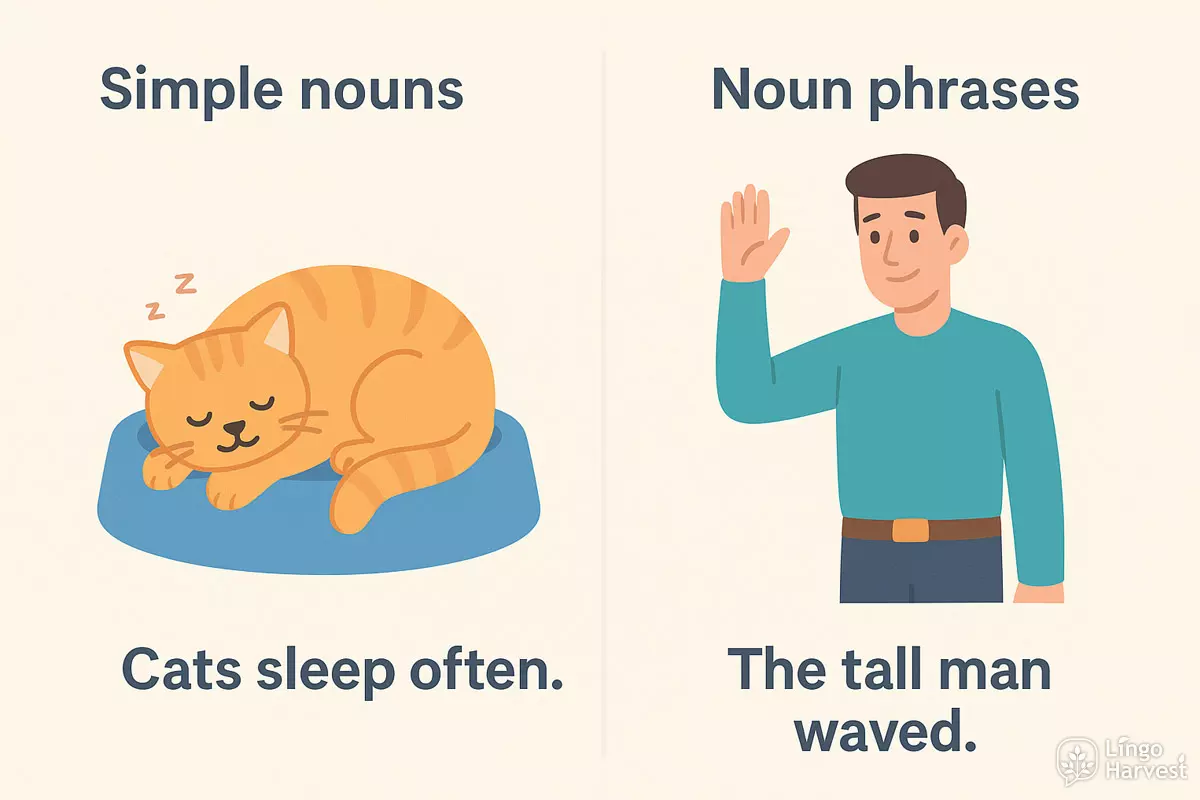
- Simple nouns: Cats sleep often.
- Noun phrases: The tall man waved.
- Pronouns: She laughed.
- Gerunds: Reading helps you learn.
- Infinitives (sometimes): To travel is exciting.
- Compound subjects: My friend and I went hiking.
- Names and titles: Dr. Smith will speak.
- Indefinite pronouns: Everyone arrived early.
- Clauses: What you said surprised me.
- Collective nouns: The team wins often.
Position and Agreement
In most English sentences, the subject comes first, followed by the verb. It must also agree with the verb in number (singular/plural). Below is a comparison of subject-verb agreement with different types of subjects:
| Subject Example | Matching Verb Form |
|---|---|
| The dog | barks |
| Children | play |
| My mother and father | are cooking |
| She | is reading |
| Swimming | is fun |
| What you said | makes sense |
Quick Tips for Identifying the Subject
- Look for the word or phrase that comes before the main verb.
- Ask “Who or what is doing the action?”
- Remember, commands often have an implied subject (“you”).
- In questions, the subject may appear after the verb or auxiliary: Is he coming?
Understanding the role and placement of the subject helps you form sentences that are both clear and grammatically accurate.
How nouns function as subjects in basic clauses
Nouns often play the starring role in simple sentences, acting as the "doer" or main topic. In most English sentences, the subject comes before the verb and tells us who or what performs the action or is being described. This placement helps readers and listeners quickly identify the focus of the statement.
Identifying the Subject Noun
The subject is usually a noun or a noun phrase. In statements, you’ll commonly find it at the start, just before the verb. For clarity, here are some typical patterns you might encounter:
- Dogs bark.
- The teacher explains.
- My neighbor's car is noisy.
- Water boils at 100°C.
- Books inspire imagination.
- Patience pays off.
- Children learn quickly.
- Happiness matters.
- The old oak tree stands tall.
- Time flies.
- Her advice helped me.
- Music soothes stress.
- Clouds gather.
- The museum closes at six.
- Honesty builds trust.
- Summer brings heat.
- Success requires effort.
- My friend travels often.
Forms: Single Words and Phrases
A subject can be a single word (like cats) or a longer noun phrase (like the small brown cat on the sofa). Both serve the same function, but a phrase can add detail or specificity.
Position Rules for Noun Subjects
In English, the subject nearly always comes before the verb in a statement. Questions and commands may move or omit the subject, but in basic clauses, this order is standard. Here’s a comparison of common sentence structures:
| Sentence Pattern | Example |
|---|---|
| Simple Subject + Verb | Cats sleep. |
| Noun Phrase + Verb | The big dog barked. |
| Compound Subject + Verb | Jack and Jill went up the hill. |
| Subject + Verb + Object | Maria reads books. |
| Subject + Linking Verb + Complement | The sky is blue. |
Key Points to Remember
- The subject usually comes first in English statements.
- It answers the question "who?" or "what?" before the verb.
- Subjects can be simple nouns, compound nouns, or detailed phrases.
- Word order helps clarify meaning and avoid confusion.
Understanding the typical placement and form of noun subjects makes it easier to build clear, correct sentences. By recognizing common patterns and positions, you can identify the core topic of any basic clause.
Word order and position of noun subjects in English
In English, the typical structure for simple sentences places the noun subject before the verb. This subject-verb-object (SVO) pattern is fundamental for clarity and is one of the first rules learners encounter. For example, in "The dog barks," "the dog" is the noun subject and comes directly before the verb "barks." This ordering helps listeners and readers quickly identify who or what performs the action in a sentence.
Standard patterns for noun subject placement
Noun subjects most often appear at the very start of declarative sentences. This placement signals the main actor or topic. Here are some common examples:
- Ali reads every morning.
- Books inspire creativity.
- The teacher explained the lesson.
- Children play in the park.
- My neighbor travels often.
- Rain falls softly at night.
- Computers process information quickly.
- Elephants live in herds.
- Sarah likes chocolate.
- The sun sets in the west.
Notice that in each case, the noun or noun phrase comes first, establishing the subject of the sentence.
Variations and exceptions
While the standard order is subject-verb-object, English does allow for variations. Questions, for example, often invert the position of the subject and verb:
- Does the cat sleep here?
- Are your friends coming?
In sentences with introductory adverbs or phrases, the subject still follows immediately after:
- Yesterday, the team won the match.
- In the morning, students arrive early.
Imperative sentences are an exception, as the subject ("you") is usually implied rather than stated.
Comparison: Affirmative, Negative, and Interrogative Sentences
Different sentence types affect where the subject appears. The following table compares the placement of noun subjects in three main English sentence forms:
| Sentence Type | Example (subject in bold) |
|---|---|
| Affirmative | Maria enjoys painting. |
| Negative | Maria does not enjoy painting. |
| Interrogative | Does Maria enjoy painting? |
| With Adverbial | Every evening, Maria enjoys painting. |
Key points to remember
- Noun subjects are usually the first element in simple English sentences.
- In questions, the subject may follow an auxiliary verb.
- Introductory phrases do not interrupt the close link between the subject and verb.
- Imperatives rarely state the subject explicitly.
- Clear subject placement is essential for understanding and natural sentence flow.
By following these patterns, you can ensure that your sentences are both correct and easily understood.
Simple vs compound noun subjects with examples
Understanding how noun subjects function in sentences helps clarify both structure and meaning. Noun subjects can be straightforward—consisting of a single word—or more complex, involving multiple nouns joined together. This distinction shapes how information is presented and how verbs agree within a sentence.
Simple noun subjects
A simple noun subject is a single noun or pronoun that performs the action or is described by the verb. These subjects are easy to identify because they stand alone without any conjunctions. Here are some clear examples:
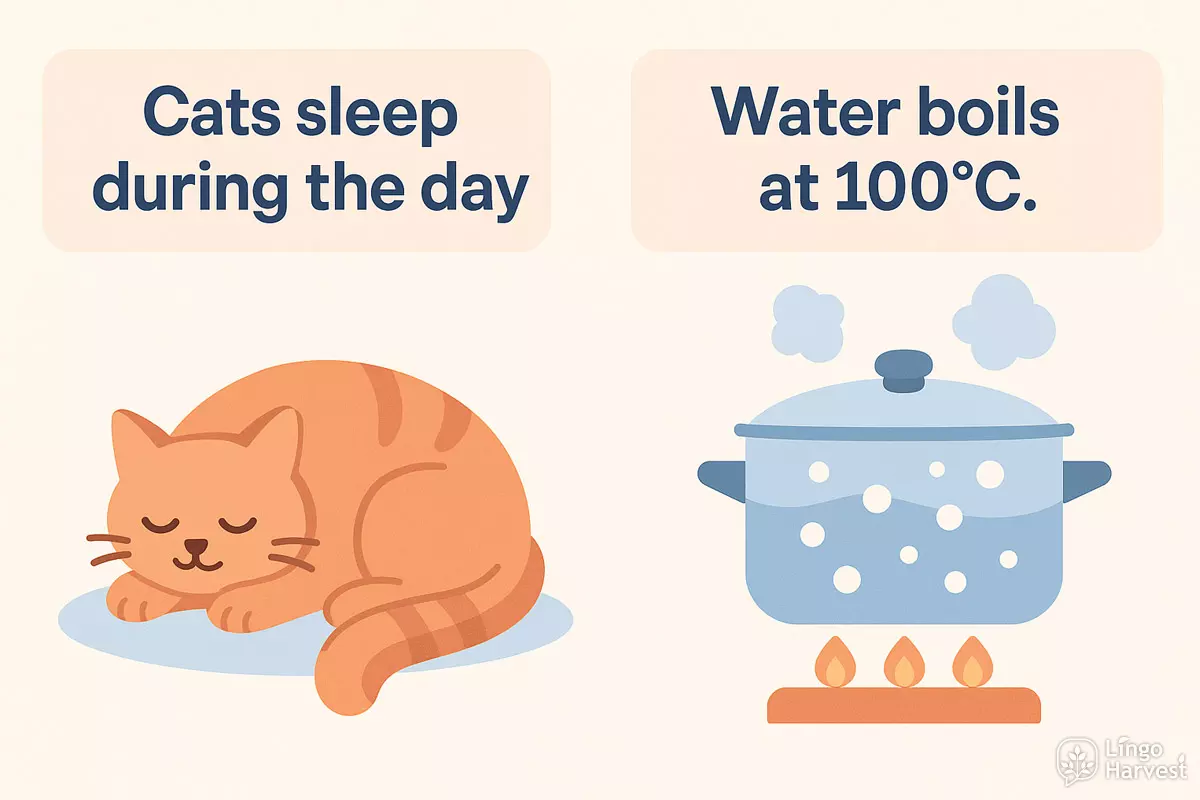
- Cats sleep during the day.
- Water boils at 100°C.
- She loves painting.
- Music inspires people.
- The dog barked loudly.
Notice that the subject is a single unit, even if it includes an article or adjective.
Compound noun subjects
A compound noun subject combines two or more nouns (or pronouns) with a conjunction, typically "and" or "or." This creates a subject that refers to multiple people, places, or things. Compound subjects often take plural verbs, but there are exceptions, especially with "or" or "nor." Examples include:
- Tom and Jerry are best friends.
- The teacher and the students went on a field trip.
- Books or magazines can be found on the table.
- Neither the cat nor the dog wants to go outside.
- My brother and I enjoy hiking.
Comparing simple and compound noun subjects
The following table highlights the structural differences and provides side-by-side examples for quick reference.
| Type of Subject | Example Sentence |
|---|---|
| Simple noun subject | The bird sings every morning. |
| Compound noun subject with "and" | Sam and Alex play chess together. |
| Compound noun subject with "or" | The spoon or the fork is missing. |
| Compound noun subject with "nor" | Neither rain nor snow stops the mail. |
Key points to remember
- Single-word subjects (simple) are direct and usually take singular verbs.
- Compound subjects joined by "and" generally require plural verbs.
- When joined by "or" or "nor," verb agreement depends on the noun closest to the verb.
- Compound structures allow for more nuanced or detailed subjects, especially in descriptive or complex sentences.
Grasping these differences makes it easier to construct clear, grammatically correct sentences in both writing and speech.
Using pronouns vs full noun phrases as subjects
Choosing between pronouns and longer noun phrases for the subject position in a sentence has a big impact on clarity, cohesion, and style. Pronouns (like “he,” “she,” “it,” “they”) are efficient and help avoid repetition, especially when the referent is already clear. On the other hand, full noun phrases (such as “the tall man in the red coat” or “those brightly colored birds”) provide more information and specificity, which is crucial for introducing new topics or when the reference might be ambiguous.
When to use pronouns as subjects
Pronouns are most effective when the subject has already been mentioned or is obvious from context. They keep sentences concise and prevent awkward repetition. Here are typical scenarios:
- Referring back to a previously mentioned noun: “Lucy baked a cake. She decorated it beautifully.”
- Maintaining flow in connected ideas: “The dogs barked. They woke up the neighbors.”
- In instructions or general statements: “If you finish early, let me know.”
When to use full noun phrases as subjects
Longer noun groups add precision and are needed when introducing new information or distinguishing among possible referents. Use them to:
- Introduce a new topic: “The ancient oak tree dominates the park.”
- Avoid ambiguity: “Both cats were hungry, but the black one ate first.”
- Provide context or description: “The woman with the blue umbrella waited at the corner.”
Comparing pronouns and full noun phrases in subject position
Sometimes, the choice between a short pronoun and a more descriptive noun phrase changes the emphasis or clarity of a sentence. Here’s a comparison of typical usage:
| Subject as Pronoun | Subject as Full Noun Phrase |
|---|---|
| She smiled warmly. | The teacher in the yellow dress smiled warmly. |
| They finished early. | The students in the front row finished early. |
| It was surprising. | The result of the experiment was surprising. |
| He called again. | Mr. Smith from the bank called again. |
| They ran away. | The stray dogs ran away. |
Tips for balancing clarity and cohesion
- Use a noun phrase when introducing a new subject or when several possible referents exist.
- Switch to a pronoun once the referent is clear and remains the topic.
- Alternate between pronouns and noun phrases to maintain both clarity and variety in your writing.
- If a sentence contains multiple subjects, make sure pronouns clearly refer to the intended noun.
Choosing between a pronoun and a full noun phrase for the subject is about more than just sentence length—it affects how readers follow your ideas and how much detail you convey. Select the form that fits your context and supports reader understanding.
Common mistakes with missing or unclear subjects
When the subject of a sentence is missing or ambiguous, readers can quickly become confused about who or what is performing the action. This issue often occurs in both spoken and written language, especially when writers assume the subject is obvious or rely too heavily on context. Failing to state the subject clearly can result in vague, incomplete, or misleading sentences.
Frequent errors in subject use
Writers and speakers sometimes make these typical mistakes:
- Omitting the subject entirely in declarative sentences (e.g., “Went to the store.”)
- Starting a sentence with “There is/are” without a clear noun following (e.g., “There is on the table.”)
- Using pronouns without clear antecedents (e.g., “They said it would rain.” Who are “they”?)
- Relying on context that isn’t actually shared by the audience
- Switching subjects mid-sentence without clear signals
- Using participial phrases with no explicit subject (e.g., “Running down the street, the birds chirped.”)
- Placing the subject too far from the verb, causing confusion
- Using passive voice without mentioning the agent (e.g., “The cake was eaten.” By whom?)
- Combining multiple clauses but omitting the subject in the second clause (e.g., “She picked up the phone and called, but didn’t answer.”)
- Using commands or instructions without specifying who should act (e.g., “Close the door.” in ambiguous contexts)
- Relying on implied subjects in formal writing
- Misplacing modifiers, making it unclear what the subject is
- Using “it” or “this” without clarifying what these pronouns refer to
- Making assumptions about the audience’s knowledge of the subject
- Starting sentences with gerunds without clarifying who is performing the action (e.g., “Swimming in the lake is fun.” – Who is swimming?)
How unclear subjects affect clarity
A sentence with an unclear or missing subject can lead to misunderstandings or force the reader to guess the intended meaning. This weakens the message and can make instructions, narratives, or arguments less effective.
Examples: Unclear vs. clear sentence subjects
| Unclear or Missing Subject | Clear Subject |
|---|---|
| Is almost finished. | The project is almost finished. |
| Left the keys on the desk. | Maria left the keys on the desk. |
| When running late, the bus can be missed. | When students are running late, they can miss the bus. |
| They said the policy will change. | The managers said the policy will change. |
| It is important to submit on time. | Employees must submit reports on time. |
| There are on the table. | Several books are on the table. |
| After reviewing the report, changes were made. | After reviewing the report, the committee made changes. |
| Didn’t answer the phone. | She didn’t answer the phone. |
| It was decided to postpone. | The board decided to postpone the meeting. |
| While baking, the timer rang. | While she was baking, the timer rang. |
Tips for avoiding unclear or missing subjects
- Always identify the main noun or pronoun performing the action.
- Check each sentence for a clear subject-verb relationship.
- Be explicit, especially when introducing new information.
- Avoid overusing “it,” “they,” or “this” without specifying what they refer to.
- Revise sentences where the subject might be ambiguous or missing.
Clear and well-placed subjects lead to more precise, effective communication and help readers grasp your intended meaning without confusion.
Practice: rewrite sentences with clear noun subjects
Clear noun subjects help readers immediately see who or what is performing the action. In practice, this means avoiding vague "it" or "there" openers and choosing precise, concrete nouns as the sentence's subject. Below, you'll find practical exercises to help strengthen your ability to recognize and revise sentences so that the subject is a clear noun.
Common Issues: Vague Subjects
Many sentences can be improved by replacing weak or unclear subjects with specific nouns. Consider these common problems:
- Starting sentences with "It is..." or "There are..."
- Using pronouns without clear antecedents
- Relying on verbs or adjectives as sentence openers
Exercise: Make the Subject Clear
Rewrite each sentence so that the subject is a specific noun. Aim for clarity and precision.
- It was decided that the meeting would be postponed.
- There are many problems with the new software.
- It seems that the temperature is rising.
- There was a loud noise in the hallway.
- It is important to follow instructions.
- There have been several changes to the schedule.
- It appears that a mistake was made.
- There is a chance of rain tomorrow.
- It is necessary to submit the form by Friday.
- There were several books on the table.
Show answers
- The committee decided to postpone the meeting.
- The new software has many problems.
- The temperature appears to be rising.
- A loud noise came from the hallway.
- Following instructions is important.
- The schedule has changed several times.
- Someone made a mistake.
- The forecast predicts rain tomorrow.
- Submission of the form is required by Friday.
- Several books lay on the table.
Identifying Clear Noun Subjects: Examples
Below is a comparison of sentences before and after revision, highlighting the shift to clear noun subjects.
| Original Sentence | Revised with Clear Noun Subject |
|---|---|
| It is believed that exercise improves health. | Researchers believe that exercise improves health. |
| There are many reasons for the delay. | Multiple factors caused the delay. |
| It was suggested to review the policy. | The manager suggested reviewing the policy. |
| There was excitement in the room. | The audience filled the room with excitement. |
| It has been shown that sleep affects memory. | Studies show that sleep affects memory. |
Tips for Strong Subject Choice
- Identify the main actor or topic in your sentence and use it as the subject.
- Replace "there is/are" and "it is/was" with a concrete noun whenever possible.
- Avoid starting sentences with vague references; be direct and specific.
- Check that every pronoun has a clear antecedent.
Practicing these techniques will help you write sentences that are direct, concise, and easier for your readers to follow.