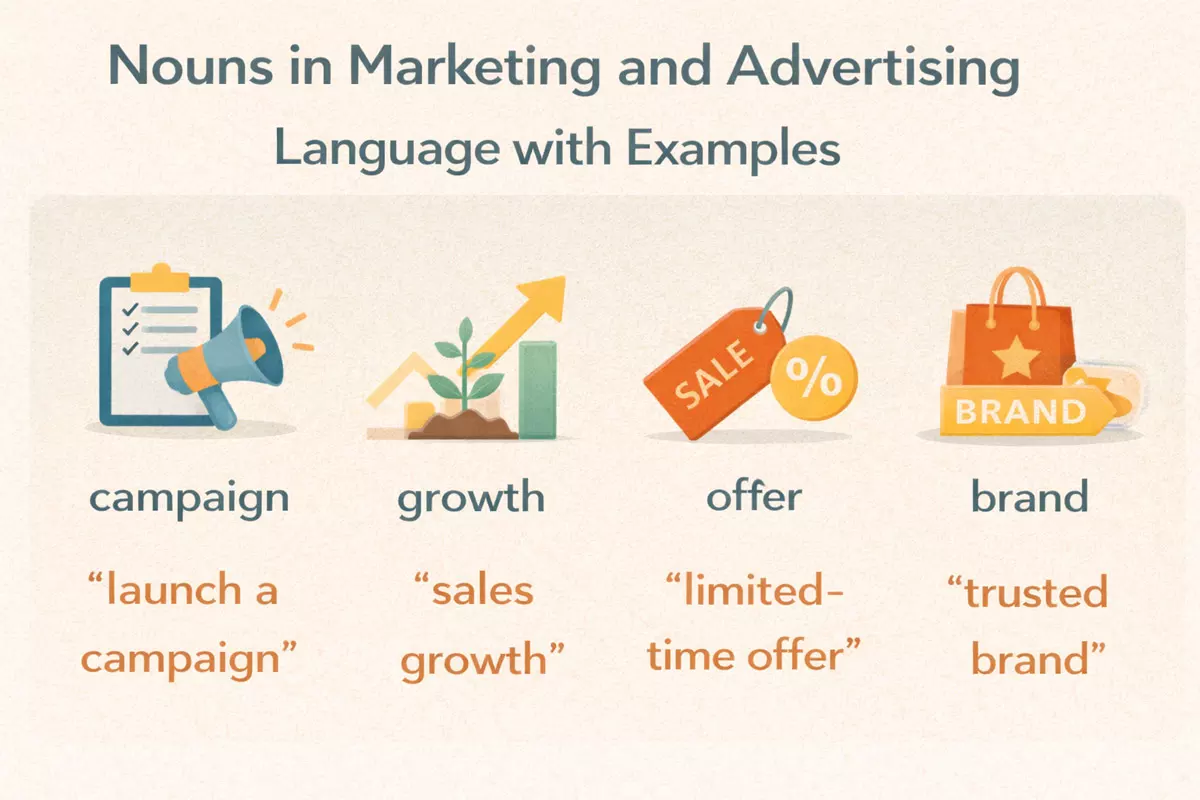
Nouns in Marketing and Advertising Language with Examples

 This article explains how nouns shape branding and persuasive messaging by exploring product, benefit, and value nouns, the effects of abstract versus concrete terms, emotive and audience-focused language, common mistakes, and ways to strengthen ad copy.
- Role of nouns in branding and persuasive messaging
- Product, benefit, and value nouns in ads
- Abstract vs concrete nouns in marketing impact
- Emotive nouns for attention and engagement
- Target-audience nouns and segmentation language
- Common mistakes with vague marketing nouns
- Practice: rewrite ad lines using stronger noun choices
Names of products, people, and places are essential in helping brands connect with their audiences, as they carry significant meaning and influence. Examining how these naming words are used in marketing and advertising shows their ability to shape messages, evoke emotions, and create lasting impressions. Effective use of names can make campaigns more memorable, enhance brand recognition, and even influence consumer decisions, highlighting the importance of thoughtful naming in a competitive marketplace.
Role of nouns in branding and persuasive messaging
Nouns are at the heart of how products, companies, and campaigns are identified and remembered. Unlike verbs or adjectives, naming with nouns gives a sense of substance and tangibility, which is crucial for establishing a clear identity in consumers’ minds. When a brand chooses a noun as its core identifier—think “Apple,” “Amazon,” or “Shell”—it taps into existing associations and emotions linked to that word, making the brand easier to recall and relate to.
Why nouns work in brand names and slogans
The power of nouns in commercial language lies in their ability to evoke images, ideas, and feelings with a single word. This is especially effective in crowded markets, where a memorable noun can make the difference between blending in and standing out. Nouns anchor the messaging, providing a concrete reference point for consumers.
- Memorability: Simple nouns are easier to remember than abstract phrases.
- Visual impact: Nouns often trigger mental images, reinforcing recognition.
- Emotional resonance: Certain nouns carry built-in cultural or emotional meaning.
- Versatility: Nouns can be used flexibly in taglines, campaigns, and product lines.
- Credibility: Naming with nouns can sound more established and trustworthy.
Persuasive messaging: How nouns drive action
Effective advertising often relies on carefully selected nouns to persuade. These words can represent desires, solutions, or aspirations, subtly guiding the audience to connect their needs with the product or service. Common patterns include:
- Using aspirational nouns: success, freedom, adventure, comfort
- Highlighting product categories: shampoo, sneakers, energy, insurance
- Leveraging exclusivity: members, insiders, VIPs, founders
- Emphasizing results: results, benefits, gains, savings
- Creating communities: club, team, family, network
Examples of nouns in branding and messaging
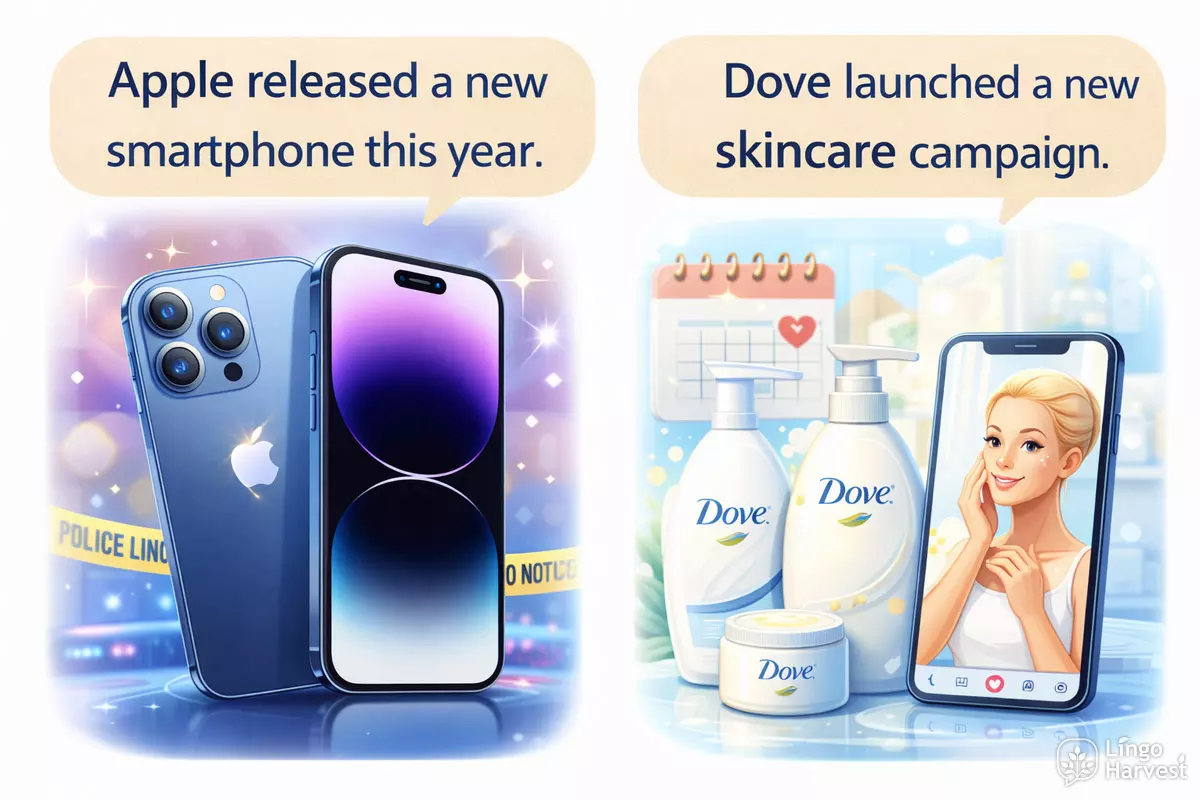
The following examples show how nouns are used to craft memorable and effective brand identities or campaign messages:
- Apple (technology brand) → Apple released a new smartphone this year.
- Dove (personal care) → Dove launched a new skincare campaign.
- Amazon (online marketplace) → Amazon expanded its delivery network.
- Shell (energy company) → Shell invested in renewable energy.
- Target (retail chain) → Target opened several new stores.
- Subway (fast food) → Subway introduced a new sandwich.
- Liberty (insurance) → Liberty offers flexible insurance plans.
- Oasis (beverage) → Oasis released a new fruit drink.
- Freedom (financial services, telecoms, more) → Freedom announced new mobile plans.
- Explorer (SUV model) → The Explorer is popular among families.
- Galaxy (smartphones, chocolate) → The Galaxy series features improved cameras.
- Mustang (automotive) → The Mustang remains a classic sports car.
- Champion (sportswear) → Champion unveiled a new athletic collection.
- Everest (adventure gear, bottled water) → Everest equipment is designed for extreme conditions.
- Vision (optics, innovation messaging) → Vision drives the company’s long-term strategy.
- Edge (electronics, finance, telecoms) → Edge technology improves processing speed.
- Miracle (skincare line) → Miracle products target sensitive skin.
- Pulse (fitness, media) → Pulse tracks daily activity levels.
- Nest (home products) → Nest devices help manage home energy use.
- Discovery (TV, travel, education) → Discovery broadcasts educational documentaries.
Comparing noun-based and non-noun-based branding
| Branding with Nouns | Branding without Nouns |
|---|---|
| Apple, Shell, Target, Oasis | Think Different, Just Do It, Because You’re Worth It |
| Concrete identity, easy recall ✅ | Abstract, often requires more explanation ❌ |
| Often used for company or product names | Common in slogans or campaign messages |
| Links directly to imagery or emotion | Relies more on context and repetition |
In summary, nouns provide the backbone for strong branding and compelling messaging. Their ability to encapsulate meaning, evoke imagery, and establish identity makes them indispensable in the language of marketing and advertising.
Product, benefit, and value nouns in ads
In advertising, nouns do a lot of heavy lifting. Marketers often choose words that directly name what’s being offered, highlight the positive results, or emphasize what the audience will gain. These nouns are essential for clarity and persuasion, helping potential customers quickly understand both what’s for sale and why it matters.
How marketers use different noun types
Product nouns refer to the actual item or service, such as “laptop,” “subscription,” or “membership.” Benefit nouns point to the advantages, like “comfort,” “protection,” or “speed.” Value nouns capture the more abstract qualities or promises, such as “quality,” “freedom,” or “innovation.” It’s common to see these words paired or stacked in ad headlines and taglines.
Typical examples in advertising language
- Performance → The new model delivers improved performance.
- Reliability → Reliability is a key factor for long-term use.
- Convenience → Online booking adds convenience for customers.
- Durability → The durability of the material ensures a long lifespan.
- Savings → Customers enjoy significant savings with this plan.
- Coverage → The policy provides wide coverage.
- Support → Technical support is available 24/7.
- Guarantee → The product comes with a money-back guarantee.
- Solution → This service offers a practical solution.
- Efficiency → Energy efficiency reduces operating costs.
- Results → The results exceeded expectations.
- Security → Data security is a top priority.
- Comfort → The design improves comfort during long use.
- Access → Users have easy access to information.
- Innovation → Innovation drives the company’s growth.
- Choice → Customers have a wide choice of options.
- Value → The product offers excellent value for money.
- Experience → The experience was smooth and enjoyable.
These words are chosen for their ability to instantly communicate purpose or appeal. For example, “guarantee” promises reassurance, while “innovation” suggests something new and exciting.
Comparing product, benefit, and value nouns
| Type | Example Nouns |
|---|---|
| Product | Device, plan, system, kit, software |
| Benefit | Protection, savings, comfort, speed, support |
| Value | Quality, trust, innovation, freedom, reliability |
Why these nouns matter
Careful noun selection helps ads cut through noise. Words like “solution” and “savings” quickly tell the reader what they can expect, while value terms like “freedom” add emotional appeal. This strategy makes the message more memorable and actionable, increasing the effectiveness of the campaign.
Abstract vs concrete nouns in marketing impact
Choosing between abstract and concrete nouns can shape how a marketing message is received. Concrete nouns—words for tangible things like “phone”, “sneakers”, or “coffee”—help audiences picture a product clearly and create a sensory connection. Abstract nouns, such as “freedom”, “innovation”, or “comfort”, evoke emotions and concepts that may appeal to deeper motivations but can be less visually vivid.
Concrete nouns: Building trust and clarity
When marketers use specific, tangible nouns, they make products easy to understand. For example, “leather wallet”, “organic apples”, or “mountain views” give clear mental images. This approach reduces ambiguity and builds trust, especially in ads that focus on product features or benefits.
- Table → The table is covered with papers.
- Headphones → I forgot my headphones at home.
- Backpack → Her backpack is packed with books.
- Notebook → He wrote the idea in his notebook.
- Chair → Please put the chair back under the desk.
- Watch → My watch stopped working this morning.
- Candle → She lit a candle during the power outage.
- Car → His car is parked outside.
- Jacket → Bring a jacket because it’s cold outside.
- Sandwich → I bought a sandwich for lunch.
Abstract nouns: Inspiring emotion and aspiration
Abstract nouns name ideas or feelings rather than things you can touch. Marketers use them to inspire, motivate, or create a sense of belonging. Examples include “adventure”, “success”, “wellness”, or “security”. These words are powerful in branding and slogans, as they tap into what people desire or value.
- Happiness → Happiness comes from feeling valued and supported.
- Quality → The quality of the product exceeded expectations.
- Friendship → Their friendship has lasted for many years.
- Freedom → Freedom of choice is important in a democracy.
- Innovation → Innovation drives success in competitive markets.
- Joy → She felt great joy when she heard the news.
- Performance → His performance improved after training.
- Trust → Trust is essential in any partnership.
- Progress → The project shows steady progress.
- Peace → The agreement helped restore peace in the region.
Comparing effects in advertising
Both types of nouns play essential roles, but their impact differs depending on the campaign goal. Here’s a side-by-side look at how they function in marketing language:
| Concrete Nouns | Abstract Nouns |
|---|---|
| Describe physical items, places, or people ✅ Easy to visualize ✅ Clarifies what’s offered |
Refer to ideas, qualities, or experiences ✅ Evoke emotion ✅ Support brand values |
| Example: “Sofa”, “Camera”, “Bicycle” | Example: “Comfort”, “Adventure”, “Freedom” |
| Best for product descriptions, comparisons | Best for slogans, mission statements, campaigns |
| Drives purchase decisions with clarity | Drives engagement through aspiration |
Blending both abstract and concrete nouns can create a well-rounded message—grounding the audience in what’s real, while also inviting them to imagine possibilities. Effective campaigns often move between the two, highlighting a product’s features and the feelings it promises.
Emotive nouns for attention and engagement
Marketers often rely on emotionally charged nouns to spark curiosity, trust, or desire in their audience. These words do more than simply name things—they evoke feelings, memories, and aspirations. By selecting nouns with strong emotional associations, ads can forge instant connections and make messages more memorable.
How emotive nouns influence perception
Choosing the right noun can shape the way a product or message is received. For example, referring to a car as a "beast" stirs excitement and power, while calling it a "companion" appeals to loyalty and warmth. The emotional undertones of such words help brands stand out and foster engagement.
Common emotive nouns in advertising
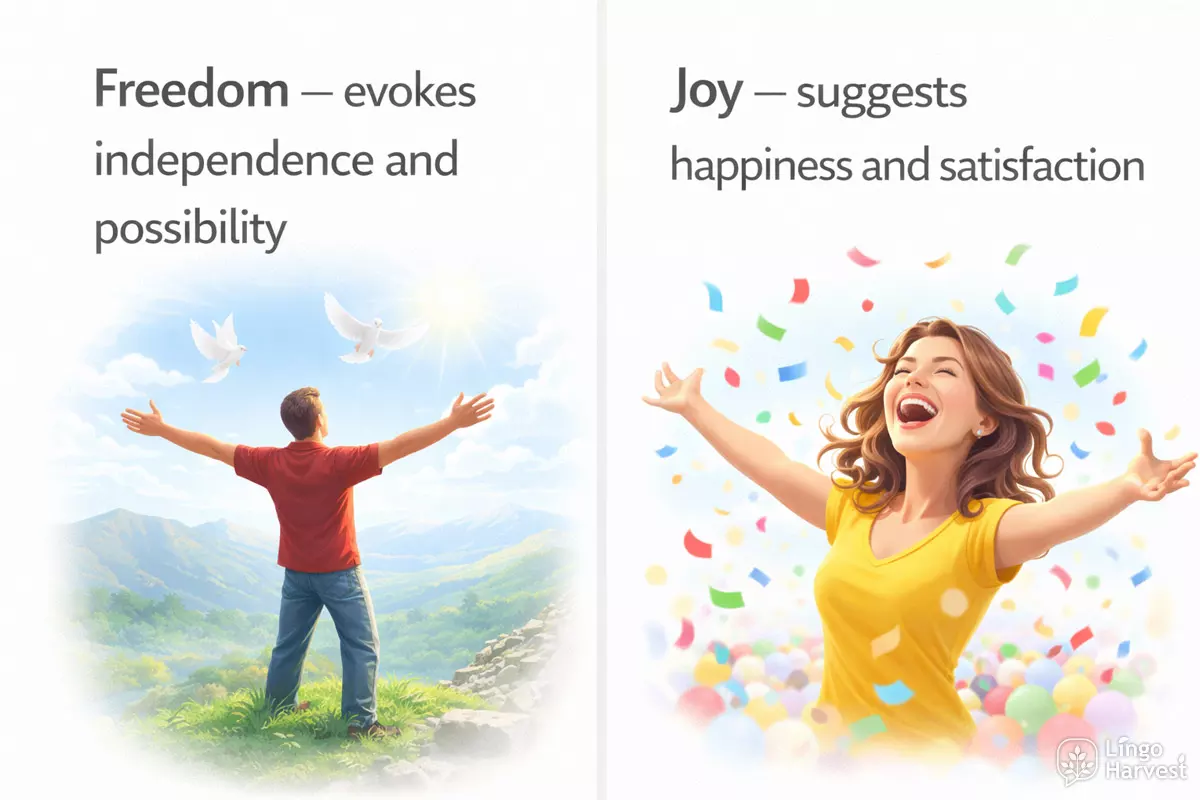
Advertisers and copywriters frequently use nouns that tap into universal human experiences or desires. Here are some widely used examples:
- Freedom – evokes independence and possibility
- Joy – suggests happiness and satisfaction
- Dream – appeals to aspirations and imagination
- Promise – instills hope and trust
- Secret – creates intrigue and curiosity
- Success – signals achievement and ambition
- Power – conveys strength and control
- Comfort – signals safety and relaxation
- Miracle – hints at extraordinary results
- Adventure – speaks to exploration and excitement
- Passion – conveys enthusiasm and intensity
- Solution – addresses problems and needs
- Hope – inspires optimism
- Treasure – represents value and rarity
- Revolution – promises change and progress
- Gift – implies generosity and surprise
- Hero – suggests courage and reliability
- Guarantee – provides assurance and trust
Contextual effects: Same noun, different outcomes
The impact of an emotionally loaded noun often depends on context. For instance, "promise" in a skincare ad suggests reliability, while in a political campaign it might evoke hope or skepticism. Writers must consider the audience’s expectations and the product’s positioning.
Comparing emotive and neutral nouns
To illustrate the difference, here is a comparison of emotive versus neutral nouns as they might appear in advertising language:
| Emotive Noun | Neutral Noun | Sample Usage |
|---|---|---|
| Miracle | Result | "Experience a skincare miracle" vs. "See the results" |
| Treasure | Product | "Unlock this hidden treasure" vs. "Try our product" |
| Adventure | Trip | "Start your next adventure" vs. "Book a trip" |
| Passion | Interest | "Ignite your passion" vs. "Explore your interest" |
Careful use of emotionally resonant nouns adds color and impact to marketing messages. By understanding the nuances and effects of these words, communicators can better engage their audience and strengthen brand recall.
Target-audience nouns and segmentation language
Understanding how to refer to specific consumer groups is essential in marketing messaging. Brands often tailor their language to appeal directly to distinct segments, using precise nouns that resonate with each audience. The choice of noun can signal inclusivity, exclusivity, or even aspirational qualities, depending on the campaign’s goals.
Common Noun Categories for Audience Segmentation
Marketers select nouns to define and address their intended groups. These terms might identify demographic traits, interests, or purchasing behaviors. Examples include:
- Shoppers – General term for people who browse or buy
- Subscribers – Those who have signed up for a service or newsletter
- Professionals – Targeting a business or career-focused audience
- Parents – Appeals to those with children
- Students – Used for educational products or discounts
- Homeowners – Relevant for real estate or improvement sectors
- Travelers – Addressing people interested in journeys or vacations
- Gamers – Referring to video game enthusiasts
- Pet owners – For products or services related to animals
- Entrepreneurs – Appeals to small business founders
- Millennials – Used for generational targeting
- Donors – For nonprofit or fundraising communication
- Fans – Engaging supporters of a brand, show, or product
- Guests – Hospitality and event-related contexts
- Members – Clubs, subscriptions, or loyalty programs
- Investors – Financial products and services
- Readers – Media, publishing, or educational sectors
- DIYers – Targeting those interested in do-it-yourself projects
- Caregivers – Healthcare or elder care sectors
- Tech enthusiasts – For electronics and gadgets
Segmentation Language in Context
The nouns chosen for segmentation often reflect both the demographics and psychographics of a brand’s audience. For example, a campaign might address “first-time buyers” for entry-level products, or “loyal customers” when promoting a rewards program. Context determines the most effective term—“visitors” for a museum versus “clients” for a law firm.
Comparing Noun Usage by Segment
Below is a structured comparison of how different sectors may refer to their target groups, highlighting subtle shifts in positioning and tone:
| Sector | Typical Noun(s) for Audience |
|---|---|
| Retail | Shoppers, Customers, Members |
| Nonprofit | Donors, Supporters, Volunteers |
| Education | Students, Learners, Alumni |
| Hospitality | Guests, Visitors, Patrons |
| Technology | Users, Developers, Tech enthusiasts |
| Healthcare | Patients, Caregivers, Providers |
| Finance | Investors, Clients, Account holders |
Why Word Choice Matters
Selecting the right noun communicates respect and understanding of the group’s identity. It can also help avoid alienation; for example, “patrons” may feel more valued than “customers” in an arts context. Effective segmentation language, when applied thoughtfully, contributes to stronger brand relationships and clearer messaging.
Common mistakes with vague marketing nouns
Using imprecise or generic nouns is a frequent pitfall in advertising copy and branding. These words may sound impressive at first glance, but they often fail to communicate any real value or meaning to the audience. Overusing such terms can make your message forgettable, reduce clarity, and even erode trust. Let's look at why this happens and how to avoid it.
Why vague nouns weaken your message
Ambiguous language often leaves potential customers confused about what’s actually being offered. Instead of painting a clear picture, these words create mental fog. For example, describing a product as a “solution” or a service as an “experience” without further details tells readers little about the benefits or specifics.
Commonly overused and unclear nouns in marketing
- Solution → This software provides a complete solution.
- Experience → The user experience has been greatly improved.
- Platform → The platform supports multiple integrations.
- Innovation → Innovation helps the company stay competitive.
- Service → The service operates around the clock.
- Partner → Our partner supports global expansion.
- Offering → The new offering targets small businesses.
- Opportunity → This project creates new opportunities.
- Value → The product delivers real value to customers.
- Quality → Quality standards are strictly maintained.
- Advantage → Speed is a major advantage.
- System → The system was upgraded last week.
- Process → The process has been simplified.
- Resource → Time is our most limited resource.
- Capability → The team has strong technical capabilities.
- Expertise → Her expertise lies in data analysis.
- Support → Customer support is always available.
- Performance → Performance improved after optimization.
- Network → The network connects users worldwide.
- Result → The result exceeded expectations.
These words are not inherently bad, but when used without context or specifics, they create more questions than answers. For instance, “our innovative platform” begs for clarification: What does it do? How is it different?
How to spot and fix ambiguous language
Look for nouns that could apply to almost any business in your industry or that require additional explanation to be meaningful. Replace them with concrete terms or supplement them with details. For example, instead of “offering a complete solution,” say “providing cloud-based accounting software for freelancers.”
| Vague Noun | Clearer Alternative |
|---|---|
| Solution | Inventory management software |
| Experience | Personalized onboarding process |
| Platform | Online collaboration tool |
| Support | 24/7 customer help desk |
| Network | Supplier database |
| Value | Save 10% on monthly costs |
| Expertise | Certified financial advisors |
| Performance | Processes orders 30% faster |
| Process | Step-by-step order tracking |
| Advantage | Exclusive member discounts |
Tips for clearer marketing communication
- Be specific: Name the product or service directly.
- Quantify benefits when possible (e.g., “reduces costs by 15%”).
- Show, don’t just tell—use examples or case studies.
- Avoid industry jargon that your audience may not understand.
- Test your copy: Ask someone unfamiliar with your offering to read it and explain what it means.
Choosing precise nouns makes your message more persuasive and memorable. Clarity leads to trust, and trust leads to action.
Practice: rewrite ad lines using stronger noun choices
Choosing impactful nouns can make advertising messages more vivid and memorable. Weak or generic nouns often fail to spark interest, while precise, concrete nouns help audiences picture the benefits and uniqueness of a product. Let’s explore how you can transform basic ad statements by swapping out bland nouns for more evocative ones.
Why do stronger nouns matter in ads?
A well-chosen noun can instantly add energy and personality to your message. For example, compare “Get more enjoyment” with “Unlock adventure” – the second line conjures a more specific, enticing image. This section offers practical exercises to help you spot and replace weak nouns, creating sharper marketing copy.
Practice: Upgrade these ad lines
Below is a list of ad slogans or sentences featuring generic nouns. Your task: replace the underlined noun with a more specific, vivid alternative to strengthen the impact.
- Experience the best service in town.
- Discover our new product for your home.
- Enjoy a taste you’ll never forget.
- Join the movement for change.
- Give the gift of happiness.
- Step into a world of possibilities.
- Your solution for better living.
- Find the deal you’ve been waiting for.
- Unleash your inner potential.
- Start your journey today.
- Upgrade your experience now.
- Feel the difference every day.
- Choose quality and value.
- Make every moment count.
- Reach your goal with us.
Common weak nouns vs. stronger alternatives
The table below provides examples of overused nouns in marketing and suggests more precise, compelling substitutes. Use these as inspiration for rewriting your own copy.
| Generic Noun | Stronger Alternative |
|---|---|
| service | concierge, craftsmanship, expertise, support team |
| product | gadget, serum, toolkit, blend, collection |
| taste | flavor, aroma, zest, richness, tang |
| experience | adventure, journey, escape, encounter, immersion |
| solution | remedy, breakthrough, shortcut, fix, formula |
| deal | bargain, steal, special, promotion, package |
| moment | milestone, celebration, memory, instant, highlight |
| goal | milestone, triumph, achievement, victory, target |
| difference | transformation, leap, shift, impact, revolution |
| value | investment, return, benefit, advantage, worth |
Try it yourself: Rewrite and compare
Take two or three of the weak-noun ad lines from above and rewrite them using the alternatives from the table or your own ideas. Notice how the message becomes more tangible and persuasive.
Show answers
- Experience the best craftsmanship in town.
- Discover our new serum for your home.
- Enjoy a flavor you’ll never forget.
- Join the revolution for change.
- Give the gift of celebration.
- Step into a world of adventures.
- Your breakthrough for better living.
- Find the bargain you’ve been waiting for.
- Unleash your inner achievement.
- Start your journey today. (Already strong, but could use “adventure” or “quest”)
- Upgrade your immersion now.
- Feel the transformation every day.
- Choose quality and investment.
- Make every milestone count.
- Reach your triumph with us.
By focusing on more expressive nouns, your marketing language can become clearer, more persuasive, and more memorable to your audience.