Post-modifiers After Nouns: Clauses and Extended Phrases

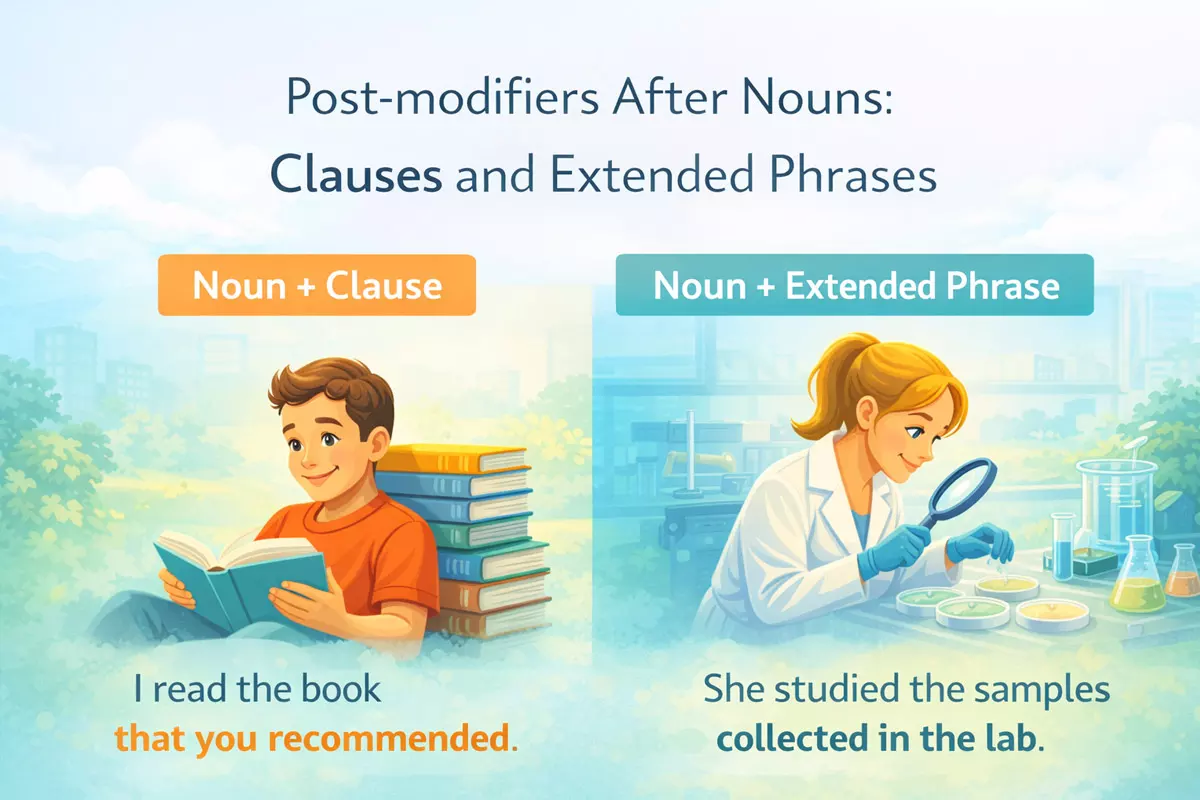 The article explains post-modifiers, their purposes, and how to use prepositional phrases, relative clauses, and non-finite clauses after nouns. It covers choosing effective modifiers, common learner mistakes, and provides practice activities.
- What post-modifiers are and why they are used
- Noun + prepositional phrase patterns after nouns
- Noun + relative clause structures for extra information
- Using non-finite clauses as post-modifiers
- Choosing correct post-modifiers for clarity and precision
- Common learner errors with post-modifying structures
- Practice: expand noun phrases using post-modifiers
Adding detail to nouns, particularly by using descriptive phrases or clauses that follow them, greatly enhances the expressiveness of your writing. These structures, known as modifiers, allow you to provide specific information about a person, place, or thing, making your sentences clearer and more engaging. Mastering the use of such modifiers not only brings variety to your writing style but also helps readers form a vivid picture of what you are describing. By learning to skillfully incorporate these elements, you can achieve greater precision and depth in your communication.
What post-modifiers are and why they are used
Post-modifiers are words, phrases, or clauses that come after a noun to add detail or clarify exactly which person, thing, or concept is being referred to. Unlike pre-modifiers, which appear before the noun (like adjectives), these elements follow the noun and expand on its meaning. They are essential in both written and spoken English for making sentences more specific, descriptive, and clear.
Writers and speakers use these structures to avoid ambiguity and to enrich their communication. For example, in the phrase the book on the table, the post-modifying phrase on the table identifies which book is meant. Without such modifiers, listeners and readers might be left with questions about exactly what is being discussed.
Common reasons for using post-modifiers
- Adding specific information: They pinpoint which person or thing is meant (e.g., the man who called you).
- Describing characteristics: Post-modifiers can describe features, qualities, or actions related to the noun (e.g., a cake made by Anna).
- Clarifying relationships: They show how the noun relates to other elements in the sentence (e.g., the house across the street).
- Reducing repetition: Instead of repeating nouns or using awkward constructions, a phrase or clause after the noun provides clarity (e.g., students interested in science).
Types of post-modifiers

There are several ways to extend the meaning of a noun, and some of the most frequent post-modifying structures include:
- Prepositional phrases (the car with leather seats)
- Relative clauses (the teacher who lives nearby)
- Participial phrases (the woman wearing a red hat)
- Infinitive phrases (the first person to arrive)
- Appositive phrases (my friend, a talented musician)
- Adjective phrases (a topic hard to explain)
- Quantifying phrases (the number of students present)
- Time expressions (the meeting next week)
- Place expressions (the city in the north)
- Comparative phrases (the route shorter than usual)
How post-modifiers improve communication
By providing extra details after a noun, these structures help avoid confusion and enrich the listener’s or reader’s understanding. They are especially useful in academic, technical, or descriptive writing, where precision is vital. In everyday conversation, they also allow speakers to be concise yet informative, without overloading sentences with adjectives or lengthy explanations.
Noun + prepositional phrase patterns after nouns
English often expands noun phrases by adding prepositional phrases directly after the noun. This structure allows speakers and writers to clarify, specify, or add detail about the person, place, thing, or idea being discussed. These post-modifying phrases typically start with prepositions such as of, in, with, for, or on, and are an essential tool for building more precise descriptions.
Common prepositions used after nouns
Some prepositions are far more frequent than others in these patterns. Here are the most typical choices:
- of — the door of the house, a piece of cake
- in — the woman in the red dress, the room in the corner
- with — a girl with blue eyes, a cup with a crack
- for — a reason for leaving, a place for everything
- on — the book on the table, the effect on health
- by — the painting by Picasso, a decision by the board
- to — an invitation to dinner, a solution to the problem
- about — a story about courage, a question about time
- at — a look at the sky, a shot at the target
- from — a letter from a friend, a reply from the company
How prepositional phrases clarify meaning
Attaching a prepositional phrase after a noun can serve several purposes:
- Identifying which specific person or thing is meant (e.g., "the man in the blue shirt")
- Describing a part or characteristic (e.g., "the handle of the door")
- Explaining function or use (e.g., "a tool for gardening")
- Indicating possession or relationship (e.g., "the sister of my friend")
- Adding facts about origin or source (e.g., "a song by the Beatles")
Patterns and example phrases
To illustrate how these structures work, here is a table of sample noun + prepositional phrase patterns, showing a variety of combinations and their typical meanings:
| Pattern | Example Phrase |
|---|---|
| Noun + of + noun | the color of the sky |
| Noun + in + noun phrase | the student in the front row |
| Noun + with + noun | a house with a garden |
| Noun + for + noun/gerund | a bag for shopping |
| Noun + on + noun | an article on climate change |
| Noun + by + noun | a book by Agatha Christie |
| Noun + to + noun | a ticket to the concert |
| Noun + about + noun | a film about space travel |
| Noun + at + noun | a glance at the clock |
| Noun + from + noun | a message from the manager |
Key points to remember
- These post-modifying phrases are not always optional; sometimes they are needed for the noun to make sense (e.g., "the cause of the problem").
- They can often be stacked or combined for more detail: "the child with the red hat in the playground".
- Using a prepositional phrase after a noun is a common way to avoid ambiguity and provide essential context in both spoken and written English.
Noun + relative clause structures for extra information
Adding relative clauses after nouns is a powerful way to include extra detail in your sentences. These clauses usually follow the noun directly and begin with words like who, which, that, whose, where, or when. They allow you to expand on or specify which person, thing, place, or time you are talking about, making your statements clearer and more informative.
Understanding relative clauses
Relative clauses are subordinate clauses that modify a noun. They can be restrictive (defining) or non-restrictive (non-defining). Restrictive clauses provide essential information, while non-restrictive ones add non-essential details, often set off by commas.
- The woman who lives next door is a doctor.
- He bought a car that was very expensive.
- We visited the museum which opened last year.
- The book that you gave me was fascinating.
- My friend whose brother is an actor is moving to Canada.
- This is the place where we met.
- Do you remember the day when we first met?
- The students who passed the exam celebrated together.
- The house which has a red door is mine.
- The teacher whom I admire is retiring.
- The artist whose paintings you love will be there.
- The city where I was born is very old.
- The year when I graduated was memorable.
- The dog that barked all night kept me awake.
- The shop which sells fresh bread opens early.
Relative pronouns and their uses
Choosing the correct relative pronoun is important. Who and whom refer to people, which refers to things, that can refer to both people and things in defining clauses, and whose shows possession. Where and when introduce clauses about places and times.
| Relative Pronoun | Typical Use | Example |
|---|---|---|
| who | People (subject) | The girl who called you is here. |
| whom | People (object, formal) | The man whom I saw was tall. |
| which | Things or animals | The film which won the award was excellent. |
| that | People, things (in defining clauses) | The book that you lent me is on the table. |
| whose | Possession (people or things) | The student whose phone rang apologized. |
| where | Places | The café where we met has closed. |
| when | Times | That was the year when I moved abroad. |
Tips for using relative clauses
- Use commas for non-defining clauses: My sister, who lives in Paris, is visiting.
- Omit the relative pronoun if it is the object: The cake (that) I baked was delicious.
- Don’t use that in non-defining clauses.
- Be clear about what the clause refers to – place it directly after the noun.
Mastering these structures helps you make your writing richer and more precise by smoothly adding relevant information after nouns.
Using non-finite clauses as post-modifiers
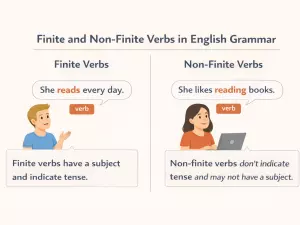
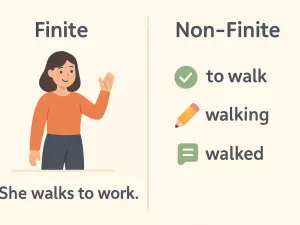
Non-finite clauses often function as extended noun modifiers, giving extra information about a person or thing. These clauses, which include to-infinitive, -ing, and -ed forms, are called 'non-finite' because they do not show tense or subject agreement. Instead, they provide descriptive or explanatory details that follow the noun.
Types of non-finite clauses after nouns
You’ll commonly see three types of non-finite clauses used as modifiers:
- To-infinitive clauses (e.g. “the first person to arrive”)
- -ing participle clauses (e.g. “a book containing useful tips”)
- -ed participle clauses (e.g. “the ideas presented yesterday”)
These structures are compact and efficient, especially in formal or written English. Each type brings its own nuance. For example, -ing participles often show ongoing action or characteristic, while -ed participles describe completed actions or states. To-infinitives frequently express purpose or necessity.
Common patterns and examples

Here are some patterns and examples of non-finite post-modifying clauses:
- the documents needed for the meeting
- students hoping to join the club
- a chance to improve your skills
- the only route available
- problems caused by the storm
- the person responsible for the error
- a theory proposed by Smith
- the next train to leave
- an essay written under pressure
- the children playing outside
- the first athlete to finish
- the tasks assigned last week
- the book to read before class
- the food served at lunch
- a company offering remote work
- the solution suggested in the report
- the last question to answer
Choosing the right non-finite clause
Selection depends on the intended meaning:
- To-infinitive: shows purpose, potential, or necessity (“a place to relax”).
- -ing participle: highlights ongoing action or characteristic (“people waiting outside”).
- -ed participle: refers to something finished or affected (“the results published yesterday”).
Comparing non-finite post-modifiers
| Pattern | Example |
|---|---|
| To-infinitive clause | the first student to finish |
| -ing participle clause | the people waiting outside |
| -ed participle clause | the documents signed this morning |
| Compound structure | the team chosen to represent the school |
Non-finite post-modifiers are flexible tools for adding detail and conciseness to your writing. They help avoid wordy relative clauses and make sentences more readable, especially in academic or professional contexts.
Choosing correct post-modifiers for clarity and precision
Selecting the most suitable phrase or clause to follow a noun can significantly improve the clarity and accuracy of your writing. Post-modifiers, such as relative clauses and prepositional phrases, help specify which person, thing, or idea you are referring to, but each type serves a different function. Understanding how and when to use each structure will ensure your message is both precise and easy to follow.
Types of post-modifiers and their uses
- Relative clauses: Add essential or extra information about a noun ("The book that you gave me was fascinating.").
- Prepositional phrases: Indicate relationships such as place, time, or possession ("The man in the blue jacket is my uncle.").
- Participle phrases: Describe a noun using a verb form ("The students waiting outside look tired.").
- Infinitive phrases: Express purpose, intention, or future action ("A decision to postpone the meeting was made.").
- Appositive phrases: Rename or further identify a noun ("My brother, a skilled carpenter, built this table.").
- Noun phrases with quantifiers or determiners: Specify or limit reference ("Several books on the shelf are new.").
Guidelines for effective selection
The main goal is to avoid ambiguity and unnecessary complexity. Consider the following strategies:
- Match the detail required: Use a restrictive clause for essential information, and a non-restrictive one for extra detail.
- Keep modifiers close to the noun they describe to prevent misreading.
- Prefer concise phrases when possible, unless detail is needed.
- Be mindful of modifier order if using more than one after a noun.
Comparison of common post-modifiers
| Modifier Type | Example Usage | When to Use | Clarity Tip |
|---|---|---|---|
| Relative clause | The cake that she baked was delicious. | When specifying which noun you mean | Use "that" for essential info, "which" for extra detail |
| Prepositional phrase | The keys on the table are mine. | To show location, time, or association | Place immediately after the noun |
| Participle phrase | The students studying in the library are diligent. | To describe an action or state connected with the noun | Ensure the phrase clearly refers to the noun |
| Infinitive phrase | A chance to improve your skills | When expressing purpose or intention | Use for concise future or potential actions |
Common pitfalls and how to avoid them
- Dangling modifiers: Make sure your modifier clearly refers to the intended noun.
- Overloading with detail: Too many modifiers can confuse the reader; prioritize the most important information.
- Ambiguity: Place the post-modifier as close as possible to the noun it describes.
- Inconsistent tense or form: Ensure verb forms in participle or infinitive phrases match the sentence context.
By carefully choosing and structuring post-modifiers, you can make your writing more precise and reader-friendly. Practice identifying which modifier best fits your intended meaning, and pay attention to placement for the clearest communication.
Common learner errors with post-modifying structures
Misusing post-modifiers after nouns often leads to confusing or grammatically incorrect sentences. Students frequently struggle with word order, correct use of relative pronouns, and distinguishing between different types of post-modifying clauses and phrases. Below, we’ll look at several typical pitfalls and clarify how to avoid them.
Mixing up relative clauses and participle phrases
Learners sometimes use a relative clause when a participle phrase is needed, or vice versa. For example, they may write “the man who is standing there” instead of the more concise “the man standing there.” Understanding when to use each structure helps make writing more natural and less repetitive.
Omitting necessary relative pronouns
Forgetting to include “who,” “which,” or “that” after a noun can make sentences unclear. For instance, “The book I borrowed yesterday” is correct in informal English, but in formal contexts “The book that I borrowed yesterday” is preferred.
Incorrect word order
Putting modifiers in the wrong place can change the meaning or make the sentence ungrammatical. In English, the post-modifier should directly follow the noun it describes.
Confusing defining and non-defining clauses
Learners often mix up clauses that give essential information (defining) and those that give extra information (non-defining). Using or omitting commas incorrectly is a frequent source of mistakes.
Typical errors in post-modifying structures
- Using “which” for people instead of “who” (e.g., “the boy which won the prize” ❌)
- Leaving out the relative pronoun when it is needed (“The car he bought is new” in formal writing should be “The car that he bought is new”)
- Repeating the subject (“The girl who she is playing” ❌ → “The girl who is playing” ✅)
- Placing the modifier too far from the noun it describes (“The letter was sent to my friend in the mailbox that I wrote” ❌)
- Using full clauses when reduced forms are better (“The person who lives next door” → “The person living next door”)
- Confusing gerund and participle forms (“the man running quickly” vs. “the man run quickly” ❌)
- Incorrect use of “whose” for things (“the table whose leg is broken” is possible, but alternatives are often clearer: “the table with a broken leg”)
- Incorrectly omitting commas in non-defining clauses (“My sister, who lives in Paris, is visiting” ✅)
- Using “that” in non-defining clauses (“My brother, that lives in Canada,…” ❌)
- Overusing or underusing post-modifiers, making sentences either too complicated or too simple
Comparing relative clauses and participle phrases
| Relative Clause | Participle Phrase |
|---|---|
| The man who is talking to John | The man talking to John |
| The book that was written by her | The book written by her |
| The students who studied hard | The students studying hard |
| The cars which are parked outside | The cars parked outside |
| The letter that arrived yesterday | The letter arriving yesterday |
Understanding the differences between these forms and knowing when to use them can help learners create clearer, more accurate sentences. Paying attention to these points and practicing with real examples is the best way to master post-modifying structures in English.
Practice: expand noun phrases using post-modifiers
Building richer noun phrases with post-modifiers helps make your writing more precise and engaging. Post-modifiers can include relative clauses, prepositional phrases, participle phrases, or even appositive phrases. Try the exercises below to deepen your understanding of how to lengthen and clarify noun groups by adding information after the noun.
Task 1: Expand Simple Nouns
Below are some basic noun phrases. Add a post-modifier (clause or phrase) to make each more specific. Try using different types, such as relative clauses (who/that/which), prepositional phrases (with/in/on...), or participle phrases (sitting by..., painted in...).
- The book
- A man
- The building
- The woman
- My friend
- An email
- The dog
- Those students
- A car
- The cake
Show answers
- The book that I borrowed from the library
- A man wearing a blue jacket
- The building with the red roof
- The woman who lives next door
- My friend from university
- An email about the meeting
- The dog lying under the table
- Those students who passed the exam
- A car parked in front of the house
- The cake made by my grandmother
Task 2: Identify the Post-modifier Type
Look at the expanded noun phrases below. Decide which type of post-modifier is used in each (relative clause, prepositional phrase, participle phrase, or appositive phrase).
- The house at the end of the street
- The teacher who helped me
- The letter sent yesterday
- My colleague, a talented designer
- The shoes under the bed
- The book on the top shelf
- The woman standing by the door
- My brother, a professional chef
- The car that we bought last year
- The documents required for the application
Show answers
- Prepositional phrase
- Relative clause
- Participle phrase
- Appositive phrase
- Prepositional phrase
- Prepositional phrase
- Participle phrase
- Appositive phrase
- Relative clause
- Participle phrase
Common Patterns for Expanding Noun Phrases
Here are some patterns you can use to add detail to noun phrases with post-modifiers:
- Noun + prepositional phrase: the chair in the corner
- Noun + relative clause: the woman who called yesterday
- Noun + participle phrase: the students waiting outside
- Noun + appositive: my brother, a skilled engineer
- Noun + infinitive phrase: the best time to visit
- Noun + adjective phrase: a person full of energy
- Noun + noun phrase: the city center
- Noun + clause: the idea that surprised everyone
- Noun + adverbial phrase: the meeting scheduled for Monday
- Noun + quantifier phrase: the group of experts
Task 3: Transform Short Noun Phrases
Rewrite each short noun phrase by attaching at least one post-modifier. Be creative!
- A photo
- The city
- Some advice
- The song
- An opportunity
- A book
- The man
- A project
- The restaurant
- A memory
Show answers
- A photo taken during our vacation
- The city where I was born
- Some advice that my mentor gave me
- The song playing on the radio
- An opportunity to learn new skills
- A book that changed my perspective
- The man waiting outside the office
- A project we completed together
- The restaurant famous for seafood
- A memory I will never forget
By practicing these variations, you’ll be able to express more complex ideas and provide clearer descriptions in both speech and writing.