Nouns as Discourse Markers in Argumentative Writing

 Here we how discourse markers and nouns such as issue or solution help organize written arguments, explains the difference between verbal and nominal discourse markers, highlights typical learner mistakes, and provides practice for improving paragraph flow.
- What discourse markers are in written argument
- How nouns guide reader interpretation and structure
- Common discourse nouns like issue, problem, and solution
- Using discourse nouns for paragraph transitions
- Difference between verbal and nominal discourse marking
- Typical learner mistakes with weak discourse nouns
- Practice: improve paragraph flow using discourse nouns
In persuasive essays, naming words play a crucial role beyond merely identifying subjects; they subtly guide readers through the writer’s line of reasoning and contribute to the logical structure of the argument. By carefully selecting and repeating key terms, writers can emphasize important concepts, clarify relationships between ideas, and help readers follow the progression of points being made. This strategic use of language strengthens the overall persuasiveness of the essay and enhances the clarity of its message.
What discourse markers are in written argument
Discourse markers function as signposts in argumentative writing, helping readers follow the flow of ideas and understand relationships between statements. In written argument, these markers can be single words, phrases, or even nouns that signal transitions, contrast, reasons, examples, or conclusions. Their primary role is to clarify the logical structure and guide the reader through the progression of claims and evidence.
Common Types of Discourse Markers in Argumentative Texts
Writers use a range of linguistic tools to connect points and organize reasoning. Here are some typical categories and examples:
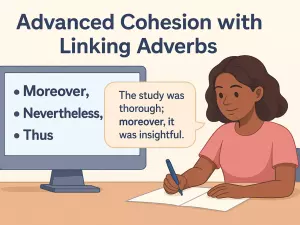
- Addition: furthermore, moreover, in addition, besides
- Contrast: however, on the other hand, nevertheless, yet
- Cause and Effect: therefore, as a result, consequently, thus
- Example/Illustration: for instance, for example, namely
- Summarizing: in conclusion, to sum up, overall, in summary
- Sequencing: first, next, finally, subsequently
- Emphasis: indeed, notably, above all, especially
- Concession: admittedly, although, even though
- Restatement: in other words, that is, to put it differently
- Reference: regarding, with respect to, as for
Nouns as Discourse Markers

While conjunctions and adverbs are the most recognizable discourse markers, certain nouns also serve this function in academic and argumentative writing. These nouns often encapsulate logical relationships or summarize prior statements, acting as cohesive devices. Examples include:
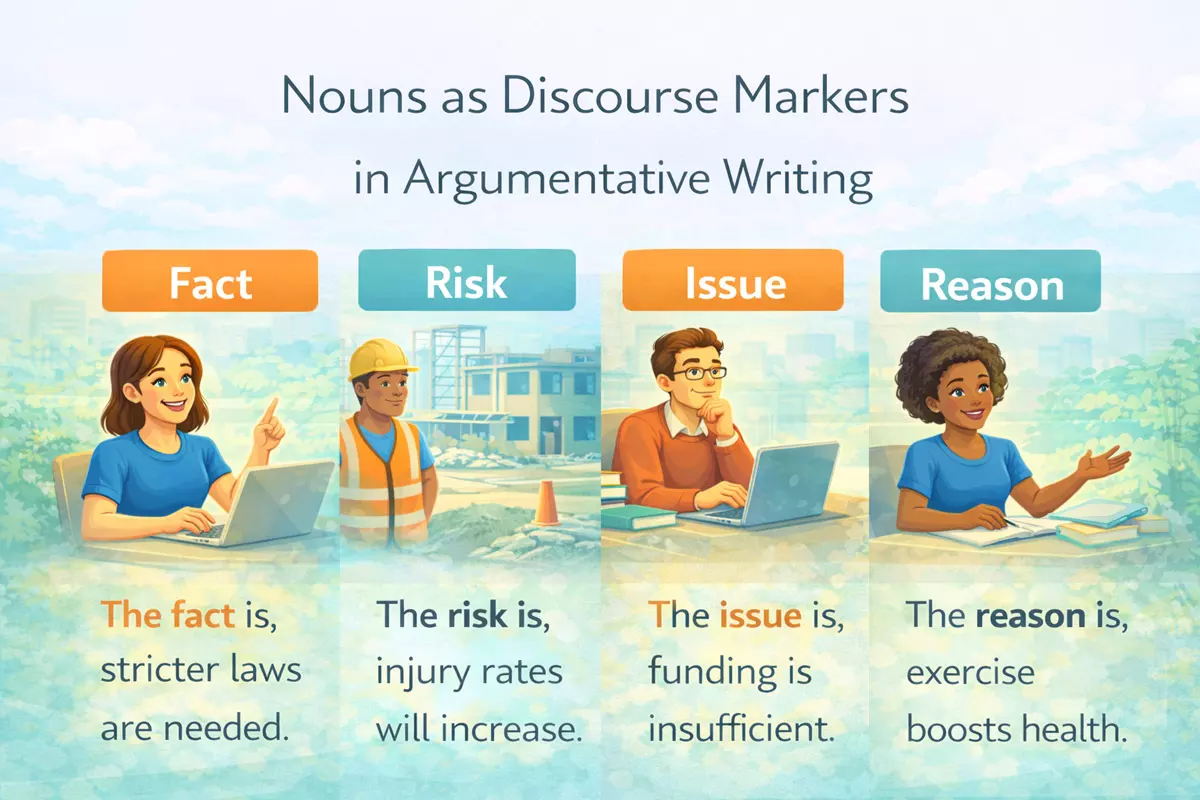
- Fact: This fact demonstrates the need for change.
- Issue: The issue remains unresolved.
- Evidence: The evidence supports the claim.
- Argument: This argument highlights the main concern.
- Reason: The reason is clear.
- Result: The result indicates progress.
- Point: The point here is critical.
- Conclusion: The conclusion follows logically.
- Implication: The implication is significant.
- Assumption: This assumption underlies the theory.
How Discourse Markers Shape Argument Structure
These linguistic markers not only connect sentences but also signal the writer’s stance, indicate shifts in reasoning, and frame the overall argument. Effective use of such markers results in arguments that are easier to follow and more persuasive, as each idea is clearly linked to the next.
| Function | Examples of Discourse Markers |
|---|---|
| Adding Information | furthermore, moreover, in addition, besides |
| Showing Contrast | however, yet, nevertheless, on the other hand |
| Indicating Cause/Effect | therefore, thus, consequently, as a result |
| Introducing Examples | for instance, for example, namely |
| Summarizing or Concluding | in conclusion, to sum up, overall, in summary |
Summary
In sum, discourse markers—ranging from conjunctions to certain nouns—are essential for structuring written argument. They clarify transitions, highlight relationships, and help ensure that the writer’s reasoning is both accessible and persuasive to the reader.
How nouns guide reader interpretation and structure
Nouns play a crucial role in shaping the coherence and clarity of argumentative writing. By introducing and labeling key concepts, writers can help readers follow the logical flow of an argument. The careful selection and repetition of specific nouns act as signposts, guiding the audience through complex reasoning and ensuring that important ideas remain prominent throughout the text.
Signposting with Noun Phrases
Writers often use noun phrases to highlight main topics or transitions between points. For instance, terms like "the evidence," "this assumption," or "the solution" direct attention to particular aspects of the discussion. These labels help readers keep track of which idea is being examined or developed, especially in longer texts where arguments may become intricate.
- Topic introduction: "The proposal offers several advantages."
- Referencing previous points: "This argument lacks supporting data."
- Clarifying relationships: "The distinction between fact and opinion is critical."
- Summarizing sections: "These findings suggest a new perspective."
- Emphasizing key issues: "The controversy remains unresolved."
Nouns as Organizational Anchors
Beyond signaling shifts in focus, specific nouns can structure entire sections of an essay. By echoing significant terms throughout a piece, writers reinforce thematic unity and make it easier for readers to locate and recall information. This technique is especially valuable in argumentative texts, where clarity and logical progression are paramount.
| Function | Example Noun Usage |
|---|---|
| Introducing concepts | The concept of justice underpins the debate. |
| Connecting ideas | This evidence supports the claim. |
| Highlighting contrast | The counterargument challenges this position. |
| Summarizing claims | These results reinforce the hypothesis. |
| Concluding points | The implications are far-reaching. |
Facilitating Reader Interpretation
Strategic use of nouns not only organizes content but also shapes how readers interpret arguments. By naming abstract ideas or grouping evidence under a shared label, writers make their reasoning more accessible. For example, consistently referring to "the policy," "the opposition," or "the outcome" helps readers grasp connections and anticipate the writer's direction. This approach reduces ambiguity and keeps the discourse focused, which is especially important when presenting nuanced or multi-layered arguments.
Common discourse nouns like issue, problem, and solution
Nouns such as issue, problem, and solution often serve as organizational signals in argumentative writing. These terms help writers guide readers through the structure of an argument, clarifying what is being discussed, what challenges exist, and how those challenges might be addressed. By using these discourse nouns, writers create a logical progression and make their reasoning easier to follow.
How these nouns function in argument structure
Writers frequently introduce a topic with a discourse noun to frame the discussion. For example, phrases like “The main issue is…” or “A significant problem arises when…” set expectations for the reader. Later, terms such as “One possible solution is…” or “The proposed remedy involves…” indicate a shift from outlining difficulties to suggesting resolutions.
Typical usage patterns
You’ll often see these nouns combined with modifiers or relative clauses to specify their meaning:
- issue (e.g., “the issue of climate change”)
- problem (e.g., “the problem that many students face”)
- solution (e.g., “a solution to the funding gap”)
- challenge (e.g., “the challenge of maintaining objectivity”)
- concern (e.g., “a growing concern among experts”)
- difficulty (e.g., “the difficulty in implementing reforms”)
- obstacle (e.g., “the main obstacle to progress”)
- approach (e.g., “an effective approach to learning”)
- response (e.g., “a response to criticism”)
- remedy (e.g., “a potential remedy for inequality”)
- consequence (e.g., “the consequence of rapid growth”)
- outcome (e.g., “the desired outcome of negotiation”)
- benefit (e.g., “a benefit of this policy”)
- drawback (e.g., “the drawback of this method”)
- advantage (e.g., “the advantage of early intervention”)
- risk (e.g., “a risk associated with automation”)
Comparing usage: issue vs. problem vs. solution
| Noun | Typical Function in Argument |
|---|---|
| Issue | Introduces a topic or area of debate; often neutral or open-ended. Example: “The issue of data privacy remains unresolved.” |
| Problem | Highlights a specific negative aspect or challenge requiring attention. Example: “A major problem with this approach is cost.” |
| Solution | Presents a proposed answer or remedy to a previously mentioned problem or issue. Example: “A viable solution could involve increased funding.” |
| Challenge | Emphasizes difficulty or complexity, often inviting analysis. Example: “A key challenge is balancing efficiency with fairness.” |
Why these nouns matter in argumentative writing
Using discourse nouns helps writers move from identifying concerns to evaluating responses. This not only clarifies the argument’s flow but also signals to readers where to focus their attention. Effective use of such vocabulary increases both clarity and cohesion, making arguments more persuasive and easier to navigate.
Using discourse nouns for paragraph transitions
Effective argumentative writing relies on clear connections between paragraphs. One powerful way to create these links is by using discourse nouns—nouns that refer to whole ideas, arguments, or sections of text. Instead of relying solely on conjunctions like "however" or "therefore," writers can use these reference nouns to point back to previous statements or forward to new points, helping readers follow the flow of reasoning.
How discourse nouns function as bridges

Reference nouns, such as "issue," "aspect," or "concept," act as cohesive devices. They encapsulate the content of prior sentences or paragraphs, allowing writers to summarize and shift focus smoothly. This technique not only clarifies the logical structure but also avoids repetitive or abrupt transitions.
- argument → His argument was that online classes improve flexibility.
- claim → The claim that the product is safe is still disputed.
- point → Her point was that people need clearer instructions.
- issue → The issue is that funding has been reduced.
- aspect → One aspect is that students require more support.
- perspective → From her perspective, the team worked efficiently.
- factor → A major factor is that prices continue to rise.
- concern → There is concern that air quality will worsen.
- topic → The topic is whether social media affects sleep.
- view → His view is that success depends on effort.
- approach → Their approach is to combine theory and practice.
- phenomenon → The phenomenon is that students multitask constantly.
- trend → The trend shows that fewer people read newspapers.
- challenge → The challenge is that deadlines are very tight.
- assumption → The assumption is that demand will stay high.
- observation → Her observation was that errors increased after midnight.
- theme → The theme is that technology changes relationships.
- implication → The implication is that more training will be required.
Patterns for integrating discourse nouns
Writers often use specific patterns to weave discourse nouns into transitions. For example:
- This issue has significant implications for public policy.
- Another factor to consider is the role of technology.
- This argument is supported by recent data.
- The previous claim overlooks a key detail.
Benefits of using discourse nouns
Employing reference nouns at paragraph boundaries offers several advantages:
- Clarifies which idea is being discussed or challenged
- Reduces ambiguity and repetition of full sentences
- Strengthens cohesion and guides the reader through complex arguments
- Allows for concise summaries of earlier content
Common errors and how to avoid them
- ❌ Using vague nouns like "thing" or "stuff" – prefer precise terms such as "argument" or "issue"
- ❌ Failing to specify which idea a noun refers to – add modifiers ("this claim," "the following aspect")
- ❌ Overusing the same noun repeatedly – vary your vocabulary to maintain clarity
In summary, incorporating reference nouns strategically helps writers maintain logical flow, especially in argumentative essays where clarity and progression are crucial. By mastering this technique, you’ll make your transitions both professional and reader-friendly.
Difference between verbal and nominal discourse marking
Understanding how writers guide readers through their arguments often comes down to the linguistic tools they choose. Traditionally, much attention has been paid to verbs and their role in connecting ideas, but nouns can also serve as effective discourse markers, especially in argumentative writing. The distinction between these two strategies is not just grammatical—it shapes the flow, clarity, and persuasiveness of a text.
How verbal discourse markers function
Verbal markers typically rely on conjunctions, linking verbs, or adverbials to indicate relationships between clauses or sentences. These structures clarify logical connections such as cause, contrast, or sequence. For example, words like “however,” “therefore,” and “meanwhile” are used to signal shifts or continuations in argumentation.
- However signals contrast.
- Therefore signals result.
- Moreover adds information.
- Firstly, secondly organize sequences.
- In conclusion signals summary.
How nouns mark discourse
Nominal discourse marking, by contrast, uses abstract nouns or noun phrases to refer back to, summarize, or introduce argument segments. These markers often encapsulate whole ideas or arguments, allowing writers to maintain cohesion and avoid repetition. Common examples include “this argument,” “the issue,” “the evidence,” or “the claim.” Such nouns serve as anchors, helping readers track the development of reasoning across a text.
- This point refers to a previously stated idea.
- The assumption highlights underlying beliefs.
- The problem identifies a challenge.
- The solution introduces a proposed fix.
- These findings summarizes results.
- The perspective presents a viewpoint.
- The debate frames a contested issue.
- The evidence points to supporting material.
- The implication draws out consequences.
- The claim refers to an assertion made earlier.
Comparing verbal and nominal strategies
While both approaches help structure argumentative writing, their effects on text organization and reader interpretation differ. Verbal markers explicitly connect clauses and signal transitions, which can make the logic of an argument transparent. Nominal markers, on the other hand, allow writers to encapsulate complex ideas, aiding cohesion and enabling concise referencing.
| Verbal Discourse Marking | Nominal Discourse Marking |
|---|---|
| Uses conjunctions or adverbs (e.g., "however," "because") | Uses abstract nouns (e.g., "the issue," "this argument") |
| Links sentences or clauses directly | Summarizes or refers to previous points |
| Often explicit in showing logical connections | Provides cohesion and allows for concise referencing |
| Example: "However, the results were inconclusive." | Example: "This result was unexpected." |
Implications for argumentative writing
Choosing between these strategies depends on the writer’s goals. Verbal markers are useful for signaling logic step-by-step, while nominal markers help condense information and reinforce key themes. Skilled writers often blend both, using nouns to summarize or foreshadow, and verbs to clarify relationships—creating writing that is both cohesive and persuasive.
Typical learner mistakes with weak discourse nouns
Learners of academic writing often struggle to use abstract nouns like “fact,” “thing,” or “aspect” effectively in argumentative texts. These words, sometimes called “shell nouns” or “carrier nouns,” can make arguments vague if not handled carefully. Overreliance on such weak nouns tends to obscure meaning, reduce precision, and interrupt the logical flow of ideas.
Common pitfalls in using vague discourse nouns
Writers frequently default to generic placeholders instead of selecting specific terms that clarify the argument. This can result in sentences that sound academic but lack substance. For example, using “this situation” or “this fact” without specifying what is meant leaves the reader guessing.
- Using “thing” instead of a precise term (e.g., “one thing to consider is…”)
- Overusing “aspect,” “issue,” or “area” without further explanation
- Repeating “point” or “fact” as catch-all references
- Relying on “matter,” “case,” or “problem” when a more descriptive noun is needed
- Failing to define what “this” refers to (e.g., “this problem” with no clear antecedent)
- Stacking vague nouns together (“the aspect of the issue”)
- Using “situation” or “circumstance” as a substitute for a concrete event or example
- Employing “element,” “factor,” or “component” without specifying which one
- Starting sentences with “the thing is…” or “the point is…”
- Leaving discourse nouns without modifiers or relative clauses
- Referencing “argument” or “view” in a way that is too broad
- Using “topic,” “subject,” or “theme” instead of stating the idea directly
How vague nouns weaken argumentative writing
Empty or fuzzy nouns make it hard for readers to follow the logic of a text. They often force readers to infer the writer’s meaning, which can lead to misunderstandings or weaken the persuasiveness of the argument. Instructors commonly mark such usage as “unclear reference” or “needs specificity.”
Comparison: Weak vs. Strong Discourse Noun Usage
| Weak Example | Improved Example |
|---|---|
| One thing to consider is pollution. | One factor to consider is the increase in air pollution from vehicles. |
| This situation is bad for everyone. | This rise in housing costs negatively affects all residents. |
| The aspect of health is important. | The mental health implications are especially important. |
| Another problem is this issue. | Another challenge is the lack of affordable childcare. |
Tips to avoid weak references
Instead of using an all-purpose noun, try these strategies:
- Replace vague terms with subject-specific vocabulary.
- Add modifiers or relative clauses for precision (“the fact that unemployment is rising”).
- Clarify what “this,” “that,” or “it” refers to.
- Review each sentence for possible ambiguity.
By making these adjustments, writers can strengthen the clarity and impact of their arguments.
Practice: improve paragraph flow using discourse nouns
Effective argumentative writing often relies on more than just strong claims and evidence; it also depends on seamless paragraph connections. One key technique is the use of discourse nouns—general nouns that refer back to or summarize previous ideas, arguments, or statements. These nouns help create cohesion by signaling relationships between sentences and paragraphs, guiding the reader smoothly through the text.
Task: Improving Cohesion with Discourse Nouns
Below are pairs of sentences. Revise each pair by joining them into a single sentence using an appropriate discourse noun. Consider which noun best summarizes or refers to the previous sentence.
- The internet has made information more accessible. This has changed the way students do research.
- Many people believe that climate change is a serious threat. They base their opinions on scientific evidence.
- The city introduced new recycling bins. This resulted in less waste going to landfills.
- Some critics argue that standardized testing is unfair. They claim it disadvantages certain groups of students.
- The government raised taxes last year. This led to widespread protests across the country.
- Universities are offering more online degrees. This has increased enrolment among working adults.
- Electric cars are becoming cheaper. This has encouraged more people to buy them.
- Scientists discovered a new treatment for the disease. This has given hope to many patients.
- Businesses are investing in automation. This has changed the nature of factory work.
- Health experts recommend daily exercise. This has improved awareness of physical fitness.
Show answers
- The internet has made information more accessible, a development that has changed the way students do research.
- Many people believe that climate change is a serious threat, a view based on scientific evidence.
- The city introduced new recycling bins, an initiative that resulted in less waste going to landfills.
- Some critics argue that standardized testing is unfair, an argument that it disadvantages certain groups of students.
- The government raised taxes last year, a decision that led to widespread protests across the country.
- Universities are offering more online degrees, a trend that has increased enrolment among working adults.
- Electric cars are becoming cheaper, a change that has encouraged more people to buy them.
- Scientists discovered a new treatment for the disease, a finding that has given hope to many patients.
- Businesses are investing in automation, a shift that has changed the nature of factory work.
- Health experts recommend daily exercise, a recommendation that has improved awareness of physical fitness.
Comparing Weak and Strong Transitions
Notice how using discourse nouns creates more logical, readable connections between ideas. Below is a comparison of sentences with and without discourse nouns:
| Without Discourse Noun | With Discourse Noun |
|---|---|
| Crime rates have fallen recently. This is because of new policies. | Crime rates have fallen recently, a trend attributed to new policies. |
| She disagreed with the proposal. She thought it was unrealistic. | She disagreed with the proposal, an opinion she justified as being realistic. |
| The experiment failed. This was due to human error. | The experiment failed, a result of human error. |
| Many people support renewable energy. They believe it is more sustainable. | Many people support renewable energy, a belief based on its sustainability. |
Quick Practice: Choose the Best Discourse Noun
For each sentence below, select the discourse noun that best fits the context.
- The team won the championship. This remarkable ______ boosted their confidence. (achievement / idea / argument)
- The new law reduced air pollution. This positive ______ was welcomed by residents. (effect / trend / issue)
- Several experts criticized the report. Their main ______ was the lack of data. (reason / point / phenomenon)
- The company released a new product. This innovative ______ attracted a lot of attention. (aspect / development / assumption)
- The university increased scholarships. This generous ______ helped more students attend. (policy / measure / assumption)
- The app crashed many times. This serious ______ frustrated users. (challenge / problem / feature)
- The research revealed new patterns. This important ______ changed the field. (finding / topic / trend)
- The city improved public transport. This helpful ______ made commuting easier. (approach / change / notion)
- The manager listened carefully. This thoughtful ______ impressed the staff. (attitude / result / concern)
- The company cut training programs. This worrying ______ reduced staff skills. (factor / decision / event)
Show answers
- achievement
- effect
- point
- development
- measure
- problem
- finding
- change
- attitude
- decision
With practice, integrating discourse nouns into your writing will help your arguments flow naturally and improve overall coherence. Consider reviewing your drafts for opportunities to replace vague references with precise, summarizing nouns.