Formal Conjunctions for Academic Writing: moreover, furthermore, nevertheless

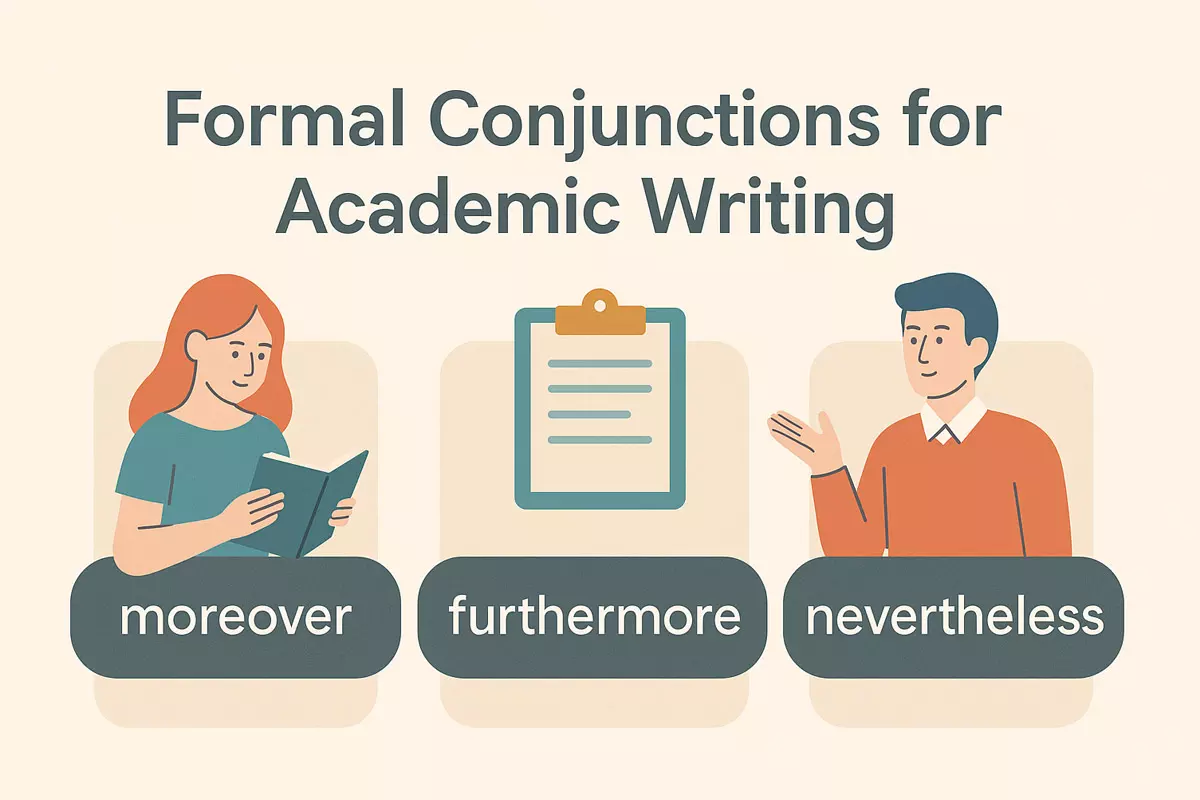 Here we why precise logical connectors are vital in academic writing, examines how words like moreover and nevertheless clarify arguments, reviews placement and formality rules, and provides examples plus editing practice for stronger conjunction use.
- Why academic writing requires precise logical connectors
- Functions of addition, extension, and contrast in argumentation
- How moreover, furthermore, nevertheless improve coherence
- Placement rules and punctuation in formal paragraphs
- Register considerations: avoiding informal alternatives
- Examples from academic papers and research summaries
- Practice: revise a paragraph using stronger formal conjunctions
Improving the flow and clarity of academic writing relies on the thoughtful use of linking words like moreover, furthermore, and nevertheless. These formal connectors play a significant role in guiding readers through complex arguments and ensuring that ideas are presented in a logical and coherent manner. By mastering the use of such transitions, writers can enhance the persuasiveness of their work, connect different points effectively, and present their research in a way that is both professional and easy to follow.
Why academic writing requires precise logical connectors
Clarity and coherence are fundamental in formal texts. Academic readers expect arguments and evidence to be presented in a way that is easy to follow. Logical connectors—such as moreover, furthermore, and nevertheless—act as signposts, guiding readers through complex reasoning and ensuring the flow of ideas. Without these linking words, even strong research or analysis can appear disjointed, making it difficult for the audience to grasp relationships between points.
Ensuring Clear Relationships Between Ideas
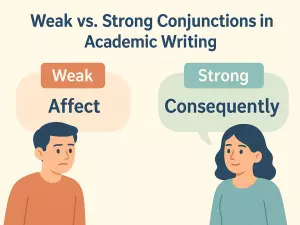
Writers use connectors to indicate how sentences or paragraphs relate. For instance, some connectors add similar information, while others show contrast or consequence. Selecting the right conjunction is crucial: using an additive connector where contrast is needed can mislead or confuse the reader.
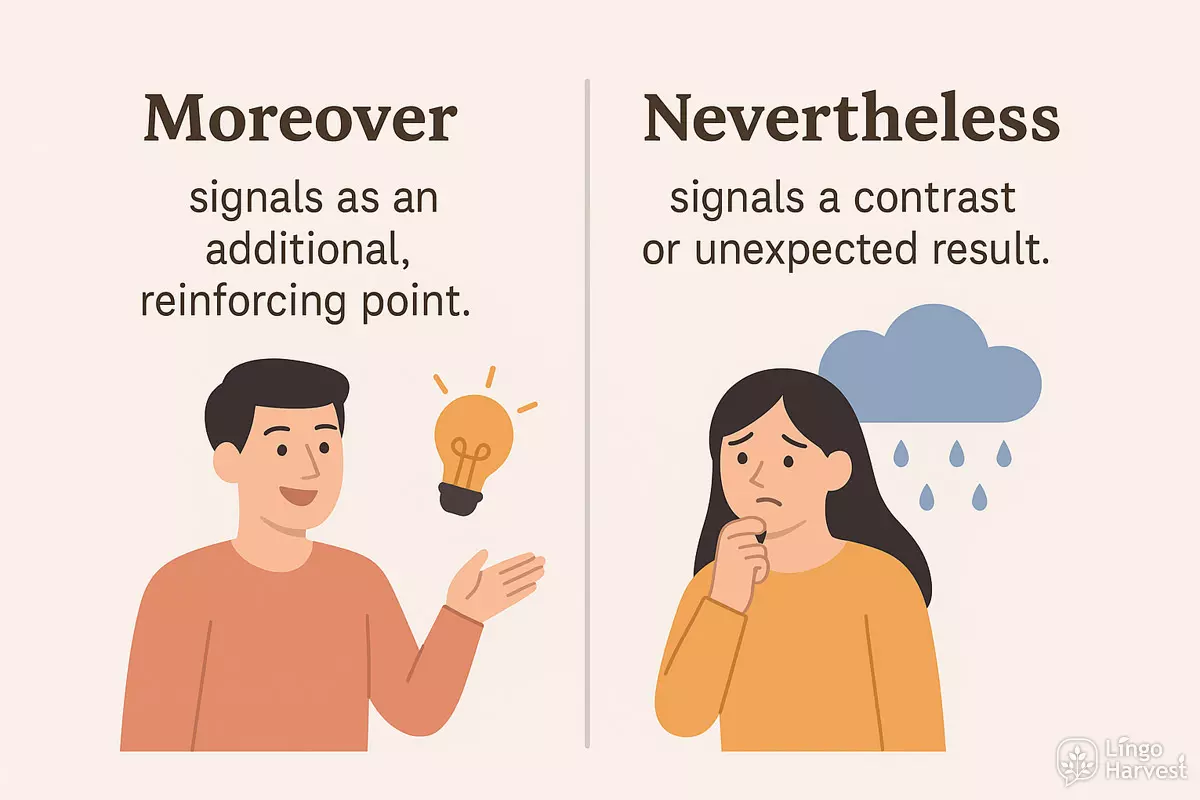
- Morevoer: introduces an additional, reinforcing point.
- Nevertheless: signals a contrast or unexpected result.
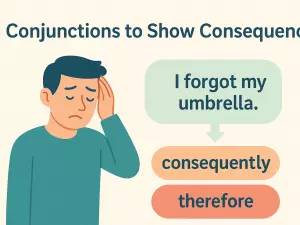
- Consequently: shows result or effect.
- In contrast: highlights differences.
- Similarly: points to a comparable idea.
- However: marks an exception or qualification.
- Therefore: draws a logical conclusion.
- On the other hand: presents an alternative viewpoint.
- For example: introduces an illustration.
- In addition: adds supporting information.
- Thus: indicates a result.
- Conversely: expresses the opposite perspective.
- Nonetheless: acknowledges a point, but maintains the main argument.
- As a result: signals outcome.
- Likewise: connects similar ideas.
The Role of Precision in Academic Tone
In scholarly writing, imprecise use of conjunctions can alter the intended meaning or weaken the argument. For example, using moreover instead of however may suggest agreement where opposition is intended. Accurate selection maintains objectivity and strengthens the credibility of the work.
Common Connectors and Their Functions
| Connector | Function |
|---|---|
| Moreover | Adds an extra, often stronger, point |
| Furthermore | Extends the previous idea with further evidence |
| Nevertheless | Introduces a contrast or exception |
| However | Signals a contradiction or alternative perspective |
| Therefore | Indicates a conclusion or result |
| In addition | Introduces supporting points |
| Consequently | Shows cause and effect |
| On the other hand | Presents an alternative or contrast |
Ultimately, precise logical connectors help writers construct arguments that are not only persuasive but also easy for readers to navigate. This attention to detail is a hallmark of effective academic communication.
Functions of addition, extension, and contrast in argumentation
In academic writing, formal conjunctions such as "moreover," "furthermore," and "nevertheless" serve different purposes that shape logical flow and coherence. These connectors help writers build on ideas, elaborate arguments, or introduce opposing viewpoints, making reasoning clearer for readers.
Addition and Extension
When constructing an argument, authors often need to add supporting points or expand on an existing claim. Words like "moreover" and "furthermore" are used to introduce new information that reinforces or elaborates on a previous statement. They signal to the reader that the next sentence continues in the same direction, strengthening the overall case.
- Moreover: Adds a new, related point that supports the main argument.
- Furthermore: Highlights an additional fact or reason, often used for emphasis.
- In addition: Presents extra information, typically in a neutral tone.
- Also: Introduces another point, often used for simple, direct extension.
- Besides: Suggests something in addition to what has already been mentioned.
- Additionally: Signals another layer of support or detail.
- As well: Implies inclusion of more elements.
- Equally: Shows that the following point is as significant as the prior one.
- Likewise: Connects similar ideas or examples.
- Similarly: Draws a parallel with the previous argument.
Contrast and Opposition
Academic arguments also require the ability to present alternative perspectives or counterpoints. Conjunctions such as "nevertheless" are critical for introducing contrasts or exceptions, helping to acknowledge complexity and anticipate objections.
- Nevertheless: Presents a contrasting idea that partially or wholly opposes the previous statement.
- However: Indicates a change of direction or a contradiction.
- Conversely: Shows an opposite viewpoint or result.
- On the other hand: Introduces an alternative perspective.
- Yet: Suggests an unexpected contrast.
- Although: Presents a concession before stating the main point.
- Despite this: Highlights a contradiction or limitation.
- Nonetheless: Emphasizes persistence or continuation despite a challenge.
- Even so: Underscores a surprising point despite previous information.
- Still: Signals an unresolved or persisting contrast.
Overview: Uses of Formal Conjunctions
The table below summarizes the typical functions of key formal connectors in academic writing, clarifying when each is most appropriate.
| Connector | Typical Use | Example Sentence |
|---|---|---|
| Moreover | Adds a strong, related supporting point | The study is comprehensive; moreover, it provides practical solutions. |
| Furthermore | Emphasizes an additional argument or detail | Furthermore, recent data confirms the trend. |
| Nevertheless | Introduces a contrasting idea or exception | The experiment was inconclusive; nevertheless, it yielded valuable insights. |
| However | Signals contradiction or shift in reasoning | The hypothesis seemed plausible; however, the results differed. |
| Additionally | Offers extra information, less emphatic than "furthermore" | Additionally, the survey included over 1,000 participants. |
| On the other hand | Presents an alternative viewpoint | Some support the proposal. On the other hand, critics cite high costs. |
These formal connectors not only organize information but also clarify relationships between claims. Choosing the right conjunction—whether for adding, extending, or contrasting—enhances both the persuasiveness and clarity of academic arguments.
How moreover, furthermore, nevertheless improve coherence
Academic writing values clarity and logical flow. Transitional devices such as "moreover," "furthermore," and "nevertheless" serve as formal conjunctions that help to organize ideas, making arguments more persuasive and easier to follow. These words guide readers through complex reasoning by signaling the addition of related points, or by introducing contrasts and exceptions. Their strategic use prevents choppy or disjointed prose, allowing for a seamless reading experience.
Enhancing Logical Progression
Using "moreover" and "furthermore" allows writers to expand on previous statements, reinforcing or elaborating on arguments. When a new point supports or strengthens the preceding idea, these connectors make the relationship explicit. On the other hand, "nevertheless" signals a shift, highlighting a contradiction or an unexpected outcome. This contrast is crucial for nuanced analysis, showing that the writer acknowledges alternative perspectives.
- Moreover: Adds information that strengthens the previous point.
- Furthermore: Introduces additional supportive details or arguments.
- Nevertheless: Presents a contrasting idea or exception to what has just been stated.
When to Use Each Connector
A clear understanding of when to use each formal transition improves the structure and persuasiveness of academic texts. Consider the following scenarios:
- To build up evidence or arguments: use "moreover" or "furthermore".
- To indicate a surprising contrast or exception: use "nevertheless".
- To prevent repetitive sentence structures: alternate among these transitions as appropriate.
Examples in Academic Sentences
Writers often benefit from seeing these conjunctions in context. Here are sample sentences demonstrating their use:
- The study revealed a significant correlation. Moreover, it identified several contributing factors.
- No adverse effects were observed. Furthermore, participants reported improved well-being.
- The hypothesis was widely accepted. Nevertheless, some critics remained unconvinced.
Comparing Functions
Below is a comparison of these conjunctions, highlighting their primary roles and typical usage patterns:
| Connector | Function | Example Usage |
|---|---|---|
| Moreover | Adds information; strengthens a point | The results were significant; moreover, they were consistent across trials. |
| Furthermore | Adds supporting detail or evidence | The new method is efficient; furthermore, it reduces costs. |
| Nevertheless | Introduces contrast or exception | The solution is simple; nevertheless, its implementation is challenging. |
Tips for Effective Use
Varying your transitions improves readability and coherence. Overusing any single conjunction may distract or bore the reader. Instead, select the connector that best fits the logical relationship you wish to express. Consider the flow of your argument, and place these words at the beginning of sentences or clauses to clearly signal connections. By thoughtfully incorporating "moreover," "furthermore," and "nevertheless," academic writers clarify relationships among ideas, making their arguments stronger and more coherent for readers.
Placement rules and punctuation in formal paragraphs
When using formal conjunctions like moreover, furthermore, and nevertheless in academic writing, their placement and punctuation are crucial for clarity and coherence. Typically, these connectors appear at the beginning of a sentence, but they can also be inserted after the subject for subtle emphasis. Proper punctuation ensures smooth transitions and prevents ambiguity.
Common Placement Patterns
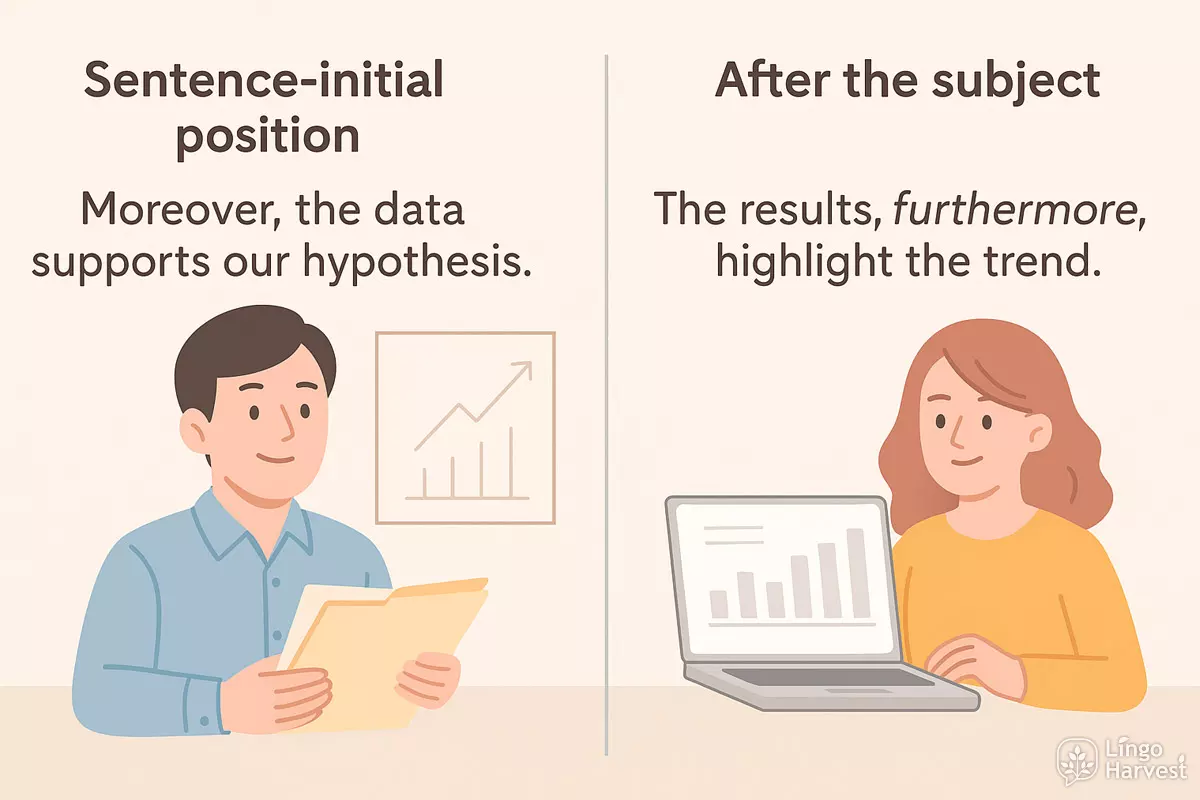
- Sentence-initial position: "Moreover, the data supports our hypothesis."
- After the subject: "The results, furthermore, highlight the trend."
- Between two independent clauses: "The experiment was conclusive; nevertheless, further research is needed."
Punctuation Guidelines
- Use a comma after moreover, furthermore, or nevertheless when they start a sentence.
- When these conjunctions interrupt a clause, set them off with commas on both sides.
- If connecting two independent clauses, use a semicolon before and a comma after the conjunction.
| Conjunction | Example (with punctuation) | Placement |
|---|---|---|
| Moreover | Moreover, the findings were consistent. | Sentence-initial |
| Furthermore | The study, furthermore, revealed new insights. | Mid-clause |
| Nevertheless | The theory was controversial; nevertheless, it gained support. | After semicolon |
| Nevertheless | Nevertheless, these results require confirmation. | Sentence-initial |
Practical Tips for Academic Writing
- Choose the conjunction that best reflects the logical relationship: addition (moreover, furthermore) or contrast (nevertheless).
- Avoid overusing these connectors; rely on them for emphasis or clarification.
- Check that each conjunction links ideas smoothly without creating sentence fragments.
- Revise for variety—mix sentence structures to maintain reader engagement.
By paying attention to the placement and punctuation of formal connectors, you ensure your academic paragraphs flow logically and your arguments remain precise. Proper use of these elements contributes to a polished, professional tone in scholarly communication.
Register considerations: avoiding informal alternatives
Academic writing relies on a formal register to ensure clarity, precision, and professionalism. Choosing the right conjunctions is crucial, as informal connectors can undermine the tone and credibility of your work. Instead of casual transitions, academic texts favor formal alternatives like moreover, furthermore, and nevertheless to signal relationships between ideas.
Why avoid informal connectors?
Informal linking words such as "plus," "so," or "but" are common in speech and everyday writing but are considered too casual for scholarly contexts. Using them can make arguments seem less rigorous and distract from your main points. Formal conjunctions, by contrast, contribute to a cohesive and authoritative style.
Common informal vs. formal conjunctions
Writers often reach for familiar connectors out of habit. Here are some informal alternatives to avoid, along with their formal counterparts preferred in academic writing:
- Plus → Moreover, Additionally
- Also → Furthermore, In addition
- But → However, Nevertheless
- So → Therefore, Consequently
- And (at the start of a sentence) → Moreover, Additionally
- Yet (at the start of a sentence) → Nevertheless, Nonetheless
- Then (indicating result) → Subsequently, As a result
- Anyway → Nonetheless, In any case
- Besides (as a transition) → Moreover, Additionally
- Basically → Fundamentally, Essentially
- Really (for emphasis) → Indeed
- Just (for limitation) → Merely
- Like (for comparison) → Such as, For instance
- Sort of → Somewhat, To some extent
- Maybe → Perhaps
- Really (for certainty) → Indeed, Certainly
- Lots of → Many, A great deal of
- Anyways → Nevertheless, Nonetheless
Impact on academic tone
The use of precise, formal conjunctions strengthens the logical flow of your arguments and demonstrates command of academic conventions. When editing, check transitions between sentences and paragraphs, replacing any informal connectors with their formal equivalents. This habit not only improves readability but also signals seriousness and respect for your audience.
Summary of best practices
- Identify and replace informal conjunctions during revision.
- Familiarize yourself with a variety of formal transitions.
- Maintain consistency in register throughout your text.
- Remember that subtle shifts in connector choice can significantly affect tone.
By consistently using formal conjunctions, your writing will better meet the expectations of academic audiences and uphold a professional standard.
Examples from academic papers and research summaries
Writers in scholarly contexts often rely on linking adverbs like moreover, furthermore, and nevertheless to clarify the flow of ideas and signal relationships between arguments. These formal conjunctions help readers track additional points, contrasts, or exceptions. Reviewing how these terms appear in published research can be useful for students and academic authors aiming to emulate effective style.
Sample Sentences from Research Literature
- Moreover: "The proposed method significantly reduces computational time; moreover, it improves accuracy across multiple datasets."
- Furthermore: "The survey included 500 participants from diverse backgrounds. Furthermore, longitudinal data were collected to assess changes over time."
- Nevertheless: "The intervention yielded positive outcomes in most cases. Nevertheless, a small subset of participants did not benefit as expected."
- "The results confirmed the initial hypothesis. Moreover, new patterns emerged that warrant further investigation."
- "Furthermore, the authors note that previous studies have largely ignored this variable."
- "The sample size was limited; nevertheless, the findings offer valuable insights."
- "The procedure is simple and cost-effective. Moreover, it can be easily adapted for other applications."
- "Furthermore, the analysis revealed significant regional differences."
- "Despite the challenges, the experiment succeeded. Nevertheless, some limitations remain."
- "The model achieved high precision. Moreover, recall rates were also substantially improved."
- "Furthermore, these outcomes are consistent with earlier research."
- "The treatment was generally well-tolerated. Nevertheless, adverse effects were reported in a minority of cases."
- "Moreover, the data support the theory proposed by Smith and colleagues."
- "Furthermore, this approach enables real-time monitoring."
- "The findings align with previous work; nevertheless, caution is warranted when generalizing the results."
Usage Patterns in Academic Contexts
Writers often place these conjunctions at the start of a sentence to mark a clear logical relationship. Moreover and furthermore typically introduce additional supporting information, while nevertheless signals a contrast or unexpected turn.
Comparing Conjunction Functions
| Conjunction | Typical Use in Academic Writing |
|---|---|
| Moreover | To add information of equal or greater importance; signals reinforcement or expansion. |
| Furthermore | To introduce a further point in addition to what has been stated; often used with parallel ideas. |
| Nevertheless | To present a contrasting idea, limitation, or exception that qualifies the previous statement. |
These patterns and examples show how formal connectors contribute to clarity and logical flow in academic prose. Reading authentic examples from research articles can help writers choose the most appropriate conjunction for their argumentative and expository needs.
Practice: revise a paragraph using stronger formal conjunctions
Effective academic writing often relies on clear connections between ideas. Using formal linking words such as moreover, furthermore, and nevertheless can significantly enhance the cohesion and professionalism of your work. Let's explore how to identify weak conjunctions and replace them with more precise, formal alternatives.
Original Paragraph Example
Many students find academic writing difficult. Also, they struggle with organizing their ideas. But, they can improve their skills with practice. And, they should use formal linking words to make their writing clearer.
Task: Improve the Paragraph
Rewrite the paragraph using stronger, more formal conjunctions. Focus on replacing informal transitions (like "also", "but", "and") with formal alternatives. Aim for clarity and logical flow.
- Identify the informal conjunctions in the original paragraph.
- Replace them with appropriate formal options, such as moreover, furthermore, or nevertheless.
- Revise sentence structure if needed for a natural, academic tone.
Common Formal Conjunctions to Use
- Moreover → Moreover, the data confirms the trend.
- Furthermore → Furthermore, the results support this claim.
- Nevertheless → Nevertheless, the project continued as planned.
- However → However, the evidence was not strong enough.
- Consequently → Consequently, we had to revise the plan.
- In addition → In addition, several new factors emerged.
- On the other hand → On the other hand, the alternative approach is cheaper.
- Therefore → Therefore, further testing is required.
- Similarly → Similarly, the second sample shows a comparable pattern.
- In contrast → In contrast, the previous study found no correlation.
- As a result → As a result, performance improved noticeably.
- Thus → Thus, the hypothesis can be accepted.
- Nonetheless → Nonetheless, the team remained optimistic.
- Conversely → Conversely, the control group showed no improvement.
- Subsequently → Subsequently, the system was updated.
- Meanwhile → Meanwhile, the committee reviewed the proposal.
- Likewise → Likewise, the next phase followed the same procedure.
- Instead → Instead, we focused on alternative methods.
- Otherwise → Otherwise, the results might be misleading.
- Nonetheless → Nonetheless, the findings remain significant.
Practice Activity
Revise the paragraph below by replacing informal conjunctions with stronger, formal ones:
Many students find academic writing difficult. Also, they struggle with organizing their ideas. But, they can improve their skills with practice. And, they should use formal linking words to make their writing clearer.
Write your revised version before checking the suggested answer.
Show answers
Many students find academic writing difficult. Moreover, they struggle with organizing their ideas. Nevertheless, they can improve their skills with practice. Furthermore, they should use formal linking words to make their writing clearer.
Tips for Choosing the Right Conjunction
- Use moreover or furthermore to add related points.
- Use nevertheless or however to introduce a contrast or exception.
- Choose therefore or consequently to show results or conclusions.
Practicing with real examples is the best way to strengthen your use of formal transitions in academic writing. Try rewriting your own paragraphs, replacing informal connectors with more advanced alternatives for a polished, scholarly tone.