Advanced Cohesion with Linking Adverbs: Moreover, Nevertheless, Thus

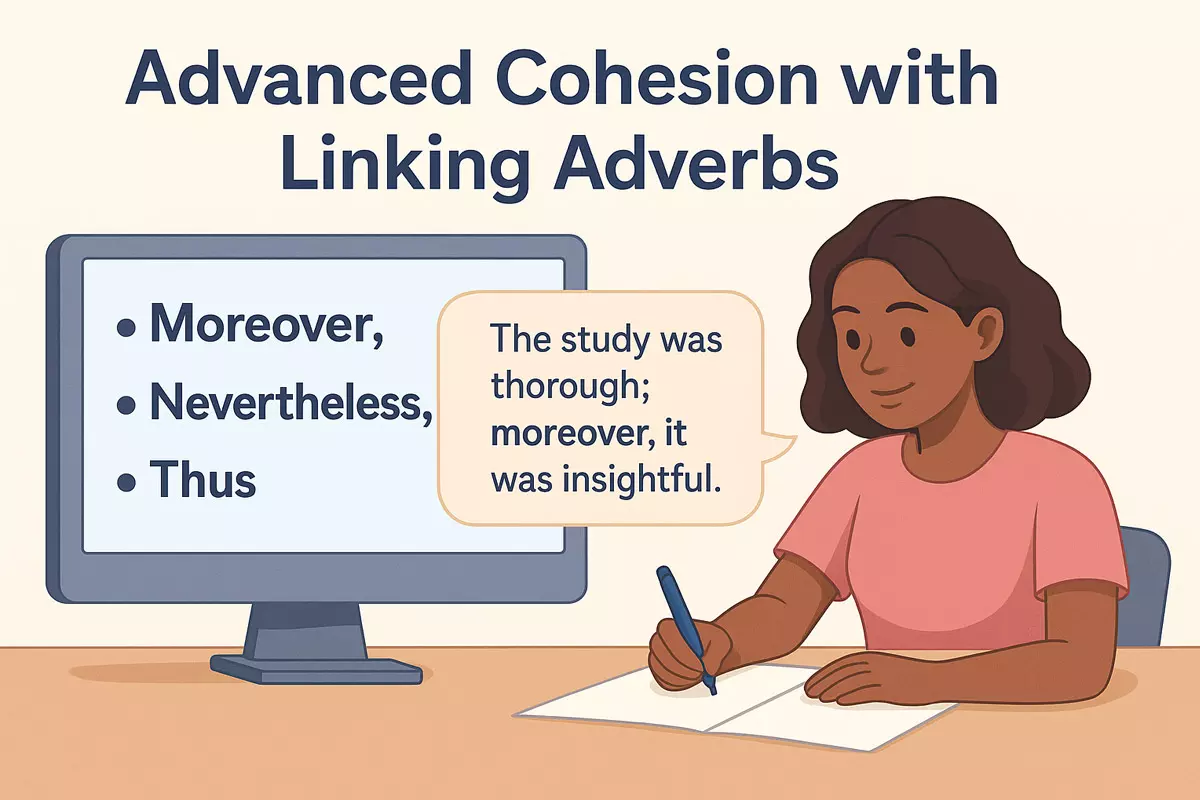 Here we how linking adverbs aid cohesion, explains their categories like addition and contrast, describes their sentence and clause positions, addresses punctuation and register, highlights common confusions, and provides practice with examples.
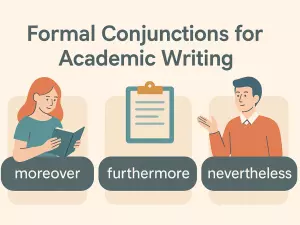
Ensuring your writing flows smoothly and logically is crucial for clear communication, and using connective adverbs such as moreover, nevertheless, and thus can significantly enhance your style. These transitional words link your ideas effectively, allowing your arguments to develop in a coherent and persuasive manner. By guiding readers from one point to the next, connective adverbs not only improve readability but also add a level of sophistication and clarity to your work, helping you convey your message more convincingly.
Role of linking adverbs in cohesion
Effective writing relies on clear connections between ideas, and linking adverbs are essential tools for achieving this flow. Words like moreover, nevertheless, and thus signal relationships such as addition, contrast, or result, helping readers understand how sentences and paragraphs relate to each other. These adverbs act as bridges, guiding the reader through an argument or explanation without confusion.
How linking adverbs improve text coherence
Using appropriate linking adverbs clarifies the writer’s intent. For instance, moreover introduces additional points, nevertheless highlights exceptions or contrasts, and thus indicates logical outcomes. Without such markers, texts can feel abrupt or disjointed, making it harder for readers to follow the logic.
- Furthermore – adds more information to support a claim
- However – introduces a contrast or opposing idea
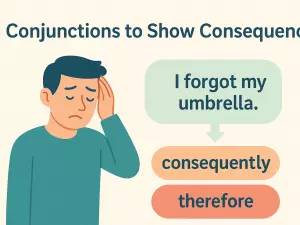
- Consequently – shows a result or effect
- Meanwhile – indicates simultaneous actions
- Therefore – signals a logical conclusion
- Nonetheless – presents a surprising or unexpected point
- Similarly – draws a comparison
- On the other hand – provides an alternative viewpoint
- Otherwise – suggests a consequence if the previous condition is not met
- In addition – introduces supplementary information
- In contrast – emphasizes differences
- Subsequently – indicates a sequence or order
- Likewise – shows similarity
- Nonetheless – signals persistence despite circumstances
- Hence – introduces a reason or result
- Otherwise – points to an alternative outcome
Common pitfalls to avoid
Overusing linking adverbs or placing them awkwardly can disrupt the natural flow of writing. It is important to choose adverbs that genuinely reflect the relationship between ideas. Misusing them, such as using thus where a contrast is needed, can confuse readers and weaken cohesion.
Comparing functions of key linking adverbs
| Linking Adverb | Function in Text |
|---|---|
| Moreover | Adds supporting or additional information |
| Nevertheless | Introduces a contrast or an unexpected turn |
| Thus | Signals a logical result or conclusion |
| However | Presents an opposing point or exception |
| Consequently | Shows cause and effect |
| Furthermore | Adds emphasis or additional arguments |
Careful and varied use of these connectors can transform writing from a loose collection of statements into a coherent, persuasive text. By helping readers navigate ideas, linking adverbs play a vital part in advanced cohesion.
Categories: addition, contrast, result, summary
Linking adverbs serve various functions in connecting ideas smoothly. They are commonly grouped based on the logical relation they express: adding information, showing contrast, indicating results, or summarizing points. Understanding these groupings helps in choosing the right connector for a specific context and improves the flow of academic and professional writing.
Addition
Adverbs of addition introduce extra information that supports or extends a previous statement. Common examples include:
- Moreover
- Furthermore
- In addition
- Also
- Besides
- Additionally
- What's more
These adverbs help to build arguments by layering supporting facts or examples.
Contrast
To highlight differences or unexpected twists, adverbs of contrast are used. These include:
- Nevertheless
- However
- On the other hand
- In contrast
- Yet
- Conversely
- Still
- Even so
Such connectors are vital for nuanced arguments or when presenting opposing viewpoints.
Result
Result adverbs signal the outcome or consequence of a previous statement. Some typical choices are:
- Thus
- Therefore
- Consequently
- As a result
- Hence
- Accordingly
- For this reason
These are especially useful in academic or technical writing to clarify cause-and-effect relationships.
Summary
When wrapping up ideas or drawing conclusions, summary adverbs come into play:
- In conclusion
- To sum up
- Overall
- In summary
- To conclude
- Briefly
- In short
- All in all
These guide the reader toward the main takeaway or final thought.
| Function | Typical Linking Adverbs |
|---|---|
| Addition | Moreover, Furthermore, In addition, Also, Besides |
| Contrast | Nevertheless, However, On the other hand, Yet, Conversely |
| Result | Thus, Therefore, Consequently, Hence, Accordingly |
| Summary | In conclusion, To sum up, Overall, In summary, Briefly |
Choosing the right linking adverb depends on your communicative goal—whether you want to add, oppose, explain consequences, or conclude. Mastery of these categories leads to clearer, more cohesive writing.
Sentence vs clause position of linking adverbs
When using linking adverbs such as moreover, nevertheless, and thus, their placement can significantly affect both the flow and clarity of your writing. These adverbs can be positioned either at the beginning of an entire sentence or within a clause, and each choice brings subtle differences in emphasis and style.
Initial sentence position
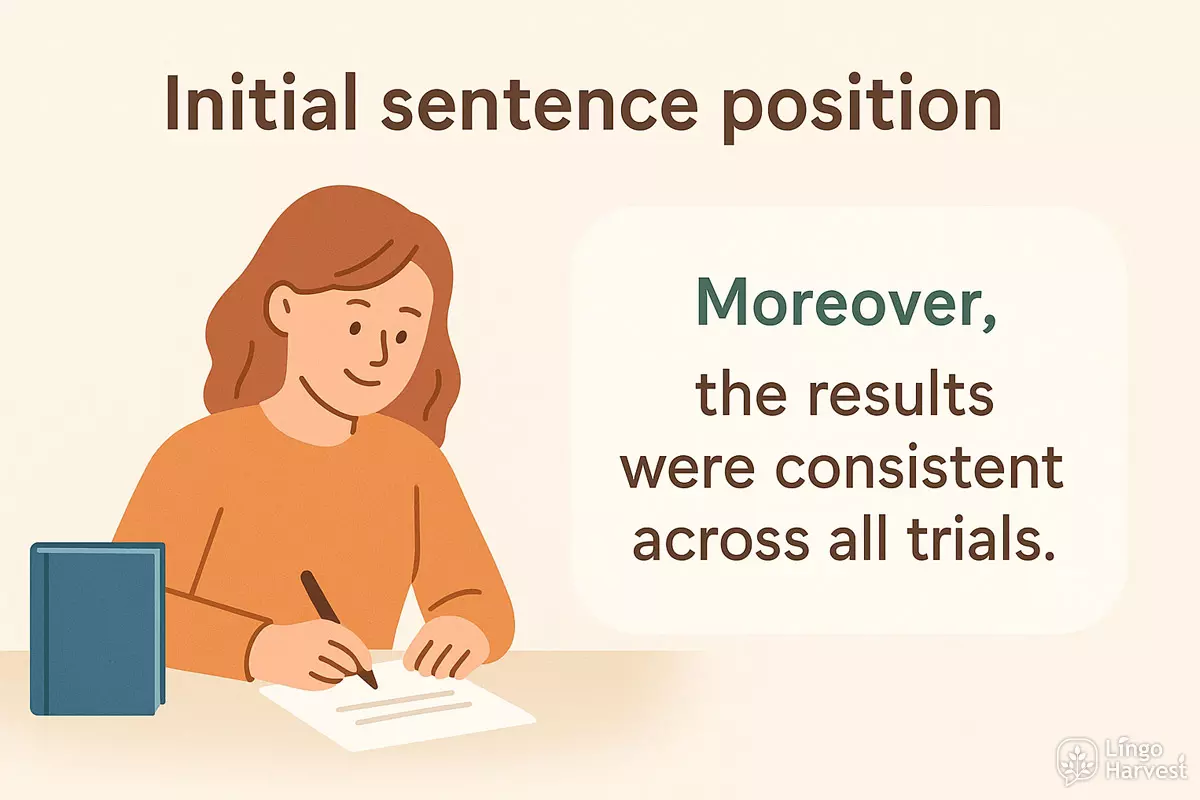
Placing a linking adverb at the start of a sentence is the most common option. This position signals a connection to the previous idea and helps guide the reader through your argument or narrative.
- Moreover, the results were consistent across all trials.
- Nevertheless, the hypothesis remains unproven.
- Thus, we can conclude that the method is effective.
Starting with a linking adverb provides a clear transition and often sets the tone for the sentence that follows.
Within a clause
Alternatively, linking adverbs may appear inside a clause, usually after the subject or the first auxiliary verb. This placement is less formal and can subtly shift the focus, sometimes making the writing feel more conversational or nuanced.
- The results, moreover, were consistent across all trials.
- The hypothesis, nevertheless, remains unproven.
- We can, thus, conclude that the method is effective.
This internal placement integrates the adverb more closely with the statement, sometimes softening the transition or highlighting the adverb’s role in modifying the entire clause.
Comparison of positions
The table below summarizes key distinctions between placing linking adverbs at the start of a sentence versus within a clause, with examples for each:
| Position | Example |
|---|---|
| Sentence-initial | Nevertheless, she submitted the report on time. |
| After the subject | She, nevertheless, submitted the report on time. |
| After the first auxiliary verb | She has, moreover, completed all assignments. |
| Between clauses (with a semicolon) | The test was difficult; thus, many students struggled. |
Common patterns and punctuation
- At the start of a sentence, linking adverbs are typically followed by a comma. - When placed within a clause, commas are used before and after the adverb. - After a semicolon, the adverb is capitalized and followed by a comma.
Quick reference: Flexible adverb positioning
Writers can use the following linking adverbs flexibly in sentence-initial or clause-internal positions:
- However
- Therefore
- Consequently
- Furthermore
- Meanwhile
- Otherwise
- Instead
- Moreover
- Nevertheless
- Thus
- Indeed
- Besides
- Still
- Subsequently
- Alternatively
- Likewise
- In addition
- Similarly
Punctuation and register choices
When using linking adverbs such as "moreover," "nevertheless," and "thus," it’s essential to pay attention to both punctuation and formality. These adverbials often appear at the beginning of a sentence, but they can also be placed mid-sentence or at the end for stylistic variation. The placement impacts both the flow and the nuance of your writing.
Common punctuation patterns
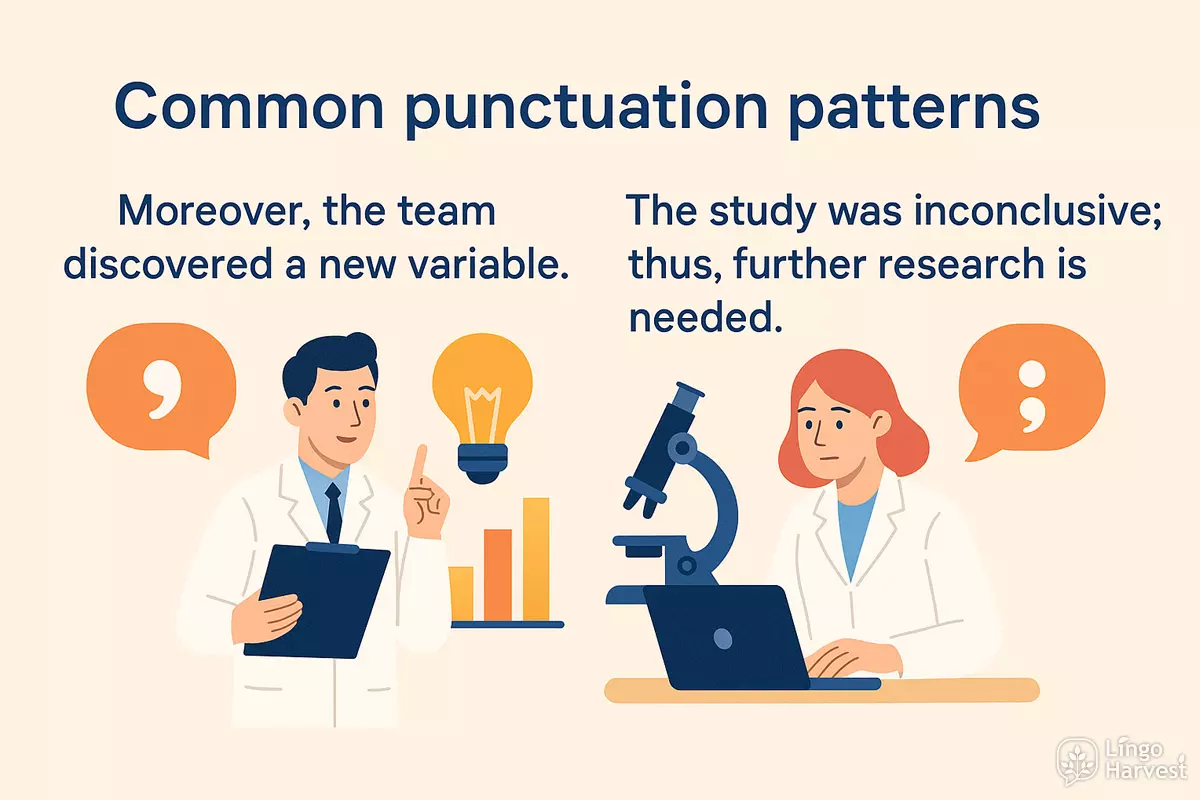
Linking adverbs typically require a comma after them when they introduce a clause. If positioned between two independent clauses, a semicolon is usually placed before the adverb, and a comma follows it. For example: "The experiment failed; nevertheless, the results were informative." When these adverbs appear within a sentence, commas set them off from the rest of the clause.
- Moreover, the team discovered a new variable.
- The study was inconclusive; thus, further research is needed.
- The data, nevertheless, suggests a trend.
- She was very tired. Nevertheless, she finished the report.
- Thus, we can conclude the hypothesis holds.
- There were many failures; moreover, the costs increased.
- He objected, nevertheless, the motion passed.
- The solution is not perfect. Thus, improvements are necessary.
- We finished on time; moreover, we stayed under budget.
- They disagreed on the method. Nevertheless, they collaborated well.
Register: Formality and context
"Moreover," "nevertheless," and "thus" are generally used in formal or academic writing. They help the text sound objective and structured. In less formal contexts, alternatives like "also," "but," or "so" might be preferred. Choosing a linking adverb that matches the tone of your writing is crucial for coherence and appropriateness.
| Linking Adverb | Typical Register | Punctuation Example |
|---|---|---|
| Moreover | Formal/Academic | We found no errors; moreover, the data matched predictions. |
| Nevertheless | Formal/Academic | The task was difficult. Nevertheless, she succeeded. |
| Thus | Formal/Academic | He was late; thus, the meeting started without him. |
| Also | Neutral/Informal | We finished early. Also, everyone was satisfied. |
| But | Informal | It rained, but we still went outside. |
| So | Neutral/Informal | He forgot his keys, so he called a friend. |
Understanding where and how to use these adverbs, along with proper punctuation, ensures your writing remains clear and professional. Choosing the appropriate connector and register not only clarifies relationships between ideas but also aligns your writing with reader expectations.
Confusion between similar adverbs
Choosing the right linking adverb can be challenging, especially when words like moreover, nevertheless, and thus seem interchangeable at first glance. Each of these connectors serves a distinct role in organizing ideas, and mixing them up can affect the clarity and accuracy of your writing. Understanding their specific functions is essential for advanced cohesion.
Common mix-ups and why they happen
Writers often confuse these adverbs because they all join sentences or clauses, but their nuances differ. For instance, moreover adds extra information, nevertheless introduces contrast, and thus signals a result. Misusing them can lead to awkward or illogical connections.
- Moreover → used to add supporting information to a previous statement.
- Nevertheless → introduces a surprising or unexpected contrast.
- Thus → presents a consequence or logical result.
Detailed comparison of linking adverbs
To clarify their distinct uses, see the table below, which compares function, typical placement, and example sentences for each adverb. This structured overview can help you select the right connector for your argument or narrative.
| Adverb | Function | Sentence Position | Example |
|---|---|---|---|
| Moreover | Adds further information to strengthen a point | Usually at the start or after a semicolon | She is talented; moreover, she is hardworking. |
| Nevertheless | Introduces a contrast or unexpected outcome | Often at the beginning or after a semicolon | It was raining; nevertheless, we went hiking. |
| Thus | Shows consequence or logical result | Typically at the start or after a semicolon | He didn’t study; thus, he failed the exam. |
| However | Signals contrast, often less surprising than “nevertheless” | Start, mid, or after a semicolon | She was tired; however, she finished the race. |
| Therefore | Introduces a conclusion or result, similar to “thus” | Start or after a semicolon | The data is incomplete; therefore, the results are inconclusive. |
| Furthermore | Adds additional, reinforcing information | Usually at the beginning or after a semicolon | The plan is risky; furthermore, it is expensive. |
Tips to avoid mistakes
Here are some quick reminders for choosing the right linking adverb:
- Ask yourself if you are adding, contrasting, or explaining a result.
- Double-check if the tone fits: “nevertheless” for surprise, “thus” for logical steps, “moreover” for extra support.
- Practice with sample sentences to see each connector in context.
By recognizing the subtle differences among these adverbs, you can improve the flow and cohesion of your writing, ensuring each idea is linked precisely and logically.
Practice: insert suitable linking adverbs into a text
Integrating linking adverbs into your writing improves flow and logical connections between ideas. This exercise will help you practice inserting appropriate linking adverbs such as moreover, nevertheless, and thus into short passages. These adverbs signal addition, contrast, or result, and choosing the right one depends on the relationship between the sentences.
Task 1: Fill in the gaps
Read the following text. Decide which linking adverb fits best in each blank: moreover, nevertheless, or thus.
- The seminar was scheduled for 9 AM. _______, many participants arrived late due to heavy traffic.
- The new method is cost-effective. _______, it has been adopted by several major companies.
- The weather forecast predicted sunshine. _______, it rained throughout the afternoon.
- The initial results were inconclusive. _______, further research is required.
- She speaks four languages fluently. _______, she can easily communicate with international clients.
- The experiment was carefully designed. _______, unexpected variables still affected the outcome.
- The team completed the project ahead of schedule. _______, the manager praised their efficiency.
- The model failed to predict the final outcome. _______, it needs significant revision.
- The proposal was well-structured. _______, the board approved it immediately.
- He practiced regularly for months. _______, his performance improved noticeably.
Show answers
- Nevertheless
- Moreover
- Nevertheless
- Thus
- Moreover
- Nevertheless
- Therefore
- Thus
- Therefore
- Consequently
Task 2: Choose the best linking adverb
Select the most suitable linking adverb for each sentence below.
- The proposal was well-researched. _______, the committee approved it unanimously.
- a) Nevertheless
- b) Moreover
- c) Thus
- The instructions were clear. _______, several errors occurred.
- a) Nevertheless
- b) Moreover
- c) Thus
- The product is affordable. _______, it is also environmentally friendly.
- a) Nevertheless
- b) Moreover
- c) Thus
- The data strongly support the hypothesis. _______, further tests are still required.
- a) Nevertheless
- b) Moreover
- c) Thus
- The weather was extremely cold. _______, many people still attended the outdoor event.
- a) Nevertheless
- b) Moreover
- c) Thus
- The new policy reduces costs. _______, it simplifies the reporting process.
- a) Nevertheless
- b) Moreover
- c) Thus
- The sample size was very small. _______, the results cannot be generalized.
- a) Nevertheless
- b) Moreover
- c) Thus
- She submitted her application late. _______, it was still accepted.
- a) Nevertheless
- b) Moreover
- c) Thus
- The course covers theoretical concepts. _______, it includes practical case studies.
- a) Nevertheless
- b) Moreover
- c) Thus
- The experiment followed all safety guidelines. _______, no accidents occurred.
- a) Nevertheless
- b) Moreover
- c) Thus
Show answers
- c) Thus
- a) Nevertheless
- b) Moreover
- a) Nevertheless
- a) Nevertheless
- b) Moreover
- c) Thus
- a) Nevertheless
- b) Moreover
- c) Thus
Common functions of linking adverbs
- Moreover: adds similar or supporting information.
- Nevertheless: introduces a contrast or unexpected outcome.
- Thus: signals a result or consequence.
Extended examples for practice
Below are more sentences where you can practice inserting linking adverbs:
- The experiment was a success. _______, the team decided to publish their findings.
- She was exhausted. _______, she continued working late into the night.
- The new policy reduces paperwork. _______, it saves staff time.
- The solution appeared simple. _______, it was difficult to implement in practice.
- He had never visited Asia before. _______, he adapted quickly to the new culture.
- They implemented the new software. _______, productivity increased within weeks.
- The weather was terrible. _______, the event was not canceled.
- The restaurant offers vegan options. _______, it is popular among a diverse clientele.
- The journey was long. _______, everyone arrived safely.
- The instructions were complicated. _______, the students managed to complete the task.
Show answers
- Thus
- Nevertheless
- Moreover
- Nevertheless
- Nevertheless
- Thus
- Nevertheless
- Moreover
- Nevertheless
- Nevertheless
By regularly practicing with these sample sentences and choosing the most fitting linking adverbs, you can significantly improve the cohesion and clarity of your academic and professional writing.