Thematic Nouns in Paragraph Development for Academic Texts

 Here we the role of thematic nouns in academic writing, showing how they link sentences, maintain topic focus, and improve paragraph cohesion. It also addresses common learner errors and provides practice to enhance paragraph flow.
- What thematic nouns are in academic writing
- How thematic nouns link sentences inside a paragraph
- Using thematic nouns to maintain topic focus
- Paragraph cohesion through repeated noun reference
- Avoiding abrupt topic shifts with thematic nouns
- Common learner errors with weak paragraph themes
- Practice: improve paragraph flow using thematic nouns
Effective academic writing relies on clear organization and logical connections between ideas, and one powerful technique to achieve this is the strategic use of central nouns. By repeating key nouns throughout a paragraph, writers create reference points that help readers follow complex arguments and understand the relationships between concepts. This technique not only enhances coherence but also ensures that the main ideas remain in focus, making scholarly texts more accessible and easier to navigate for their audience.
What thematic nouns are in academic writing
In academic texts, thematic nouns act as organizing anchors that help writers link ideas, summarize concepts, and maintain coherence. These nouns, sometimes called "shell nouns" or "carrier nouns," refer to broad concepts, processes, or categories rather than specific people or objects. Their primary function is to encapsulate complex information or arguments in a single word or phrase, making it easier to refer back to earlier points or introduce new ones.
Characteristics of thematic nouns
- Abstractness: They often refer to intangible ideas, such as “phenomenon” or “issue.”
- Referential function: Such nouns encapsulate previous information or upcoming arguments, providing cohesion between sentences and paragraphs.
- Flexibility: Writers use them to generalize, summarize, or signal a shift in focus.
- Frequency: They frequently appear at the beginning of sentences, setting the theme or topic for what follows.
Common types and examples

Writers in scholarly contexts frequently use certain thematic nouns to build arguments and structure paragraphs. Here are some widely used examples:
- Aspect → One important aspect of the study focuses on student motivation.
- Concept → The concept of sustainability has become central to modern research.
- Evidence → Strong evidence supports the effectiveness of this method.
- Factor → Time was a major factor influencing the results.
- Implication → The implication of these findings is far-reaching.
- Issue → The issue continues to divide experts across disciplines.
- Method → The method used in this experiment follows established standards.
- Outcome → The outcome suggests a positive trend in performance.
- Perspective → Each perspective offers a unique interpretation of the data.
- Process → The process requires careful planning and consistent effort.
- Reason → A key reason for the decline was lack of funding.
- Result → The result confirms the initial hypothesis of the researchers.
- Role → Technology plays a major role in shaping modern communication.
- Significance → The significance of this discovery cannot be overstated.
- Situation → The situation demands immediate attention from policymakers.
- Strategy → Their strategy aims to reduce long-term financial risk.
- Theme → The theme of identity appears throughout the novel.
- Trend → The trend shows an increasing interest in renewable energy.
- View → Her view on the topic differs from mainstream opinion.
- Variable → Temperature was the main variable measured in the study.
Functions in academic paragraphs
Thematic nouns are not just vocabulary choices—they play a structural role. They allow writers to:
- Refer back to complex ideas without repeating details
- Summarize or evaluate previous arguments
- Introduce new lines of reasoning
- Transition smoothly between topics
How thematic nouns support coherence
By using these nouns, writers can connect sentences and ideas more efficiently. For instance, after presenting several findings, a writer might say, “This evidence suggests that...”. Here, “evidence” serves as a thematic noun, summarizing prior information and guiding the reader toward the next analytical step.
Comparison: Thematic vs. Specific Nouns
| Thematic Noun | Specific Noun |
|---|---|
| Phenomenon | Global warming |
| Approach | Case study method |
| Outcome | Improved test scores |
| Issue | Lack of funding |
| Factor | Teacher experience |
Understanding and using thematic nouns skillfully is fundamental for clear, cohesive, and persuasive academic writing. They are essential building blocks for developing and connecting ideas across paragraphs.
How thematic nouns link sentences inside a paragraph
Thematic nouns serve as cohesive devices that help writers maintain clarity and unity within academic paragraphs. These "umbrella" terms, such as "issue," "process," or "phenomenon," allow authors to refer back to earlier ideas or to group related details under a shared concept. By introducing a thematic noun after an initial statement, writers can then elaborate, clarify, or provide evidence in subsequent sentences without repeating the original noun or phrase.
Functions of thematic nouns in academic writing
- Summarizing preceding information with a single, general term
- Enabling smooth transitions between sentences
- Reducing unnecessary repetition of specific terms
- Helping readers follow the logical flow of ideas
- Allowing expansion on a topic without restating the main subject
- Signaling shifts from examples to generalizations
- Facilitating analysis by grouping related points
- Providing a bridge to new but related information
- Clarifying the scope of discussion
- Supporting coherence in argumentation
Common thematic nouns and their uses
Writers often use broad, abstract nouns to encapsulate complex ideas. Some frequent choices include:
- Framework → The framework organizes ideas into clear categories.
- Hypothesis → The hypothesis predicts a measurable difference between groups.
- Dimension → One dimension of the topic involves cultural identity.
- Correlation → The correlation between diet and sleep is well documented.
- Resource → Water is a vital resource for agricultural development.
- Interpretation → This interpretation challenges traditional economic models.
- Procedure → The procedure must be repeated to confirm the findings.
- Mechanism → The mechanism behind language learning is still debated.
- Cycle → The cycle repeats every twelve months in stable climates.
- Evaluation → The evaluation revealed areas that require improvement.
- Priority → Public health is a major priority for governments worldwide.
- Model → The model helps predict future population growth.
- Transformation → The transformation of the industry shocked the market.
- Observation → Each observation adds detail to the overall picture.
- Indicator → This indicator shows a significant rise in productivity.
- Hypothesis → The hypothesis was supported by experimental data.
- Procedure → The procedure ensures accurate measurement.
- Influence → Cultural influence affects consumer behavior.
- Benefit → One benefit of online learning is flexibility.
- Variable → Rainfall is a key variable in climate studies.
Example: Linking with thematic nouns
Consider the following sequence:
- Many cities have experienced rapid population growth in recent decades.
- This trend has led to increased demand for housing and infrastructure.
- Another consequence is the strain on public services.
Here, "trend" and "consequence" function as thematic nouns, connecting the sentences and guiding the reader through the argument.
Benefits of using thematic nouns
By employing thematic nouns, writers can streamline their text and avoid awkward repetition. This approach not only makes the prose more readable but also helps emphasize the relationships between different points. Furthermore, thematic nouns allow for a more analytical style, which is especially valued in academic contexts.
Using thematic nouns to maintain topic focus
Academic paragraphs often risk losing clarity when writers rely on vague pronouns or repeat the same subject without variation. Thematic nouns—also known as “topic nouns” or “summary nouns”—help keep writing organized by referring back to ideas already introduced or by grouping information under a unifying label. When used thoughtfully, these linguistic tools allow writers to connect sentences smoothly and underline the thread of argument or explanation.
How thematic nouns clarify connections
Instead of repeating a specific term, thematic nouns capture the essence of a previous sentence or several sentences. For example, after discussing various challenges in online learning, a writer might use “these difficulties” or “such obstacles” to refer collectively to previously mentioned issues. This approach avoids redundancy while guiding the reader’s attention to the main concept.
Common types of thematic nouns
Writers can choose from a range of summary nouns to reinforce cohesion. Here are some frequent choices in academic writing:
- topic → The topic has generated considerable interest among researchers.
- dimension → One important dimension of the problem involves social equity.
- category → Each category represents a different group of participants.
- feature → A key feature of the program is its flexibility.
- condition → The condition of the roads affected travel time.
- concern → A major concern is the long-term impact on public health.
- mechanism → The mechanism behind this effect is not fully understood.
- pattern → This pattern appears consistently across all age groups.
- stage → At this stage, the project is still in development.
- scenario → In the worst-case scenario, funding may be reduced.
- system → The system relies on constant feedback from users.
- background → The background of the study helps explain its goals.
- relationship → The relationship between diet and sleep is complex.
- element → Collaboration is an essential element of successful teamwork.
- principle → The principle of fairness underlies these regulations.
- obstacle → A lack of resources remains a major obstacle to progress.
- consequence → One consequence of the policy was increased inequality.
- response → The response from participants was generally positive.
- phase → During the final phase, the results were reviewed in detail.
- focus → The main focus of this section is practical application.
Effective application in paragraph development
By employing thematic nouns, writers can shift from specific details to broader generalizations or summarize complex information. This not only improves readability but also helps maintain the logical progression of ideas. For instance, after listing several environmental problems, the phrase “these concerns” can encapsulate all the issues, enabling the writer to discuss solutions without awkward repetition.
| Original Detail | Thematic Noun for Reference |
|---|---|
| Rising tuition fees and costly textbooks | These expenses |
| High dropout rates in rural schools | This phenomenon |
| Inconsistent grading policies | Such practices |
| Emerging digital tools for research | These innovations |
| Multiple interpretations of a theory | These perspectives |
Tips for selecting appropriate summary nouns
Choose a thematic noun that best matches the content you are summarizing. Check that it is neither too vague nor too narrow for the context. When in doubt, opt for a noun that accurately encapsulates the preceding information and signals the intended focus for the following discussion. This practice strengthens coherence and supports the reader’s understanding throughout the paragraph.
Paragraph cohesion through repeated noun reference
Maintaining unity across sentences is essential for clear academic writing. One reliable strategy is to use thematic nouns, which act as anchors that help readers follow the logical flow from one idea to the next. By reintroducing the same noun or closely related nouns throughout a paragraph, writers can signal connections and clarify how each sentence relates to the central topic.
How repeated noun reference supports clarity
When a paragraph revisits a central term—such as “process,” “method,” or “phenomenon”—it reinforces the subject under discussion. This repetition is not simply redundant; instead, it helps readers track the development of ideas and prevents ambiguity. Even when synonyms or pronouns are used, periodically returning to the main noun keeps the focus sharp.
- Reduces reader confusion by signaling continuity
- Enhances logical progression between sentences
- Prevents abrupt topic shifts
- Supports argument development by maintaining focus
- Facilitates transitions between evidence and explanation
- Strengthens overall coherence of academic texts
- Helps integrate examples and details smoothly
- Links analysis back to the core subject
- Clarifies relationships among multiple ideas
- Improves readability in complex or technical writing
Patterns of thematic noun reference
Writers often use several techniques to repeat noun references without becoming monotonous. These include exact repetition, the use of synonyms, nominalizations, and the inclusion of related terms. This variety allows for cohesion while keeping the prose engaging.
| Technique | Example in Context |
|---|---|
| Exact repetition | The theory is controversial. This theory has been debated for decades. |
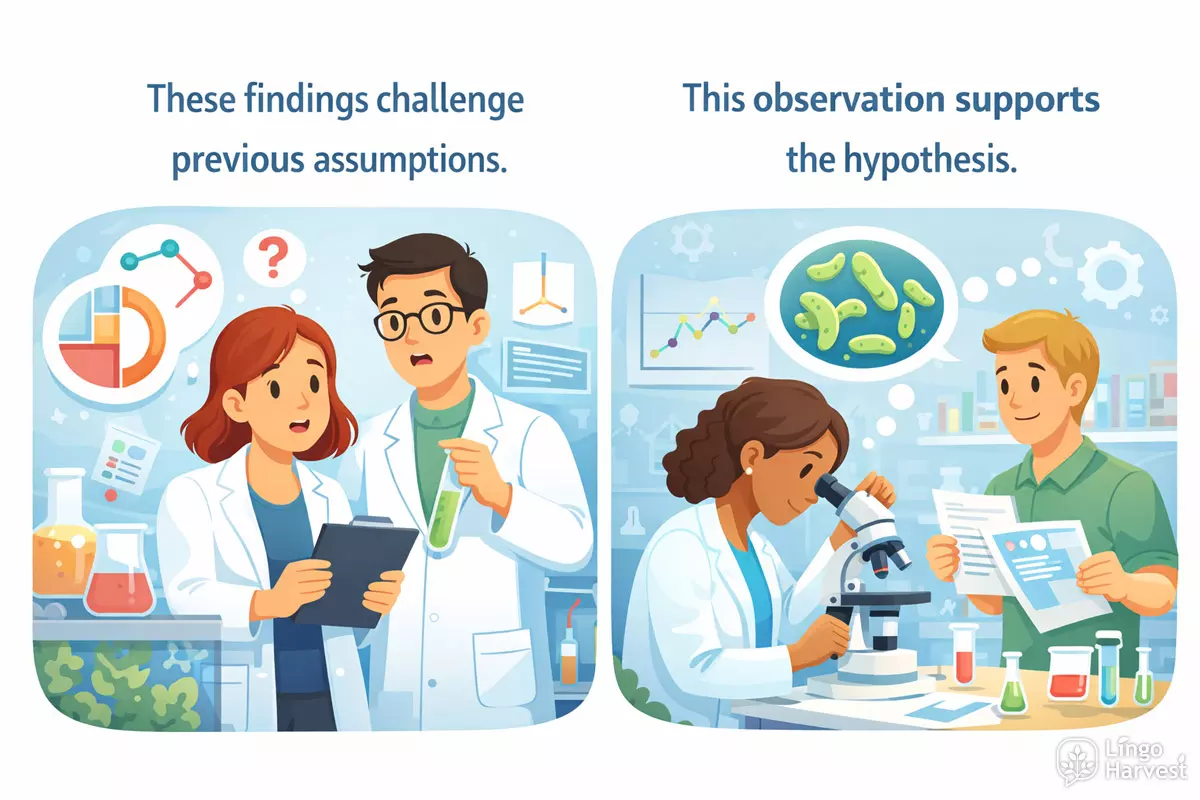
| Synonym use | The experiment yielded unexpected results. These findings challenge previous assumptions. |
| Nominalization | The data suggest a trend. This observation supports the hypothesis. |
| Related term | The ecosystem is fragile. Such environments require careful management. |
Common thematic nouns for academic writing
Some nouns frequently serve as thematic anchors in paragraphs, especially in scholarly contexts. Here are examples that often appear as focal points:
- Approach → This approach allows researchers to compare multiple data sets.
- Concept → The concept has been widely discussed in academic literature.
- Issue → The issue remains unresolved due to conflicting viewpoints.
- Method → The method used here follows international research standards.
- Process → The process requires careful planning and time management.
- Theory → The theory explains how learning develops over time.
- Data → The data revealed unexpected patterns in student behavior.
- Evidence → Strong evidence supports the study’s conclusion.
- Result → The result clearly confirmed the original hypothesis.
- Phenomenon → The phenomenon has been documented in several cultures.
- Model → The model predicts future outcomes with high accuracy.
- Framework → The framework provides structure for the entire analysis.
- Variable → Temperature was the main variable controlled in the study.
- Analysis → The analysis shows a strong correlation between the two factors.
- Implication → The implication of these findings is significant for future policy.
- Context → Understanding the context is crucial for proper interpretation.
- Factor → Lack of funding was a crucial factor affecting progress.
- Perspective → This perspective challenges traditional assumptions about learning.
- Outcome → The outcome demonstrated measurable improvement among participants.
- Assumption → The assumption that all learners are similar is incorrect.
By skillfully using these nouns and related references, writers can build paragraphs that are both cohesive and sophisticated, guiding readers seamlessly through complex arguments and information.
Avoiding abrupt topic shifts with thematic nouns
Maintaining coherence within academic paragraphs requires careful management of how ideas are connected. Sudden jumps from one subject to another can confuse readers and disrupt the logical flow. Thematic nouns—sometimes called “umbrella nouns” or “summary nouns”—offer a practical tool for linking sentences and smoothing transitions between topics.
How thematic nouns help maintain continuity
Thematic nouns act as a bridge between specific details and broader concepts. By referring back to previous content or encapsulating a set of related ideas, these nouns keep the reader oriented and reinforce the main thread of discussion. For instance, instead of shifting directly from a discussion of various economic indicators to policy recommendations, a writer can use a thematic noun like “these trends” or “such developments” to tie the points together.
Common thematic nouns for academic writing
Writers can select from a range of thematic nouns depending on the context. Here are some frequently used options:
- issue → The issue has sparked debate among researchers.
- phenomenon → This phenomenon appears in various cultural settings.
- process → The process requires several stages of verification.
- trend → The trend suggests growing interest in online learning.
- factor → One major factor influenced the final outcome.
- approach → Their approach focuses on long-term improvement.
- aspect → An important aspect of the study concerns student motivation.
- method → The method relies on accurate data collection.
- challenge → Funding remains the biggest challenge for the project.
- concept → The concept has been widely explored in modern theory.
- outcome → The outcome confirmed a significant improvement in results.
- strategy → The strategy aims to reduce environmental impact.
- procedure → The procedure must be followed exactly for reliable results.
- development → The development of new tools improved research accuracy.
- theme → The theme of identity appears throughout the literature.
- event → The event attracted international attention.
- perspective → Each perspective offers valuable insight into the matter.
- assumption → The assumption was later proven incorrect.
- implication → The implication of these findings is significant for policy.
- effect → The effect was stronger than researchers predicted.
Practical strategies for smoother transitions
Writers can use thematic nouns to summarize previous content before introducing new information. For example, after several sentences discussing different teaching techniques, one might write, “These methods share a common goal: enhancing student engagement.” This approach reinforces cohesion and signals the paragraph’s ongoing focus.
Benefits and pitfalls
Thematic nouns can clarify relationships and prevent abrupt changes in topic, but overusing them or choosing overly vague terms can obscure meaning. Effective use involves selecting precise nouns that accurately represent the preceding ideas, thereby guiding the reader through the argument without redundancy or loss of clarity.
Examples of effective thematic noun use
- After outlining several research findings: “These results suggest a need for further investigation.”
- Following a discussion of environmental policies: “Such measures have significant economic implications.”
- Describing multiple experimental approaches: “Each technique offers unique advantages.”
- Summarizing historical events: “These developments shaped subsequent policy decisions.”
By integrating thematic nouns thoughtfully, academic writers can unify their paragraphs and guide readers through complex material with greater ease.
Common learner errors with weak paragraph themes
Many students struggle to create effective paragraphs because their thematic nouns are vague, inconsistent, or fail to guide the reader. Instead of establishing a clear focus, learners often use general or shifting topics, which makes it difficult for readers to follow the argument or main idea. Understanding these typical pitfalls can help writers develop stronger, more cohesive academic writing.
Frequent issues with paragraph themes
Writers often fall into predictable traps when selecting or repeating their thematic nouns. Some of the most frequent mistakes include:
- Using overly broad or empty nouns (e.g., “things,” “stuff,” “aspects”).
- Switching topics mid-paragraph without clear transitions.
- Introducing new thematic nouns too frequently, which confuses the reader.
- Failing to restate or echo the main theme in topic sentences and supporting details.
- Relying on pronouns (“it,” “this,” “they”) without clear antecedents.
- Repeating the same noun without adding specificity or development.
- Confusing the paragraph’s theme with its subject or example.
- Using thematic nouns that are too abstract and disconnected from evidence.
- Neglecting to connect supporting sentences back to the initial theme.
- Allowing the paragraph to drift into unrelated ideas or anecdotes.
- Omitting a clear thematic noun, resulting in a list of facts rather than a unified argument.
Weak vs. strong thematic nouns
Choosing the right noun can dramatically improve a paragraph’s unity and clarity. Below is a comparison of weak and strong thematic nouns commonly seen in student writing:
| Weak Thematic Noun | Stronger Alternative |
|---|---|
| Thing | Factor, method, phenomenon |
| Aspect | Characteristic, dimension, feature |
| Problem | Challenge, obstacle, limitation |
| Situation | Context, scenario, circumstance |
| It | Specific process, concept, or object |
| Stuff | Materials, resources, data |
| Thing | Variable, element, component |
| Way | Approach, strategy, technique |
| People | Participants, stakeholders, researchers |
| Issue | Controversy, concern, debate |
How to avoid weak paragraph themes
To prevent these common errors, writers should consciously select precise, relevant thematic nouns and ensure consistency throughout each paragraph. Regularly revisiting the paragraph’s main idea and checking for coherence can strengthen academic writing and make arguments more persuasive.
Practice: improve paragraph flow using thematic nouns
Strengthening paragraph unity is crucial in academic writing. One effective approach is to use thematic nouns—words that encapsulate the subject or topic and help maintain coherence across sentences. Practicing this technique can help writers guide readers smoothly through complex information, building logical connections between ideas.
Identifying and Using Thematic Nouns
Thematic nouns are general terms that refer back to previous content or summarize a group of related ideas. They often appear at the beginning of sentences to remind readers of the paragraph’s focus, making transitions smoother. To practice, review the list below and notice how each noun can connect details back to the main topic:
- Dimension → One important dimension of the study is social inequality.
- Insight → The interviews provided valuable insight into student behavior.
- Debate → The debate continues over how to regulate social media.
- Observation → This observation supports the main hypothesis of the research.
- Obstacle → A major obstacle to progress is the lack of reliable data.
- Pattern → The pattern becomes clear when the results are compared over time.
- Mechanism → The mechanism behind this effect is still not fully understood.
- Technique → This technique is widely used in experimental psychology.
- Finding → The most surprising finding was the high level of satisfaction.
- Influence → Parental influence plays a crucial role in early education.
- Plan → The plan includes several stages of implementation.
- Feature → A key feature of the program is its flexibility.
- Progress → Significant progress has been made in cancer treatment.
- Standpoint → From a historical standpoint, the reform was inevitable.
- Topic → The topic has attracted growing attention in recent years.
- Argument → The argument is supported by both theoretical and empirical work.
- Position → Her position on climate policy differs from the majority view.
- Consequence → One major consequence of the crisis was mass unemployment.
- Component → Training is an essential component of the new strategy.
- Impact → The impact of digital tools on learning is still being evaluated.
Task 1: Spot the Thematic Noun
Read the sentences below. Identify which noun in each sentence is functioning as a thematic noun that connects to previous information.
- The trend of urbanization has accelerated in recent years. This development presents both opportunities and challenges for city planners.
- Recent studies highlight a challenge in vaccine distribution. This issue requires innovative logistical solutions.
- One effective strategy is peer mentoring. This approach fosters collaboration and knowledge sharing.
- Researchers noted a rise in global temperatures. This pattern suggests long-term climate change.
- Students reported difficulty understanding the material. This problem indicates a need for clearer instruction.
- The team observed a shift in consumer preferences. This change will affect future marketing plans.
- The project created a significant impact on local communities. This effect is now being measured.
- The study revealed a difference between the two groups. This contrast supports the hypothesis.
- The government introduced a new policy to support families. This measure received widespread approval.
- The experiment produced unexpected results. This outcome challenged previous assumptions.
Show answers
- "Development" refers back to "trend" and acts as the thematic noun in the second sentence.
- "Issue" refers back to "challenge" and serves as the thematic noun.
- "Approach" refers back to "strategy" and is the thematic noun.
- "Pattern" refers back to "rise" and is the thematic noun.
- "Problem" refers back to "difficulty" and is the thematic noun.
- "Change" refers back to "shift" and is the thematic noun.
- "Effect" refers back to "impact" and is the thematic noun.
- "Contrast" refers back to "difference" and is the thematic noun.
- "Measure" refers back to "policy" and is the thematic noun.
- "Outcome" refers back to "results" and is the thematic noun.
Task 2: Revise for Better Flow
Rewrite the following short paragraph by replacing repeated references with appropriate thematic nouns to improve flow:
Original:
"Climate change affects many regions. Climate change causes rising sea levels and unpredictable weather. Climate change also impacts agriculture."
Your task: Replace the repeated phrase with suitable thematic nouns.
Show answers
Possible revision:
"Climate change affects many regions. This phenomenon causes rising sea levels and unpredictable weather. The issue also impacts agriculture."
Common Thematic Nouns in Academic Writing
Below is a reference table of commonly used thematic nouns and their typical academic context.
| Thematic Noun | Typical Usage Context |
|---|---|
| Process | Describing steps or stages in research or development |
| Factor | Identifying influences or causes in an outcome |
| Argument | Discussing points in a debate or analysis |
| Development | Referring to progress or changes over time |
| Implication | Exploring consequences or significance of findings |
| Strategy | Presenting proposed solutions or methods |
| Trend | Describing patterns or changes in data over time |
| Component | Breaking down systems or theories into parts |
| Perspective | Introducing viewpoints or analytical angles |
| Aspect | Highlighting particular features of a topic |
Quick Tips for Using Thematic Nouns Effectively
- Use a thematic noun early in a sentence to refer back to the main topic or idea.
- Vary your choice of nouns to avoid repetition and keep writing engaging.
- Choose nouns that accurately summarize the previous sentence or paragraph’s content.
- Check that each noun clearly connects details, evidence, or examples to the central theme.