Content Words vs Function Words

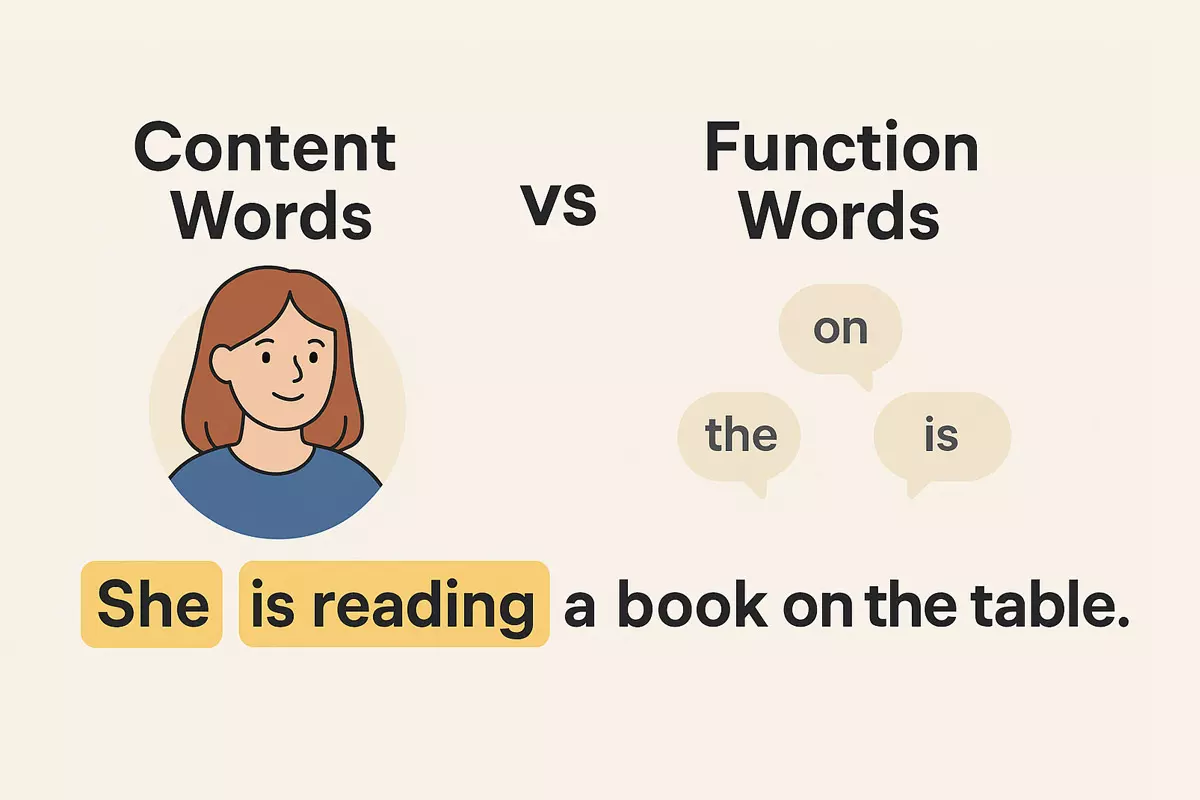 The article explains the difference between content words and function words, how they interact in sentences, and their roles in communication. It offers examples, tips for identifying each type, common errors, and a short exercise for practice.
When we communicate, certain words hold the main meaning of our message, while others serve primarily to connect, organize, or clarify our ideas. Recognizing the distinction between these meaningful words and their grammatical counterparts helps us better understand how language functions and how messages are constructed. This awareness can deepen our appreciation for the structure of language and enhance our ability to express ourselves clearly and effectively in both written and spoken communication.
What Are Content Words?
Content words are the parts of language that carry the main meaning in sentences. These words give us the essential information about what is happening, who is involved, and where or when things occur. Unlike grammatical connectives, they are not just there to glue sentences together—they have a clear, standalone sense. In everyday conversation and writing, these terms help us express ideas, describe objects, actions, and qualities, and convey new information.
Types of Content Words
There are several major categories that fall under this label. Each plays a different role in communication:
- Nouns — names of people, places, things, or ideas (e.g., cat, freedom, mountain)
- Main verbs — actions or states (e.g., run, discover, exist)
- Adjectives — words that describe nouns (e.g., blue, interesting, ancient)
- Adverbs — words that modify verbs, adjectives, or other adverbs, often showing how, when, or where (e.g., quickly, yesterday, outside)
Functions and Examples

These words help listeners and readers grasp the main point of a message. For example, in the sentence “The dog slept peacefully on the sofa,” the highlighted terms each add key details. Without them, the sentence would lose its meaning.
Common Content Word Examples
- river
- build
- happy
- slowly
- book
- sing
- delicious
- tomorrow
- teacher
- forest
- explore
- bright
- silently
- music
- invent
Why Are They Important?
These meaningful words are crucial for understanding and producing clear language. They allow us to communicate specific ideas, ask questions, and describe experiences. For learners of any language, recognizing and practicing this type of vocabulary is a key step in developing fluency.
What Are Function Words?
Function words are the small, often overlooked words in a sentence that play a crucial role in structuring language and expressing grammatical relationships. Unlike words that convey concrete meanings—such as nouns, verbs, or adjectives—these elements serve to connect, organize, and clarify the relationships between the main ideas in a sentence. Their primary job is not to carry specific content, but to indicate how the content words fit together.
Types and Roles
You encounter these grammatical helpers every day, even if you don’t notice them. They include articles, conjunctions, prepositions, pronouns, auxiliary verbs, and more. Their presence is essential for building coherent sentences and expressing nuanced ideas like tense, mood, and relationship.
- Articles: the, a, an
- Prepositions: in, on, at, by, with, for, from, to, about
- Conjunctions: and, but, or, because, although, if, while, since
- Auxiliary (helping) verbs: is, are, was, were, have, had, do, does, will, can, must
- Pronouns: he, she, it, they, we, you, who, which, that
- Determiners: this, those, some, any, each, every, all, both
- Quantifiers: many, few, several, much, little
- Particles: not, up, off, out (when not used as main verbs or prepositions)
- Interrogatives: who, what, where, when, why, how
- Expletives: there (as in “There is a cat on the mat.”)
Why They Matter
Without these core building blocks, sentences would lose their structure and become difficult to understand. For example, “dog park” could mean “the dog is at the park” or “the park belongs to the dog”—function words clarify the intended relationship. In English and many other languages, omitting them leads to ambiguity or ungrammatical sentences.
Common Features
Most function words are short, frequently used, and tend to have little or no stress in speech. They rarely change form (for example, “the” stays the same in all contexts), and many are part of closed word classes, meaning new ones aren’t regularly added to the language.
In summary, these small but mighty words are the glue that holds sentences together, providing the framework that allows us to communicate ideas clearly and efficiently.
How They Work Together
Understanding how content and function words interact is essential for grasping the structure and meaning of sentences. Content words—such as nouns, main verbs, adjectives, and adverbs—carry the core meaning, while function words—like prepositions, conjunctions, articles, and pronouns—serve as the glue that binds these meaningful units and clarifies relationships between them.
In everyday communication, these two types of words form a partnership: content terms provide the information, and function terms organize that information so it’s clear and grammatically correct. For example, in the sentence “She quickly ran to the old house,” the words “quickly,” “ran,” and “house” express the main ideas, while “she,” “to,” “the,” and “old” help specify who, where, and how.
Sentence Construction: Roles and Balance
A sentence without function words would be choppy and difficult to follow, while a sentence without content words would lack meaning. Together, they ensure both clarity and expressiveness. The relationship can be seen in typical English patterns:
- Noun + Preposition + Noun: Book on table (preposition “on” links the two nouns)
- Pronoun + Verb + Article + Noun: She found the keys
- Adjective + Noun + Conjunction + Noun: Red apple and banana
- Adverb + Verb + Preposition + Noun: Quickly ran to school
- Article + Adjective + Noun + Preposition + Pronoun: The old man with her
- Pronoun + Modal + Base Verb + Article + Noun: They can see the stars
- Conjunction + Pronoun + Verb: But he stayed
- Article + Noun + Conjunction + Article + Noun: The dog and the cat
- Preposition + Article + Noun: In the garden
- Adverb + Verb + Object: Always remember this
Division of Labor: Meaning vs. Structure
The division between these word types is clear when you compare their functions. Content words provide the substance; function words shape and connect the ideas. See the overview below:
| Content Words (Meaning) |
Function Words (Structure) |
|---|---|
| Nouns (dog, happiness, city) | Articles (the, a, an) |
| Main verbs (run, think, build) | Prepositions (in, on, by) |
| Adjectives (blue, tall, busy) | Conjunctions (and, but, if) |
| Adverbs (quickly, always, here) | Pronouns (she, their, it) |
| Numbers (three, hundred) | Auxiliaries (is, have, will) |
When reading or listening, our brains often skip over function words and focus on the main ideas, yet without these connecting pieces, speech and text would be confusing or even meaningless. This division also impacts language learning and processing: learners often master content vocabulary first, but fluency depends on mastering the smaller connecting terms as well.
In summary, content and function words are like the ingredients and recipe in a dish—one provides flavor, the other ensures everything fits together. Both are necessary for effective communication, whether in simple phrases or complex sentences.
Examples in Sentences
To clarify the difference between content and function words, it helps to see how both types appear in real-life language. Content words—such as nouns, main verbs, adjectives, and adverbs—carry the core meaning in a sentence. In contrast, function words (like prepositions, conjunctions, articles, and pronouns) connect ideas or show grammatical relationships. Below, you’ll find a variety of illustrative sentences, each highlighting how these two categories work together to form clear communication.
Sample Sentences Highlighting Both Types
- She (function) quickly (content) ran (content) to (function) the (function) store (content).
- They (function) are (function) reading (content) interesting (content) books (content).
- We (function) will (function) meet (content) after (function) lunch (content).
- My (function) brother (content) and (function) sister (content) live (content) in (function) Canada (content).
- It (function) is (function) very (content) cold (content) outside (content).
- The (function) cat (content) sat (content) on (function) the (function) mat (content).
- Because (function) he (function) was (function) tired (content), John (content) slept (content) early (content).
- She (function) has (function) a (function) red (content) car (content).
- If (function) you (function) like (content) music (content), join (content) us (function).
- We (function) can (function) visit (content) the (function) museum (content) tomorrow (content).
Comparison: Content Words vs. Function Words in Context
| Content Word Example | Function Word Example | Sentence |
|---|---|---|
| dog, run, quickly | the, and, to | The dog runs quickly to the park. |
| music, play, beautiful | she, with, a | She plays beautiful music with a smile. |
| students, study, hard | the, are, at | The students are studying hard at night. |
| flowers, bloom, spring | in, and, their | In spring, flowers bloom and show their colors. |
| friend, travel, far | my, will, to | My friend will travel far to see me. |
By examining sentences like these, the distinct roles of each word type become clear. Content words give information and meaning, while function words provide structure and coherence. This interplay allows for both detailed expression and grammatical accuracy in language use.
How to Identify Each Type
Distinguishing between content words and function words is easier once you know what to look for. Content words carry the main meaning in a sentence, while function words connect and organize those content words. Here are some practical ways to spot which is which in any text.
Common Clues for Content Words
Content words usually belong to categories like nouns, main verbs, adjectives, and adverbs. These words are often stressed in speech and are open to new additions (for example, new nouns or verbs). If a word gives you clear information about who, what, where, or how, there’s a good chance it’s a content word.
- Nouns: dog, happiness, book, city, computer
- Main verbs: run, create, jump, sing, decide
- Adjectives: blue, quick, interesting, heavy, silent
- Adverbs: quickly, silently, often, yesterday, well
Recognizing Function Words
Function words are typically short, common, and serve grammatical roles rather than carrying concrete meaning. These include articles, pronouns, prepositions, conjunctions, and auxiliary verbs. They’re rarely stressed, and the list of function words in a language changes very slowly over time.
- Articles: a, an, the
- Pronouns: he, she, it, they, you
- Prepositions: at, in, on, for, with, to
- Conjunctions: and, but, or, although, because
- Auxiliary verbs: is, are, was, have, do, will
- Determiners: this, that, these, those, each
Quick Comparison Table
| Content Words | Function Words |
|---|---|
| Carry main meaning Can stand alone Open to new entries |
Organize sentence Rarely stressed Closed set of words |
| Examples: cat, beautiful, run, quickly |
Examples: the, and, to, of, is |
Tips for Spotting Each Type
If you’re unsure, try removing the word from the sentence. If the sentence loses its core meaning, you probably removed a content word. If the sentence sounds ungrammatical but the main idea remains, it was likely a function word. For language learners, recognizing these groups helps with fluency, reading comprehension, and even test-taking strategies.
Common Misunderstandings
Many learners mix up content and function words, especially when they're first exploring how sentences are built. One frequent issue is believing that all short words are automatically function words, or thinking that only nouns and verbs carry meaning. This isn’t always the case—some brief words do have significant meaning, and adjectives and adverbs also contribute essential information.
Confusing Word Roles
It’s common to confuse which words actually shape the meaning of a sentence and which ones simply help connect ideas. For example, people may assume “not” is a content word because it changes meaning, but it actually acts as a function word by modifying verbs.
- Assuming all prepositions are unimportant: Even though they’re function words, prepositions like “in,” “on,” and “by” are crucial for clarity.
- Thinking pronouns always replace content words: In reality, pronouns are function words but can refer back to content-heavy ideas.
- Believing every word that can stand alone is a content word: Some, like “the” or “and,” never carry independent meaning.
- Misidentifying auxiliary verbs (“is”, “have”, “will”) as content words because they appear often with main verbs.
Overgeneralizing Word Categories
Another mistake is sorting words into just two rigid groups. In practice, the distinction isn’t always black and white. Some words, such as “like” or “after,” can act as either content or function words depending on context. For example, “like” is a verb in “I like apples” (content), but a conjunction in “He acts like he’s tired” (function).
Examples of Tricky Words
Here are some commonly mixed-up words and their typical roles:
- “that” (can be a determiner, relative pronoun, or conjunction)
- “just” (adverb with meaning, or as a softener)
- “since” (preposition or conjunction)
- “well” (noun, adverb, interjection, or adjective)
- “off” (preposition, adverb, or adjective)
- “so” (conjunction or adverb)
- “while” (noun or conjunction)
- “after” (preposition, conjunction, or adverb)
- “even” (adjective or adverb)
- “down” (preposition, adverb, or adjective)
- “yet” (adverb or conjunction)
- “but” (conjunction or preposition)
- “back” (noun, adjective, adverb, or verb)
- “still” (adjective or adverb)
- “before” (preposition, conjunction, or adverb)
- “like” (verb, preposition, or conjunction)
- “over” (preposition, adverb, or adjective)
- “right” (noun, adjective, adverb, or interjection)
Misunderstanding Their Importance
Some believe function words can be left out without losing much meaning, or that only the “main” words matter for comprehension. In reality, omitting function words can make sentences unclear or grammatically incorrect. For instance, “I go store” is understandable but lacks the clarity and precision of “I am going to the store.”
Quick Comparison
| Content Words | Function Words |
|---|---|
| Carry core meaning (nouns, verbs, adjectives, adverbs) | Connect and organize (prepositions, articles, conjunctions, pronouns, auxiliary verbs) |
| Can stand alone or be stressed | Usually unstressed in speech |
| Change less often in grammar | Change more for tense, agreement, etc. |
| Examples: “cat,” “run,” “happiness,” “quickly” | Examples: “the,” “and,” “but,” “to,” “she” |
Understanding these distinctions helps avoid mistakes in both writing and speaking. Paying attention to the roles words play in sentences can make communication clearer and more effective.
Using Both Correctly
Balancing content and function elements is essential for clear, natural communication. Content units supply the main ideas and information, while smaller grammatical words tie sentences together and clarify relationships. Mastering both is key to fluent writing and speaking in English or any language. Focusing only on information-heavy vocabulary can result in awkward phrasing, while overusing connectors or prepositions may make sentences confusing or wordy.
Common Mistakes to Avoid
- Leaving out connectors, making sentences choppy or hard to follow
- Overusing pronouns, articles, or prepositions, leading to redundancy
- Misplacing transition words, causing confusion about sentence relationships
- Relying solely on nouns and verbs without the proper use of conjunctions or articles
Practical Tips for Effective Use
- Read sentences aloud to check for natural flow and clarity
- Identify the main ideas (nouns, verbs, adjectives, adverbs) and ensure they are supported with the right connectors (prepositions, articles, conjunctions, pronouns)
- Practice rewriting simple statements using both types of elements for variety
- Notice how native speakers balance both in conversations or writing
Examples: Combining Both Elements
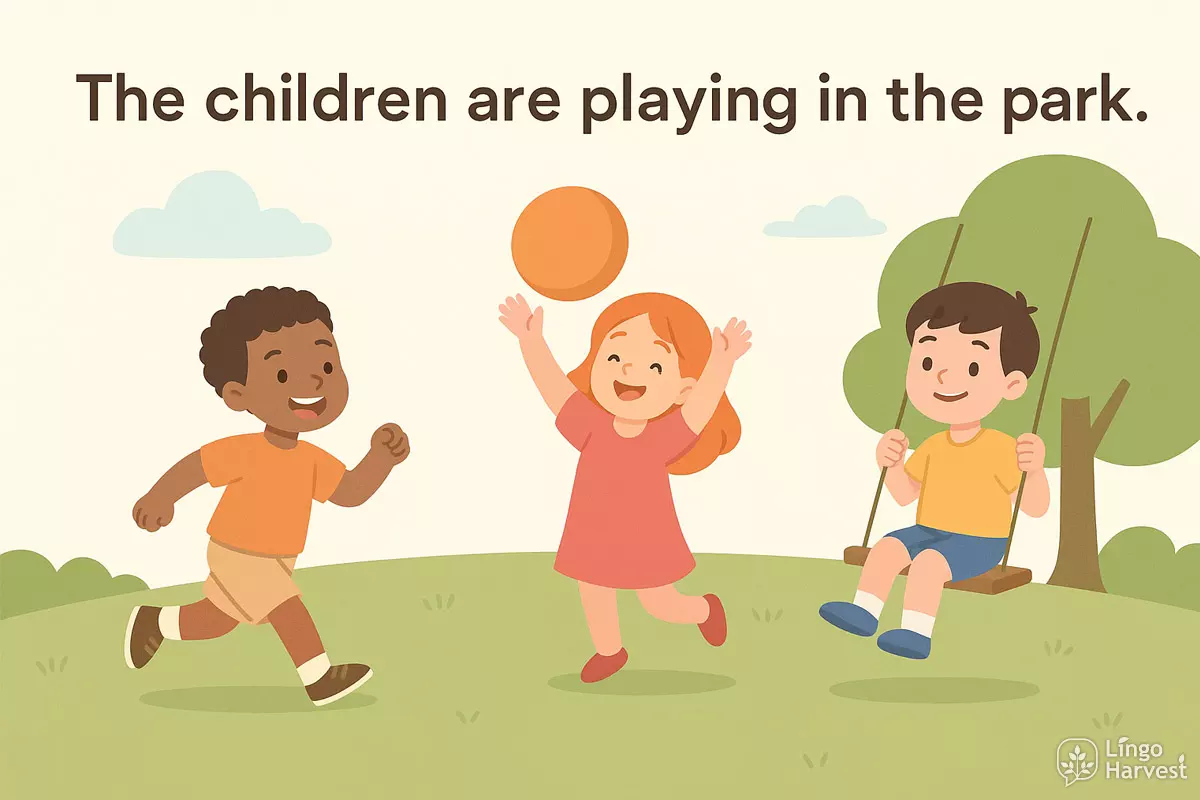
Below is a table showing how content and function units work together in sentences:
| Content Words | Function Words | Full Example Sentence |
|---|---|---|
| cat, sleep | the, is, on, the | The cat is on the bed. |
| children, play, park | the, in, are | The children are playing in the park. |
| music, listen | to, I, every, day | I listen to music every day. |
| book, interesting | this, is, very | This book is very interesting. |
| friends, meet, café | my, at, the | My friends meet at the café. |
Checklist for Sentence Building ✅
- Start with your main idea (who/what does what?)
- Add articles, prepositions, and pronouns for structure
- Check for logical connectors if combining clauses
- Review for unnecessary repetition or missing links
- Read for smoothness and sense
By paying attention to both types of words, you can craft sentences that are not only grammatically correct but also clear and engaging. Practice by analyzing sentences from books or conversations, identifying which words carry meaning and which provide structure. Over time, this awareness will make your communication more effective and natural.
Short Practice Exercise
To help you distinguish between main vocabulary carriers and grammatical connectors, try the following set of identification and classification tasks. This will build your awareness of how different word types function in sentences. Read each instruction carefully and attempt each part before revealing the solutions.
1. Which Are Content Words?
Below is a list of words. Identify which ones are meaningful on their own (nouns, verbs, adjectives, adverbs) and which are grammatical glue (prepositions, articles, pronouns, etc.).
- quickly
- the
- run
- and
- happiness
- by
- beautiful
- it
- jump
- but
- cat
- on
- they
- suddenly
- with
- dog
Show answers
- Content words: quickly, run, happiness, beautiful, jump, cat, suddenly, dog
- Function words: the, and, by, it, but, on, they, with
2. Sorting Practice
Match each word below to its group: main carriers of meaning or grammatical connectors.
| Word | Type |
|---|---|
| above | |
| freedom | |
| she | |
| sing | |
| slowly | |
| for | |
| an | |
| green |
Show answers
- above – Function word
- freedom – Content word
- she – Function word
- sing – Content word
- slowly – Content word
- for – Function word
- an – Function word
- green – Content word
3. Fill in the Blanks
In each sentence, supply a suitable content word where indicated (___), and a function word where shown ([...]).
- The ___ [in] the garden is blooming.
- She ___ [and] danced gracefully.
- [He] will ___ the answer soon.
- The children ran ___ [to] the playground.
Show answers
- 1. The flower (content word: noun) [in] the garden is blooming.
- 2. She sang (content word: verb) [and] danced gracefully.
- 3. [He] will find (content word: verb) the answer soon.
- 4. The children ran quickly (content word: adverb) [to] the playground.
Practicing with these distinctions will help you read more efficiently and write with greater precision, as you learn to identify which words carry meaning and which serve a connecting or supporting role in English sentences.