Subordinating Conjunctions: Grammar Role

 This article explains subordinators, their role in clause structure, and covers time, reason, and contrast words. It also outlines comma rules for complex sentences and provides practice tasks to help you apply what you learn.
Have you ever wondered how to connect ideas smoothly in complex sentences? Words that introduce dependent clauses, such as although, because, and while, play a crucial role in shaping both the meaning and the flow of your writing. By understanding how these words function, you can transform your writing style, making your communication clearer and more effective. Mastering the use of these connectors not only enhances readability but also allows you to express relationships between ideas with greater precision.
What Subordinators Are
In English grammar, certain words act as links between a dependent clause and a main clause. These linking words are known as subordinators or subordinating conjunctions. Their main function is to introduce subordinate clauses, which cannot stand alone as complete sentences. By connecting these clauses to a main idea, subordinators show the relationship between two thoughts—such as cause and effect, time sequence, condition, or contrast.
How Subordinators Work
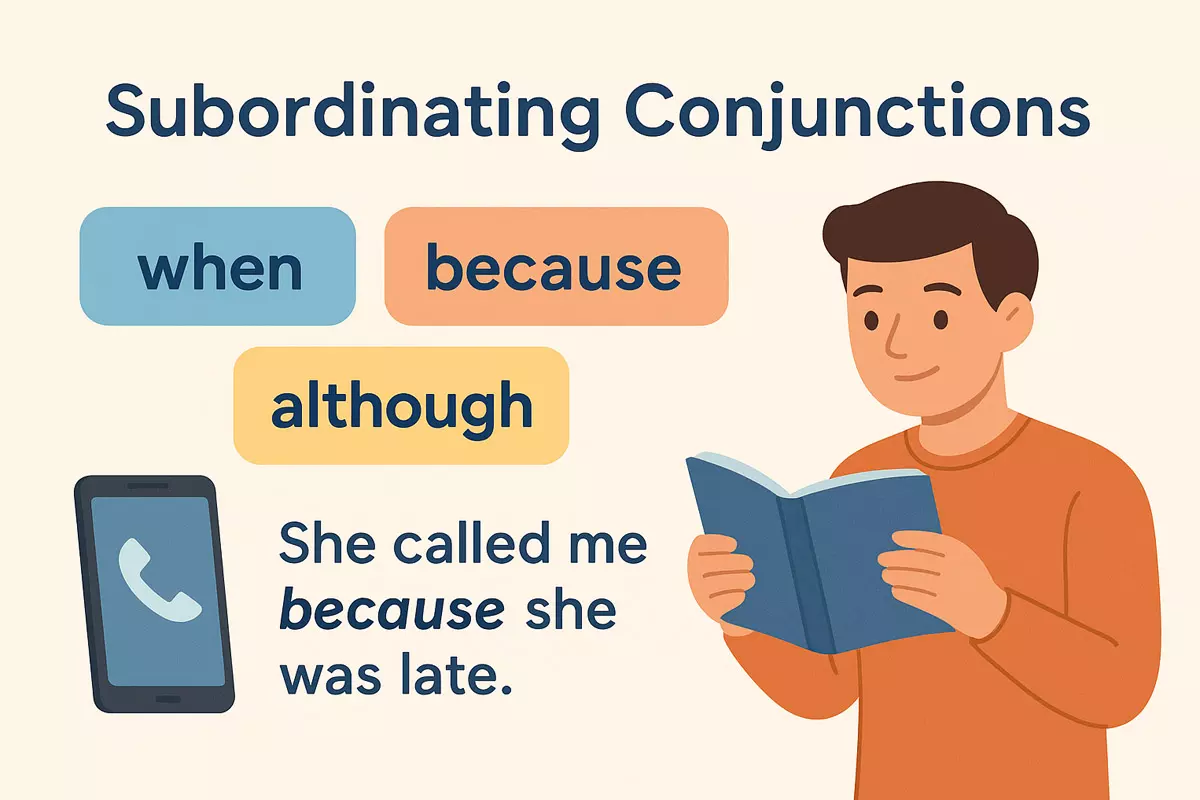
These words set up a hierarchy between ideas in a sentence. The clause introduced by the subordinator is less important grammatically and depends on the main clause to form a complete thought. For example, in the sentence “She left because it was late,” the word “because” introduces the reason for her leaving and ties the two parts together.
Common Types and Functions
Subordinators can express a wide range of relationships. Here are some of the most frequent roles they play:
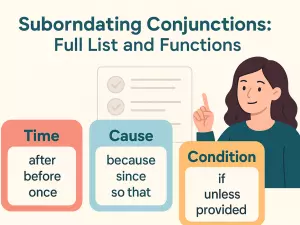
- Time: after, before, when, while, since, as soon as
- Cause or reason: because, since, as, so that
- Condition: if, unless, provided that, even if
- Contrast or concession: although, though, whereas, even though
- Purpose: so that, in order that
- Comparison: than, as…as, rather than
- Place: where, wherever
- Manner: as, like, the way
Examples in Sentences
Here are several examples illustrating how these connecting words work in context:
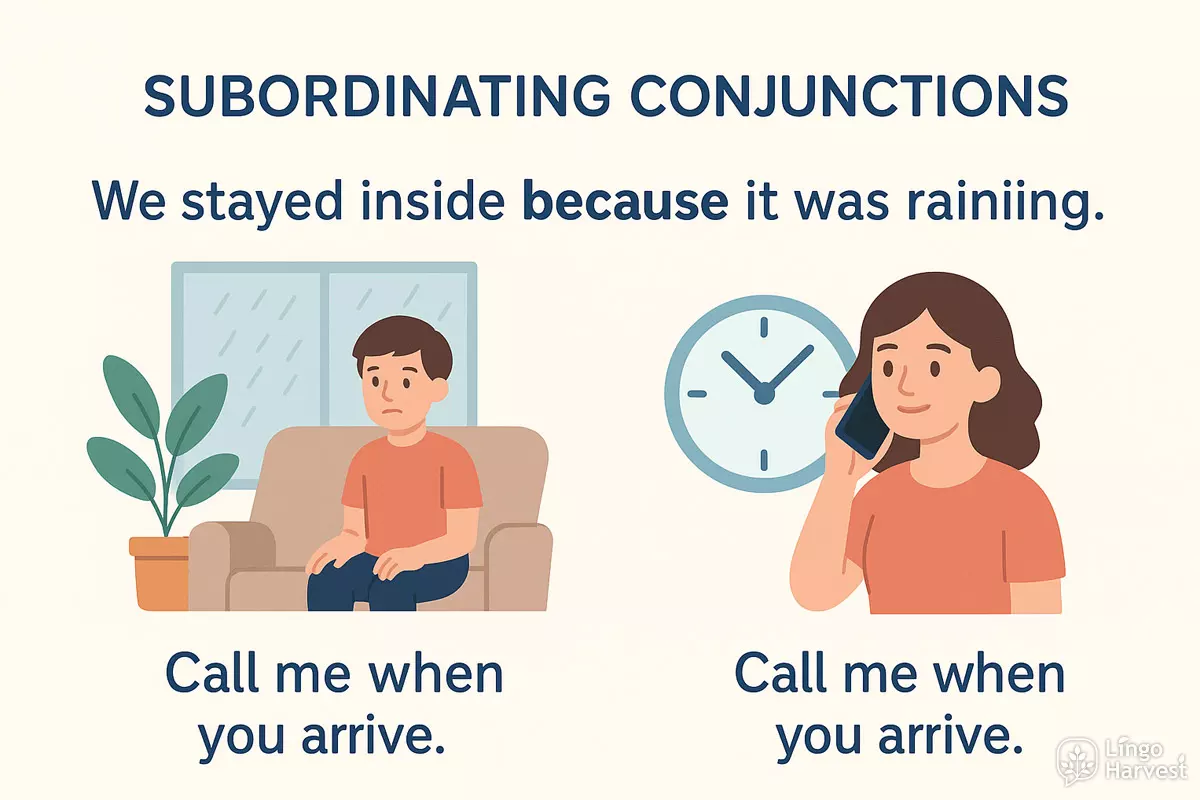
- We stayed inside because it was raining.
- Call me when you arrive.
- Although he was tired, he finished the project.
- You can play outside if you finish your homework.
- She acts as if she knows the answer.
- I will join you wherever you go.
- He works hard so that he can succeed.
- They left before the sun set.
- Since we met, my life has changed.
- Unless you hurry, you will miss the bus.
Recognizing Subordinators
It’s easy to confuse these connecting words with other types of conjunctions or relative pronouns. Remember, a subordinator always introduces a subordinate clause, making it dependent on the main clause for complete meaning. If you see a clause that cannot stand alone and starts with one of the words above, it’s likely introduced by a subordinator.
Clause Structure
When discussing subordinating conjunctions, it's essential to understand how they connect different parts of a sentence. These connectors introduce dependent clauses, which cannot stand alone and must be linked to an independent clause to form a complete thought. The way these elements combine greatly affects sentence complexity and meaning.
How Subordinating Conjunctions Join Clauses
Subordinating conjunctions such as "because," "although," "while," and "since" typically appear at the beginning of a dependent clause. This clause is then attached to a main clause, either at the start or end of the sentence. For example:
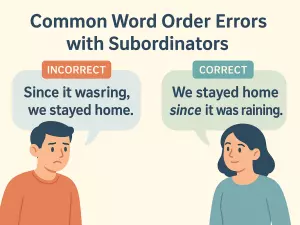
- Although it was raining, we went for a walk.
- We went for a walk although it was raining.
Notice how the position of the subordinate clause can shift, but the overall meaning stays consistent.
Word Order and Punctuation
When a dependent clause comes before the main clause, a comma is usually required. However, if the main clause comes first, a comma is often unnecessary. This rule helps clarify the sentence’s structure and prevents confusion.
Common Patterns with Subordination
Here are some frequent ways sentences are structured with these conjunctions:
- [Subordinating conjunction] + [subject] + [verb], [main clause]
- [Main clause] [subordinating conjunction] + [subject] + [verb]
Examples:
- Because she was late, the meeting started without her.
- The meeting started without her because she was late.
- If you study hard, you will pass the exam.
- You will pass the exam if you study hard.
Types of Subordinate Clauses
Dependent clauses introduced by subordinating conjunctions can express different relationships:
- Time: after, before, when, while, since
- Cause: because, since, as
- Condition: if, unless, provided that
- Contrast: although, though, whereas, even though
- Purpose: so that, in order that
Examples of Subordinating Conjunctions in Use
Here's an expanded list of patterns and vocabulary showing how these words join clauses:
- After the movie ended, we went home.
- She called me because she needed help.
- Unless you hurry, you'll miss the bus.
- Though it was cold, we enjoyed the picnic.
- We waited until the rain stopped.
- He acts as if he owns the place.
- Whenever you visit, bring your camera.
- Wherever I go, I take my notebook.
- Once you try it, you'll understand.
- In case you forget, here's a reminder.
- Even though she was tired, she finished the project.
- While I appreciate the offer, I must decline.
- Provided that you register, you can attend the event.
- So that everyone understands, please speak clearly.
- Before you leave, turn off the lights.
- As soon as the bell rings, class will begin.
- Since you asked, I'll explain.
- Whereas his brother prefers tea, he likes coffee.
- As long as you keep quiet, you can stay.
- Now that the sun is out, let's go outside.
Comparing Main and Subordinate Clauses
| Main Clause | Subordinate Clause (with Conjunction) |
|---|---|
| I stayed inside | because it was snowing |
| We will go out | if the weather improves |
| She smiled | although she was tired |
| He called me | after he arrived |
| You can join us | provided that you finish early |
Time Words
Understanding how to express sequence and timing is essential for constructing clear complex sentences. Subordinating conjunctions that relate to time allow us to connect events or actions in a way that shows when things happen in relation to one another. These connectors help clarify whether one event happened before, after, or during another.
Common Conjunctions Indicating Time
Several words serve to link clauses by showing their chronological relationship. Here are some of the most frequently used temporal subordinators:
- after
- before
- when
- while
- as soon as
- until
- since
- once
- whenever
- by the time
- as long as
- now that
- every time
- the moment
- as
- immediately
How Subordinators Express Sequence
These connectors can indicate whether an action is ongoing, finished, or yet to start. For instance, "after" places the subordinate clause’s action later than the main clause, while "before" does the opposite. Words like "while" and "as" point to simultaneous events.
| Subordinator | Example Sentence |
|---|---|
| after | We ate dessert after we finished dinner. |
| while | She studied while listening to music. |
| until | Wait here until I return. |
| as soon as | Call me as soon as you arrive. |
| since | He’s been happier since he started his new job. |
| before | Finish your homework before you go out. |
| once | Once you try it, you’ll love it. |
| when | I’ll call you when I get home. |
Usage Tips
To avoid confusion, pay attention to verb tenses when using time-based subordinators. For example, "after" and "before" often require the simple past, while "since" pairs with the present perfect. These connectors are typically placed at the beginning of the subordinate clause, but the order of main and subordinate clauses can be switched for emphasis or style. Exploring these connectors helps make your writing and speech more precise, letting listeners or readers easily follow the timeline of events.
Reason Words
When explaining why something happens, English often uses certain subordinating conjunctions. These connectors introduce clauses that give a cause or justification for the main action in a sentence. By mastering these linking words, sentences become clearer and more logical, helping readers or listeners understand the motivation behind events or actions.
Common Conjunctions That Express Cause
Writers and speakers frequently choose from a group of conjunctions to show cause-and-effect relationships. Here are some of the most widely used options:
- because
- since
- as
- now that
- seeing that
- inasmuch as
- for the reason that
- due to the fact that
- in that
- considering that
How These Connectors Work in Sentences
These linking words generally introduce a subordinate clause, which provides the explanation or cause. The main clause presents the result or effect. For example:
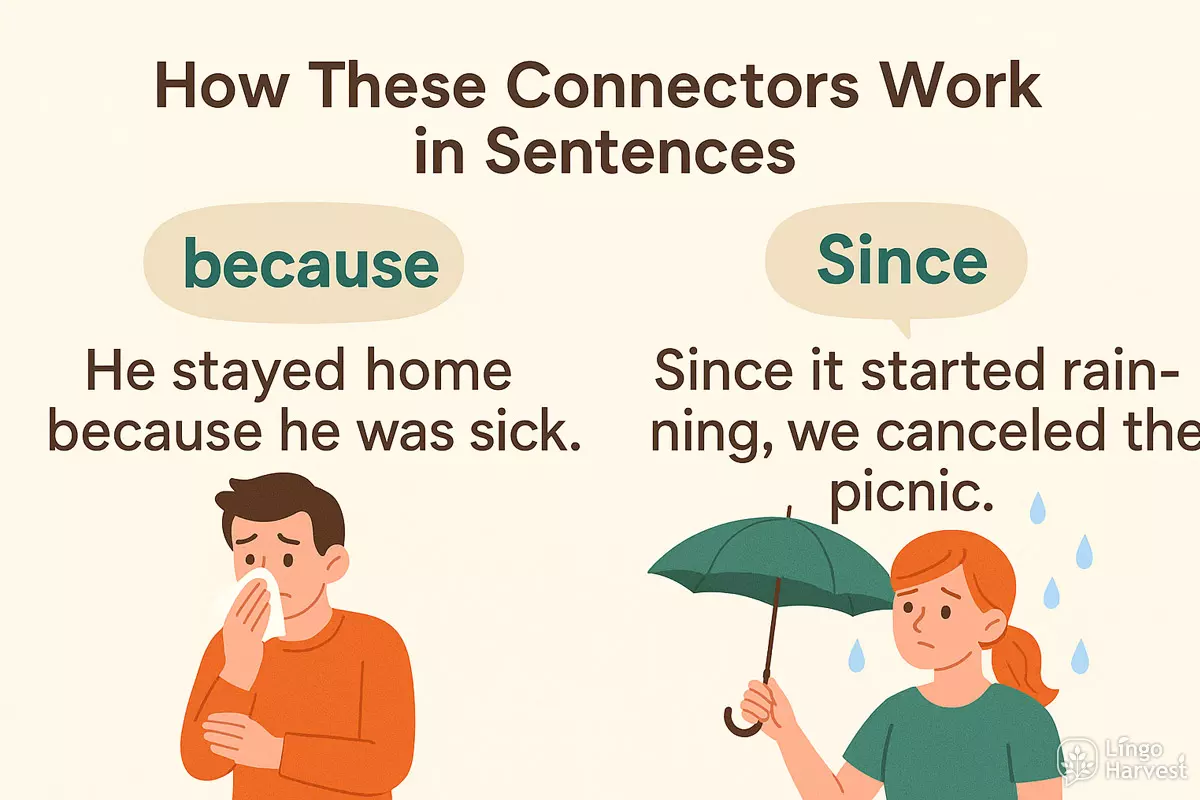
- He stayed home because he was sick.
- Since it started raining, we canceled the picnic.
- She took an umbrella as she expected bad weather.
Notice that the position of the subordinate clause can shift. It may appear at the beginning or end of the sentence, often separated by a comma when leading.
Comparing Reason Conjunctions
Some connectors are more formal or specific than others. The table below shows differences in usage and tone:
| Conjunction | Typical Use |
|---|---|
| because | Neutral, everyday explanation of cause |
| since | Casual, sometimes interchangeable with "because," but can also refer to time |
| as | Often used in written or formal contexts to explain reasons |
| now that | Introduces a new situation as the reason for a result |
| inasmuch as | Formal, typically found in legal or academic writing |
Tips for Using Causal Subordinators
- Choose the connector that matches the tone and formality of your writing.
- Avoid overusing the same word; variety makes text more engaging.
- Be careful with "since" and "as," as they can be ambiguous (cause vs. time or manner).
Selecting the right conjunction clarifies connections between ideas and strengthens the coherence of your sentences.
Contrast Words
Subordinating conjunctions often serve to highlight differences or unexpected relationships between two clauses. These connectors help writers and speakers clarify how two ideas oppose, differ, or qualify one another. Recognizing and using these linking words can improve both clarity and nuance in your writing or conversation.
Common Subordinators That Express Contrast
Several subordinating conjunctions specifically introduce a contrast between clauses. Here are some of the most frequent connectors used for this purpose:
- although
- though
- even though
- whereas
- while
- even if
- in spite of the fact that
- despite the fact that
- rather than
- unless
- as opposed to
- contrary to
- notwithstanding that
- however much
- except that
- on the other hand
- nevertheless (when used subordinately)
Usage Patterns and Examples
Contrast subordinators can appear at the start or in the middle of complex sentences. Notice how they alter the relationship between ideas:
- Although it rained all day, the event continued as planned.
- He enjoys spicy food, whereas his brother prefers mild flavors.
- Even if you apologize, she might not forgive you.
- She went for a walk, despite the fact that she was tired.
When using these subordinators, pay attention to the clause order and punctuation. If the sentence begins with the subordinate clause, use a comma before the main clause. If the main clause comes first, a comma is usually not needed.
Quick Comparison of Contrast Conjunctions
| Subordinator | Typical Use |
|---|---|
| although / though | Shows an unexpected or surprising contrast |
| whereas | Directly compares two different facts or situations |
| even if | Introduces a hypothetical contrast |
| unless | Expresses exception or condition that contrasts with the main idea |
| despite / in spite of the fact that | Indicates a strong contrast, often with unexpected results |
Mastering these connectors allows for smoother transitions and clearer expression of contrasting ideas in both formal and informal English.
Comma Rules
Understanding when to add punctuation with subordinate clauses is essential for clear writing. Subordinating conjunctions like "because," "although," and "when" connect dependent and independent clauses, but their placement within a sentence often determines whether a comma is needed.
When to Use a Comma
A comma is typically required when a dependent clause (introduced by a subordinating conjunction) comes before the main clause. This signals to readers that an introductory element is present and helps prevent confusion.
- After introductory dependent clauses: Although it was raining, we went for a walk.
- To set off contrast: Whereas cats are independent, dogs often seek company.
- With nonessential information: She smiled, even though she was tired.
When Not to Use a Comma
If the subordinate clause follows the main clause, a comma is usually not needed. The flow of the sentence remains natural without extra punctuation.
- We went for a walk because it was sunny.
- He stayed inside although the party was outside.
- She called me when she arrived.
Common Subordinating Conjunctions and Comma Use
Writers often wonder about specific words and their punctuation patterns. Here's a quick reference for typical usage:
| Conjunction | Comma Rule Example |
|---|---|
| Because | Comma after introductory clause: Because I was late, I missed the bus. No comma when ending: I missed the bus because I was late. |
| Although | Although it was cold, we went outside. → Comma needed We went outside although it was cold. → No comma |
| When | When I called, she answered quickly. She answered quickly when I called. |
| If | If you study, you will pass. You will pass if you study. |
| Unless | Unless you hurry, you'll miss the train. You'll miss the train unless you hurry. |
| Since | Since you asked, I'll explain. I'll explain since you asked. |
| While | While I waited, I read a book. I read a book while I waited. |
| After | After the meeting ended, we went home. We went home after the meeting ended. |
| Before | Before you leave, lock the door. Lock the door before you leave. |
| Even though | Even though it's late, I'm still working. I'm still working even though it's late. |
Quick Tips for Writers
- Start with a dependent clause? Add a comma before the main clause.
- Main clause first? Usually, skip the comma.
- For clarity, read sentences aloud—pauses often signal where punctuation is needed.
- Some conjunctions, such as "because," can occasionally require a comma for emphasis or to prevent misreading, but this is rare.
Mastering these punctuation guidelines helps your writing stay clear and easy to read, especially when combining complex ideas with subordinate clauses.
Practice Tasks
To deepen your understanding of how subordinating conjunctions function within sentences, try the following activities. These exercises target both recognition and active use, helping you build confidence with complex sentence structures.
Identify the Subordinator
Read each sentence and underline the word that introduces the dependent clause.
- She left the party because she felt unwell.
- Although it was raining, they decided to go hiking.
- We can start dinner after he arrives.
- Unless you hurry, you will miss the bus.
- He acts as if nothing happened.
Show answers
- because
- Although
- after
- Unless
- as if
Complete the Sentences
Choose an appropriate subordinating conjunction from the list below to fill in each blank.
- since, while, before, if, although, because, unless, when, after, even though
- ________ you call me, I can help you with your homework.
- I will wait here ________ you return.
- ________ she was tired, she finished the project.
- You cannot go out ________ you finish your chores.
- He always smiles ________ he is nervous.
Show answers
- If
- until
- Although / Even though
- unless
- when
Common Subordinating Conjunctions: Quick Reference
Here is a list of frequently used subordinators grouped by meaning. This will help you recognize their typical roles in sentences.
- Time: after, before, when, while, as soon as, until, since
- Cause/Reason: because, since, as
- Condition: if, unless, provided that, in case
- Contrast: although, though, even though, whereas, while
- Purpose: so that, in order that
- Comparison: as if, as though
Combine the Sentences
Rewrite each pair as a single sentence using an appropriate subordinator. Pay attention to punctuation.
- It was late. We kept talking.
- She studied hard. She wanted to pass the exam.
- You call me. I will come over.
- He doesn’t like coffee. He drinks it every morning.
Show answers
- Although it was late, we kept talking.
- She studied hard so that she could pass the exam.
- If you call me, I will come over.
- Even though he doesn’t like coffee, he drinks it every morning.
Spot the Error
Each sentence below has a mistake in subordinating conjunction usage. Find and correct it.
- He went to bed although he finished his homework.
- Because it was cold, but we went outside.
- I will stay here unless you will return soon.
- Since you are busy, so I’ll come later.
Show answers
- He went to bed after he finished his homework. (or: He went to bed although he hadn’t finished...)
- Because it was cold, we went outside.
OR: It was cold, but we went outside. (Remove ‘because’ or ‘but’) - I will stay here until you return soon. (or: I will stay here unless you return soon.)
- Since you are busy, I’ll come later. (Remove ‘so’)