Quantifiers as Determiners: Much, Many, Several

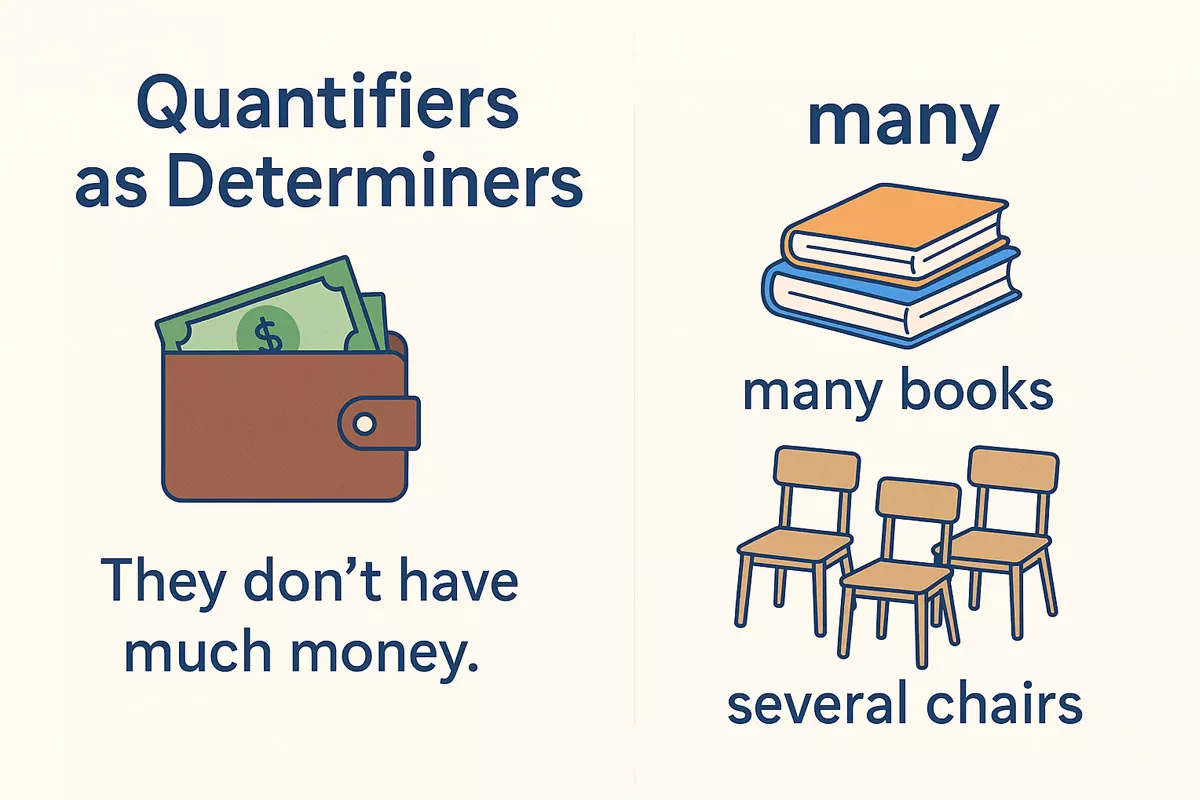 Here we the meaning of quantifier determiners, how they differ with count and non-count nouns, common usage patterns, and frequent learner mistakes. It also provides clear examples and a mini practice section for reinforcement.
Selecting appropriate words to express quantity can significantly influence the meaning of a sentence. Understanding how determiners such as much, many, and several operate enables English learners to communicate amounts more precisely and confidently. By mastering these terms, individuals can avoid ambiguity and ensure their intended message is clear, whether discussing countable or uncountable nouns. This awareness contributes to more effective and nuanced language use in both written and spoken contexts.
What Quantifier Determiners Mean
Quantifier determiners help us express the amount or number of something, without needing to give a specific figure. Words like much, many, and several let speakers describe quantity in a general way. These terms often signal whether we talk about countable or uncountable nouns, and they give listeners a sense of scale or frequency.
How Quantifiers Work in Sentences
When used before a noun, these words set expectations about quantity or volume. For example, saying "many apples" suggests a large but undefined number of apples, while "much water" refers to a significant amount of water. The choice of quantifier can also convey subtle differences in tone or emphasis.
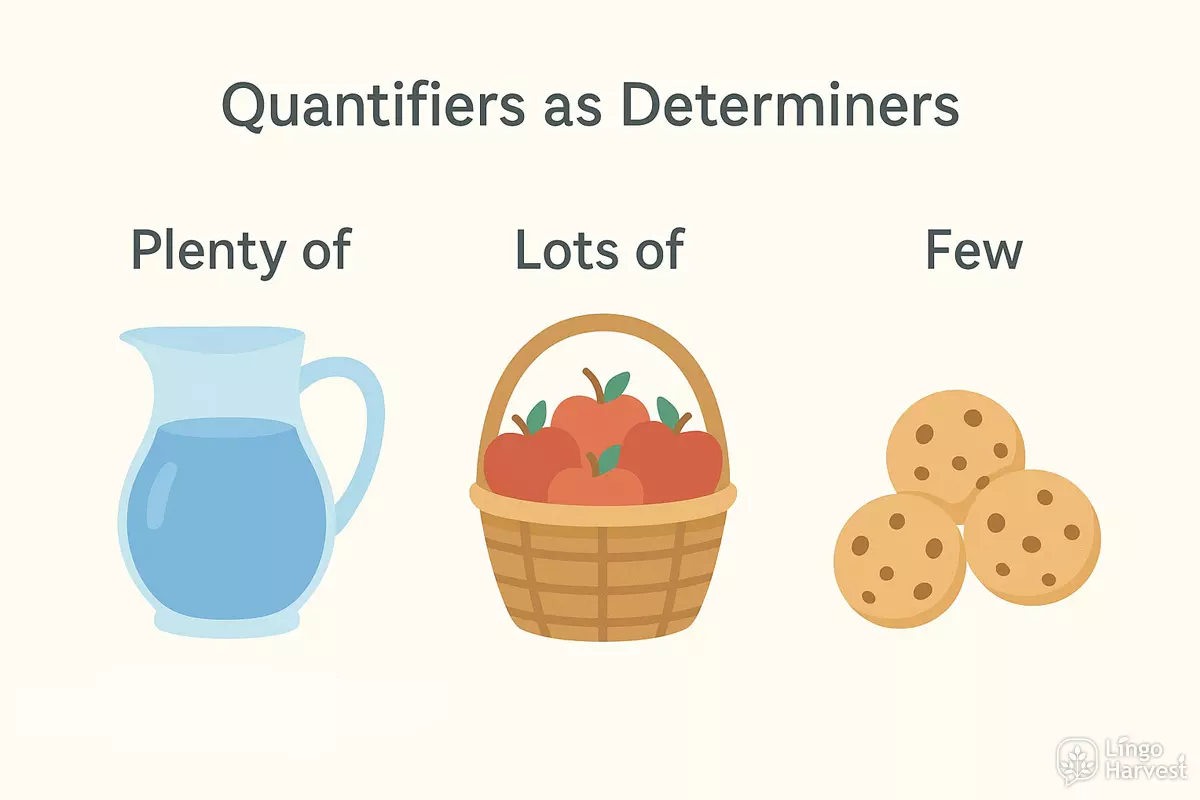
- Much — used with uncountable nouns (e.g., much information, much rice)
- Many — used with countable nouns (e.g., many books, many ideas)
- Several — refers to more than two but not a large number (e.g., several chairs, several reasons)
- A few — a small number, countable
- A little — a small amount, uncountable
- Some — an unspecified quantity (both countable and uncountable)
- Any — used in questions and negatives for both types
- Plenty of — more than enough
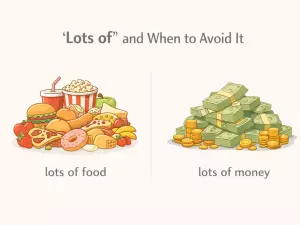
- Lots of — large amount, informal
- Few — not many, emphasizes scarcity
- Little — not much, emphasizes scarcity
- Each — every one, considered individually
- Every — all items in a group, individually
- All — the whole quantity or number
- None — zero quantity
- Most — the majority
- Enough — sufficient quantity
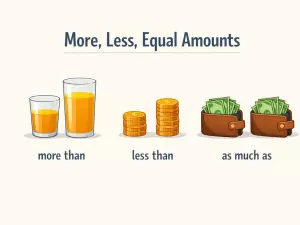
- More — a greater amount
- Less — a smaller amount (uncountable)
- Fewer — a smaller number (countable)
Countable vs. Uncountable: Choosing the Right Quantifier
Choosing between quantifiers depends on whether the noun is countable or uncountable. For instance, many is correct with things you can count (like "many pencils"), while much fits with mass nouns you cannot count individually (like "much milk").
| Countable Nouns | Uncountable Nouns |
|---|---|
| many apples | much sugar |
| several ideas | little patience |
| few chairs | less time |
| fewer problems | some information |
In summary, quantifying determiners add clarity and nuance to communication by indicating approximate amounts. They are essential for expressing quantity without being overly precise, and their correct use depends on the noun type and context.
Count vs Non-Count
Understanding which nouns are countable and which are not is essential when using quantifiers like much, many, and several. Some nouns can be counted individually (e.g., apples, cars), while others refer to substances or abstract concepts that cannot be separated into individual elements (e.g., water, information).
Countable Nouns
These nouns refer to items you can count one by one. They have both singular and plural forms. Quantifiers such as many and several are typically used with these words. Here are some examples of countable nouns:
- book
- idea
- dog
- pen
- student
- apple
- chair
- question
- car
- cup
- friend
- computer
You might say, "There are many students in the classroom," or "She has several books to read."
Non-Count Nouns
Non-count nouns, also called uncountable nouns, refer to things that cannot be counted individually. They do not have a plural form, and it is incorrect to use many or several with them. Instead, quantifiers like much or a little are appropriate. Here are some common non-count nouns:
- water
- information
- advice
- furniture
- music
- bread
- rice
- money
- luggage
- equipment
- sand
- news
Examples: "There isn't much bread left," or "We don't have much information."
Choosing the Right Quantifier
The choice of quantifier depends on the type of noun. Here’s a quick comparison to illustrate which quantifiers go with which nouns:
| Quantifier | Used With | Example |
|---|---|---|
| much | Non-count | Is there much milk? |
| many | Countable (plural) | How many chairs? |
| several | Countable (plural) | Several books are missing. |
| a little | Non-count | We have a little time. |
| a few | Countable (plural) | A few apples remain. |
Remember: using the wrong quantifier can make a sentence sound unnatural or even incorrect. For example, "many information" ❌ is wrong, while "much information" ✅ is correct.
Common Patterns
Many English sentences use words like "much," "many," and "several" to express quantity, but each has its own rules for usage and agreement. Understanding these tendencies helps speakers choose the right word depending on whether they are talking about countable or uncountable nouns.
Usage with Countable and Uncountable Nouns
"Much" is typically used with uncountable nouns, while "many" and "several" are used with countable nouns. Here are some frequent combinations:
- much water
- much information
- many people
- many books
- several options
- several chairs
- much time
- many ideas
- several reasons
- much advice
- many friends
- several opportunities
Typical Sentence Structures
These quantifiers often appear in similar grammatical positions. Some patterns include:
- There isn't much milk left in the fridge.
- Do you have many questions?
- Several students arrived early.
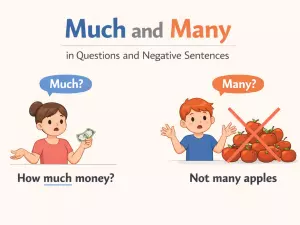
- How much sugar do you need?
- Not many people attended the meeting.
- She has several ideas for the project.
Comparing "Much," "Many," and "Several"
The table below highlights distinctions in their typical use and meaning:
| Quantifier | Usage & Example | Countable/Uncountable | Typical Context |
|---|---|---|---|
| Much | There isn’t much noise. | Uncountable | Negative statements, questions, formal |
| Many | Many cars are parked outside. | Countable | Questions, negatives, positives (especially formal) |
| Several | Several guests arrived early. | Countable | Small but indefinite number (more than two, not a lot) |
| Much vs. Many | How much money? How many coins? | See usage | Quantity questions |
Notes on Formality and Emphasis
"Much" is less common in positive statements in everyday speech; people often use "a lot of" instead. "Many" and "several" can both emphasize a larger number, but "several" suggests a moderate quantity, not as great as "many." Choosing the right one depends on both the noun type and the desired emphasis.
Typical Learner Confusions
Understanding how to use quantifying determiners such as "much," "many," and "several" can cause persistent issues for English learners. The distinctions between countable and uncountable nouns, as well as subtle differences in meaning, often lead to mistakes in both speaking and writing.
Countable vs. Uncountable Nouns
A frequent stumbling block is knowing which quantifier pairs with which type of noun. "Many" is used with countable nouns, while "much" fits uncountable ones. "Several" is only for countable nouns. Learners sometimes confuse these pairings, producing sentences like "much apples" or "several water," which sound unnatural to native speakers.
| Correct Usage | Incorrect Usage |
|---|---|
| many books | much books |
| much information | many information |
| several cars | several water |
| much advice | many advices |
| many students | much students |
| several ideas | several sugar |
Common Error Patterns
Mixing up these quantifiers is common, especially when translating directly from a learner’s native language. Some languages do not distinguish between countable and uncountable nouns in the same way, making direct translation unreliable. Incorrect verb agreement sometimes follows: "There is many people" instead of "There are many people."
- Using "much" with plural nouns: "much apples"
- Using "many" with uncountable nouns: "many money"
- Applying "several" to uncountable substances: "several sand"
- Forgetting to use "much" in negative sentences: "I don’t have many time"
- Assuming "much" is always formal: "much friends" in casual speech
- Confusing "a lot of" with "many/much": "a lot of informations"
- Incorrect verb agreement: "There is many cars"
- Omitting the quantifier altogether: "I have books" (when quantity is important)
Subtle Differences in Meaning
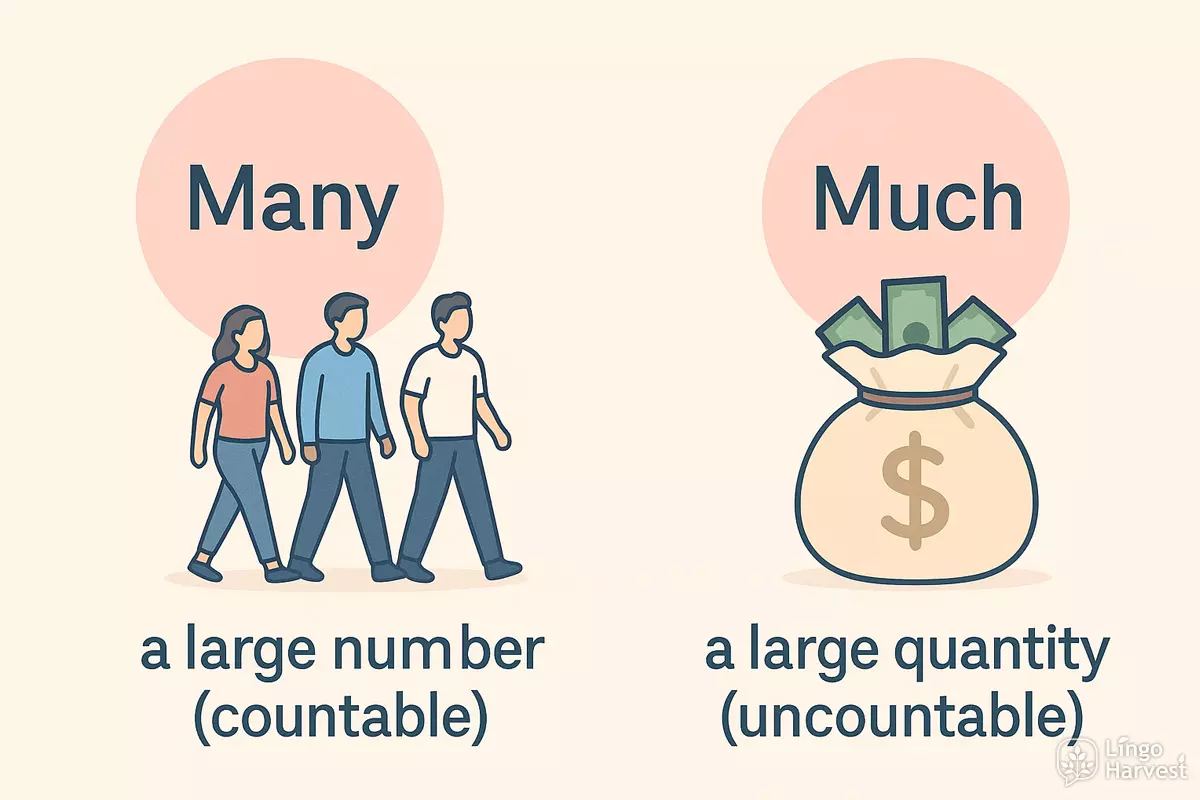
Another source of confusion is the nuance between these words. "Many" and "much" typically refer to large quantities, but "several" means more than two but not a large number. Learners sometimes use "several" to mean "many," which can change the meaning of a sentence.
- "Many" = a large number (countable)
- "Much" = a large quantity (uncountable)
- "Several" = more than two but not a lot (countable)
Tips to Avoid Mistakes
- Always check if the noun is countable or uncountable. - Remember: "many" and "several" are for things you can count; "much" is for things you can’t. - Practice with examples and listen for these words in native speech. - When in doubt, "a lot of" works for both types, but be aware of formality and context. Understanding these distinctions helps learners avoid the most frequent errors and communicate with greater accuracy.
Useful Examples
Understanding how to use "much," "many," and "several" as determiners is easier with real-world sentences. These quantifiers help specify the amount or number of things when talking about countable or uncountable nouns. Below you’ll find practical sample sentences and typical usage patterns, so you can see how these words fit naturally in English communication.
Everyday Sentences
- There isn’t much milk left in the fridge.
- How many books did you read last month?
- Several people called while you were out.
- She doesn’t have much experience in this field.
- We saw many birds at the park.
- I have several ideas for the project.
- Is there much traffic on your way to work?
- Many students found the test difficult.
- He received several awards last year.
- There isn’t much time before the meeting starts.
- How many apples are in the basket?
- They made several changes to the plan.
- Do you have much homework tonight?
- Many tourists visit this city every year.
- We have several options to consider.
Comparison Table: Countable vs. Uncountable Usage
| Quantifier | Used with | Example |
|---|---|---|
| Much | Uncountable nouns | We don’t have much sugar. |
| Many | Countable plural nouns | Many cars are parked outside. |
| Several | Countable plural nouns | Several friends joined the hike. |
Mini Practice
To help you become more confident using quantifiers like "much," "many," and "several," try the following exercises. Read each sentence and decide which quantifier best completes the idea. Pay attention to whether the noun is countable or uncountable, and consider the meaning each word brings.
Choose the Correct Quantifier
- There aren’t _____ cookies left in the jar.
- How _____ water do you drink each day?
- _____ students attended the extra class last week.
- We don’t have _____ information about the event yet.
- _____ people know about this shortcut.
- I have too _____ work to do before the deadline.
- _____ of my friends like to travel abroad.
- She has _____ patience with noisy children.
Show answers
- many
- much
- Several
- much
- Few/Not many
- much
- Many
- little
Identify If the Noun Is Countable or Uncountable
For each item below, decide whether the noun is countable or uncountable. Then, suggest which quantifier fits best: "much," "many," or "several."
- Advice
- Chairs
- Sand
- Apples
- Homework
- Opportunities
- Money
- Suggestions
Show answers
- Advice – uncountable – much
- Chairs – countable – many/several
- Sand – uncountable – much
- Apples – countable – many/several
- Homework – uncountable – much
- Opportunities – countable – many/several
- Money – uncountable – much
- Suggestions – countable – many/several
Comparing Quantifiers: Usage Table
| Quantifier | Used With | Example | Typical Meaning |
|---|---|---|---|
| much | Uncountable nouns | There isn’t much time. | A large amount |
| many | Countable nouns (plural) | Many students passed. | A large number |
| several | Countable nouns (plural) | Several books are missing. | More than two, but not a lot |
| little/few | Uncountable (little) / Countable (few) | Few people came. Little milk left. | Not much / Not many |
Try forming your own sentences using each quantifier and noun type. Notice how the meaning changes depending on which word you choose.