Much vs Many: Countable or Uncountable?

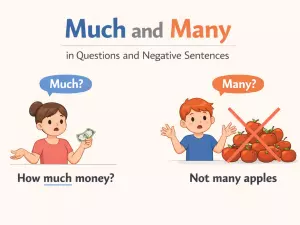
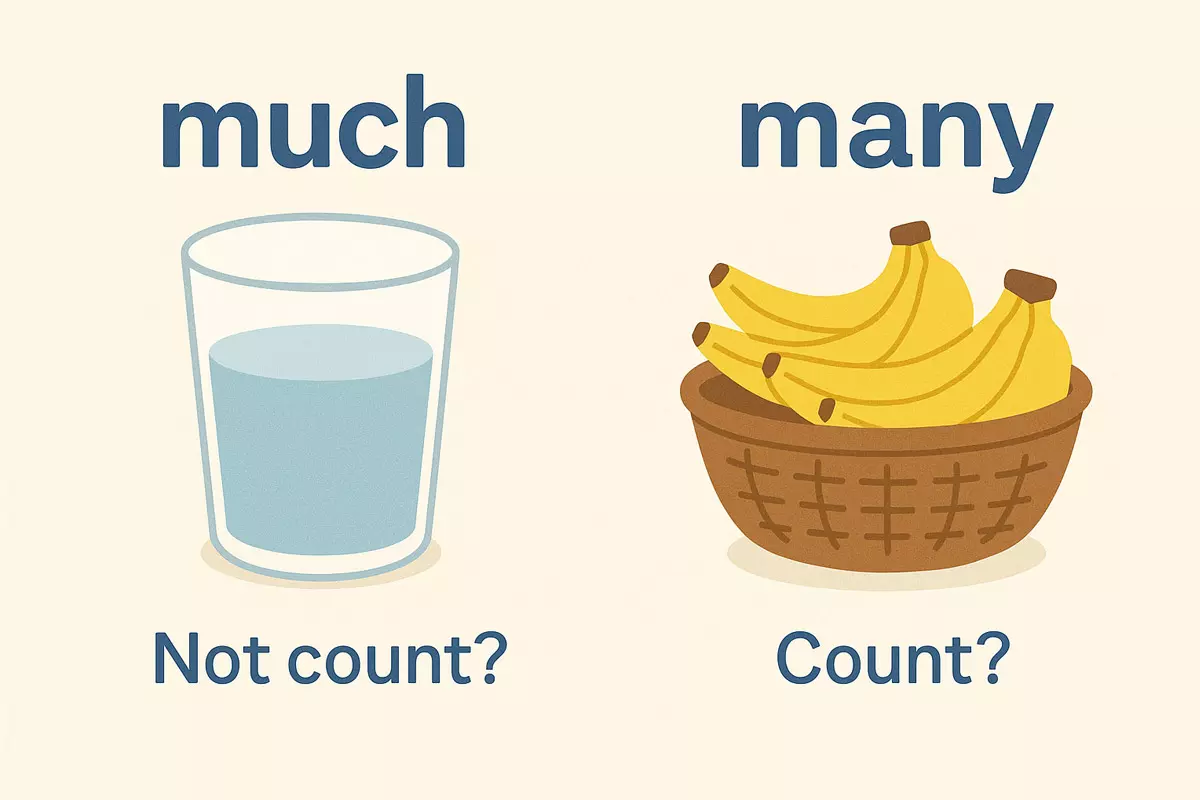 Use many with plural countable nouns and much with uncountable nouns. Takeaway: if you can count the items one by one, choose many; if you measure the amount as a whole, choose much. This guide explains the rule through questions, negatives, informal speech, shopping, cooking, and practice.
Many English learners wonder whether to use "much" or "many" when discussing quantities, and the key to choosing the right word lies in the type of noun involved. "Many" is used with countable nouns—things you can count individually, like apples, books, or cars. In contrast, "much" is used with uncountable nouns—things you cannot count separately, such as water, information, or rice. Remembering this distinction will help you use these words correctly in everyday English conversations.
Countable vs Uncountable Nouns
Understanding the distinction between items you can count and those you can't is essential for using "much" and "many" correctly. In English, words for things you can separate into individual units—like "apples" or "cars"—are called count nouns. On the other hand, substances or concepts that are viewed as a whole—like "water" or "information"—are noncount nouns.
What Are Count Nouns?
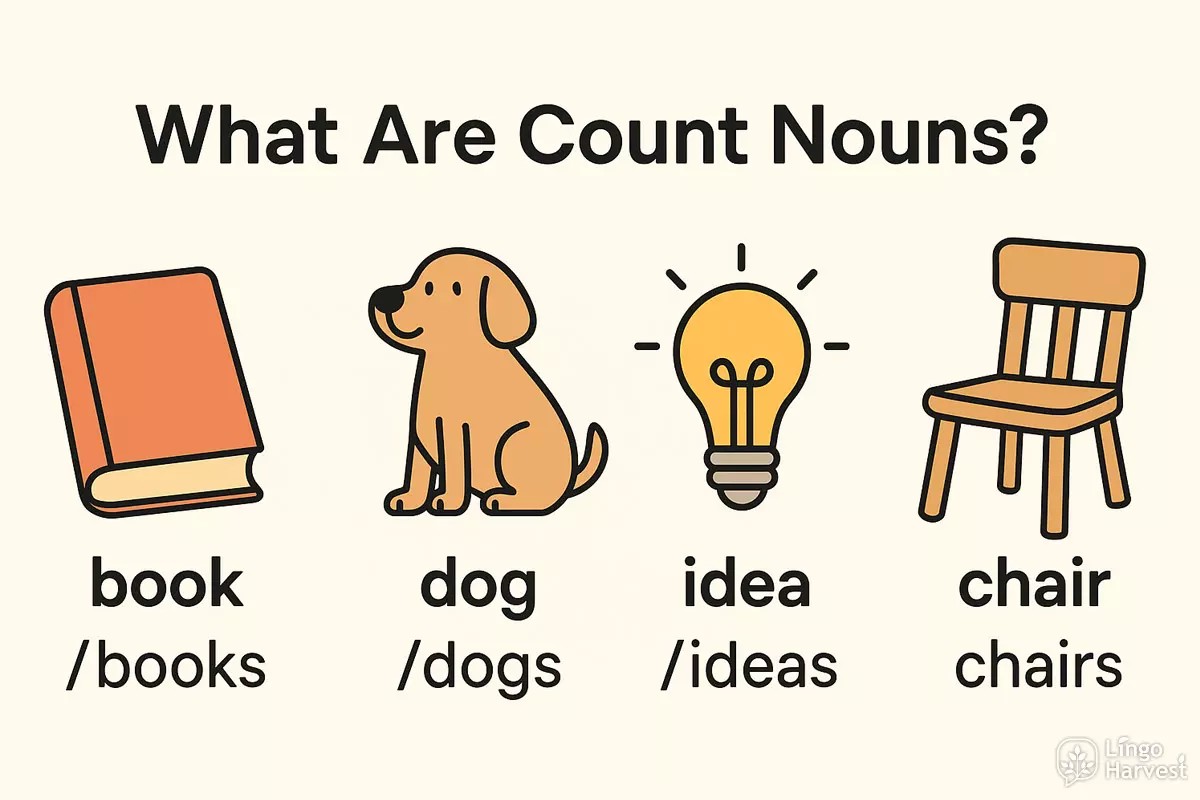
Count nouns refer to things that can be counted individually. They have both singular and plural forms, and you can use numbers or quantifiers like "many" with them. For example:
- book / books
- dog / dogs
- idea / ideas
- child / children
- chair / chairs
- pen / pens
- city / cities
- apple / apples
- friend / friends
- car / cars
You can say "three books," "many pens," or "a few apples" because these items are countable.
What Are Noncount Nouns?
Noncount nouns, sometimes called mass nouns, refer to things you don't usually count as separate items. They typically have no plural form and are treated as singular. With these, you use "much," "a little," or "some." Examples include:
- water
- rice
- advice
- furniture
- information
- music
- air
- sand
- money
- knowledge
- bread
- traffic
- luggage
- equipment
- homework
- news
It wouldn't make sense to say "one rice" or "many music."
Quick Comparison: Countable vs Uncountable
| Count Nouns ✅ | Uncountable Nouns (use much) |
|---|---|
| apple / apples | water |
| car / cars | information |
| child / children | advice |
| idea / ideas | bread |
| friend / friends | furniture |
| dog / dogs | money |
| book / books | music |
| pen / pens | luggage |
Why Does This Matter?
Choosing between "much" and "many" depends on whether the noun is countable or not. Use "many" with things you can count ("many books"), and "much" with things you can't count ("much water"). This rule helps you sound more natural and accurate in English.
How much? vs How many?
Understanding the difference between "how much" and "how many" is essential for correct English usage. The core distinction lies in whether the noun being described is countable or uncountable. "How many" is used with things you can count individually, while "how much" goes with things you measure but don't count in separate units. This is one of the most common patterns in quantity questions.
When to Use "How many"
"How many" applies to plural, countable nouns—objects or concepts you can easily number. For instance, you might ask about apples, cars, or questions. If you can add an "s" and count them one by one, "how many" is the right choice.
- How many books are on the shelf?
- How many students are in the class?
- How many days until the weekend?
- How many chairs do we need?
- How many emails did you get?
- How many languages do you speak?
- How many mistakes did you find?
- How many pens do you have?
- How many countries have you visited?
- How many hours will it take?
When to Use "How much"
"How much" is used with uncountable nouns—things that are seen as a whole or mass, not as individual items. Examples include substances, abstract ideas, and categories like money, time, or information.
- How much water do you drink daily?
- How much money do you need?
- How much time is left?
- How much sugar should I add?
- How much information did you get?
- How much noise is too much?
- How much energy does it use?
- How much homework do you have?
- How much milk is in the fridge?
- How much patience do you have?
Quick Comparison
To help clarify, here’s a side-by-side look at typical usage patterns:
| Countable (use "How many") | Uncountable (use "How much") |
|---|---|
| How many apples? | How much juice? |
| How many chairs? | How much furniture? |
| How many emails? | How much information? |
| How many friends? | How much friendship? |
| How many coins? | How much money? |
| How many hours? | How much time? |
| How many questions? | How much advice? |
Tips to Decide
If you’re unsure which form to use, try to count the noun: if you can say "one, two, three," use "how many." If not, "how much" is likely correct. Some nouns, like "chicken" or "coffee," can be both countable and uncountable depending on meaning (e.g., "How many coffees?" at a café vs. "How much coffee?" referring to the substance). Context matters, so think about what you’re asking. In summary, matching "how much" and "how many" to the noun’s countability is key for natural English questions. Practicing with different examples helps build confidence and accuracy.
A lot of / lots of vs much/many
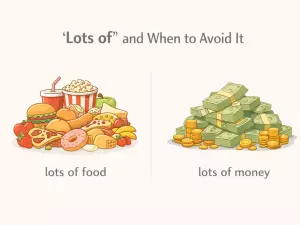
A lot of, lots of, much, and many all describe quantity, but they do not sound the same in every sentence. The basic grammar rule is simple: use many with plural countable nouns and much with uncountable nouns. In everyday positive sentences, however, English often prefers a lot of or lots of because they sound more natural and conversational.
Takeaway: if you are asking a question or making a negative sentence, much and many are usually safe choices. If you are making a positive everyday sentence, a lot of often sounds better, especially with uncountable nouns.
Basic grammar difference
- Many goes with plural countable nouns: many books, many apples, many questions.
- Much goes with uncountable nouns: much water, much information, much traffic.
- A lot of works with both countable and uncountable nouns: a lot of books, a lot of water.
- Lots of also works with both types, but it sounds more informal: lots of people, lots of noise.
Natural use in positive, negative, and question forms
| Sentence type | Countable nouns | Uncountable nouns |
|---|---|---|
| Positive everyday sentence | We have a lot of books. | She has a lot of experience. |
| Negative sentence | There aren’t many seats left. | There isn’t much time left. |
| Question | Do you have many questions? | Do you have much homework? |
| Informal positive sentence | They invited lots of friends. | He drinks lots of coffee. |
Examples that sound natural
- There aren’t many cars on the road today.
- She doesn’t have much patience with rude customers.
- We have a lot of friends in this city.
- He drank lots of coffee before the meeting.
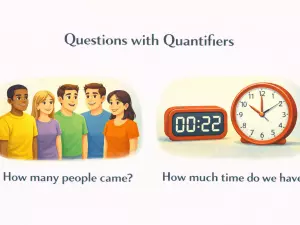
- How many emails did you get this morning?
- How much time do we have before the train leaves?
- There’s a lot of noise outside.
- They bought lots of souvenirs at the market.
- We don’t have much milk left.
- She didn’t make many mistakes in the test.
Less natural vs better choices
| Less natural or incorrect | Better choice | Why |
|---|---|---|
| I have much work today. | I have a lot of work today. | Much in positive everyday sentences often sounds stiff. |
| She has much friends. | She has many friends / a lot of friends. | Friends is countable, so use many or a lot of. |
| There is many traffic. | There is a lot of traffic. | Traffic is uncountable, so do not use many. |
| Do you have a lot of time? | Do you have much time? / Do you have a lot of time? | Both can be correct. Much time is a little more direct; a lot of time is more conversational. |
Comparing formality and frequency
| Expression | Typical usage |
|---|---|
| Much | Uncountable nouns, especially in questions and negatives: How much time?, not much money. In positive sentences, it can sound formal or emphatic. |
| Many | Plural countable nouns: many people, many problems. It is common in questions, negatives, and neutral/formal positive statements. |
| A lot of | Countable and uncountable nouns. Very common in everyday English, especially in positive statements: a lot of ideas, a lot of advice. |
| Lots of | Countable and uncountable nouns. More informal and friendly: lots of photos, lots of fun. |
Quick Tips
- For formal writing, "much" and "many" are preferred in questions and negatives.
- In everyday conversation, "a lot of" and "lots of" are more natural in positive contexts.
- In everyday positive sentences, a lot of is often more natural than much. Many is still common in neutral and formal English: Many people attended the event.
- All these forms can be used with adjectives or adverbs ("much better," "many more," "a lot of fun").
Understanding when to choose each phrase depends on both grammar (countable vs. uncountable) and the style of your communication (formal vs. informal). This helps you sound more natural and precise in English.
Formal vs Informal Preferences
The choice between much, many, a lot of, and lots of is not only about grammar. It is also about tone. In formal writing, many often sounds clear and precise with countable nouns, while much is most natural with uncountable nouns in questions and negative sentences. In everyday speech, learners usually sound more natural when they use a lot of in positive sentences.
Common usage patterns

In essays, reports, tests, and professional emails, many is common in positive statements: Many students completed the survey. Much can appear in formal positive statements too, but it often sounds heavy or written: Much research has focused on this problem. In normal conversation, people usually say a lot of research, a lot of work, or a lot of time.
- How much time do we have? ✅ Natural question with an uncountable noun.
- We don’t have much information. ✅ Natural negative sentence with an uncountable noun.
- Do you have many questions? ✅ Natural question with a plural countable noun.
- There aren’t many options left. ✅ Natural negative sentence with a plural countable noun.
- Many students attended the lecture. ✅ Neutral/formal positive sentence.
- She has many useful ideas. ✅ Correct, especially in writing or careful speech.
- We have a lot of work today. ✅ Natural everyday positive sentence.
- He has a lot of experience in teaching. ✅ More natural than much experience in casual speech.
- There are a lot of people here. ✅ Common in everyday conversation.
- She made lots of notes during the lesson. ✅ Informal and natural.
- Much rain fell last night. ⚠️ Grammatically possible, but formal or literary.
- A lot of rain fell last night. ✅ More natural in everyday English.
- I have much work today. ⚠️ Understandable, but stiff in normal speech.
- I have a lot of work today. ✅ Better everyday choice.
Formal, neutral, and informal choices
| Context | More natural choice | Example |
|---|---|---|
| Academic or formal writing | many with countable nouns; much in negatives/questions or formal set phrases | Many studies support this view. There is not much evidence. |
| Professional email | many, much, or a lot of, depending on tone | We received many replies. We do not have much time. |
| Everyday conversation | a lot of for most positive sentences | I have a lot of things to do today. |
| Very informal speech | lots of | We took lots of photos. |
| Negative sentences | much with uncountable nouns; many with plural countable nouns | There isn’t much milk. There aren’t many seats. |
| Questions | how much or how many | How much money do you need? How many tickets should we buy? |
What sounds stiff in everyday English?
Some sentences are grammatically possible, but they sound too formal for normal conversation. This happens most often with much in positive statements.
| Stiff or too formal | More natural | Reason |
|---|---|---|
| We have much work this week. | We have a lot of work this week. | A lot of sounds more natural in a positive everyday sentence. |
| She has much experience. | She has a lot of experience. | Experience is uncountable, but much sounds formal here. |
| There was much noise outside. | There was a lot of noise outside. | In speech, a lot of is the usual positive form. |
| He gave me much advice. | He gave me a lot of advice. | Advice is uncountable, but the positive sentence sounds better with a lot of. |
Takeaway
Use many with plural countable nouns and much with uncountable nouns, especially in questions and negative sentences. In formal writing, many is common and precise, while much can sound formal in positive statements. In everyday speech, a lot of is often the safest natural choice for positive sentences with both countable and uncountable nouns.
Typical Traps (too much/many)
Grasping the difference between “much” and “many” can be tricky, especially for learners whose native languages don’t make this distinction. People often confuse these words when talking about amounts, especially in negative sentences or questions. The pair too much / too many is one of the most common traps. Below are some common pitfalls and how to avoid them.
Common Mistakes with “Much” and “Many”
Learners often mix up “much” and “many” because both refer to quantity, but they are used with different types of nouns. Here are a few classic errors:
- Using much with countable nouns: ❌ much apples instead of ✅ many apples.
- Using many with uncountable nouns: ❌ many water instead of ✅ much water.
- Overusing “much” or “many” in positive statements: “I have much friends” → Incorrect.
- Forgetting to use “much” and “many” mainly in questions and negatives: “I don’t have many books” or “Do you have much time?”
Other Tricky Situations
There are some less obvious problems, especially when using modifiers or in informal speech. Watch out for these:
- “Too much” with countable nouns: ❌ too much chairs.
- “Too many” with uncountable nouns: ❌ too many information.
- “So much” vs. “so many”: “So much noise” (uncountable), “So many mistakes” (countable).
- “How much” for prices or amounts: “How much is this?” (correct), but not for plural items: ❌ How much apples?
- “How many” for plural count: “How many pencils do you have?”
- “Much” in positive sentences is rare: “He has much patience” sounds formal; usually say “a lot of patience.”
- “Many” is more common in positive sentences: “She has many friends.”
- “A lot of” can often replace both: “A lot of books” or “a lot of water.”
- “Very much” vs. “very many”: “I like it very much,” but “There aren’t very many options.”
- Confusing “much” and “many” with “more”: “More money” (uncountable), “more people” (countable).
Quick Reference Table
Here’s a handy comparison to clear up confusion:
| Expression | Correct Usage Example |
|---|---|
| much | Do you have much time? (uncountable) |
| many | Are there many cars? (countable) |
| too much | There is too much noise. (uncountable) |
| too many | There are too many people. (countable) |
| so much | She has so much homework. (uncountable) |
| so many | He made so many mistakes. (countable) |
Real-Life Examples (shopping, cooking)
Understanding when to use "much" or "many" becomes clearer with practical situations such as grocery shopping or preparing meals. In these everyday contexts, we naturally encounter both countable and uncountable nouns, which directly affects our word choice.
At the Grocery Store
When buying items, it's important to distinguish between things you can count (apples, bottles) and those you measure (milk, rice). Here are some common phrases:
- How many eggs do we need for the cake?
- There aren’t many bananas left in the basket.
- Do we have much bread at home?
- She didn’t buy much cheese.
- Are there many tomatoes in the fridge?
- We don’t need much salt for this recipe.
- How many cans of soup shall we get?
- He never buys much juice.
- How many bags of chips are on the shelf?
- I don’t drink much coffee in the evening.
Cooking and Recipes
Recipes are another excellent context for practicing the difference. Ingredients like "flour" or "water" are uncountable, while "carrots" or "onions" are countable.
| Countable Nouns (use "many") | Uncountable Nouns (use "much") |
|---|---|
| How many potatoes do you need? | How much sugar is required? |
| Are there many mushrooms in the soup? | Is there much oil left? |
| Did you buy many onions? | Did you use much flour? |
| We don’t need many lemons. | We don’t need much butter. |
Counting uncountable nouns with pieces, cups, bottles, and slices
Some nouns are uncountable by themselves, so they use much: much coffee, much bread, much advice. But when you add a container, piece, or unit, the phrase becomes countable, so you use many: many cups of coffee, many slices of bread, many pieces of advice. This is very common in shopping, cooking, and restaurant English.
| Uncountable amount | Countable unit | Meaning |
|---|---|---|
| How much coffee do you drink? | How many cups of coffee do you drink? | Coffee is a liquid; cups are countable. |
| We don’t have much water. | We don’t have many bottles of water. | Water is uncountable; bottles are countable. |
| There isn’t much bread left. | There aren’t many slices of bread left. | Bread is usually uncountable; slices are countable. |
| Did you buy much cheese? | Did you buy many blocks of cheese? | Cheese is a food substance; blocks are countable units. |
| She gave me much advice. (formal) | She gave me many pieces of advice. | Advice is uncountable; pieces make it countable. |
| We need much information. | We need many pieces of information. | Information is uncountable; pieces are countable. |
| There isn’t much furniture in the room. | There aren’t many pieces of furniture in the room. | Furniture is uncountable; pieces are countable. |
| How much rice should I cook? | How many cups of rice should I cook? | Rice is measured as a mass; cups are countable. |
A useful pattern is: much + uncountable noun, but many + countable unit + of + uncountable noun. For example, say much milk but many cartons of milk, much sugar but many spoons of sugar, and much luggage but many pieces of luggage. You can also review more examples in food quantifiers.
Common mistakes with units
- Incorrect: many advice → Correct: much advice or many pieces of advice.
- Incorrect: many furniture → Correct: much furniture or many pieces of furniture.
- Incorrect: much bottles of water → Correct: many bottles of water.
- Incorrect: much cups of coffee → Correct: many cups of coffee.
- Incorrect: many bread → Correct: much bread or many slices of bread.
Quick Tips
- Use "many" for objects you can count individually (e.g., apples, bottles, eggs).
- Use "much" for substances or concepts you measure rather than count (e.g., water, sugar, information).
- Questions and negatives often use "much" and "many" naturally: "Do you have many friends?" "I don’t have much time."
Everyday routines like shopping lists or following a recipe provide useful opportunities to practice the correct use of "much" and "many," helping you sound more natural and accurate in English.
Practice: Describe Quantities
Understanding when to use "much" or "many" depends on whether the noun is countable or uncountable. Let's work through some typical situations you might face in daily conversation or writing. Below, you'll find activities and examples that help you choose the right word to describe amounts accurately.
Choose the Correct Word
Read each sentence and decide whether "much" or "many" fits best.
- How ____ apples are in the basket?
- There isn’t ____ water in the glass.
- Do you have ____ friends at school?
- She doesn’t eat ____ bread.
- Are there ____ books on the shelf?
- We don’t have ____ time left.
- How ____ chairs do we need?
- He doesn’t make ____ mistakes.
- There aren’t ____ cars in the parking lot.
- Is there ____ milk in the fridge?
Show answers
- many
- much
- many
- much
- many
- much
- many
- many
- many
- much
Common Nouns: Countable or Uncountable?
Let’s look at a selection of everyday nouns. Decide which are countable (use "many") or uncountable (use "much").
- rice
- chairs
- money
- ideas
- information
- flowers
- bread
- questions
- music
- people
- furniture
- sandwiches
- advice
- bottles
- news
Show answers
- rice – uncountable
- chairs – countable
- money – uncountable
- ideas – countable
- information – uncountable
- flowers – countable
- bread – uncountable
- questions – countable
- music – uncountable
- people – countable
- furniture – uncountable
- sandwiches – countable
- advice – uncountable
- bottles – countable
- news – uncountable
Quick Reference: When to Use "Much" or "Many"
| Word | Type of Noun | Example Sentence |
|---|---|---|
| much | Uncountable | There isn’t much sugar left. |
| many | Countable (plural) | She has many friends. |
| much | Uncountable | How much time do we have? |
| many | Countable (plural) | Are there many chairs here? |
| much | Uncountable | He doesn’t drink much milk. |
| many | Countable (plural) | Do you read many books? |
Homework: Write Your Own Quantity Sentences
Now write your own sentences with much, many, a lot of, and countable units like pieces of, cups of, and bottles of. Try to make each sentence realistic, not just grammatical.
- Write one question with how many and a countable noun.
- Write one question with how much and an uncountable noun.
- Write one negative sentence with many.
- Write one negative sentence with much.
- Write one positive everyday sentence with a lot of and a countable noun.
- Write one positive everyday sentence with a lot of and an uncountable noun.
- Write one informal sentence with lots of.
- Write one sentence with too many and a plural countable noun.
- Write one sentence with too much and an uncountable noun.
- Write one sentence that changes an uncountable noun into a countable phrase with pieces of, cups of, bottles of, or another unit.
Show sample answers
- How many messages did you receive today?
- How much time do we have before the lesson starts?
- There aren’t many chairs in this room.
- I don’t have much patience when the internet is slow.
- We saw a lot of tourists near the museum.
- She has a lot of experience with online teaching.
- They took lots of photos during the trip.
- There are too many tabs open on my computer.
- There is too much salt in this soup.
- I drank three cups of coffee this morning.
FAQ
1. What is the main difference between much and many?
Use many with plural countable nouns, such as many books, many students, or many questions. Use much with uncountable nouns, such as much water, much information, or much time.
2. Do we say much people or many people?
Say many people. The noun people is plural and countable in this context, so it takes many. For example: Many people use English at work.
3. Can I use a lot of instead of much and many?
Yes, a lot of can be used with both countable and uncountable nouns. You can say a lot of books and a lot of water. In positive everyday sentences, a lot of often sounds more natural than much.
4. Why do we say much money but many dollars?
Money is treated as an uncountable noun, so we say much money. Dollars are countable units, so we say many dollars. The same idea works with much water but many bottles of water.
5. Is much used in positive sentences?
Yes, but it often sounds formal, written, or emphatic. For everyday speech, a lot of is usually more natural. For example, I have a lot of work today sounds more conversational than I have much work today.
6. What is the difference between too much and too many?
Use too many with plural countable nouns: too many cars, too many mistakes, too many emails. Use too much with uncountable nouns: too much noise, too much sugar, too much homework.
7. Do I use how much or how many for food?
It depends on whether you are counting items or measuring an amount. Say how many eggs, how many apples, and how many potatoes. Say how much rice, how much flour, and how much milk.
8. What should I say: much information or many informations?
Say much information or a lot of information. Do not say many informations, because information is uncountable in English. If you want to count separate items, say many pieces of information.
9. Is lots of correct English?
Yes, lots of is correct, but it is informal. It works with both countable and uncountable nouns: lots of friends, lots of noise, lots of ideas. In formal writing, many, much, or a large amount of may be more appropriate.