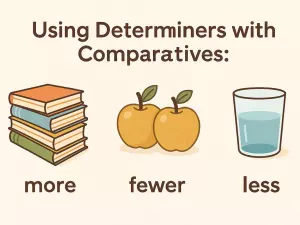
Quantifiers in Comparisons: More Than, Less Than, As Much As

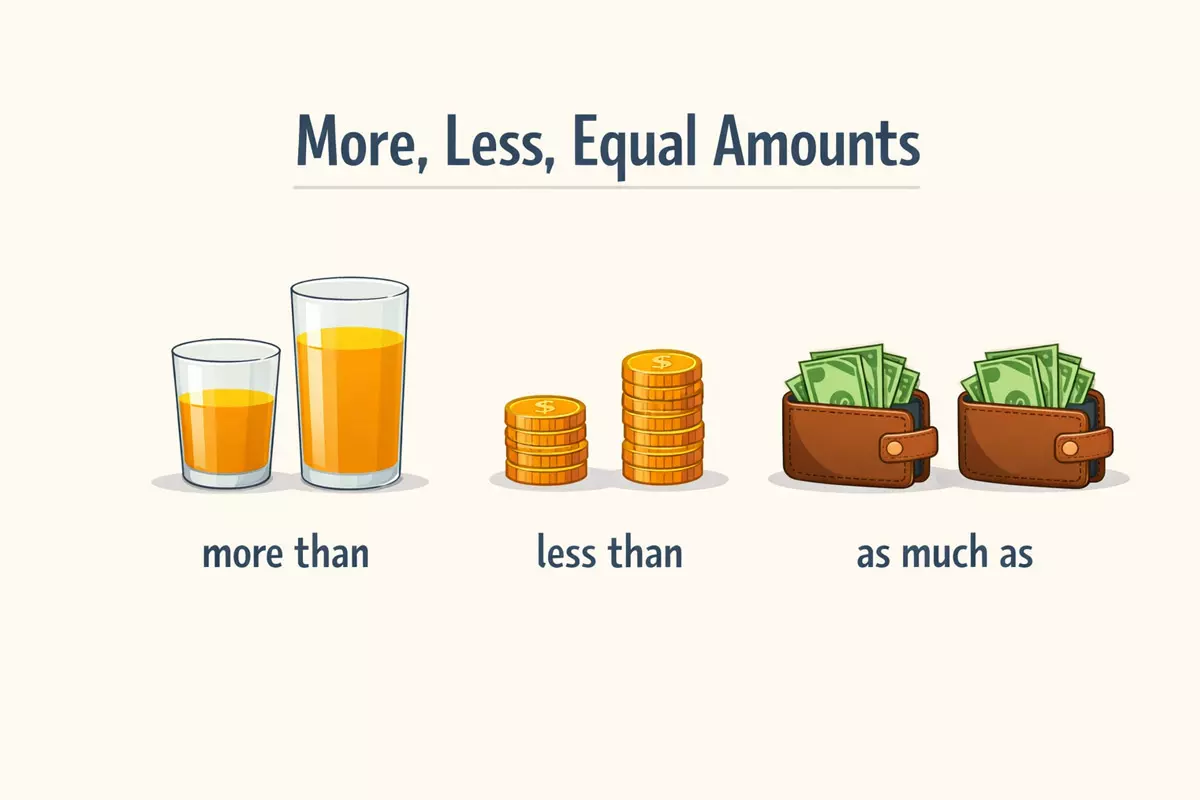 Here we basic comparison structures with quantities, explains how to compare amounts and numbers with countable and uncountable nouns, discusses word order and common errors, and provides examples and practice for building clear comparative sentences.
- Basic comparison structures with quantities
- Comparing amounts vs comparing numbers
- Use with countable and uncountable nouns
- As much as vs as many as distinctions
- Word order in comparative expressions
- Common errors in comparison structures
- Examples showing correct comparison
- Practice: building clear comparisons
Being able to express differences in amount or degree is an important skill in English, as it allows you to compare quantities, qualities, or frequency in a clear and accurate way. Using comparative phrases such as greater than, less than, fewer than, or equal to helps you communicate differences effectively in various contexts, from daily conversations to more formal discussions. Mastering these expressions will improve your ability to make comparisons and convey your meaning precisely when talking about numbers, amounts, or characteristics.
Basic comparison structures with quantities
Comparing amounts in English relies on a few straightforward patterns. These structures help us express whether one thing has a greater, lesser, or equal quantity compared to another. The most common quantifiers in such comparisons are "more," "less," and "as much/as many." The choice depends on whether the noun is countable or uncountable.
Patterns for countable and uncountable nouns
For countable nouns (things you can count, like apples or books), use "many," "more," "fewer," and "as many as." For uncountable nouns (like water or money), use "much," "more," "less," and "as much as." Here is a quick reference table:
| Type of Noun | Comparative Structure |
|---|---|
| Countable | more/fewer/as many ... as |
| Uncountable | more/less/as much ... as |
Common comparison phrases
- more than → I have more than two hours today.
- less than → It takes less than ten minutes.
- fewer than → There were fewer than 20 people there.
- as many as → She has as many books as I do.
- as much as → He earns as much as his brother.
- not as many as → We don’t have not as many chairs as we need.
- not as much as → I don’t have not as much time as yesterday.
- as few as → As few as five students came.
- as little as → It cost as little as $5.
- almost as many as → We have almost as many cups as plates.
- almost as much as → She has almost as much experience as he does.
- twice as many as → They have twice as many cars as we have.
- twice as much as → This bag costs twice as much as that one.
- half as many as → I read half as many pages as you did.
- half as much as → He spent half as much money as I did.
- the same amount as → I have the same amount as you.
- the same number of → We have the same number of students.
- no more than → It will take no more than an hour.
- no less than → He waited no less than three hours.
- just as many as → I have just as many questions as you do.
Example sentences
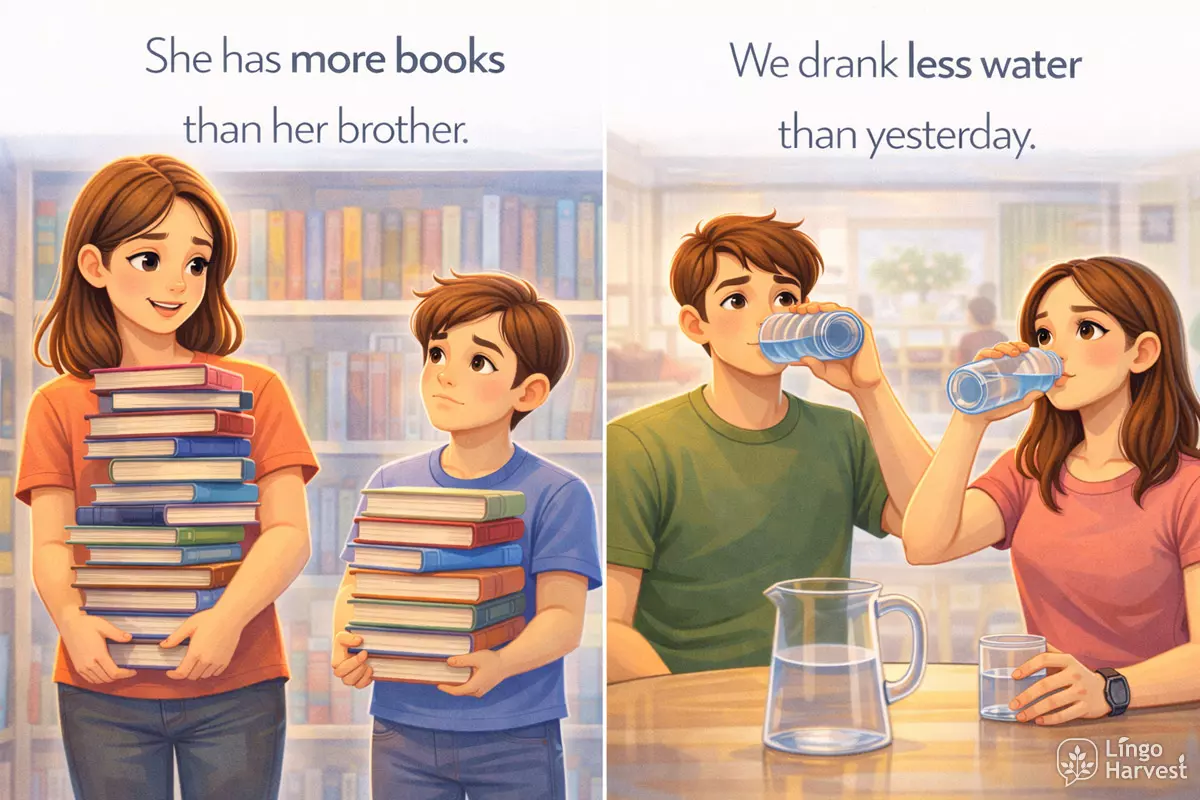
- She has more books than her brother. (countable)
- We drank less water than yesterday. (uncountable)
- He brought as many chairs as we needed. (countable)
- This recipe uses as much sugar as the other one. (uncountable)
- There are fewer students than last year. (countable)
- I have as few problems as possible. (countable, rare use)
- She spent twice as much money as I did. (uncountable)
- You have the same number of pencils as I do. (countable)
Notice how the structure changes slightly depending on what you are comparing. Using the right quantifier helps avoid awkward or incorrect expressions, such as saying "much apples" or "many water" ❌. Stick to the patterns above for smooth, accurate comparisons ✅.
Comparing amounts vs comparing numbers
When we compare things in English, the words we choose depend on whether we’re talking about quantities (uncountable) or individual items (countable). This distinction shapes the correct use of quantifiers such as more, less, fewer, as much as, and as many as. Understanding the difference helps avoid common mistakes and makes your comparisons clear and precise.
Amounts: Uncountable Nouns
Uncountable nouns refer to things we measure in bulk or mass, like water, time, or information. With these, we use quantifiers like more, less, and as much as:
- She has more experience than I do.
- There is less sugar in this recipe.
- Do you have as much patience as your brother?
- We need less time to finish this task.
- Can you drink as much coffee as him?
Numbers: Countable Nouns
Countable nouns are individual items you can count (books, apples, ideas). Here, quantifiers like more, fewer, and as many as are used:
- He has more books than his sister.
- There are fewer cars on the road today.
- Did you solve as many problems as I did?
- We saw fewer movies this month.
- She owns as many plants as her neighbor.
Summary Table: Choosing the Right Quantifier
| Type of Noun | Correct Quantifiers | Example |
|---|---|---|
| Uncountable (amount) | more, less, as much as | He drank less water than yesterday. |
| Countable (number) | more, fewer, as many as | She made fewer mistakes this time. |
| Uncountable (amount) | as much as | Do you have as much energy as before? |
| Countable (number) | as many as | He has as many friends as I do. |
Common Mistakes and Tips
- Use fewer only with countable nouns: ❌ less apples → ✅ fewer apples
- Use less only with uncountable nouns: ❌ fewer water → ✅ less water
- When unsure, check if you can count the noun. If yes, use fewer/as many as; if not, use less/as much as.
- More works with both types: more money (uncountable), more oranges (countable).
Choosing the appropriate quantifier depends on whether you’re dealing with a measurable quantity or a countable number. Getting this right makes your English sound natural and accurate.
Use with countable and uncountable nouns
Different quantifiers behave in specific ways depending on whether the noun is countable (like apples or cars) or uncountable (like water or money). When making comparisons such as more than, less than, or as much as, it's important to match the quantifier to the noun type. This ensures your sentences are both natural and grammatically correct.
Countable Nouns
For items you can count individually, use more, fewer, and as many as. These forms highlight number or quantity. For example, you’d say “more books,” “fewer chairs,” or “as many pencils as.” Avoid using less or as much as with countable nouns, as these are typically reserved for uncountable contexts.
- She has more pens than I do.
- There are fewer students in this class than last year.
- I ate as many cookies as you did.
- We bought more tickets than needed.
- Do you have fewer problems now?
Uncountable Nouns
For substances or concepts that can’t be counted individually, use more, less, and as much as. These compare the amount or degree, not the number. For example, “more rice,” “less sugar,” or “as much information as.” Avoid using fewer or as many as with uncountables.
- He needs more advice than she does.
- We drank less milk this week.
- You have as much patience as your brother.
- There’s more time today than yesterday.
- She used less salt in the soup.
Comparison Overview
It’s easy to mix up which quantifiers fit with each noun type. The table below summarizes the correct patterns for comparisons:
| Quantifier | Countable Nouns | Uncountable Nouns | Example |
|---|---|---|---|
| more | ✅ | ✅ | more chairs / more water |
| less | ❌ | ✅ | less sugar |
| fewer | ✅ | ❌ | fewer books |
| as many as | ✅ | ❌ | as many apples as |
| as much as | ❌ | ✅ | as much coffee as |
Remember: use fewer and as many as for countable items, and less and as much as for things you cannot count. More works with both types. Choosing the right form helps your comparisons sound natural and precise.
As much as vs as many as distinctions
Understanding when to use as much as and as many as is essential for clear comparisons in English. The difference centers on whether you are talking about uncountable or countable nouns. As much as is used with uncountable nouns—things you cannot count individually, such as water, money, or time. As many as is used with countable nouns—items you can count one by one, like apples, books, or people.
Countable vs. uncountable: choosing the right phrase
Here’s how you decide which form to use:
- Use as much as for substances, concepts, and amounts you cannot separate into individual units.
- Use as many as for things you can number.
Common examples
- I don’t have as much time as you.
- She drank as much water as possible.
- There weren’t as many chairs as guests.
- He read as many books as his sister.
- We need as much information as we can get.
- Are there as many options this year?
- The recipe doesn’t call for as much sugar as flour.
- Did you see as many birds as last time?
- She didn’t spend as much money as expected.
- Can you lift as many boxes as he can?
Quick reference: when to use each form
| Expression | Example Nouns | Sample Sentence |
|---|---|---|
| as much as | water, time, money, information, patience | She doesn’t have as much patience as her brother. |
| as many as | books, chairs, people, apples, ideas | There aren’t as many books on the shelf as before. |
Tips for mastering these quantifiers
- If you can count the noun (one, two, three…), use as many as.
- If it’s measured in amount (not number), use as much as.
- With abstract concepts (advice, experience), default to as much as.
- Plural forms usually signal as many as; singular, non-count forms indicate as much as.
Getting comfortable with these distinctions helps prevent awkward phrasing and ensures your comparisons are both accurate and natural-sounding. Practice by identifying countable and uncountable nouns in everyday situations and forming your own sentences.
Word order in comparative expressions
Arranging words correctly in comparative statements is essential for clarity and precision. In English, common comparative structures involve quantifiers like “more than,” “less than,” and “as much as.” The placement of quantifiers, adjectives, nouns, and verbs can change the meaning or create ungrammatical sentences if not handled carefully. Understanding the typical patterns helps speakers and writers construct comparisons that are both accurate and natural-sounding.
Basic patterns with quantifiers

Comparative phrases often follow predictable patterns. Here are some of the most frequent structures:
- more + noun + than: She has more books than I do.
- less + noun + than: He has less patience than his brother.
- as much/many + noun + as: We have as many opportunities as they have.
- more + adjective + than: This test is more difficult than the last one.
- less + adjective + than: The movie was less interesting than expected.
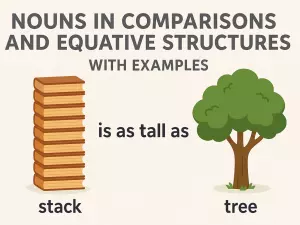
- as + adjective + as: She’s as tall as her mother.
- more + adverb + than: He runs more quickly than his friend.
- less + adverb + than: She finished less efficiently than usual.
- as + adverb + as: He answered as politely as possible.
- no more/less than: He paid no more than $20.
- twice/three times as much/many as: She earns twice as much as her colleague.
- the same amount/number as: We received the same number of votes as last year.
Comparing countable and uncountable nouns
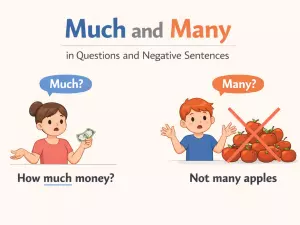
The choice between “many/more/fewer” and “much/more/less” depends on whether the noun is countable or uncountable. “Many” and “fewer” are used with countable nouns, while “much” and “less” pair with uncountable nouns.
| Quantifier | Example with countable | Example with uncountable |
|---|---|---|
| more | more apples than | more water than |
| less/fewer | fewer cars than | less traffic than |
| as many/much as | as many tickets as | as much time as |
| the same number/amount as | the same number of chairs as | the same amount of sugar as |
Common pitfalls and tips
- Don’t use “much” directly before countable nouns (❌ much apples); use “many.”
- Place “than” or “as” immediately after the comparative phrase for clarity (✅ more students than teachers).
- With verbs, position the comparative phrase after the verb: She studies more than I do.
- “As much as” and “as many as” require a following noun or verb: as much help as, as many books as.
- For emphasis, modifiers like “far,” “much,” or “a lot” can precede comparatives: much less time than.
Following these patterns will help you form comparative expressions that are both accurate and idiomatic. Practice with a range of quantifiers and structures to build confidence in everyday communication.
Common errors in comparison structures
Writers and speakers often stumble when using quantifiers in comparative sentences. Problems can arise from mismatching forms, using incorrect prepositions, or omitting necessary words. These issues can make a sentence unclear or grammatically incorrect. Recognizing the most frequent pitfalls helps you communicate comparisons more accurately and naturally.
Typical mistakes in comparative quantifier usage
- Using "more" or "less" with uncountable nouns incorrectly (e.g., "more informations" ❌ instead of "more information" ✅).
- Mixing up "as much as" and "as many as" (e.g., "as much apples as" ❌ instead of "as many apples as" ✅).
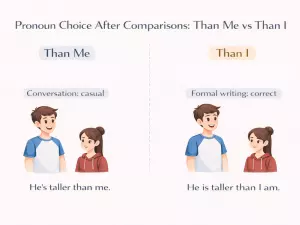
- Dropping "than" in comparative structures (e.g., "She has more books me" ❌ instead of "She has more books than me" ✅).
- Confusing adjective and adverb forms (e.g., "He runs faster than me" ❌ vs. "He runs faster than I do" ✅).
- Overusing "the" in comparisons (e.g., "the more better" ❌ instead of "better" or "much better" ✅).
- Incorrect parallel structure (e.g., "I have more books than John has pens" ❌ instead of "I have more books than John has" ✅).
- Using double comparatives or superlatives (e.g., "more better," "most fastest").
- Confusing "few" and "little" in negative comparisons (e.g., "less people" ❌ vs. "fewer people" ✅).
- Omitting necessary quantifiers (e.g., "She earns than him" ❌ instead of "She earns more than him" ✅).
- Using "as" with comparative adjectives (e.g., "as taller as" instead of "as tall as").
- Incorrectly matching noun and quantifier (e.g., "less cars" ❌ instead of "fewer cars" ✅).
- Misplacing "than" (e.g., "She is than smarter him" ❌).
Side-by-side comparison: incorrect vs. correct forms
| Incorrect Example | Correct Example |
|---|---|
| She has more informations than me. | She has more information than me. |
| As much apples as you. | As many apples as you. |
| He has less friends than I do. | He has fewer friends than I do. |
| They are as taller as us. | They are as tall as us. |
| I have more books you. | I have more books than you. |
| This is the most fastest car. | This is the fastest car. |
| She works more harder than anyone. | She works harder than anyone. |
| Less cars are on the road today. | Fewer cars are on the road today. |
| I have as much books as you. | I have as many books as you. |
| He earns than me. | He earns more than me. |
How to avoid typical mistakes
- Check if the noun is countable or uncountable and choose "many/few" or "much/little" accordingly.
- Always use "than" when making direct comparisons.
- Match the quantifier to the noun type (e.g., "fewer cars," "less traffic").
- Keep parallel structure by comparing similar elements.
- Double-check adjective and adverb forms in comparative sentences.
Paying attention to these details will help you construct clear, effective comparative sentences with quantifiers.
Examples showing correct comparison
Understanding how to use quantifiers like "more than," "less than," and "as much as" helps you express differences and similarities in quantity or degree. Here, you'll find a variety of sample sentences and structures that clearly illustrate the correct way to compare amounts, numbers, and degrees. These examples cover both countable and uncountable nouns, as well as comparisons involving actions or qualities.
Comparing Countable and Uncountable Nouns
- She has more books than her brother.
- There are fewer cars than yesterday on the street.
- This recipe needs less sugar than the last one.
- We have as many chairs as we need for the meeting.
- He drank as much water as he could.
- The store sold more apples than oranges last week.
- They received less information than expected.
- She owns fewer pets than her neighbor.
- There is as much excitement as nervousness before the event.
- We got more feedback than anticipated.
Comparing Actions and Qualities
- He runs faster than his classmates.
- She works as hard as anyone on the team.
- This solution is less effective than the alternative.
- The test was more challenging than last time.
- They responded as quickly as possible.
Side-by-Side Comparison Table
| Structure | Example |
|---|---|
| more + [noun] + than | She has more friends than I do. |
| fewer + [countable noun] + than | They have fewer tickets than us. |
| less + [uncountable noun] + than | I have less time than before. |
| as many + [countable noun] + as | We saw as many birds as last year. |
| as much + [uncountable noun] + as | You can have as much cake as you want. |
Common Pitfalls to Avoid
- Use fewer for countable nouns (e.g., "fewer apples"), but less for uncountable nouns (e.g., "less water").
- Don’t confuse as much as (uncountable) with as many as (countable).
- Always include the word "than" when making a direct comparison (e.g., "more than," not just "more").
By studying these varied patterns and examples, you can confidently express quantity differences and similarities in both spoken and written English.
Practice: building clear comparisons
Effective use of quantifiers in comparative statements helps express differences in amount, degree, or number with precision. To develop this skill, it's essential to see how various structures work in context, then apply them in meaningful sentences. Below, you'll find targeted exercises and a range of examples to strengthen your understanding and accuracy.
Common Quantifiers in Comparative Sentences
Comparative sentences often use quantifiers like more than, less than, and as much as. Here are some patterns and sample phrases:
- more than: "She has more books than her brother."
- less than: "I spent less money than last year."
- as much as: "You can eat as much cake as you want."
- as many as: "There were as many people as seats."
- fewer than: "We received fewer responses than expected."
- as few as: "Only as few as three students attended."
- no more than: "Take no more than two per person."
- at least as much as: "She works at least as much as I do."
- not as much as: "He doesn't earn as much as his friend."
- twice as many as: "Twice as many tickets as last year were sold."
- half as much as: "She drank half as much as before."
- the same amount as: "He used the same amount as yesterday."
- nearly as much as: "The new phone costs nearly as much as a laptop."
- almost as many as: "There were almost as many as last time."
- slightly more than: "We paid slightly more than last month."
- significantly less than: "This model weighs significantly less than the old one."
- just as much as: "You deserve this just as much as anyone."
- not nearly as many as: "We sold not nearly as many as before."
Comparative Structures Table
The table below summarizes several common patterns for making comparisons with quantifiers:
| Quantifier Pattern | Example Sentence |
|---|---|
| more [noun] than | They have more time than we do. |
| less [noun] than | I ate less rice than you. |
| as much [uncountable noun] as | She drank as much water as possible. |
| as many [countable noun] as | He solved as many problems as he could. |
| fewer [countable noun] than | There are fewer cars than yesterday. |
| as few [countable noun] as | We had as few interruptions as last time. |
| no more than [number] | No more than ten people joined. |
| twice as much/many as | She earns twice as much as her coworker. |
Try It Yourself: Fill in the Blanks
Complete the sentences below using appropriate quantifiers (more than, less than, as much as, etc.):
- He has _______ friends _______ his sister.
- We need _______ chairs _______ people.
- She spent _______ time on the project _______ expected.
- This bag costs _______ money _______ that one.
- They received _______ invitations _______ last year.
- I have _______ free time _______ you today.
- There are _______ students in this class _______ in my class.
- He drank _______ water _______ he should.
- This test was _______ difficult _______ the last one.
- We made _______ progress this week _______ last week.
Show answers
- He has more friends than his sister.
- We need as many chairs as people.
- She spent less time on the project than expected.
- This bag costs as much money as that one.
- They received fewer invitations than last year.
- I have less free time than you today.
- There are more students in this class than in my class.
- He drank more water than he should.
- This test was not as difficult as the last one.
- We made more progress this week than last week.
Spot the Error: Which Sentence Is Incorrect?
Read the following sentences and choose the one that does not use quantifiers correctly.
- He ate more apples than his brother.
- She has as much friends as I do.
- There are fewer students in class today.
- We need as many volunteers as possible.
- He spent less money than last week.
- She drank as many water as she could.
- This task took more time than expected.
- They have as much chairs as we need.
- I made fewer mistakes than before.
- He has as many experience as his coworker.
Show answers
- ✅ (Correct as written)
- ❌ It should be “She has as many friends as I do.”
- ✅ (Correct as written)
- ✅ (Correct as written)
- ✅ (Correct as written)
- ❌ It should be “She drank as much water as she could.”
- ✅ (Correct as written)
- ❌ It should be “They have as many chairs as we need.”
- ✅ (Correct as written)
- ❌ It should be “He has as much experience as his coworker.”
Rewrite the Sentences
Change the following sentences to use a different comparative quantifier (for example, change "more than" to "less than" or "as many as").
- She has more pencils than you.
- They invited as many guests as last year.
- I drank less coffee than usual.
- We completed twice as many tasks as yesterday.
- He has more information than his manager.
- There are less cars on the road today.
- She earned as much money than her colleague.
- I made fewer mistakes as before.
- They spent twice as much time as planned.
- We have more work as last week.
Show answers
- She has fewer pencils than you.
- They invited fewer guests than last year.
- I drank as much coffee as usual.
- We completed as many tasks as yesterday.
- He has less information than his manager.
- There are fewer cars on the road today.
- She earned as much money as her colleague.
- I made fewer mistakes than before.
- ✅ (Correct as written)
- We have more work than last week.