Articles with Jobs: a Teacher, an Engineer, a Doctor

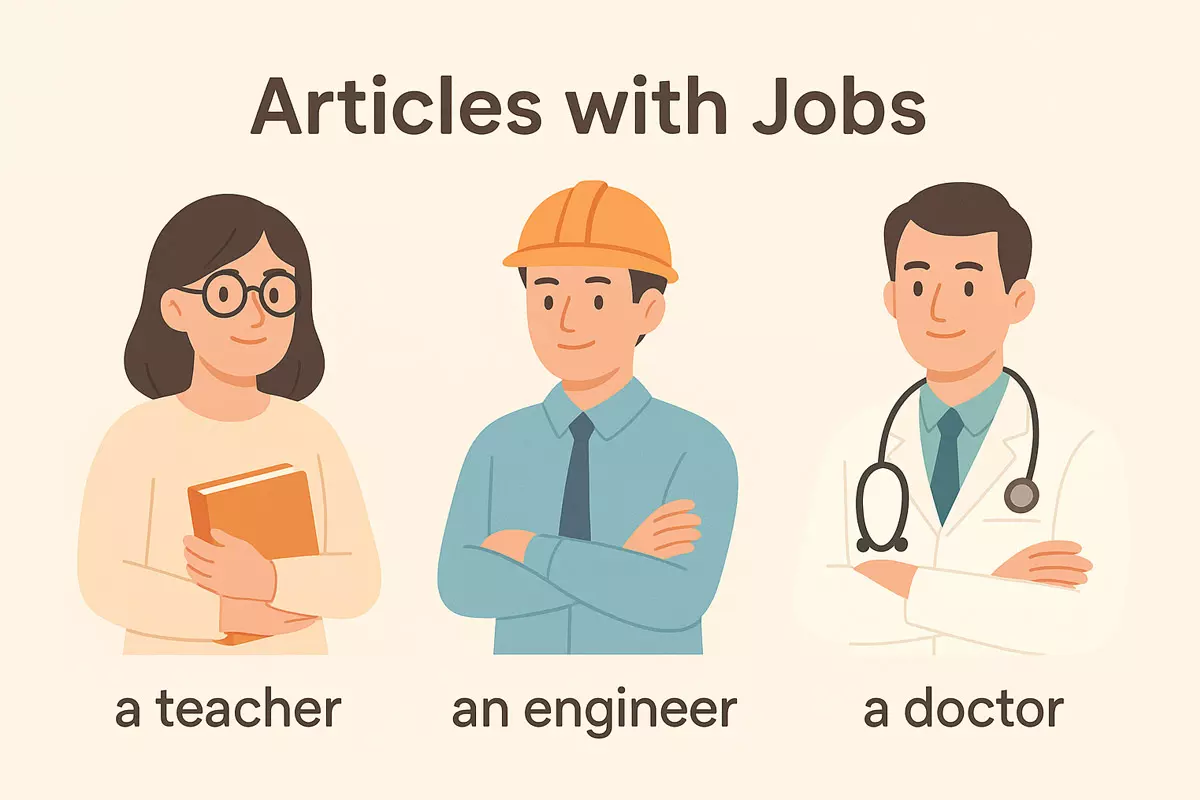 This article explains how to use a or an with professions, when to omit articles, and covers special cases like at school or in prison. It provides examples with common jobs, highlights typical mistakes, and includes practice questions.
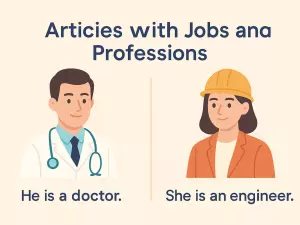
Understanding the correct use of the articles a and an with different professions is important for clear and accurate communication in English. For example, we say a teacher or a doctor because these words begin with consonant sounds, while we use an engineer because engineer starts with a vowel sound. Paying attention to these details helps us describe people’s jobs more precisely and makes our spoken and written English sound more natural and professional.
When to Use a or an with Professions
Choosing between a and an before a job title depends on how the profession name begins—specifically, the first sound of the word that follows. This is a quick way to help your speech and writing sound natural and correct when talking about jobs.
General Rule
Use a before words that start with a consonant sound, and an before words that start with a vowel sound. This rule applies to professions just like any other noun. The key is the sound of the first letter, not just the letter itself.
Examples of Professions with “a” and “an”
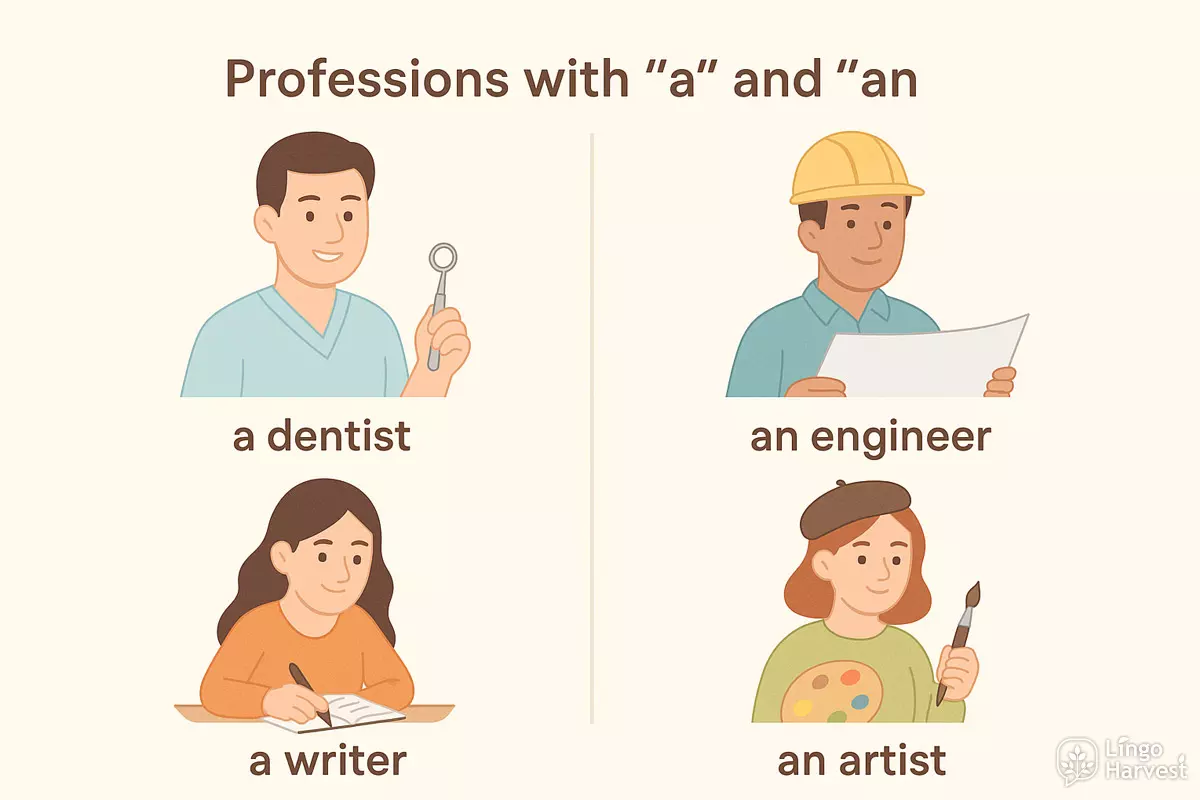
- a teacher
- a doctor
- a lawyer
- a nurse
- a manager
- a pilot
- a chef
- a scientist
- a dentist
- a writer
- an engineer
- an artist
- an actor
- an architect
- an accountant
- an electrician
- an analyst
- an editor
Quick Reference Table: Choosing “a” or “an”
| Article + Profession | Reason |
|---|---|
| a teacher | “Teacher” begins with the consonant sound /t/. |
| a doctor | “Doctor” starts with the consonant sound /d/. |
| an engineer | “Engineer” begins with the vowel sound /e/. |
| an artist | “Artist” starts with the vowel sound /a/. |
| a nurse | “Nurse” begins with the consonant sound /n/. |
| an accountant | “Accountant” starts with the vowel sound /a/. |
Common Mistakes to Avoid
- Don’t choose based on spelling alone—focus on the first sound of the profession.
- Remember, some words start with a silent letter (e.g., “an honest person” but “a historian”). For jobs, this is rare but possible.
When introducing someone’s occupation, these small words make a big difference. Practice by saying the profession out loud with each article and listen for which sounds smoother.
When Not to Use Articles
Articles are not always needed when talking about professions or jobs in English. There are specific situations where leaving out a or an is the correct choice. Understanding these contexts will help you avoid common mistakes and sound more natural.
After "become," "as," "like," and "appointed" (in certain contexts)
When describing someone’s role or job after certain verbs or prepositions, articles are often omitted—especially in headlines, CVs, or brief notes. Here are some typical patterns:
- She was elected president of the club.
- He works as manager of the team.
- They appointed her director.
- He served like mentor for new employees.
With Job Titles Used as Official Positions
No article is used when the job title is meant as an official post, often in formal writing or documents. Examples include:
- Prime Minister addressed the nation.
- President will attend the meeting.
- Professor Smith published a new paper.
- Captain gave the order.
In Lists, Headings, and Bullet Points
When listing professions or roles in resumes, business cards, or organizational charts, articles are usually dropped for brevity:
- Teacher
- Software Engineer
- Medical Doctor
- Project Manager
- Designer
- Consultant
- Research Scientist
- Sales Director
- Data Analyst
- HR Specialist
Generalizations and Categories
When referring to professions or roles in a general sense (not a specific individual), articles are sometimes omitted, especially in signage or instructions:
- Nurses needed for night shift.
- Engineers wanted.
- Waiters apply within.
- Doctors on call 24/7.
Comparison: When to Omit vs. When to Use Articles
| No Article Needed | Article Needed |
|---|---|
| He became president in 2020. | He is a president of a company. |
| She works as engineer at NASA. | She is an engineer. |
| Apply: teacher, nurse, driver | He is a teacher and a nurse. |
| Appointed manager last year. | He is a manager. |
Remember, omitting articles is typical in headlines, lists, official titles, and after certain verbs or prepositions. For ordinary sentences about someone's profession, use a or an.
Special Cases (at school, in prison)
When describing people’s roles or locations, English sometimes omits the article before certain phrases, especially with institutions like "school," "prison," "hospital," or "church." This can be confusing for learners, since we often use articles with professions (like "a teacher") but not always with places or roles.
When No Article Is Used
No article is used before these nouns when we refer to the general activity or function of the place, not the specific building. For example:
- He is in prison. → (He is there as a prisoner, not just visiting.)
- She is at school. → (She is there as a student or staff, not just at the building.)
- My grandmother is in hospital. → (She is there as a patient.)
- He goes to church on Sundays. → (He attends religious services.)
When an Article Is Required
Use "the" or "a" if you mean the specific building, or when the person is not there for the institution’s main purpose:
- He is in the prison to visit his friend. → (Not a prisoner, just visiting.)
- She waited at the school for her ride. → (Not a student or staff, just at the location.)
- The new wing of the hospital is impressive. → (Referring to the building.)
- They painted the church last week. → (Referring to the building.)
Professions vs. Institutional Roles
When talking about jobs, we generally use "a" or "an":
- She is a teacher.
- He is an engineer.
- My father is a doctor.
But with institutional roles, the article is dropped if the person is participating in the institution’s main function:
- He is in prison (as a prisoner), not a prisoner in the prison.
- She is at school (as a student), not a student at the school (unless you want to emphasize the person, not the activity).
Quick Reference: Article Use in Common Phrases
| Phrase | Correct Usage |
|---|---|
| at school | No article (for students/staff) |
| at the school | With article (referring to the building/location) |
| in prison | No article (for prisoners) |
| in the prison | With article (visitors, or specific building) |
| in hospital | No article (British English, for patients) |
| in the hospital | With article (American English, or referring to the building) |
| at church | No article (for worshippers) |
| at the church | With article (location/building) |
Understanding when to use or omit articles with institutions and jobs helps make your English sound more natural and precise. The key is to consider whether you are emphasizing the activity/role or the specific place/person.
Examples with Common Jobs
When talking about professions in English, articles like a or an are generally used before job titles. This is a key rule for describing someone's occupation, whether you are introducing yourself or talking about others.
How to Use Articles with Jobs
The indefinite articles a and an are used depending on the first sound of the job title. Use a before consonant sounds and an before vowel sounds. Here are some common examples for clarity:
- a driver
- an operator
- a mechanic
- an inspector
- a designer
- an optician
- an usher
- a programmer
- a pharmacist
- a receptionist
- a consultant
- a journalist
- a firefighter
- a plumber
- a translator
- a photographer
- a cashier
- a waiter
- a librarian
- a gardener
Sample Sentences
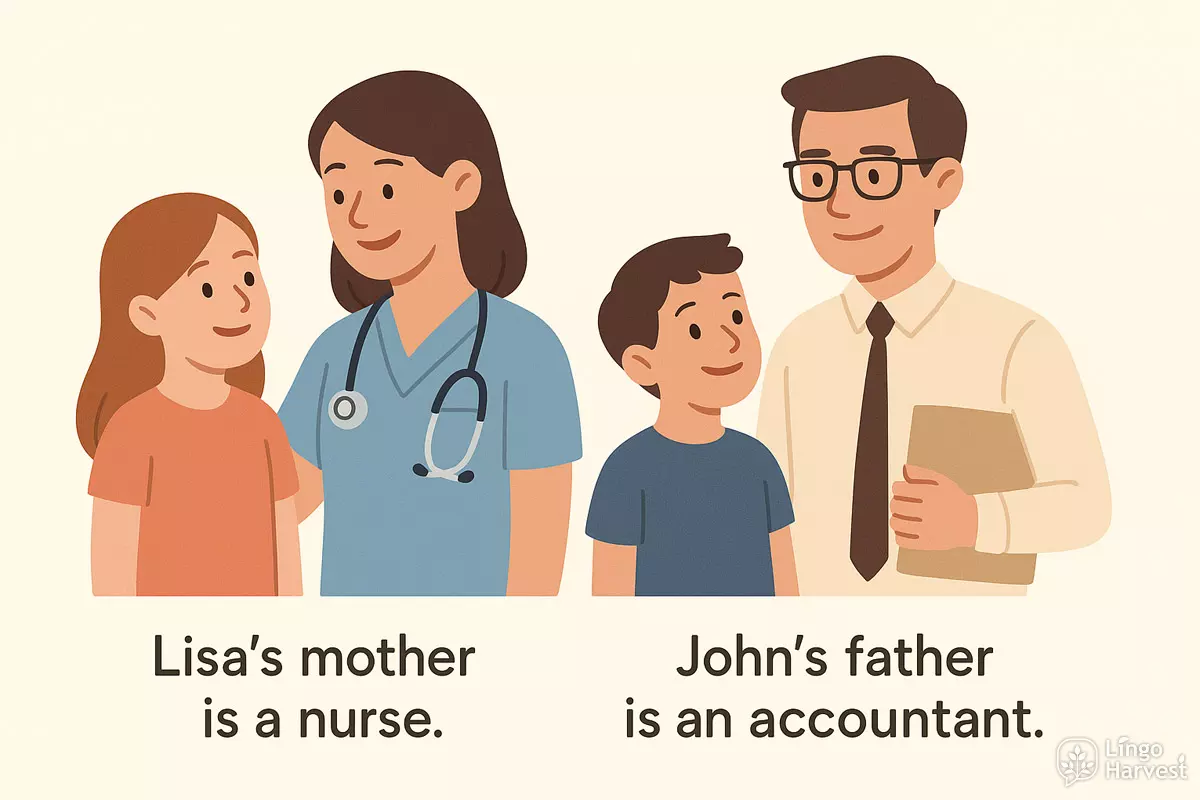
To see how these articles are used in context, consider the following sentences:
- She is a doctor.
- My brother is an engineer.
- Are you a teacher?
- He wants to become an architect.
- Lisa’s mother is a nurse.
- John’s father is an accountant.
Quick Reference: Article Usage
| Job Title | Correct Article |
|---|---|
| Engineer | an engineer |
| Doctor | a doctor |
| Artist | an artist |
| Manager | a manager |
| Operator | an operator |
| Teacher | a teacher |
| Accountant | an accountant |
| Electrician | an electrician |
| Designer | a designer |
| Inspector | an inspector |
Remember, we do not use the before job titles when speaking generally about someone's profession. Also, articles are not used for plural forms (e.g., "They are engineers").
Typical Mistakes
When discussing professions in English, learners often struggle with the correct use of articles before job titles. This can lead to sentences that sound unnatural or are simply incorrect. Understanding where and why to use "a" or "an" is essential for clear communication. Below are some of the most frequent pitfalls and misunderstandings related to articles with jobs.
Confusing When to Use an Article
Many English learners forget to use an article before a profession, or they use one when it isn’t needed. For instance, saying "She is teacher" instead of "She is a teacher" is a common error. Remember, when stating someone’s profession, an indefinite article is almost always required.
- Omitting the article: He is engineer. → He is an engineer.
- Wrong article: She is an doctor. → She is a doctor.
- Unnecessary article: She became the teacher in 2020. (when talking about her profession, not a specific position)
Incorrect Article Choice: "A" vs. "An"
Choosing between "a" and "an" depends on the sound at the beginning of the job title, not the spelling. "An" is used before vowel sounds, while "a" comes before consonant sounds.
| Incorrect Example | Corrected Version |
|---|---|
| He is a engineer. | He is an engineer. |
| She is an teacher. | She is a teacher. |
| My mother is a artist. | My mother is an artist. |
| He is an manager. | He is a manager. |
Using Articles with Plural Job Titles
Articles are not used with plural forms of professions. Learners sometimes add "a" or "an" incorrectly: "They are a doctors" is wrong. The correct form is just "They are doctors."
- Incorrect: They are a engineers.
- Correct: They are engineers.
Mixing Up "The" with Indefinite Articles
Use "the" only when you are referring to a specific job or role (for example, "the doctor who treated me"). When talking generally about someone’s profession, use "a" or "an."
- Incorrect: She is the engineer. (unless referring to a specific engineer)
- Correct: She is an engineer.
Summary of Frequent Article Issues with Professions
- Leaving out "a" or "an" before a job title
- Using the wrong article based on pronunciation
- Applying articles to plurals
- Confusing "the" with indefinite articles
- Forgetting to adjust article use with adjectives (e.g., "a good teacher," not "good teacher")
- Adding articles after linking verbs unnecessarily ("She became a engineer" is correct, but "She became engineer" is not)
- Using job titles as proper nouns ("He is Engineer" instead of "He is an engineer")
- Translating directly from other languages where articles are used differently
- Omitting articles in set expressions ("He wants to be doctor" instead of "He wants to be a doctor")
- Incorrect use with modifiers ("He is an experienced engineer," not "He is experienced engineer")
By focusing on these patterns, learners can avoid the common traps and use articles with professions more naturally in English.
Practice: Choose the Correct Article
Understanding when to use a or an with job titles is key for clear communication. Below, you'll find practical exercises to help you master choosing the right article before professions. Read each sentence and decide which article fits best.
Fill in the Blank
- She is ___ engineer.
- My mother is ___ artist.
- He hopes to become ___ architect.
- Julia is ___ doctor at the city hospital.
- Alex works as ___ accountant.
- Is your uncle ___ electrician?
- Sarah is ___ university professor.
- My cousin is ___ nurse.
- He met ___ lawyer at the conference.
- Maria is ___ office manager.
Show answers
- an
- an
- an
- a
- an
- an
- a
- a
- a
- an
Common Job Titles and Their Articles
Choosing the correct article depends on the first sound of the job title. Here is a list of professions with their appropriate articles to guide you:
- a teacher
- an engineer
- a doctor
- an artist
- a nurse
- an accountant
- a pilot
- an operator
- a manager
- an electrician
- a chef
- an architect
- a lawyer
- an officer
- a driver
- an analyst
- a scientist
- an intern
- a programmer
- an editor
Quick Check: Which Article?
Select the correct option for each profession below.
- ___ pilot
- ___ engineer
- ___ scientist
- ___ operator
- ___ manager
Show answers
- a
- an
- a
- an
- a
Remember, use an before words that start with a vowel sound, and a before words that start with a consonant sound. Practicing with real job titles helps reinforce this rule for everyday English.