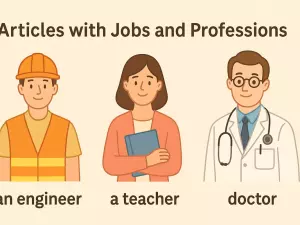
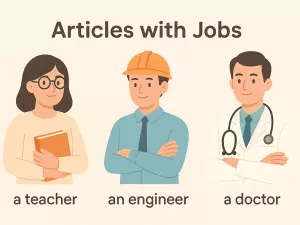
Articles with Jobs and Professions: a teacher, an engineer

 This article explains why we use a or an with jobs, the difference between singular and plural forms, and special exceptions. It also covers talking about roles and common beginner errors, finishing with a quick practice section.
When discussing careers like being a doctor or working as a scientist, it is essential to use the correct articles before job titles, such as "a" or "an." These small words are important because they help us communicate clearly and accurately in English. Using the right article makes our speech and writing sound natural and helps listeners or readers understand exactly what we mean. Paying attention to these details not only improves our language skills but also shows respect for the conventions of English grammar.
Why we use a/an with jobs
In English, we add a or an before job titles to show that the person is one of many people in that profession. The indefinite article tells us we are talking about one example of a larger group, not a specific individual. For instance, when you say “She is a teacher,” you mean she belongs to the group of teachers, not that she is the only teacher.
General Rule
Job names are countable nouns, so we use a (before consonant sounds) or an (before vowel sounds) to introduce someone’s profession. This is true even if the person is the only one in the company or place. The article is required, even though we don’t use it with some other nouns.
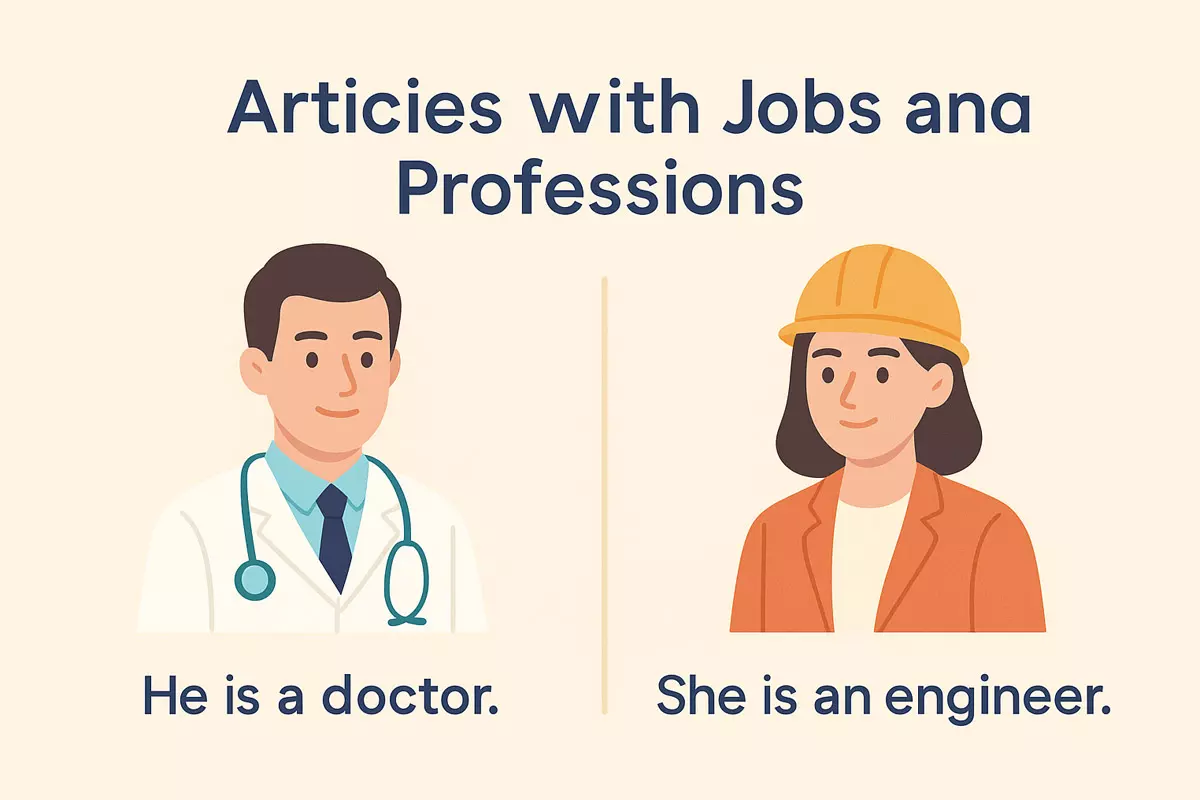
- He is a doctor.
- She is an engineer.
- My friend is a pilot.
- Sarah is a nurse.
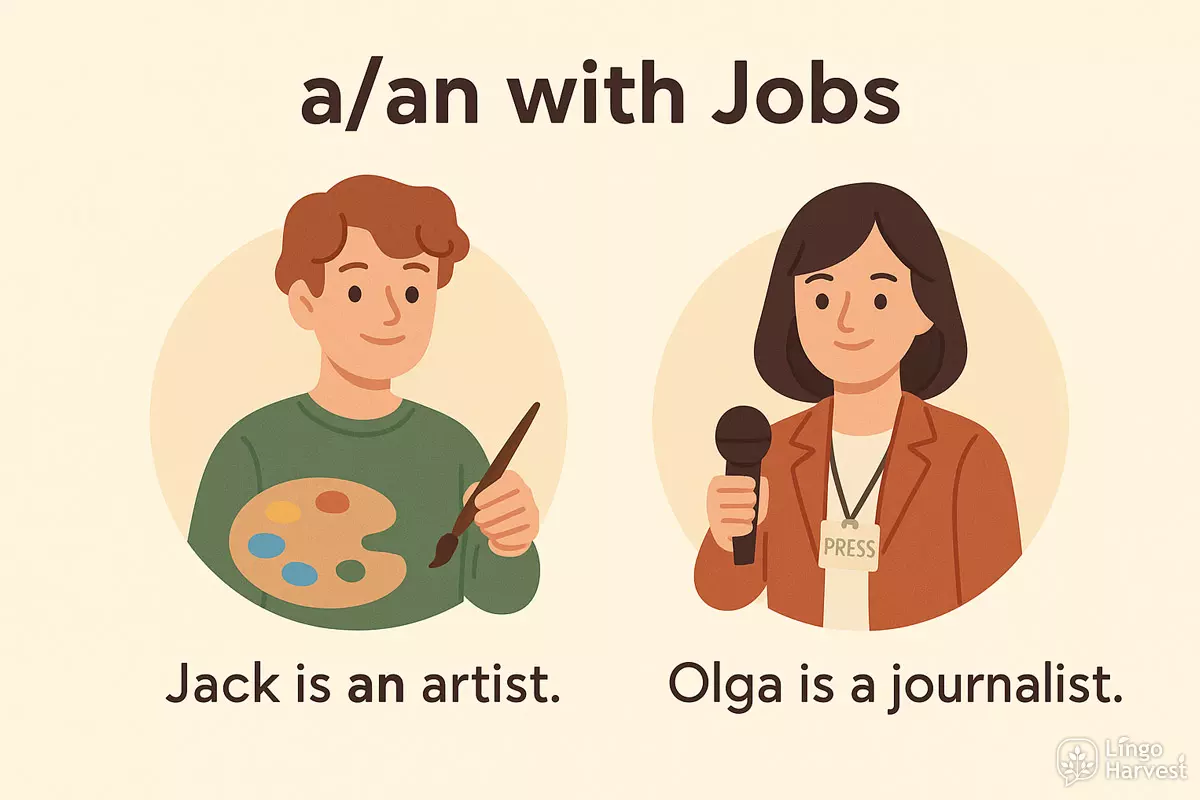
- Jack is an artist.
- Olga is a journalist.
- Ben is an accountant.
- Maria is a chef.
- Tom is an actor.
- Lisa is a manager.
- Igor is an architect.
- Kate is a designer.
- Vera is a lawyer.
- Paul is an electrician.
- Anna is a dentist.
When to Use "a" vs "an"
The choice depends on the sound at the beginning of the job title:
| Use a before... | Use an before... |
|---|---|
| Consonant sounds: teacher, manager, lawyer, chef |
Vowel sounds: engineer, artist, accountant, architect, electrician |
| a driver a programmer a designer a nurse |
an engineer an actor an economist an operator |
Common Mistakes
- ❌ She is teacher. (incorrect)
- ✅ She is a teacher. (correct)
- ❌ He is engineer. (incorrect)
- ✅ He is an engineer. (correct)
Remember, omitting the article is a frequent error for learners. Using a or an with occupations is a basic grammar rule that helps your English sound natural and clear.
Singular vs plural forms
When talking about jobs and professions in English, the choice between singular and plural forms—and whether to use an article—depends on what you mean. If you refer to one person’s occupation, you use the singular form with an article (a teacher, an engineer). When you mean several people in the same line of work, the plural form is used and articles are not needed (teachers, engineers).
How articles change with number
- Singular + article: Use a or an before a job title in the singular: a doctor, an accountant.
- Plural (no article): When talking about more than one person, drop the article: doctors, accountants.
- Definite article: Sometimes, the is used, but only when referring to a specific group or individual: the teacher who helped me, the engineers in our office.
Examples of job titles: singular and plural
- a teacher → teachers
- an engineer → engineers
- a nurse → nurses
- a manager → managers
- an artist → artists
- a driver → drivers
- an architect → architects
- a scientist → scientists
- an actor → actors
- a chef → chefs
- an electrician → electricians
- a pilot → pilots
- an accountant → accountants
- a designer → designers
- an economist → economists
Typical mistakes to avoid
- ❌ I am teacher. → ✅ I am a teacher.
- ❌ She is engineer. → ✅ She is an engineer.
- ❌ They are a doctors. → ✅ They are doctors.
Remember, use "a" or "an" only with singular professions, and leave out the article for plural forms. This rule helps your sentences sound natural and correct in English conversations, resumes, and introductions.
Special cases and exceptions
While using articles with job titles and occupations is generally straightforward, there are some notable exceptions and special uses to consider. Understanding these outliers helps avoid common mistakes and clarifies why certain expressions sound natural while others do not.
When no article is used
In some situations, articles are omitted before professions. This typically happens after certain verbs or in fixed phrases. Here are common scenarios where omitting "a" or "an" is correct:
- After "become" or "turn": She wants to become president (when referring to a unique or official title).
- In lists or headlines: Jobs listed without articles: Teacher needed. Engineer required.
- After "as" with roles: He works as manager (in some business English contexts, though "as a manager" is also common).
- With titles or ranks: They elected her chairperson.
Titles vs. professions
A distinction exists between a profession as a role ("a doctor") and a unique title or office ("President", "Prime Minister"). Unique posts usually do not take an article.
- He became President in 2020. ✅
- She was appointed Director. ✅
- He is a doctor. ✅
- They elected her Chairperson. ✅
- He served as Minister of Finance. ✅
- She became a lawyer last year. ✅
When both forms are correct
Sometimes, both versions—with or without an article—are accepted, but the meaning can slightly change:
- He is a manager. (describes profession)
- He is manager. (describes current role or position, especially in a specific context)
- She is a coordinator. (profession)
- She is coordinator for this project. (specific assigned role)
Plural forms and generalizations
When speaking about professions in a general sense, the plural form is used without articles:
- Teachers are important in society.
- Engineers solve problems.
- Doctors help people every day.
- Scientists study the world around us.
Unusual or idiomatic expressions
Some expressions break the usual rules for stylistic or idiomatic reasons. Here are frequent examples:
- By profession, she is architect.
- He was made captain.
- She is head nurse at the hospital.
- Appointed chief engineer.
- He works as consultant (sometimes without "a" in business jargon).
- They named him project manager.
- She was promoted to senior analyst.
- He is acting director for now.
- Named team leader.
- He became advisor.
Summary of patterns
| Form | When Used |
|---|---|
| a/an + profession | Describing someone's job or occupation e.g. She is a teacher. |
| profession (no article) | After "become", "appointed", or in titles/roles e.g. He became president. |
| the + profession | Referring to a specific person already known e.g. The engineer fixed it. |
| Plural (no article) | General statements about all in a profession e.g. Engineers design bridges. |
By keeping these nuances in mind, you can use articles with jobs and professions accurately, especially in contexts where standard rules do not apply.
Talking about roles and positions
When discussing jobs and professions in English, articles like a and an are commonly used before the job title. This is because we usually talk about someone's role as a member of a profession rather than as a unique individual. For instance, we say, "She is a teacher" or "He is an engineer." The article shows that the person is one of many in that occupation.
General Patterns
We use the indefinite article with most singular job titles. This is true whether introducing someone or describing their occupation. Here are some typical patterns:
- I am a doctor.
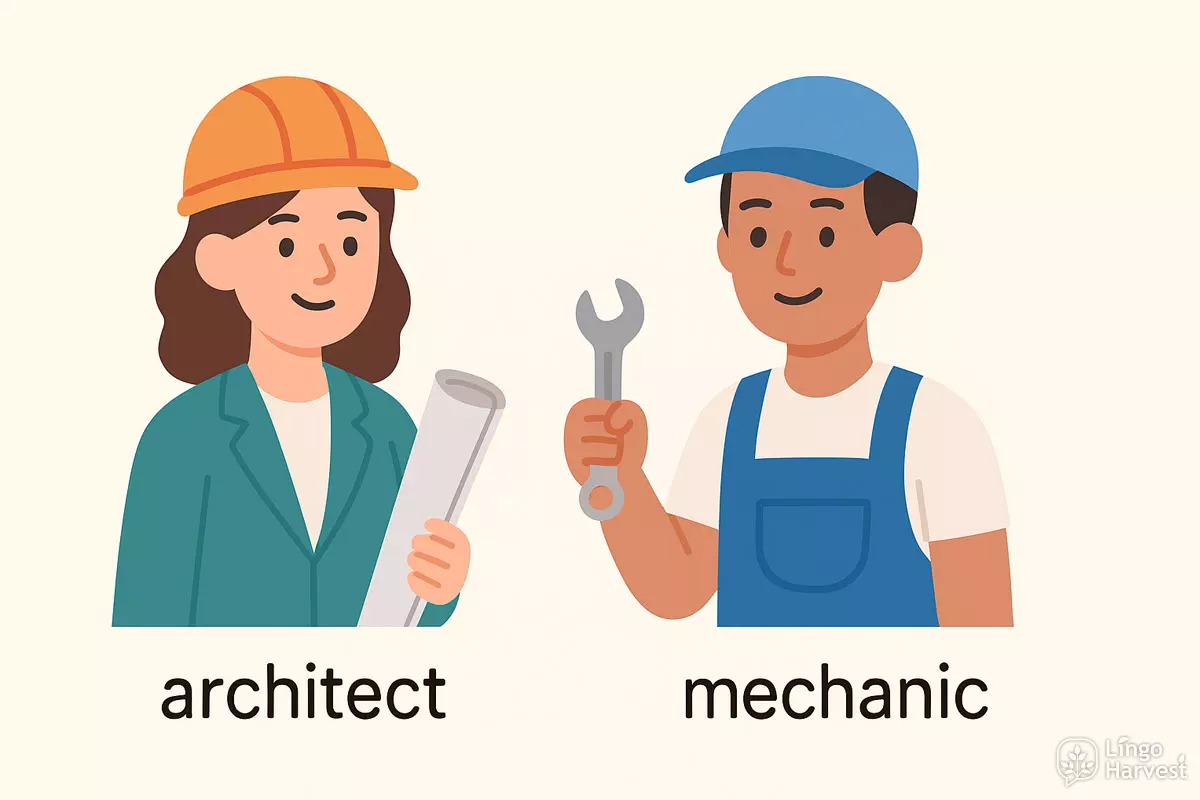
- She wants to become an architect.
- He works as a mechanic.
- My sister is an artist.
- They hired a manager last week.
- Are you a student?
- He trained as an electrician.
- We need a translator for this document.
- She is an accountant by profession.
- He became a firefighter.
- My cousin is a journalist.
- She’s a nurse at the local hospital.
- He is an actor in a theater group.
- Are you a designer?
- My uncle is a pilot.
When NOT to Use an Article
There are some exceptions. We usually omit the article if the job title is used as a title or after certain linking verbs combined with modifiers. For example:
- President Smith (title, no article)
- She became head of marketing (no article before the specific role)
- He was appointed director last year
Comparing Definite and Indefinite Articles
Sometimes the definite article the is used if referring to a specific person in a unique role, but this is less common with professions. Here is a comparison of typical usage:
| Indefinite Article | Definite Article |
|---|---|
| She is a doctor. (any doctor, general role) |
She is the doctor who treated me. (a specific doctor, known to both) |
| He is an engineer. | He is the engineer for this project. |
| I am a teacher. | I am the teacher you spoke to yesterday. |
| She became a manager. | She is the manager of our department. |
Quick Reminders ✅
- Use a/an before singular professions: a lawyer, an artist.
- Do not use an article before plural or uncountable nouns: "They are engineers."
- Titles and unique roles may drop the article: "Director Brown," "President."
- The definite article is only for specific, identified individuals.
Understanding how articles work with jobs and professions helps you sound more natural in English and avoids common mistakes.
Common beginner errors
When learning how to use articles with job titles and professions in English, new learners often make similar mistakes. These slip-ups can lead to sentences that sound unnatural or even change the meaning entirely. Understanding these typical pitfalls can help you avoid them and speak more confidently.
Omitting the article
A frequent issue is dropping the article before a profession. In English, we say "She is a teacher," not "She is teacher." This rule applies to most singular job titles and roles.
- ❌ He is doctor. → ✅ He is a doctor.
- ❌ My brother is engineer. → ✅ My brother is an engineer.
Choosing the wrong article: 'a' vs. 'an'
Many students confuse when to use "a" or "an" before a profession. The choice depends on pronunciation, not spelling. Use "an" before vowel sounds and "a" before consonant sounds.
- ❌ She is a artist. → ✅ She is an artist.
- ❌ He is an lawyer. → ✅ He is a lawyer.
Confusing definite and indefinite articles
Another mistake is using "the" instead of "a/an" with professions when first introducing someone's job. "The" is only used when you are talking about a specific person known to both the speaker and listener.
- ❌ My mother is the nurse. → ✅ My mother is a nurse.
Misusing plural forms
When talking about professions in general, learners sometimes incorrectly use articles with plural job titles or omit them where needed.
- ❌ She is a teachers. → ✅ She is a teacher.
- ❌ They are a engineers. → ✅ They are engineers.
Forgetting to use "an" with vowel sounds
Some jobs begin with a vowel sound, requiring "an" instead of "a." Here are common examples:
- an actor
- an architect
- an engineer
- an accountant
Quick reference: Correct and incorrect forms
| Incorrect | Correct |
|---|---|
| She is teacher. | She is a teacher. |
| He is engineer. | He is an engineer. |
| My father is the doctor. | My father is a doctor. |
| They are a scientists. | They are scientists. |
| She is a artist. | She is an artist. |
Summary of key trouble spots
- Always use "a" or "an" before a singular profession.
- Choose "an" for vowel sounds, "a" for consonant sounds.
- Don’t use "the" unless referring to a specific, known person in context.
- Don’t use an article with plural professions (“They are doctors,” not “They are a doctors”).
- Check pronunciation, not spelling, to decide between "a" and "an."
Quick practice
Let’s reinforce how to use indefinite articles with jobs and professions. In English, when you talk about someone’s occupation, you almost always need a or an before the job title. Try these practice activities to check your understanding.
Identify the correct article
Read the sentences below. Choose the correct article (a/an) or no article in each blank.
- She is ___ engineer.
- My brother is ___ doctor.
- Are you ___ teacher?
- He wants to become ___ artist.
- Lisa is ___ architect.
- Tom is ___ actor.
- Her aunt is ___ accountant.
- He dreams of being ___ astronaut.
- My cousin is ___ electrician.
- Julia is ___ nurse.
- He worked as ___ reporter for two years.
- She was hired as ___ operations manager.
- His father is ___ historian.
- They appointed her ___ team leader.
- Mark is ___ economist.
Show answers
- an
- a
- a
- an
- an
- an
- an
- an
- an
- a
- a
- an
- a
- — (no article)
- an
Common job titles with articles
Here is a list of typical professions. Practice saying or writing them with the correct article:
- a nurse
- an engineer
- a pilot
- an accountant
- a designer
- an electrician
- a chef
- an actor
- a manager
- an officer
- a scientist
- an optician
- a lawyer
- an author
- a mechanic
- an entrepreneur
- a builder
- an analyst
When do we NOT use an article?
Sometimes we do not use an article with job titles. Match the situations in the table below:
| Sentence | Use of Article |
|---|---|
| She is a doctor. | With a job title (required) |
| Doctor Smith will see you now. | As a title before a name (not used) |
| He became an engineer. | Describing someone’s profession (required) |
| Engineer Brown joined the meeting. | Professional title before a name (not used) |
Show answers
- We use a/an when talking about someone's profession in general.
- No article is used when the job title comes directly before a person’s name as a form of address or formal title.
Make your own sentences
Write three sentences about people you know, using the correct article and a profession. For example: "My aunt is a nurse."
Show answers
- My father is an architect.
- Julia is a designer.
- He is an electrician.