Useful Sentence Connectors for Beginners

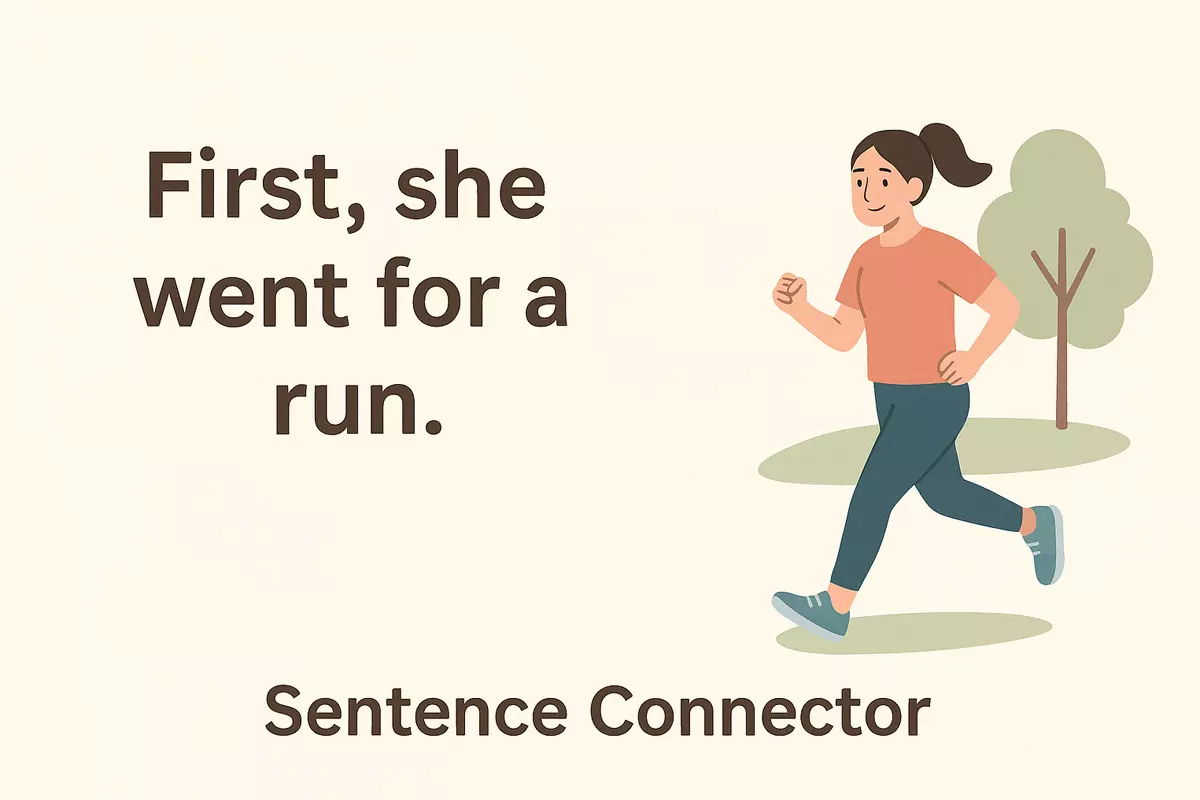 This article explains what sentence connectors are and how to use them to add information, show contrast, and show cause in English. It provides examples in context and offers practice joining short sentences.
Learning how to smoothly link your thoughts can make your writing and speaking much clearer and more engaging. For those just starting out, mastering simple ways to join ideas will help you express yourself with confidence and ease. Using transition words such as however, therefore, or for example can guide your audience through your points and create a logical flow. Practicing these techniques regularly not only improves your communication skills but also helps you organize your ideas more effectively, making your messages easier to understand and more enjoyable to read or hear.
What Are Sentence Connectors?
Sentence connectors are words or short phrases that link ideas within or between sentences, helping your writing and speech flow smoothly. They show relationships such as contrast, cause and effect, addition, or sequence, making communication clearer and more logical. For beginners, using these linking expressions can help create longer, more interesting sentences and avoid repetition.
Why Use Linking Words?
Using connectors is essential for expressing complex thoughts, joining two or more ideas, and guiding your reader or listener through your message. These words signal how one part of your sentence relates to another, whether you’re adding information, showing contrast, or giving reasons.
Common Types of Sentence Connectors
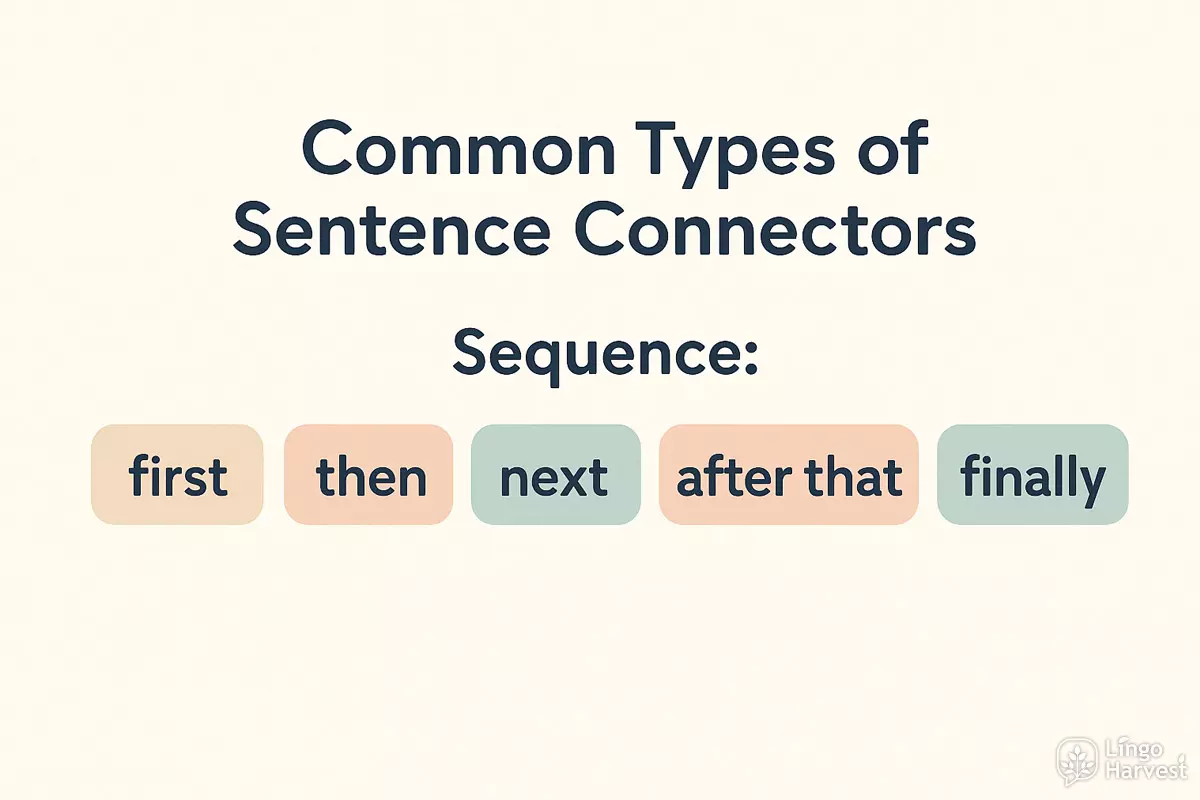
- Addition: and, also, as well as, moreover, furthermore, plus
- Contrast: but, however, although, yet, on the other hand, nevertheless
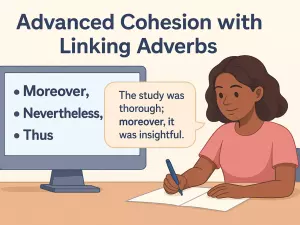
- Cause and Effect: because, so, therefore, thus, as a result, since
- Sequence: first, then, next, after that, finally, at last
- Example/Clarification: for example, such as, in other words, that is
- Comparison: similarly, likewise, just as
- Condition: if, unless, provided that, in case
- Purpose: so that, in order to, for the purpose of
- Summary: in conclusion, to sum up, overall, in short
- Emphasis: especially, in particular, above all
How Connectors Work in Sentences
These linking devices can connect two clauses within one sentence or bridge separate sentences. For example: "I wanted to go for a walk, but it started to rain." Here, but joins two contrasting ideas. Another example: "She was tired. However, she finished her homework." The connector shows contrast between the two sentences.
Placement and Punctuation
Placement of connectors depends on the type. Some, like and or but, go between clauses, while others, such as however or therefore, often start a new sentence and are followed by a comma. Proper use improves clarity and helps your writing sound more natural.
Adding Information (and, also, moreover)
Connecting sentences with words that show addition helps your writing flow smoothly and logically. When you want to add more details or points, certain connectors make your ideas clearer and easier to follow. These connectors signal to your reader that more information is coming, and they help you build stronger, more organized sentences.
Common Connectors for Adding Details
Many words and phrases can show that you are including extra information. Here are some of the most useful ones for beginners:
- and
- also
- in addition
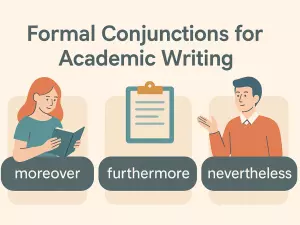
- moreover
- furthermore
- besides
- as well as
- plus
- additionally
- what's more
- not only... but also
- another
- along with
- on top of that
- to add to this
- apart from this
- as a further point
- similarly
- equally important
How to Use Addition Connectors
When using these connectors, pay attention to where they fit in a sentence. Some can start a new sentence, while others join two ideas within the same sentence. For instance, "and" often links two similar ideas, while "moreover" or "furthermore" usually start a new sentence to introduce another point.
| Connector | Example Sentence |
|---|---|
| and | I like apples and oranges. |
| also | He finished his homework. Also, he cleaned his room. |
| moreover | The train is fast. Moreover, it is very comfortable. |
| in addition | We visited the museum. In addition, we went to a park. |
| besides | She is a good singer. Besides, she can play the guitar. |
| furthermore | The test was difficult. Furthermore, it was very long. |
| plus | The hotel is cheap. Plus, it is near the beach. |
| as well as | He speaks French as well as Spanish. |
| not only... but also | She not only dances but also sings well. |
| additionally | The room is large. Additionally, it is bright. |
Tips for Beginners
To make your writing clearer, use these connectors to join related ideas. Avoid using the same word repeatedly; try different options from the list above. Remember, some connectors are more formal (like "moreover" or "furthermore"), and others fit everyday conversation ("and," "also," "plus"). Practice by writing short paragraphs and adding new points with different connectors. This will help your sentences sound more natural and connected.
Showing Contrast (but, however)
Understanding how to express contrast in English helps beginners communicate differences, unexpected results, or opposing ideas clearly. Using words like “but” and “however” allows speakers and writers to connect sentences and ideas smoothly, signaling to the listener or reader that a change or contradiction is coming. When you want to join two ideas that do not agree, “but” is the simplest connector. It is used inside one sentence, usually after a comma. “However” is a bit more formal and often starts a new sentence or comes after a semicolon. Both help to highlight opposition or an exception to the first idea.
Common Connectors for Expressing Contrast
There are several connectors you can use to contrast ideas. Each one can change the tone or strength of the difference you want to show. Here are some of the most useful words and phrases:
- but
- however
- yet
- although
- though
- even though
- nevertheless
- on the other hand
- in contrast
- still
- despite
- whereas
- while
- nonetheless
- even so
- instead
- on the contrary
- yet
- otherwise
- except
Placement and Punctuation Tips
“But” usually connects two clauses in one sentence:
- I like tea, but I don’t like coffee.
“However” often begins a new sentence or follows a semicolon:
- I like tea. However, I don’t like coffee.
- I like tea; however, I don’t like coffee.
Comparing “but” and “however”
You might wonder when to use each connector. Here’s a simple comparison:
| Connector | Usage Example |
|---|---|
| but | She is tired, but she keeps working. |
| however | She is tired. However, she keeps working. |
| although | Although she is tired, she keeps working. |
| nevertheless | She is tired. Nevertheless, she keeps working. |
Practice Sentences
Try making your own sentences using these connectors. For example:
- He wanted to go swimming, but it was too cold.
- The weather was terrible. However, we went hiking.
- Although she was sick, she went to school.
- It rained all day. Nevertheless, they played outside.
Learning to use these connectors helps you write and speak more naturally, adding variety and clarity to your English.
Showing Cause (because, so)
When learning English, it’s important to connect ideas by explaining reasons and results. Two of the most common connectors for this are “because” and “so.” These words help you explain why something happens or what happens as a result. Mastering their use will make your sentences clearer and more natural.
How to Use "Because" and "So"
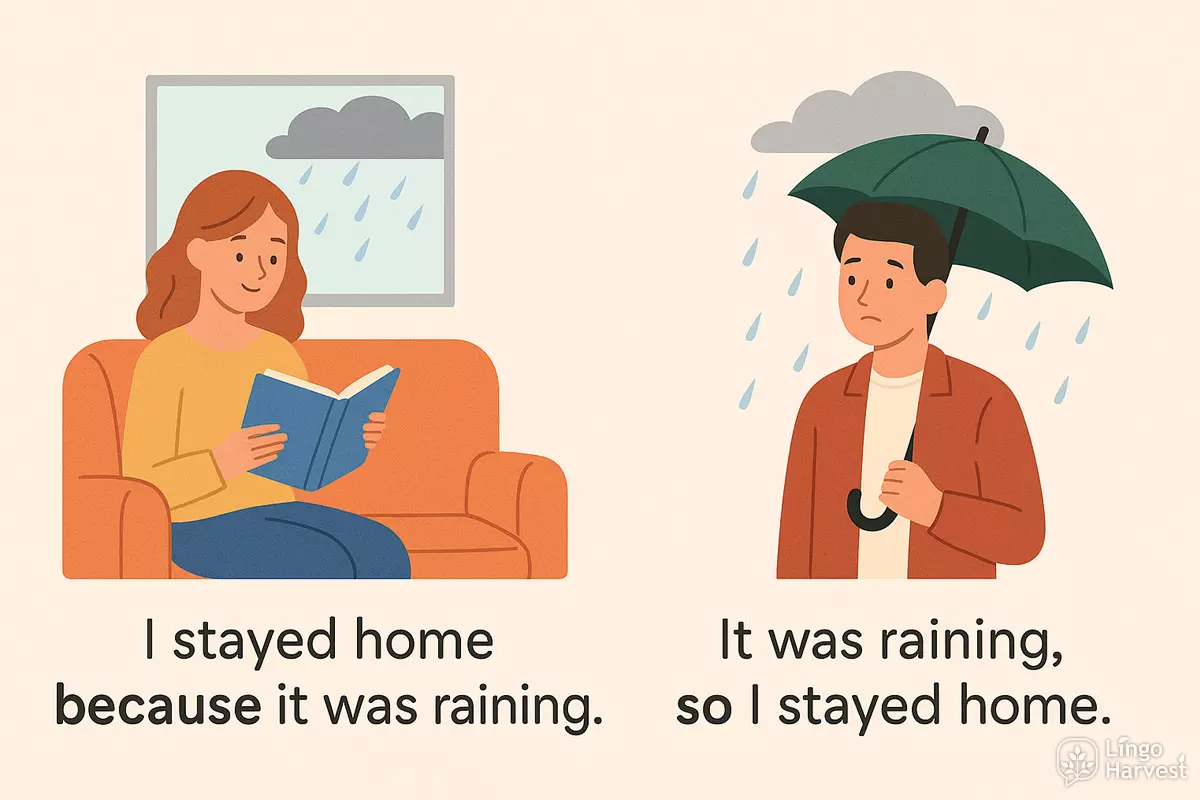
“Because” introduces a reason, while “so” introduces a result. For example:
- I stayed home because it was raining. (reason)
- It was raining, so I stayed home. (result)
Both words connect two ideas, but they go in different places in the sentence.
Common Patterns with "Because" and "So"
- Subject + verb + because + reason
- Because + reason, subject + verb
- Reason, so + result
- Subject + verb, so + subject + verb
Examples for Beginners
- She is tired because she didn’t sleep well.
- He brought an umbrella because it looked like rain.
- Because he was hungry, he ate two sandwiches.
- I missed the bus, so I was late.
- It’s cold, so wear your jacket.
- They studied hard because they wanted to pass the test.
- She was sick, so she stayed in bed.
- He forgot his keys, so he couldn’t open the door.
- Because it was his birthday, he got presents.
- I’m thirsty because I ran a lot.
- He smiled because he heard good news.
- It started to snow, so school was cancelled.
- I like English because it’s fun to learn.
- She turned off the lights because it was late.
- Our team won, so we celebrated.
- He was tired, so he went to bed early.
- Because the movie was interesting, we watched it twice.
Quick Comparison: "Because" vs "So"
| Connector | Function/Example |
|---|---|
| because | Gives the reason I was late because I missed the bus. |
| so | Shows the result I missed the bus, so I was late. |
| because of | Followed by a noun or noun phrase I was late because of the traffic. |
| therefore (formal) | Shows result (more formal) It rained; therefore, the match was cancelled. |
Connecting ideas with words like “because” and “so” helps you explain your thoughts clearly. Practice using these connectors in different situations to build confidence and fluency.
Examples in Context
Understanding how linking words function in real sentences helps beginners use them naturally. Below, you’ll find practical sentences showing how connectors can join ideas, clarify meaning, or introduce reasons. These patterns are common in everyday conversations and simple writing, making them ideal for those just starting out.
Sample Sentences Using Connectors
- And: I like apples and oranges.
- But: She is tired, but she will finish her homework.
- Because: He stayed home because it was raining.
- So: It was late, so we went to bed.
- Or: Would you like tea or coffee?
- Also: She is funny. Also, she is kind.
- Then: We ate dinner, then we watched a movie.
- After that: He finished his work. After that, he went outside.
- However: I wanted to go out. However, it started to rain.
- For example: I like fruit. For example, I eat bananas every day.
- Because of: The game was canceled because of the storm.
- First, next, finally: First, wash your hands. Next, cut the vegetables. Finally, cook everything together.
- In addition: She speaks French. In addition, she knows Spanish.
- Although: Although he was tired, he went to work.
- Since: Since it is cold, wear a jacket.
- When: Call me when you arrive.
- While: She listened to music while she studied.
Comparison of Common Connectors
| Connector | Example Sentence |
|---|---|
| And | I have a cat and a dog. |
| But | He wanted to play but had no time. |
| Because | She stayed inside because it was cold. |
| So | It was raining, so we took an umbrella. |
| Or | Do you want juice or water? |
| However | He is friendly. However, he is very shy. |
Practicing these sentence patterns will help new learners connect their ideas smoothly. Notice how each linking word changes the relationship between the two parts of the sentence. With time, these connectors become second nature in both speaking and writing.
Practice: Join Short Sentences
Combining basic sentences is a practical way to make your English sound more natural and connected. Using connectors, you can turn choppy statements into smooth, flowing ideas. This section offers hands-on exercises and examples to help beginners link short statements effectively.
Common Connectors to Join Sentences
- and
- but
- so
- because
- or
- then
- although
- after
- when
- while
- if
- since
- before
- as
- unless
- until
- even though
- however
- therefore
- because of
How to Combine Sentences: Examples
Let’s see how using connectors can transform short, simple statements into more complex and interesting ones:
- I like tea. I like coffee. → I like tea and coffee.
- She was tired. She finished her work. → She was tired, but she finished her work.
- It rained. We stayed inside. → Because it rained, we stayed inside.
- He studied hard. He passed the test. → He studied hard, so he passed the test.
- You can take a bus. You can walk. → You can take a bus or walk.
- I finished my homework. I went out to play. → After I finished my homework, I went out to play.
- She called me. I was not home. → She called me when I was not home.
- He likes soccer. He doesn’t like basketball. → He likes soccer, but he doesn’t like basketball.
- We will go out. It stops raining. → We will go out when it stops raining.
- I studied. I was tired. → Although I was tired, I studied.
Practice Task: Connect the Sentences
Read each pair of simple sentences. Combine them using a suitable connector. Try to use different connectors for variety.
- I was hungry. I made a sandwich.
- She likes apples. She likes oranges.
- He didn’t study. He failed the exam.
- It was raining. We went for a walk.
- You can come with us. You can stay home.
- I finished breakfast. I brushed my teeth.
- My brother is tall. I am short.
- We missed the bus. We were late for school.
- She is friendly. She is helpful.
- I went to bed. I was still tired.
Show answers
- I was hungry, so I made a sandwich.
- She likes apples and oranges.
- He didn’t study, so he failed the exam.
- Although it was raining, we went for a walk.
- You can come with us or stay home.
- After I finished breakfast, I brushed my teeth.
- My brother is tall, but I am short.
- We missed the bus, so we were late for school.
- She is friendly and helpful.
- I went to bed, but I was still tired.
Tips for Joining Sentences Smoothly
- Choose connectors that best show the relationship between ideas (reason, contrast, sequence, etc.).
- Vary your connectors to make your writing more interesting.
- Read your sentences aloud to check if they sound natural and clear.