Pronoun Reference Tracking in Long Sentences

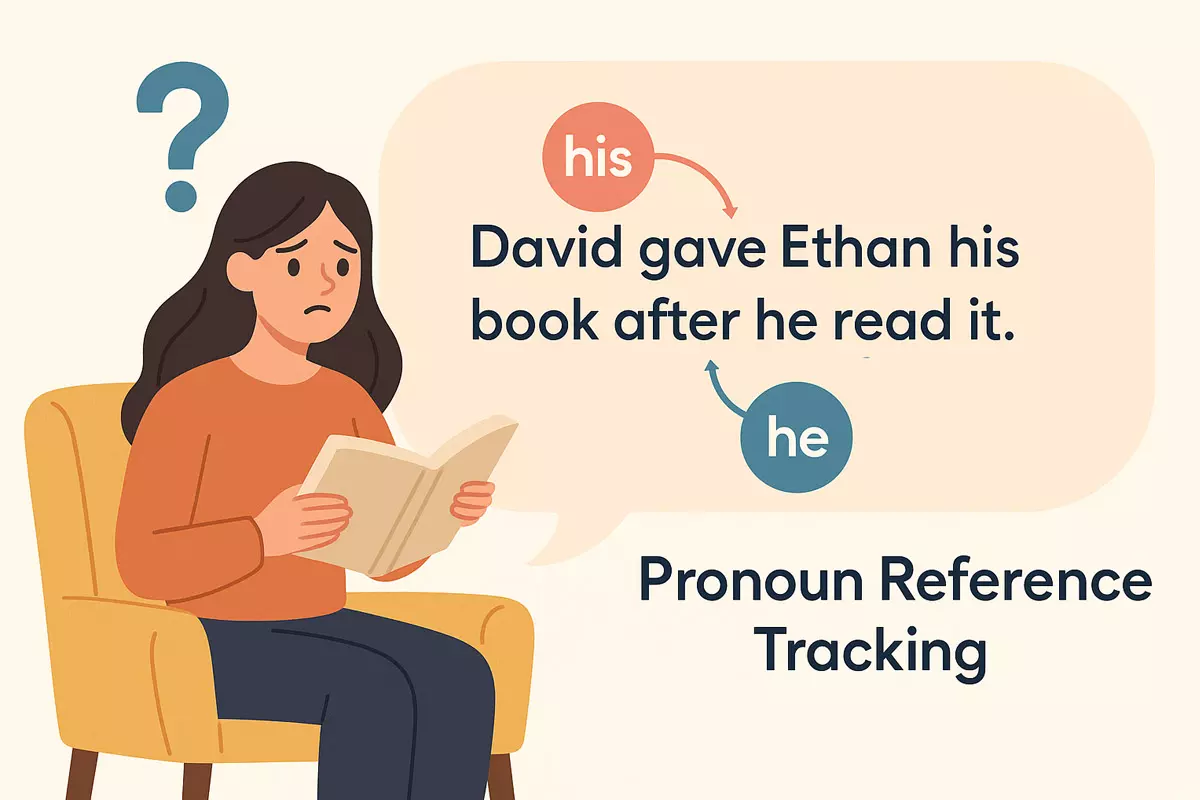 Here we what pronoun reference is, typical issues in lengthy sentences, and the difference between ambiguous and clear antecedents. It also suggests strategies for clarity, offers examples, and provides practice with fixing ambiguous pronouns.
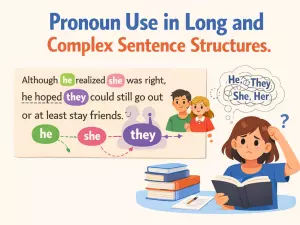
As sentences become longer and more complex, it can be challenging to determine exactly who or what a pronoun is referring to. Maintaining clarity in these situations is essential for effective communication and good writing. Writers and speakers need to be mindful of how pronouns are used so that readers and listeners can easily follow the intended meaning. By carefully constructing sentences and choosing pronouns thoughtfully, language users help ensure that their audience understands the connections between ideas without confusion.
What Pronoun Reference Means
Understanding how pronouns connect to the nouns or phrases they stand for is essential for following complex sentences. In grammar, this relationship—where a pronoun "refers back" to a specific word or group of words—is called reference. Accurately tracking these links helps readers avoid confusion, especially when sentences are long or contain multiple possible antecedents.
How Pronoun Reference Works
A pronoun typically stands in for a noun mentioned earlier in the sentence or text, known as its antecedent. The connection should be clear so the reader knows exactly who or what the pronoun is replacing. Ambiguous references can make comprehension difficult, particularly in intricate or technical writing.
- Clarity: The pronoun’s meaning should be unmistakable.
- Agreement: Pronouns must match their antecedents in number and gender.
- Proximity: The closer the antecedent, the easier it is to track.
- Consistency: Shifting between multiple referents can confuse readers.
- Context: Sometimes, understanding depends on the broader context or prior knowledge.
- Types: Pronouns can refer to people, objects, places, or even entire ideas.
- Repetition: Overusing pronouns without repeating the noun can cause ambiguity.
- Implicit Reference: Occasionally, the antecedent is implied rather than directly stated.
- Multiple Antecedents: Sentences with several nouns require careful pronoun use.
- Ellipsis: Sometimes, the pronoun replaces not just a word, but a whole phrase or clause.
Common Pronoun Reference Issues
Writers often encounter problems such as unclear antecedents or mismatched pronouns. For example, in the sentence "When Susan met Lisa, she was excited," it's ambiguous whether "she" refers to Susan or Lisa. Careful sentence construction and attention to detail can prevent these misunderstandings.
Examples of Pronoun Reference in Sentences
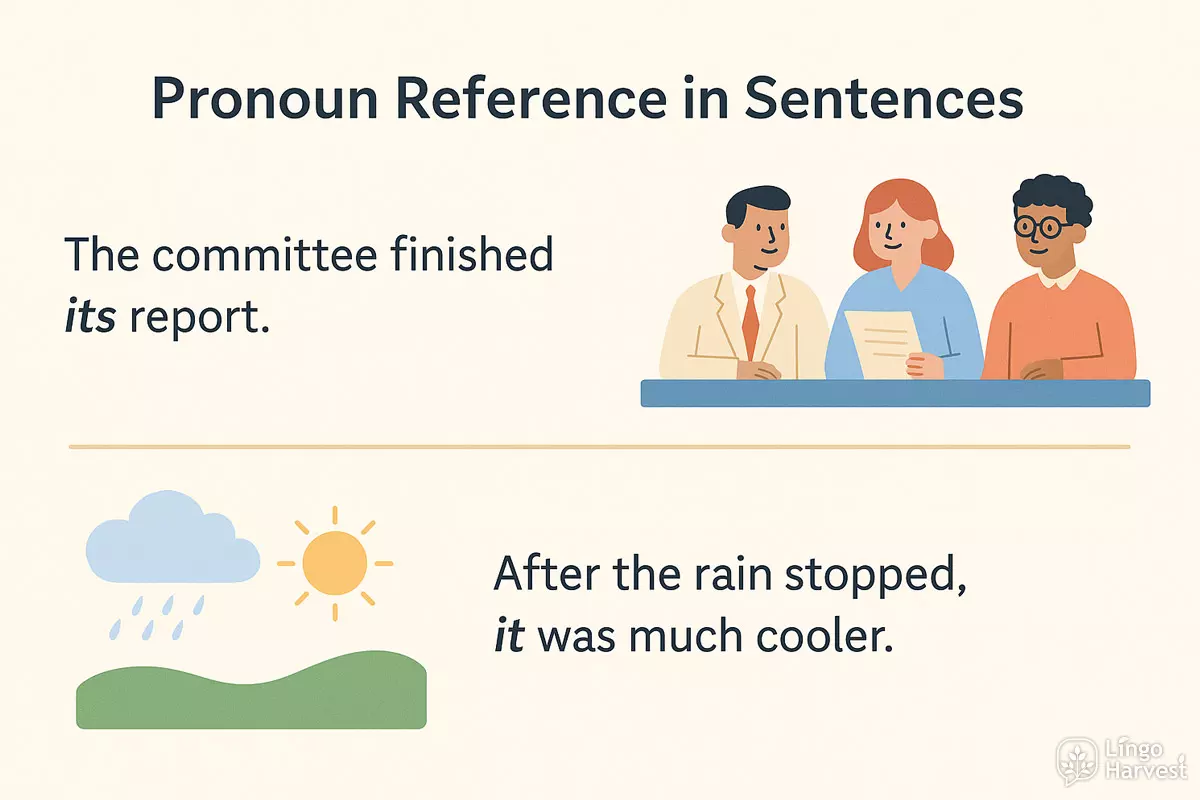
Here are several patterns showing how pronouns can refer to different kinds of antecedents:
- "The committee finished its report." (its refers to committee)
- "After the rain stopped, it was much cooler." (it refers to the weather/air, an implied noun)
- "Tom gave Jerry his book." (his could refer to Tom or Jerry—ambiguous)
- "The students handed in their assignments." (their refers to students)
- "Maria lost her keys because she was distracted." (she refers to Maria)
- "The city increased its budget." (its refers to city)
- "The children played until they were tired." (they refers to children)
- "John dropped the glass, and it broke." (it refers to the glass)
- "If you see the manager, tell him I called." (him refers to the manager)
- "The dog chased the cat because it was hungry." (ambiguous: it could be dog or cat)
Types of Pronoun Reference
Reference can be direct or indirect. Direct reference points to a specific noun, while indirect reference may require inference from context. Mastering these patterns is vital for both writers and readers when dealing with lengthy or information-dense sentences.
Common Reference Problems in Long Sentences
Tracking pronouns and their intended antecedents becomes notably challenging as sentence length increases. When multiple nouns, clauses, or modifiers are involved, readers can lose track of which entity a pronoun refers to. This can result in confusion, misinterpretation, or even ambiguity that disrupts comprehension.
Types of Reference Ambiguity
Several reference issues arise in extended sentence structures, including:
- Ambiguous Pronouns: When a pronoun could refer to more than one antecedent nearby.
- Distant Antecedents: The noun a pronoun refers to is far from the pronoun itself, creating processing difficulties.
- Intervening Phrases: Additional clauses or phrases placed between a pronoun and its antecedent can obscure the relationship.
- Multiple Potential Antecedents: When several nouns of the same gender or number are present, the pronoun’s referent becomes unclear.
- Generic vs. Specific Reference: A pronoun may seem to refer to a general group or a specific noun, causing uncertainty.
- Ellipsis and Omission: Sometimes, the antecedent is implied rather than stated, forcing readers to infer the connection.
- Shifting Topics: Topic changes within the sentence can create confusion about pronoun linkage.
- Pronoun Overload: Use of several pronouns in quick succession can overwhelm the reader’s working memory.
- Unclear Gender/Number: Pronouns with ambiguous gender or number can make it hard to match them to the correct noun.
- Nested Structures: Multiple embedded clauses can bury the antecedent, making tracking difficult.
Illustrative Examples of Reference Issues
Consider these cases, which frequently trip up both readers and natural language processing systems:
- After Tom gave the book to Jerry, he left the room. (Who left?)
- The committee reviewed the proposal before they approved it. (Does "they" refer to committee members, or another group?)
- Mary told Susan that she would win the prize. (Which person is "she"?)
- The dog chased the cat because it was scared. (Which animal was scared?)
- While reading the letter, she realized it was missing a page. (What was missing a page?)
- John met Paul after he finished work. (Who finished work?)
- The teacher asked the student to give her book back. (Is it the teacher's or student's book?)
- The bike hit the car, but it was not damaged. (What was not damaged?)
- Everyone admired the artist's painting because it was beautiful. (Painting or the act of painting?)
- If the manager calls the assistant while she is away, leave a message. (Who is away?)
- Jack sent the files to Jill after she requested them. (Who requested the files?)
- The parents told the children that they could play outside. (Who is allowed outside?)
Comparison of Reference Tracking Challenges
| Problem Type | Typical Example | Impact on Understanding |
|---|---|---|
| Ambiguous Pronoun | Mary gave Anna her book. | Unclear who owns the book |
| Distant Antecedent | After a long discussion about various topics, John said he agreed. | Hard to connect "he" to John |
| Intervening Phrase | The girl, who was wearing a red hat, waved as she left. | Possible confusion over "she" |
| Multiple Antecedents | When the dog chased the cat, it ran fast. | Ambiguity over which animal ran |
Careful sentence construction and explicit reference can help reduce these issues, but even skilled writers may encounter such pitfalls in complex sentences. Awareness of these patterns is key for both readers and anyone seeking to improve clarity in their writing or language processing algorithms.
Ambiguous vs Clear Antecedents
Understanding how pronouns link back to their referents is essential for grasping meaning in complex sentences. When a pronoun clearly points to one specific noun, reading and comprehension flow smoothly. However, confusion can arise if it’s not obvious which noun a pronoun refers to, especially in longer or more intricate sentences. This distinction—between clear and unclear connections—has a big impact on both human readers and automated language processing systems.
What Makes an Antecedent Clear?
A clear antecedent leaves no doubt about which noun the pronoun refers to. Typically, clarity is achieved when:
- Only one possible noun matches the pronoun in gender and number.
- The referent is close to the pronoun, often in the same or previous clause.
- Context or topic focus highlights the intended noun.
- Parallel structure or repetition reinforces the connection.
For example: “Maria gave her friend a book because she wanted to help.” (Assuming context makes it clear that “she” refers to Maria.)
Sources of Ambiguity
Ambiguity often arises when multiple nouns could serve as the pronoun’s referent or when sentence structure is complex. Common causes include:
- Several nouns sharing the same gender or number.
- Long gaps between pronoun and possible referents.
- Switches in topic or focus mid-sentence.
- Use of generic or abstract nouns as possible antecedents.
For example: “When Anna spoke to Lisa about her project, she was excited.” (Does “she” refer to Anna or Lisa?)
Common Patterns: Ambiguous vs. Clear Reference
The following table contrasts typical sentence patterns that lead to either ambiguity or clarity in pronoun reference.
| Ambiguous Example | Clear Example |
|---|---|
| John told Mike that he would be late. | John told Mike, “I will be late.” |
| Sarah met Emily after her class. | After Sarah’s class, she met Emily. |
| The dog chased the cat, but it escaped. | The dog chased the cat, but the cat escaped. |
| Alex gave Jordan his keys. | Alex gave his keys to Jordan. |
| The teacher praised the student because she worked hard. | The teacher praised the student because the student worked hard. |
| Lisa asked Karen if she could help. | Lisa asked Karen, “Can you help?” |
| After talking to Sam, Pat said he was tired. | After talking to Sam, Pat said, “I am tired.” |
| The engineer told the manager that he was wrong. | The engineer said, “You are wrong,” to the manager. |
| When the painter finished, he admired his work. | When the painter finished, the painter admired his work. |
| Jessica gave the book to Rachel after she read it. | After Jessica read the book, she gave it to Rachel. |
Tips for Achieving Clarity
Writers and speakers can avoid confusion by:
- Restating the noun instead of using a pronoun if ambiguity is possible.
- Placing pronouns close to their intended referents.
- Restructuring sentences for more direct reference.
- Using reported speech or direct quotes for attribution.
- Being mindful of gender/number agreement.
Clarity in reference not only aids understanding but also improves the precision of automated language tools. Recognizing these patterns helps both humans and machines interpret long sentences with greater accuracy.
Strategies for Maintaining Clarity
When dealing with lengthy sentences packed with multiple nouns and ideas, it’s easy for readers to lose track of which pronoun refers to which entity. Preventing confusion requires a few practical techniques, especially when sentences span several clauses or contain embedded phrases.
Use Explicit Nouns for Reference
Replacing ambiguous pronouns with their noun antecedents can instantly clarify meaning. Instead of saying “When Sarah handed the keys to Lisa, she smiled,” rephrase as “When Sarah handed the keys to Lisa, Lisa smiled.” This removes guesswork about “she.”
Keep Antecedents Close
Place pronouns near their referents whenever possible. Long gaps between a noun and its pronoun force readers to backtrack and can create ambiguity. If the pronoun is far from its noun, consider restructuring the sentence for proximity.
Limit the Number of Entities
Introducing many people or objects in a single sentence increases the risk of confusion. Where possible, break complex ideas into shorter sentences or reduce the number of entities before using pronouns.
Vary Sentence Structure
Alternating between simple, compound, and complex sentences can help avoid repetitive or confusing pronoun patterns. Mixing structures also keeps writing lively and accessible.
Examples of Clear and Unclear Pronoun Reference
| Ambiguous Sentence | Revised for Clarity |
|---|---|
| Maria met Anna after she arrived at the station. | After Maria arrived at the station, she met Anna. |
| The dog chased the cat because it was scared. | The dog chased the cat because the cat was scared. |
| John told Mark that he would win the prize. | John told Mark, “You will win the prize.” |
| When the students talked to the teachers, they were excited. | The students were excited when they talked to the teachers. |
| Emma gave Olivia her book after class. | After class, Emma gave her book to Olivia. |
Additional Tips for Pronoun Reference
- Repeat the noun if there’s any doubt about the pronoun’s meaning.
- Use gendered or distinctive pronouns when possible to avoid overlap.
- Break up long sentences that contain multiple pronouns.
- Read sentences aloud to check for natural clarity.
- Ask someone unfamiliar with your writing to identify pronoun antecedents.
- Use parallel structure when listing actions for clarity.
- Choose active voice over passive to highlight agents.
- Check for consistency in singular/plural pronoun use.
- Be cautious with “it” and “they” in sentences with several possible referents.
- Revise any sentence where a pronoun could refer to more than one noun.
Applying these approaches makes complex statements much easier to follow, helping readers understand exactly who or what each pronoun represents.
Using Repetition and Reformulation
Clarifying pronoun references in extended sentences often relies on repeating key nouns or rephrasing earlier ideas. This strategy helps readers or listeners track which entity each pronoun refers to, especially when multiple subjects are present or the sentence stretches over several clauses. Rather than expecting the audience to remember every detail, explicit cues improve comprehension.
Why Repeat or Reformulate?
Long sentences with several participants or actions can create ambiguity. For example, if a sentence mentions "the teacher," "the student," and "the principal," using "she" or "he" later can confuse readers. Reintroducing the noun or restating the idea makes the reference clear, reducing misunderstanding.
Common Techniques for Clarity
Writers and speakers can use several methods to keep pronoun references unambiguous:
- Explicit repetition: Restate the noun instead of using a pronoun.
- Paraphrasing: Reformulate the sentence to clarify who or what is being discussed.
- Add descriptive phrases: Use modifiers like "the teacher who just arrived" to specify the referent.
- Break up long sentences: Shorter sentences naturally reduce pronoun confusion.
- Use names or titles: Alternate between names and pronouns for variety and clarity.
Examples of Repetition and Reformulation in Context
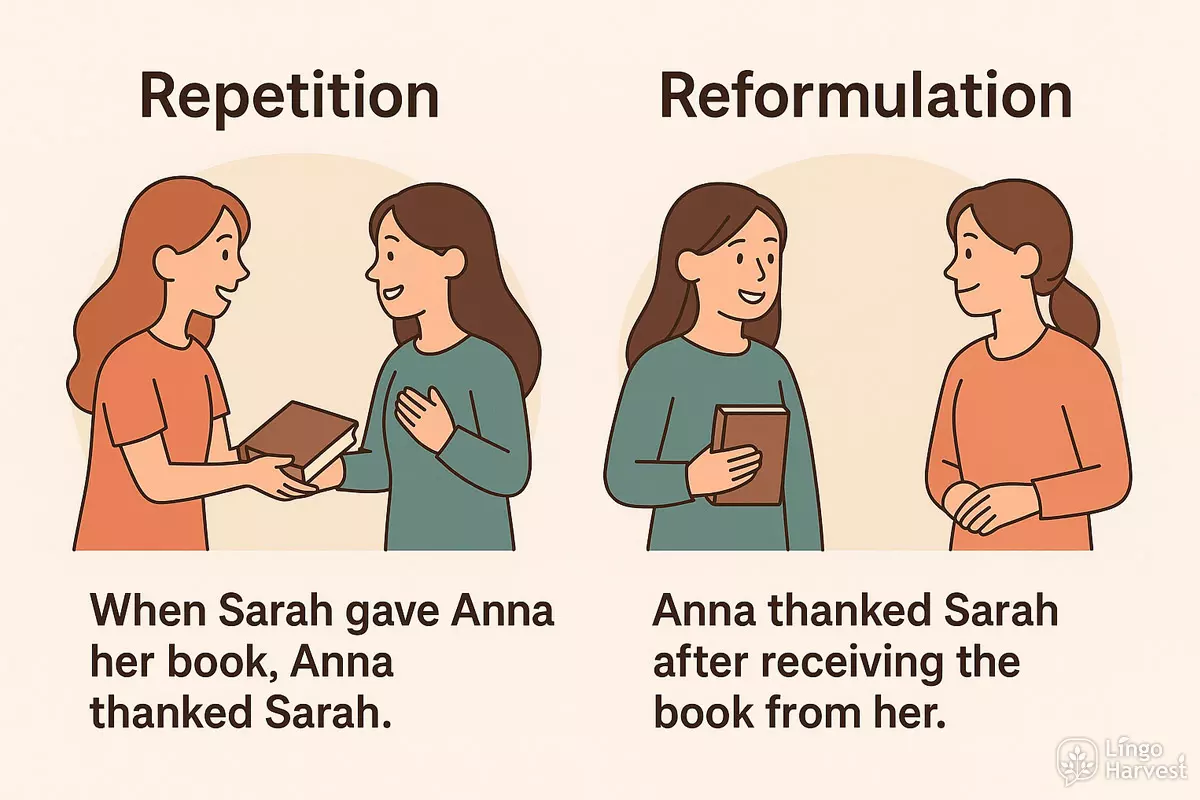
Sometimes, repeating a noun or reformulating a clause can make a sentence much easier to follow. Here are some practical patterns:
- Original: "When Sarah gave Anna her book, she thanked her."
- Repetition: "When Sarah gave Anna her book, Anna thanked Sarah."
- Reformulation: "Anna thanked Sarah after receiving the book from her."
- Adding detail: "When Sarah gave Anna her book, Anna was grateful and thanked Sarah."
- Breaking up: "Sarah gave Anna her book. Anna thanked her."
Useful Phrases for Reference Tracking
Writers often rely on a range of expressions to keep references clear in complex sentences. Here are some effective options:
- "the aforementioned [noun]"
- "the latter/the former"
- "this individual"
- "the person in question"
- "the one who..."
- "[Name] herself/himself"
- "the same [noun] as before"
- "the subject/recipient"
- "that particular [noun]"
- "the previously mentioned [noun]"
- "the entity under discussion"
- "the group/person already described"
- "that individual"
- "the party involved"
- "this participant"
Comparison of Strategies
When choosing between repetition and reformulation, consider the flow and clarity of the text. The table below highlights differences and use cases:
| Method | Best Used When |
|---|---|
| Repetition of Nouns | Multiple entities are present and pronouns would be unclear |
| Reformulation of Clauses | Sentence is long or complex, and rewording increases clarity |
| Descriptive Phrases | Additional context is needed to distinguish between referents |
| Breaking Up Sentences | Pronoun chains become too difficult to track in a single sentence |
By thoughtfully repeating or rephrasing, writers and speakers can ensure their audience accurately follows pronoun references, even in the most intricate sentences.
Pronoun Chains in Complex Sentences
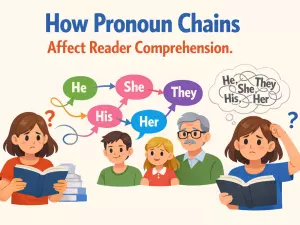
Tracking references through long or intricate sentences often requires following a sequence of pronouns that each point back to earlier nouns or noun phrases. These sequences, sometimes called pronominal chains, can stretch over multiple clauses and even across several sentences, demanding careful attention from both readers and writers to avoid ambiguity.
How Chains Develop in Extended Sentences
When a sentence contains several actions or events, each involving different participants, writers often use pronouns to maintain cohesion and avoid repetition. For example, in “Maria told Anna that she would deliver the package because she trusted her,” the pronouns “she” and “her” could refer to either Maria or Anna, depending on context. This illustrates how easily referent tracking can become challenging.
Common Patterns in Pronoun Referencing
Writers use various strategies to keep reference chains clear. Here are some of the most common patterns:
- Repeating the noun after a long clause
- Using demonstratives (“this,” “that”) for clarity
- Switching to names when multiple female or male pronouns are involved
- Employing appositives: “John, who was tired, said he would rest”
- Breaking up sentences to reduce pronoun distance
- Using possessive forms to show relationships—“his car,” “her idea”
- Introducing pronouns only after the referent is clear
- Clarifying with relative clauses: “the teacher who knew she was late”
- Relying on gender or number to distinguish referents
- Making use of context from previous sentences
Potential Ambiguities and How to Avoid Them
Long stretches of pronoun reference can make it unclear who or what is being discussed. Problems arise when:
- Several people or items of the same gender/number are present
- Pronouns are too far from their antecedents
- Multiple chains overlap or intersect
To resolve these, writers may rephrase or repeat key nouns, or restructure sentences to bring pronouns closer to their antecedents.
Examples of Pronoun Reference Chains
Below is a selection of sample sentences illustrating how pronoun chains work and where confusion can occur:
- After the manager called the assistant, he asked her to reschedule the meeting.
- When the dog saw the cat, it barked because it was startled.
- Susan met with Jane before she finished her report.
- The players congratulated the coach, and he thanked them for their effort.
- Mark told Paul that he should check his email.
- Each child brought their favorite book, and they shared it with the group.
- When the lamp fell, it broke, and its pieces scattered everywhere.
- After Lisa helped Karen, she felt grateful for the support.
- The committee announced their decision, and it surprised everyone.
- Tom and Jerry argued until he apologized.
- Jessica lent her sister her jacket because she was cold.
- Once the document was reviewed, it was sent to the board for approval.
- The teacher asked the student if she could explain the answer.
- When the car hit the pole, it was damaged badly.
- They promised to help their neighbors if they needed anything.
- After the concert, the band thanked its fans for coming.
Chain Clarity: Strategies at a Glance
Writers and speakers can use several techniques to enhance clarity when referencing with pronouns:
- Repeat the noun if confusion is likely
- Use gender and number distinctions where possible
- Keep pronouns close to their antecedents
- Break up lengthy sentences
- Choose names over pronouns in complex scenarios
Understanding and managing these reference sequences is essential for producing clear, unambiguous writing, especially in contexts where details and participants multiply. Careful construction and editing will ensure that readers always know who or what is being referred to, even in the most elaborate sentences.
Examples of Corrected Reference
Clarity in tracking pronouns across complex sentences is essential for both readers and writers. Ambiguous references can lead to confusion, especially when multiple nouns are involved. Below are several sample sentences that demonstrate how ambiguous pronoun use can be revised for greater precision. These corrections help ensure that each pronoun clearly points to its intended antecedent, which is especially important in technical writing, academic papers, and any context where misinterpretation could have consequences.
Common Patterns of Ambiguity and Their Corrections
- Original: When Sarah gave Anna her book, she thanked her.
Corrected: When Sarah gave Anna her book, Anna thanked Sarah. - Original: The dog chased the cat until it climbed the tree.
Corrected: The dog chased the cat until the cat climbed the tree. - Original: After John met Tom, he offered him a ride.
Corrected: After John met Tom, John offered Tom a ride. - Original: The vase fell on the table and it broke.
Corrected: The vase fell on the table and the vase broke. - Original: Mary told Lisa that she would be late.
Corrected: Mary told Lisa, "I will be late." - Original: If the bike hits the wall, it will get damaged.
Corrected: If the bike hits the wall, the bike will get damaged. - Original: Susan showed Emily her painting.
Corrected: Susan showed Emily Susan's painting. - Original: When the teacher spoke to the student, she smiled.
Corrected: When the teacher spoke to the student, the teacher smiled. - Original: The manager called the assistant while she was out.
Corrected: The manager called the assistant while the assistant was out. - Original: The laptop was placed in the bag because it was expensive.
Corrected: The laptop was placed in the bag because the laptop was expensive. - Original: After the car hit the tree, it was damaged.
Corrected: After the car hit the tree, the car was damaged. - Original: When Julia visited Monica, she brought flowers.
Corrected: When Julia visited Monica, Julia brought flowers. - Original: The scientist gave the engineer her report.
Corrected: The scientist gave the engineer the scientist's report. - Original: The committee told the director that they needed more time.
Corrected: The committee told the director, "We need more time." - Original: The children saw the clowns while they were eating.
Corrected: The children saw the clowns while the children were eating. - Original: When the lamp hit the table, it broke.
Corrected: When the lamp hit the table, the lamp broke. - Original: If the letter arrives before the package, send it.
Corrected: If the letter arrives before the package, send the letter. - Original: The coach congratulated the player after he scored.
Corrected: The coach congratulated the player after the player scored. - Original: When the bird saw the cat, it flew away.
Corrected: When the bird saw the cat, the bird flew away.
Comparison Table: Ambiguous vs. Clarified Reference
| Ambiguous Sentence | Clarified Version |
|---|---|
| After Emily called Jessica, she went to the store. | After Emily called Jessica, Emily went to the store. |
| The teacher gave the student her notes. | The teacher gave the student the teacher's notes. |
| When the dog chased the ball, it rolled under the car. | When the dog chased the ball, the ball rolled under the car. |
| The doctor spoke to the nurse while she was writing. | The doctor spoke to the nurse while the nurse was writing. |
| The book was placed on the desk because it was important. | The book was placed on the desk because the book was important. |
These examples demonstrate how simple changes can resolve ambiguity. By repeating the noun or restructuring the sentence, writers make it clear who or what the pronoun refers to. This approach is especially helpful in texts with several potential antecedents or in documents where misunderstanding could lead to errors.
Practice: Fixing Ambiguous Pronouns
Understanding how to clarify unclear pronoun references is crucial for effective writing, especially in complex or lengthy sentences. Ambiguous pronouns can confuse readers, making it hard to track who or what is being discussed. The following exercises and tips will help you identify and correct unclear references, improving overall clarity in your sentences.
Common Strategies for Clarifying Pronouns
- Replace the pronoun with the specific noun it refers to.
- Restructure sentences to place the pronoun closer to its antecedent.
- Use demonstrative pronouns (this, that, these, those) with a noun for clarity (e.g., "this idea").
- Eliminate unnecessary pronouns if the meaning is clear without them.
- Split long sentences into shorter ones to avoid confusion.
- Add descriptive phrases or clauses for precise reference.
- Use names instead of pronouns if multiple subjects are involved.
- Vary sentence structure to avoid repetitive pronoun use.
- Ensure each pronoun clearly matches a single, recent noun.
- Check for consistency in number and gender between pronoun and antecedent.
Identify and Revise Ambiguous Pronouns
Read each sentence below and rewrite it to resolve the unclear reference. Try to be concise while making the meaning obvious.
- When Maria met with Ana, she was very nervous.
- John told Mark that he needed to improve his work.
- The cup was on the table, but it was broken.
- Sara gave her sister her book because she finished it.
- The dog chased the cat, but it escaped.
- After discussing the project with the manager, they decided to cancel it.
- Paul called Alex while he was driving to the airport.
- Lisa showed Emma the photo, and she laughed.
- The coach congratulated the player after he scored.
- Tom asked Jerry if he could borrow his laptop.
Show answers
- When Maria met with Ana, Maria was very nervous. (Or: Ana was very nervous.)
- John told Mark that Mark needed to improve his work. (Or: John needed to improve his work.)
- The cup was on the table, but the cup was broken. (Or: The table was broken, if that's the intended meaning.)
- Sara gave her sister the book because her sister finished it. (Or: Sara finished it.)
- The dog chased the cat, but the cat escaped.
- After discussing the project with the manager, the team decided to cancel it. (Or: The manager decided to cancel it.)
- Paul called Alex while Paul was driving to the airport. (Or: While Alex was driving.)
- Lisa showed Emma the photo, and Emma laughed.
- The coach congratulated the player after the player scored.
- Tom asked Jerry if Tom could borrow Jerry's laptop.
Quick Reference: Types of Pronoun Ambiguity
| Type of Ambiguity | Example Sentence | Possible Interpretations | How to Fix |
|---|---|---|---|
| Multiple possible antecedents | Alex told Jordan that he was late. | Alex was late or Jordan was late. | Replace "he" with the intended person's name. |
| Distant antecedent | The report was reviewed by the team after it was edited by Sam. | "It" could mean the report or the team. | Clarify by specifying "the report" or "the team." |
| Pronoun with unclear gender/number | Taylor asked if they could help. | "They" could refer to Taylor or a group. | Specify if Taylor is an individual or a group. |
| Pronoun refers to entire idea/action | She forgot her keys, which was frustrating. | "Which" refers to forgetting or the keys. | Rephrase: "Forgetting her keys was frustrating." |
By practicing these techniques and reviewing examples, you can strengthen your ability to spot and correct unclear pronoun references, making your writing more precise and reader-friendly.