Natural Gender vs Grammatical Gender in English Noun Usage

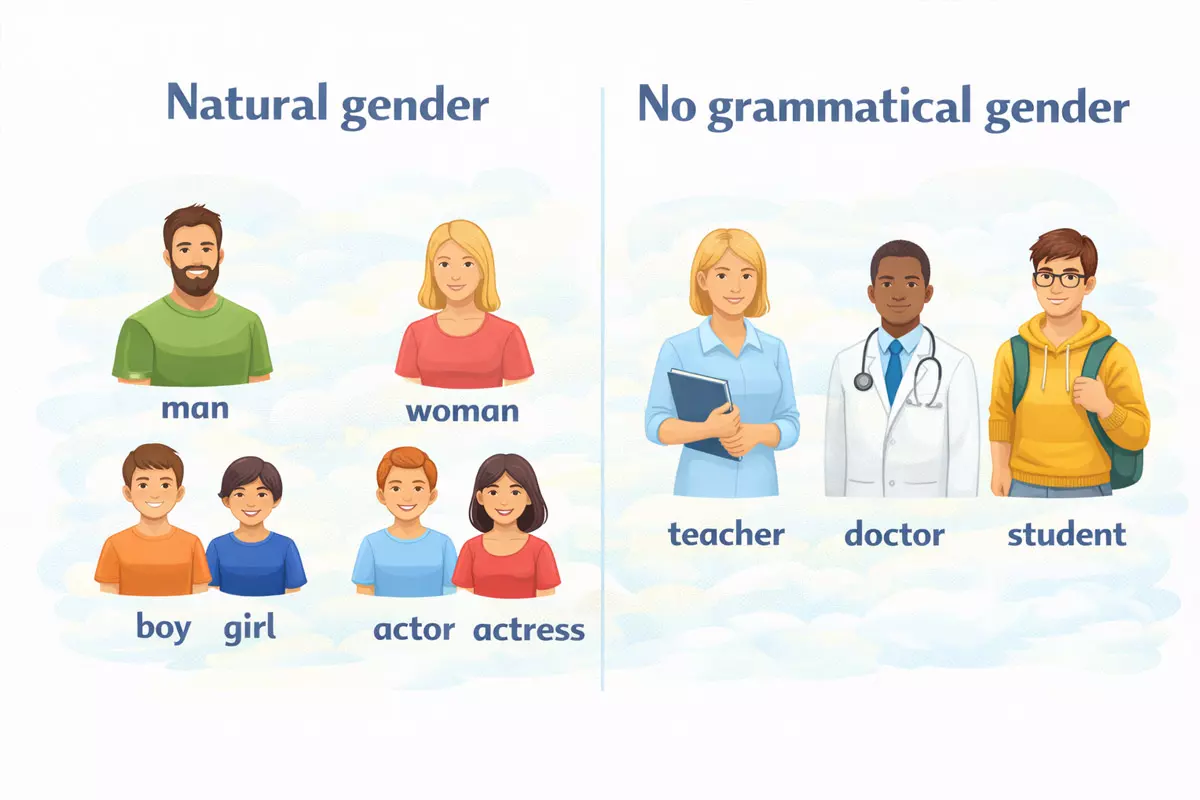 Here we the difference between natural and grammatical gender, explains why English uses natural gender, and discusses how this affects pronoun choice for people, animals, and objects. It also addresses special cases and common learner confusion.
- Difference between natural and grammatical gender
- Why English mostly uses natural gender
- Gender reference with people, animals, and objects
- Pronoun choice based on natural gender
- Special cases with ships, countries, and brands
- Common learner confusion with gender and pronouns
- Practice: choose correct pronouns based on natural gender
English learners often find it fascinating how gender is expressed in the language, as it sometimes aligns with biological sex, such as in words like "actor" and "actress," while at other times, it follows traditional conventions or is entirely neutral. Unlike languages with grammatical gender, English typically does not assign gender to most nouns, instead using gender-neutral terms like "teacher" or "doctor." Recognizing these patterns helps learners navigate the nuances of English and understand how gender is communicated, both explicitly and implicitly, in everyday language use.
Difference between natural and grammatical gender
Understanding how English handles gender in nouns means distinguishing between two separate concepts: natural (biological) gender and grammatical gender. These terms are often confused, but they describe different ways languages assign or recognize gender.
Natural gender: Based on biological sex
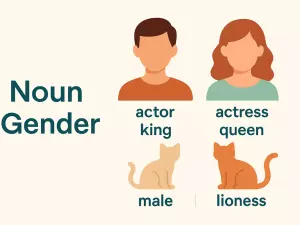
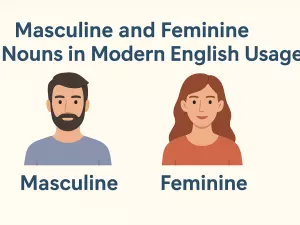
Natural gender refers to the actual sex or gender identity of the noun’s referent. In English, this system is straightforward:
- Male: man, boy, father, uncle, king
- Female: woman, girl, mother, aunt, queen
- Neuter (non-living or inanimate): table, car, book, idea, school
- Common gender (can refer to any gender): teacher, doctor, child, friend, student
Pronouns usually reflect this distinction: he for males, she for females, and it for objects or animals when sex is unknown or irrelevant.
Grammatical gender: A language structure
Grammatical gender is a system where nouns are assigned to classes (masculine, feminine, neuter) regardless of real-world gender. Unlike languages such as French, German, or Russian, English mostly lacks grammatical gender. Instead, gender agreement is limited, and most English nouns are not marked by gender.
Key distinctions at a glance
The table below summarizes the main contrasts between natural and grammatical gender in the context of English:
| Feature | Natural Gender | Grammatical Gender |
|---|---|---|
| Definition | Reflects biological sex or social gender | Assigns nouns to classes (masculine, feminine, neuter) by language rules |
| Example nouns | boy (male), girl (female), book (neuter) | In English: rare; in other languages: la table (French, feminine) |
| Agreement | Pronouns match real-world gender | Articles, adjectives, verbs may change form to agree (not in modern English) |
| Prevalence in English | Common and natural | Minimal; mostly historical or in set phrases |
Summary of usage in English
English noun gender almost always follows real-world sex or is neutral, while grammatical gender plays little to no role. The rare exceptions, such as calling ships or countries "she," are more poetic or traditional than grammatical. This separation makes English simpler in this area compared to many other languages.
Why English mostly uses natural gender
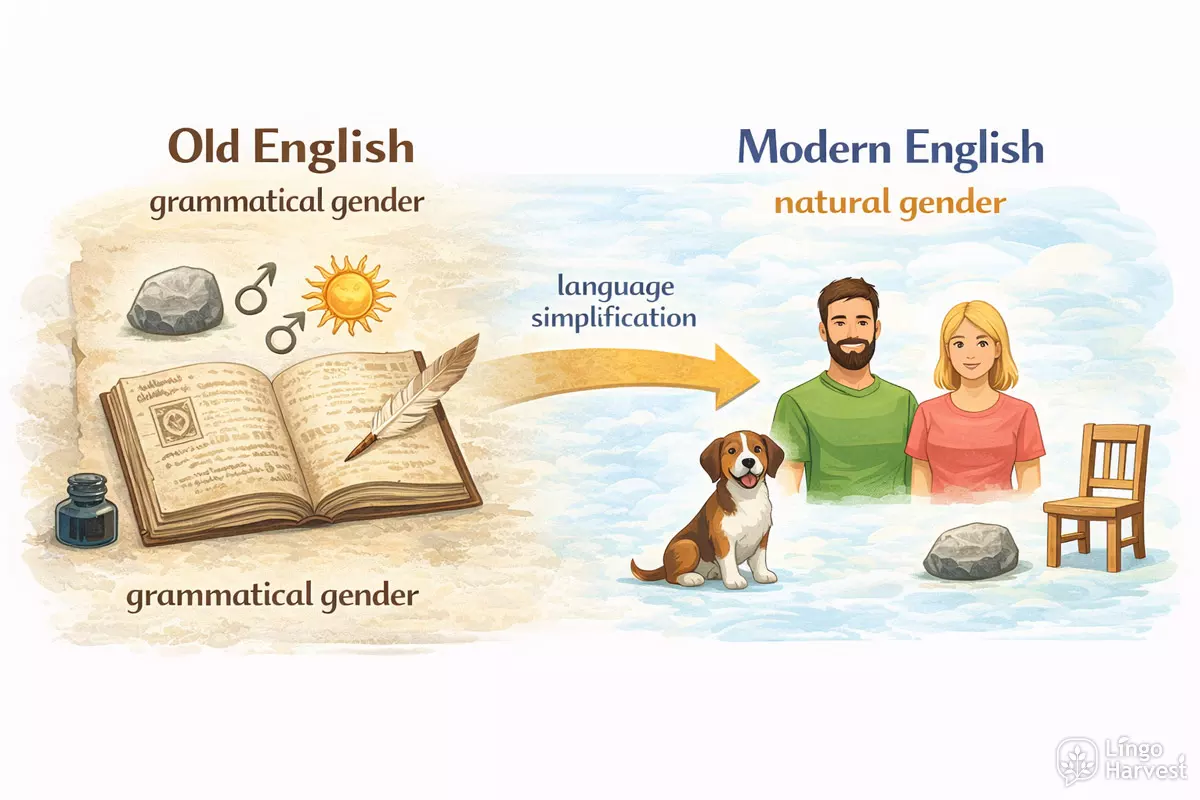
English nouns generally reflect the biological sex or animacy of what they describe, rather than following arbitrary grammatical rules. This approach is a direct result of historical language changes and the tendency toward simplification over centuries of evolution.
The historical shift from grammatical to natural gender
Old English once had a complex system of grammatical gender, similar to modern German. Over time, however, these distinctions faded as English grammar simplified. By the Middle English period, gendered noun endings and agreement patterns were largely abandoned, making way for a system that relies on actual characteristics—male, female, or non-living—rather than grammatical categories.
How natural gender works in modern English
Today, most English nouns are not classified as masculine, feminine, or neuter by arbitrary rule. Instead, the gender is determined by meaning:
- Words for males (e.g., man, boy, father) use he/him pronouns.
- Words for females (e.g., woman, girl, mother) use she/her pronouns.
- Objects, animals of unknown sex, and abstract concepts usually take it.
This system avoids confusion and makes English more accessible, especially for learners whose languages do not use grammatical gender.
Benefits of a meaning-based approach
A natural gender system simplifies agreement rules. For example, speakers do not need to memorize noun genders or adjust adjectives and articles accordingly. This reduces errors and streamlines communication.
Examples of natural gender usage
English reflects gender only when it is relevant. Here are common examples:
- man – he
- woman – she
- dog (male) – he
- cat (female) – she
- child – he or she
- table – it
- car – it (sometimes she in poetic or affectionate contexts)
- ship – it (traditionally she in nautical usage)
- doctor – he or she (based on actual person)
- teacher – he or she
- baby – it or he/she
- city – it
- lion (male) – he
- lioness – she
- actor – he
- actress – she
- bird – it (unless sex is known)
- computer – it
- friend – he or she
- tree – it
Comparison with languages that use grammatical gender
The contrast between English and languages with grammatical gender can be striking. Here’s how English differs from a language like French in noun gender assignment:
| English Noun | English Gender Assignment | French Gender Assignment |
|---|---|---|
| Table | Neuter (it) | Feminine (la table) |
| Sun | Neuter (it) | Masculine (le soleil) |
| Car | Neuter (it) | Feminine (la voiture) |
| Book | Neuter (it) | Masculine (le livre) |
| Girl | Feminine (she) | Feminine (la fille) |
| Boy | Masculine (he) | Masculine (le garçon) |
Summary
English’s reliance on natural gender reflects both the history and the practical logic of the language. By aligning gender with real-world characteristics, English avoids the complexity of grammatical gender, making it more straightforward for speakers and learners alike.
Gender reference with people, animals, and objects
English handles gender in nouns quite differently from languages with grammatical gender systems. Instead of assigning gender to every noun, English typically reserves gender distinctions for people and, occasionally, animals. Inanimate objects are almost always referred to using neutral terms.
People: Natural Gender and Pronouns
When referring to humans, English relies on natural gender. This is reflected in pronoun choice:
- He / him / his for males
- She / her / hers for females
- They / them / their for individuals of unknown or non-binary gender
Most profession and relationship nouns are now gender-neutral (e.g., "doctor," "parent"), with older forms ("waiter/waitress," "actor/actress") becoming less common.
Animals: Mixed Approach
With animals, English often uses "it" unless the animal’s sex is known or relevant. Pets and animals with a personal connection may be called "he" or "she." For example:
- The dog wagged its tail. (unknown gender)
- My cat is very friendly. She loves to cuddle. (known female)
- The lion roared. He was protecting his pride. (known male)
Objects: Always Neuter
Inanimate things almost always take the pronoun "it." There are rare exceptions in poetic or traditional language (e.g., ships or countries as "she"), but these are not standard in modern usage.
| Referent | Usual Pronoun(s) | Notes/Examples |
|---|---|---|
| Man, boy | he / him / his | Natural male gender |
| Woman, girl | she / her / hers | Natural female gender |
| Person (unknown or non-binary) | they / them / their | Gender-neutral reference |
| Animal (unknown gender) | it / its | Default for most animals |
| Animal (known gender) | he / she | Common for pets or specific animals |
| Object | it / its | Always neuter |
| Ship, country (poetic/traditional) | she / her | Rare, formal, or literary use |
Summary of Common Patterns
English's approach is practical: natural gender for people, flexible options for animals, and neutral terms for objects. This system avoids the complexity of grammatical gender, making English nouns relatively straightforward in terms of gender reference.
Pronoun choice based on natural gender
In English, the selection of personal pronouns typically aligns with the actual gender identity of the person or animal being referred to, rather than following any grammatical rule attached to the noun itself. This approach is known as natural gender, and it shapes how speakers refer to individuals in both written and spoken language. Unlike languages with grammatical gender, English relies on the real-world gender of the referent to determine the appropriate pronoun.
How English Pronouns Reflect Actual Gender
When referring to people, pronouns such as he, she, and they are chosen based on the individual’s self-identified gender. For most animals, especially pets with known gender, the same logic applies, whereas for unknown or inanimate objects, it is used. This differs from languages in which every noun has a fixed gender regardless of meaning.
- He – used for male individuals (e.g., "John forgot his keys.")
- She – used for female individuals (e.g., "Maria left her bag.")
- They – used as a singular pronoun for individuals whose gender is unknown, unspecified, or nonbinary (e.g., "Someone left their umbrella.")
- It – used for objects, abstract concepts, or animals of unknown sex (e.g., "The cat is hungry. It wants food.")
- He or she – sometimes used in formal writing to refer to a person of unknown gender, though they is now more common.
Examples of Pronoun Usage Based on Referent
The following table shows how English speakers select pronouns in different scenarios, reflecting the natural gender principle:
| Referent | Appropriate Pronoun |
|---|---|
| Man (David) | he / him / his |
| Woman (Anna) | she / her / hers |
| Nonbinary person (Alex) | they / them / their |
| Unknown person | they / them / their |
| Known male animal (dog named Max) | he / him / his |
| Known female animal (cat named Bella) | she / her / hers |
| Unknown animal | it / its |
| Object (book, car, idea) | it / its |
Special Cases and Shifts in Usage
There are situations where traditional usage is evolving. The singular they has become widely accepted for referring to individuals whose gender is not known or who identify outside the binary. Additionally, certain professions and roles are now described using gender-neutral language, avoiding assumptions based on job titles (e.g., "chairperson" instead of "chairman").
Summary of Key Patterns
- Personal pronouns generally correspond to the real gender of the person or animal.
- For unknown or unspecified gender, they is commonly used.
- Objects and most animals without a known gender are referred to as it.
- English avoids grammatical gender in pronoun selection, focusing on semantics and identity.
- Language is evolving toward greater inclusivity with pronouns.
Special cases with ships, countries, and brands
English sometimes bends its usual gender rules when referring to certain objects, especially ships, nations, and famous products. While the language generally relies on natural gender (he/she for people, it for things), tradition and style sometimes introduce exceptions for these categories.
Ships and boats: the feminine tradition
Historically, many English speakers have used feminine pronouns for ships and boats, referring to them as she or her. This custom is rooted in maritime tradition and persists in poetic or ceremonial contexts, though it is declining in official and modern usage.
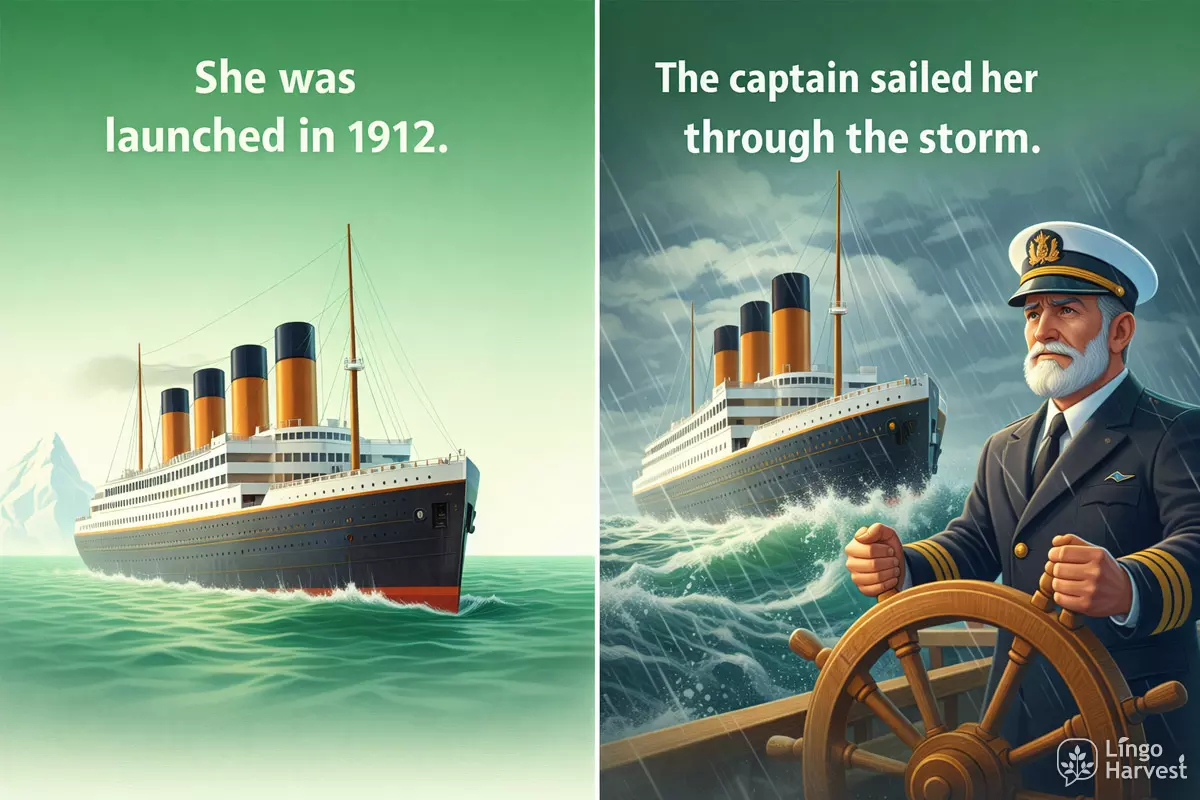
- She was launched in 1912. (About the Titanic)
- The captain sailed her through the storm.
- Maintenance on her hull is complete.
In technical writing, however, ships are now often called it, aligning with standard English usage.
Countries and regions: personification and neutrality
Countries are typically referred to as it in modern English. However, in literature, speeches, or poetic language, a country may be personified as feminine, especially when evoking national pride or emotion.
- England is proud of her traditions.
- France celebrated her national holiday.
- Italy and her allies signed the treaty.
- In most news writing: Spain increased its exports.
This personification is less common today and may sound formal or old-fashioned.
Brands and objects: shifting between 'it' and 'she'
Well-known brands or objects, especially vehicles, may sometimes be affectionately referred to as she. This is most common with cars, motorcycles, and sometimes aircraft, but is not standard. Most of the time, it is used.
- I love my old Mustang; she still runs beautifully.
- This laptop? It never lets me down.
- The Boeing 747 made its final flight.
- He tinkered with his bike until she purred.
Such usage is informal and reflects personal attachment or tradition more than grammatical rules.
Summary: Pronoun choices for ships, countries, and brands
| Category | Traditional Pronoun(s) | Modern/Neutral Usage | Example Sentence |
|---|---|---|---|
| Ships & Boats | she / her | it | The Titanic made her maiden voyage. |
| Countries & Regions | she / her | it | England increased its exports. |
| Brands & Vehicles | she / her (informal) | it | My car, she’s a beauty. |
| Other Objects | it | it | The phone has lost its signal. |
In summary, while English is largely neutral in assigning gender to non-human nouns, cultural habits and stylistic choices occasionally override the rules, especially with ships, nations, and beloved vehicles. These exceptions highlight the influence of history and emotion on language, rather than strict grammar.
Common learner confusion with gender and pronouns
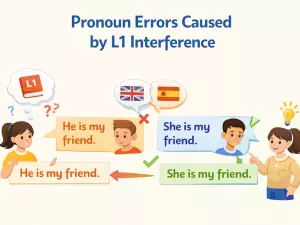
Learners of English often find it puzzling to distinguish when gender matters for nouns and which pronouns are appropriate to use. Since English mostly relies on natural gender (based on biological or social identity) rather than grammatical gender (as in many other languages), some students expect more rigid rules or look for patterns that don’t exist. This can lead to mistakes, especially with pronouns and certain nouns.
Misunderstandings with Pronoun Choice
One frequent issue is choosing the correct pronoun for animals, objects, or people of unknown gender. In English, objects and most animals are referred to as it, but exceptions and cultural factors sometimes apply. For people, he or she is used if gender is known, but they is increasingly common as a singular pronoun for unknown or non-binary gender.
- Referring to a car as "she" (poetic or informal, not standard)
- Calling a baby "it" (can sound impersonal or rude in English)
- Using "he" for all animals, regardless of sex
- Applying "they" for one person (now accepted, but may feel odd to some learners)
- Confusing "its" (possessive for things/animals) with "his/her" (people)
- Using "he/she" for objects (incorrect in modern usage)
- Assuming professions (e.g., doctor, nurse) have gendered pronouns
- Mixing up "his" and "her" when gender is unknown
- Translating gendered words directly from their native language
- Overusing gender-neutral "they" in all contexts
Animal and Object Gender Confusion
English learners sometimes expect every noun to have a gender, as in French, German, or Spanish. In reality, very few English nouns are gendered. Typically, animals and objects are neutral unless context or tradition dictates otherwise. For example, ships and countries are sometimes called "she" in poetic English, but this is rare in formal contexts.
| Noun | Standard Pronoun | Common Error |
|---|---|---|
| Dog (unknown sex) | it | he/she |
| Doctor (unknown gender) | they | he |
| Ship | it | she |
| Child (unknown gender) | they | it |
| Table | it | he/she |
| Cat (pet, known female) | she | it |
Summary of Typical Pitfalls
To avoid confusion, remember that English generally uses natural gender for people and "it" for things and animals (unless their sex is known or relevant). Singular "they" is accepted for unknown or non-binary individuals. Watch out for overgeneralizing rules from other languages or using non-standard poetic traditions in formal writing.
Practice: choose correct pronouns based on natural gender
Understanding how to select the right pronoun for a person or animal often depends on knowing their biological or social gender. In English, natural gender influences whether we use "he," "she," or "they" for people, and sometimes "it" or gendered pronouns for animals. This section gives you a chance to apply your knowledge through examples and targeted exercises.
How to Decide: Pronouns for People and Animals
When referring to people, pronoun choice is typically based on the person’s gender identity or, if unknown, a gender-neutral option. For animals, gendered pronouns are used if the animal's sex is known and relevant; otherwise, "it" is common.
- Mother → she/her
- Father → he/him
- Waiter (male) → he/him
- Waitress (female) → she/her
- Student (unknown gender) → they/them
- Dog (known to be male) → he/him
- Cat (gender not specified) → it
- Teacher (female) → she/her
- Friend (gender-neutral context) → they/them
- Horse (female, e.g., mare) → she/her
- Baby (gender not specified) → it/they
- Neighbor (gender not specified) → they/them
- Brother → he/him
- Sister → she/her
- Doctor (gender not specified) → they/them
- Actor (female) → she/her
- Actor (male) → he/him
- Chicken (hen) → she/her
- Chicken (rooster) → he/him
- Chicken (unknown) → it
Exercise: Choose the Right Pronoun
Read each sentence and select the correct pronoun based on the natural gender of the noun in brackets.
- The nurse (female) said that ____ would help us soon.
- My cousin (gender not specified) called to say ____ will visit next week.
- The lion (male) roared as ____ protected its territory.
- Our pet rabbit (unknown gender) likes to hide when ____ hears loud noises.
- The pilot (male) announced that ____ would land in ten minutes.
- The teacher (female) told the students ____ would grade the tests tonight.
- Each contestant (gender not specified) must write ____ name on the form.
- The puppy (female) wagged ____ tail happily.
- My uncle said ____ will arrive late.
- Every participant (gender not specified) should bring ____ own water bottle.
Show answers
- she
- they
- he
- it
- he
- she
- their
- her
- he
- their
Common Mistakes to Watch For
Learners sometimes use "it" for people or use gendered pronouns when the gender is not known. Remember:
- Never use "it" for people.
- Use "they/them" for a single person if gender is unknown or irrelevant.
- For animals, use "he/she" if the sex is known and important; otherwise, "it" is fine.
Mastering pronoun selection based on natural gender helps make your English more precise and respectful.