Pronoun Use in Academic Writing: Clarity, Objectivity, and Style

 Here we the importance of pronoun choice in academic texts, outlines common types and their role in clarity, compares pronouns to repetition, highlights discipline-specific preferences, and provides practice revising sentences for an academic tone.
- Why pronoun choice matters in academic texts
- Common pronoun types used in academic writing
- Maintaining clarity and precision with pronouns
- Avoiding overpersonal tone
- Pronouns vs repetition in formal texts
- Discipline-specific preferences
- Typical learner mistakes in academic style
- Practice: revise sentences for academic tone
Choosing the appropriate way to reference yourself and others in scholarly writing can be unexpectedly complex, but mastering this skill is essential for producing clear and professional academic papers. Carefully considering when to use first-person pronouns or more formal constructions helps ensure your arguments are both precise and objective. By thoughtfully selecting personal references, you not only clarify your own role in the research but also maintain the formal tone expected in academic contexts, ultimately strengthening the impact of your work.
Why pronoun choice matters in academic texts
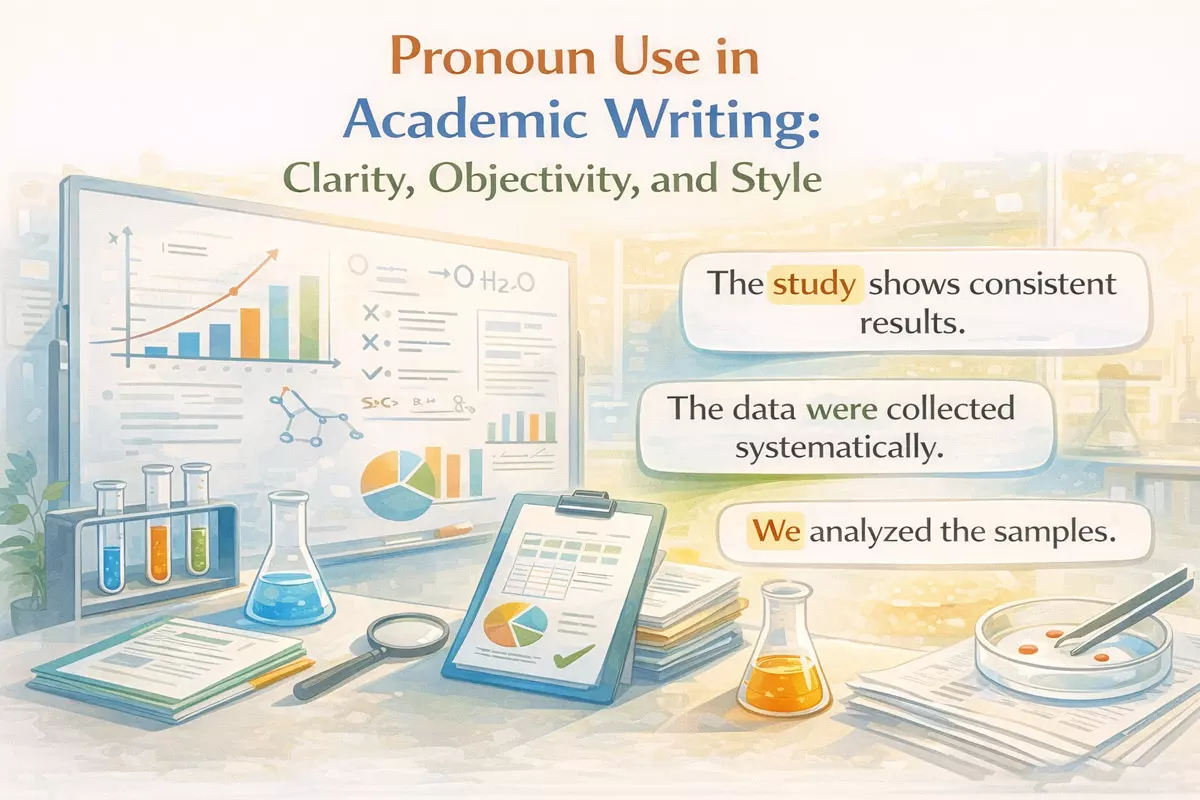
Selecting appropriate pronouns in scholarly writing directly shapes clarity, tone, and the relationship between writer and reader. The choice between “I,” “we,” or passive constructions affects not just sentence structure but also the impression of objectivity or subjectivity in the work. Researchers often debate whether to use first person (“I conducted”), collective (“we analyzed”), or impersonal forms (“the study shows”), and each option carries implications for both style and credibility.
Influence on Clarity and Precision
Using the right pronouns can help the reader immediately identify who performed an action or holds a viewpoint. For example, “we hypothesize” is more direct than “it is hypothesized,” reducing ambiguity. Overusing passive voice or unclear referents can make arguments harder to follow, especially in complex discussions.
Impact on Tone and Engagement
Pronoun selection also shapes the tone of academic writing. First-person pronouns can make the text more engaging and transparent, while third-person or passive forms may distance the author from their claims. The decision often depends on disciplinary conventions and the intended degree of formality.
Reflecting Disciplinary Norms
Different academic fields have their own conventions regarding pronoun use. For example, humanities disciplines may encourage first-person narration to highlight the author’s perspective, while the sciences often favor passive constructions to emphasize objectivity. Being aware of these differences is essential for producing work that aligns with disciplinary expectations.
| Pronoun Choice | Typical Effect in Academic Writing |
|---|---|
| I | Highlights individual contribution; can be perceived as subjective or personal. |
| We | Emphasizes collaboration or collective perspective; common in group research papers. |
| One | Formal, impersonal; often used in philosophical or theoretical contexts. |
| They | Refers to other researchers or groups; avoids direct self-reference. |
| It (passive voice) | Creates distance, focusing on actions or results rather than the actor. |
Common Pronoun Pitfalls
- Ambiguous referents (unclear who “they” or “we” refers to)
- Inconsistent use within a single text
- Unintentionally informal or overly detached tone
- Failure to follow style guidelines (e.g., APA, MLA, Chicago)
Effective use of pronouns in academic papers enhances readability, supports precise argumentation, and helps writers position themselves appropriately within their field. By being deliberate in these choices, authors can communicate more persuasively and professionally.
Common pronoun types used in academic writing
Academic texts frequently rely on several types of pronouns to maintain clarity, cohesion, and precision. While scholarly style often emphasizes objectivity and formality, pronouns still play a crucial role in sentence structure and flow. Understanding which forms are appropriate—and how to use them effectively—can help writers avoid ambiguity and maintain a professional tone.
Personal Pronouns
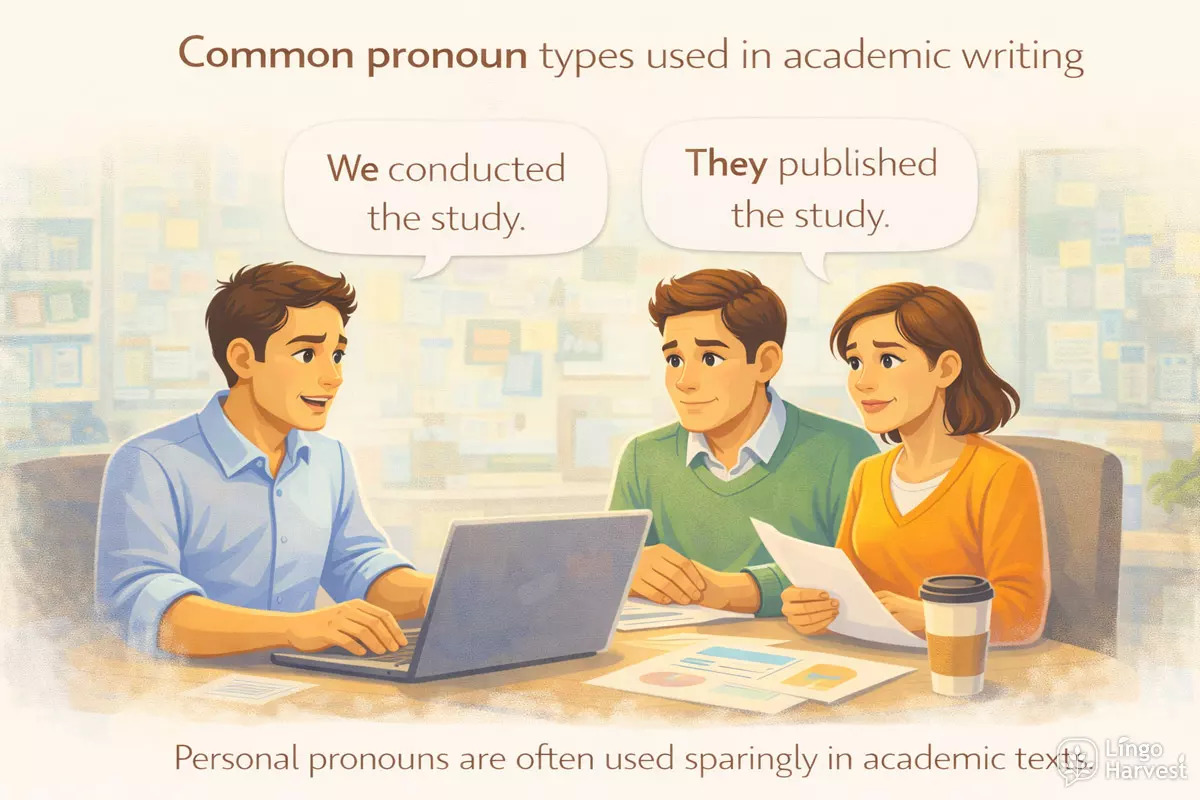
Personal pronouns reference specific people or groups. In research papers, these are often used sparingly to minimize subjectivity. First-person forms (such as I and we) are sometimes permitted, especially in reflective writing or when describing methodology. However, third-person pronouns (he, she, it, they) are more common when referring to other scholars or entities.
- I/we: Used for self-reference, often in methodology sections.
- He/she/they: Refer to other researchers or participants.
- It: Common for referencing inanimate objects or abstract concepts.
Demonstrative Pronouns
Demonstrative pronouns help specify particular items or ideas, making writing more precise. In academic contexts, these words (this, that, these, those) clarify which data, arguments, or findings are being discussed. Overusing them without clear antecedents, however, can cause confusion.
Relative Pronouns
Relative pronouns connect clauses and provide additional information about a noun. Words like which, that, who, and whom are essential for creating complex, informative sentences in research papers.
Indefinite Pronouns
Indefinite pronouns refer to nonspecific people or things. Academic writers use these with care to avoid vagueness. Common examples include everyone, anyone, each, some, and none.
Reflexive and Intensive Pronouns
Reflexive pronouns (myself, yourself, themselves) refer back to the subject of the sentence and are sometimes used for emphasis or to clarify agency in methodology sections. Intensive pronouns look identical but serve to emphasize the subject.
Pronoun Forms and Examples
The table below summarizes several pronoun types, forms, and typical uses in scholarly writing:
| Pronoun Type | Examples | Common Usage in Academic Writing |
|---|---|---|
| Personal | I, we, he, she, it, they | Describing authorship, referencing participants or objects |
| Demonstrative | this, that, these, those | Clarifying references to data, results, or arguments |
| Relative | who, whom, which, that | Connecting clauses, providing additional information |
| Indefinite | anyone, everyone, each, some, none | Discussing generalizations or unspecified subjects |
| Reflexive/Intensive | myself, ourselves, themselves | Emphasizing agency, clarifying actions |
Choosing Pronouns for Clarity
Selecting the right pronoun depends on context and disciplinary conventions. Always ensure that each pronoun has a clear antecedent and matches in number and gender with its referent. When in doubt, rephrase to prevent ambiguity or overuse.
Maintaining clarity and precision with pronouns
Using pronouns effectively in academic writing helps ensure that arguments are easy to follow and that references remain unambiguous. Ambiguous or unclear pronoun references can cause confusion, forcing readers to pause and reread sentences to determine what or whom a pronoun is referring to. Writers should be mindful of pronoun-antecedent agreement and choose pronouns that accurately and precisely replace nouns without introducing uncertainty.
Common pitfalls in pronoun use
Writers often encounter several challenges when integrating pronouns into scholarly texts. Some frequent issues include:
- Unclear antecedents: A pronoun appears before its noun or refers to multiple possible antecedents.
- Vague references: The pronoun "it," "this," or "they" is used without a clear noun in the preceding context.
- Pronoun agreement errors: The pronoun does not match its antecedent in number or gender.
- Overuse of pronouns: Excessive reliance on pronouns can make writing dense and hard to follow.
- Shifts in person: Switching from "one" to "you" or "he/she" can confuse the reader.
Strategies for ensuring pronoun accuracy
To make your writing more precise, consider the following strategies:
- Always place pronouns close to their antecedents to avoid confusion.
- Replace ambiguous pronouns with the specific noun when clarity is at risk.
- Check for agreement in number and gender between pronouns and their antecedents.
- Use demonstrative pronouns ("this," "that," "these," "those") with a clear noun: e.g., "this result," not just "this."
- Limit the use of "it" and "they" unless the referent is unmistakable.
- Revise sentences where pronouns could refer to more than one noun in the previous clause.
- Read sentences aloud to identify awkward or ambiguous pronoun use.
Examples of clear and unclear pronoun references
| Unclear Pronoun Reference | Clear Revision |
|---|---|
| When Mark spoke to Tom, he was upset. | When Mark spoke to Tom, Mark was upset. |
| The study discussed the results, and they were significant. | The results discussed in the study were significant. |
| It shows that the data are reliable. | This analysis shows that the data are reliable. |
| They said the hypothesis was incorrect. | The researchers said the hypothesis was incorrect. |
| After reviewing the samples, they were discarded. | After reviewing the samples, the researchers discarded them. |
Checklist for precise pronoun usage
- Identify each pronoun’s antecedent quickly and easily.
- Ensure pronouns agree in number and gender with their antecedents.
- Avoid introducing pronouns without a clear reference point.
- Revise sentences if pronoun use could lead to misinterpretation.
- Use specific nouns where pronouns might cause ambiguity.
- Be consistent in pronoun choice throughout the document.
- Limit the use of generic pronouns like "it" and "they" unless context is obvious.
Attention to these details greatly improves the readability and professionalism of academic writing, making it easier for readers to engage with your ideas and arguments.
Avoiding overpersonal tone
Academic writing often requires a degree of distance between the writer and the subject. Using direct personal language can sometimes make arguments appear subjective or overly informal. Instead, writers are encouraged to present their ideas in a way that emphasizes objectivity and professionalism.
Strategies for Maintaining Professional Distance
Writers can achieve a more objective style by minimizing references to themselves and focusing on the research or argument itself. Here are some effective approaches:
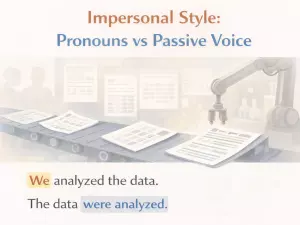
- Use passive voice where appropriate to shift focus from the author to the action (e.g., "The results were analyzed").
- Favor third-person constructions instead of first-person ("This study demonstrates" rather than "I demonstrate").
- Frame statements in terms of evidence, data, or established knowledge ("Evidence suggests that...").
- Avoid conversational phrases or anecdotes that center the writer's experience.
- Rely on neutral verbs such as "indicates," "reveals," or "shows" instead of "I think" or "we believe."
- Reference the discipline or methodology rather than personal involvement ("According to sociolinguistic theory...").
- Use noun-based phrasing ("the analysis of results") rather than verb-based phrasing ("I analyzed the results").
- Eliminate unnecessary qualifiers that reflect uncertainty or personal opinion ("perhaps," "I feel").
- Attribute claims to sources or literature ("Previous research has found...").
- Reserve first-person pronouns for instances where personal involvement is methodologically relevant.
Common Constructions: Personal vs. Impersonal
It can help to compare sentence structures to see how shifting pronoun use changes the tone. The table below contrasts personal and impersonal forms commonly used in scholarly texts.
| Personal Construction | Impersonal Alternative |
|---|---|
| I found that... | The results showed that... |
| We believe... | It is believed that... |
| In my opinion,... | It can be argued that... |
| I will discuss... | This section discusses... |
| We conducted an experiment... | An experiment was conducted... |
When First-Person Is Appropriate
Some academic contexts do permit selective use of "I" or "we," particularly in disciplines where the writer's perspective or actions are central to the work (such as reflective pieces or methodological descriptions). However, even then, restraint is recommended to maintain the scholarly tone. Always consider the conventions of your field and the expectations of your audience before using personal pronouns in formal writing.
Pronouns vs repetition in formal texts
In academic writing, authors often face a choice between using pronouns or repeating nouns to refer to key concepts and entities. While repetition can provide clarity, excessive use of the same terms may disrupt the flow and make the text cumbersome. On the other hand, pronouns help maintain cohesion and avoid monotony, but overusing them or using them ambiguously can confuse readers about what or whom is being referenced.
Clarity and coherence: balancing strategies
Writers strive for clear reference chains, ensuring readers can easily follow arguments and evidence. Repeating nouns can make a sentence explicit, but it can also sound redundant, especially in longer texts. Pronouns like it, they, this, or these are valuable for linking sentences and paragraphs, provided their referents are unmistakable. The key is to alternate between pronouns and repetition judiciously, depending on context and the need for clarity.
Common pitfalls with pronoun use
- Ambiguous antecedents: When several nouns appear in a sentence, a pronoun may not clearly refer to the intended noun.
- Overuse: Relying exclusively on pronouns can result in vague or confusing text, especially if the reader loses track of references.
- Inconsistent reference: Shifting between nouns and pronouns without clear pattern can break the flow and coherence.
When to repeat nouns versus using pronouns
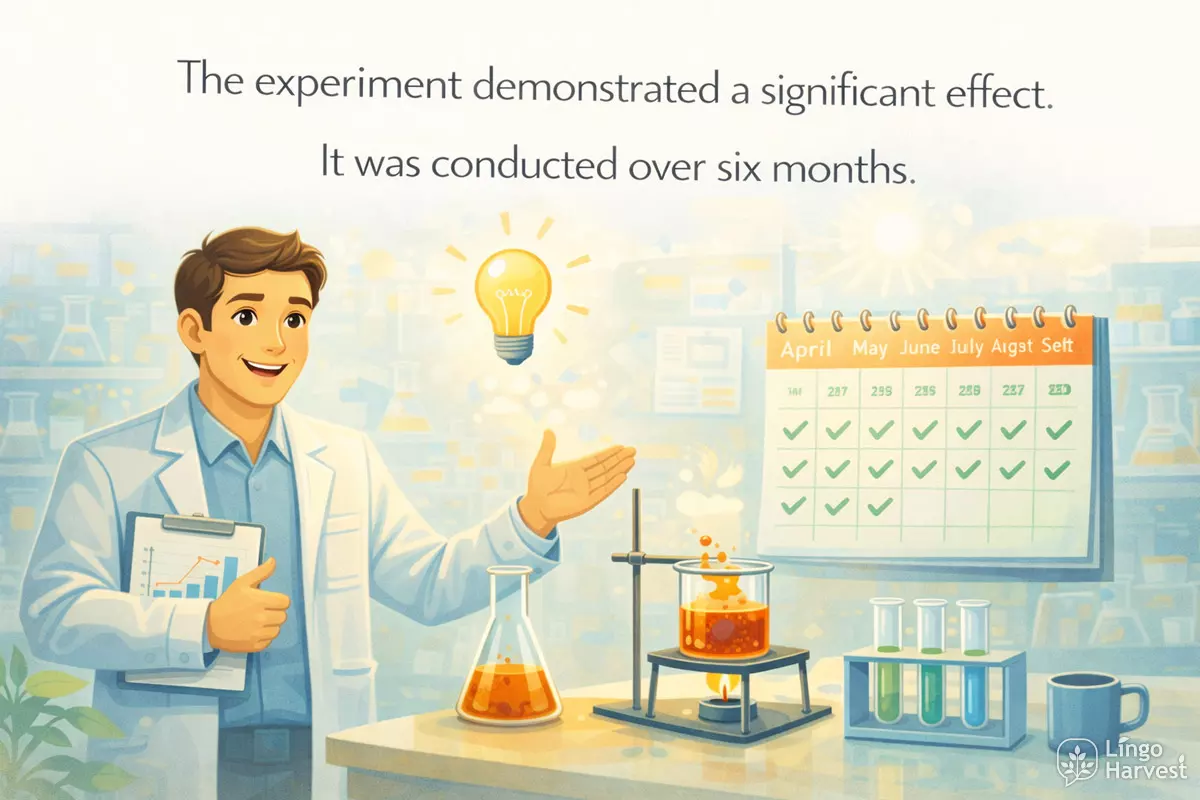
Authors should consider repetition when introducing new terms, defining concepts, or clarifying complex ideas. Pronouns work best once the referent has been firmly established. To illustrate, here are some typical patterns:
- Initial mention: "The experiment demonstrated a significant effect."
- Subsequent reference: "It was conducted over six months."
- Clarifying multiple subjects: "The theory and the model were compared. The theory was more robust, whereas the model had limitations."
- Avoiding ambiguity: "The researcher interviewed the participants. She then analyzed the data." (Here, she clearly refers to the researcher.)
Comparison of repetition and pronoun usage
| Repetition | Pronoun Use |
|---|---|
| Ensures clarity for new or complex terms | Improves cohesion by linking sentences |
| May result in cumbersome, repetitive text | Can cause ambiguity if not clearly referenced |
| Useful when introducing definitions or distinctions | Best after referent is established |
| Preferred for technical terms or multiple similar concepts | Effective for maintaining flow in connected ideas |
Tips for effective reference management
- Introduce a noun before using a pronoun to refer to it.
- Repeat nouns if there is any risk of confusion.
- Alternate between repetition and pronouns for readability.
- Review sentences with multiple nouns to ensure pronoun clarity.
- Use demonstrative pronouns (this, these) to refer to previous ideas, but specify the noun if ambiguity is possible.
Ultimately, the right balance between noun repetition and pronoun use is essential for clear, engaging academic writing. Careful attention to reference chains not only aids reader comprehension but also strengthens the overall coherence of the text.
Discipline-specific preferences
Writers quickly discover that expectations for pronoun usage can shift considerably depending on the academic field. Some disciplines favor direct reference to the researcher using first-person pronouns, while others expect neutral or impersonal constructions. Understanding these conventions is important for aligning with the norms of a given scholarly community and for ensuring clarity and professionalism in academic prose.
First-person pronouns in various fields
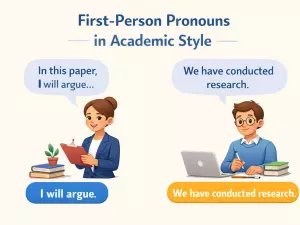
In the humanities and social sciences, using "I" or "we" is often encouraged to emphasize the author's interpretation or role in the research process. Fields such as philosophy, history, and education tend to accept or even prefer first-person pronouns, especially when discussing methodology, analysis, or personal reflection. In contrast, the natural sciences and engineering have traditionally favored impersonal constructions. Instead of "I conducted the experiment," writers might use "The experiment was conducted." However, some journals and style guides now permit or recommend first-person usage for greater transparency, especially in Methods and Discussion sections.
Overview of common disciplinary conventions
The following table summarizes how different academic domains typically approach personal pronoun use:
| Discipline | Typical Pronoun Usage | Example |
|---|---|---|
| Philosophy | Frequent use of "I" | I argue that... |
| Literary Studies | Common use of "I" or "we" | We see in this text... |
| Psychology | Increasing use of "we" | We hypothesized that... |
| Biology | Mixed; often "we" in teams | We observed a change... |
| Physics | Traditionally impersonal, but changing | The results indicate... |
| Engineering | Usually passive or "we" | The system was designed... |
| Economics | Often passive or "we" | We estimate the effect... |
| Law | Varies; some first-person in analysis | I will show that... |
| Mathematics | Traditionally passive or "we" | We prove the following theorem... |
| Medicine | Increasingly "we" in research papers | We enrolled 200 patients... |
Second-person and gender-neutral pronouns
Second-person pronouns like "you" are rare in formal academic writing, except in instructional or pedagogical genres. Gender-neutral language is widely encouraged across disciplines, with "they" now accepted as a singular pronoun in many style guides. This shift reflects a broader commitment to inclusivity and precision.
- "They" as a singular pronoun to avoid gendered assumptions
- Avoidance of "he/she" constructions in favor of more neutral phrasing
- Preference for recasting sentences to eliminate pronouns when possible
Key takeaways for writers
Adapting to the pronoun norms in your area can help your work communicate more effectively and meet editorial expectations. When in doubt, consult the target journal’s or discipline’s style guide, and review recent publications for examples.
Typical learner mistakes in academic style
Writers transitioning to academic contexts often struggle with how to use pronouns effectively and appropriately. Some issues stem from differences between conversational habits and formal writing conventions, while others arise from uncertainty about clarity or objectivity. Being aware of these challenges makes it easier to avoid them and adopt a more scholarly tone.
Frequent issues with pronoun usage
- Overusing first-person pronouns (I, we) when describing research or arguments, especially in fields that prefer impersonal structures.
- Switching between singular and plural pronouns inconsistently, leading to confusion about the subject or number.
- Using vague pronoun references—where it, they, or this do not clearly refer to a specific noun.
- Relying on second-person pronouns (you) in explanations, which is rarely suitable for academic texts.
- Employing gendered pronouns (he, she) unnecessarily, rather than using inclusive forms like they.
- Omitting pronouns and creating sentence fragments or awkward passive constructions.
- Using demonstrative pronouns (this, that, these, those) without clear antecedents, making arguments difficult to follow.
- Inconsistent use of pronouns throughout a paragraph, which can disrupt flow and reader understanding.
- Shifting between formal and informal pronoun usage within the same text.
- Repeating nouns excessively to avoid pronouns, resulting in unnatural or stilted prose.
- Using pronouns to refer to abstract concepts without first defining them.
- Introducing personal opinions with pronouns in disciplines where objectivity is expected.
Examples of common errors and improved alternatives
| Problematic Example | Suggested Revision |
|---|---|
| You can see that the results are significant. | The results are significant. |
| This shows that it is important. | This finding demonstrates the importance of the issue. |
| If a student is late, he should contact the instructor. | If a student is late, they should contact the instructor. |
| I believe that climate change is a threat. | Climate change is a significant threat. |
| They argue that the policy is effective, but it is unclear who "they" refers to. | Smith and colleagues argue that the policy is effective. |
Tips for more precise pronoun use
- Always clarify what a pronoun refers to, especially in complex arguments.
- Use impersonal constructions or passive voice where appropriate, but avoid overuse for readability.
- Favor gender-neutral forms when referring to hypothetical or general individuals.
- Check each pronoun for agreement in number and person with its antecedent.
- Revise for consistency in style and tone throughout the document.
By addressing these pitfalls, writers can produce clearer, more objective, and more professional academic texts that are easier for readers to follow and trust.
Practice: revise sentences for academic tone
Refining sentences to suit academic writing involves making language more precise, objective, and formal. This practice section offers opportunities to edit sentences that use pronouns in informal or ambiguous ways, improving their clarity and professionalism. Below, you'll find example sentences that need revision, guidance on common issues, and a chance to test your skills.
Common Issues with Pronouns in Academic Prose
- Overuse of first-person pronouns (I, we, my, our) where objectivity is preferred
- Vague reference—using it, this, they without a clear antecedent
- Informal language, such as conversational phrasing or contractions
- Ambiguity in plural vs. singular pronoun use
Practice Exercise: Improve the Sentences
For each sentence below, rewrite it to make it suitable for a scholarly context. Focus on pronoun clarity, formality, and objectivity.
- We can see that climate change affects everyone.
- You can find the results in the appendix.
- They say that the experiment was successful, but it is not clear who they are.
- My data shows that the hypothesis is correct.
- This shows that the process is effective, but it is not specific what "this" refers to.
- It’s clear that more research is needed.
- We believe that our findings are important.
- They did not specify which variables were controlled in the study.
- You should consider the ethical implications.
- I think the results support the theory.
Show answers
- It is evident that climate change affects all individuals.
- The results are available in the appendix.
- The authors report that the experiment was successful; however, the specific individuals or groups are not identified.
- The data indicate that the hypothesis is supported.
- This evidence demonstrates the process's effectiveness.
- Further research is clearly needed.
- The findings are considered significant.
- The study did not specify which variables were controlled.
- The ethical implications should be considered.
- The results appear to support the theory.
Patterns for Academic Revisions
Academic tone often involves replacing personal pronouns and vague references with more precise language. Here are some useful alternatives:
- Instead of "I think" → "The evidence suggests"
- Instead of "We found" → "The study found"
- Instead of "You can see" → "It can be observed"
- Instead of "They say" → "Previous research indicates"
- Instead of "My results" → "The results"
- Instead of "This shows" → "The data demonstrate"
- Instead of "It’s clear" → "Clearly"
- Instead of "We believe" → "It is considered"
- Instead of "You should" → "It is recommended"
- Instead of contractions (e.g., "It’s") → Use full forms ("It is")
Comparison: Informal vs. Academic Style
| Informal/Conversational | Academic/Formal |
|---|---|
| We looked at the data and saw a trend. | The data were examined, and a trend was identified. |
| You can see that the results are significant. | The results are significant. |
| They say this method works well. | Previous studies indicate that this method is effective. |
| I think more research needs to be done. | Further research is required. |
| My results prove the hypothesis. | The results support the hypothesis. |
| This shows we need to improve the process. | This finding suggests that the process requires improvement. |
By practicing these revisions, you’ll develop a stronger sense of how to convey ideas with clarity and professionalism in academic contexts, especially when using pronouns.