First-Person Pronouns in Academic Style

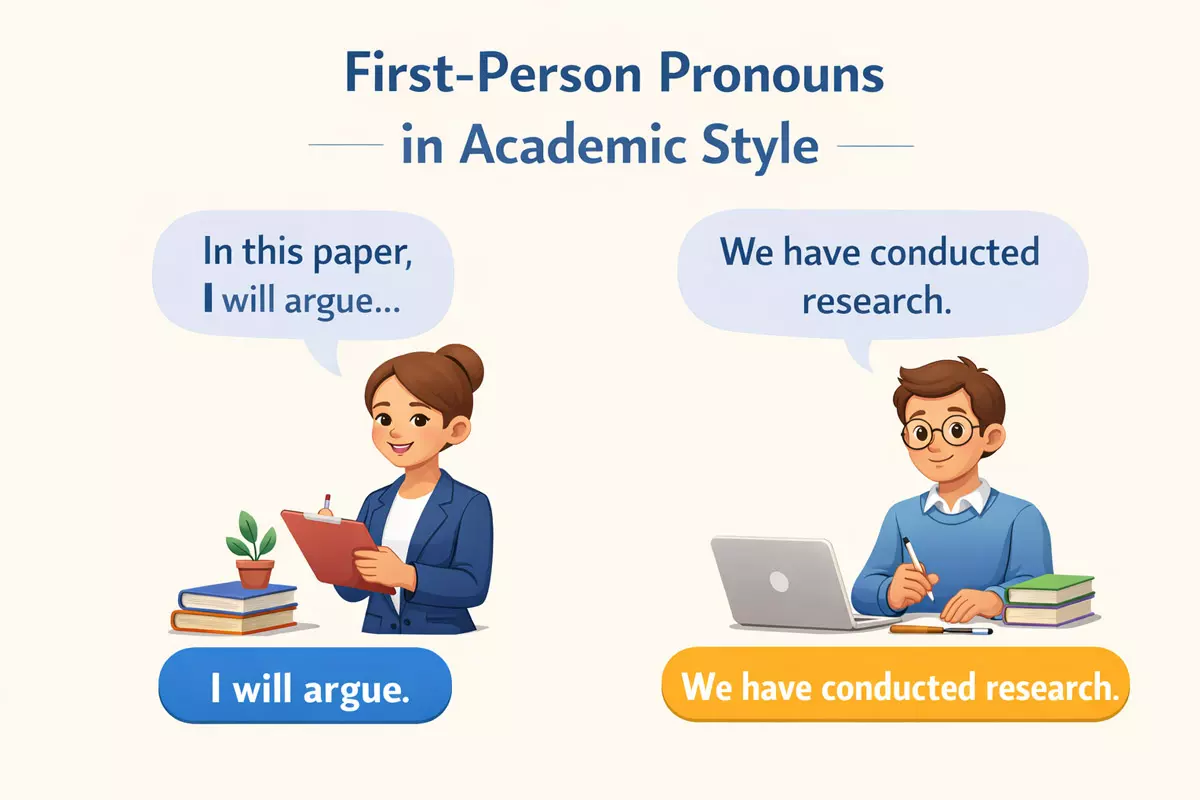 The article reviews traditional and modern perspectives on using I and we in academic writing, outlines style guide recommendations, discusses disciplinary differences, and explains how to balance author presence and objectivity, with examples and practice revising…
- Traditional views on first-person usage
- Modern academic style guide recommendations
- When I and we are acceptable
- Discipline-specific differences
- Balancing author presence and objectivity
- Avoiding overuse of first person
- Examples from academic texts
- Practice: revise sentences using first person appropriately
When writing scholarly papers, it is important to consider how much of your personal perspective to include and whether to refer to yourself directly or maintain an impersonal tone. The decision often depends on the conventions of your discipline and the specific purpose of your work. Thoughtful use of self-reference can help clarify your arguments, make your reasoning more transparent, and strengthen the overall impact of your research, while excessive self-focus may detract from the objectivity that academic writing often requires.
Traditional views on first-person usage
Academic writing has long been governed by conventions that discourage the use of first-person pronouns such as I, we, my, and our. Historically, scholars have argued that avoiding these forms promotes objectivity, detachment, and a more formal tone. The preference for passive constructions—such as "It was determined that..." instead of "We determined that..."—has been especially strong in the sciences and technical fields. This approach aimed to separate the writer from the research and to emphasize results over personal involvement.
Rationale for Avoidance
Several reasons have been cited for minimizing self-reference in scholarly prose:
- Maintaining an impersonal and objective stance
- Highlighting the research rather than the researcher
- Conforming to disciplinary expectations and traditional journal styles
- Reducing perceived bias or subjectivity
- Encouraging a universal tone, especially in collaborative work
- Aligning with the conventions of formal academic English
- Avoiding apparent egotism or self-promotion
- Facilitating the focus on evidence and argumentation
- Ensuring clarity in multi-authored papers
- Reducing redundancy when the authorship is already clear
Common Guidelines and Examples
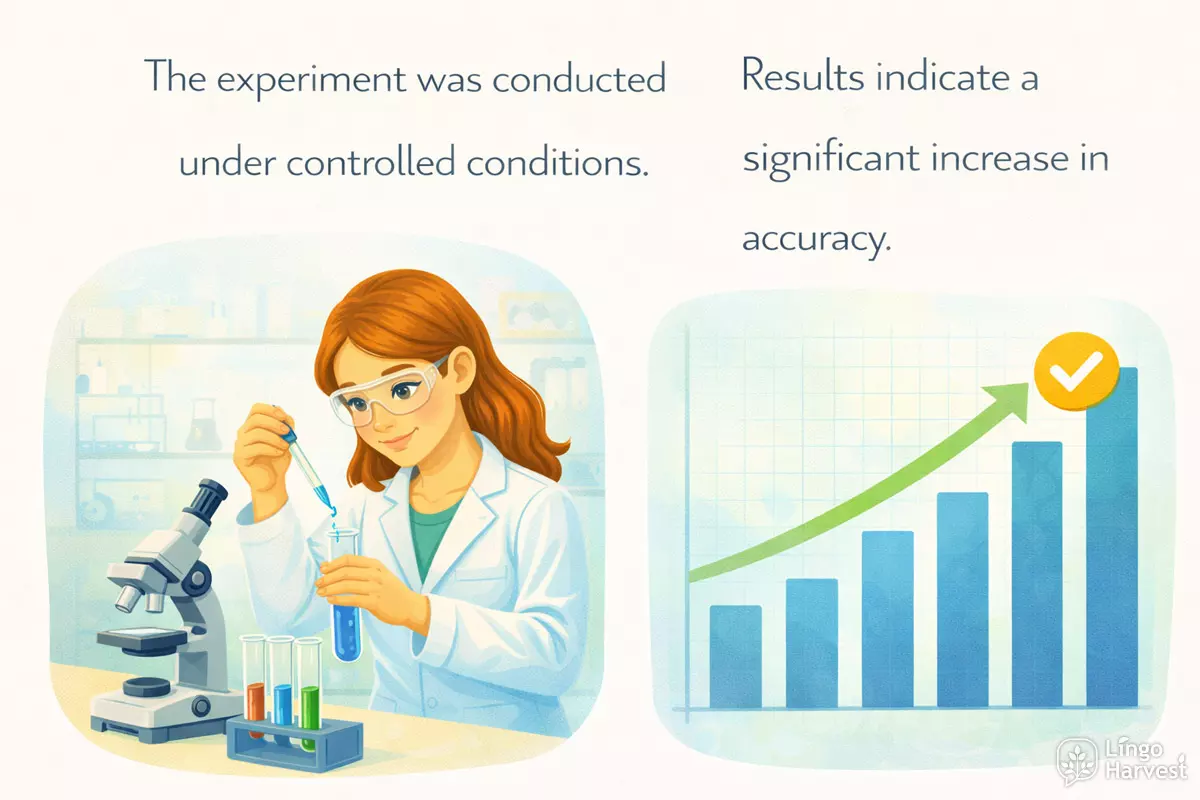
Style guides and instructors have traditionally provided explicit advice regarding self-reference. The following list illustrates typical recommendations and patterns found in academic advice:
- Use passive voice: The experiment was conducted under controlled conditions.
- Refer to the work, not the author: This paper discusses the impact of climate change on agriculture.
- Omit the subject entirely: Results indicate a significant increase in accuracy.
- Choose third-person phrasing: The researchers found a strong correlation between the variables.
- Employ nominalizations: The analysis of the data revealed several inconsistencies.
- Avoid “I think” or “I believe” in arguments: The evidence supports the proposed hypothesis.
- Replace “In our opinion” with evidence-based statements: Previous studies demonstrate similar outcomes.
- Use “It is suggested that” instead of first person: It is suggested that further trials are necessary.
- Favor “The present study” over “We”: The present study examines long-term trends.
- Minimize direct reference to the author’s actions: The methodology section outlines the steps taken.
Disciplinary Differences
Some academic fields have been stricter than others in enforcing these norms. The sciences and engineering have typically promoted the most rigorous avoidance of personal pronouns, while the humanities and social sciences have shown more flexibility, especially in recent decades.
| Discipline | Stance on First-Person |
|---|---|
| Physics | Rarely permitted; passive preferred |
| Literature | Occasionally accepted, especially in argumentation |
| Psychology | Historically avoided, but now more frequent |
| Philosophy | Accepted for personal argument or reflection |
| Biology | Generally discouraged, but varies by journal |
| History | Permitted in narrative or reflective sections |
Despite these longstanding traditions, many journals and style guides have begun to relax their positions, especially as the value of clarity and transparency in research communication becomes more widely recognized.
Modern academic style guide recommendations
Current writing manuals and institutional guidelines increasingly recognize the place of first-person pronouns in scholarly communication. Rather than a blanket prohibition, many now encourage thoughtful, purposeful use of “I” and “we” when it clarifies authorship, perspective, or responsibility. This shift reflects a broader trend toward transparency and accountability in research writing.
Shifts in Guidance on “I” and “We”
Where earlier conventions discouraged personal pronouns to maintain an “objective” tone, recent editions of leading style guides offer more nuanced advice. Many now recommend using first person for actions the author performed, especially in methods, reflections, or positionality statements. However, they caution against overuse or unnecessary self-reference.
Comparison of Style Guides
| Style Guide | Stance on First-Person Pronouns | Typical Contexts Allowed | Sample Guidance |
|---|---|---|---|
| APA (7th ed.) | ✅ Permitted | Methods, personal actions, argument positions | “Use ‘I’ or ‘we’ when describing your own actions.” |
| MLA (9th ed.) | ✅ Permitted | Interpretive claims, process descriptions | “First person is appropriate when focusing on your own interpretation.” |
| Chicago Manual (17th ed.) | ✅ Permitted (with restraint) | Introduction, discussion, personal involvement | “Use first person judiciously for clarity and ownership.” |
| ACS Style | ❌ Discouraged | Rarely, mostly for acknowledgments or clarifications | “Passive voice preferred for describing procedures.” |
Typical Recommendations for Effective Use
- Use “I” or “we” when describing actions you or your team performed.
- Prefer first person for clarity, especially to avoid awkward passive constructions.
- Avoid unnecessary repetition—use first person only when it adds precision.
- Do not use first person for general truths or established knowledge.
- In group-authored papers, “we” is usually preferred.
- In reflective or positionality statements, first-person reference is encouraged.
- Check for discipline-specific expectations; some scientific fields remain more cautious.
- Maintain a professional tone even when writing personally.
- Balance directness with objectivity—avoid making the writing overly subjective.
- Consult your target journal or instructor for any specific preferences.
In summary, most major style guides now endorse a flexible, context-driven approach to first-person pronouns. Writers are encouraged to use them when it genuinely improves clarity and transparency, but to remain mindful of disciplinary norms and the overall tone of their work.
When I and we are acceptable
Academic writing often discourages the use of first-person pronouns, but there are situations where they are not only allowed, but actually recommended. The choice to use “I” or “we” depends on disciplinary conventions, the type of paper, and the intended clarity of the writing. Understanding where these pronouns fit can help writers navigate expectations and communicate their role in the research process.
Common contexts for first-person pronouns
Writers are usually permitted to use “I” or “we” in settings that call for explicit discussion of actions, decisions, or perspectives. In some disciplines, especially in the sciences, “we” is preferred when referring to a research group, while “I” may be used in single-author works in the humanities or reflective writing. Here are typical scenarios:
- Stating a research aim or objective
- Describing actions taken (“In this study, we analyzed…”)
- Explaining methodological choices
- Highlighting the author’s perspective or interpretation
- Reflecting on personal experience (in reflective essays or reports)
- Clarifying the author’s contribution in collaborative work
- Responding to reviewer comments in revisions
- Making claims about what was found or concluded
- Discussing limitations or future directions
- Outlining the structure of the paper (“In the next section, I discuss…”)
- Justifying a theoretical stance
- Reporting on unique insights from the author’s expertise
- Summarizing the main findings of the work
- Contrasting the author’s findings with previous research
- Describing the process of data collection or analysis
Disciplinary differences
Some fields maintain stricter conventions than others. For example, in engineering and many sciences, “we” is often used even for solo authors, while in philosophy or qualitative research, “I” may be encouraged for clarity and accountability. Social sciences sometimes accept both, depending on the journal or assignment guidelines.
Examples: Acceptable uses of "I" and "we"
Below is a comparison of contexts where first-person pronouns are typically accepted versus situations where they are usually avoided:
| Acceptable Use | Not Recommended |
|---|---|
| “We conducted a survey of 200 participants.” | “I think the results are interesting.” (in a formal report) |
| “I argue that this theory is insufficient.” | “We believe this is the best method.” (without evidence) |
| “In this section, I will discuss the implications.” | “I feel that the data supports my opinion.” |
| “We decided to use a mixed-methods approach.” | “We hope the reader will agree with us.” |
Guidelines for appropriate usage
- Check your discipline’s specific style guide or journal instructions.
- Use first-person pronouns for transparency in describing your actions or decisions.
- Avoid them when making general statements or presenting established facts.
- Prefer “we” for collaborative work, and “I” for personal actions in solo-authored papers.
- Maintain a formal tone even when using personal pronouns—focus on clarity and precision.
Ultimately, the judicious use of “I” and “we” can strengthen academic writing when it clarifies the author’s role, avoids ambiguity, and adheres to disciplinary norms.
Discipline-specific differences
Expectations regarding first-person pronoun use can vary considerably between academic fields. In some areas, referring to oneself is encouraged for clarity and ownership of claims, while in others, it is discouraged in favor of impersonal constructions. This variability reflects both tradition and the preferred rhetorical stance of each discipline.
Humanities and Social Sciences
Writers in philosophy, history, and sociology often employ first-person pronouns to highlight their arguments or perspectives. Using “I” or “we” can signal the author’s analysis or interpretation, especially when discussing subjective viewpoints or methodological choices. Some journals even require authors to clarify their role through explicit self-reference.
STEM Fields
Science, technology, engineering, and mathematics typically prioritize objectivity and reproducibility, which leads to more restrained use of first-person references. However, trends are shifting: in some journals, “we” is used for collaborative work, while others still prefer passive voice (e.g., “The experiment was conducted…” instead of “We conducted the experiment…”).
| Field | Preferred Approach to First-Person Pronouns |
|---|---|
| Philosophy | Frequent use of “I” for argumentation and clarification of the author’s stance |
| Literary Studies | “I” and “we” are common, especially in interpretive or reflexive analysis |
| Psychology | Increasing acceptance of “we” in research reports; “I” for personal reflection |
| Biology | Mostly “we” in co-authored papers; passive voice still common |
| Physics | Predominantly passive constructions, but “we” appears in some journals |
| Engineering | Preference for passive or impersonal language; “we” used sparingly |
| Political Science | “I” or “we” used to clarify methodology or argument |
| Linguistics | First-person common in qualitative research; less so in quantitative work |
| Medicine | Shifting from passive to “we” in some journals, especially for clinical studies |
| Economics | “We” increasingly accepted in theoretical and empirical papers |
Key Patterns and Considerations
- Collaborative research often justifies the use of “we,” especially in multi-author papers.
- Solo-authored work in the humanities may favor “I” to stress individual insight.
- Some journals specify pronoun usage in their submission guidelines—always check before submitting.
- Trends are evolving; even traditionally impersonal fields are relaxing their standards.
- First-person usage can enhance clarity, but overuse may be seen as informal or subjective.
Ultimately, the decision to use first-person pronouns depends on disciplinary norms, the purpose of the writing, and sometimes the preferences of specific journals. Awareness of these conventions can help authors navigate the expectations of their field and communicate their ideas more effectively.
Balancing author presence and objectivity
Managing the use of first-person pronouns in academic writing involves finding a middle ground between clearly signaling the researcher's role and maintaining an impartial, scholarly tone. While some disciplines encourage explicit authorial presence to clarify methodology or argumentation, others prioritize detachment to emphasize neutrality. Striking the right balance depends on the context, the expectations of the field, and the purpose of the text.
When to Use First-Person Pronouns
Using "I" or "we" can improve clarity, especially when describing actions you took, decisions made during research, or interpretations that are uniquely yours. This approach can make the writing more direct and help avoid awkward passive constructions. However, overuse may shift focus from the research to the researcher, potentially undermining objectivity.
Strategies for Maintaining Impartiality
To preserve a sense of neutrality while still acknowledging your role, consider these strategies:
- Limit first-person pronouns to sections discussing methodology or personal reflection.
- Favor passive voice or impersonal constructions when describing established knowledge or widely accepted facts.
- Use "we" instead of "I" for collaborative work, but clarify the scope of "we" to avoid confusion.
- Be explicit about your reasoning without overstating personal opinion.
- Reserve evaluative language for evidence-based conclusions.
Comparing Authorial Presence Across Styles
| Approach | Example | Effect on Tone | Typical Usage |
|---|---|---|---|
| Explicit First Person | I conducted the experiment. | Direct, personal | Methods, reflections |
| Inclusive First Person | We analyzed the data. | Collaborative, less individual | Team-authored studies |
| Passive Voice | The data were analyzed. | Impersonal, objective | Results, literature reviews |
| Impersonal Construction | This study examines... | Neutral, formal | Introductions, overviews |
Examples: Varying Authorial Distance

Writers can signal their stance and involvement with subtle language choices. Here are several ways to modulate presence in academic style:
- I argue that the current framework does not adequately explain the observed results.
- We propose a new model that accounts for both internal and external influencing factors.
- The study demonstrates a clear relationship between training intensity and performance.
- It can be observed that error rates decrease as experience increases.
- This paper investigates the long-term effects of digital learning environments.
- Our results indicate a statistically significant improvement over previous methods.
- It is suggested that further research be conducted to confirm these findings.
- The author contends that earlier interpretations overlooked key variables.
- Findings show consistent patterns across all participant groups.
- The data support the hypothesis proposed in the introduction.
- In this article, I discuss the implications of recent policy changes.
- Analysis reveals several limitations in the existing methodology.
- One may conclude that the proposed solution is both effective and scalable.
- The evidence suggests a need for revising the current theoretical model.
- The experiment was conducted under strictly controlled laboratory conditions.
- We observed that participant engagement increased over time.
Finding the right mix of authorial voice and impartiality is not about following rigid rules, but about communicating research with clarity and credibility. Writers should always consider the conventions of their field and the expectations of their audience when deciding how visible their presence should be.
Avoiding overuse of first person
Academic writing values clarity and objectivity, so writers are often encouraged to limit the frequency of first-person pronouns. While using "I" or "we" can sometimes clarify authorship or responsibility, excessive use can make arguments seem subjective or informal. To maintain a formal tone, it's helpful to find alternative structures that focus on evidence, processes, or results rather than the writer’s perspective.
Strategies for reducing first-person pronouns
There are several techniques that can help shift the focus away from the author and toward the research itself. Consider the following approaches:
- Passive voice: Instead of "We conducted an experiment," use "An experiment was conducted."
- Nominalization: Replace "I analyzed the data" with "Data analysis was performed."
- Impersonal constructions: Use phrases like "It was found that..." or "The results indicate..."
- Third-person references: Substitute "We suggest" with "This study suggests" or "The research indicates."
- Omitting the subject: Sometimes the subject can be dropped entirely, for example, "The following section discusses..." instead of "In the following section, I discuss..."
Common alternatives to first-person statements
Writers often rephrase sentences to avoid the direct mention of themselves. Here are some typical patterns used in scholarly texts:
- It is argued that the proposed framework offers a more comprehensive explanation of the observed phenomena.
- The data support the hypothesis that early intervention leads to improved outcomes.
- Evidence suggests a strong correlation between environmental factors and learning efficiency.
- This paper examines the impact of automation on workplace productivity.
- Findings demonstrate consistent improvements across multiple test conditions.
- The results reveal previously unidentified patterns in user behavior.
- Analysis shows that minor adjustments significantly enhance performance.
- The study explores alternative approaches to long-term data retention.
- Previous research has established a foundational link between motivation and achievement.
- The methodology employed ensures reliability and reproducibility of the findings.
- The following section outlines the key steps of the experimental procedure.
- The investigation highlights critical gaps in current theoretical models.
- An overview is provided of the main challenges facing the industry.
- The literature indicates a growing consensus on the issue.
- Statistical analysis revealed significant differences between the control and experimental groups.
- The authors propose a revised classification system.
- The experiment was designed to evaluate the effectiveness of the new method.
- Conclusions are drawn based on the evidence presented in the study.
Comparing first-person and alternative forms
To illustrate the difference, here is a comparison of sentences using first-person pronouns and their more objective counterparts:
| First-person version | Alternative phrasing |
|---|---|
| I found that the results were significant. | The results were found to be significant. |
| We propose a new method for analysis. | A new method for analysis is proposed. |
| I will discuss the implications in the next section. | The implications are discussed in the next section. |
| We observed a clear trend in the data. | A clear trend was observed in the data. |
| I suggest that further research is needed. | Further research is suggested. |
By choosing more neutral constructions, academic authors can enhance the objectivity of their writing and better align with scholarly conventions. While some disciplines accept moderate use of first-person pronouns, it is generally wise to use them sparingly and only when they clarify meaning or responsibility.
Examples from academic texts
Academic writing often balances formality and clarity, which shapes how first-person pronouns like "I," "we," "my," and "our" are used. In recent years, many scholarly publications have become more accepting of personal reference, especially in fields such as social sciences, education, and some areas of the humanities. However, the way these pronouns appear—and the functions they serve—vary widely depending on discipline, genre, and even individual journal guidelines.
Typical uses of first-person pronouns in scholarly writing
Writers employ first-person pronouns for specific rhetorical purposes. Here are some frequent contexts where they appear:
- Stating research aims: In this study, I examine the effects of regular feedback on learner motivation.
- Describing methodology: We conducted interviews with undergraduate students from three universities.
- Acknowledging limitations: I recognize that this approach may not account for all contextual variables.
- Presenting interpretations: I argue that these findings suggest a shift in learner engagement patterns.
- Reporting results: We found a significant correlation between study time and test performance.
- Referring to future work: In future studies, we plan to expand the sample size and refine the methodology.
- Clarifying authorial stance: I contend that a mixed-methods approach offers greater explanatory power.
- Expressing personal reflection: Upon reflection, I realized the importance of clearer task instructions.
- Highlighting collaboration: Our team developed a new framework for analyzing learner behavior.
- Describing the writing process: In the following section, we outline the structure of the argument.
Comparing first-person usage across disciplines
The acceptability and frequency of first-person pronoun use varies by academic field. The table below illustrates contrasting patterns:
| Discipline | Typical Use of First Person |
|---|---|
| Humanities | Common in argument and analysis (e.g., "I argue"). |
| Sciences | Often used for methods and results (e.g., "We measured"). |
| Social Sciences | Frequent in methodology and interpretation (e.g., "We interviewed"). |
| Engineering | Less frequent; tends toward passive voice or collective "we." |
| Literary Studies | Personal voice is common, especially in analysis. |
Sample sentences from published research
To illustrate how these pronouns function in context, here are real-world sentences drawn from journal articles and academic monographs:
- "We hypothesize that early intervention improves outcomes." ✅
- "I will discuss three main themes emerging from the data." ✅
- "Our results support the initial predictions." ✅
- "In this section, we present the theoretical framework." ✅
- "I acknowledge several limitations to this approach." ✅
- "We observed notable differences between the groups." ✅
- "My analysis suggests an alternative explanation." ✅
- "We conclude that further research is warranted." ✅
- "I contend that this reading offers new insights." ✅
- "Our findings align with previous studies." ✅
These diverse examples highlight how personal pronouns are strategically integrated into academic prose to clarify agency, signal argumentation, and guide readers through complex reasoning. Understanding the norms in your discipline can help you decide when and how to use them effectively.
Practice: revise sentences using first person appropriately
When writing for an academic audience, it's essential to know when to use first-person pronouns (such as "I" or "we") and when to avoid them. The following activities and examples will help you learn how to revise sentences so they use first-person forms only where appropriate, maintaining both clarity and the expected level of formality.
Identifying Appropriate First-Person Usage
Sometimes, academic writing benefits from first-person pronouns—especially when describing your unique research actions, perspectives, or interpretations. However, overuse or inappropriate application can weaken objectivity. Review these sentences and decide which should use first person:
- The experiment was conducted over a two-week period.
- This paper argues that climate change policies require local adaptation.
- We analyzed the data using a mixed-methods approach.
- It is believed that further research is necessary.
- I propose a new framework for evaluating social media campaigns.
- The results indicate a strong relationship between age and usage patterns.
- We suggest that the model be tested in different contexts.
- This article examines the role of feedback in language learning.
- I conclude that the original hypothesis should be revised.
- The data were collected from three independent sources.
Show answers
- No first person needed. Passive voice is appropriate for describing methods.
- Could use first person for clarity: In this paper, I argue that…
- Appropriate use of we if the study has multiple authors.
- Avoids first person, but ownership could be clearer with I believe…
- Correct use of first person to present the author’s original contribution.
- No first person needed. Results are presented objectively.
- Appropriate use of we to make a collective recommendation.
- No first person required. Neutral academic style is suitable.
- Correct use of I to state the author’s conclusion.
- Passive voice is standard and appropriate for data collection.
Rewriting Practice: Transforming Sentences
Below are sentences often found in academic texts. Revise them to use first-person language where it clarifies authorship, and avoid it where unnecessary.
- It was observed that the temperature increased steadily throughout the experiment.
- This study will focus on the impact of urbanization on biodiversity.
- The literature review suggests several gaps in existing research.
- It is argued that policy interventions are urgently needed.
- The questionnaire was distributed to all participants.
- It was concluded that the initial hypothesis was incorrect.
- The analysis indicates a strong correlation between the variables.
- It is assumed that participants followed the instructions carefully.
- The data were collected over a six-month period.
- It is believed that these findings have practical implications.
Show answers
- I observed that the temperature increased steadily throughout the experiment.
- In this study, I will focus on the impact of urbanization on biodiversity.
- In my literature review, I identified several gaps in existing research.
- I argue that policy interventions are urgently needed.
- I distributed the questionnaire to all participants.
- I concluded that the initial hypothesis was incorrect.
- My analysis indicates a strong correlation between the variables.
- I assume that participants followed the instructions carefully.
- I collected the data over a six-month period.
- I believe that these findings have practical implications.
Common Patterns for First-Person Revision
When revising for first-person pronouns, several academic patterns are especially common. Use these templates to revise your own sentences:
- In this paper, I argue that...
- I conducted interviews with...
- We propose a new method for...
- I found that...
- We collected data from...
- I observed that...
- In our analysis, we discovered...
- I suggest that...
- We recommend further research into...
- I will discuss the implications...
- In this section, I explain...
- I acknowledge limitations in...
- Based on my results, I conclude that...
- We observed a significant trend in...
- I developed a framework for...
Passive vs. First Person: Comparison Table
The table below contrasts passive constructions with revised first-person forms for academic contexts. Notice how first-person usage can clarify agency and responsibility.
| Passive Construction | First-Person Revision |
|---|---|
| The samples were analyzed for contaminants. | I analyzed the samples for contaminants. |
| It is suggested that further research is needed. | I suggest that further research is needed. |
| The data were interpreted using thematic analysis. | We interpreted the data using thematic analysis. |
| The results are presented in Table 2. | In this section, I present the results in Table 2. |
| A limitation was identified in the sampling method. | I identified a limitation in the sampling method. |
By practicing these transformations, you can become more confident in choosing when and how to use first-person pronouns in your academic work. Striking the right balance will help you communicate your contributions clearly while respecting disciplinary conventions.