How Quantifiers Are Used in Headlines and News Writing

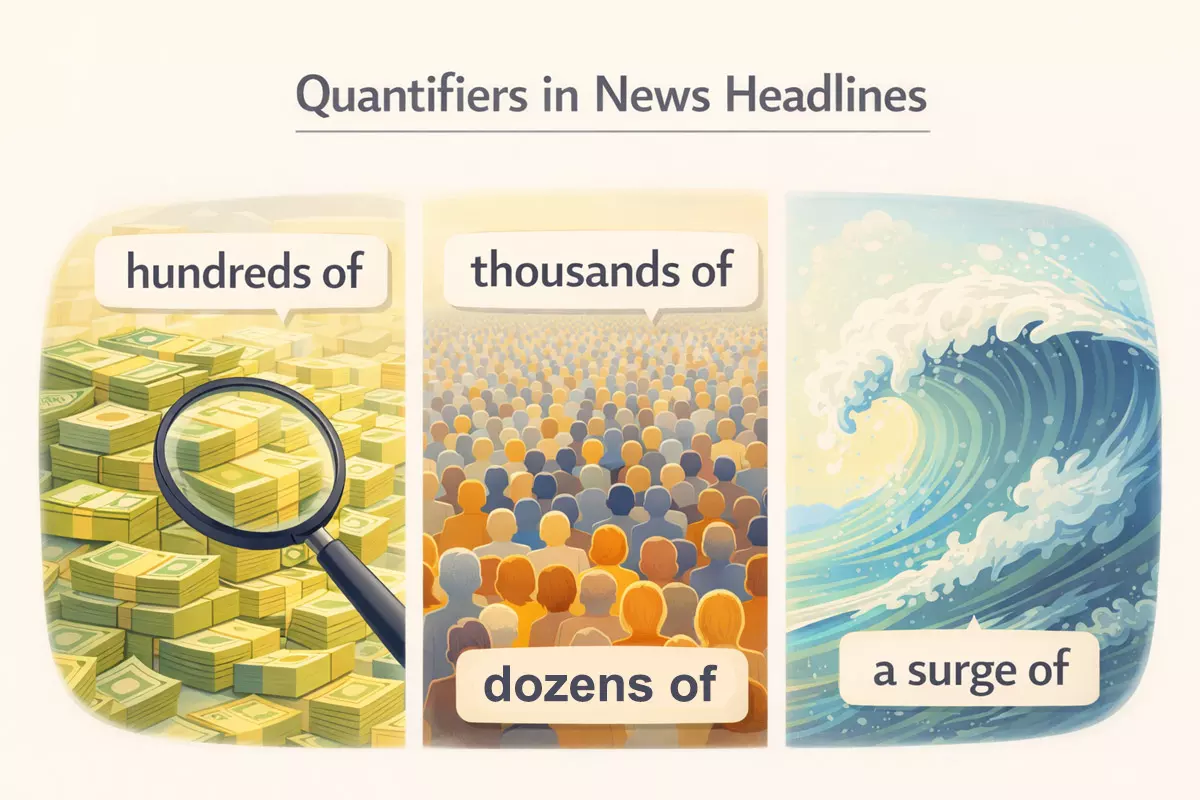 Here we how quantifiers create emphasis and clarity in news headlines, covers typical quantifier choices and the omission of articles, compares headlines to full articles, and provides practice rewriting headlines using quantifiers.
- Purpose of quantifiers in headlines
- Emphasis and impact through quantity words
- Common headline-friendly quantifiers
- Omission of articles and function words
- Difference between headlines and full articles
- Avoiding ambiguity in numerical references
- Examples from news-style headlines
- Practice: rewriting headlines with quantifiers
News headlines and stories frequently use words that indicate quantities, such as many, few, or several, which can subtly influence how readers interpret the information presented. These expressions of quantity are not merely descriptive; they play a strategic role in shaping perceptions about the significance or scale of an event. By understanding how such language is employed in journalistic writing, readers can become more aware of potential biases and better equipped to critically assess the news they consume.
Purpose of quantifiers in headlines
Quantifiers play a crucial role in how news headlines communicate scope, urgency, and significance. By specifying amounts, ranges, or frequencies, these words help readers quickly grasp the scale or importance of a story before reading further. News outlets rely on quantifiers to provide immediate context and to shape first impressions, whether they’re highlighting how widespread an issue is or how rare an event might be.
How quantifiers guide reader expectations
The presence of quantifiers such as many, few, most, or several lets readers know what to expect about the topic’s magnitude. For instance, “Few students pass new exam” instantly frames the outcome as unusual or concerning, while “Most cities see rent increases” signals a broader trend. These choices affect whether readers perceive a story as isolated or widespread.
- Clarifies scale: Helps distinguish between isolated incidents and widespread phenomena.
- Enhances precision: Offers a more exact picture than vague statements.
- Draws attention: Highlights extremes or notable exceptions.
- Shapes tone: Words like only or almost can suggest urgency, surprise, or skepticism.
- Encourages engagement: Readers are more likely to click on headlines that promise specific or significant information.
Common quantifiers used in news headlines
Writers choose quantifiers both for accuracy and impact. Here are some of the most frequently used forms:
- Many → Many residents were forced to evacuate after the storm.
- Few → Few details have been released so far.
- Several → Several companies announced layoffs this week.
- Most → Most voters support the proposed reforms.
- All → All flights were canceled due to severe weather.
- None → None of the suspects have been identified.
- Some → Some schools will remain closed tomorrow.
- More → More workers are demanding flexible schedules.
- Less → Less funding is expected for the program next year.
- Almost → Almost half of the population lives in urban areas.
- Nearly → Nearly 1,000 people attended the rally.
- Only → Only a few hours remain before the deadline.
- Every → Every household will receive an emergency alert.
- Much → Much attention has been focused on the investigation.
- Hundreds → Hundreds of homes were damaged by flooding.
- Thousands → Thousands of passengers were affected by the strike.
- Majority → The majority of lawmakers voted in favor of the bill.
- Minority → A minority of members opposed the decision.
Comparing quantifier effects in headlines

Different quantifiers can dramatically change a headline’s meaning. Here is a comparison of how a single news topic can be framed using various quantifiers:
| Quantifier | Headline Example |
|---|---|
| Many | Many residents oppose new development |
| Few | Few residents oppose new development |
| Most | Most residents oppose new development |
| Some | Some residents oppose new development |
| All | All residents oppose new development |
| None | No residents oppose new development |
Each quantifier above signals a different scale of support or opposition, subtly guiding the reader’s perception of the issue. Editors choose these words carefully to reflect facts but also to attract attention and frame narratives in a specific light.
Emphasis and impact through quantity words
Writers and editors use quantifiers—words that express amounts or proportions—to make headlines more compelling and informative. By signaling magnitude, frequency, or rarity, these terms help frame stories in ways that immediately capture a reader’s attention. Whether highlighting a widespread trend or a singular event, the careful use of quantity words can shape the perceived importance of news.
How quantifiers shape perception
Choosing between terms like “many,” “several,” or “a handful of” can dramatically affect how readers interpret the scope of an event. For example, “Thousands protest in city center” suggests a large, significant event, while “Dozens gather for rally” conveys a smaller scale. The selected quantifier doesn’t just provide data—it sets the emotional tone and urgency.
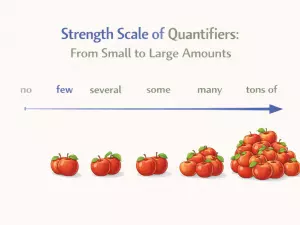
- Many: Implies a large, but unspecified, number (e.g., “Many call for reform”).
- Few: Indicates scarcity or selectiveness (e.g., “Few options remain”).
- Most: Suggests a majority, often adding weight to a statement (e.g., “Most voters support measure”).
- Several: More than a couple, but not a large number (e.g., “Several injured in accident”).
- Hundreds/Thousands: Offers a concrete sense of scale (e.g., “Hundreds evacuated after fire”).
- All: Total inclusion, often adding drama (e.g., “All flights canceled”).
- None: Absence, which can create a strong or surprising impact (e.g., “None survive crash”).
- Majority/Minority: Used to indicate proportions (e.g., “Majority backs new law”).
- Only: Emphasizes limitation or rarity (e.g., “Only one survivor found”).
- Every: Stresses universality (e.g., “Every student affected”).
- More/Less: Used for comparisons (e.g., “More jobs lost this year”).
- Half: Specifies a precise proportion (e.g., “Half of cases remain unsolved”).
- Double/Triple: Highlights growth or escalation (e.g., “Double the usual rainfall”).
- Major/Minor: Qualitative quantifiers (e.g., “Major breakthrough reported”).
In each case, the chosen quantity word not only conveys factual information but also influences the reader’s perception—whether the situation is routine or remarkable, urgent or negligible. News writers select these words carefully to match the intended emphasis and the true scale of the story.
Common headline-friendly quantifiers
Headlines often rely on specific quantifiers to convey scale, urgency, or uncertainty efficiently. These words and phrases help journalists summarize key facts and draw readers in, all while keeping headlines concise. Quantifiers can refer to numbers, amounts, frequency, or generalizations, and their careful selection can change the tone or impact of a news headline.
Popular quantifiers used in headlines
Writers frequently turn to certain quantifying words and phrases that are both brief and attention-grabbing. Here are several examples commonly found in news headings:
- Numerous → Numerous schools closed after the storm.
- Vast → Vast areas remain without power.
- Limited → Limited information has been released by officials.
- Multiple → Multiple agencies are investigating the incident.
- Tens of thousands → Tens of thousands evacuated overnight.
- Over a million → Over a million users were affected by the outage.
- Billions → Billions were lost in global markets today.
- Several dozen → Several dozen flights were delayed.
- The entire → The entire region was placed under lockdown.
- Zero → Zero casualties were reported.
- Innumerable → Innumerable complaints flooded social media.
- Scores of thousands → Scores of thousands gathered for the protest.
- A significant share → A significant share of voters remain undecided.
- A small fraction → A small fraction of cases required hospitalization.
- One-half → One-half of the budget was allocated to defense.
- Twice as many → Twice as many applications were submitted this year.
- Three times more → Three times more rainfall is expected.
- Virtually all → Virtually all services have resumed.
- Close to → Close to 10,000 jobs were created.
Writers may choose between more specific numbers and these broader quantifiers depending on the available data or the effect they want to create. For instance, "Thousands Flee Wildfire" gives a sense of large scale without pinning down an exact count, while "Few Oppose New Law" conveys rarity.
Comparing vague and precise quantifiers
Editors often decide between using vague or precise quantifiers depending on space, certainty, and emphasis. The table below illustrates some typical choices and how they might appear in headlines.
| Vague Quantifier | Precise Alternative |
|---|---|
| Hundreds | 350 |
| Many | Over 40% |
| Most | 9 out of 10 |
| Few | 3 |
| Dozens | 24 |
| Some | 7 |
| Majority | 60% |
| Almost | 98% |
Choosing between general and specific quantifiers often depends on the headline's purpose: to intrigue, to summarize, or to convey certainty. In fast-moving news situations, vaguer terms may be used until more exact figures are confirmed. Either way, these quantifiers are essential tools for delivering information quickly and clearly to readers.
Omission of articles and function words
News headlines often skip words like "the," "a," and "of" to create concise, impactful statements. This practice helps headlines fit limited space and catch readers’ attention quickly. By removing these grammatical elements, editors highlight the most important nouns, verbs, and quantifiers. The result is a kind of shorthand that’s easy to scan but may sound unusual compared to regular speech or writing.
Why Function Words Get Dropped
Articles (such as "a," "an," and "the") and other function words (like "is," "are," "of," or "to") often carry grammatical meaning rather than core information. In headlines, the focus is on delivering the essential facts efficiently. Eliminating these words:
- Reduces length, allowing more information in limited space
- Creates a sense of urgency or immediacy
- Makes the headline more direct and impactful
Common Patterns in Headline Shortcuts
Certain structures appear repeatedly in news writing. Quantifiers (such as "many," "few," "most," "all," "no," "some," "several") are typically placed directly before the noun, with articles and linking verbs omitted. Here are some typical headline constructions:
- Many students protest tuition hike
- Few options remain for stranded travelers
- Most workers support new policy
- All flights canceled after storm
- No survivors found in wreckage
- Some schools reopen Monday
- Several cities report power outages
- More cases expected this week
- Hundreds gather downtown
- Thousands flee wildfire
- Millions face drought conditions
- Dozens injured in crash
Comparing Headlines With and Without Function Words
For a clearer sense of how these omissions work, compare typical headlines to what a full-sentence version might look like. Notice how quantifiers and nouns take center stage, while grammatical elements are dropped.
| Headline Style | Full Sentence Equivalent |
|---|---|
| Many residents evacuate city | Many of the residents are evacuating the city. |
| No agreement reached | No agreement has been reached. |
| Most schools closed Monday | Most of the schools will be closed on Monday. |
| Several injured in explosion | Several people were injured in the explosion. |
| All flights delayed | All of the flights are delayed. |
Quick Tips for Reading Headlines
- Look for the main nouns and verbs—these carry the core meaning.
- Mentally add missing words (like "are," "is," or "the") for clarity.
- Recognize that quantifiers may stand alone without articles.
Understanding this headline style makes news reading faster and helps readers interpret quantifier use more accurately.
Difference between headlines and full articles
When it comes to news writing, the way quantifiers are used can shift significantly between the headline and the body of an article. Headlines are designed to capture attention and communicate the core of a story in as few words as possible. This leads editors to rely on generalizations, broad quantifiers, or even omission of quantity altogether. In contrast, the main text of a news story is where writers expand, clarify, and often specify the details that headlines may leave vague.
How quantifiers function in headlines
In headlines, brevity is essential. Quantifiers are often simplified or exaggerated to fit the limited space and to provoke curiosity or urgency. Words like many, most, few, or several are favored over precise numbers, unless the number itself is newsworthy. Sometimes, quantifiers are left out entirely if the story’s impact is clear without them.
- Many lose homes in flood
- Few options remain for commuters
- Most agree on new policy
- Several injured in accident
- Dozens protest at city hall
- Hundreds evacuated after fire
- No survivors found
- All flights canceled
- Some schools reopen
- One arrested after chase
Quantifiers in full articles: context and precision
The body of a news article allows for more exact language and explanation. Writers clarify what quantifiers mean, cite sources, and provide numbers or percentages. The main text often corrects or nuances the impression given by the headline, adding context that headlines cannot provide due to space constraints.
| Headlines | Full Articles |
|---|---|
| Use broad or vague quantifiers (e.g. many, most, few) | Give specific numbers or percentages (e.g. 73%, 1,500 people) |
| Favor generalizations for impact | Provide detailed breakdowns and explanations |
| May omit quantifiers if space is tight | Clarify or define what quantifiers refer to |
| Prioritize brevity and immediacy | Allow for nuance, exceptions, and context |
Why these differences matter
Understanding the contrast between quantifier usage in headlines and the main body is important for both readers and writers. Headlines can sometimes oversimplify or even mislead, intentionally or not, due to space and attention constraints. The full article provides the necessary details, so readers should always look beyond the headline for a more accurate picture. For journalists, being aware of these differences ensures responsible communication and helps maintain trust with the audience.
Avoiding ambiguity in numerical references
Clear communication in headlines and news stories often depends on how numbers are presented. Numbers can mislead or confuse readers if their meaning is vague, if context is omitted, or if quantifiers are used carelessly. Journalists need to pay close attention to phrasing, especially when reporting statistics, quantities, or comparisons, to ensure readers understand what is truly being described.
Common pitfalls with numeric language
- Using "several," "many," or "a few" without context—these terms mean different things to different readers.
- Leaving out time frames (e.g., “10 accidents reported” vs. “10 accidents reported this week”).
- Reporting percentages without a clear base (“20% increase”—of what, compared to when?).
- Mixing absolute and relative numbers (“5 more cases” vs. “a 5% rise”).
- Failing to specify ranges (“dozens injured” can mean anything from 24 to 96).
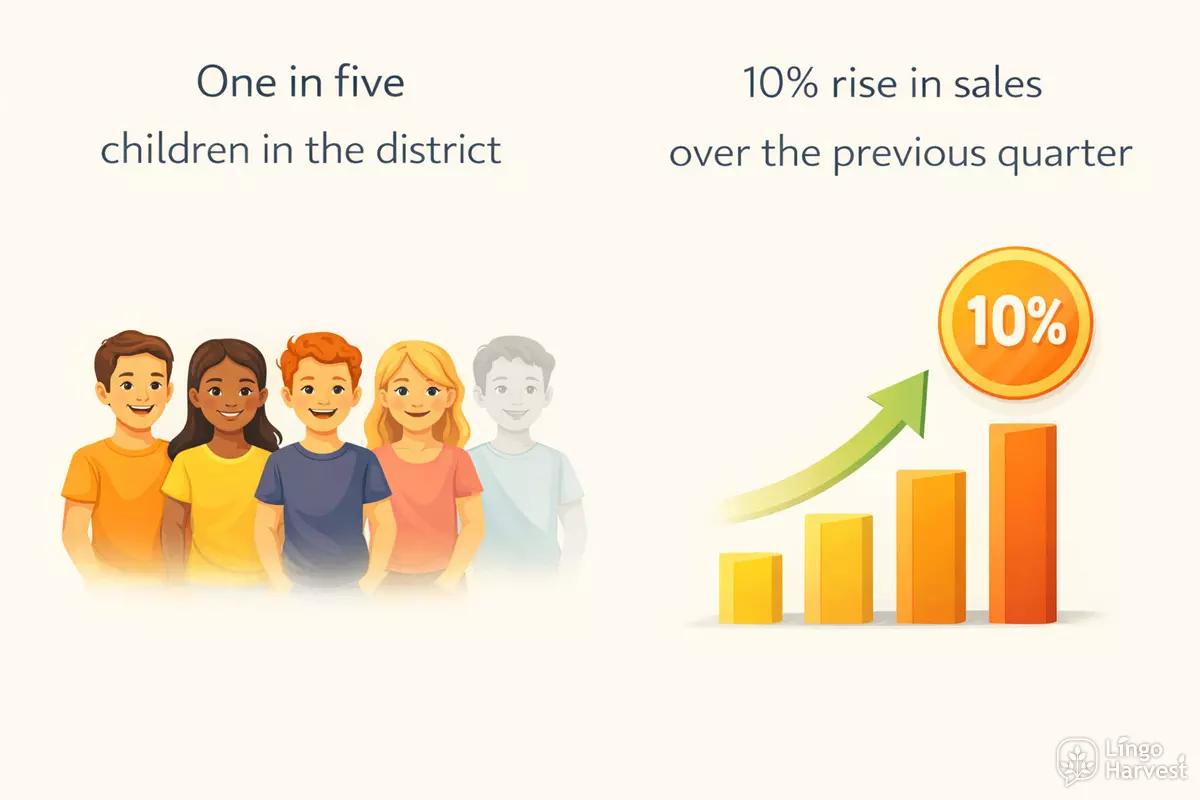
- Using fractions or ratios without clarifying the whole (“one in five students”—of which group?).
- Ambiguous group references (“most people” – which population is meant?).
- Imprecise estimates (“hundreds of jobs lost” – is it closer to 200 or 900?).
- Numbers without units or measures (“increased by 10”—ten what?).
- Combining numbers and adjectives that conflict (“only 10 major events” – is 10 really ‘only’?).
How to make numerical references precise
Writers can minimize confusion by being explicit and consistent. Whenever possible, specify the quantity, timeframe, and context. Avoid over-relying on vague quantifiers. For comparative statements, define both sides of the comparison. If estimates are necessary, give a range or explain the source of the estimate.
| Ambiguous Wording | Clear Alternative |
|---|---|
| “Several people injured” | “Five people injured” or “At least five people injured” |
| “Most cases resolved” | “80% of cases resolved” |
| “A significant increase” | “A 15% increase compared to last year” |
| “Hundreds affected” | “About 300 people affected” |
| “One in five children” | “One in five children in the district” |
| “10% rise” | “10% rise in sales over the previous quarter” |
| “Few complaints” | “Three complaints filed this month” |
| “Dozens evacuated” | “About 36 people evacuated” |
| “More cases than last year” | “120 cases this year, up from 90 last year” |
| “Increase in revenue” | “Revenue increased by $2 million in 2023” |
Best practices for journalists
- Be specific: Use exact numbers whenever available, and clarify when numbers are estimated.
- Provide context: Always define the group, time period, or circumstances your numbers refer to.
- Clarify comparisons: State both elements being compared to avoid confusion.
- Explain terms: If using quantifiers like “majority” or “minority,” specify the percentages or counts involved.
- Check for consistency: Use the same units and time frames throughout a headline or article.
By following these guidelines, writers help readers interpret information correctly and avoid misinterpretation or doubt caused by unclear quantifiers and numeric references.
Examples from news-style headlines
News writing frequently relies on quantifiers to deliver information quickly and clearly. These words and phrases help set expectations, highlight significance, or add nuance to a story. In headlines, quantifiers are often used to summarize amounts, trends, or proportions in just a few words, allowing readers to grasp the scale or impact of an event at a glance. Let’s look at how this plays out with real-world patterns and vocabulary.
How quantifiers shape meaning in headlines
A headline’s choice of quantifier can alter the perceived scale or urgency of a story. For example, “Many schools reopen after storm” signals a broad impact, while “Few schools reopen after storm” suggests lingering disruption. Quantifiers can also introduce ambiguity or precision, depending on whether they are general (“most,” “some”) or specific (“12,” “hundreds”).
| Quantifier | Sample Headline |
|---|---|
| Most | Most voters support new climate policy |
| Few | Few options left for stranded travelers |
| Dozens | Dozens injured in downtown collision |
| All | All flights canceled amid severe weather |
| Some | Some experts warn of economic slowdown |
| Hundreds | Hundreds rally for teachers’ pay raise |
| Nearly half | Nearly half of businesses report losses |
| No | No agreement reached in budget talks |
Tips for spotting quantifiers in headlines
- Look for words indicating amount or proportion, not just numbers.
- Notice how quantifiers can soften or intensify the message (e.g., “some” vs. “all”).
- Consider context: “many” in one scenario may mean dozens, in another, thousands.
By paying attention to these cues, readers and writers can better interpret the intended emphasis and scope conveyed in news headlines through quantifiers.
Practice: rewriting headlines with quantifiers
Applying quantifiers in news headlines can sharpen meaning, add precision, or create a sense of scale. To help you recognize and use quantifiers more effectively, let's review some common patterns and practice transforming headlines by adding or adjusting quantifiers.
Alternative headline quantifiers for news reporting
- A growing number of → A growing number of cities are introducing congestion charges.
- A shrinking number of → A shrinking number of workers remain in traditional offices.
- An estimated → An estimated 5,000 residents were affected by the outage.
- Over half of → Over half of voters support the proposed amendment.
- Less than half of → Less than half of respondents approved the measure.
- Nearly all of → Nearly all of flights resumed by the evening.
- Virtually no → Virtually no progress has been made in negotiations.
- A record number of → A record number of tourists visited the city this year.
- An overwhelming majority of → An overwhelming majority of lawmakers backed the bill.
- A small proportion of → A small proportion of cases required hospitalization.
- Tens of thousands of → Tens of thousands of homes remain without power.
- In excess of → In excess of 200 schools were temporarily closed.
- A wave of → A wave of protests spread across the capital.
- A surge of → A surge of interest followed the announcement.
- Minimal → Minimal damage was reported after the quake.
- Widespread → Widespread disruptions affected public transport.
- Isolated → Isolated incidents were reported overnight.
- A handful of → A handful of companies dominate the market.
- Close to half of → Close to half of households rely on public transit.
- An unprecedented number of → An unprecedented number of applications flooded the system.
Headline transformation exercise
Rewrite the following headlines by inserting an appropriate quantifier. Consider the context and the likely intent or impact of each headline.
- ___ students protest new school policy.
- ___ countries sign climate agreement.
- ___ residents evacuated after flood warning.
- ___ evidence supports new treatment.
- ___ of the city loses power during storm.
- ___ businesses closed due to rising costs.
- ___ flights were delayed because of heavy fog.
- ___ progress has been made in peace talks.
- ___ voters support the proposed reform.
- ___ schools reopened after the strike ended.
Show answers
- Hundreds of students protest new school policy.
- Most countries sign climate agreement.
- Thousands of residents evacuated after flood warning.
- Little evidence supports new treatment.
- Half of the city loses power during storm.
- Many businesses closed due to rising costs.
- Several flights were delayed because of heavy fog.
- Little progress has been made in peace talks.
- Most voters support the proposed reform.
- All schools reopened after the strike ended.
Comparing headline impact
Let's compare how quantifiers change the nuance of news headlines. Review the table below to see how a headline's meaning shifts with different quantifier choices.
| Original Headline | With Quantifier |
|---|---|
| Teachers demand pay raise | Many teachers demand pay raise |
| Voters oppose tax hike | Most voters oppose tax hike |
| Scientists warn about pollution | Several scientists warn about pollution |
| Children attend summer camp | Dozens of children attend summer camp |
| Shops close early for holiday | All shops close early for holiday |
Try your own
Now, select a recent headline or invent one. Add or change a quantifier to alter its scope or emphasis. Think about how your choice affects the reader’s perception and the headline's accuracy.