Prepositions for Academic Synonyms: Reduce Repetition in Writing

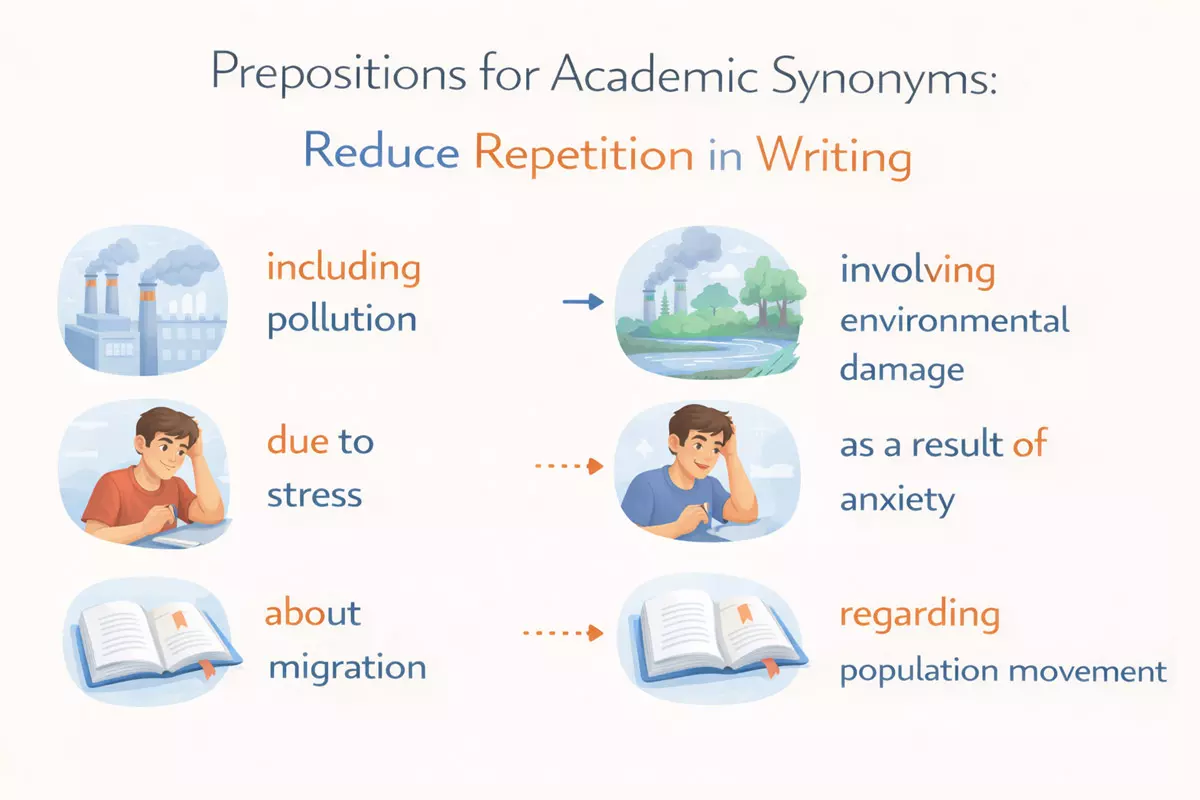 Here we prepositional synonymy in academic writing, including verb-to-noun phrase replacements, mapping of key semantic clusters, strategies for lexical variation, the impact of preposition choices, collocation accuracy, and editing techniques.
- The mechanics of prepositional synonymy: Replacing verbs with noun + preposition units
- Mapping semantic clusters: Synonyms for 'focus on', 'result in', and 'attribute to'
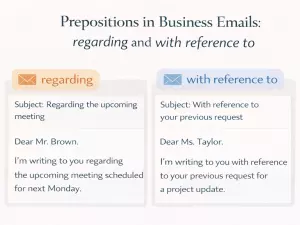
- Lexical variation: Using 'with respect to', 'concerning', and 'regarding' to frame topics
- Nuance control: How switching prepositions shifts the level of certainty or formality
- Breaking 'monotonous rhythm': Varying sentence openings with prepositional phrases
- Collocation stability: Ensuring synonym accuracy within discipline-specific contexts
- Structural substitution: Replacing 'because of' with more sophisticated academic alternatives
- Practice: Comparative analysis of high-frequency synonyms in peer-reviewed journals
- Editing workshop: Rewriting repetitive abstracts for professional lexical density
If you find your academic writing becoming repetitive or dull, consider varying your use of prepositions and experimenting with alternative vocabulary. This strategy helps you avoid redundancy, making your arguments clearer and more persuasive. By diversifying your language in this way, you can sharpen your expression and enhance the overall sophistication of your work, ensuring that your writing remains engaging and effective for your readers.
The mechanics of prepositional synonymy: Replacing verbs with noun + preposition units
Understanding how to substitute verbs with noun plus preposition constructions can add variety and precision to academic writing. This technique allows writers to avoid overusing common verbs by shifting to more nuanced noun-based phrases, which often sound more formal or objective.
Why use noun + preposition structures?
Academic texts often favor nominalization—the process of turning verbs into nouns—because it can make statements less direct and more analytical. Using noun + preposition units also helps writers reduce repetition of verbs like “show,” “affect,” or “lead to,” making the prose more engaging and varied.
Common patterns for transformation
Writers can often convert a verb into a noun, then pair it with an appropriate preposition to convey the same meaning. For example, “analyze” becomes “analysis of,” and “affect” changes to “effect on.” This approach expands your range of expressions and enables subtle shifts in emphasis or perspective.
| Verb | Noun + Preposition Alternative | Example Sentence |
|---|---|---|
| analyze | analysis of | The analysis of the dataset revealed clear patterns. |
| affect | effect on / influence on | The effect on productivity was observed after the update. |
| contribute | contribution to | Her contribution to the project improved the final outcome. |
| depend | dependence on | The dependence on external funding increased over time. |
| result | result of / result in | The result of the intervention was a measurable improvement. |
| lead | lead to / cause of | The cause of the failure was a configuration error. |
| relate | relation to / relationship with | The relationship with local partners strengthened the program. |
| increase | increase in | There was an increase in demand during the peak season. |
| reduce | reduction in / decrease in | A reduction in costs was achieved through automation. |
| explain | explanation for / explanation of | The explanation for the delay was insufficient. |
| compare | comparison with / comparison between | The comparison between the two groups showed a clear difference. |
| respond | response to | The response to the survey was higher than expected. |
| apply | application of / application to | The application of this method improved accuracy. |
| identify | identification of | The identification of key variables guided the analysis. |
| assess | assessment of | The assessment of risk was completed before implementation. |
| support | support for | There is strong support for the proposed reform. |
| address | addressing of / approach to | The approach to the problem emphasized long-term solutions. |
| develop | development of | The development of the framework took several months. |
| suggest | suggestion of | The suggestion of a new guideline reduced confusion. |
Tips for effective substitution
- Check for clarity: Some noun + preposition forms may add formality but can also make sentences longer or more complex. Make sure your meaning remains clear.
- Vary structures: Alternate between verb forms and nominalized forms to keep your writing dynamic.
- Match prepositions carefully: The choice of preposition (e.g., “of,” “to,” “for”) can subtly change the meaning. Double-check usage in academic examples.
- Consider emphasis: Nominalizations can focus attention on the process or result rather than the actor, which is useful in objective writing.
Using noun plus preposition constructions is a practical way to diversify your academic vocabulary and reduce repetitive verb use, helping your writing sound more polished and nuanced.
Mapping semantic clusters: Synonyms for 'focus on', 'result in', and 'attribute to'
When writing academically, it's easy to overuse certain phrases like "focus on," "result in," or "attribute to." To make your prose more varied and precise, it helps to understand the semantic clusters around each expression. Exploring these alternative verbs and structures not only reduces repetition but also sharpens your argument and clarifies relationships between ideas.
Alternative expressions for 'focus on'
Writers often rely on "focus on" to indicate attention or emphasis. However, a range of verbs and constructions can convey similar meanings, allowing for more nuanced academic writing. Consider these options:
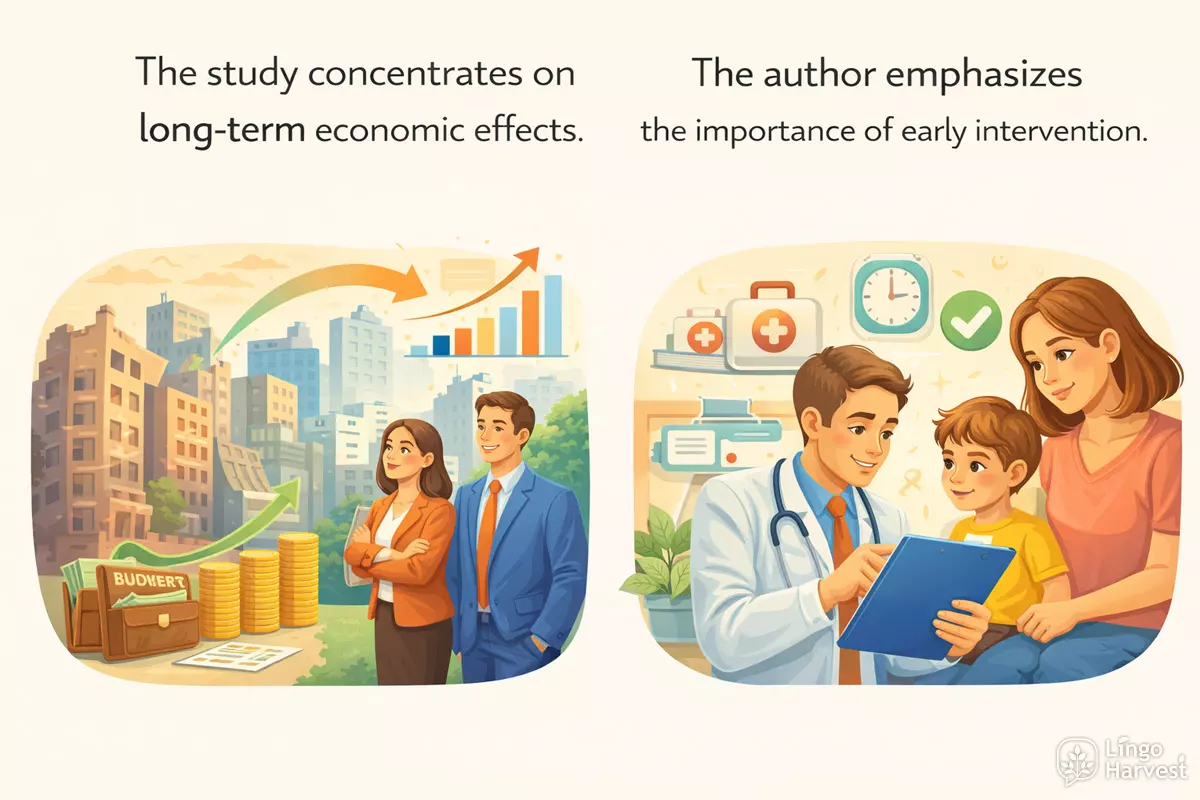
- Concentrate on → The study concentrates on long-term economic effects.
- Emphasize → The author emphasizes the importance of early intervention.
- Highlight → The results highlight significant regional differences.
- Center on → The discussion centers on ethical considerations.
- Address → This paper addresses gaps in previous research.
- Target → The program targets high-risk populations.
- Direct attention to → The report directs attention to emerging challenges.
- Prioritize → Policymakers must prioritize public safety.
- Explore → The researchers explore alternative explanations.
- Examine → The article examines patterns of social behavior.
- Deal with → This section deals with methodological limitations.
- Zero in on → The analysis zeros in on key performance indicators.
- Shed light on → The findings shed light on underlying mechanisms.
- Investigate → The team investigated possible sources of error.
- Specialize in → The department specializes in applied linguistics.
Synonyms and patterns for “result in”
To express causality or outcomes, “result in” is frequently used. Swapping it out with other phrases can improve readability and accuracy:
- Lead to → Poor planning can lead to significant delays.
- Cause → The malfunction caused a system shutdown.
- Bring about → The reform brought about measurable improvements.
- Give rise to → Rapid urbanization gave rise to housing shortages.
- Produce → The new method produced more reliable results.
- Generate → Increased demand generated higher costs.
- Yield → The experiment yielded promising data.
- Trigger → The announcement triggered public debate.
- Contribute to → These factors contribute to long-term instability.
- Induce → The treatment induced a positive response.
- Engender → Policy uncertainty engendered market volatility.
- Prompt → The findings prompted further investigation.
- Culminate in → Years of negotiation culminated in a formal agreement.
- Be responsible for → Human error was responsible for the failure.
- Effect → The legislation effected substantial change.
Ways to express “attribute to”
Explaining origins or assigning causes is another area where variety helps. These alternatives can often replace “attribute to” without loss of meaning:
- Ascribe to → The success was ascribed to careful planning.
- Assign to → Responsibility was assigned to the review committee.
- Credit to → The improvement is credited to better training.
- Blame on → The delay was blamed on supply shortages.
- Owe to → The breakthrough is owed to collaborative research.
- Impute to → The error was imputed to faulty equipment.
- Refer to → The issue was referred to budget constraints.
- Trace to → The problem can be traced to outdated procedures.
- Pin on → The failure was pinned on inadequate oversight.
- Connect with → The trend is connected with demographic changes.
- Link to → Higher risk was linked to environmental factors.
- Regard as resulting from → The decline is regarded as resulting from reduced funding.
Comparing usage: Prepositions and context
Some synonyms for these verbs require different prepositions or grammatical structures. The table below highlights a few examples to clarify usage in academic contexts.
| Verb/Phrase | Typical Preposition or Structure |
|---|---|
| Concentrate | on |
| Lead | to |
| Ascribe | to |
| Result | in |
| Attribute | to |
| Blame | on |
| Yield | (direct object) |
| Shed light | on |
Using these clusters and understanding their typical prepositions will help you vary your vocabulary and improve the flow of your academic writing. This approach not only reduces repetition but also enhances clarity and precision.
Lexical variation: Using 'with respect to', 'concerning', and 'regarding' to frame topics
Academic writing often requires nuanced ways to introduce topics, clarify scope, or connect ideas. Instead of repeating a single phrase, such as "about" or "in relation to," writers can enhance clarity and variety by choosing among several formal alternatives. Expressions like "with respect to," "concerning," and "regarding" each serve to frame topics, but they have subtle differences in tone and context.
When to Use Each Expression
- With respect to: Common in formal and technical writing, this phrase draws attention to a specific aspect of a broader issue. It signals a shift of focus.
- Concerning: Slightly less formal, "concerning" efficiently introduces the subject under consideration. It is direct and neutral.
- Regarding: Flexible and widely used, "regarding" is suitable for most academic contexts and can replace both "about" and "on the subject of."
Examples of Usage in Sentences
- With respect to methodology, the study followed established protocols.
- Concerning recent developments, results have been promising.
- Regarding ethics, all participants provided informed consent.
- With respect to sample size, limitations were acknowledged.
- Concerning data accuracy, the authors ensured rigorous checks.
- Regarding future research, several avenues remain unexplored.
- With respect to funding, the project relied on institutional grants.
- Concerning statistical analysis, advanced techniques were employed.
- Regarding participant demographics, diversity was prioritized.
- With respect to policy implications, the findings are significant.
- Concerning limitations, the authors were transparent.
- Regarding recommendations, further studies are suggested.
Comparing Formal Topic-Framing Expressions
| Phrase | Typical Context | Example Use | Degree of Formality |
|---|---|---|---|
| With respect to | Highlighting a specific facet or aspect | With respect to data interpretation, results vary. | High |
| Concerning | Introducing a topic or issue neutrally | Concerning outcomes, the study was conclusive. | Moderate |
| Regarding | General reference to a subject or topic | Regarding limitations, further research is needed. | Moderate–High |
| In relation to | Comparing or linking two topics | In relation to costs, efficiency improved. | Moderate |
Tips for Effective Variation
- Alternate between these expressions to keep writing engaging and precise.
- Choose the phrase that best matches the required formality and clarity for your audience.
- Be mindful of subtle distinctions; for instance, "with respect to" often narrows focus, while "regarding" is broader.
- Avoid overusing any single expression within a paragraph or section.
By thoughtfully selecting among these topic-framing phrases, academic writers can reduce repetition and enhance their text’s readability.
Nuance control: How switching prepositions shifts the level of certainty or formality
Subtle changes in preposition choice can significantly alter the impression your academic writing leaves. Selecting a different preposition often changes not just the meaning, but also the perceived confidence and register of your statements. This is particularly important when paraphrasing to avoid repetition: while synonyms are helpful, pairing them with varied prepositions adds further nuance and sophistication.
How prepositions affect certainty
Writers can express varying levels of certainty or tentativeness by modifying prepositions. For example, "evidence for" suggests support, while "evidence of" implies existence, and "evidence by" can attribute authorship or agency. Choosing the right preposition allows you to present findings or claims with more caution or with greater authority.
- at risk of (neutral/standard) vs. at risk for (more clinical/formal in health sciences)
- concerned with (about a topic) vs. concerned about (worried or anxious)
- difference in (change within a group) vs. difference between (contrast across groups)
- responsible for (assigned duty) vs. responsible to (accountable to a person/authority)
- consistent with (agreement) vs. consistent in (regularity of action)
- derived from (origin) vs. derived by (agent carrying out the process)
- relate to (general connection) vs. relate with (interact, less common)
- associated with (link, neutral) vs. associated to (rare, sometimes in legal/formal contexts)
- report on (focus of study) vs. report about (general information)
- evidence for (support) vs. evidence of (existence/indication)
Formality shifts with prepositions
Academic writing often requires a more formal register. Some prepositions are inherently more formal or appropriate for scholarly contexts. For instance, "with respect to" is more formal than "about", and "in accordance with" is more precise than "following" or "according to".
| Less Formal Expression | More Formal Alternative |
|---|---|
| about | regarding / with respect to |
| according to | in accordance with / as per |
| because of | due to / owing to |
| after | subsequent to / following |
| before | prior to |
| by | via / through |
| for | in order to / for the purpose of |
| on | upon |
| in | within / among |
| to | towards / with a view to |
Practical tips for academic synonym variation
When revising, pay attention not only to the noun or verb you choose but also to the preposition that follows. This can help you fine-tune your level of certainty (e.g., "suggests that" vs. "demonstrates that") and adapt the tone to suit your audience. Substituting prepositions thoughtfully avoids awkward repetition and signals a more advanced command of academic style.
Breaking 'monotonous rhythm': Varying sentence openings with prepositional phrases
Academic writing often suffers from repetitive sentence structures, especially when every sentence begins with the subject. Introducing sentences with prepositional phrases is an effective way to diversify rhythm and maintain reader engagement. This approach not only enhances flow but also allows for greater emphasis on context, timing, or location—elements critical for precise academic communication.
Why start with prepositional phrases?
Leading sentences with prepositional phrases can highlight background information or establish relationships before presenting the main idea. This technique is particularly useful for connecting complex ideas, clarifying cause and effect, or foregrounding important qualifiers. It also helps avoid patterns where each sentence follows the same subject-verb-object sequence, which can make writing feel mechanical.
Common prepositional openers in academic writing

Writers often use a variety of prepositions to begin sentences, each serving a specific function. Consider the following examples:
- In contrast to previous studies, the current research found no significant correlation.
- According to the data, performance improved over time.
- By employing alternative methods, the researchers reduced bias.
- Under these conditions, the reaction rate increased.
- For many participants, the intervention proved effective.
- With regard to environmental factors, results were inconclusive.
- During the initial phase, errors were most frequent.
- In light of recent findings, new guidelines were established.
- On the basis of these results, further study is recommended.
- Without additional evidence, the claim remains unsubstantiated.
- Throughout the experiment, variables were carefully controlled.
- In support of this argument, previous literature was cited.
- Beyond these limitations, further research is necessary.
- Following this approach, consistency improved.
- Across multiple disciplines, similar patterns emerge.
Comparing sentence openings: Subject-first vs. prepositional phrase
Alternating sentence openings can clarify meaning and prevent a tedious reading experience. The table below illustrates how shifting introductory elements alters emphasis and style:
| Subject-first Opening | Prepositional Phrase Opening |
|---|---|
| The researchers observed an increase in accuracy. | During the experiment, the researchers observed an increase in accuracy. |
| The study highlights the importance of context. | In the context of language acquisition, the study highlights its importance. |
| New evidence suggests a revision is necessary. | In light of new evidence, a revision is necessary. |
| Participants reported improved motivation. | Following the intervention, participants reported improved motivation. |
| Limitations affect the generalizability of results. | Without sufficient data, limitations affect the generalizability of results. |
Tips for effective use
- Vary prepositional phrases to avoid formulaic writing.
- Ensure the opening phrase is directly relevant to the main clause.
- Avoid overusing lengthy introductory phrases, which can obscure the main point.
- Read sentences aloud to check for natural flow.
Strategic use of prepositional phrases at the beginning of sentences not only reduces monotony but also strengthens coherence and clarity in academic prose. Experiment with different patterns to find a balance that suits your writing style and subject matter.
Collocation stability: Ensuring synonym accuracy within discipline-specific contexts
Understanding how words combine with prepositions is crucial when selecting synonyms in academic writing. Swapping terms without considering their typical word partners can lead to awkward or even incorrect phrasing. Not all synonyms fit the same grammatical patterns, especially when it comes to prepositional usage. This is particularly important in specialized fields, where certain combinations are standard and expected.
Why collocational patterns matter in academic writing
Writers often assume that synonyms are interchangeable in any context. However, the preposition that follows a word may change depending on the synonym or the discipline in which it’s used. For example, “impact on” is standard, but “influence on” and “affect” don’t always work with the same prepositions, and “affect to” is incorrect. This is why it's essential to be attentive to the stable word partnerships—known as collocations—when trying to reduce repetition.
Common discipline-specific collocations
Academic fields often have preferred or fixed prepositional patterns. Here are examples of commonly used terms and their typical prepositions in research writing:
- Depend on → Final approval depends on further evaluation.
- Consistent with → The findings are consistent with previous research.
- Relevant to → This information is highly relevant to the discussion.
- Focus on → The study focuses on long-term environmental effects.
- Associated with → High stress levels are associated with sleep disorders.
- Responsible for → The committee is responsible for overseeing the process.
- Result in / result from → Poor planning can result in delays, while delays often result from miscommunication.
- Contribute to → Regular exercise contributes to improved mental health.
- Derived from → The conclusion is derived from extensive data analysis.
- Similar to → This approach is similar to earlier models.
- In contrast to / with → In contrast to earlier findings, the results were unexpected.
- Influence on → Social media has a strong influence on public opinion.
- Effect on → The policy had a positive effect on employment rates.
- Comparison with / to → A comparison with previous studies reveals key differences.
- Attitude toward(s) → Public attitude towards renewable energy is changing.
- Rely on → Many organizations rely on accurate reporting.
- Opposed to → Several groups are opposed to the proposed reforms.
- Subject to → Access is subject to approval by the authorities.
- Engaged in → The team is engaged in ongoing research.
- Concerned with / about → The report is concerned with data security issues.
Prepositional shifts with near-synonyms
Some synonyms require different prepositions, even if their meanings are close. Careful attention to these subtle changes is necessary to maintain accuracy. Compare the following:
| Term | Typical Prepositional Collocation |
|---|---|
| Interested | in (interested in biology) |
| Concerned | about/with (concerned about safety / concerned with ethics) |
| Different | from/to (different from the control / different to the expected result) |
| Similar | to (similar to previous studies) |
| Responsible | for (responsible for maintenance) |
| Accountable | to/for (accountable to the board / accountable for actions) |
| Opposed | to (opposed to the policy) |
| Contrary | to (contrary to expectations) |
Tips for maintaining accurate prepositional use with synonyms
- Check reputable discipline-specific sources for standard collocations.
- When replacing a word, verify the preposition that naturally follows the synonym in academic texts.
- Be aware that some terms have multiple correct prepositions, each with distinct meanings (e.g., “result in” vs. “result from”).
- Consult corpora or published papers in your field to see real examples of usage.
- Remember that prepositional errors can undermine clarity and credibility, even if the vocabulary is advanced.
In summary, careful attention to how synonyms pair with prepositions in your field will help you avoid awkward phrasing and ensure your writing remains clear and professional.
Structural substitution: Replacing 'because of' with more sophisticated academic alternatives
Academic prose often benefits from variety and precision, especially when explaining causation. The phrase “because of” is common in both spoken and written English, but frequent use can make scholarly writing sound repetitive or simplistic. Selecting more nuanced alternatives helps writers clarify relationships and elevate the tone of their work.
Why avoid overusing "because of"?
Relying too heavily on one causal connector can weaken arguments and reduce reader engagement. Academic texts usually demand a range of expressions to convey cause and effect, degree, or logical relationships. By substituting “because of” with context-appropriate alternatives, writers can achieve both clarity and stylistic sophistication.
Common academic alternatives to "because of"
Below is a list of phrases and prepositional structures that can replace “because of” in scholarly contexts. Each option carries a slightly different nuance, so choosing the right one depends on your intended meaning:
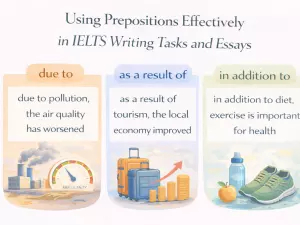
- Due to — formal, often used after a linking verb (e.g., The cancellation was due to unforeseen circumstances.)
- Owing to — interchangeable with “due to,” but sometimes preferred for variation (e.g., Owing to the late submission, the paper was not accepted.)
- As a result of — emphasizes consequence (e.g., As a result of the policy change, enrollment increased.)
- As a consequence of — slightly more formal than “as a result of”
- On account of — less formal, but still appropriate in many academic settings
- In light of — highlights consideration or new information (e.g., In light of recent findings…)
- In view of — similar to “in light of,” often used for justifying decisions
- By virtue of — stresses causation through a particular quality or circumstance
- Thanks to — usually positive, less formal but sometimes suitable for academic tone
- Following — indicates temporal cause (e.g., Following the announcement, attendance dropped.)
- As a result — can be used at the start of a sentence for stylistic variation
- Given — concise, often used before a noun phrase (e.g., Given the data, the hypothesis was revised.)
- Resulting from — used in participial phrases
- Stemming from — emphasizes origin or source
- Arising from — formal, often used in legal or technical writing
- Attributed to — highlights causality with a focus on agency
- Prompted by — stresses a triggering event
- Triggered by — similar to “prompted by,” often used for sudden or specific causes
Comparing alternatives: Usage and nuance
Writers should match the alternative to the formality, precision, and flow required in their text. The table below summarizes several options, their typical usage, and example sentences for quick reference.
| Alternative | Typical Use | Example |
|---|---|---|
| Due to | Formal; after linking verb | The delay was due to technical issues. |
| Owing to | Formal; interchangeable with “due to” | Owing to budget cuts, the project was postponed. |
| As a result of | Emphasizes consequence | As a result of the merger, staff numbers increased. |
| In light of | Highlights consideration | In light of recent evidence, the theory was revised. |
| Given | Concise; before noun phrase | Given the circumstances, a delay is reasonable. |
| Stemming from | Emphasizes origin | The conflict, stemming from resource shortages, escalated quickly. |
| On account of | Less formal, explanatory | The meeting was rescheduled on account of weather conditions. |
| By virtue of | Formal, stresses cause by characteristic | She was eligible by virtue of her experience. |
Tips for effective use of alternatives
Varying your causal connectors not only reduces repetition but also allows for more precise meaning. When choosing a substitute, consider:
- The level of formality required by your discipline or publication
- The exact relationship you want to express (cause, consequence, justification, etc.)
- Sentence structure and flow
By integrating these alternatives thoughtfully, academic writing becomes more engaging, nuanced, and professional.
Practice: Comparative analysis of high-frequency synonyms in peer-reviewed journals
Understanding how academic writers alternate synonyms and prepositions is key to producing polished, varied prose. This section invites you to examine real patterns from scholarly articles, focusing on how prepositional use shifts with near-equivalent terms. By analyzing these patterns, you can learn to diversify your own writing and avoid redundancy.
Common Synonyms and Their Prepositions: Contextual Variations
Writers often choose between synonyms such as "according to" vs. "based on," or "in relation to" vs. "regarding," depending on formality, flow, and context. Below is a comparative overview of several frequently used synonym pairs and the typical prepositions that follow them in academic literature.
| Synonym/Expression | Typical Prepositions/Usage | Example from Journals |
|---|---|---|
| according to | to (+ source/authority) | According to Smith (2021), the results indicate... |
| based on | on (+ data/evidence) | The conclusion is based on recent findings. |
| in relation to | to (+ subject/topic) | This issue arises in relation to climate change. |
| regarding | direct object (no preposition) | Several questions remain regarding the methodology. |
| as a result of | of (+ cause) | As a result of this process, efficiency increased. |
| due to | to (+ reason) | Production was delayed due to technical issues. |
| in accordance with | with (+ rule/standard) | Procedures were modified in accordance with protocol. |
| consistent with | with (+ evidence/theory) | The data are consistent with previous studies. |
| contrary to | to (+ expectation/opinion) | Contrary to earlier reports, the effect was negligible. |
| in contrast to | to (+ comparison) | In contrast to earlier findings, our results suggest... |
Practice Task: Identify Appropriate Prepositions
Fill in the blanks with the correct prepositions or forms based on the synonym used. Choose from: to, with, on, of, for, no preposition.
- The recommendations were made ________ the latest guidelines.
- Several issues were raised ________ the proposed solution.
- The results are consistent ________ previous research.
- Production was halted ________ unforeseen circumstances.
- This is discussed ________ the context of international law.
- The policy was revised ________ public feedback.
- Decisions must be taken ________ the available evidence.
- The investigation was launched ________ the complaint.
- The agreement was signed ________ national regulations.
- Funding was reduced ________ budget constraints.
Show answers
- in accordance with
- regarding
- with
- due to
- in relation to
- in response to
- on the basis of
- in connection with
- in accordance with
- due to
Tips for Synonym Selection in Academic Contexts
- Check collocations: Many synonyms require specific prepositions or none at all.
- Consider register: Some alternatives are more formal or concise.
- Read journal articles: Observe how experienced authors alternate between expressions.
- Vary structure: Alternate between prepositional phrases and participial forms to avoid monotony.
- Use corpus tools: Analyze frequency and context of synonyms in your discipline.
By developing an awareness of these patterns, you can refine your academic writing, making it both precise and stylistically varied.
Editing workshop: Rewriting repetitive abstracts for professional lexical density
Improving the lexical density of academic writing often begins with revising repetitive abstracts. Overuse of common prepositions and synonyms can make abstracts sound redundant and less professional. By carefully selecting more precise alternatives, writers can elevate the sophistication and clarity of their work.
Common Pitfalls in Abstracts: Repetition and Blandness
Many abstracts rely on a narrow set of prepositions and phrases, leading to monotony. Repeated use of terms like "in", "on", "for", and "with" can dilute meaning and hinder reader engagement. Instead, varying prepositional phrases and academic synonyms helps convey nuance and reduces redundancy.
Strategies for Enhancing Lexical Density
To rewrite for higher lexical density and professionalism:
- Replace general prepositions with context-specific alternatives.
- Substitute overused academic synonyms with more precise vocabulary.
- Condense phrases by removing unnecessary prepositional structures.
- Integrate nominalizations judiciously to pack more information per sentence.
- Use varied sentence structures to avoid formulaic patterns.
Preposition and Synonym Alternatives: Expanded List
When editing abstracts, consider these alternatives to frequently repeated forms:
- "in accordance with" → "pursuant to", "as stipulated by"
- "on the basis of" → "according to", "by virtue of"
- "for the purpose of" → "to", "so as to", "with the aim of"
- "with regard to" → "regarding", "concerning", "in reference to"
- "in relation to" → "regarding", "with respect to", "pertaining to"
- "as a result of" → "due to", "because of", "stemming from"
- "in terms of" → "concerning", "regarding", "with respect to"
- "due to" → "owing to", "attributable to", "resulting from"
- "in order to" → "to", "so as to", "for"
- "by means of" → "via", "through", "using"
- "in the context of" → "within", "amid", "under"
- "on behalf of" → "representing", "for"
- "in light of" → "considering", "given", "because of"
- "in addition to" → "besides", "along with", "as well as"
- "with respect to" → "concerning", "regarding", "in terms of"
Before-and-After Comparison: Abstract Revision
Below is a structured comparison of a repetitive abstract and its revised version, highlighting increased lexical density and varied prepositional use.
| Original Abstract | Revised Abstract |
|---|---|
| This paper discusses the impact of technology in education. In this study, the data was collected from surveys in schools. The results show improvements in learning with technology. The findings are important for teachers in schools. | This article examines technology’s influence on educational outcomes. Data were obtained through school-based surveys. Results indicate enhanced learning attributable to technological integration. These findings hold significance for educators within academic institutions. |
Checklist for Abstract Editing
To ensure your abstract avoids repetition and attains a professional tone, consider:
- Have you varied your prepositions and avoided overused phrases?
- Did you replace vague synonyms with discipline-specific vocabulary?
- Is each sentence information-rich and concise?
- Does the abstract read smoothly without unnecessary repetition?
- Are prepositional phrases used purposefully and sparingly?
Applying these strategies to your editing process will not only reduce repetition, but also enhance the academic rigor and readability of your writing.