Who vs Whom in Questions: How to Choose the Correct Form

 Here we why who and whom can be confusing in questions, explains their subject and object roles, preposition use, formal versus informal patterns, when who is acceptable, common mistakes, tests for correctness, and offers practice questions.
- Why who vs whom is confusing in questions
- Subject vs object roles in question structure
- Whom after prepositions in questions
- Informal spoken patterns vs formal expectations
- When who is acceptable instead of whom
- Common learner errors in questions
- Quick tests to choose the correct form
- Practice: build correct who/whom questions
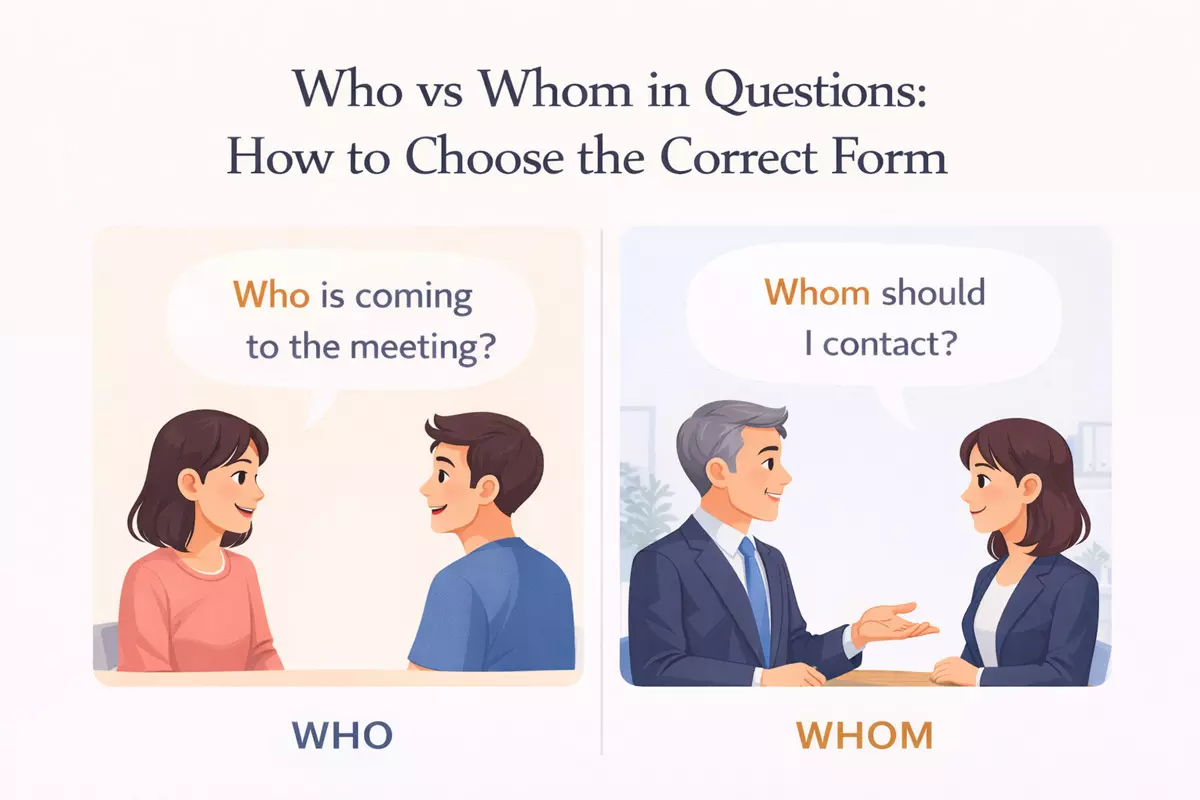
Many people find it challenging to decide when to use “who” versus “whom” in questions, but knowing their functions makes it easier. “Who” serves as the subject of a sentence or clause, while “whom” is used as the object. For example, in the question “Who called you?” “who” is the subject performing the action. In contrast, “Whom did you call?” uses “whom” as the object receiving the action. Recognizing these roles will help you choose correctly and communicate more clearly.
Why who vs whom is confusing in questions
Many people find it tricky to choose between "who" and "whom" in questions because the usual subject-object distinction isn’t always obvious when words are rearranged. In regular sentences, it’s easier to spot the subject (who does something) and the object (whom something is done to). But questions often flip the word order, hiding these roles and making the right choice less clear.
Another challenge comes from everyday speech. Native speakers often use "who" everywhere, even when "whom" is technically correct, so the formal rule feels awkward or old-fashioned. Formal writing and standardized tests, however, still expect the traditional usage.
How question structure adds confusion
When you turn a statement into a question, the position of "who" or "whom" changes. This can make it hard to tell which word fits. For example, "You saw whom?" is correct, but "Whom did you see?" sounds more formal. In both cases, "whom" is the object, but the question format hides this.
- "Who" is always the subject of a verb (who does the action)
- "Whom" is always the object of a verb or preposition (whom receives the action)
- Question word order often splits the verb and the pronoun, making it harder to spot their roles
- In spoken English, "whom" is rare, so using it in questions feels unnatural
- Prepositions are sometimes stranded at the end, e.g. "Whom did you give it to?" vs. "To whom did you give it?"
- Inversion in questions can confuse the subject-object relationship: "Who did you see?" vs. "Whom did you see?"
- Relative clauses in questions can also blur the roles, e.g. "Who do you think will win?" vs. "Whom do you think they chose?"
- Some verbs and prepositions are "hidden" or implied, making it harder to analyze the sentence
- Both words sound similar, especially in fast or casual speech
- English speakers rarely correct others for misusing "whom" in questions, so mistakes persist
Quick reference: subject vs. object in questions

| Function | Example Question |
|---|---|
| Subject (who) | Who called you? |
| Object (whom) | Whom did you call? |
| Object of preposition (whom) | To whom did you speak? |
| Subject in embedded question (who) | Who do you think will win? |
| Object in embedded question (whom) | Whom do you think they invited? |
In summary, the confusion mostly stems from question word order, the fading use of "whom" in spoken English, and the subtle grammatical patterns that become less obvious when sentences are restructured. Recognizing the role of the pronoun is the key to choosing correctly, but this is often easier said than done.
Subject vs object roles in question structure
Understanding when to use "who" or "whom" in questions depends on whether the word is acting as the subject or the object. The subject does the action, while the object receives it. This distinction determines which form is correct in a question.
How to tell subject from object in questions
To figure out the role, try answering the question with "he" or "him" (or "they"/"them"). If "he/they" fits, use "who." If "him/them" fits, "whom" is correct. This trick works because "who" matches with subject pronouns, and "whom" matches with object pronouns.
- Who is calling? (He is calling. ✅)
- To whom did you speak? (You spoke to him. ✅)
- Who wrote the letter? (She wrote the letter. ✅)
- With whom are you meeting? (You are meeting with them. ✅)
- Who finished the project? (They finished the project. ✅)
- For whom is this gift? (This gift is for her. ✅)
- Who left their umbrella here? (He left his umbrella here. ✅)
- To whom should I address the letter? (Address it to him. ✅)
- Who made this cake? (She made this cake. ✅)
- By whom was the decision made? (The decision was made by them. ✅)
Common question patterns
Questions often rearrange word order, which can make it harder to see which form to use. Look for the verb and see who is doing the action. If the "who/whom" is before the verb and performing the action, it's likely the subject. If it's after a preposition or following the verb, it's probably the object.
| Function | Example Question | Correct Form | Test Answer |
|---|---|---|---|
| Subject | Who called last night? | Who | He called last night. |
| Object (of verb) | Whom did you invite? | Whom | You invited him. |
| Object (of preposition) | To whom did you give the book? | Whom | You gave the book to her. |
| Subject (plural) | Who are coming to dinner? | Who | They are coming to dinner. |
| Object (passive) | By whom was this painted? | Whom | This was painted by him. |
In summary, identifying who is doing the action versus who is receiving it is the key to using "who" and "whom" correctly in questions. Practice with different sentence structures helps make the choice feel natural.
Whom after prepositions in questions
When a preposition comes before a question word, English grammar traditionally calls for whom instead of who. This is because the preposition needs an object, and whom serves that function. You’ll often see this style in formal writing or when someone wants to sound especially correct. In spoken English, however, it’s common to move the preposition to the end of the question, which sometimes leads people to use who instead, even though whom is technically correct.
Common patterns with prepositions and whom
Here are the most frequent structures you’ll encounter when forming questions with prepositions and whom:
- To whom should I address the letter?
- For whom are you making this reservation?
- With whom did you travel?
- About whom were you speaking?
- From whom did you receive this package?
- By whom was the book written?
- Of whom are you most proud?
- On whom can we rely?
- After whom is the award named?
- Among whom did you divide the prize?
- At whom was the remark directed?
- Between whom was the argument?
- Without whom could you not have succeeded?
- Over whom do you have authority?
- Under whom do you work?
- Near whom did you sit?
- Before whom did you testify?
- Within whom does the responsibility lie?
Preposition placement in questions
In everyday conversation, it’s common to place the preposition at the end, resulting in questions like “Who did you travel with?” rather than “With whom did you travel?” While both can be correct, the version with the preposition at the front and whom is preferred in formal contexts.
| Formal Style | Informal Style |
|---|---|
| To whom should I speak? | Who should I speak to? |
| With whom are you meeting? | Who are you meeting with? |
| About whom are you worried? | Who are you worried about? |
| For whom did you buy this? | Who did you buy this for? |
| From whom did you hear this? | Who did you hear this from? |
Usage tips
- Use whom directly after a preposition in formal questions.
- In informal speech, most native speakers use who and put the preposition at the end.
- If you’re writing essays, reports, or official documents, sticking with whom after prepositions demonstrates a strong command of formal English.
- Don’t be surprised if you rarely hear “To whom…” in daily conversation; it’s more common in writing.
In summary, placing whom after a preposition is a hallmark of formal English questions. For everyday speech, shifting the preposition to the end and using who is widely accepted, but understanding the difference gives you more control over your language in different contexts.
Informal spoken patterns vs formal expectations
Everyday conversation often bends or ignores the traditional rules governing "who" and "whom," especially in questions. While formal English maintains a clear distinction—using "who" for subjects and "whom" for objects—informal speech tends to favor "who" in both roles. This shift is driven by ease of use and the natural flow of spoken language, rather than by grammatical correctness.
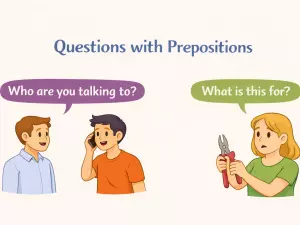
In relaxed settings, people will almost always ask, "Who are you talking to?" instead of the more technically correct, "Whom are you talking to?" Only in formal writing or highly structured contexts does the object form "whom" appear frequently, and even then, it can sound stiff or outdated to many ears.
Common informal patterns in questions
- Who did you see at the store?
- Who are you going with?
- Who should I call?
- Who are you looking for?
- Who was the email addressed to?
- Who do you want to speak to?
- Who are you inviting?
- Who’s this for?
- Who do you trust?
- Who is she dating?
- Who did they hire?
- Who did you give the book to?
- Who are they waiting for?
- Who did you send the message to?
- Who do you admire?
- Who should I thank?
- Who are you thinking about?
- Who was chosen?
Contrasts in formal English
In contrast, academic or official contexts may require strict adherence to the rules. Here, "whom" is expected when referring to the object of a verb or preposition. However, this often results in sentences that feel unnatural in conversation. Consider the following:
- Whom did you see at the store?
- To whom was the email addressed?
- Whom are you inviting?
- For whom is this?
| Informal (spoken) | Formal (written/speech) |
|---|---|
| Who are you talking to? | To whom are you talking? |
| Who did you invite? | Whom did you invite? |
| Who should I give this to? | To whom should I give this? |
| Who was the letter for? | For whom was the letter? |
| Who are you waiting for? | For whom are you waiting? |
| Who did they hire? | Whom did they hire? |
| Who do you trust? | Whom do you trust? |
| Who do you want to speak to? | To whom do you want to speak? |
Most native speakers rarely use the formal structures in speech, reserving them for written communication or when aiming to sound particularly precise or traditional. In practice, "who" has become the default, and using "whom" can sometimes seem overly formal or even pretentious. Understanding the audience and context is key to deciding which form to use.
When who is acceptable instead of whom
In everyday English, the distinction between who and whom is often relaxed, especially in questions. While whom is technically correct when referring to the object of a verb or preposition, many speakers and writers use who in its place without causing confusion or drawing attention. This is particularly true in informal settings.
Common Situations Where "Who" Replaces "Whom"
- Informal conversations: "Who are you talking to?" instead of "To whom are you talking?"
- Questions ending with prepositions: "Who did you go with?"
- Quick speech or casual writing: "Who should I send this to?"
- When the sentence sounds overly formal with whom: "Who are we meeting?"
- Elliptical questions or fragments: "Who for?"
- When the object is not immediately clear: "Who did you see?"
- When clarity is unaffected: "Who do you believe?"
- In indirect questions: "I don't know who she called."
- When whom would sound stilted or unnatural: "Who are you waiting for?"
- Everyday idioms or fixed phrases: "Guess who!"
Why "Who" Has Become Widely Accepted
Language evolves, and the strict rules of whom have softened over time. In spoken English, who is nearly always used, even by educated speakers, because it feels more natural and less formal. Most listeners understand the meaning without pause, so the need for whom is limited to formal writing or when clarity demands it.
Comparison of Acceptability in Examples
| Formal (Whom) | Informal (Who) |
|---|---|
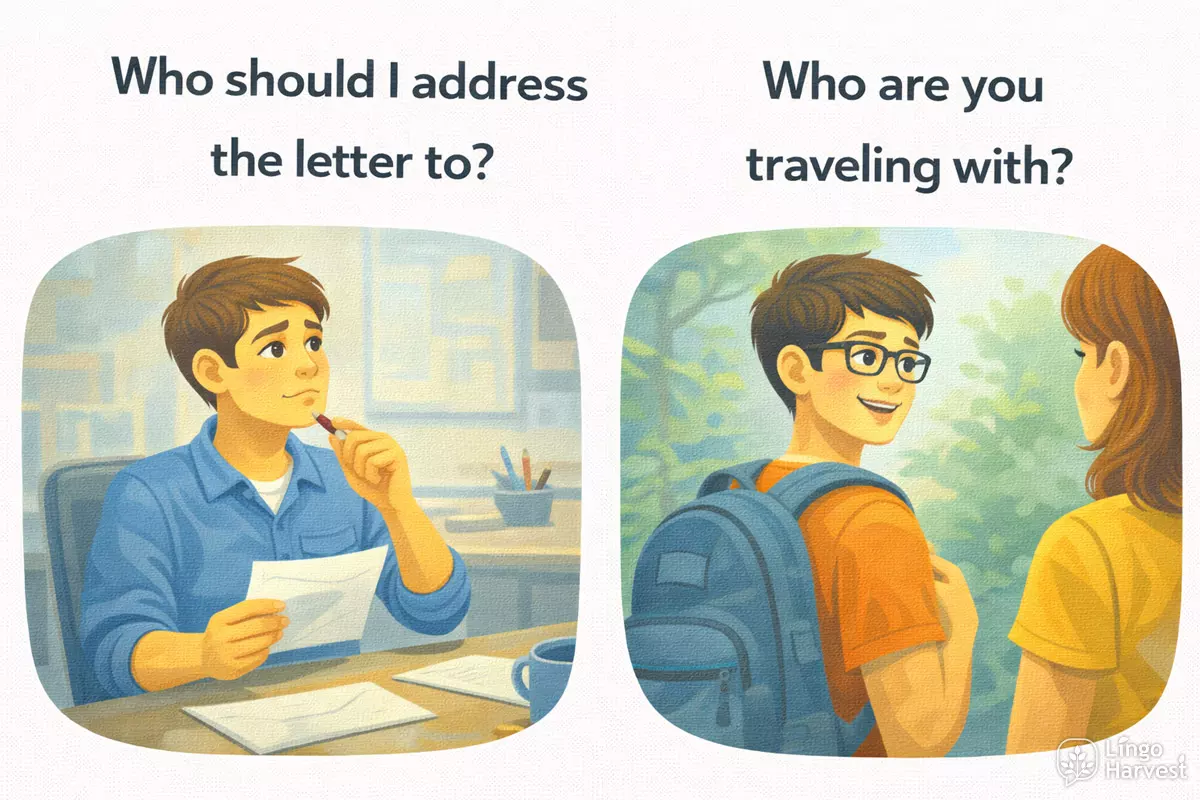
| To whom should I address the letter? | Who should I address the letter to? |
| Whom did you invite? | Who did you invite? |
| For whom is this package? | Who is this package for? |
| With whom are you traveling? | Who are you traveling with? |
| Whom are you supporting? | Who are you supporting? |
In summary, while whom remains the grammatically correct choice in certain contexts, who is widely tolerated and even preferred in most modern questions, especially in speech and informal writing. Unless you are writing for a very formal audience, using who is unlikely to cause misunderstandings or be considered incorrect.
Common learner errors in questions
Mistakes with "who" and "whom" often crop up when forming questions, especially for those who are used to more conversational English. Many learners default to "who" in every situation, simply because "whom" feels old-fashioned or confusing. However, understanding where each word fits can help avoid awkward or incorrect sentences.
Mixing Up Subject and Object Roles
The most frequent slip is using "who" when "whom" is actually required, or vice versa. "Who" acts as the subject of a verb, while "whom" is used as the object. For example, students often ask "Who did you see?" instead of the more formal "Whom did you see?" This mix-up is especially common in spoken English, where "whom" is rarely used.
Overusing "Whom" in Everyday Questions
Some learners try to sound formal by using "whom" everywhere, even when it’s not needed. This can make questions sound unnatural, such as "Whom is coming to the party?" instead of the correct "Who is coming to the party?"
Confusion After Prepositions
Another area that causes trouble is using "who" or "whom" after prepositions. The correct form is "To whom are you speaking?" but many learners say "Who are you speaking to?" While the latter is common in conversation, it’s considered informal.
Common Incorrect Patterns
Here are some typical mistakes learners make when forming questions with "who" and "whom":
- "Who did you give the book to?" ❌ (formal: "To whom did you give the book?")
- "Whom wants to join us?" ❌ (should be "Who wants to join us?")
- "Who should I talk to?" ❌ (formal: "To whom should I talk?")
- "Whom made this cake?" ❌ (should be "Who made this cake?")
- "Whom are you inviting?" ✅ (correct)
- "Who are you inviting?" (informal, but widely used)
- "To who did you send the email?" ❌ (should be "To whom did you send the email?")
- "Who do you trust?" (acceptable in speech, but "Whom do you trust?" is more formal)
- "For whom is this package?" ✅ (correct)
- "Who is this package for?" (informal alternative)
At a Glance: Subject vs. Object Forms
| Function | Example Question |
|---|---|
| Subject ("who") | Who called you? |
| Object ("whom") | Whom did you call? |
| Object after preposition ("whom") | To whom did you speak? |
| Informal usage (object as "who") | Who did you call? |
In summary, the root of most errors is not identifying whether the pronoun acts as a subject or object in the question. It helps to mentally rephrase the question as a statement and see which pronoun makes sense: "You called whom?" (object) vs. "Who called you?" (subject). Though modern English often accepts "who" in object positions, knowing the difference is still important for formal writing and exams.
Quick tests to choose the correct form
Choosing between "who" and "whom" in questions can be tricky, but a few reliable strategies will help you make the right decision every time. The main difference is that "who" functions as the subject of a verb, while "whom" acts as the object of a verb or preposition. Applying a quick mental check or substitution can clarify which word is correct.
Substitution test
Try replacing the word in question with "he" or "him." If "he" fits, use "who"; if "him" fits, use "whom." This simple test works because "he" is a subject (like "who"), and "him" is an object (like "whom").
- Who/Whom did you see? → Did you see he/him? (Did you see him? ✔ Use "whom")
- Who/Whom is coming to dinner? → He/Him is coming to dinner. (He is coming to dinner. ✔ Use "who")
Identify the verb's subject or object
Another useful approach is to analyze the sentence structure. Ask yourself whether the word is performing the action (subject) or receiving it (object).
- If the word is doing the verb, choose "who." (Example: Who wants tea?)
- If something is being done to the word, choose "whom." (Example: To whom did you speak?)
Common patterns in questions
Many English questions follow predictable patterns. Reviewing these can reinforce your understanding:
- Who called you last night?
- Whom did you call?
- With whom are you traveling?
- Who is responsible?
- Whom should I ask?
- Who finished the report?
- Whom are you inviting?
- Who knows the answer?
- Whom do you trust?
- Who will attend the meeting?
- Whom did the manager choose?
- Who made this decision?
- Whom should we contact?
- Who left their umbrella?
- Whom are you thinking about?
- Who won the game?
- Whom did you hear from?
- Who is at the door?
- Whom did you sit next to?
- Who helps you study?
Comparison table: "Who" vs. "Whom" in questions
| Form | Example in a Question |
|---|---|
| Who (subject) | Who wants dessert? |
| Whom (object) | Whom did you meet? |
| Who (subject complement) | Who is at the front desk? |
| Whom (object of preposition) | With whom are you speaking? |
Practice: Choose the correct word
- (Who/Whom) should I invite to the panel?
- To (who/whom) did you send the message?
- (Who/Whom) wrote this letter?
- (Who/Whom) are they expecting?
- About (who/whom) were you talking?
- (Who/Whom) is responsible for this decision?
- (Who/Whom) did you meet at the conference?
- With (who/whom) are you working on this project?
- (Who/Whom) will lead the discussion today?
- From (who/whom) did you get this information?
Show answers
- Whom
- Whom
- Who
- Whom
- Whom
- Who
- Whom
- Whom
- Who
- Whom
Practice: build correct who/whom questions
Understanding when to use “who” versus “whom” can be tricky, especially in questions. “Who” is used as the subject of a sentence, while “whom” is used as the object. Practicing with real examples is the best way to strengthen your grasp of this distinction.
Rewrite the following statements as questions
Try to transform the sentences below into correct questions using either “who” or “whom.” Consider whether the missing word is the subject or the object in the sentence.
- Someone called you last night.
- You are meeting someone at noon.
- Someone fixed the broken window.
- The teacher gave the award to someone.
- Someone will help us with the project.
- You invited someone to dinner.
- Someone left their umbrella in the classroom.
- You spoke to someone after class.
- Someone made this delicious cake.
- The manager promoted someone last week.
Show answers
- Who called you last night?
- Whom are you meeting at noon?
- Who fixed the broken window?
- To whom did the teacher give the award?
- Who will help us with the project?
- Whom did you invite to dinner?
- Who left their umbrella in the classroom?
- Whom did you speak to after class?
- Who made this delicious cake?
- Whom did the manager promote last week?
Common patterns for forming questions
Recognizing common sentence patterns can make it easier to choose between “who” and “whom” in questions. Here’s a summary of typical question forms:
| Pattern | When to Use “Who” or “Whom” |
|---|---|
| Who + verb + (object)? Who called you? |
Use “who” as the subject of the verb. |
| Whom + auxiliary + subject + verb? Whom did you see? |
Use “whom” as the object of the verb or preposition. |
| Preposition + whom + auxiliary + subject + verb? To whom did you speak? |
Use “whom” after a preposition. |
| Who + is/was + ...? Who is responsible for this? |
Use “who” as the subject complement. |
Mini quiz: choose the correct word
Select the right option in each question.
- (Who/Whom) are you going to invite?
- (Who/Whom) finished the assignment first?
- To (who/whom) should we address the letter?
- (Who/Whom) do you trust most?
- (Who/Whom) is calling you so late?
- (Who/Whom) did they choose for the role?
- With (who/whom) are you planning to work?
- (Who/Whom) knows the correct answer?
- About (who/whom) were they speaking?
- (Who/Whom) will represent the company?
Show answers
- Whom are you going to invite?
- Who finished the assignment first?
- To whom should we address the letter?
- Whom do you trust most?
- Who is calling you so late?
- Whom did they choose for the role?
- Whom are you planning to work with?
- Who knows the correct answer?
- Whom were they speaking about?
- Who will represent the company?
Regular practice with these patterns helps you become more confident in forming both formal and informal questions using “who” and “whom.”