Sentence Building Practice: Arrange Words Correctly

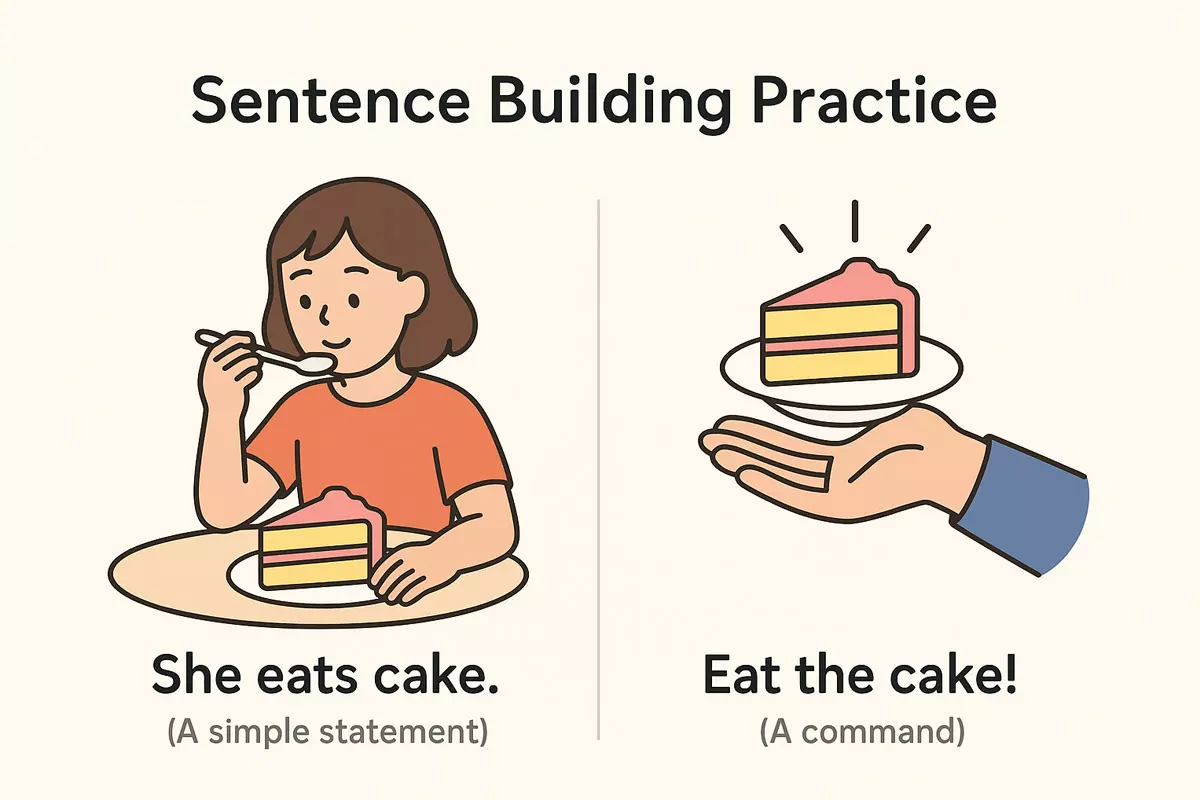 Here we why word order is important in English, reviews basic sentence structure, and points out frequent mistakes with verbs and objects. It also provides examples and practice tasks for building sentences from scrambled words.
Learning to arrange words in the correct order is essential for mastering any language, as it enables you to construct clear and accurate sentences. This article provides practical advice and interactive exercises designed to simplify the process of sentence formation, making it more accessible and enjoyable. By following these tips and practicing regularly, you can improve your ability to communicate effectively and confidently, whether you are writing or speaking in your target language.
Importance of Word Order
Getting the sequence of words right is fundamental to making your sentences clear and understandable. In English, the position of each part—subject, verb, and object—affects not just the meaning but also how natural your sentence sounds. A misplaced word can lead to confusion or even a completely different message. Mastering these patterns is essential for effective communication, especially for learners trying to build confidence in everyday conversation.
How Word Position Affects Meaning
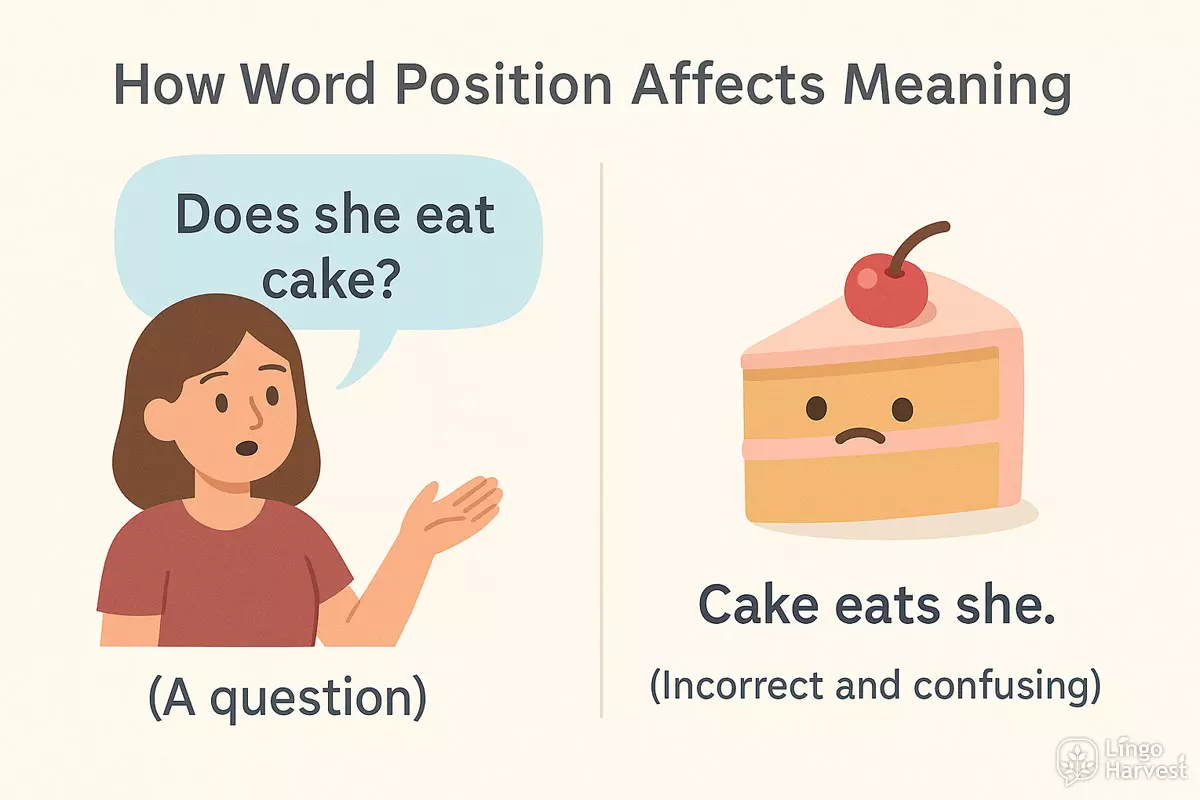
Changing the arrangement of words can transform a statement, question, or command. Consider these examples:
- She eats cake. (A simple statement)
- Does she eat cake? (A question)
- Eat the cake! (A command)
- Cake eats she. (Incorrect and confusing)
Each structure signals a different intention. Even a small shift, like moving the subject or verb, can impact clarity.
Common Patterns in English Sentences
English typically follows a Subject–Verb–Object (SVO) order. Here are some frequent sentence structures and how they function:
| Structure | Example |
|---|---|
| Subject + Verb + Object | The dog chased the ball. |
| Subject + Verb + Adverb | She sings beautifully. |
| Adverb + Subject + Verb | Yesterday, we met. |
| Question (Auxiliary + Subject + Verb) | Did you finish? |
| Negation (Subject + Auxiliary + not + Verb) | He does not agree. |
| Imperative (Verb + Object) | Open the window. |
| Subject + Verb + Complement | The soup tastes delicious. |
| Subject + Modal + Verb | We can help. |
| Subject + Verb + Prepositional Phrase | She works at the bank. |
| Subject + Verb + Indirect Object + Direct Object | They gave her a gift. |
Why Sequence Matters
Consistent word placement helps listeners and readers process information quickly. In languages like English, incorrect arrangement can mark a speaker as non-fluent or cause misunderstandings. With practice, arranging words in the right order becomes more intuitive, allowing for smoother, more accurate communication.
Basic English Sentence Structure
Understanding how to correctly arrange words is essential for clear English communication. Most sentences in English follow a predictable order, which helps listeners and readers quickly grasp the intended meaning. Mastering this pattern is a key step in building accurate sentences.
Standard Word Order: Subject-Verb-Object (SVO)
In English, the most common sentence pattern is Subject-Verb-Object (SVO). This means the person or thing doing the action comes first, followed by the action, and then the receiver of the action (if there is one). For example, in the sentence “The cat (subject) eats (verb) fish (object),” the word order makes the meaning clear.
| Component | Example |
|---|---|
| Subject | Tom, The dog, My friends |
| Verb | reads, likes, are playing |
| Object | books, pizza, football |
| Full SVO Example | Tom reads books. The dog likes pizza. My friends are playing football. |
Common Sentence Elements
In addition to the basic SVO pattern, English sentences often include other elements. Recognizing these helps you arrange words naturally:
- Adjectives: describe nouns (e.g., big house, red apple)
- Adverbs: modify verbs, adjectives, or other adverbs (e.g., quickly, very)
- Prepositional phrases: provide details about place, time, or manner (e.g., in the park, after lunch)
- Articles: specify nouns (e.g., a, an, the)
- Pronouns: replace nouns (e.g., he, she, they)
- Conjunctions: join clauses or items (e.g., and, but, because)
- Auxiliary verbs: help form questions and negatives (e.g., do, does, is, are)
- Modifiers: add detail or emphasis (e.g., always, never, sometimes)
- Interrogatives: start questions (e.g., who, what, where, when)
- Negatives: make sentences negative (e.g., not, never)
Tips for Arranging Words Correctly
- Begin with the subject, unless you are forming a question.
- Use the correct verb form for the subject.
- Place adjectives before the noun they describe.
- Adverbs generally come after the verb, but sometimes before it if they modify the whole action.
- Put time and place expressions at the end of the sentence, or at the beginning for emphasis.
- For questions, invert the subject and auxiliary verb: “Are you ready?”
- For negatives, add “not” after the auxiliary verb: “She does not like tea.”
Practicing with these guidelines helps you build sentences that are both correct and natural. As you get more comfortable, try rearranging words in different patterns to ask questions, give commands, or add detail.
Common Confusions with Verbs and Objects
Misplacing verbs and objects is a frequent source of trouble for learners arranging words into correct sentences. In English, the verb usually comes after the subject and before the object. However, not every verb requires an object, and some objects can be confused with adverbs or complements.
Direct vs. Indirect Objects
Understanding whether a verb needs a direct object, an indirect object, or both, can help avoid mistakes. For example, “give” typically takes both: “She gave him a book.” Here, “him” is the indirect object and “a book” is the direct object.
- Direct object: Receives the action directly (e.g., “read a book”).
- Indirect object: Indicates to whom/for whom the action is done (e.g., “read her a book”).
- No object: Some verbs don’t need any object (e.g., “sleep”, “arrive”).
Common Mistakes When Placing Verbs and Objects
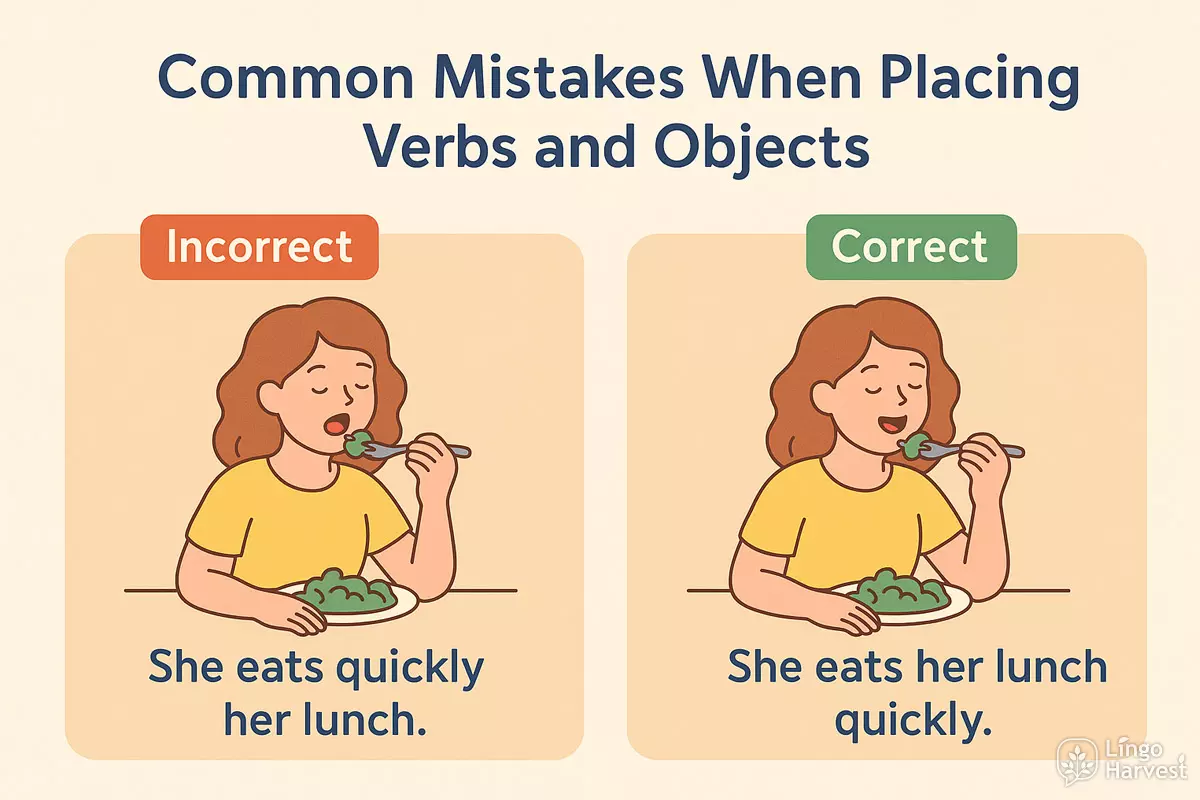
Learners often swap the order or add unnecessary words. Consider these common mix-ups:
- Incorrect: “She eats quickly her lunch.”
Correct: “She eats her lunch quickly.” - Incorrect: “I explain you the rules.”
Correct: “I explain the rules to you.” - Incorrect: “They discussed about the problem.”
Correct: “They discussed the problem.” - Incorrect: “He suggested me to wait.”
Correct: “He suggested that I wait.”
Verbs That Do Not Take an Object
Some action words don’t need a receiver. Attempting to add one leads to unnatural or incorrect sentences.
- Arrive – “They arrived.” (not “They arrived the station.”)
- Disappear – “The cat disappeared.”
- Sleep – “He sleeps.”
- Exist – “Unicorns don’t exist.”
Verbs That Always Need an Object
Other verbs sound incomplete without something to act on.
- Bring – “Bring your book.”
- Find – “Can you find my keys?”
- Make – “Make a cake.”
- Need – “I need help.”
Comparing Transitive and Intransitive Verbs
Some verbs can be both, depending on the sentence. See the structured comparison below:
| Verb | Usage Example |
|---|---|
| Run (intransitive) | She runs every morning. |
| Run (transitive) | She runs a small business. |
| Open (transitive) | Please open the window. |
| Open (intransitive) | The store opens at 9am. |
| Change (intransitive) | The weather changes often. |
| Change (transitive) | Change your clothes before dinner. |
| Break (intransitive) | The glass broke. |
| Break (transitive) | He broke the glass. |
Typical Verbs That Cause Confusion
Certain verbs often lead to errors in word order or object placement. Here are some to watch for:
- Tell (tell someone something)
- Say (say something)
- Ask (ask someone something)
- Explain (explain something to someone)
- Suggest (suggest doing something, or suggest that…)
- Discuss (discuss something, not “discuss about”)
- Describe (describe something to someone)
- Answer (answer a question, not “answer to”)
- Inform (inform someone of/about something)
- Remind (remind someone to do something)
- Offer (offer something to someone)
- Promise (promise someone something)
- Buy (buy something for someone)
- Show (show something to someone)
- Send (send something to someone)
- Teach (teach someone something)
- Give (give something to someone)
- Lend (lend something to someone)
- Pay (pay someone for something)
- Return (return something to someone)
Paying close attention to which verbs require objects, and where to place them, will make your sentences both clearer and more natural. If you’re unsure, try to check example sentences or ask if the verb “does something to” another thing or person.
Examples and Rearranging Tasks
Practicing how to arrange words into correct sentences is a practical way to improve your understanding of grammar and word order. The following examples cover a variety of sentence types, giving you a chance to see different structures in action. You'll also find tasks where you can try arranging jumbled words into proper sentences, which is an effective exercise for building your language skills.
Common Patterns in Sentence Structure
- Subject + Verb + Object: The cat eats fish.
- Subject + Verb + Adverbial: She sings beautifully.
- Question form: Are you ready?
- Imperative: Close the door.
- Negative: They do not understand.
- Compound sentence: I like tea, but she prefers coffee.
- With adjectives: The old house looks abandoned.
- Prepositional phrase: The book is on the table.
- With modal verbs: You should try again.
- Passive voice: The letter was written by Tom.
Practice: Rearranging Mixed Words
Below are sets of jumbled words. Rearrange each set to form a correct sentence.
- blue / the / sky / is
- quickly / she / ran / home
- on / sat / the / cat / mat / the
- read / I / book / a / yesterday
- delicious / cake / baked / a / Mary
- always / early / gets / up / he
- the / is / where / station?
- not / do / like / I / spinach
- can / piano / the / play / you?
- written / was / letter / the / by / Anna
Show answers
- The sky is blue.
- She ran home quickly.
- The cat sat on the mat.
- I read a book yesterday.
- Mary baked a delicious cake.
- He always gets up early.
- Where is the station?
- I do not like spinach.
- Can you play the piano?
- The letter was written by Anna.
Comparing Sentence Types
| Jumbled Words | Correct Sentence |
|---|---|
| dog / the / barking / is | The dog is barking. |
| coffee / like / I / hot | I like hot coffee. |
| going / are / they / school / to | They are going to school. |
| the / was / broken / window | The window was broken. |
Challenge: Rearranging for Questions
Arrange these words to ask questions:
- you / are / coming / when
- finished / have / your / homework / you
- like / do / music / you
- is / what / your / name
- going / are / where / you
- did / watch / you / last night / movie
- your / when / birthday / is
- can / speak / you / French
- what / time / it / is
- the / meeting / when / starts
- have / seen / you / this / before
- like / do / coffee / you
- why / late / are / you
- where / did / go / they / yesterday
- how / get / can / I / to / station
Show answers
- When are you coming?
- Have you finished your homework?
- Do you like music?
- What is your name?
- Where are you going?
- Did you watch the movie last night?
- When is your birthday?
- Can you speak French?
- What time is it?
- When does the meeting start?
- Have you seen this before?
- Do you like coffee?
- Why are you late?
- Where did they go yesterday?
- How can I get to the station?
Practice: Build Sentences from Scrambled Words
Arranging jumbled words into correct sentences is a practical way to strengthen your understanding of sentence structure. This exercise helps you focus on word order, grammar rules, and logical connections between different parts of a sentence. Below, you’ll find a set of progressively challenging activities to put your skills to the test.
How to Approach Scrambled Sentences
Start by identifying the subject, verb, and object in the group of words. Look for clues such as capitalized words (which may signal the beginning of the sentence), punctuation marks, or time expressions. Next, ask yourself what makes grammatical sense as you arrange the parts. If you’re unsure, try reading the sentence aloud to hear if it sounds natural.
Scrambled Sentences: Try These!
- dog / the / barked / loudly / at / stranger / the
- cake / delicious / baked / a / she / yesterday
- always / my / finish / before / I / homework / dinner
- to / the / went / early / park / children / morning / in / the
- can / this / you / solve / puzzle / quickly
- movie / we / an / watched / interesting / last / night
- forgot / umbrella / her / at / home / Sarah
- reading / loves / books / Jane / mystery
- train / missed / because / late / was / he
- flowers / beautiful / garden / the / in / are
- music / listen / relaxing / to / after / work / I
- birthday / celebrated / his / family / with / yesterday / Tom
- rains / when / carry / always / I / an / umbrella
- breakfast / had / not / yet / I / my
- quickly / finish / the / please / assignment
- visit / summer / we / will / our / grandparents / in
- the / closed / store / is / now
- her / dog / walks / every / morning / she
- call / me / you / can / evening / the / in
- exam / passed / difficult / the / he
Show answers
- The dog barked loudly at the stranger.
- She baked a delicious cake yesterday.
- I always finish my homework before dinner.
- The children went to the park early in the morning.
- Can you solve this puzzle quickly?
- We watched an interesting movie last night.
- Sarah forgot her umbrella at home.
- Jane loves reading mystery books.
- He missed the train because he was late.
- The beautiful flowers are in the garden.
- I listen to relaxing music after work.
- Tom celebrated his birthday with family yesterday.
- I always carry an umbrella when it rains.
- I have not had my breakfast yet.
- Please finish the assignment quickly.
- We will visit our grandparents in the summer.
- The store is closed now.
- She walks her dog every morning.
- You can call me in the evening.
- He passed the difficult exam.
Tips for Building Sentences from Scrambled Words
- Identify the main verb and its subject first.
- Look for time markers (e.g., yesterday, always, now) to place adverbs correctly.
- Keep adjectives close to the nouns they describe.
- Remember common word order patterns: Subject + Verb + Object.
- Use conjunctions (because, when, and) to join clauses logically.
Practicing with mixed-up words is a valuable way to develop your sentence construction abilities. As you get comfortable, try creating your own scrambled sentences and exchanging them with a friend for even more practice.