Comparatives with More and Most: Easy Rules

 This article explains when to use more and most, highlights the rules for one-syllable and multi-syllable comparatives, and lists irregular forms like better and worse. It also warns against double comparatives and includes examples and practice.
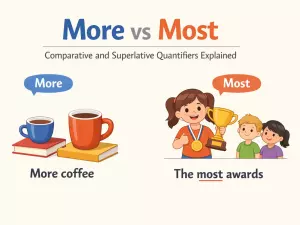
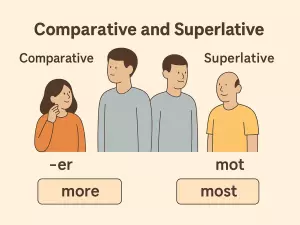
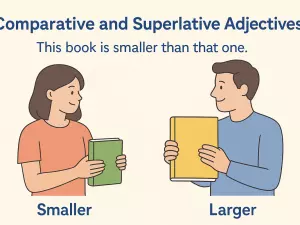
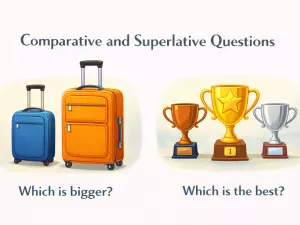
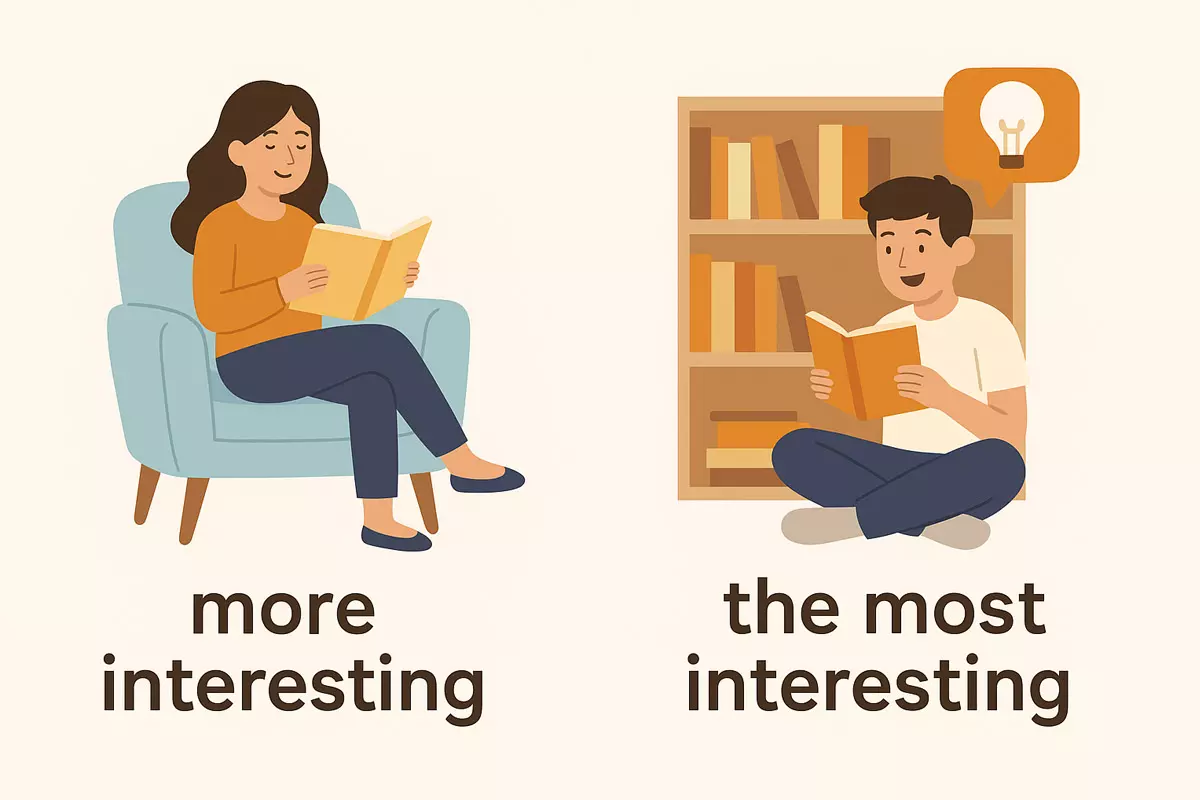
Learning to express comparisons in English can be challenging, particularly when choosing between “more” and “most” for different words. Generally, use “more” to compare two things, such as “more interesting,” and “most” when comparing three or more, like “the most interesting.” For shorter adjectives, add “-er” or “-est” instead, as in “taller” or “tallest.” By following these simple rules, you will improve your ability to create clear and accurate comparative sentences in English.
When to Use More and Most
Understanding the right situations for “more” and “most” helps make your comparisons clear and accurate. These words are used to form the comparative and superlative degrees of adjectives and adverbs, but not all words follow the same rules. The choice depends on the length, syllable count, and sometimes the origin of the word.
General Rules for Using "More" and "Most"
- Long adjectives: For adjectives with two or more syllables (except those ending in -y), use “more” for the comparative and “most” for the superlative.
Example: more beautiful, most interesting - Adverbs ending in -ly: Use “more” and “most” with adverbs that end in -ly.
Example: more quickly, most carefully - Some two-syllable adjectives: Words ending with -ful, -ous, -ing, or -ed usually take “more” and “most.”
Example: more helpful, most boring - Short adjectives: One-syllable adjectives and some two-syllable adjectives ending in -y typically use “-er” and “-est” endings instead. (e.g., smaller, happiest)
- Irregular adjectives: A few adjectives have irregular forms and do not use “more” or “most” (e.g., good → better, best).
Common Adjectives and Adverbs That Use "More" and "Most"
Below is a list of adjectives and adverbs that commonly follow this pattern:
- more comfortable / most comfortable
- more expensive / most expensive
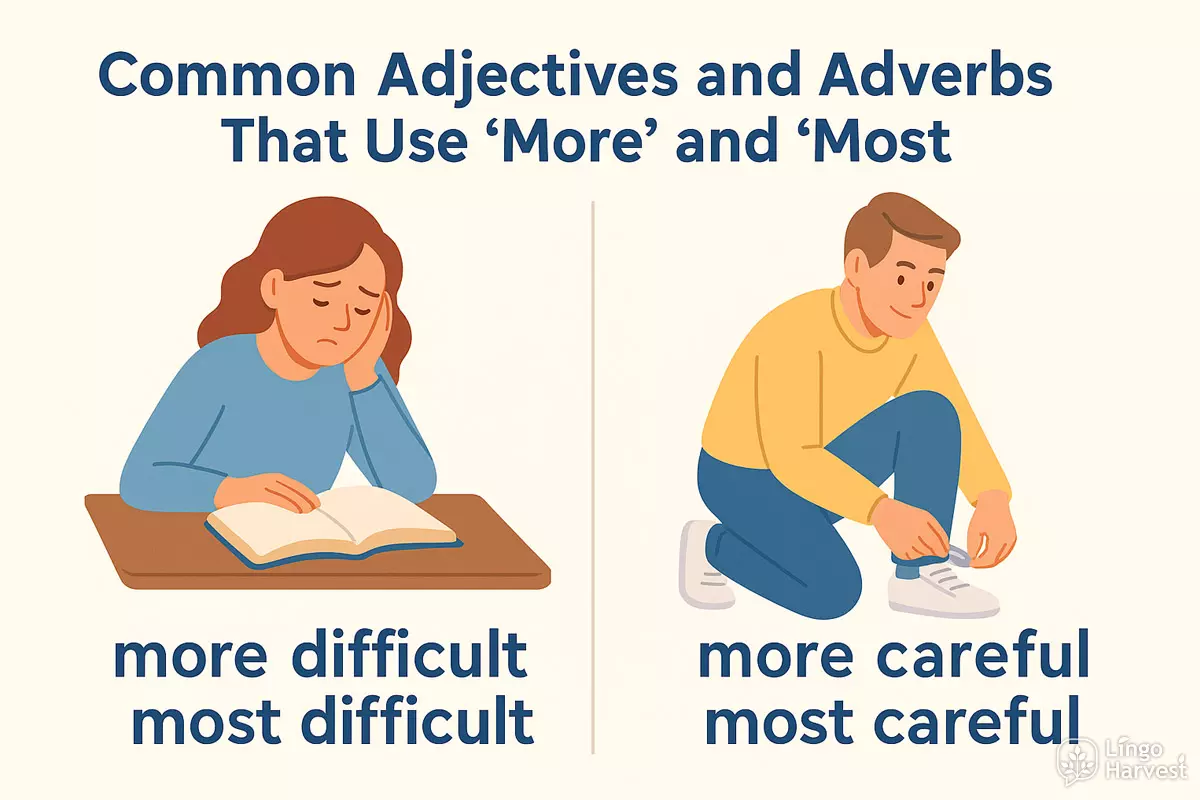
- more difficult / most difficult
- more careful / most careful
- more famous / most famous
- more modern / most modern
- more generous / most generous
- more intelligent / most intelligent
- more exciting / most exciting
- more important / most important
- more creative / most creative
- more polite / most polite
- more reliable / most reliable
- more quickly / most quickly
- more quietly / most quietly
- more easily / most easily
- more peacefully / most peacefully
- more seriously / most seriously
- more frequently / most frequently
- more efficiently / most efficiently
Comparison Table: When to Use "More" and "Most" vs. "-er" and "-est"
| Word Type | Comparative | Superlative | Example |
|---|---|---|---|
| Adjective (2+ syllables) | more + adjective | most + adjective | more beautiful / most beautiful |
| Adverb (-ly ending) | more + adverb | most + adverb | more quickly / most quickly |
| Adjective (1 syllable) | adjective + -er | adjective + -est | smaller / smallest |
| Irregular adjectives | special form | special form | good → better → best |
Exceptions and Tips
Remember, some adjectives can use both forms, but one is usually more common. For example, “more clever” and “cleverer” are both possible, but “cleverer” is used more in everyday English. Always check with a reliable dictionary if you’re unsure. Also, avoid double comparatives or superlatives like “more better” or “most easiest” ❌. By following these guidelines, you’ll know exactly when to use “more” and “most” for clear, natural comparisons.
One-Syllable vs Multi-Syllable Words
Understanding how to form comparatives and superlatives depends a lot on word length. The number of syllables in an adjective usually determines whether you should add -er/-est or use more/most before the word. Let’s break down the main differences.
Short Adjectives: One Syllable
For adjectives with just one syllable, you typically add -er for the comparative and -est for the superlative form. This is a simple and direct way to show comparison. Here are some common examples:
- tall → taller → tallest
- fast → faster → fastest
- small → smaller → smallest
- short → shorter → shortest
- cold → colder → coldest
- long → longer → longest
- young → younger → youngest
- old → older → oldest
- sweet → sweeter → sweetest
- bright → brighter → brightest
Longer Adjectives: Two Syllables or More
Adjectives with two or more syllables usually use more for the comparative and most for the superlative. Instead of changing the ending, you simply put these words in front:
- beautiful → more beautiful → most beautiful
- interesting → more interesting → most interesting
- expensive → more expensive → most expensive
- dangerous → more dangerous → most dangerous
- comfortable → more comfortable → most comfortable
- popular → more popular → most popular
- delicious → more delicious → most delicious
- famous → more famous → most famous
- important → more important → most important
- generous → more generous → most generous
Special Cases: Two-Syllable Adjectives
Some two-syllable adjectives, especially those ending in -y, -er, -le, or -ow, can use either method. For these, both forms are often accepted, but the -er/-est form is more common:
- happy → happier → happiest
- simple → simpler → simplest
- narrow → narrower → narrowest
- clever → cleverer/more clever → cleverest/most clever
- quiet → quieter/more quiet → quietest/most quiet
| Adjective Type | How to Form Comparative/Superlative |
|---|---|
| One syllable | Add -er / -est e.g., small → smaller → smallest |
| Two+ syllables | Use more / most e.g., careful → more careful → most careful |
| Two-syllable (special endings) | Usually -er/-est, sometimes more/most e.g., happy → happier → happiest |
| Irregular | Unique forms (good → better → best) |
Remember, exceptions do exist, especially with irregular adjectives. Always check if a word follows these rules or has its own unique comparative and superlative forms.
Irregular Comparatives (Better, Worse)
Not all adjectives follow the typical "more" and "most" pattern. Some words have special comparative and superlative forms that don’t use "more" or "most" at all. These are called irregular comparatives and superlatives. Instead of adding endings or using "more," these words change completely.
Key Examples of Irregular Forms
The most common irregular adjectives are "good" and "bad." Their comparative forms are "better" and "worse," not "more good" or "more bad." The superlative forms are "best" and "worst."
- Good → better (comparative) → best (superlative)
- Bad → worse (comparative) → worst (superlative)
- Far → farther/further (comparative) → farthest/furthest (superlative)
- Little (amount) → less → least
- Many → more → most
- Much → more → most
When to Use Irregular Forms
Always use these special forms instead of the standard "more" or "most" construction. For example, we say "She is better at chess than I am," not "She is more good at chess than I am." Using the standard pattern with irregular adjectives is a common mistake for learners.
Quick Reference: Irregular Adjective Forms
| Base Form | Comparative | Superlative |
|---|---|---|
| good | better | best |
| bad | worse | worst |
| far | farther / further | farthest / furthest |
| little (amount) | less | least |
| many / much | more | most |
More Irregular Patterns
A few other words also have unique comparative and superlative forms. Here are some you might encounter:
- Old → elder (for family), older → eldest, oldest
- Well (health) → better → best
- Late → later → latest (or last, depending on context)
- Near → nearer → nearest/next
- Fore → former → foremost/first
- Much → more → most
- Little (size) → smaller → smallest (but little for amount: less/least)
Learning these patterns helps you sound more natural and avoid common errors. With practice, irregular forms will become automatic.
Double Comparatives to Avoid
English learners sometimes add unnecessary extra words when making comparisons, especially with adjectives and adverbs. This usually happens when both "-er" and "more" are used together, which is incorrect. English rarely allows two comparative markers at once. Understanding which forms to use helps you sound more natural and prevents confusing sentences.
What Are Double Comparatives?
A double comparative happens when someone combines "more" or "most" with an adjective that already has an "-er" or "-est" ending, or uses both "-er" and "-est" forms together. This is a common mistake, especially for those new to English grammar or for speakers of languages where such constructions are correct. The result is a sentence that feels awkward or plainly wrong to native speakers.
Common Incorrect Patterns
Some adjectives naturally take "-er" (like "smaller"), while others use "more" (like "more interesting"). Mixing these by saying "more smaller" or "more better" is always a mistake. The same goes for using "most" with "-est" forms. Here are frequent errors to watch out for:
- more better
- more faster
- more stronger
- more easier
- more longer
- more taller
- more shorter
- more harder
- more cleverer
- most fastest
- most easiest
- most biggest
- most simplest
- most oldest
- most closest
- most happiest
- most friendliest
- most brightest
- most prettiest
- most funniest
How to Fix These Mistakes
To correct these errors, use either the "-er"/"-est" ending or "more"/"most"—never both together. The choice depends on the adjective’s length and common usage. Short adjectives usually take "-er"/"-est" (e.g., "faster," "fastest"), while longer ones use "more"/"most" (e.g., "more beautiful," "most interesting").
| Incorrect Double Comparative | Correct Form |
|---|---|
| more better | better |
| more easier | easier |
| more beautifuler | more beautiful |
| most fastest | fastest |
| most happiest | happiest |
| more cleverer | cleverer or more clever |
| most interestingest | most interesting |
| more simpler | simpler |
Quick Tips
- Never combine "more" or "most" with "-er" or "-est" endings.
- Use only one comparative or superlative form at a time.
- For most one-syllable adjectives, use "-er"/"-est".
- For most adjectives with three or more syllables, use "more"/"most".
Following these guidelines will help you avoid common pitfalls and make your English comparisons sound correct and natural.
Examples in Sentences
Understanding how to use "more" and "most" for comparisons can be much easier with practical illustrations. These structures are especially useful when describing qualities of multi-syllable adjectives or adverbs. Notice how the words "more" and "most" help us compare two or more things, people, or ideas.
Comparing Two Things with "More"
- This book is more interesting than the last one.
- She is more experienced than her colleague.
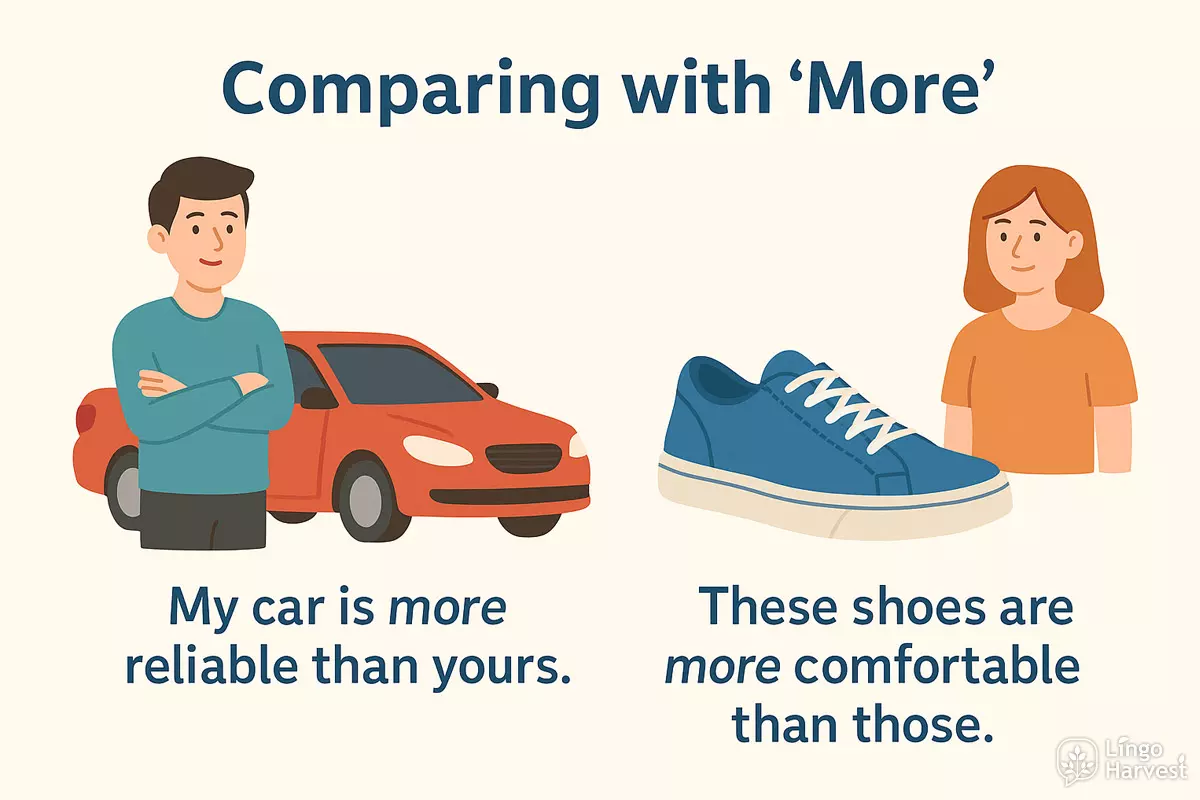
- My car is more reliable than yours.
- He speaks more fluently than his brother.
- These shoes are more comfortable than those.
- That explanation was more confusing than helpful.
- The test was more difficult than we expected.
- This painting is more colorful than the others in the gallery.
- She became more confident after the training.
- His answer was more accurate than mine.
Comparing Three or More with "Most"
- She is the most talented artist in the group.
- This is the most expensive restaurant in town.
- He was the most surprised by the announcement.
- That is the most beautiful view I have ever seen.
- He is the most hardworking employee in the company.
- This was the most challenging project we've completed.
- She gave the most detailed report at the meeting.
- Out of all the answers, his was the most convincing.
- It’s the most important decision of your career.
- That was the most enjoyable trip we've taken so far.
Quick Reference: "More" and "Most" in Use
| Base Adjective/Adverb | Comparative & Superlative Forms |
|---|---|
| careful | more careful → most careful |
| comfortable | more comfortable → most comfortable |
| quickly | more quickly → most quickly |
| expensive | more expensive → most expensive |
| interesting | more interesting → most interesting |
Using these patterns, you can describe and compare many qualities with clarity and precision. The key is to choose "more" for comparing two items and "most" for highlighting the top quality among three or more.
Practice: Complete the Comparatives
Understanding how to use "more" and "most" with adjectives helps you create clear comparisons in English. To reinforce these rules, try the following exercises. You'll work with a variety of adjectives, including both short and long forms, and get a chance to check your answers at the end.
Task 1: Fill in the Blanks
For each sentence, write the correct comparative form using "more" or "most" as needed.
- Of all the students, Julia is the ________ (intelligent) in the class.
- This puzzle is ________ (challenging) than the last one.
- Mount Everest is the ________ (famous) mountain in the world.
- My new phone is ________ (expensive) than my old one.
- He is ________ (patient) than his brother.
- This textbook is the ________ (comprehensive) I have seen.
- Today’s weather is ________ (pleasant) than yesterday's.
- Her explanation was ________ (detailed) than the teacher’s.
- That solution is the ________ (effective) so far.
- This essay is ________ (interesting) than the previous one.
Show answers
- most intelligent
- more challenging
- most famous
- more expensive
- more patient
- most comprehensive
- more pleasant
- more detailed
- most effective
- more interesting
Task 2: Identify the Correct Form
Choose whether "more" or "most" is needed in each case. Use the base adjective in parentheses.
- She is the ________ (creative) artist in the group.
- This book is ________ (useful) than the last one.
- Of all options, this is the ________ (practical).
- My sister is ________ (organized) than me.
Show answers
- most creative
- more useful
- most practical
- more organized
Common Patterns: "More" and "Most" with Adjectives
Here are some adjectives that typically use "more" and "most" for comparisons. Practice forming comparatives and superlatives using these examples.
| Adjective | Comparative | Superlative |
|---|---|---|
| beautiful | more beautiful | most beautiful |
| comfortable | more comfortable | most comfortable |
| dangerous | more dangerous | most dangerous |
| expensive | more expensive | most expensive |
| interesting | more interesting | most interesting |
| convenient | more convenient | most convenient |
| reliable | more reliable | most reliable |
| delicious | more delicious | most delicious |
| comfortable | more comfortable | most comfortable |
| successful | more successful | most successful |
Try making your own sentences with these forms to reinforce your understanding. Practicing in context helps you remember when to use "more" and "most" with longer adjectives, especially those with three or more syllables.