Comparative and Superlative Adjectives (Theory)

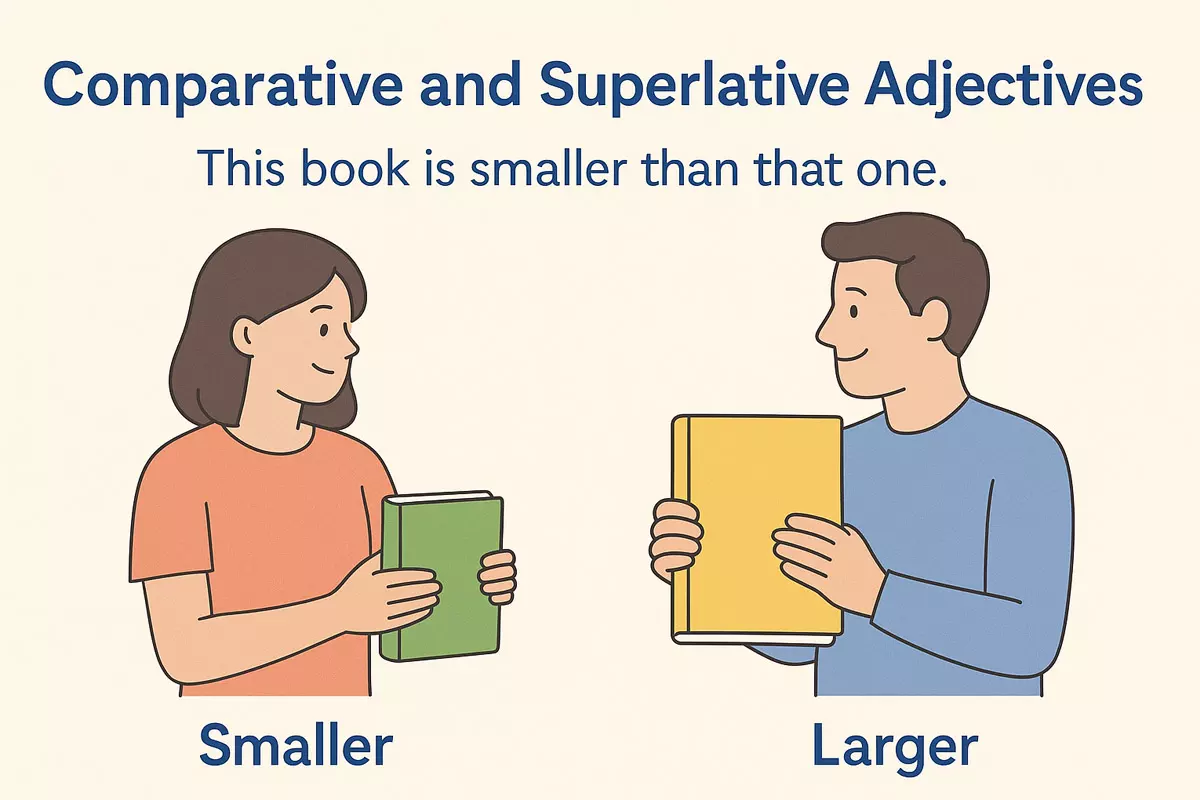 The article explains why we compare things, covers patterns for one- and two-syllable adjectives, outlines rules for longer adjectives, lists irregular forms and common confusions, and includes practice exercises to reinforce understanding.
Comparing people or things in English often involves using adjectives in their comparative or superlative forms, which allows you to clearly express differences or highlight extremes. For example, to compare speed, you might say one person is faster than another, while to express an extreme, you could say someone is the fastest in a group. Mastering these forms not only improves your descriptions but also enhances your ability to communicate ideas with clarity and accuracy in everyday conversations.
Why We Compare
Comparing things helps us describe differences and similarities in the world around us. Whether talking about people, places, objects, or experiences, we often need to express how one thing stands out from another. This is where comparative and superlative adjectives come into play—they let us show contrasts, preferences, and extremes in a clear way.
Understanding the Purpose of Comparison
We use comparison in everyday language to provide context and clarity. For example, saying "This book is more interesting than that one" gives the listener a sense of which book might be a better choice. Without comparative forms, it would be difficult to communicate subtle or significant distinctions.
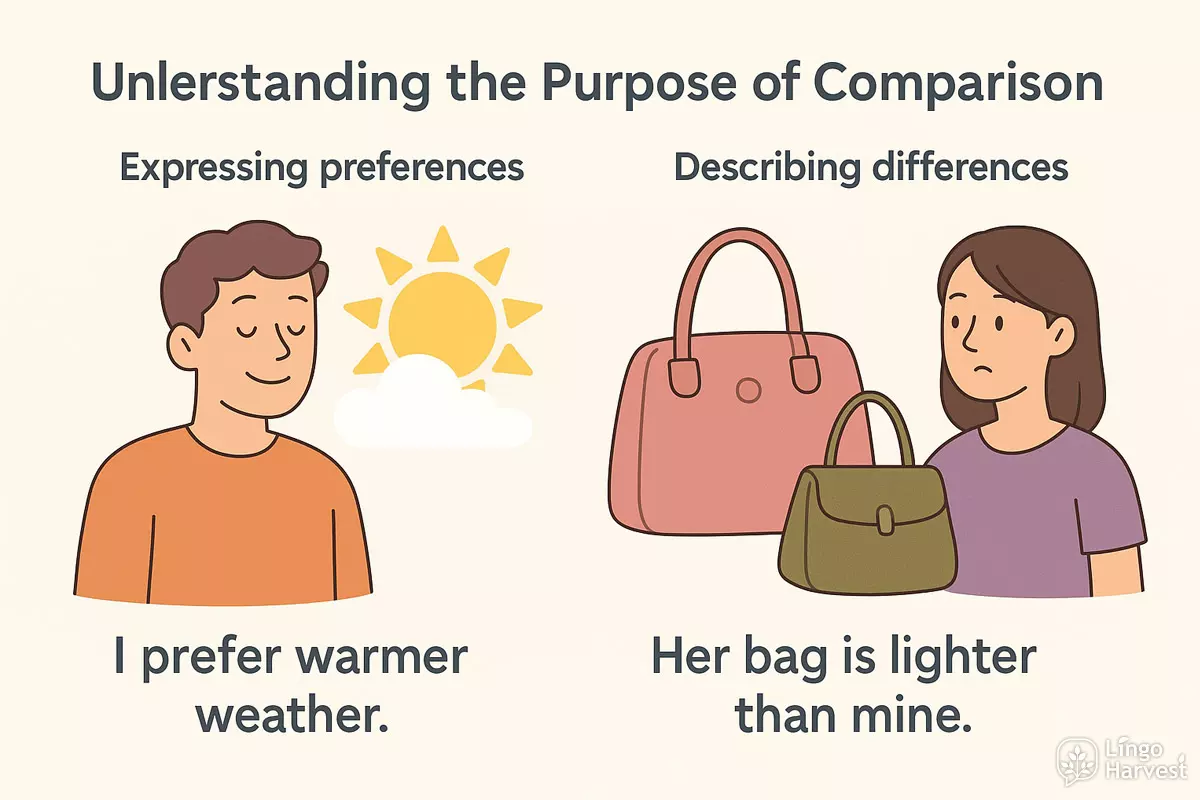
- Expressing preferences: "I prefer warmer weather."
- Describing differences: "Her bag is lighter than mine."
- Highlighting qualities: "This solution is the simplest."
- Ranking items: "He finished the test fastest."
- Making choices: "Which route is shorter?"
- Showing improvement: "Your score is better this time."
- Pointing out uniqueness: "She is the tallest in the class."
- Emphasizing progress: "The project is more advanced now."
- Clarifying relationships: "That city is farther than you think."
- Evaluating performance: "Today was the busiest day."
Comparative and Superlative Forms in Action
To illustrate how these forms work in English, here’s a structured look at some common adjectives and how they change when used to compare two or more things. Notice how the form shifts depending on the comparison.
| Adjective | Comparative | Superlative | Example |
|---|---|---|---|
| small | smaller | smallest | This bag is smaller than that one. |
| happy | happier | happiest | He is the happiest person here. |
| exciting | more exciting | most exciting | That was the most exciting match. |
| good | better | best | This is the best solution. |
| bad | worse | worst | His score was worse than mine. |
| far | farther/further | farthest/furthest | She ran farther than anyone else. |
In summary, the ability to compare allows us to be precise, persuasive, and expressive in our communication. It provides the tools to highlight what makes something unique, preferable, or remarkable in any context.
One-Syllable Patterns
Most adjectives with a single syllable form their comparative and superlative by adding -er and -est to the base word. This is the classic pattern for short adjectives in English, making it straightforward to express comparison. These forms rarely require the use of "more" or "most"; instead, endings are attached directly to the original adjective.
Basic Formation Rules
To create the comparative, add -er; for the superlative, add -est. Spelling can change slightly depending on the adjective's ending:
- If the word ends with a single vowel followed by a single consonant, double the consonant: big → bigger, biggest.
- If the word ends in -e, just add -r or -st: nice → nicer, nicest.
- Most other words simply add the ending: fast → faster, fastest.
Common Examples
Below is a table showing typical one-syllable adjectives and their comparative and superlative forms:
| Base Form | Comparative | Superlative |
|---|---|---|
| small | smaller | smallest |
| fast | faster | fastest |
| tall | taller | tallest |
| old | older | oldest |
| short | shorter | shortest |
| cold | colder | coldest |
| young | younger | youngest |
| thick | thicker | thickest |
| big | bigger | biggest |
| hot | hotter | hottest |
| late | later | latest |
| wide | wider | widest |
| hard | harder | hardest |
| sweet | sweeter | sweetest |
| long | longer | longest |
Special Notes
A few adjectives have irregular forms (like "good → better → best"), but most single-syllable adjectives follow the patterns above. This structure provides clarity and consistency when comparing people, objects, or ideas in English.
Two-Syllable Patterns
Adjectives with two syllables can follow different rules when forming their comparative and superlative forms, depending on their ending and pronunciation. While one-syllable adjectives usually add -er and -est, those with two syllables may either take these endings or use more and most before the adjective.
Common Endings That Take -er/-est
Some two-syllable adjectives, especially those ending in -y, -ow, -er, or -le, typically add -er and -est. When the adjective ends in -y, the y changes to i before adding the ending.
- happy → happier, happiest
- narrow → narrower, narrowest
- simple → simpler, simplest
- clever → cleverer, cleverest
- shallow → shallower, shallowest
- quiet → quieter, quietest
- gentle → gentler, gentlest
- angry → angrier, angriest
- tender → tenderer, tenderest
- funny → funnier, funniest
Adjectives That Use More/Most
Many other two-syllable adjectives, especially those not ending in -y, -ow, -er, or -le, form the comparative and superlative with more and most.
| Adjective | Comparative | Superlative |
|---|---|---|
| modern | more modern | most modern |
| peaceful | more peaceful | most peaceful |
| careful | more careful | most careful |
| famous | more famous | most famous |
| boring | more boring | most boring |
| useful | more useful | most useful |
| honest | more honest | most honest |
| polite | more polite | most polite |
| common | more common | most common |
| pleasant | more pleasant | most pleasant |
Exceptions and Double Forms
Some two-syllable adjectives can be used with either form, though one may be more common. For example, "clever" can become either "cleverer" or "more clever." When in doubt, use more and most for clarity.
Summary
To choose the correct form, consider the word’s ending and how it sounds in speech. Adjectives ending in -y or -ow often add -er/-est, while others tend to use more/most. Always check for exceptions, as usage can vary.
Long Adjective Rules
When working with adjectives that have two or more syllables, English follows a different pattern for forming the comparative and superlative. Instead of adding -er or -est (as with short adjectives), you use more and most before the adjective. This approach helps maintain clarity and flow in speech and writing.
How to Form Comparatives and Superlatives
- For the comparative, place more before the adjective: more beautiful.
- For the superlative, use most before the adjective: the most beautiful.
- These rules apply to most adjectives with two or more syllables, especially those ending in -ful, -ous, -ing, or -ed.
- Some two-syllable adjectives (like those ending in -y) can take either form, but the “more/most” structure is always correct.
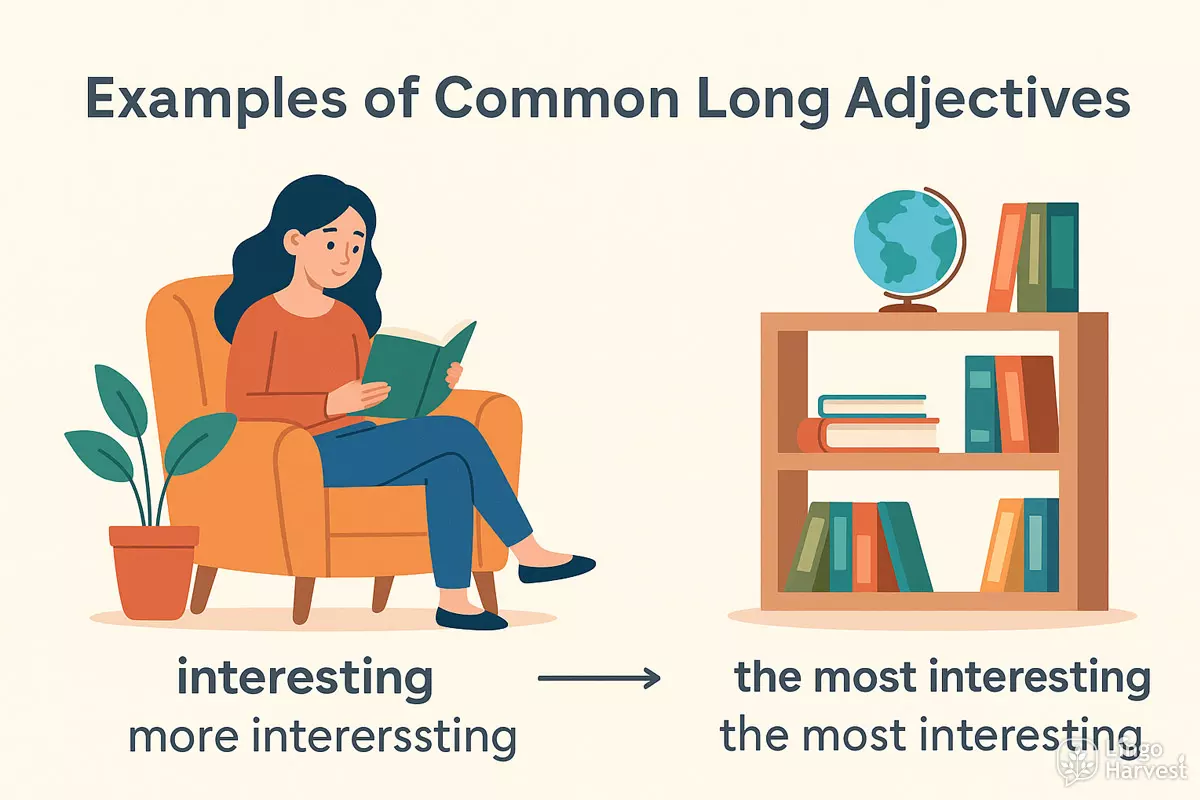
Examples of Common Long Adjectives
- careful → more careful / the most careful
- famous → more famous / the most famous
- expensive → more expensive / the most expensive
- interesting → more interesting / the most interesting
- comfortable → more comfortable / the most comfortable
- important → more important / the most important
- dangerous → more dangerous / the most dangerous
- generous → more generous / the most generous
- reliable → more reliable / the most reliable
- creative → more creative / the most creative
- delicious → more delicious / the most delicious
- modern → more modern / the most modern
- difficult → more difficult / the most difficult
- comfortable → more comfortable / the most comfortable
- intelligent → more intelligent / the most intelligent
- efficient → more efficient / the most efficient
Comparing Long and Short Adjectives
| Adjective | Comparative | Superlative |
|---|---|---|
| happy (short) | happier | the happiest |
| famous (long) | more famous | the most famous |
| modern (long) | more modern | the most modern |
| dangerous (long) | more dangerous | the most dangerous |
| simple (short) | simpler | the simplest |
| interesting (long) | more interesting | the most interesting |
Tips and Exceptions
- Never add -er or -est to long adjectives (❌ beautifuller).
- Some adjectives can use both forms (e.g., “cleverer” and “more clever”), but “more/most” is always correct with long adjectives.
- Certain adjectives are irregular (like good → better → best), so always check for exceptions.
Understanding these patterns makes your English more natural and helps you avoid common mistakes when describing differences or ranking things with longer descriptive words.
Irregular Forms
Many common English adjectives do not follow the standard “-er” and “-est” endings or the “more/most” pattern when forming their comparative and superlative forms. Instead, these words change their spelling entirely or use unique forms that must be memorized. These exceptions are used frequently in both written and spoken English, so recognizing them is important for fluency. Some of the most notable adjectives with non-standard degrees include “good,” “bad,” and “far.” Each of these words has its own set of comparative and superlative forms that do not resemble the base adjective. While most adjectives simply add an ending or use “more/most,” these change form completely.
Common Examples
Here are several adjectives with unique comparative and superlative forms. Notice how some change completely, while others only alter a few letters:
- good → better → best
- bad → worse → worst
- far → farther/further → farthest/furthest
- little (amount) → less → least
- much/many → more → most
- old → older/elder → oldest/eldest
- late → later → latest/last
- well (adverb) → better → best
- badly → worse → worst
- ill → worse → worst
- fore → former → foremost/first
- near → nearer → nearest/next
- hind → hinder → hindmost
- inner → inner → innermost
- outer → outer → outermost
- up → upper → uppermost
- in → inner → innermost
Comparison Table
Below is a summary of several key adjectives that break the usual comparative and superlative rules, showing their base, comparative, and superlative forms side by side.
| Base Form | Comparative | Superlative |
|---|---|---|
| good | better | best |
| bad | worse | worst |
| far | farther / further | farthest / furthest |
| little (amount) | less | least |
| many / much | more | most |
| old | older / elder | oldest / eldest |
| late | later | latest / last |
These forms are exceptions to the usual rules and are best learned through exposure and practice. When in doubt, consult a reliable list or dictionary, as memorizing these patterns will help avoid common mistakes.
Common Confusions
Many learners find themselves puzzled by the correct use of forms when describing differences or extremes. Sometimes, it’s tricky to know whether to add “-er” or “-est,” use “more” or “most,” or remember which adjectives are irregular. Below, we’ll clarify some of the points that often cause uncertainty.
“-er/-est” vs. “more/most”
Choosing between endings and separate words depends largely on the length and origin of the describing word. For most short (one-syllable) adjectives, like “small” or “fast,” add “-er” for comparison and “-est” for the highest degree. For longer adjectives (usually three syllables or more), use “more” or “most.” However, two-syllable words can be tricky and may take either form, depending on their ending.
- “smaller” / “smallest” → single syllable
- “more beautiful” / “most beautiful” → three syllables
- “happier” / “happiest” → ends in “-y” (change “y” to “i”)
- “more modern” / “most modern” → two syllables, not ending in “-y”
Irregular Forms
Some words don’t follow typical patterns at all. Here are common irregulars that often confuse:
- good → better → best
- bad → worse → worst
- far → farther/further → farthest/furthest
- little (amount) → less → least
- many/much → more → most
Double Comparatives and Superlatives
Avoid combining forms like “more better” or “most fastest.” Only one marker is needed:
- ❌ “more easier”
- ✅ “easier”
- ❌ “most happiest”
- ✅ “happiest”
Commonly Confused Patterns
Sometimes, two similar-looking words are used differently. Here’s a quick comparison:
| Incorrect Usage | Correct Usage |
|---|---|
| more funner | more fun or funnier |
| most simplest | simplest |
| more older | older |
| most interestingest | most interesting |
| less better | better |
| more little | less |
Summary of Pitfalls
- Don’t use both “more/most” and “-er/-est” at the same time.
- Watch out for irregular adjectives that change form entirely.
- Remember that not all two-syllable adjectives behave the same way; check if “-er/-est” or “more/most” is standard.
- Never use “-er” or “more” with absolute adjectives (e.g., “perfect” or “unique”).
By paying attention to these details, you’ll avoid the traps that trip up even advanced speakers.
Practice Exercises
Sharpen your understanding of comparative and superlative forms with these targeted activities. Each task focuses on recognizing patterns, applying rules, and transforming adjectives correctly in context.
1. Forming Comparatives and Superlatives
Review the adjectives below. Write their comparative and superlative forms.
- fast
- happy
- busy
- expensive
- good
- bad
- large
- early
- little
- interesting
- hot
- far
- simple
- famous
- thin
Show answers
- fast → faster, fastest
- happy → happier, happiest
- busy → busier, busiest
- expensive → more expensive, most expensive
- good → better, best
- bad → worse, worst
- large → larger, largest
- early → earlier, earliest
- little → less, least
- interesting → more interesting, most interesting
- hot → hotter, hottest
- far → farther/further, farthest/furthest
- simple → simpler, simplest
- famous → more famous, most famous
- thin → thinner, thinnest
2. Table: Adjective Comparison Patterns
Below is a summary of how different adjectives change form. Review the examples and identify the rule each follows.
| Adjective | Comparative | Superlative | Rule |
|---|---|---|---|
| small | smaller | smallest | Add -er/-est to short adjectives |
| funny | funnier | funniest | Change -y to -i, add -er/-est |
| modern | more modern | most modern | Use more/most for long adjectives |
| good | better | best | Irregular forms |
| big | bigger | biggest | Double final consonant, add -er/-est |
Show answers
- small: regular short adjective, just add -er/-est
- funny: ends with -y, change to -i before adding -er/-est
- modern: two syllables, not ending in -y; use more/most
- good: irregular; better/best
- big: double the consonant before adding -er/-est
3. Choose the Correct Form
Select the correct option to complete each sentence.
- This test is (easier / more easy) than the last one.
- She is the (most tall / tallest) player on the team.
- Winter is (colder / more cold) than autumn.
- Of all my friends, Mark is the (best / better) cook.
- This book is (more interesting / interestinger) than the movie.
Show answers
- easier
- tallest
- colder
- best
- more interesting
4. Error Correction
Each sentence below contains a mistake. Identify and correct it.
- He is more taller than his brother.
- This is the baddest day of my life.
- My house is expensiver than yours.
- She is the most smartest student in the class.
Show answers
- He is taller than his brother.
- This is the worst day of my life.
- My house is more expensive than yours.
- She is the smartest student in the class.